
TN Medical Council orders sensitisation of doctors, students on transgender health
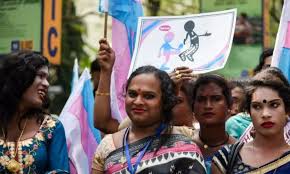
The move follows the recent release of the State Policy for Transgender Persons by Chief Minister M.K. Stalin, which seeks to improve the socioeconomic conditions of the community over the next five years Chennai: In a significant step towards inclusive healthcare, the Tamil Nadu Medical Council (TNMC) has directed all medical practitioners, educators and students in the state to undergo sensitisation programmes on transgender health, LGBTQIA+ issues, and the rights and dignity of sexual minorities. The move follows the recent release of the State Policy for Transgender Persons by Chief Minister M.K. Stalin, which seeks to improve the socio-economic conditions of the community over the next five years. According to the circular issued by TNMC, all Continuing Medical Education (CME) programmes in Tamil Nadu must incorporate mandatory sessions dedicated to transgender health and broader LGBTQIA+ concerns. The registrar stressed that such sensitisation was “imperative” to ensure that medical professionals not only provide equitable care but also uphold ethical and legal responsibilities. These sessions will also educate stakeholders about the prohibition of coercive practices, including so-called “conversion therapy”, which has been discredited worldwide. The circular outlined that the sensitisation sessions could be conducted either as standalone CMEs or integrated within existing academic schedules. Importantly, medical colleges and training centres must furnish completion reports to the Council within 30 days, while TNMC itself will monitor implementation by calling for records and verifying compliance. The training modules will also emphasise best practices in medical education and clinical care for trans persons, while ensuring that members of the transgender and LGBTQIA+ community share their lived experiences. This inclusion, officials noted, is designed to foster empathy and break down stereotypes that have long created barriers to accessing healthcare. The larger policy framework, released in July, also includes several welfare measures such as scholarships for transgender and intersex students pursuing higher education, the appointment of nodal counsellors in colleges, the establishment of short-stay homes for trans persons, and the launch of a toll-free helpline. Together, these initiatives represent the first comprehensive attempt by the Tamil Nadu government to institutionalise support systems for the trans community. By insisting on mandatory sensitisation in the medical sector, the TNMC has underlined the critical role healthcare professionals play in shaping inclusive spaces. For a community that has long battled stigma and systemic discrimination, these steps promise not just recognition but also a safer and more dignified future within Tamil Nadu’s healthcare system. Courtesy : Madhyamam Note: This news is originally published on https:/madhyamam.com/bha and is used purely for non-profit/non-commercial purposes, especially human rights
I worry about…: Suspect confesses to trans partner after shooting Charlie Kirk

The suspect appeared virtually for his first court hearing today after being formally charged on seven counts. Prosecutors said they would seek the death penalty, citing text messages and a handwritten note in which he appeared to confess to the crime. Conservative activist Charlie Kirk’s suspected killer, Tyler Robinson, allegedly admitted to carrying out the attack at Utah University last week. In a series of text messages to his transgender partner and roommate, Robinson discussed the rifle he used and revealed other details, including the motive, according to court documents. Kirk, 31, founder of Turning Point USA, was speaking at his ‘American Comeback Tour’ when he was struck in the neck by a single rifle shot. Court filings state that the 22-year-old admitted to planning the killing for over a week and even left behind a handwritten note revealing his intentions.Police said the roommate handed over the text messages, according to the documents. The roommate was described in court filings as “a biological male who was in a romantic relationship with Robinson.” The suspect appeared virtually for his first court hearing since he was formally charged on seven counts today. Prosecutors say they will seek the death penalty, citing text messages and a handwritten note in which he appeared to confess to the crime. CONFESSION IN TEXTS TO ROOMMATE Less than three hours after Kirk was fatally shot, Robinson messaged his live-in partner, Lance Twiggs, directing them to check under his computer keyboard. Twiggs, who is now cooperating with the FBI in the probe, found a note that read: “I had the opportunity to take out Charlie Kirk, and I’m going to take it.” At first, Twiggs texted back asking whether the note was some kind of twisted prank. Robinson allegedly replied, “I am still ok my love, but am stuck in Orem for a little while longer yet. Shouldn’t be long until I can come home, but I gotta grab my rifle still. To be honest I had hoped to keep this secret till I died of old age. I am sorry to involve you.” When Twiggs pressed him directly, Robinson admitted to killing Kirk. “You weren’t the one who did it, right?” asked Twiggs. “I am. I’m sorry,” Robinson replied. Twiggs asked why he did it, to which Robinson replied, “I had enough of his hatred. Some hate can’t be negotiated out. If I am able to grab my rifle unseen, I will have left no evidence. Going to attempt to retrieve it again, hopefully they have moved on. I haven’t seen anything about them finding it,” revealing the motive. ROBINSON PANICKED ABOUT LOSING FAMILY RIFLE Robinson allegedly told Twiggs he used his grandfather’s scoped .30-06 hunting rifle and hid it in nearby bushes after the attack, changing clothes to deceive the police. “I’m worried what my old man would do if I didn’t bring back grandpa’s rifle. How the f*** will I explain losing it to my old man,” Robinson wrote in one of the exchanges cited in the indictment. Robinson never managed to retrieve the weapon because police had already secured the area. Prosecutors say Twiggs has not been charged and is fully cooperating with investigators. One of Robinson’s final messages before surrendering read: “(Y)ou are all I worry about love.” The suspect was arrested on Thursday night, about 33 hours after the shooting, FBI Director Kash Patel confirmed. US President Donald Trump has publicly supported calls for Robinson to face the death penalty and attended Kirk’s funeral. Top administration officials have threatened to go after left-wing organisations in the wake of the assassination, which Trump blamed almost immediately on the “radical left.” Courtesy : India Today Note: This news is originally published on https:/indiatoday.com/bha and is used purely for non-profit/non-commercial purposes, especially human rights
The Aland files: Rahul Gandhi flags ‘mass targeted deletions’ of voters; accuses EC of destroying democracy
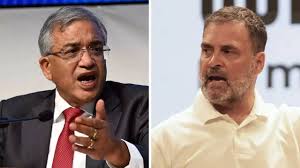
NEW DELHI: Congress leader Rahul Gandhi on Thursday presented evidence on alleged “vote chori”, accusing Chief Election Commissioner (CEC) Gyanesh Kumar of shielding those he claimed had “destroyed Indian democracy.” Speaking at a press conference at the Indira Bhawan Auditorium, the leader of opposition cited Aland constituency in Karnataka, where he alleged that a “targeted” attempt was made to delete 6,018 votes. He claimed that 6,018 applications were filed impersonating voters and this filing was done automatically using mobile numbers from outside Karnataka. Rahul Gandhi also made a claim about CEC Gyanesh Kumar. “CEC is protecting the people who have destroyed Indian democracy,” Gandhi added. “This I am saying with solid proof,” the leader of opposition said. — PTI_News (@PTI_News) The Congress MP said, “Aland is a constituency in Karnataka. Somebody tried to delete 6018 votes. We don’t know the total number of votes that were deleted in Aland in the 2023 election. They are much higher than 6,018, but somebody got caught deleting those 6018 votes, and it was caught by coincidence. What happened was that the booth-level officer there noted that her uncle’s vote was deleted, so she checked who deleted her uncle’s vote, and she found that it was a neighbour who deleted the vote. She asked her neighbour, but they said I did not delete any vote. Neither the person deleting the vote nor the person whose vote was deleted knew. Some other force hijacked the process and deleted the vote…” Rahul Gandhi claimed that in Karnataka’s Aland assembly constituency, 6,018 deletion applications were filed by impersonators to target Congress voters. This deletion of votes was done in “centralised manner” using software and not through individuals, the leader of opposition in Lok Sabha further said, adding that “targeted deletion” of votes was done in Congress stronghold through planned action. Gandhi also said that the Karnataka CID has started investigation seeking details from Election Commission on deletions done, but EC is not providing details. He urged, “Gyanesh Kumar ji, do your job, and you have taken an oath. Give the details to the Karnataka CID.” — ANI (@ANI) This press conference came 40 days after Rahul raised questions on the electoral outcome of Bangalore Central Lok Sabha seat, claiming that there was “chori” (stealing) of one lakh votes in Mahadevapura assembly seat during the 2024 polls. He had then claimed that the Election Commission was colluding with the BJP, which he called a “crime” against the Constitution. What about ‘Hydrogen bomb’? Speaking about the so-called “hydrogen bomb” of revelations, Rahul Gandhi said, “We will present the hydrogen bomb.” He added, “I told my team I would not step on stage without 100% proof.” “We will take two to three months to finish these presentations, and there will be no doubt that elections are being stolen across states in India,” he said. Earlier, addressing the concluding event of his Voter Adhikar Yatra on September 1, Gandhi had said his party will soon come out with a “hydrogen bomb” of revelations about “vote chori” and after that Prime Minister Narendra Modi will not be able to show his face to the country. Last month, Gandhi, citing data from the 2024 Lok Sabha polls, had claimed that over one lakh votes were “stolen” through manipulation in Mahadevapura assembly segment in Karnataka, and asserted that “vote chori” is an “atom bomb on our democracy”. Courtesy : TOI Note: This news is originally published on https:/timesofindia.com/bha and is used purely for non-profit/non-commercial purposes, especially human rights
Tejashwi Yadav’s Bihar Adhikar Yatra: Consolidating Rahul Gandhi’s gains or establishing pre-eminence in alliance?

NEW DELHI: RJD leader and former Bihar deputy chief minister Tejashwi Yadav on Tuesday launched ‘Bihar Adhikar Yatra’ from Jehanabad to raise pitch against Nitish Kumar-led NDA government over issues of unemployment and increasing crime incidents among others ahead of the upcoming assembly elections. Interestingly, Tejashwi’s solo yatra comes close on the heels of the much-hyped “Voter Adhikaar Yatra” which included all Mahagathbandhan leaders and was led by Congress leader Rahul Gandhi. Tejashwi was part of the Voter Adhikaar Yatra, but the limelight was hogged by Rahul – who has been leading a campaign against alleged vote theft across the country accusing the Election Commission of helping the BJP. The RJD, which is going all out to dethrone Nitish Kumar led NDA government in the state, asserted that Tejasjwi’s yatra will cover districts which were left out in the ‘Voter Adhikaar Yatra’. “After the ‘Voter Adhikar Yatra’, some districts were left out. All our workers and leaders from these districts demanded that these areas should be covered, so Tejashwi ji took the decision to take out this yatra respecting their feelings,” RJD MP Sanjay Yadav said yesterday when asked about the launch of the yatra. However, the fact that this new yatra comes amid an ongoing debate over Mahagathbandhan’s CM face and also inconclusive seat-sharing talks makes one wonder if the RJD leader has other objectives in mind also. Recently, the RJD leader had surprised all when during a rally in Muzaffarpur he pronounced: “And this time, Tejashwi will contest all 243 seats, whether it is Muzaffarpur, Kanti or Bochahan.” Tejashwi’s remarks, more than anything, was perhaps an attempt to stamp his pre-eminence as the leader of the opposition alliance across the state. However, Tejashwi later explained that there is “no confusion” regarding the chief ministerial face in the opposition bloc and the name will be announced at the “right time.” So, the question is why was such an assertion needed in the first place? After all, RJD is the largest party in the alliance and in the last elections had won 75 seats, which was the highest as it was one more than BJP’s tally. However, as the opposition alliance gears up for the assembly elections, the Congress has refused to openly endorse Tejashwi as Mahagathbandhan’s CM face. During the “Voter Adhikaar Yatra”, when Rahul Gandhi was pointedly asked why Congress was not endorsing Tejashwi as the CM face, he evaded a direct reply and instead spoke of a good understanding between the partners. This, despite the fact, that Tejashwi had earlier openly announced that Rahul would become the Prime Minister once the opposition won the next Lok Sabha elections. When asked why the Congress was not backing Tejashwi Yadav as the chief ministerial face in Bihar, Rahul Gandhi said: “A very strong partnership had been forged. All the parties (in the bloc) are working in sync. There’s no tension, and there’s mutual respect to help each other as we are ideologically and politically aligned. The result will be good. But the vote theft needs to be stopped.” Rahul’s reply was clearly a calculated and clever deflection of announcing party’s stand on the leadership issue in Bihar. The Congress leader, riding high on his successful “vote chori” campaign, was perhaps not willing to lose the bargaining chip so easily. The seat-sharing talks are underway and all parties are posturing for a higher share. In the 2020 assembly elections, the Rashtriya Janata Dal had contested 144 seats and won 75. The Congress had the worst strike rate as it contested 70 seats but won only 19. In fact, the Left parties had performed very well with the CPI-ML winning 12 out of 19, CPM 2 out of 4 and CPI 2 out of 6. This time around more parties have joined the opposition alliance and hence seat-sharing will not be an easy exercise. Already there are reports of pressure on both the RJD and the Congress to reduce their share so that other parties can be accommodated. While the Congress in Bihar is in no position to question his leadership within the alliance, they can pile pressure on the RJD during seat sharing talks. This, perhaps, explains why RJD and its leader Tejashwi have embarked on a campaign to ensure their pre-eminence in the alliance is not questioned. Courtesy : TOI Note: This news is originally published on https:/timesofindia.com/bha and is used purely for non-profit/non-commercial purposes, especially human rights
‘Mobiles, softwares used’: How Karnataka’s Aland saw massive voter deletions – Rahul Gandhi explains with ‘proof’
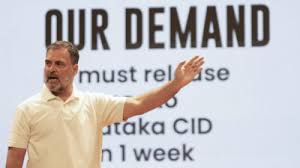
NEW DELHI: Leader of opposition in Lok Sabha Rahul Gandhi presented five evidence of mass deletions in Karnataka’s Aland assembly constituency held by Congress MLA BR Patil. He claimed before the 2023 Karnataka assembly election ‘someone’ tried to delete as many as “6,018 votes.” He added, “nobody knows how many total votes were deleted…someone got caught while trying to delete these votes by coincidence.” He said a booth-level officer discovered her uncle’s vote had been deleted. Upon investigating, she found a neighbour’s name was falsely linked to the deletion- yet neither party was aware of the action, suggesting an external force had hijacked the process. “As luck would have it, they got caught,” he said. Gandhi claimed these 6,018 applications were filed impersonating voters – applications that the supposed applicants never actually submitted. “The filing was done automatically using software…Mobile numbers from outside Karnataka, from different states, were used to delete votes in Aland, specifically targeting Congress voters,” he alleged. Emphasising the political nature of the deletions, he added: “This wasn’t random. These deletions specifically targeted booths where the Congress party was winning.” The Congress MP presented five examples, Evidence number 1: Curious case of Godabai Rahul Gandhi cited a specific case involving a woman named Godabai, whose name was used in a failed attempt to delete 12 voters from the electoral rolls. “Someone created fake logins and attempted to delete voters. Thankfully, this attempt was stopped – but Godabai, of course, had no idea,” he said. He played a clip by the woman Godabai, where she can be heard saying that she has “no idea about anything related to deletion of voters.” According to Gandhi, the operation involved the use of mobile phone numbers from outside Karnataka, raising serious questions about the origin and intent behind the deletions. “These numbers are from different states,” he said, alleging that the system was being misused in a coordinated manner to disrupt the electoral process, “this leads to key questions.” To this Gandhi posed some pin pointed question, listing them out: Whose numbers are these? How were they operated? Where were they operated from? Who generated the OTPs to disturb the process? Gandhi suggested that the deletion process was neither isolated nor accidental but a part of a broader, tech-enabled operation aimed at disenfranchising targeted voters. Evidence number 2: 12 deletions in 14 minutes – and no one knew In another instance, Rahul pointed to a man named Suryakant, who, according to records presented by him, allegedly submitted 12 voter deletion forms in just 14 minutes. One of the voters whose names were removed in this rapid deletion spree was Babita Chaudhary. Both Suryakant and Babita were present with Gandhi on stage, alongside Gandhi, while he was addressing the media. “Babita’s vote was deleted by Suryakant, or so the system says. But here’s the catch – neither Suryakant nor Babita knew anything about it,” Gandhi revealed. Gandhi used the moment to underscore how voter data was being manipulated This, he argued, was further evidence that the deletions were not just bureaucratic errors or isolated incidents but part of a deliberate, technology-driven mechanism designed to interfere with the electoral process, without the knowledge or consent of the individuals involved – specifically targeting voters in Congress-favoured areas. Evidence number 3: 2 forms in 36 seconds – filed at 4:07 am Gandhi further presented the case of Nagaraj, who, according to records, submitted two voter deletion applications in just 36 seconds. “Please try filling these forms yourself and see how long it takes you. I ask the youth of India – try it. Try filling two forms in 36 seconds. You’ll see the answer to this question,” Gandhi said, pointing to the improbability of such rapid submissions without automated tools. He further highlighted the unusual timing of the activity. “Notice also the time this gentleman filled the form. For some reason, he got up at 4:07 in the morning and suddenly filled two forms in 38 seconds.” After presenting the evidence of alleged vote chori, Congress leader went on to make two big assertions: Claim 1: Centralised, software-driven operation – not individual action Rahul Gandhi further asserted that the process was centrally coordinated and executed using software, not by individual volunteers or booth-level workers. “This is being done not by individuals but through the use of software,” Gandhi said, pointing to a pattern in the serial numbers of deleted voters. “Look at the serial numbers: serial number 1 means this is the first name in the booth. So a software is picking up the first name in the booth and using it to delete voters.” He claimed that an automated program was run where the first voter listed in each booth was falsely shown as the applicant requesting deletions. These applications were then submitted using mobile numbers from outside Karnataka, indicating cross-state coordination. “We are pretty certain this was done in a centralized manner, and it was done at scale. This was not done at a worker level. This was done at a call centre level,” Gandhi alleged, suggesting a structured, high-volume effort to influence electoral rolls in specific regions. Claim 2: Targeted Deletions in Congress-Stronghold Booths He also alleged that the voter deletions were not random, but strategically targeted at booths where the Congress party had strong support. “The top 10 booths with maximum deletions were Congress strongholds,” he said, adding that Congress had won 8 out of those 10 booths in the 2018 elections. Calling it a planned operation, not a statistical anomaly, Gandhi claimed that the pattern of deletions clearly showed political intent. “This was not a coincidence; this was a planned operation,” he said. Courtesy : TOI Note: This news is originally published on https:/timesofindia.com/bha and is used purely for non-profit/non-commercial purposes, especially human rights
2 bros-in-law get life term for abducting, gang-raping 15-yr-old Dalit girl

Meerut: A Pocso court in Bulandshahr sentenced two brothers-in-law, in their early twenties, to rigorous life imprisonment for kidnapping and gang-raping a 15-year-old Dalit girl three years back. “This act will leave lifelong scars on the girl’s mind,” the court observed. According to the prosecution, the crime was committed on April 30, 2022, when the victim, a Class 10 student, was abducted by the two men from her village while she was on her way to school. Special public prosecutor (SPP) Mahesh Raghav said, “Both convicts gang-raped the survivor and threatened to kill her if she told anyone about the sexual assault. They also recorded the act on their mobile phones. For days, they continued abusing the survivor by blackmailing her and threatening to upload the video. The case came to light only when the girl’s mother discovered the video posted on social media.” Subsequently, an FIR was registered under several IPC sections, including 376D (gang rape), 341 (wrongful restraint), 354A (sexual harassment), along with relevant sections of the Pocso Act, IT Act, and the SC/ST Act. “A total of seven witnesses testified during the trial. The girl’s statement and medical report were key to securing the conviction,” added Raghav. On Monday, special judge Manoj Kumar Singh sentenced the two men to life imprisonment and imposed fines of Rs 58,000 each, directing Rs 80,000 compensation for the survivor. Both convicts pleaded for leniency, but the court rejected their appeal, citing the brutality of the crime. Courtesy : TOI Note: This news is originally published on https:/timesofindia.com/bha and is used purely for non-profit/non-commercial purposes, especially human rights
Dalit Woman Gang-Raped in Odisha’s Puri Nation
Ex-CM Naveen Patnaik expresses shock, slams BJP govt’s failure on women’s safety. Bhubaneswar: A 20-year-old Dalit woman was allegedly gang-raped near the Maa Baliharachandi temple in Puri district, about 50 km from the state capital, after she and her male friend were filmed and blackmailed by a group of men. The incident, which took place on September 13, has sparked outrage across Odisha. According to police sources, the woman and her friend had visited the temple and later headed to a nearby beach, where they were followed by the accused. The men secretly filmed the couple and demanded extortion money, forcing them to transfer Rs 2,500 via mobile and pay Rs 1,000 in cash. When the duo refused to give more, the miscreants thrashed the man and then took turns to rape the woman in front of him. The couple was later abandoned in a nearby forest area. The survivor managed to narrate her ordeal to locals, who immediately informed the police. Three accused were taken into custody immediately while the main suspect, identified as Shiv Prasad Sahu, was arrested on Tuesday afternoon before fleeing to Andhra Pradesh. The police has seized the mobile phones used in the crime. Reacting strongly to the incident, BJD president and former Odisha Chief Minister Naveen Patnaik said he was “deeply shocked and anguished” to learn about the crime “It is heart-rending to witness such horrifying patterns of violence against women reported across Odisha,” Patnaik said, adding that the BJP-led state government had “miserably failed to create confidence in the system where our daughters feel safe, valued and heard.” He accused the ruling dispensation of making “theatrical displays of concern” while crimes against women continue unabated. Referring to similar incidents in Gopalpur, Balasore and Balanga, he said many victims and their families were still waiting for justice. “If such a crime happens near a popular tourist spot often thronged by visitors from across the world, it will not only devastate the survivor but also tarnish Odisha’s image nationally and internationally,” Patnaik warned. He urged the BJP government to take the “strongest possible action” to restore women’s faith in the justice system. Akshay Kumar Sahoo Courtesy : Deccan Chronicle Note: This news is originally published on https:/deccanchronicle.com/bha and is used purely for non-profit/non-commercial purposes, especially human rights
Shankar Bigha Massacre, Ranveer Sena killed 34 Dalits in exchange for 10 Savarnas:Vajpayee dismissed Rabri govt; women demanded arms instead of compensation from Rabri

The date was 25 January 1999. The country was preparing to celebrate the 50th Republic Day. Just moments earlier, President K. R. Narayanan had addressed the nation, saying: “Atrocities on Dalits must stop.” But something very different happened that night. Shankar Bigha is a village in the Arwal district of Bihar. At that time, it was part of Jehanabad district. There were about 110 houses in this village, with over 100 Dalit families living there. None of them had permanent houses or agricultural land. They had settled here for daily-wage labour. It was half past ten on a freezing winter night. Around 100 armed men entered the village, carrying guns and axes. The first house belonged to Bhairon Rajvanshi. He was sleeping with his wife and children when he heard a noise. Startled, he wrapped his bedding around himself, ran out, and shouted to his wife, “Take the children and run. The army people have come.” Bhairon managed to escape, but his wife and children stayed inside. The attackers entered the house, firing shots. The first bullet hit Bhairon’s wife in the legs, and she collapsed. One of the attackers grabbed the children from the cot and threw them on the ground. Bhairon’s wife screamed, “Leave my children alone. What harm have they done to you?” One attacker dragged her by the hair and shouted, “You people support the MCC, don’t you? No one in this village will survive tonight. We will wipe you all out.” The attacker shot both children dead on the spot. The woman beat her chest and wailed. Enraged, the attacker slashed her neck with a sword. Then four or five more assailants entered. They fired indiscriminately all around the house for a while and then left. A vigil was taking place in a large veranda. About 10–15 people were singing and dancing. The sound of gunfire had not yet reached them. Around 40–50 attackers had surrounded the veranda from all sides. One of them said, “Shall we pour kerosene and burn everyone?” Another replied, “No, they are all awake. They will run. They might even have guns.” An attacker, tying his dhoti tightly around his waist, said, “Look, we don’t have much time. Quickly get into the veranda and attack. Don’t give them a chance to escape.” The attackers charged in. They entered the porch, firing indiscriminately. Bullets rained down on the people performing kirtan. Within minutes, ten bodies lay there. A few somehow managed to flee into the fields. From there, the attackers moved house to house, shouting slogans. Whoever they found, they shot dead. Those who survived the bullets were hacked with axes. The entire village echoed with screams. Soon, gunfire was heard from neighbouring villages. The attackers’ commander was startled, wondering where the firing was coming from. Could it be that the MCC had arrived? He quickly told his men, “It seems the MCC people are here. Look, a crowd is coming. Let’s get out of here.” The attackers fired in the air, shouted slogans, and escaped towards the western side of the village. Bhairon Rajvanshi had been hiding in the haystack, watching everything. As soon as the attackers left, he ran home, gasping for breath. He called to his wife from the doorway, but there was no reply. Terrified, Bhairon stepped inside. Something struck his foot. Trembling, he switched on his torch. His wife’s body was lying before him. Blood was splattered everywhere. He stepped forward and saw the body of his elder son under the cot. Bhairon felt faint. He steadied himself and entered the other room. There, he found three more bodies – his two brothers and his younger son. Five members of his family had been slaughtered. He began screaming hysterically, “I am ruined! They have killed everyone. They have spared no one!” It was already midnight. The sound of crying and wailing echoed throughout the village. Corpses lay scattered in the streets. Meanwhile, the phone rang at the Jehanabad police station: “There has been a massacre in Shankar Bigha village.” Around 2 a.m., Jehanabad SP Manmohan Singh and ASP K. K. Singh arrived at the village. The SP went from house to house, surveying the scene. A total of 23 bodies were found. Among the dead were five women and seven children. One child was barely ten months old. The gunshot had ripped his intestines out – the attackers had pressed the barrel of the gun to his stomach before firing. Senior journalist Ramashankar Mishra recalls the massacre: “I reached the village on the morning of 26 January. It was a heart-wrenching sight. Some bodies were riddled with bullets, some had their hands cut off, others had their eyes gouged out. Houses, verandas, and alleys were all stained with blood.” This was the Shankar Bigha massacre. The Ranveer Sena was accused of carrying out the killings. About 20 days earlier, a newspaper had reported that the Ranveer Sena chief had announced the next location of their attack had been chosen. And it happened exactly there. In 1998, ten upper-caste people had been killed in Chauram, in Arwal district. The Maoist organisation MCC was accused of the killings. The Ranveer Sena believed that the people of Shankar Bigha had assisted the Maoists – and that was why the village was chosen for retaliation. On the morning of 27 January, Chief Minister Rabri Devi and Lalu Prasad Yadav reached Shankar Bigha. The crowd erupted in anger as soon as they saw them. Women hurled abuses. People shouted slogans – “Down with Lalu-Rabri! Social justice is a sham! End the Ranveer Sena! Rabri government, resign!” Lalu tried to pacify the crowd: “Listen, we will ensure justice for everyone. The families of those killed will receive one lakh rupees each. Every villager will be given twenty thousand rupees to build houses. A school and a panchayat building will be constructed here.” But the announcement only inflamed tempers. A woman carrying her child walked up to Rabri and screamed: “We don’t
Dalit man hacked to death in Mayiladuthurai over intercaste relationship

A 28-year-old Dalit mechanic, K Vairamuthu, was brutally murdered in Tamil Nadu’s Mayiladuthurai on September 15, allegedly over his relationship with a woman. The killing has sparked widespread protests, with political parties and rights groups demanding action under the SC/ST (Prevention of Atrocities) Act. A 28-year-old Dalit man from the Paraiyar community was hacked to death in Tamil Nadu’s Mayiladuthurai district late on Monday, September 15, allegedly over a relationship with a woman. The killing has triggered strong protests with the political leaders blaming the police for failing to thwart the crime despite repeated complaints. The deceased, identified as K Vairamuthu, a diploma holder in DME and a two-wheeler mechanic from Adiyamangalam village, had reportedly been in a decade-long relationship with Malini (26), an MBA graduate employed in Chennai. Her family had opposed the relationship. According to reports, around 10.30 pm, when Vairamuthu was on his way home, a gang of men intercepted him and attacked him with sickles. He sustained deep injuries to his neck and wrists and was rushed to the Mayiladuthurai Government Hospital, where he succumbed. While Malini’s father belongs to the Paraiyar community, her mother Vijaya is reportedly from the Backward Class (BC) Chettiar community. Vijaya is said to have strongly opposed Malini’s relationship with Vairamuthu and their plans to marry. On September 14, the police had mediated between the two families. Malini reportedly asserted her decision to marry Vairamuthu, even moving in with him after her family disowned her. Her family also gave a written statement to the police that they would not interfere in the marriage. On the day of the murder, Malini had travelled to Chennai to collect documents for registering their marriage. Later that night, Vairamuthu was waylaid and killed. Following a complaint by Vairamuthu’s mother, Rajalakshmi, police registered a case and formed four special teams. At least 10 suspects, including Malini’s brothers Gugan and Gunal, have been detained for questioning in connection with the murder. The killing has triggered protests in Mayiladuthurai, with over 150 people — including Malini, Vairamuthu’s relatives, and members of the Communist Party of India (Marxist) [CPI(M)], Democratic Youth Federation of India (DYFI), Viduthalai Chiruthaigal Katchi (VCK), and the Tamil Nadu Untouchability Eradication Front — staging a road blockade near the Mayiladuthurai Government Hospital and on the Mayiladuthurai–Kumbakonam highway. They have demanded that all accused, including Vijaya, be booked under the SC/ST (Prevention of Atrocities) Act and that adequate compensation be given to Vairamuthu’s family. Traffic on the highway was disrupted for hours on Tuesday as protesters refused to receive Vairamuthu’s body until their demands were met. CPI(M) state secretary P Shanmugam condemned the killing, describing it as a caste-based murder, and alleged that despite repeated threats and complaints, the police had failed to provide protection to Vairamuthu. Written by:TNM Staff Courtesy : TNM Note: This news is originally published on https:/thenewsminute.com/bha and is used purely for non-profit/non-commercial purposes, especially human rights
Dalit woman assaulted and robbed in Rae Bareli: Violent men beat a woman for building a field fence, snatched gold jewelry from a woman who came to her rescue; case filed
A Dalit woman was assaulted and robbed in Maharajganj, Rae Bareli. Following the orders of the SC/ST Court, police have filed a case against four individuals. The incident occurred at 2 p.m. on July 13th. Siyavati was building a fence in her field on the Mahua Kheda Gunawar border. Neighboring farmer Chhote Lal Singh, his son Shrikrishna Singh, grandson Rakesh Singh, and granddaughter Saroj Kumari arrived armed with sticks and iron rods. The accused hurled casteist slurs at Siyavati and began assaulting her. When Ashma, who was at a nearby poultry farm, came to her rescue, the accused struck her on the head with an iron rod. Ashma fell unconscious. During this, Saroj took the gold necklace, earrings, and bracelets from the unconscious Ashma’s neck. The victim complained to the Maharajganj police and the Superintendent of Police. When no action was taken, she appealed to the SC/ST Court on July 22nd. On the court’s orders, the Kotwali police registered a case and began investigation. Police Inspector Jagdish Yadav stated that a case has been filed against the four accused under relevant sections. Anand Kumar Singh Courtesy: Hindi News