
Why LGBTQIA+ community is battling India’s blanket ban on blood donation
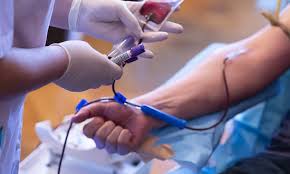
Activists condemn exclusion of transgender women and gay men from donating blood, calling it unscientific, discriminatory, and out of step with global standards Despite strides in transgender and gay rights, India has latched on to a rather archaic and discriminatory policy, stemming from a fearful mindset, when it comes to the rights of homosexuals and transgender individuals in donating blood. Activists, medical experts, and members of the LGBTQIA+ community, who echo these sentiments, have slammed the Centre’s recent decision refusing to alter a long-standing ban on blood donation by transgender women and gay men. They say the ban is discriminatory, unscientific, and ignores advances in blood screening technology that make transfusions over 99 per cent safe. The government’s order has come even though the Supreme Court, in May this year, while hearing a petition on the matter, asked whether an entire identity group needs to be stigmatised when medical science has advanced to screen blood for infection. The issue in short ♦ India upholds blood donation ban on trans women, gay men ♦ Supreme Court questions rationale behind identity-based exclusions ♦ Activists call policy outdated, discriminatory, and unscientific ♦ Global shift favours behaviour-based screening over blanket bans ♦ Experts say modern tests ensure over 99% blood safety ♦ Queer community urges inclusive reforms, cites systemic healthcare bias “Why should an entire community be deemed unsafe when modern medical science can effectively screen blood for infection? This discourages willing donors and denies life-saving blood. Such prejudice is appalling,” Ujan, a transwoman from West Bengal, told The Federal. What does the law say? Clauses 12 and 51 under the Guidelines on Blood Donor Selection and Referral tag transgender individuals, homosexual and bisexual men, and female sex workers as “high-risk” groups and bar them from donating blood irrespective of their lifestyle, health conditions, or sexual practices. The guidelines were drafted in 2017 by the National Blood Transfusion Council (NBTC) and the National AIDS Control Organisation as a precaution during a time of declining HIV/AIDS incidence. It, however, continues to exclude entire communities without scientific justification, say activists. Santa Khurai, a transgender activist from Manipur, founder of the community organisation AMANA, and a petitioner in a 2021 case challenging this policy, noted, “The Supreme Court of India questioned the government’s stigmatising response to our petition in May 2025.” It was Khurai’s petition that the Supreme Court had referred to while posing the question to the Centre in May this year. Status in other countries Activists say the continuation of the ban in India is unfortunate, even though many countries, including the US, the UK, Canada, Brazil, and Australia, have replaced such blanket bans with behaviour-based risk assessments. “The US Public Health Service initially implemented a lifetime ban on men who have sex with men (MSM) donating blood in 1983, in response to the emerging HIV/AIDS epidemic. However, in 2023, the US Food and Drug Administration revised these guidelines to adopt a gender-inclusive, behaviour-based screening process,” Naveenraj, a queer activist and trainer based in Tamil Nadu, told The Federal. He emphasised that this modern approach prioritises individual risk factors over blanket bans based on sexual orientation or gender identity. Many countries, including Brazil, the UK, Canada, Australia, France, Spain, Italy, Argentina, and Chile, have already scrapped such discriminatory policies. Brazil’s Supreme Federal Court, for instance, ruled the ban unconstitutional and highlighted the efficiency of modern blood screening technologies. “India’s Supreme Court should similarly lift the ban, in keeping with its commitment to equality, dignity, and inclusion,” Naveenraj added. ‘Flawed science guides policy’ Medical professionals are also calling out the “flawed science” underpinning the policy. Umang, an undergraduate medical student in Pune, remarked, “Heterosexual and homosexual individuals can both transmit HIV. It’s practically impossible to determine someone’s sexual orientation during blood donation. With current methods, HIV detection in India is over 99.5 per cent accurate, so targeting MSMs is not about safety—it’s about exclusion.” This sense of injustice resonates deeply within the queer community. “Whether or not it’s a fundamental right, denying a minority group the chance to donate blood is dehumanising. India must take progressive steps, like the EU, Canada, and Australia, where donor eligibility is assessed based on behaviour, not identity,” Srini, a volunteer with Good As You, a Bengaluru-based queer support group, told The Federal Echoing this sentiment, Jayant Iyer, founder of Queer Nilayam in Bengaluru, called the government’s continued enforcement of the ban “disappointing, outdated, discriminatory, and unscientific.” He shared personal frustration: “I’ve been denied the chance to donate blood multiple times despite being healthy and willing. Even during shortages, prejudice trumps science and compassion.” ‘Structural transphobia’ For many, the policy reflects broader systemic bias. “Can the Indian government ban cisgender heterosexual people based on their gender or sexuality?” asked Rudrani Rajkumari, a transgender activist and founder of Xomonnoy in Guwahati. “This is not about protection; it’s about discrimination. Rather than investing in quality testing, the system excludes LGBTQIA+ people from saving lives.” From a global perspective, the issue strikes a chord with transgender communities elsewhere. “The Indian government’s stance wrongly associates LGBTQI+ identities with risk,” said Mandy Jovial, a South Africa-based transgender activist. “This is more than a blood ban—it’s structural transphobia. Fortunately, in South Africa, policies aren’t based on sexual orientation or gender identity, even though stigma persists.” What India needs Even within India, trans individuals raise questions about the logic of such exclusion. Vaidehi, a trans woman from Mysuru, asked, “How would anyone know someone’s SOGIESC [sexual orientation, gender identity and expression, and sex characteristics] unless disclosed? Assuming trans or homosexual persons have HIV is discriminatory. Anyone can have HIV. Besides, trans persons on hormone replacement therapy should consult a doctor before donating, but that’s a medical concern— not a reason to ban an entire community.” Medical experts agree that the government’s approach is flawed and misleading. “One data point doesn’t scientifically justify a ban,” said Dr Swathi SB, a public health practitioner and HIV physician in Karnataka. “Equating identity with sexual behaviour is dangerously reductionist. We need
Karnataka MLA Yatnal booked for remarks against Dalit women
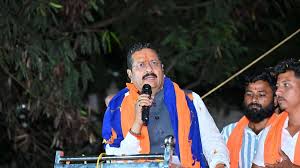
Dalit activist Mallikarjun Pujar filed a complaint, following which the police registered an FIR under sections relating to derogatory comments against women and promoting enmity. Karnataka MLA Basangouda Patil Yatnal has been booked by the local police over his statement that Dalit women must refrain from offering floral tributes to Goddess Chamundeshwari, stating that only women of the “Sanatan religion” are allowed to do that. Yatnal had made the remarks on Monday at Koppal; however, the video emerged on Wednesday, September 17, and has since been widely shared across social media platforms. “Those who offer floral tributes to Mother Chamundi should be from the Sanatan religion. Even ordinary Dalit women are not allowed to do so,” Yatnal is heard saying in the video. He also condemned Karnataka chief minister Siddaramaiah’s decision to allow Booker Prize winner Banu Mustaq to inaugurate Dasara festivities in Mysuru this year. He was booked under the provisions of the SC/ST Act for derogatory remarks against women and incitement of enmity, reported Makoob Media. Dalit activist Mallikarjun Pujar filed a complaint, following which the police registered an FIR under sections relating to derogatory comments against women and promoting enmity. Following a row over the comments, Yatnal, who was previously expelled from the BJP in March, has called the video doctored and politically motivated, meant to mislead people. Karnataka Information Technology Minister Priyank Kharge, a Dalit leader, denounced Yatnal’s derogatory statement. Accusing the BJP leaders of staying silent in a post on X, he stated, “What greatness do you seek in Hinduism when you paint a religious colour in the social system and look down on a particular class of people? Do you exclude Dalits when you say we are all Hindus, we are all one? Why are the BJP leaders, who were vocal when Shri Siddaramaiah said that there is inequality in Hinduism, silent?” Police are yet to make arrests as the investigation is underway. Edited by Syeda Faiza Kirmani Courtesy : The Siasat Daily Note: This news is originally published on https:/thesiasatdaily.com/bha and is used purely for non-profit/non-commercial purposes, especially human rights
SP, BSP gear up for 2027 UP polls, eye non-Yadav OBC and Dalit voters
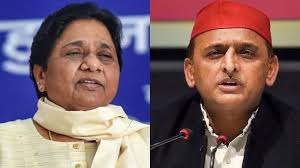
The outreach strategy of the SP, in particular, is to focus towards non-Yadav OBC communities, especially those that have distanced themselves from the BJP in 2024 or where the saffron party’s grip has loosened in recent years. ith more than a year and a half to go before the 2027 Uttar Pradesh Assembly elections, the Samajwadi Party (SP) and Bahujan Samaj Party (BSP) have begun early preparations to consolidate their voter base. Both parties are targeting non-Yadav OBCs and Dalit communities, aiming to replicate and build upon their performance in the 2024 Lok Sabha elections. The outreach strategy of the SP, in particular, is to focus towards non-Yadav OBC communities, especially those that have distanced themselves from the BJP in 2024 or where the saffron party’s grip has loosened in recent years. A senior SP leader and former MP confirmed that the party held a key meeting this week with OBC office-bearers from the Saini, Kushwaha, and Shakya communities. These representatives have been tasked with organizing PDA Chaupals (outreach meetings) to bolster support for the party. The meeting was attended by a legislator from the Saini community in western UP, a Kushwaha MP from eastern UP, and a Shakya MP from western UP. Following the success of these grassroots initiatives, SP chief Akhilesh Yadav is expected to address dedicated rallies for these communities in the coming months. According to insiders, communities such as Gujjars, Kushwahas, and Pasis have increasingly shown signs of drifting away from the BJP since the 2022 Assembly elections and the 2024 Lok Sabha polls. Notable examples include Pallavi Patel’s victory from Sirathu (Kaushambi) on an SP ticket, Babu Singh Kushwaha’s win as SP MP from Jaunpur, and Awadhesh Prasad’s election from Faizabad (Ayodhya). Beyond its traditional Yadav voter base, the SP’s electoral strategy now includes outreach programme to woo other OBC castes as well as Dalit castes like Jatavs and Pasis. Buoyed by its PDA (Pichhda, Dalit, Alpsankhyak) coalition, which helped the party win 38 Lok Sabha seats, SP leaders believe the time is ripe to expand their influence among marginalized communities, particularly amid BSP’s declining electoral fortunes. Meanwhile, in view of its recent electoral setbacks, the BSP has also started preparing for the battle ahead. The party is particularly concerned about SP’s outreach to Dalits and its growing proximity with Congress, a trend evident in the Lok Sabha polls and expected to continue in 2027. BSP supremo Mayawati is scheduled to address a major rally of block-level workers in Lucknow on October 9, commemorating the death anniversary of party founder Kanshi Ram. A BSP source told ‘ The Statesman’ that Mayawati has decided to reorganize workers with a sharp focus on consolidating Dalit votes. Interestingly, she may also consider re-inducting leaders who had left the party earlier, with attention on figures like Swami Prasad Maurya, once her close aide. To ensure the success of the October 9 rally, BSP has arranged at least one bus per four Assembly constituencies, while party workers are tasked with organizing transport to bring supporters to the venue. Courtesy : The Statesman Note: This news is originally published on https:/thestatesman.com/bha and is used purely for non-profit/non-commercial purposes, especially human rights
‘Meant to emphasise shared history’: Congress Sam Pitroda clarifies his ‘felt at home in Pak’ remark, says aim was ‘never to belittle anyone’s suffering’
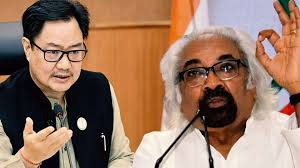
NEW DELHI: Indian Overseas Congress chief Sam Pitroda on Friday clarified his remarks about feeling “at home” in Pakistan, saying his comments were intended to highlight “shared history” and people-to-people bonds, not to play down terrorism or geopolitical tensions. In a post on X, Pitroda said, “If my words have caused confusion or hurt, I want to clarify that my aim was never to belittle anyone’s suffering or undermine legitimate concerns – but to foster honest conversation, empathy, and a more grounded and responsible approach to how India sees itself – and is seen – by others.” — sampitroda (@sampitroda) Additionally Pitroda said, “In light of recent discussions, I wish to clarify my remarks and put them in the full context of my IANS/AP7AM interview. My intention has always been to call attention to the realities we face: concerns about the electoral process, the importance of civil society and youth, and India’s role – both in its neighborhood and globally. Likewise, when I challenged the “Vishwaguru” narrative and said that it’s a myth that India is always on everyone’s mind, I was cautioning against overconfidence in image over substance. Foreign policy must be based on real influence, mutual trust, peace, and regional stability – not bravado or optics. “We need to defend democracy: ensuring free, fair elections; strengthening institutions; empowering youth; protecting minority rights; resisting polarization. These are not partisan issues – they go to the heart of what and who we are as a nation. If my words have caused confusion or hurt, I want to clarify that my aim was never to belittle anyone’s suffering or undermine legitimate concerns – but to foster honest conversation, empathy, and a more grounded and responsible approach to how India sees itself – and is seen – by others. Moving forward, I remain committed to transparency, respectful dialogue, and working towards a future where we strengthen institutions, civil society, safety, and security, so our actions truly live up to our ideals,” he added. Pitroda had sparked controversy earlier today with statements advocating a neighbourhood-first policy. He told IANS, “I’ve been to Pakistan, and I must tell you, I felt at home. I’ve been to Bangladesh, I’ve been to Nepal, and I feel at home. I don’t feel like I’m in a foreign country. They look like me, they talk like me, they like my songs, they eat my food. So, I must learn to live with them in peace and harmony. That’s my first priority.” BJP leaders reacted sharply, with national spokesperson Pradeep Bhandari calling Pitroda “Pakistan’s favourite” and questioning his proximity to a “terror nation,” especially after the Pahalgam terror attack. Bhandari said, “We all know that Pahalgam terror attack was carried out by Pakistan. Our armed forces gave terror nation Pakistan a befitting reply through Operation Sindoor. I want to ask you people that can any patriot ever say that terror nation Pakistan is like a home… But Rahul Gandhi’s close aide, a person who defines strategies of Rahul Gandhi and Congress, says that terror nation Pakistan is like home for him.” Pitroda, a longtime aide of the Gandhi family and chairman of the Overseas Indian Congress, has frequently been at the centre of controversies. Earlier this year, his comments on China forced the Congress to publicly distance itself. In June 2024, during the Lok Sabha campaign, he stepped down temporarily after remarks on inheritance tax and comparisons of Indians’ physical features with Africans, Arabs, and Chinese drew criticism. He was later reinstated after assuring no repeat of such controversies. Courtesy : TOI Note: This news is originally published on https:/timesofindia.com/bha and is used purely for non-profit/non-commercial purposes, especially human rights
‘Online voter deletion not possible’: EC refutes Rahul Gandhi’s claim; cites law and due process
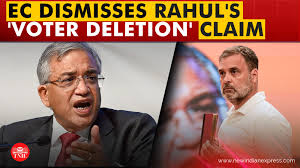
NEW DELHI: The Election Commission on Friday refuted Congress leader Rahul Gandhi’s charges, claiming that “no deletion of votes can be done online by any member of the public.” The poll body, in a point-wise statement, said that the no name is deleted from the roll without issuing a notice to the affected person. “No Deletion of any vote can be done online by any member of the public. No wrongful deletion of electors in Aland; an FIR was registered by the authority of ECI itself in 2023 against suspicious attempts of deletions,” it said.”Although the Elector of the constituency can fill Form 7 online to apply for deletion of an entry from that particular constituency, it does not mean that the entry gets automatically deleted merely by submitting the Form 7. As per Registration of Electors Rules, 1960, no name is deleted from the roll without issuing a notice to the affected person and giving him an opportunity of being heard,” it added. It further said that the poll body only accepted 24 applications of deletion and 5,994 incorrect applications were rejected ahead of the assembly election in Aland. It also said a inquiry was conducted & subsequently an FIR was registered by Electoral Registration Officer, Aland “In the case of Aland, Karnataka, 6,018 applications in Form 7 for deletion were submitted online. On verification, only 24 applications were found to be genuine, while 5,994 were found to be incorrect. Accordingly, 24 applications were accepted, and the 5,994 incorrect applications were rejected,” it said. “Suspecting the genuineness of such a large number of applications for deletion, an inquiry was conducted & subsequently an FIR (No. 26/2023, Aland Police Station, dated 21.02.2023) was registered,” it added. This comes a day after Congress leader Rahul Gandhi reiterated his “vote chori” allegations and took a swipe at the Election Commission, calling it an “election watchman” who “stayed awake, watched the theft, and protected the thieves”. Rahul Gandhi accused Chief Election Commissioner Gyanesh Kumar of shielding “vote chors” and systematically deleting Congress supporters’ names from voter rolls. He claimed a centralized software-driven method was being used to impersonate voters and erase names, mainly targeting Dalits, OBCs, Adivasis, minorities, and other opposition-leaning communities. Displaying Aland data, he asserted he had “100% proof” of vote manipulation. “In Aland, Karnataka, 6018 votes, somebody tried to delete these votes. We don’t know the total number of votes deleted in the 2023 elections, but somebody got caught. It was caught, by most crimes, by coincidence. What happened was that the Booth Level officer noticed that her uncle’s vote had been deleted. When she checked, she saw that her neighbour had deleted the vote,” Gandhi said during the press conference. Courtesy : TOI Note: This news is originally published on https:/timesofindia.com/bha and is used purely for non-profit/non-commercial purposes, especially human rights
Amid issues in Congress district unit, Rahul and Sonia Gandhi arrive in Wayanad
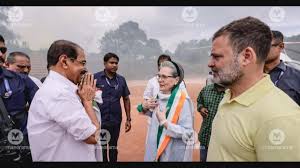
Kozhikode: Leader of opposition in Lok Sabha Rahul Gandhi and Congress parliamentary party chairperson Sonia Gandhi arrived in Wayanad for a two-day visit on Friday. While KPCC leadership described it as a private visit, AICC general secretary K C Venugopal, who accompanied the Gandhis from New Delhi, attended a district leadership meeting during the day in a bid to reportedly sort out the issues plaguing the party’s district unit. The DCC leadership meeting, convened on Venugopal’s direction, assumed significance as the Wayanad unit of Congress has been facing factionalism and controversy, particularly in connection with the deaths by suicide of former DCC treasurer N M Vijayan and his son in Dec 2024, followed by the suicide of Jose Nelledam, a grama panchayat member in Mullankolly on Sept 12 this year, and the suicide attempt by Vijayan’s daughter-in-law Padmaja Vijesh last week. The developments had even cast a shadow over Priyanka Gandhi’s week-long tour of the constituency, with CPM questioning why she did not visit Nelledam’s family. At the DCC leadership meeting, which was attended by block level leaders, Venugopal issued a stern warning to district leaders to end infighting and resolve issues immediately. He said the party would closely monitor developments in Wayanad and take strict action against those who fuel disputes. “The incidents in Wayanad were unfortunate. The party will ensure that such situations do not recur. Anyone responsible for creating problems will not be recognized, and the leadership will take the matter seriously,” Venugopal said. According to party sources, a change in the party’s district leadership would likely see N D Appachan replaced as DCC president. Meanwhile, KPCC president Sunny Joseph said that Irikkur MLA Sajeev Joseph and KPCC general secretary Jameela Alipatta have been assigned to hold discussions and resolve the issues in Mullankolly. Both have been directed to complete necessary discussions within two days and submit recommendations for a solution, after which appropriate organizational steps will be taken. He said the party would address the financial liabilities of Vijayan and the Sultan Bathery Urban Bank. Rahul and Sonia Gandhi landed at Calicut International Airport at 10am and reached Wayanad by helicopter. Wayanad MP Priyanka Gandhi, who has been in the constituency since Sept 11, received them at the Padinjarathara helipad. They later moved to a resort near Banasura Islands. Sonia and Priyanka Gandhi visited Regional Coffee Research Station, where they met coffee farmers and officials. They also visited MS Swaminathan Research Foundation’s (MSSRF) Community Agrobiodiversity Centre (CAbC) at Puthurvayal. They interacted with foundation chairperson Soumya Swaminathan over video conferencing. Meanwhile, Priyanka raked up the vote theft issue in a video message. “I urge all of you to join our vote chori (vote theft) signature campaign. Just as every vote counts, every signature counts. Every one of you standing up for democracy, standing up for the constitutional values counts,” she said. Courtesy : TOI Note: This news is originally published on https:/timesofindia.com/bha and is used purely for non-profit/non-commercial purposes, especially human rights
The false lure of sheep herding: Two tribal children from Rajasthan were trapped in a trap of advance money, with the plan to take them abroad and force them into forced labor!
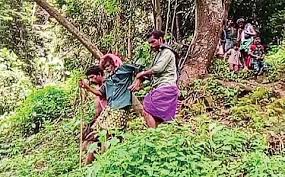
On the initiative of Gayatri Seva Sansthan, a total of five children were freed from bonded labor this month. Shepherds were forcing young children from tribal areas to work. Udaipur/Salumbar – The case of child labor involving tribal children under the false lure of sheep herding has once again come to light. In Salumber district, Rajasthan, two innocent children were rescued from the clutches of shepherds who were being forced to graze sheep in bondage for advance money. Acting on information from the local voluntary organization, Gayatri Seva Sansthan, the police took major action against child labor and human trafficking, filing a case against two accused. The rescued children have been placed in a safe place under the supervision of the Child Welfare Committee. In a major action against child labor and human trafficking in Salumber district, two tribal children were rescued from the clutches of shepherds through the ingenuity of the local voluntary organization, Gayatri Seva Sansthan. A case was registered against two individuals under the Jawar Mines police station on Thursday. It is noteworthy that a few years ago, upon receiving a similar complaint, the National Commission for Protection of Child Rights, Government of India, and the Rajasthan Child Commission, Government of Rajasthan, took it seriously and formed an investigation team to take action. Various organizations associated with Rebari, Raika, and shepherds were also appealed to identify those who employ child labor. Since then, such incidents have not been seen or heard of. In this direction, the then Chairman of the National Child Commission, Government of India, Priyank Kanoongo, and Rajasthan Child Commission member, Dr. Shailendra Pandya, also interacted with over 2,000 representatives of this community in the Bali Panchayat Samiti of Pali in the state. Payal Kenaria, Salumber District Coordinator of Gayatri Seva Sansthan, reported that Ravi Joshi, a conscious citizen of the society, had called the helpline. It was reported that three groups of shepherds were herding sheep on the Udaipur-Salumbar road, being attended to by two young children. The children were in critical condition, with their parents unaccompanied. Considering the seriousness of the information, the organization immediately informed Yashoda Paniya, Chairperson of the Child Welfare Committee, Udaipur, and the Jawar Mines Police Station. Investigation revealed that the children belonged to the Bhil community in the tribal region of Sirohi district, who were forced into bonded labor by paying them advance payments. Acting on the organization’s report, the police filed a case against Jaiparam Gadaria and Asaram Gadaria under serious sections of various laws. The accused are accused of luring children to work by promising them money and food, and then planning to take them out of the state for forced labor. The children rescued from the scene were handed over to the Child Welfare Committee, Udaipur, where they were sheltered. On this occasion, child rights expert and former member of the Rajasthan Child Commission, Dr. Shailendra Pandya, stated that the police have registered a case against the accused under sections 75, 79 of the Juvenile Justice Act, sections 16, 17, and 18 of the Bonded Labor Abolition Act, 1976, and various sections of the Indian Penal Code and have initiated an investigation. Previous cases of child labor by shepherds were reported in Banswara, Dungarpur, Udaipur, and Pali districts. Prominent members of society are strongly against child labor, but some individuals are still actively exploiting children’s childhood for greed. Strict action against them and better rehabilitation of the children is absolutely necessary. Amit Rao of the organization stated that the Gayatri Seva Sansthan is continuously working to eradicate social evils like child labor, child marriage, and human trafficking. A few days ago, the organization also freed three children from Pratapgarh district in a similar case. So far, a total of five children have been freed from bonded labor this month. Geetha Sunil Pillai Courtesy: Hindi News
Priyanka Gandhi ventured into the dense forests of Wayanad at the call of tribals, revealing shocking facts.
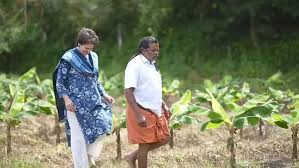
Priyanka met with the Cholanayakan community in the dense forests of Karulai, discussed their demands with officials, and also reviewed development projects such as roads and railways. Malappuram, Kerala: Congress MP Priyanka Gandhi Vadra continued her campaign to connect with people at the grassroots level in her parliamentary constituency, Wayanad. On Wednesday, she took a long walk through the dense forests of Karulai in Kerala’s Malappuram district and met with the Cholanayakan tribal community, which is on the verge of extinction. During the visit, she listened attentively to the community’s concerns and assured them of all possible support. Priyanka Gandhi has been touring her Wayanad Lok Sabha constituency since September 11. According to a party release, her forest visit came at the request of C. Vinod, a member of the tribal community. Vinod, who is pursuing a PhD in tribal economics, had informed Priyanka about the serious problems facing his community during the election campaign. During her visit to the forest, Vinod also briefed her on the conditions and challenges there. After meeting with the people in the tribal settlement, the Congress MP brought some of their representatives to the Forest Department’s inspection bungalow. There, she held a detailed meeting with Forest Department officials and community representatives regarding the community’s key demands, such as housing and a bridge. She also met with social activists working for the development of the tribal community. During her busy tour, Priyanka Gandhi visited the famous Nilambur Teak Depot after meeting the Cholanayakan community. She inspected the entire depot premises and eagerly inquired about the activities of the museum located there. Earlier in the day, Priyanka also reviewed the infrastructure development in the area. She visited the Nilambur Railway Station and reviewed the ongoing development work there. According to the release, she also held important discussions on the Vaniyambalam Railway Flyover, the renovation of Nilambur Station, and other railway-related needs in the area. Priyanka Gandhi shared a video on the social media platform ‘X’, detailing her visit to the construction site of the proposed Padinjarathara-Poozhithodu road in Kottiyambayal, Wayanad district. In her post, she wrote, “Visited the proposed Padinjarathara-Poozhithodu road site in Kottiyambayal along with the District Collector, District Forest Officer, and Executive Engineers of the Public Works Department (PWD). This new road will make a huge difference by providing an alternative route to the Thamarassery Ghat Road, improving connectivity in Wayanad district.” Rajan Chaudhary Courtesy: Hindi News
Dalit man dies in police custody: Allahabad High Court seeks response from Yogi government, demands ₹25 lakh compensation
Nawabganj Police Station death case: Petitioners demand ₹25 lakh compensation for the family and a High Court-monitored investigation. Prayagraj: Hearing a public interest litigation (PIL) seeking an investigation into the death of a Dalit man in police custody at Nawabganj police station in Prayagraj, the Allahabad High Court has directed the state government to file its reply (counter affidavit) within two weeks. The petitioners have also demanded compensation of ₹25 lakh for the deceased’s family members. The family has alleged that the man died due to custodial torture within the police station premises, while the police claim he died of a heart attack. Hearing a PIL filed by the Advocates Forum and two others, a division bench of Justice Siddhartha and Justice Santosh Rai, in its order on Wednesday, directed the PIL to be listed before the appropriate court for further hearing on October 10. According to the petitioner’s lawyer, Charlie Prakash, on May 27, the police picked up Hira Lal, a laborer, from his home in connection with a theft case in which no one was named. It is alleged that no member of Hira Lal’s family was allowed to meet him, and the police later informed him that he had died. Family members were asked to go to the mortuary at Swaroop Rani Nehru Hospital. The PIL alleges that Hira Lal’s body was not handed over to his family members, and the police cremated him at Daraganj Ghat in Prayagraj. The petitioner’s lawyer, Charlie Prakash, argued, “This is a case of brutal custodial death and murder by the police within the police station premises, in violation of Article 21 (right to life and personal liberty).” He demanded the formation of a high-level, independent, and impartial committee headed by a retired High Court judge to investigate the illegal detention, custodial torture, and custodial death of Hira Lal, a resident of Narrepar village, Budauna, under the jurisdiction of the Nawabganj police station. The PIL also states, “The investigation should be conducted under the supervision of the High Court and should submit its report within a stipulated time.” Rajan Chaudhary Courtesy: Hindi News
Dalit girl raped in Mau on the pretext of marriage: Threatened to kill, case filed against accused

A case of rape of a Dalit girl under the pretext of marriage has come to light in the Doharighat police station area of Mau. The girl has alleged that when she pressured him to marry her, the accused used casteist slurs and threatened to kill her. Police have registered a case in this matter and have begun searching for the accused. The victim, a resident of a village in the Doharighat police station area, stated in her complaint to the police that a young man from her village had been raping her for the past three to four years under the pretext of marriage. When she began pressuring him to marry her, he began to evade the allegations. According to the victim, when she went to the accused’s house, he used casteist slurs and threatened to kill her. Station in-charge Rajkumar Singh stated that based on the victim’s complaint, police have registered a case against the accused under relevant sections and further action is being taken. Mithilesh Kumar Rai Courtesy: Hindi News