
Vermont Christian school wins court battle over transgender athlete ban: Here’s why it matters for religious freedom

A federal appeals court has ruled in favour of a Vermont Christian school that was previously banned from participating in the state’s sports league after it forfeited a basketball game against a team with a transgender player. The ruling reinstates Mid Vermont Christian School into the Vermont Principals’ Association (VPA), the governing body for school sports in the state. In a decision issued by the US Court of Appeals for the Second Circuit on September 9, the court granted the school a preliminary injunction, allowing it to rejoin the VPA while the case continues. The court stated that the school was likely to succeed in its claim that its removal from the sports league was based on religious discrimination, as reported by the Associated Press. Forfeited game leads to expulsion from state league The incident began in 2023 when Mid Vermont Christian School, based in Quechee, forfeited a high school girls’ basketball playoff game. School officials stated that the presence of a transgender player on the opposing team compromised “the fairness of the game and the safety of our players,” as reported by the Associated Press. Following the forfeiture, the VPA expelled the school from all state-sponsored athletic and co-curricular activities, including academic competitions such as debate tournaments and science fairs. The VPA cited its policies regarding race, gender, and disability awareness, stating that the school had violated its principles. Legal case filed by Alliance Defending FreedomIn response to the expulsion, Alliance Defending Freedom (ADF), a conservative legal group, filed a lawsuit on behalf of Mid Vermont Christian School, some students, and parents. The case argued that the school’s First Amendment rights had been violated. According to ADF, the school had participated in the state’s sports league for nearly 30 years and only chose to forfeit the game to avoid breaching its religious beliefs, as reported by the Associated Press. David Cortman, an attorney with ADF, said in a statement that “the government cannot punish religious schools — and the families they serve — by permanently kicking them out of state-sponsored sports simply because the state disagrees with their religious beliefs,” as quoted by the Associated Press. Appeals court finds expulsion not religiously neutral In its ruling, the US Court of Appeals for the Second Circuit found that the VPA’s decision to expel the school was not neutral toward religion. The court wrote, “We conclude that plaintiffs are likely to succeed in showing that the VPA’s expulsion of Mid Vermont was not neutral because it displayed hostility toward the school’s religious beliefs,” as quoted by the Associated Press. The preliminary injunction means that Mid Vermont Christian School can resume participation in state-sanctioned sports and other activities while the case proceeds in court. The final outcome of the legal challenge is still pending. Emails seeking comment were sent to both Mid Vermont Christian School and the Vermont Principals’ Association, as reported by the Associated Press. Neither party has publicly responded to the court’s ruling. Courtesy : TOI Note: This news is originally published on https:/timesofindia.com/bha and is used purely for non-profit/non-commercial purposes, especially human rights
SP Chief Akhilesh Yadav calls for nationwide PDA unity to empower the marginalized
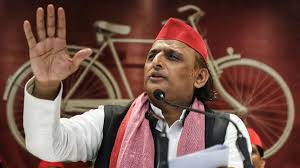
Samajwadi Party chief Akhilesh Yadav on Wednesday emphasized that unity among backward classes, Dalits, and minorities is crucial to gain political power and protect the Constitution. Samajwadi Party chief Akhilesh Yadav on Wednesday emphasized that unity among backward classes, Dalits, and minorities is crucial to gain political power and protect the Constitution. In a statement shared on his WhatsApp channel, Yadav, underlined that the Pichhda, Dalit, Alpsankhyak (PDA) movement is about empowering those who have historically faced exploitation and oppression. Yadav described PDA as a unity born out of a shared consciousness and collective feeling against the exploitation and oppression of marginalized communities. “PDA is basically the name of that unity born out of consciousness and common feeling against the exploitation, oppression, and neglect of ‘backward, Dalit, and minority’,” he said. The PDA movement aims to bring together people from every class who stand for humanity and are against injustice. The PDA movement, born in Uttar Pradesh, has now become a beacon of hope for the oppressed and marginalized communities nationwide. The movement’s slogan, “Jo Peeedit Woh PDA” (Those who are oppressed are PDA), resonates with people from all walks of life who have faced historical neglect and exploitation. The PDA movement seeks to promote inclusive governance, ensuring equal opportunities for all citizens to thrive.The movement champions the causes of social justice and equitable development, aiming to counter attempts to undermine reservation policies. Yadav also advocates for a caste census to ensure fair representation and allocation of resources based on demographic realities. The PDA movement is not just about politics; it’s about empowering the marginalized communities to stand up against injustice. As Yadav said, “Let’s unite to save the Constitution, protect reservations, and build a new, prosperous tomorrow for all.” The movement’s slogan, “PDA ka parcham poore desh mein lahraayenge, hum apni PDA sarkar banayenge” (We will hoist the PDA flag across the country and form a PDA government), reflects its determination to bring about change. Courtesy : The Statesman Note: This news is originally published on https:/thestatesman.com/bha and is used purely for non-profit/non-commercial purposes, especially human rights
Punjab SC Commission seeks report from SSP Jalandhar in Jaitewali case
Chandigarh (Punjab) [India], September 23 (ANI): The Punjab State Scheduled Castes Commission has sought a report from the SSP Jalandhar in the case involving abusive remarks against Sant Krishna Nath Chaheru and the Dalit community of Village Jaitewali, near Jalandhar, on Tuesday. Speaking on this matter, a spokesperson for the Punjab State Scheduled Castes Commission stated that the matter came to the attention of the Commission’s Chairman, S Jasvir Singh Garhi, through a newspaper report. Hence, taking suo motu notice of the matter, the Chairman directed the SSP Jalandhar to submit a report through the concerned Deputy Superintendent of Police by September 25. Meanwhile, the Punjab Government, under the leadership of Chief Minister Bhagwant Mann, took steps to uplift education for Scheduled Caste students, said Cabinet Minister Baljit Kaur during a press conference at Punjab Bhawan. During the press conference, she stated that the Department of Social Justice, Empowerment, and Minorities has implemented major initiatives to ensure that students from marginalised communities receive opportunities to excel in higher education and professional careers. While discussing the new Overseas Scholarship Scheme, Baljit Kaur stated that Scheduled Caste students and children of landless agricultural labourers can now pursue studies at the world’s top 500 universities with full financial support from the Punjab Government. This scheme covers visa, airfare, tuition fees, a maintenance allowance of Rs 13.17 lakh per annum, a contingency allowance of Rs 1.35 lakh, and medical insurance. She also announced the launch of a two-month PCS Crash Course for SC, BC, and minority students at the Ambedkar Institute in Mohali, designed to prepare them for the civil services. She also mentioned that applications are being accepted offline and via email between September 17 and 26, and forty candidates will be selected through an entrance test on September 30. (ANI) Courtesy : ANI News Note: This news is originally published on https:/aninews.com/bha and is used purely for non-profit/non-commercial purposes, especially human rights
HRF demands Collector-led probe into Kaikaluru Dalit attack case

The Human Rights Forum (HRF) has demanded a comprehensive probe, under the leadership of the District Collector, into the Kaikaluru Dalit attack case. A three-member team from the HRF visited Danagudem near Kaikaluru, where a Dalit, P. Ajay, was allegedly attacked with a knife by members of Kapu community. The team learnt that the incident took place on September 5 during the Ganesh idol immersion celebrations, when Ajay, who was on his way to a ration shop on a two-wheeler, honked to alert the revellers. Enraged at this, the revellers, belonging to another community, reportedly attacked Ajay. Casteist slurs were reportedly hurled at his mother and sisters, who tried to help him. They were also reportedly dragged by their hair and beaten up. Despite being present there, the police personnel could not do anything, the activists wrote in a statement issued on Tuesday. HRF condemned the silence of the State government on this subject, and demanded stern action against all the accused. They also demanded a Collector-led probe in the incident and action under the SC/ST (Prevention of Atrocities) Act against officials for threatening the complainant with a rowdy sheet. Ajay is undergoing treatment at the government hospital in Eluru. HRF activists A. Ravi, Md. Iqbal and Mutyala Srinivasa Rao were part of the fact-finding team. The Hindu Bureau Courtesy : The Hindu Note: This news is originally published on https:/thehindu.com/bha and is used purely for non-profit/non-commercial purposes, especially human rights
Govt builds houses for 10 Dalit families in Temkemaiung

Bhojpur. A Dalit family of Temkemaiyung Rural Municipality-9 has got a new house. As many as 10 Dalit families, who were living in tents due to financial constraints, have been provided houses under the Janata Awas Programme. Devi Charan Darnal, a local, said that it has become easier after the government reconstructed the house at a time when people have been living a difficult life due to lack of money for rebuilding their houses. He said that he was very happy to get a house after spending years with a tarpaulin in the tent. “We had been living under tents for generations as we could not construct our houses due to poverty”, he said, adding, “It was difficult to survive in the rainy and cold season.” It has become easier for us after the house was built. ’ Phulmaya Bishwakarma, a local, said that it has become easier to run their daily lives as the state has constructed their houses at a time when they have been living in open sky and sheds. “With the construction of the house, our daily lives have changed,” he said, adding, “Life was very difficult due to poverty.” It was not possible to build a house. Due to lack of a good source of income, they have to work as daily wages. Life has become easier after the government built houses. I’m very happy to be home. ’ Bishwakarma said that although most of the children used to fall ill every day due to cold due to lack of home, such problem has now come to an end. The government has identified the homeless Dalit families who are economically weak. According to ward chair Nabharaj Mangpahang, the houses were constructed with the budget received from Urban Development and Building Division Office, Dhankuta. Each family invested Rs 336,000 to construct the houses, said ward chair Mangpahang. “10 Dalit families have got new houses from the state level”, ward chair Mangpahang said. We had recommended the construction of houses for those who are financially weak. ’ He said that after the completion of the construction of these houses, the budget has not been received yet for the other three poor families after completing the necessary process. Courtesy : Lagani News Note: This news is originally published on https:/laganinews.com/bha and is used purely for non-profit/non-commercial purposes, especially human rightsC
Supreme Court slams CBI for not arresting absconding cops in Dalit death case
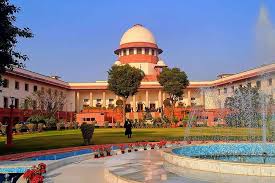
Justices warn of action if witness is harmed; say CBI cannot plead helplessness in arresting Madhya Pradesh officers accused in custodial torture The Supreme Court on Tuesday pulled up the CBI for failing to arrest two Madhya Pradesh police officers for their alleged role in the custodial death of a 26-year-old Dalit man in July 2024 at the state’s Myana police station. “This can’t go on like this. Despite a Supreme Court order, you are unable to act. Then what is the use? You are pleading helplessness. He is absconding, proclamation is there, we can’t trace. Please don’t plead helplessness,” a bench of Justices B.V. Nagarathna and R. Mahadevan told the counsel appearing for the CBI. “We will not spare you if anything untoward happens to the sole witness and there is a second custodial event,” the bench added. The court was referring to the apprehensions of the family of the deceased Deva Pardhi that even his uncle, Gangaram Pardhi, who was an eyewitness to the “custodial death”, had reason to be wary of Madhya Pradesh police officers. The Supreme Court on Tuesday pulled up the CBI for failing to arrest two Madhya Pradesh police officers for their alleged role in the custodial death of a 26-year-old Dalit man in July 2024 at the state’s Myana police station. “This can’t go on like this. Despite a Supreme Court order, you are unable to act. Then what is the use? You are pleading helplessness. He is absconding, proclamation is there, we can’t trace. Please don’t plead helplessness,” a bench of Justices B.V. Nagarathna and R. Mahadevan told the counsel appearing for the CBI. “We will not spare you if anything untoward happens to the sole witness and there is a second custodial event,” the bench added. The court was referring to the apprehensions of the family of the deceased Deva Pardhi that even his uncle, Gangaram Pardhi, who was an eyewitness to the “custodial death”, had reason to be wary of Madhya Pradesh police officers. The CBI counsel said three police personnel had been arrested, but two others were absconding. He said the proclamation order against the two policemen had been issued, but the agency was unable to track them. When the bench asked how come one of the absconding officers had filed an anticipatory bail plea in the state high court, the counsel clarified that it was the brother of the accused who had filed the plea. “You are saying he is absconding, so we cannot do anything. What are you doing?” the bench asked, to which the CBI lawyer said the agency had conducted several raids at various places and was also undertaking digital surveillance to track the absconding cops. The court was dealing with the appeal filed by the family of Pardhi challenging the high court’s refusal to order a CBI probe into the alleged custodial death. According to the family, on July 14, 2024, Pardhi was in the midst of preparations for his marriage when the police swooped on their house and arrested him and Gangaram in connection with theft cases. Pardhi died allegedly due to custodial torture. The counsel for the family on Tuesday told the bench that repeated pressure is being put on Gangaram. According to the counsel, he was brutally beaten up in prison by jail officials in connivance with other Madhya Pradesh police personnel, compelling him to retract his statement against the accused officers. “It is very unfortunate,” the bench observed, noting that even after the Supreme Court had on May 15 passed directions for the arrest of the police personnel, two of them continued to be at large. “We will frame charges against the chief secretary…,” the bench warned. According to the CBI, policemen Sanjiv Singh Malviya and Uttam Singh Kushwaha have been absconding since April and the agency has secured non-bailable warrants against them. They have been declared proclaimed offenders and an application has been filed for the attachment of their properties. “You know where they are. You are protecting,” the bench said, to which the counsel explained that the duo had been absconding before the matter came to the CBI. Courtesy : The Telegraph Note: This news is originally published on https:/thetelegraph.com/bha and is used purely for non-profit/non-commercial purposes, especially human rights
Caste census: After stiff opposition from CM’s own camp, commission says converted castes axed
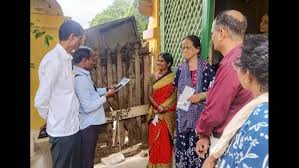
Bengaluru: On a day of much drama, Karnataka State Commission for Backward Classes Tuesday clarified that all Dalit Christian castes have been removed in the final list of castes to be enumerated as part of the socio-economic-educational-political survey, widely known as the caste census. Commission chairman Madhusudan Naik told TOI that the 14 castes were initially included in the draft list but were removed “earlier this month” following public objections. His clarification came late in the day amid intense political drama that unsettled governing Congress, as several Dalit functionaries — including loyalists of chief minister Siddaramaiah such as former ministers H Anjaneya from the Left sect of Scheduled Castes and KN Rajanna from the Valmiki community of Scheduled Tribes — objected to the inclusion of converted castes in the enumeration. While Anjaneya warned of protests, Rajanna criticised both the govt and the commission, saying inclusion of Dalit converted castes would amount to “state-sponsored religious conversion”. However, drama unfolded when a delegation of BJP members led by Chalavadi Narayanaswamy, leader of the opposition in the legislative council, met Naik in the morning demanding that the 14 castes be masked in the enumeration app — just as the commission had done with 34 OBC converted castes last week. This led to a face-off as Naik defended their inclusion, insisting converted castes are eligible for recognition. BJP members strongly objected to the chairman’s assertion and attempted to gherao him. Naik, though, left for a high court hearing on the census. His clarification, that the 14 castes had already been removed, came late in the evening. “The commission’s clarification appears an afterthought to manipulate the situation,” said Narayanaswamy. “The panel is acting as a puppet of the govt.” The census has initially sparked controversy for including 48 converted castes such as ‘Kuruba Christian’ and ‘Kubara Christian’. It included the 14 SC castes as ‘Madiga Christian’, ‘Holeya Christian’and ‘Valmiki Christian’, an ST caste. Last week, the commission said it had masked 34 OBC converted castes following strong opposition. But 14 converted Dalit castes remained. Dalit representatives vehemently protested their inclusion. “It is wrong to include them under the converted category,” said VS Ugrappa, senior Congress functionary and Valmiki leader. “Inclusion of other Dalit converted castes is also wrong since it is a violation of the Anti-conversion Act. Enlisting these castes as converted castes is not just misleading but also mischievous.” He said those from Valmiki community never opted for conversation as they are not untouchable or socially stigmatised or backward like some other Dalits. The developments provided ample ammunition for opposition BJP to attack the govt with. “By ordering a caste census in a tearing hurry, Siddaramaiah has made everybody, including his own party men and cabinet colleagues, unhappy,” said Lahar Singh Siroya, BJP Rajya Sabha member. “As of Tuesday, Vokkaligas, Lingayats, Dalits, OBCs, Brahmins, minorities, tribes, and nomads are all upset with the Congress govt. The CM should ask if his own Kuruba community is with him or if they too are upset.” Courtesy : TOI Note: This news is originally published on https:/timesofindia.com/bha and is used purely for non-profit/non-commercial purposes, especially human rights
Book Review- Caste: a global story by Suraj Milind Yengde
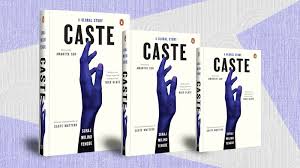
Suraj Milind Yengde in his new book, ‘Caste: a Global story‘ traces global footprint of the anti-caste struggle and how caste and caste-based discrimination become a global phenomenon. Recent cases of caste-based discrimination have been found in top companies like Cisco and higher education institutions in the United States of America. First time, worldwide public discussions are taking place on caste and caste-based discrimination issues. The Cisco and United States university campus incidents were recorded due to the awareness of the global reactions that occurred in the widely publicised case of the institutional murder of Rohith Vemula, a Dalit, in Hyderabad Central University. In this context, the international community endeavours to understand what caste is and caste-based discrimination, and what mechanisms should be developed to address caste-based discrimination in campuses, public institutions, and day-to-day life. The book, “Caste: A Global Story,” attempts to explore, analyse, and observe the Indian caste society from the perspectives of those subjected to it as well as outsiders. This will serve as a prelude to a detailed study of castes globally. The book sets the story on caste centred on India’s hierarchical society and the various forms it takes worldwide (p.21). The author divided his book in six important chapters to explore academic, concepts of caste, caste based discriminations, Dalit response to Black Literature, and caste and race; for the author, it is the prominent voices such as ‘Dalit-Black Live Matters’ along with initiation of the study of caste outside of India like in Trinidad, Cosmopolitan Dalit universalism, and chapter addresses biography of Dalit Agonism- field notes from the Diary of an archivist. There has been various attempt to study caste by many prominent scholars such as Caste: The Origins of Our Discontents By Isabel Wilkerson (2023) Ambedkar in London: William Gould, Santosh Dass, Christophe Jaffrelot (2024), The Evolution of Pragmatism in India by Scott R. Stroud (2023), Becoming Babasaheb: The Life and Times of Bhimrao Ramji Ambedkar (Vol.1): Birth to Mahad (1891-1929) by Aakash Singh-Rathore (2023), and The Trauma of caste by Thenmozhi Soundrarajan (2022). This latest work on the topic by Suraj Yengde explores the historical development of caste and caste-based discrimination beyond time and space. This recent chain of work, based on historical investigation, ethnographic research, and personal story narrations by diaspora, comparative studies of caste and race by social scientists explore and highlight the lived experience of the downtrodden communities and individuals. In this context, Ambedkar’s theoretical writing and his experience during his university days in the United Kingdom and the United State help to understand global inequality and the nexus of caste-race hierarchy. Suraj explores the connection between the anti-caste movement in India and a similar kind of discrimination outside of India. For instance, organisations working on anti-caste connected Dalit lived experiences and experiences of Blacks in the US in order to develop a campaign like Dalit Lives Matter, similar to Black Lives Matter. In the chapter Affairs of Letters: Dalit responses to Black Literature, the author mentions that it is not about literary analysis nor an exercise in comparative literature, but to find out the persistence and map out the history of the one-sided love affair of the Dalit community with Black American literature. And looking critically at the emergence of a literary response to caste and its institutions, and the growing divergence. While mapping it out, he found that the relationship between Dalit and Black literature solidarity has been largely a ‘one-sided’ (p.88) affair. This observation makes sense to a large extent as most of the Dalit literature published in regional languages like Marathi, Hindi, Tamil, and Kannada etc. Despite this limitation, Dalit literature always promotes universal solidarity and an egalitarian society for all oppressed communities by invoking the idea of justice, equality, and freedom. In one of his seminal works, ‘Castes in India: Their Mechanism, Genesis and Development’, Dr. Ambedkar’s observed that, “If Hindus migrate to other regions of earth, Indian caste would become a world problem”. Recently that observation become alive when cases of caste discrimination in UK and USA by the upper caste Indian diaspora were reported similarly, in the year 2021, a federal lawsuit in the USA was filed for caste discrimination in against a Hindu organisation named Bochasanwasi Shri Akshar Purushottam Swaminarayan Sanstha (BAPS). It was alleged the BAPS exploited more than 200 workers (11, Nov, 2021, Aljazeera). In fourth chapter, Suraj also traces caste and caste practice in Trinidad. He observed “Their (Indian origin community) Hindu and caste identity was and continues to be primarily shaped by a brahman-centric form of rituals” (p.141). He also mentioned that caste based occupational category exists among the Indo-Trinidadians. For example, the Pandits Council of Trinidad and Tobago, which is the accredited body of 500 pandits (brahmins), controls the religious aspect of the Hindu community. For a non-Brahman member to obtain membership and become a priest is almost impossible because of caste restrictions. (p.148). Suraj explores how caste practices continue and also their connection with the Indian Hindu fundamental RSS in maintaining such traditions with the upper caste organisation of Trinidad and Tobago. Chapter on ‘Cosmopolitan Dalit Universalism: Dalit Activism and the Promise of an Anti-Caste World’, is a quite interesting one. It presents a fresh look at how the caste system travels not only to the UK and the US, but also to other parts of the world, through the Dalit diaspora, including Malaysia, Kuwait, UAE, Bahrain, etc. It initiated the nurturing of Amebdkarite consciousness by various anti-caste Dalit organisations in particular countries where they get settled (p.207). The Dalit diaspora plays a significant role in galvanizing Ambedkarite consciousness at the international level, with the help of anti-caste thinkers and ideologies such as Buddha, Phule, Periyar, Guru Ravidas, and Kabir. Since most of the Dalit diaspora comprises labourers such as construction workers, supermarket staff, drivers, hotel staff, and cleaning staff, therefore they their life has not been easy. Despite their economic conditions and limited time, they try to develop and maintain Dalit consciousness by
Ponnam hits out at BJP over GST rate cut
Hyderabad: Transport and BC welfare minister Ponnam Prabhakar on Tuesday alleged that the BJP looted the poor and sucked their blood for the past eight years with the ‘Gabbar Singh Tax’ (GST), and was now trying to project the Goods and Services Tax (GST) rollback as if it was doing a great service. Speaking at a media conference in Gandhi Bhavan, Prabhakar said, “The BJP govt at the Centre is trying to mislead the people by stating that it has reduced GST rates to 5% or 18%. But the reality is that it had already doubled the prices of essential commodities. The price of salt increased from 10 per kg to 20 per kg, edible oil from 70 per litre to 160 per litre, and dal from 60 to 160 per kg, to name a few. It taxed a poor man’s meal more than the luxury food served in star hotels. The GST had only burdened the poor and small traders, while the rich benefited. Basic necessities such as funeral expenses had been taxed under GST too.” Referring to Union finance minister Nirmala Sitharaman’s recent statement that the Centre earned 22 lakh crore in six months through GST, Prabhakar said this was proof enough how the Central govt squeezed the common man. He further said, “Telangana will suffer a loss of 7,000 crore every year because of the GST rate rationalisation. When GST was introduced, the BJP govt had promised to bear the losses of states for 10 years, but the promise has not been fulfilled. The Centre is pushing Telangana into financial distress. Union ministers G Kishan Reddy and Bandi Sanjay should give clarity to the people of Telangana on how the state’s losses would be addressed. They must take up the issue with the Prime Minister and Union finance minister in New Delhi, and cannot remain silent or defend the GST rate rationalisation.” AICC leader Rahul Gandhi has been saying from day one that this is not GST but ‘Gabbar Singh Tax’. The Centre’s approach is like giving with one hand and taking with the other. The GST council must function democratically, and not as a tool of the Central government, he added. Courtesy : TOI Note: This news is originally published on https:/timesofindia.com/bha and is used purely for non-profit/non-commercial purposes, especially human rights
BJP seizes on Manish Tewari’s remarks on falling regimes, calls it indirect attack on Rahul
NEW DELHI: Congress MP Manish Tewari’s remark terming the recent regime changes in Sri Lanka, Bangladesh and Nepal and unrest in Philippines a rejection of the politics of entitlement sparked a controversy, with BJP framing it as sign of Congress’s unease over LoP Rahul Gandhi’s politics. BJP’s Amit Malviya latched on to Tewari’s use of words like ‘#nepokids’ in his post on X to say, “Senior Congress neta Manish Tewari, member of G-23 rebel group, takes aim at Rahul Gandhi – the ultimate ‘nepo kid’ of Indian politics (sic).” In his post, Tewari wrote, “The toppling of President Gotabaya Rajapaksa in Sri Lanka in July 2023, Sheikh Hasina in Bangladesh in July 2024, K P Sharma Oli in Nepal in Sept 2025 and now protests against Ferdinand Marcos Jr in Philippines have one word written over them – ENTITLEMENT IS NO LONGER ACCEPTABLE TO GEN X, Y, Z.” He also said, “Watch for my piece on ‘The Social Media Trends that toppled or are challenging ‘DYNASTS’. Study #nepokids or #TrillionPesoMarch in the meantime.” BJP turned Tiwary’s remarks into anti-Congress fodder. “Forget Gen Z, even Congress’s own veterans are fed up with his regressive politics. The revolt is now from within,” Malviya said on X. Party spokesperson Sambit Patra said India rejected “nepokid” in 2014, leading Tewari to say that he was being misinterpreted. “Gosh. I just wish that some people would grow up in life. Everything doesn’t have to be dum-bed down to Cong-BJP, he said-she said or targeting X or Y. What’s happening in South Asia and East Asia has serious nat’l security implications.” Courtesy : TOI Note: This news is originally published on https:/timesofindia.com/bha and is used purely for non-profit/non-commercial purposes, especially human rights