
‘You Have No Right to Drink With Me’: Dalit Man Stabbed and Beaten With Stone by Friend in MP’s Gwalior

A disturbing case of caste-based violence has been reported from Gwalior, Madhya Pradesh, where a drunken argument between two friends turned into a assault. According to the police, Balveer Valmiki and Vijay Sharma, both residents of Mahavir Colony, were friends. On Sunday afternoon, Vijay allegedly invited Balveer to drink near Badanpura on Tighra Road. The two consumed alcohol together, but as evening fell, an argument erupted between them. Vijay reportedly began hurling casteist slurs, saying, “You belong to a lower caste; you have no right to drink with me.” When Balveer protested, Vijay’s anger escalated he allegedly pulled out a knife and stabbed Balveer in the neck. When the victim collapsed, bleeding heavily, Vijay picked up a large stone and struck him on the head before fleeing the spot. Balveer remained unconscious throughout the night until passersby discovered him the next morning and alerted the police. He was rushed to a nearby hospital, where doctors said his condition is now stable but that he sustained deep wounds to his neck and skull. Based on Balveer’s statement, police registered a case and launched a search operation. Acting on the directions of Station Officer Ratnambar Shukla, a team arrested the accused Vijay Sharma near his home. This is not an isolated incident. In October, a Dalit driver from Gwalior had alleged that three men kidnapped, assaulted, and forced him to drink urine in Bhind district. Just days earlier, another Dalit youth was reportedly urinated on in Katni for protesting against illegal mining. According to the National Crime Records Bureau (NCRB) 2023 data, crimes against Scheduled Castes continue to rise nationwide, with 57,789 cases registered last year, marking an increase from 2022. Madhya Pradesh recorded 8,232 such cases, placing it among the top three states for caste-related crimes, after Uttar Pradesh and Rajasthan. Courtesy : TOP Note: This news is originally published on https:/theobserverpost.com/bha and is used purely for non-profit/non-commercial purposes, especially human rights
UPSC Gender Gap: Women See Gradual Progress, Transgender Inclusion Remains Almost Nonexistent

Despite forming nearly half of India’s population, women and transgender individuals continue to be vastly underrepresented in the country’s most prestigious recruitment process — the UPSC Civil Services Examination. Data from the Union Public Service Commission’s (UPSC) Annual Reports between 2010 and 2021 paints a telling picture: while women’s participation has slowly increased, transgender representation remains almost invisible. Women’s Representation: A Slow but Steady Climb According to the UPSC’s 2021 Annual Report, women constituted 32.98% of candidates appearing for the Preliminary Examination. However, only 14.75% progressed to the Mains, 26.87% reached the Interview stage, and ultimately, a mere 15.66% — or 201 women — made it to the final list of selected candidates. Although modest, the upward trend is clear: women’s participation rose from 23% in 2010 to nearly 33% in 2021, signaling a slow but steady shift toward gender inclusion in India’s civil services. Transgender Participation: Progress Still Out of Sight In contrast, the transgender community remains almost absent from the UPSC landscape. Following a 2016 court directive, the Commission added a “third gender” option in its application forms — a milestone for inclusivity. However, the impact has been minimal. In 2021, only 19 transgender candidates applied, with just four appearing for the exam — none qualified. Similarly, 2020 saw 16 applicants and five appearances, while 2018 and 2019 recorded just one application each. Experts attribute this near-zero participation to systemic barriers — widespread stigma, identity-based exclusion, and a lack of institutional support prevent many transgender students from even reaching higher education, let alone competing in national-level exams. Professor Rajeev from Delhi University explained that while initiatives like his department’s Transgender Resource Center offer training and counseling, broader social awareness and inclusive educational policies are urgently required to bridge the gap. Societal Pressures Continue to Constrain Women Aspirants For countless women, preparing for the UPSC remains a struggle against entrenched cultural expectations. Anshika Moyal from Rajasthan recalled how her decision to move to Delhi for exam preparation invited constant reminders from relatives to get married. “There’s still a belief that girls should be married by their late twenties. That constant pressure makes it hard to stay focused,” she said. Similarly, Aayushi from Uttarakhand, a government employee, shared that she faced ridicule from family elders for continuing her studies instead of marrying. “My grandmother used to say I was wasting time, but my mother stood by me and encouraged me to keep going,” she added. IAS officer Ira Singhal noted that many families see the UPSC as a “risky pursuit” for women, preferring the perceived stability of marriage over the uncertainty of years-long preparation. Economic and Structural Challenges Deepen the Divide Beyond social barriers, financial constraints often determine who can afford to chase their civil services dream. UPSC preparation typically demands hefty expenses — coaching fees, accommodation, and study materials add up quickly. Aayushi shared that while her parents funded her education, they couldn’t afford to send her to Delhi for coaching, forcing her to rely on self-study. Such financial disparities highlight how families often invest more readily in sons’ education, while daughters’ ambitions are seen as secondary. The Balancing Act: Marriage, Family, and Ambition For married women and mothers, the challenge intensifies. Anshika noted that several of her married friends preparing for UPSC can barely dedicate three to four hours a day to study after managing household and childcare responsibilities. These stories underline the dual burden of domestic expectations and academic competition that women face, often making their journey longer and harder. The Road Ahead: Building a Gender-Just Bureaucracy The trends suggest that while women are gradually carving a space in India’s administrative services, transgender representation is still at a nascent — almost invisible — stage. Experts argue that meaningful reform will require inclusive educational policies, gender-sensitive coaching programs, targeted scholarships, and affirmative institutional support. As India strives toward a modern, equitable civil service, the challenge is clear: to build a system where merit prevails over gender, ensuring that every talented individual — regardless of identity — can aspire to serve the nation through its most respected bureaucratic institutions. Parijat Tripathi Courtesy : North Block South Block Note: This news is originally published on https:/northblocksouthblock.com/bha and is used purely for non-profit/non-commercial purposes, especially human rights
Unpacking transgender rights
Scholarship on queer and non-binary identities emerged relatively later, with Judith Butler’s work on gender performativity standing out as especially influential. “Can you provide a definition for the word ‘woman’?” When Republican Senator Marsha Blackburn asked the then–DC Circuit Court Judge Ketanji Brown Jackson this question at her confirmation hearing for a seat on the United States Supreme Court in 2022, Jackson replied (with some hesitation), “I am not a biologist.” This should come as no surprise, for this very question has long preoccupied scholars, lawyers, writers, philosophers, activists, and lawmakers alike. Early thinkers like Aristotle and Plato viewed women as inherently inferior to men, relying on naturalist assumptions about their supposed incapacity for reason or leadership. Simone de Beauvoir challenged these assumptions in her magnum opus, The Second Sex, arguing that distinctions between the sexes were socially—rather than naturally—constructed. Yet like many early feminist theorists, she conceptualised gender within a limited binary framework. Gender not fixed or innate Scholarship on queer and non-binary identities emerged relatively later, with Judith Butler’s work on gender performativity standing out as especially influential. In the book, ‘Gender Trouble’, Butler demonstrated that gender was neither innate nor fixed, but rather something enacted—a series of repeated performances shaped by social norms and expectations. And yet, naturalist conceptions about gender persist in contemporary political thought. In April 2025, the UK Supreme Court issued a landmark ruling that held that the term “woman” in the Equality Act 2010 did not include transgender women. This ruling followed Donald Trump’s second presidential victory, during which attacks on the transgender community became both frequent and central to the Republican Party’s platform. In January 2025, just hours into his first day back in office, President Trump signed an executive order declaring it official US policy to recognise “only two sexes, male and female,” further asserting that these sexes were fixed, immutable, and “grounded in fundamental and incontrovertible reality.” What do these developments tell us? They show that in many parts of the West, transgender people continue to be excluded—either by omission or active resistance—from legal and policy frameworks meant to otherwise include them. Even in Canada and the EU, backlash is growing: public opinion on transgender rights is divided in Canada too, while far-right movements in the EU continue to frame gender diversity as a threat to national identity. What we’re witnessing, therefore, is not hesitation, but a deliberate global rollback of hard-won LGBTQ+ rights. India’s principled stance In this broader context of shrinking protections and rising hostility, India’s jurisprudence on transgender rights stands out as surprisingly principled. In 2014, the Supreme Court of India formally recognised the “third gender” as a distinct legal category and unequivocally affirmed transgender individuals’ right to selfidentify their gender, along with their entitlement to full constitutional rights. More recently, in Viswanathan Krishna Murthy v State of Andhra Pradesh, the Andhra Pradesh High Court held that transgender women in heterosexual marriages could be legally recognised as “women” for the purposes of invoking protections under laws that traditionally apply only to cisgender women; a position that stands in stark contrast to the view taken by the UK Supreme Court months earlier. Interestingly, the Andhra Pradesh High Court arrived at this conclusion by relying on the Supreme Court of India’s 2023 marriage equality ruling, which denied same-sex couples the right to marry yet affirmed transgender individuals’ right to enter heterosexual marriages. Holding that denying a transgender woman legal status as a “woman” under Section 498-A of the IPC based on her reproductive capacity is discriminatory, the Court said: “Such a contention, therefore, deserves to be rejected at the outset.” To be clear, transgender people in India continue to face challenges with the law. For instance, the Transgender Persons (Protection of Rights) Act, 2019, India’s primary legislation governing transgender rights at the national level, still subjects transgender individuals to a burdensome bureaucratic certification process in direct violation of the Supreme Court of India’s 2014 ruling, which affirmed transgender people’s right to self-identify their own gender. Petitions challenging these and other provisions have yet to be heard by the Supreme Court. Despite that, in a global political climate where transgender rights are being rolled back at a disheartening pace, it is encouraging to see judgments like Viswanathan Krishna Murthy affirm transgender people’s dignity and right to equality. As the law tightens its noose around transgender lives, one can only hope that lawmakers and judges listen with greater intent and empathy to the plurality of gendered experiences. As Simone de Beauvoir once wrote, “I am a woman; on this truth must be based all further discussion” — may we take this as an opening to defend our freedom to define ourselves beyond imposed categories. (The author is a communications manager at Nyaaya, the Vidhi Centre for Legal Policy and can be reached at sahgalkanav@gmail.com) Kanav Narayan Sahgal. Courtesy : DH Note: This news is originally published on https:/deccanherald.com/bha and is used purely for non-profit/non-commercial purposes, especially human rights
‘Why would Gen-Z listen to him?’: Prashant Kishor questions Rahul’s influence; plays down his impact

NEW DELHI: Jan Suraaj chief Prashant Kishor on Sunday dismissed the “notion” that Congress leader Rahul Gandhi holds any meaningful sway over Gen Z voters in Bihar. He further criticised Gandhi’s limited engagement and understanding of the state. In an exclusive interview with news agency ANI, Kishor said, “How much knowledge does Rahul Gandhi have here? Rahul Gandhi comes here, roams around, does a couple of show bites and then he is gone.” He questioned the idea that Bihar’s youth would rally behind Gandhi’s calls on issues like “vote theft” or protecting democracy. “When the people of Bihar are not listening to him (Rahul Gandhi), then why would Gen Z listen to him? Gen Z is not a homogeneous group in Bihar who acts on someone’s call or on the basis of their assessment,” he said. — ANI (@ANI) Referring to recent protests in Nepal that led to the fall of the former PM KP Sharma Oli’s government, Kishor said some people were “getting excited” after the Gen Z movement there but stressed that Bihar’s political landscape is different. “Bihar is a very political place. It is not like Bangalore. People won’t have clothes, food, jobs, but there is a lot of political optimism among the people here. And the result of this is that people are leaving their work and doing politics day and night. But I don’t think there is going to be a revolution by someone’s call here,” he said. Kishor underlined that youth play an important role in Bihar’s politics, primarily because of unemployment and migration. “The youth between 20 and 30 years, who are facing a bit of unemployment. Not a bit, I mean he is facing a lot of difficulties due to unemployment. They are forced to go out, enduring the tough life there. That is definitely a big factor in Bihar. You can call him Gen Z, you can call him a youth, you can call him a millennial. This is the terminology,” he said. Commenting on the Congress party’s role in the upcoming elections, Jan Suraaj founder said it remains marginal. “I had also said at that time that Congress is a follower of RJD in Bihar. They are a big party of the country. They are the leaders of the opposition in the country. They belong to the Gandhi family. So it is natural that the media will cover them,” he said. “But from the point of view of Bihar, there is no presence of Congress. Congress is not a factor. There is no discussion of Congress. What is Congress doing? Congress has little effect. Politically, you can see it in Seemanchal. In Seemanchal, I think that even today, the Muslims are more tilted towards Congress than RJD,” he added. Hours before the first phase of polling, Gandhi had appealed to young voters, particularly Gen Z to come forward and “save democracy through truth and non-violence.” In a video message posted on X, Congress leader addressed “Gen Z brothers and sisters” from Bihar, urging them to turn out in large numbers and vote responsibly. “My young friends from Bihar, my Gen-Z brothers and sisters — tomorrow is not just a day for voting, but a day to decide the direction of Bihar’s future,” he said. — RahulGandhi (@RahulGandhi) Referring to his repeated “vote theft” allegations, Gandhi added, “You’ve seen how in Haryana, a nefarious game of vote theft was played. In Maharashtra, Madhya Pradesh, Chhattisgarh — everywhere, these people have tried to suppress the people’s voice. Now their eyes are on Bihar, on your votes, on your future.” He urged voters to “stay vigilant against every conspiracy” and to “walk the path of truth and non-violence” while supporting Mahagathbandhan candidates in their constituencies. The first phase of the Bihar assembly elections concluded peacefully on Thursday with a record voter turnout, while the remaining 122 constituencies will vote in the second phase on November 11. Counting will take place on November 14. Courtesy : TOI Note: This news is originally published on https:/timesofindia.com/bha and is used purely for non-profit/non-commercial purposes, especially human rights
Modi, Shah will be caught for being ‘involved’ in ‘vote chori’: Rahul

Patna: Leader of opposition in Lok Sabha, Rahul Gandhi, on Sunday alleged that the people in the country were being taken for a ride since the govt was not being formed in a fair manner, but through ‘vote chori’. He said PM Narendra Modi and Union home minister Amit Shah would eventually be caught for being “involved” in the “vote chori”. He said if voters managed to prevent vote theft at the polling booths, the opposition alliance would form the next govt in Bihar. Addressing election rallies in Kishanganj and Purnia on the last day of the poll campaign for the second and last phase of polling, Rahul alleged Modi and Shah never won elections in a fair manner, rather by “fraudulent means”, adding they would eventually be caught. “Modi and Shah chunao nahin jitate hain, vote chori karke chunao jitate hain (Modi and Shah don’t win elections, they emerge victorious by stealing votes),” Rahul said, accusing the chief election commissioner (CEC) of being a part of the conspiracy. “I have proof of vote theft and they will be caught in the end,” he said. He alleged the BJP won elections by fraudulent means in several states such as Maharashtra and Haryana, and it is now planning to “steal votes” in Bihar too. Asking the voters to remain alert at the polling booths, he said the formation of the INDIA bloc govt in Bihar is certain if they prevent vote theft. “I can say with certainty that the ‘Mahagathbandhan’ (INDIA bloc) is going to form the next govt. There is a cent per cent chance. But, you must prevent the BJP from vote theft. Be on the guard at the polling stations on the day when votes will be cast (Nov 11),” Rahul said, adding it is now the duty of every youngster, worker, and farmer to thwart vote theft. He said barely a few days back, he exposed “vote chori” in Haryana but both the BJP leaders and the EC have not replied so far. “Haryana has 2 crore voters, but 25 lakh fake electorate cast their votes in the elections… several BJP leaders from UP also voted in Haryana,” Rahul alleged, describing “vote chori” as the biggest theft in the country. He said the BJP fears people’s voices and hence they are either involved in vote theft or trying to cause bitterness in the society or talking about free data so that the youths remain engrossed on social media. “Social media is the biggest addiction in the 21st century and the NDA people want the young generation to be engaged in it,” he alleged, adding youths need employment. Rahul said the BJP and RSS have been pursuing a “divisive agenda”, with the objective of “deflecting attention from vote theft”, adding “Modi and Shah are scared of the people’s voice. They have betrayed the soul of India. They are bound to be caught.” Courtesy : TOI Note: This news is originally published on https:/timesofindia.com/bha and is used purely for non-profit/non-commercial purposes, especially human rights
SIR an attempt to institutionalise ‘vote chori’: Rahul

Bhopal: Loading his ‘vote chori’ (vote theft) jibe as fresh ammunition to gun for the BJP-led NDA, Congress MP Rahul Gandhi said the ruling party at the Centre was working in collusion with the Election Commission (EC) to destroy the country’s democratic framework while also inflicting wounds on the soul of the ‘Constitution.’ Amid the ongoing Special Intensive Revision (SIR) the Congress leader alleged that the enumeration exercise was a cover for ‘institutionalising vote chori’. “This is an attack on our democracy and the Constitution as conceived by Dr Ambedkar. PM Modi, Amit Shah and CEC Gyanesh Kumar are working in collusion to damage Bharat Mata,” Rahul alleged. In his parting address at Pachmarhi where he had arrived on Saturday to attend a training camp organised for District Congress Committee (DCC) presidents there, the Leader of Opposition (LoP) in the Lok Sabha said, “The main issue facing the country today is vote chori. As you must have seen during my presentation on Haryana (assembly polls), there were 25 lakh fake voters, which means that one in every eight voters was fake. After going through the data on Haryana (polls), I am sure ‘vote chori’ happened in MP, Maharashtra and Chhattisgarh as well.” Asked if he had evidence of vote theft in MP as well, Rahul responded, “Yes, we have a lot of information from different places. We shall present all information and evidence before the country in due course of time. This is just the beginning.” he said. Courtesy : TOI Note: This news is originally published on https:/timesofindia.com/bha and is used purely for non-profit/non-commercial purposes, especially human rights
Issue fresh documents to trans persons after transition surgery, High Court tells UP education department
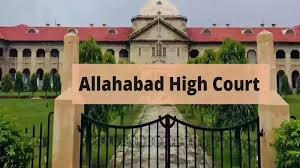
PRAYAGRAJ: In a landmark order upholding the rights of transgender persons, Allahabad HC has directed UP education department to issue fresh marksheets and certificates with the required changes to a petitioner who underwent gender transition surgery. Justice Saurabh Shyam Shamshery allowed the petition filed by Sharad Roshan Singh and set aside the order dated April 8, passed by the regional secretary of Madhyamik Shiksha Parishad, Bareilly, which had rejected his plea for a name change. The rejection was on the ground that the relevant provisions and govt orders did not provide a procedure for name correction in educational documents at a belated stage. Authorities had also stated that provisions of Transgender Persons (Protection of Rights) Act, 2019, read with the Rules, 2020, were not applicable to him. However, the district magistrate concerned had, under Section 6 of the 2019 Act, already issued a certificate of identity, officially recognising Sharad’s gender transition after surgery. Subsequently, he requested modification of his educational certificates to reflect his new name and gender. However, the regional secretary rejected his application on April 8, 2025. In its judgment delivered on Thursday, the court observed, “Transgender Persons (Protection of Rights) Act, 2019 is a special Act. Section 20 of the Act provides that its provisions shall be in addition to, and not in derogation of, any other law for the time being in force. Therefore, the concerned respondents (education authorities of the state) committed a legal error by not applying the provisions of the Act of 2019 in favour of the petitioner.” Appearing for the petitioner, senior advocates HR Mishra and Chitrangada Narayan cited verdicts of SC and HCs to assert petitioner’s right to have his name changed after gender reassignment. Courtesy : TOI Note: This news is originally published on https:/timesofindia.com/bha and is used purely for non-profit/non-commercial purposes, especially human rights
HC to edu dept: Issue fresh documentsto transgender after transition surgery
Prayagraj: In a landmark order to uphold the rights of transgenders to change their genders and also get their names changed accordingly, the Allahabad high court has directed the Uttar Pradesh education department authorities to make the required change in documents of a petitioner. The court ordered the education dept officials to issue fresh marks sheet certificates after the petitioner underwent a gender transition surgery, from female to male. Allowing a writ petition filed by one Sharad Roshan Singh, Justice Saurabh Shyam Shamshery set aside an order dated April 8, 2025 passed by regional secretary, Madhyamik Shiksha Parishad, Bareilly, by which the application of the petitioner for the change of name after the gender change was rejected on the ground that that relevant provisions and government order did not provide any procedure for correction of name in educational documents at a very belated stage. The order also said that provisions of the Transgender Persons (Protection of Rights) Act, 2019 read with Rules, 2020 were not applicable on him. The petitioner was recognized as transgender person under the aforesaid Act of 2019. The district magistrate concerned in terms of section 6 of the Act of 2019 had issued a certificate of identity. Sharad had also obtained official recognition of his gender change from the DM after undergoing the transition surgery. Subsequently, he requested the modification of his educational certificates to reflect his new name and gender. However, regional secretary, Madhyamik Siksha Parishad, rejected his application on the aforesaid grounds on April 8, 2025. Appearing on behalf of the petitioner, senior advocate HR Mishra and Chitrangada Narayan relied on various judgments of apex court and high courts of the other state to assert the right of the petitioner to get his name changed after gender change. The court held that the Board and government authorities had violated Section 20 of Transgender Persons (Protection of Rights) Act, 2019 Act. This section provides a special legal framework granting priority over other laws. Under Rule 5(3) and Annexure-1 of the Act, transgender persons can modify all official documents. This includes educational certificates, which can be updated to reflect their correct name, gender, and photograph. In his judgment on Nov 6, the court said, “The Transgender Persons (Protection of Rights) Act, 2019 is a special Act. Section 20 of the Act, 2019 provides that provisions of this Act shall be in addition to, and not in derogation of, any other law for the time being in force. Therefore, the concerned respondents (education authorities of the state) have committed a legal error by not applying the provisions of the Act of 2029 in favour of the petitioner.” Courtesy : TOI Note: This news is originally published on https:/timesofindia.com/bha and is used purely for non-profit/non-commercial purposes, especially human rights
BJP bets big on Dalits, Mahadalits as Bihar gears up for Phase 2 polls

For the second phase, the BJP has put its focus on consolidating Dalit and Mahadalit votes, which account for 18% of Bihar’s electorate. This bloc wields considerable influence on more than 100 assembly seats As Bihar gears up for the second phase of assembly elections, the BJP has put its focus on consolidating Dalit and Mahadalit votes, which together account for around 18% of the state’s electorate. This bloc wields considerable influence on more than 100 assembly seats, and its voting pattern holds the key as to which side will form the next government. Leading up to November 11, the BJP has centred its campaign on constituencies bordering Uttar Pradesh — particularly in the districts of West Champaran, Gopalganj, Siwan, Saran, Bhojpur, Buxar, and Kaimur. These districts are adjacent to UP’s Deoria, Kushinagar, Maharajganj, Ghazipur, Chandauli, Ballia, and Sonbhadra. UNITING MAHADALIT AND PASWAN VOTERS The BJP estimates that Mahadalits constitute about 13% and Paswan voters around 5% of Bihar’s electorate. In the 2020 assembly election, the votes got split after Chirag Paswan’s Lok Janshakti Party (LJP) contested separately. This time, Chirag Paswan is in the NDA fold, and the BJP is determined to prevent that split. The BJP estimates that former chief minister Jitan Ram Manjhi’s HAM will help secure nearly 2.5% of the Musahar votes, while Chirag Paswan will ensure that about 5% of Paswan votes end in the NDA’s kitty. EYE ON MAYAWATI FACTOR The BJP is also closely monitoring Mayawati’s Bahujan Samaj Party (BSP). While Mayawati initially announced candidates for all 243 seats, only about 190 are in the fray after some nominations were cancelled. At a recent rally in Kaimur’s Bhabua, Mayawati attempted to consolidate the Ravidas community, a significant Dalit sub-group. BJP believes Mayawati’s party may secure up to 5% of Ravidas votes. A split will only indirectly benefit the NDA. In the last Assembly polls, the BSP fielded candidates on 78 seats and secured 2.37% of the total votes. It won one seat, Chainpur, whose MLA later joined the JD(U). The party has a relatively strong base in western Bihar, especially in districts like Kaimur, Rohtas, Ara, and Buxar. NDA’S CANDIDATE MATH To appeal to the Dalit community, the NDA has fielded 39 candidates from the Scheduled Castes. The NDA has also attempted to maintain a careful caste balance within Dalit and Mahadalit sub-groups, ensuring representation for Ravidas, Musahar, Pasi, Bhuiya, Dhobi, Dom, Nat, Bhogta, and Kanjhar communities. For the second phase, the BJP’s mission is clear: prevent the fragmentation of Dalit and Mahadalit votes like the 2020 polls. It remains to be seen if the BJP’s intricate social engineering pays off. Himanshu Mishra Courtesy : India Today Note: This news is originally published on https:/indiatoday.com/bha and is used purely for non-profit/non-commercial purposes, especially human rights
“Faith cannot be fenced by caste”: Madras HC allows temple chariot to pass through Dalit neighbourhood
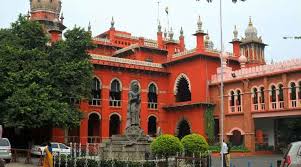
The Madras High Court has ordered that temple chariot of Muthu Kolakki Amman Temple be allowed to pass through a Dalit neighbourhood, observing that “faith cannot be fenced by caste or creed,” while hearing a plea by a Dalit man seeking permission to pass through the Dalit colony for his community to enter the Temple and participate in its rituals amid opposition from upper-caste residents,” the Live law reported. “Faith cannot be fenced by caste or creed and divinity cannot be confined by human prejudice. God does not reside in certain streets alone. No street is unworthy of the chariot or the god it carries. God never discriminates. So discrimination cannot be wrapped in the sanctity of tradition,” Justice PB Balaji remarked. The court was hearing a petition filed by a man belonging to the Scheduled Caste community, directed authorities to allow the Muthu Kolakki Amman temple car to pass through the Dalit colony and ensure peaceful conduct of the procession. The petitioner had approached the court seeking directions to the Kancheepuram District Collector, Superintendent of Police, HR&CE Joint Commissioner, Tahsildar, and others to permit his community to enter the temple and participate in its rituals and car festival. He alleged that upper-caste residents had long resisted their participation, despite the temple being managed by the Hindu Religious and Charitable Endowment Department, and that representations to officials had gone unanswered. The court observed that through Article 17 of the Constitution, untouchability was abolished “not just in physical form but in true letter and spirit,” stressing that no one could dictate “who is entitled to stand before the deity and worship.” It further noted that all respondents had affirmed there was no bar on anyone entering the temple or participating in its festivals. The District Collector informed the court that a field inspection revealed no restriction preventing Scheduled Caste members from entering the temple or taking part in the car festival. Although private respondents opposed altering the traditional chariot route, citing decades of custom and possible complications, the Collector found that the requested extension was feasible without disrupting the festival’s historic character. Taking note of this report, the court directed the Collector to implement the proposed integrated route during both the trial and main processions, ensuring that the event proceeds smoothly with adequate police protection. Reiterating that “faith cannot be fenced by caste or creed,” the court held that “discrimination cannot be wrapped in the sanctity of tradition.” Many believe that despite constituting around 16.6% of India’s population, Dalits continue to face deep-rooted social stigma, exclusion, and violence. From being denied entry into temples to facing social boycotts and even brutal assaults for asserting their identity, caste-based discrimination remains pervasive. Earlier in 2024, Tamil Nadu’s Tiruvannamalai district, the village of Thenmudiyanur, became a site of struggle for Dalit dignity when upper-caste Hindus boycotted a temple after Dalits were granted entry. Courtesy : Maktoob Media Note: This news is originally published on https:/maktoobmedia.com/bha and is used purely for non-profit/non-commercial purposes, especially human rights