
Were Hindu and Dalit homes demolished in Malavani to “polarize votes”? Mumbai Congress levels serious allegations against BJP

Conspiracy to polarize ahead of BMC elections? Sachin Sawant claims families living there for 25 years were rendered homeless by branding them Rohingyas Mumbai: The Mumbai Congress on Monday leveled serious allegations against the Bharatiya Janata Party (BJP), alleging that the ruling party destroyed the homes of poor families in the Malavani area of Malad for political gain. The Congress claims that in an action taken earlier this month, the homes of several Hindu and Dalit families were demolished on the false accusation that they were Rohingyas or Bangladeshis living illegally in India. Describing the BJP’s claims as fabricated Addressing a press conference on Monday evening, Mumbai Congress chief spokesperson Sachin Sawant said, “The BJP’s allegation that the residents of Malvani are Rohingyas or Bangladeshis is completely fabricated.” To prove his point, Sawant also brought with him victims of Hindu and Dalit families whose homes were razed during the campaign. Sawant alleged that the BJP is attempting to polarize voters in view of the upcoming BMC elections. He said that labeling poor families in Malvani as foreigners is a deliberate conspiracy to target a particular community for political gain in the elections. Actions were carried out on November 3, 4, and 11. It is noteworthy that the Suburban Collectorate carried out demolitions of slums in Malvani on November 3, 4, and 11. The administration claimed that the residents were illegal Rohingya and Bangladeshi immigrants. According to the Congress, this action was taken following instructions from BJP minister Mangal Prabhat Lodha, who is also the co-in-charge guardian minister of Mumbai along with Ashish Shelar. Sawant commented, “Lodha is not the head of the Revenue Department, nor is he the full-time guardian minister, yet he directly ordered officials to demolish the houses.” Allegations of Violation of Supreme Court Rules The Congress leader claimed that this demolition action blatantly violated Supreme Court guidelines. He said, “People were not even given a chance to present their documents. This entire drive should be thoroughly investigated.” The Congress demanded that the officials responsible be immediately suspended and the Governor should dismiss Minister Lodha from the state cabinet. People Living There for 25 Years Sachin Sawant also rejected the BJP’s claim that only “illegal Muslim residents” were evicted during the drive. He pointed out that the homes of Hindus and Dalits living there for the past 25 years were also demolished. Sawant strongly stated, “Denying an opportunity to prove their legitimacy shows that the BJP’s agenda is solely a conspiracy designed to polarize.” The Congress chief spokesperson also alleged that the BJP is specifically targeting Malwani and its MLA, Aslam Shaikh, because he represents a minority community. “As always, they are playing their dirty game of inciting Hindu-Muslim hatred,” he said. Rajan Chaudhary Courtesy: Hindi News
‘Films can change transgender struggles’

Panaji: People aren’t exposed to the struggles of transgender individuals, which has the potential to be changed through cinema, said Vietnamese actress Can Quan, starring in the movie ‘Skin of Youth’, on Monday at the International Film Festival India. “When I was young, I saw people from the transgender community in nations such as the US and Hong Kong expressing their individualities through art, fashion, and music. So this movie was my chance to express my individuality through the character,” said Quan Tran. Ashleigh Mayfair, the director of the movie, said that they hope to release the movie in Vietnam as well. “The movie has been welcomed internationally and other film festivals and gave value to the existence of transgender communities worldwide. We hope that this movie helps the Vietnamese audience understand the perspective of a transgender individual. Courtesy : TOI Note: This news is originally published on https:/timesofindia.com/bha and is used purely for non-profit/non-commercial purposes, especially human rights
MPs from T’gana must raise BC quota issue in Parl: KTR
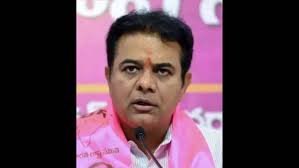
Hyderabad: Alleging that the Congress govt had betrayed the BCs by not providing 42% reservations in local bodies, BRS working president KT Rama Rao said the BRS would expose the Congress party’s U-turn on enhanced BC reservations. He said that they would confront the Congress party everywhere for trampling on the promises made under the ‘Kamareddy BC Declaration’ before the 2023 assembly elections and for deceiving BCs at every step. “The party will go to the people and expose the injustice done to Telangana BCs by Congress leader Rahul Gandhi in Delhi. Rahul is touring the nation claiming that 42% reservation has been given to BCs in Telangana, even though no such increase has actually been implemented in the state,” the BRS leader said at a meeting of BC leaders on Monday. A meeting with BC public representatives, former MLAs, MLCs, and senior party leaders was held at Telangana Bhavan on Monday. During the meeting, MLC Dr Dasoju Sravan gave a PowerPoint presentation on what he described as the fraud being committed by the Congress party in the name of 42% reservations. Speaking at the meeting, KTR demanded that if Rahul Gandhi were truly sincere, he should use his position as Leader of the Opposition in the Lok Sabha to ensure an immediate discussion on this issue in Parliament. He questioned why, if the BJP govt at the Centre was not cooperating with the Congress govt in Telangana on BC reservations, Rahul was not raising the issue in Parliament. He added that if Rahul were genuinely committed to the 42% BC quota, he could introduce a Private Member’s Bill. He demanded that BJP and Congress MPs elected from Telangana raise this issue in the Lok Sabha during the upcoming Parliamentary sessions. KTR criticised the BJP, saying that while they repeatedly speak about BCs, they are betraying them in all aspects — from reservations to fund implementation and the creation of an OBC welfare ministry. He remarked that people are observing the BJP’s deception as well. Courtesy : TOI Note: This news is originally published on https:/timesofindia.com/bha and is used purely for non-profit/non-commercial purposes, especially human rights
‘Don’t respect Ambedkar, Samvidhan’: BJP slams Rahul for skipping CJI’s oath taking; calls it ‘boycott’
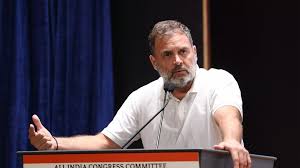
NEW DELHI: The BJP on Monday criticised Leader of Opposition in Lok Sabha Rahul Gandhi for not attending the oath-taking ceremony of Justice Surya Kant as the 53rd Chief Justice of India, alleging his absence reflected “disrespect” towards B R Ambedkar and the Constitution. BJP national spokesperson Shehzad Poonawalla accused the Congress leader of “skipping and boycotting” a key constitutional event attended by the country’s top leadership. Poonawalla, addressing reporters, said, “Today, when the entire country was in a sense celebrating, particularly Haryana, the Chief Justice of India’s oath ceremony and the entire government led by Modiji was present at the event, he skipped it, boycotted it.” He further remarked, “Instead of attending this solemn programme, Rahul Gandhi may be on some foreign trip or jungle safari.” Justice Surya Kant, known for being part of landmark benches including the rulings on the abrogation of Article 370 and the revision of Bihar’s electoral rolls, was administered the oath by President Droupadi Murmu at Rashtrapati Bhavan. Vice President C P Radhakrishnan, Prime Minister Narendra Modi and several senior dignitaries were present. Justice Kant, who succeeds Justice B R Gavai, will serve until February 9, 2027. The BJP leader alleged that Gandhi and his party places “parivaar tantra” above democratic and constitutional norms, adding, “It shows that his family, particularly him, talk about ‘samvidhan’, but they don’t respect Ambedkar and ‘samvidhan’.” Justice Kant took the oath in Hindi in the name of God and will now head the Supreme Court for nearly 15 months. Courtesy : TOI Note: This news is originally published on https:/timesofindia.com/bha and is used purely for non-profit/non-commercial purposes, especially human rights
Shivakumar camp ramps up pressure as Rahul Gandhi returns to Delhi
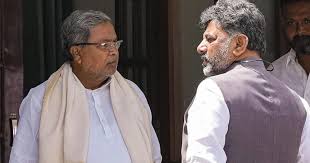
Bengaluru/New Delhi: The tussle at the top in Karnataka again played out in Delhi Monday, as deputy chief minister and KPCC president DK Shivakumar and his supporters stepped up efforts to push for a change of chief minister. Shivakumar and his supporters, who reportedly sought an appointment with Rahul Gandhi to press for his elevation as CM for the remaining two-and-a-half-years of this govt, have made multiple trips to the capital in recent days. Two separate groups of his supporters are currently in Delhi seeking meetings with senior party functionaries. But Rahul refused to meet any of them, prompting the deputy CM to return to Bengaluru, party sources said. Meanwhile, the Siddaramaiah camp is said to be running its own low-key manoeuvres — by seeking permission for cabinet rejig — to counter demands that he step down. Amid the churn, MLC and former AICC general secretary BK Hariprasad — regarded as close to the Gandhis — met Rahul privately in Delhi around noon. His meeting took place even as Shivakumar was denied time. Sources say Hariprasad briefed Rahul on the political situation and urged early intervention to prevent further escalation. He is believed to have told Rahul that repeated visits by Shivakumar’s supporters to the capital could trigger counter-pressure from Siddaramaiah’s camp, deepening internal rifts. Hariprasad declined to reveal details, saying only that “everything is fine”. Congress president Mallikarjun Kharge, who Siddaramaiah privately met on Saturday at his residence in Bengaluru, has expressed frustration over the persistent factional divide but suggested that he can’t resolve the impasse immediately. Kharge, who has remained in Bengaluru since Saturday, is expected to travel to Delhi on Tuesday to discuss developments with Rahul and review implications of either retaining or altering the present arrangement. Sources say a final decision from the central brass may be imminent. On Monday, a second batch of MLAs backing Shivakumar including HC Balakrishna (Magadi), KM Uday (Maddur), Nayana Motamma (Mudigere), Iqbal Hussain (Ramanagara), Sharath Bachegowda (Hoskote) and Shivaganga Basavaraj (Channagiri) flew to Delhi to meet senior party functionaries. Last week, some 10 legislators led by agriculture minister N Cheluvaraswamy met Kharge in Delhi and reportedly pressed for Shivakumar’s elevation in line with what they claim is an understanding that the chief minister post would change hands at the halfway mark. Simultaneously, the Siddaramaiah camp has continued to push for a cabinet rejig. Sources say that if the high command approves a reshuffle, it will signal that Siddaramaiah will continue for the full five-year term, narrowing the scope for Shivakumar to take over. Siddaramaiah, who earlier asserted that he would complete a full term as CM and present two more budgets, struck a more moderate tone Monday. “We will abide by the high command’s decision. If they decide I should continue (as CM), I will continue. Ultimately, whatever the high command decides, I should accept it. Shivakumar should also accept it,” he said in Chikkaballapur. Sharing the stage with him, Shivakumar responded that Siddaramaiah’s statement was ‘Veda Vakya’ (sacrosanct) for him. Courtesy : TOI Note: This news is originally published on https:/timesofindia.com/bha and is used purely for non-profit/non-commercial purposes, especially human rights
Caste Discrimination in US: Dalit Activist Thenmozhi Soundararajan’s Groundbreaking Survey and Advocacy
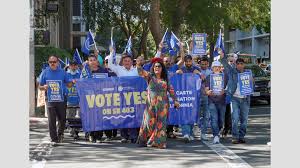
In 2015, Thenmozhi Soundararajan, a young activist, scholar, and co-founder of Equality Labs — a dalit civil rights organisation — spearheaded the first nationwide survey on caste discrimination in the US. The survey found that one in four dalits had faced physical or verbal assault, one in three reported discrimination in education, two in three encountered workplace bias, and more than half lived in fear of being ‘outed’. It emerged from repeated testimonies from dalit Americans even as dominant-caste South Asians insisted caste “was not an issue”. “These numbers showed what many denied: caste isn’t confined to South Asia. It exists in 21st-century America,” says Thenmozhi, who was conferred the Vaikom Award last month, which recognises contributions to caste justice and dalit civil rights. “Dalits faced slurs, physical threats and even organisational crises from those who didn’t want us to ask these questions,” says Thenmozhi, who wrote about it in ‘The trauma of caste’, published in 2022. Born to parents from Coimbatore, who later migrated to the US, Thenmozhi says she was driven by the suffering she witnessed in her family and among caste-oppressed communities. “It wasn’t one moment. It was the weight of intergenerational trauma in our diaspora and the silence that allowed caste harassment to be recreated in our homes, schools and workplaces,” says the US-based activist, who also co-founded ‘Dalit History Month’, celebrated globally. The ‘Lakireddy Bali Reddy’ case in the early 2000s in Berkeley shook her, she says. Reddy, a wealthy landlord, brought dalit women and girls from India on fake visas, exploited them for labour, and sexually abused minors. The crimes surfaced after a 13-year-old victim died in one of his buildings, leading to federal charges, a prison sentence and reforms in California’s anti-trafficking laws. “I recall letters from dominant-caste supporters asking for leniency. The impunity was devastating. We deserve a diaspora that heals together, stands with survivors, and refuses to repeat the injustices we inherited.” ‘We must de-brahminise technology and prevent a digital apartheid: Thenmozhi’ What were some of the other findings of your caste in the US report? We found 60% experienced caste-based slurs and derogatory comments; 40% felt unwelcome at their place of worship; 20% reported discrimination at a place of business. More than 40% said they had been rejected in a romantic partnership because of caste. In 2015, many US academics did not support this work. When working on the report, we were met with caste slurs. One organisation convened a board meeting to debate whether sharing our survey would “divide the community”. The truth is, the community was divided by caste; the survey revealed what had long been hidden. Your advocacy triggered support for anti-caste legislation across US cities. Our caste report, initially dismissed by many academics, mainly from dominant castes, became a foundational text for congressional briefings, institutional reforms and the legislative fight for SB 403, a bill in California to ban caste discrimination. In 2023, Senator Aisha Wahab championed SB 403, a bill that sought to add caste to California’s existing anti-discrimination laws, making it illegal to deny someone housing, employment or educational opportunities because of their caste. While SB 403 passed both houses, the governor, under pressure from dominant-caste Hindus, vetoed the bill. However, while vetoing the bill, the governor confirmed that caste discrimination is already against the law. In that sense, we still won: Californians who are denied housing, harassed at work, or subjected to physical or verbal abuse because of caste have clear pathways to redress, and our communities have stronger tools to live together with respect. Your work focuses on the tech industry. Tech companies are not neutral meritocracies; they are powerful corporate institutions that often protect dominant-caste networks. They benefit from public subsidies while funding anti-democratic political agendas. We must regulate tech, not worship it. Companies should explicitly include caste in anti-discrimination, vendor and harassment policies; provide caste-awareness training for HR, managers and staff; and audit datasets and algorithms to identify caste-coded biases. Just as earlier generations fought to de-brahminise access to public space, we must now de-brahminise technology and prevent a digital apartheid. Why must caste be considered in conversations about AI? If datasets, training corpora and annotation labour are marked by caste bias, and they often are, then AI will reproduce caste discrimination at scale. Caste must be included in algorithmic auditing, dataset review and ethical governance. The future must be built with caste-oppressed engineers, researchers, linguists and ethicists at the table. Where is the anti-caste movement today? Dalit art, literature, music, film, and political thought are shaping global culture. Our voices are visible. But visibility is not enough. This moment calls us to look to our ancestors such as Periyar, Iyothee Thass, Savitribai and Jyotiba Phule and Ambedkar. The next phase of our movement is about institution-building, not just reacting to harm, but designing the world that comes next. Courtesy : TOI Note: This news is originally published on https:/timesofindia.com/bha and is used purely for non-profit/non-commercial purposes, especially human rights
Education, unity path to progress for Dalits: Min Satish

Pic: Public works minister Satish Jarkiholi inaugurates the student talent awards and Kannada Rajyotsava programme organised by the Karnataka Rajya Sa-Abhivruddhi Sangha at Kannada Bhavana in Belagavi on Sunday Belagavi: District minister Satish Jarkiholi stressed that the progress of the Dalit community depends on unity, education, entrepreneurship, and strong social and political representation. “Our future rests on the Constitution given to us by BR Ambedkar,” he said, while inaugurating the Student Talent Awards and Kannada Rajyotsava programme organised by the Karnataka Rajya Sa-Abhivruddhi Sangh at Kannada Bhavan on Sunday. Jarkiholi said that understanding history is essential for building an equitable society. Acts such as segregating Dalits or humiliating them, he said, must end. “The injustice suffered by our ancestors should not be repeated for future generations. Education is the only way forward,” he added. He cautioned that without the Constitution, historically marginalised communities might still be denied basic rights. “Ambedkar’s contribution is the foundation of the community’s growth,” he noted. The minister pointed out that while the govt has implemented several initiatives to promote education among the poor, challenges persist. He suggested that financially stable individuals and govt officials adopt underprivileged students and support their higher education to bring meaningful social change. Jarkiholi also referred to a recent meeting in Hubballi, regarding issues faced by the community, and assured that the demand for land for the Karnataka Rajya Sa-Abhivruddhi Sangh in Belagavi would soon be addressed. Attempts to erase the history of great social reformers, he said, must be countered with awareness and education. Quoting Ambedkar, he said, “Those who know history can create history.” He urged the youth to draw inspiration not from film stars or sports icons, but from social reformers like Buddha, Basavanna, and Ambedkar, whose ideals can eliminate caste and religious conflicts and ensure the country’s progress. MLA Raju Sait, writer UR Patil, folk singer Jyotirling Honakatti, association president Subhash Netrekar, Bhimrao Pawar and Sukumar Dodamani were present. Courtesy : TOI Note: This news is originally published on https:/timesofindia.com/bha and is used purely for non-profit/non-commercial purposes, especially human rights
Chhattisgarh: Dalit youth assaulted, beaten in the middle of the road in Dipka, case filed
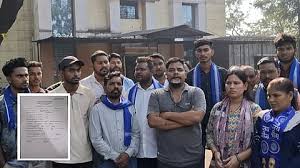
Dalit youth attacked in an Instagram dispute: assaulted with casteist slurs, FIR filed against Kunal Singh Rajput. Chhattisgarh: A serious case of assault against a Dalit youth has come to light in the Dipka police station area of Korba district. The victim alleges that a boy named Kunal Singh Rajput came to kill him. The Dalit youth suffered a serious head injury in the incident. However, in the presence of the Chhattisgarh Bhim Army Ekta Mission, the Dipka police have registered a case against the accused. According to the police, the accused is being interrogated and further action will be taken after the investigation is complete. The incident occurred on November 15th at Azad Chowk in Dipka, when Nitesh Kurre, a resident of Dipka, was going to the market with his wife at 5 pm. Kunal Singh Rajput attacked Nitesh Kurre, causing a head injury and serious injuries. The Dalit youth alleges that the accused, Kunal Singh Rajput, stopped him on the road, began assaulting him, and hurled casteist slurs at him over a social media Instagram chat and an old dispute. Police investigating the case Based on the victim’s complaint, the Dipka police have registered a case under relevant sections of the IPC, including sections 296, 115(2), and 351(2) of the Indian Penal Code, and have begun investigating the matter. Sharvan Kumar Courtesy: Hindi News
Major RPF action at Tatanagar station: 13 tribal minors, including 12 girls, being taken to Tamil Nadu were rescued.
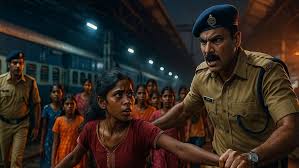
The plan was to make them work as laborers in a Tamil Nadu thread factory; the RPF apprehended them before they could board the Tatanagar-Ernakulam Express. Jamshedpur: The Railway Protection Force (RPF) has achieved a major success in its campaign against human trafficking in Jharkhand. The RPF, acting swiftly at Jamshedpur’s Tatanagar railway station, rescued 13 tribal minors from the clutches of human traffickers. Officials announced on Monday that the rescued children, including 12 girls and one boy, were being taken to Tamil Nadu under the pretext of providing them jobs. They were planning to go to Coimbatore. Tatanagar RPF in-charge Rakesh Mohan stated that the action was based on a strong intelligence report. Senior Divisional Security Commissioner P. Shankar Kutti of the Chakradharpur Division of the South Eastern Railway had provided a tip in this regard. Upon receiving information, the Flying Squad of the Anti-Human Trafficking Unit (AHTU) increased surveillance at the station. An RPF officer said, “These children were rescued from Tatanagar station on Sunday while they were waiting to board the Tatanagar-Ernakulam Express. During interrogation, the minors revealed that they were being taken to work at a yarn manufacturing unit in Salem, Tamil Nadu.” Two brothers arrested Taking action in this case, police arrested two alleged human traffickers. The accused have been identified as Sunil Tatonba and Jampira Tatonba. These two accused are real brothers and residents of Amdiha Panchayat, which falls under the Hatgamharia police station area of West Singhbhum district. On Monday, the RPF handed over all the rescued children and the two arrested accused to the Tatanagar Government Railway Police (GRP) for further legal action. All the children are residents of West Singhbhum. Tatanagar GRP in-charge Jitram Oraon confirmed the case and said that all the rescued minors are between 15 and 17 years old. They are residents of different villages in the Hatgamharia block of West Singhbhum district, Jharkhand. Giving details about the further process, the GRP in-charge said, “All 13 minors have been handed over to the Child Welfare Committee (CWC) in Jamshedpur for care and protection. Before being released to their families in Hatgamharia, these children will be produced in the Jamshedpur Civil Court to record their statements.” Accused Sent to Jail Sunil and Jampira Tatonba, two brothers arrested on charges of trafficking minors, were produced in court, from where they were sent to Ghaghidih Central Jail in judicial custody. This prompt action by the administration saved the children from a bleak future. Rajan Chaudhary Courtesy: Hindi News
Rajasthan Board’s arbitrary fee hike: Parents of tribal children worried, the board will fill its pockets but poor families will be burdened!
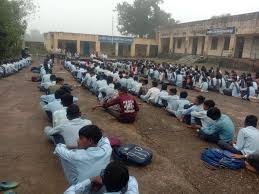
Over 38,000 students in Banswara district alone will be affected by this decision. Over 80% of the district’s population comes from the tribal community, most of whom live below the poverty line. Banswara – A decision by the Rajasthan Board of Secondary Education, Ajmer, has raised concerns among thousands of families in the tribal-dominated district of Banswara. The board has abruptly increased the examination fees for grades 10 and 12, jeopardizing the education of children from poor tribal families. The board has increased the theoretical exam fee from ₹600 to ₹850, and the practical exam fee from ₹100 to ₹200 per subject. This increase will apply to both regular and private students. Virendra Chaudhary, a senior leader of the Rajasthan Teachers’ Union (Siyaram), stated that the Ajmer Board of Secondary Education has declared the fee hike of Rs. 250 for theoretical exams and 100% for practical exams, from Rs. 100 per subject to Rs. 200, as unfair. Over 38,000 students in Banswara district alone will be affected by this decision. Over 80% of the district’s population belongs to the tribal community, with most families living below the poverty line. Most earn a living by working as laborers in Gujarat or neighboring states, making it difficult to even make ends meet. They can barely afford to pay their children’s fees. Local parents are outraged by this decision. Dhirajmal, a parent and former sarpanch of Bhanwar Vod Gram Panchayat, said, “This fee hike is an additional burden for poor tribal families. We are already struggling in this era of inflation. This will adversely impact our children’s education, especially girls’ education.” The looting of children and the hefty bonuses to board employees are unfair. Teacher leader Virendra Chaudhary stated that the Board employees are being given annual bonuses of thousands of rupees by robbing poor tribal students. The Board fails to make timely payments for all tasks, from application forms to fee invoices and other Board work, including evaluation and inspection. It also makes unnecessary 20% deductions for temple expenses, magazines, and other items. He demanded the state government conduct a high-level investigation into the arbitrary ₹35,000 bonus given to Ajmer Board employees and the additional honorarium paid in addition to their salaries. The Rajasthan Teachers’ Association, Siyaram, demanded the inclusion of a chairman and members from the tribal region in the Board’s executive committee and expressed the need for a separate board for the Banswara tribal region. Chaudhary stated that for years, a new executive committee has been formed and, under the influence of the administrator, anti-tribal and anti-student decisions have been taken unilaterally. He stated that, as decided in a meeting chaired by the Education Secretary, starting in the 2026-27 academic year, both regular and private students will now have to pay an examination fee of ₹850, which is a step and a deep conspiracy to financially deprive tribal students across the state from education. Furthermore, the fee for practical exams has been fixed at ₹200. However, this increase is the first since 2017. Currently, ₹600 is charged for regular students, ₹650 for private students, and ₹100 for practical exams. According to board officials, the fee increase has become necessary due to rising expenses on question paper printing, evaluation, and examination center arrangements. Currently, the board earns approximately ₹130 crore from examination fees. While this fee increase will increase this revenue, it will directly impact the pockets of approximately 2 million students across the state. Local students and parents have expressed disagreement with this decision. Student Narayan Lal Charpota said that the cost of coaching and books is already skyrocketing, and now the increase in examination fees will make education even more difficult for ordinary families. Siyaram Sharma, State Administrative President of the Rajasthan Teachers’ Union (Siyaram), said that the board’s decision cannot be considered administratively appropriate. The government should also announce a reimbursement relief scheme for the tribal BPL category so that economically weaker students are not deprived of the examination. 10th and 12th exams to be held from February 12 The Education Department has amended the Shivira Panchang to start the new session early. The exam schedule has been released. A letter in this regard was issued by Education Director Sitaram Jat. According to this, the 10th and 12th grade exams of the Board of Secondary Education will be held between February 12 and March 12. Annual exams for classes 9 and 11 will be held between March 10 and 25, and for classes 5 and 8 before March 12 instead of April 2026. Similarly, annual examinations for classes three and four, as well as six and seven, have been scheduled for March instead of April. The second competency-based assessment has also been scheduled for November instead of December, and the third assessment for March instead of April. The Education Department has begun preparations in the district in accordance with the revised schedule. Preparations are also underway in schools. Geetha Sunil Pillai Courtesy: Hindi News