
Dalits lobby for greater role as BJP set to elect UP chief

Lucknow: A section of Dalit ranks in the BJP is lobbying hard with the party leadership in Delhi ahead of the much-anticipated appointment of the state unit chief in UP, it is learnt. BJP’s Dalit functionaries are reportedly pressing for “adequate” representation in “responsible positions” in UP, where assembly elections are due in 2027. This, sources said, is being highlighted as a potential tool to mobilise the Dalit communities, which account for a sizable proportion of the voting bloc in UP. In fact, the names of two former Dalit MPs, Ram Shankar Katheria and Vidya Sagar Sonkar, are being considered for the appointment of the state president. A senior BJP functionary pointed out that only two Dalit MPs, Mithilesh Katheria (Dhanuk) and Brij Lal (Kori), represent the BJP in the Rajya Sabha from UP. Also, the BJP has just one Dalit legislator, Surendra Chaudhary, in the UP legislative council. Organisationally, the party has just one Dalit state general secretary, Priyanak Rawat, and three vice-presidents: Kanta Kardam, Neelam Sonkar and Devesh Kumar. The overdrive of the Dalit community comes even as speculations are rife about an OBC functionary being appointed as the next state president. A senior SC functionary in the state BJP said that the non-Jatav SCs have been consolidating behind the BJP since 2017, when the party formed the govt with an overwhelming majority for the first time. “This needs to be augmented further. The party needs to give SCs more space while accommodating them in key positions,” said a senior SC functionary from the UP BJP unit. Courtesy : TOI Note: This news is originally published on https:/timesofindia.com/bha and is used purely for non-profit/non-commercial purposes, especially human rights
“Dying Is Easier Than Learning English”: 17-Year-Old Dalit Student Dies by Suicide in AP’s Kurnool After Struggling With English Lessons

A 17-year-old Dalit girl in Kurnool died by suicide on Thursday, and police say she had been struggling for months with the pressure of learning English. The incident happened at the District Institute of Education and Training in B Thandrapadu. According to police, the girl went into the college sick room and locked the door after her friends briefly stepped outside. When they returned, she did not respond, and staff later found her dead. “She was a 17 year old Dalit student at the training institute and has allegedly died by suicide,” a police official told PTI. Police said the girl had repeatedly told her father that she could not cope with English lessons. She had even written that “dying was easier than learning it,” according to officials. Despite her fear, her parents insisted she continue attending classes. Her friends also told police that she had been dealing with menstrual problems, which may have increased her emotional distress. A case has been registered under Section 194 of the Bharatiya Nyaya Sanhita, and the investigation is ongoing. Courtesy : TOP Note: This news is originally published on https:/theobserverpost.com/bha and is used purely for non-profit/non-commercial purposes, especially human rights
Madhya Pradesh: Is eating at a Dalit’s house a greater sin than cow slaughter? A Panchayat decreed bathing in the Ganges and performing the Pind Daan (worship ceremony) for a living father, causing a stir in the administration.
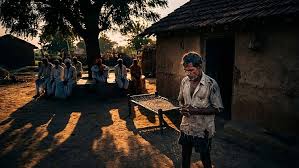
The Panchayat decreed that eating at a Dalit’s house cut off all supplies to the family; pressure was put on them to perform the Pind Daan (worship ceremony) for a living father. Raisen: A shocking incident has emerged from Raisen district, Madhya Pradesh, exposing the harsh reality of caste discrimination still prevalent in society. A man was socially ostracized simply because he ate at a funeral feast hosted by a Dalit family. The victim alleges that the Panchayat not only expelled him from society but also imposed shocking conditions for his reintegration. Given the gravity of the matter, the administration has launched an investigation. What is the whole matter? This incident occurred in Piparia Puaria village, Udaypura tehsil, about 100 kilometers from the Raisen district headquarters. This area is also the constituency of Narendra Shivaji Patel, Minister of State for Health in the Madhya Pradesh government. The case is about a month old, but it came to light during a public hearing on Tuesday. According to media reports, the victim, Bharat Singh Dhakad, told officials that about a month ago, a ‘Shraddha’ ceremony was held at the home of Santosh Mehtar, a Dalit man in the village. Bharat Singh Dhakad, the village panchayat’s assistant secretary, Manoj Patel, and a teacher, Satyendra Singh Raghuvanshi, had eaten at the ceremony. The Panchayat’s Bizarre Decree: “This is a Sin Bigger than Cow Slaughter” Bharat Singh alleges that the Panchayat took offense to his eating at a Dalit man’s home. The Panchayat called a meeting and passed a resolution declaring that eating at a Dalit’s home was “a sin bigger than cow slaughter.” The decree stated that whoever committed this ‘act’ would have to purify themselves by bathing in the Ganges and hosting a feast in the village before they would be accepted back into society. Two accepted the condition, one opposed. Under pressure from the Panchayat, Assistant Secretary Manoj Patel and teacher Satyendra Singh Raghuvanshi agreed to their conditions. They bathed in the Ganga and hosted a feast in the village. However, Bharat Singh Dhakad refused to obey this discriminatory order. Following this, the Panchayat allegedly declared a social boycott against him and his family. Pressure to perform ‘Pind Daan’ for his living father In an application submitted to Udaypura Tehsildar Dinesh Bargale at the public hearing, Bharat Singh made very serious allegations. He stated that he was pressured by the Panchayat that if he wanted to be absolved of sins, he would have to shave his head and perform ‘Pind Daan’ (a post-death ritual) for his living father. Dhakad said, “I and my family are being treated like untouchables. We are barred from entering the temple and are prohibited from participating in any social events in the village.” He named the Sarpanch, Deputy Sarpanch, and Panchs in his complaint. Administration and Police Stance As soon as the matter came to light, the administration swung into action. Tehsildar Dinesh Bargale said, “The matter is being investigated. If the allegations are found to be true, strict legal action will be taken against the culprits.” Meanwhile, SDOP Kunwar Singh Mukati clarified that insulting anyone based on caste or withholding food and water is a crime. He said, “Preventing someone from attending social events, considering them untouchable, or imposing punishments like bathing in the Ganges and serving them a feast is a punishable offense under the Indian Penal Code (IPC). Every citizen has the right to live with dignity. Those who spread social hatred will not be spared.” Sarpanch Denies Allegations On the other hand, when contacted, the village sarpanch, Bhagwan Singh Patel, categorically denied the allegations. He said, “Allegations like untouchability are false. If someone is not inviting them to their events due to personal reasons, it is their personal matter.” The Sarpanch also stated that the regional MLA and State Minister Narendra Shivaji Patel had also visited the village and tried to convince the people. Teacher confesses to ‘purification’ Interestingly, Satyendra Singh Raghuvanshi, the teacher who ate at the Dalit’s house, admitted that after the dispute, he had gone to his guru’s ashram in Allahabad and returned after bathing in the Sangam. He said, “I don’t believe in casteism, so I went to my friend Santosh’s house to eat. Someone made a video and made it viral, which escalated the controversy. I bathed in the Ganga on the orders of the Panchayat and now I have no complaints, nor am I being ostracized.” The teacher has been posted at the village secondary school for the past 16 years. Currently, the police and administration are trying to get to the bottom of this matter to uncover the truth. Rajan Chaudhary Courtesy: Hindi News
Why villagers in this Rajasthan village were agitated over the suspicious death of a Dalit youth, protesting for two days.

The family and the administration reached an agreement on a post-mortem. The administration assured an impartial investigation within two days, and Bhim Army leaders Rajendra Singh Dhandhal and Mangilal Meghvanshi ended the protest on Thursday. Jalore – The suspicious death of Chetan Kumar, a 23-year-old Dalit youth, in Kaleti village of Bagoda tehsil in Jalore district, Rajasthan, has shaken the entire area. Chetan’s body, who had gone to guard his fields, was found hanging from a tree, but the family claims it is a case of murder, not suicide. Signs such as his feet touching the ground, the position of the rope, and nearby wires have made the death mysterious. The family flatly refused to have a post-mortem conducted by a local medical board and insisted on calling a district-level team. The protest, villagers gathering, and administrative activity outside the Bagoda Community Health Center (CSC) mortuary continued until Thursday afternoon, but now there are reports of a compromise. Why did this incident spark a stir? Went out to guard the field at night, body found in the morning Everything seemed normal on Tuesday night. Chetan Kumar (23), son of Sanwalaram, was a resident of Kaleti village. He worked as a laborer on the farm of local farmer Lala Ram Chaudhary, where he was tending to the pomegranate crop. After dinner, Chetan left to guard the field. But around 7 a.m. on Wednesday, the farm owner, Lala Ram, informed the family that Chetan had committed suicide. Upon hearing this news, the family was devastated. Family members Madanram (30), Tikaram, Tekaram, Bijlaram, Tolaram, and mother Manjudevi immediately rushed to the scene. The scene left everyone stunned. Chetan’s body was hanging from a tree. A rope was tied around his neck, but his feet were touching the ground. According to the family, only the neck was visible, suggesting murder rather than suicide. Madanram immediately took photographs and videotaped the scene, which clearly showed three wires lying nearby, touching the body. A heavy weight (bot) had also fallen to the ground, where the body had previously been empty. The family says, “He seemed to be breathing, so we cut the rope and brought him down. But this isn’t suicide; someone has tried to disguise it as a murder.” Social activist Bhanwar Meghvanshi told The Mooknayak that the Bagoda police arrived at the scene and prepared a panchnama. The body was kept in the mortuary, but the postmortem process was halted. The family demanded a district-level medical team because they lacked trust in the local authorities. Madanram said, “Prima facie, it doesn’t appear to be a suicide. A thorough investigation should be conducted.” He belongs to the Meghwal community, and the incident sparked outrage among the Dalit community. Hundreds of villagers gathered outside the CSC mortuary. Women, children, and the elderly were all shouting, and a sit-in began, which lasted two days. Bhim Army leaders Rajendra Singh Dhandal and Mangilal Meghvanshi also arrived at the scene. They said, “This isn’t just a death, it’s a symbol of the community’s suffering. The administration should conduct an impartial investigation, otherwise there will be a protest.” According to the family, Chetan had no financial difficulties or mental problems. “He was the support of the family, why would he commit suicide?” They suspect someone else may have been involved in the murder. The wires and weights seen in the video further strengthened this suspicion. Bagoda Police Station Officer Baldev Ram stated that a postmortem report has been filed under Section 194 BNSS (investigation into the cause of death) based on the family’s complaint. An investigation has begun into all aspects, including the possibility of murder. The police formed a three-member medical board, consisting of district-level doctors. Assistant Sub-Inspector Narsiram and other teams were constantly counseling the family. Tensions were at their peak until Thursday afternoon. After several hours of persuasion, a consensus was reached between the family and the administration. The district medical board approved a postmortem. The administration assured a fair investigation within two days, after which Bhim Army leaders Rajendra Singh Dhandal and Mangilal Meghvanshi ended their protest. The body will be handed over to the family for last rites. Geetha Sunil Pillai Courtesy: Hindi News
SC certificate for minor based on father’s non-SC, mother’s Dalit caste: Supreme Court’s latest order prioritizes education, learn about the full story

According to Presidential notifications of 1964 and 2002 and Home Ministry directives, caste certificates are primarily based on the father’s caste and residence in the state. Previous Supreme Court decisions also considered the father’s caste to be decisive. New Delhi: The Supreme Court has delivered a significant ruling to facilitate the education of a minor girl. Where the father belongs to a non-SC community, the child can be granted an SC caste certificate based on the mother’s ‘Adi Dravida’ caste. This decision could set a new precedent in the changing social landscape, although the court has left major legal questions open. This case involves a minor girl from Puducherry. The Madras High Court had previously ordered the issuance of a SC certificate, which was challenged in the Supreme Court. A bench of Chief Justice Surya Kant and Justice Jyomlya Bagchi rejected the challenge, stating that the certificate should be issued so that the girl’s education is not affected. The bench clarified that the legal debate is being kept open for further discussion. The Chief Justice made an important observation that could spark debate. He said, “In changing times, why not issue a caste certificate based on the mother’s caste?” This raises the question: if the mother belongs to the SC community and the father belongs to the general caste, should the child receive SC benefits? Especially if the child is growing up in the mother’s family. In this case, the mother of the minor girl stated that her husband has been living with her in her parents’ home since marriage, and that their ancestors belong to the Hindu Adi Dravidian community. The mother had sought certificates for all three children—two daughters and a son. Supreme Court’s stance in previous decisions In previous cases, the Supreme Court had clearly stated that according to Hindu custom, a child’s caste is determined by the father. In the 2003 case of Punit Rai vs. Dinesh Chaudhary, the Supreme Court stated that the primary basis for determining caste is the father’s caste. In the absence of a law, a child inherits caste from the father, not the mother. In the 2012 case of Rameshbhai Dabhai Naika vs. Gujarat, a two-judge bench stated that the presumption of the father’s caste is strong in inter-caste marriages, especially if the father belongs to a higher caste. However, this presumption is not final. The child can provide evidence that they grew up in the mother’s SC/ST community. If they faced difficulties typical of that community, the mother’s caste may be considered. If the child has always been considered a member of the mother’s community, they may receive a certificate. Senior IRS officer Netra Pal wrote in his post regarding this matter, “Last year, I wrote regarding Rohith Vemula’s claim for a Scheduled Caste certificate, stating that even if the mother belongs to a Scheduled Caste and the father belongs to an Other Backward Class, the son can still claim a Scheduled Caste certificate based on the DoPT circular. Now, the Supreme Court has also upheld this. There appears to be no error in the decision, as it follows the DoPT circular.” Geetha Sunil Pillai Courtesy: Hindi News
Caste-based oppression against a Dalit music student in Tamil Nadu: “If you want a government job, forget music and do what your caste requires…”

FIR No. 407/2025 was registered at the Thirupparankundram police station on August 2nd, following the student’s complaint, but was closed just a month and a half later, on September 30th, citing a “factual error.” Madurai – Caste discrimination has become so deeply ingrained in Tamil Nadu that its dark shadow looms even over the temples of learning. A sensational case has emerged from the Tamil Nadu Government Music College in Pasumalai, Madurai, where a Dalit female student not only endured severe caste-based insults, but also had her education and employment threatened through institutional conspiracies. The student filed a complaint with the police alleging caste discrimination, but the police, acting unilaterally, closed the case and, on the other hand, filed a charge sheet against the woman based on the college administration’s complaint. The student has now appealed to the National Commission for Scheduled Castes (NCSC) for justice. Challenging the police’s biased investigation, she has demanded a fresh investigation. The victim, a Bharatanatyam alumnus, was also working as a part-time evening class teacher at the college. Living with her husband and mother, she explained that she was pursuing a Bachelor of Arts (Bharatanatyam) degree while also working as a temporary teacher, but caste prejudices made her life hell. In her petition, the student has leveled serious allegations against Principal Sampoornam and Chitra, a Bharatanatyam teacher. She claims that these two officials orchestrated a long-standing system of caste-based violence, abusive behavior, and institutionalized harassment. The harassment began in small ways and gradually escalated into a deadly one. The principal and teacher prevented her from using common toilets, made her sit in a separate room during exams, and denied her basic freedoms, such as standing with other teachers or wearing an ID card. Chitra allegedly made an openly casteist remark, “If you want a government job, do the traditional work of your caste—cleaning.” This remark was not only derogatory but also demeaning to the entire community. The harassment reached its peak when the victim was awarded the prestigious Kalaichudar Mani Award. Principal Sampoornam allegedly questioned, “How did a Dalit woman achieve such heights?” Following this award, the two accused staff members hatched a conspiracy. They collected the examination fees but prevented her from taking the second-year exams. Furthermore, her part-time teaching job was abruptly terminated without prior notice, further crippling her financial situation and causing her to suffer a mental breakdown. In January 2025, after an investigation by the State Scheduled Castes/Scheduled Tribes Commission, the victim was reinstated for her third-year studies, but the accused, using police pressure, threatened her and forced her to apologize. July 23rd was the most humiliating day of her life, when the principal made her stand outside the classroom for over four hours and incited other students to socially boycott her. This incident not only violated her dignity but also poisoned the college environment. FIR No. 407/2025 was registered at the Thirupparankundram police station on August 2nd, based on the student’s complaint, under the Scheduled Castes/Tribes (Prevention of Atrocities) Act, but was closed just a month and a half later, on September 30th, citing “factual error.” According to the victim, the Deputy Superintendent of Police (DSP) adopted a biased attitude, relying on the accused’s false and one-sided statements. Moreover, she was not informed of the closure of the case, causing her severe mental trauma. Furthermore, immediately after her original complaint was closed, action was taken on Principal Sampoornam’s complaint, in which the victim was immediately arrested, remanded, and later released on bail. She alleged that the police, under the influence of the accused party, did not take any concrete action on her complaint, instead expediting action against her. In her petition to the NCSC, the victim has clearly requested that a new and impartial DSP be appointed to investigate her FIR, who will conduct the investigation with complete honesty and in accordance with the provisions of the Act. She has demanded strict legal action against the accused staff members, Principal Sampoornam and teacher Chitra. Furthermore, she has appealed for a guarantee of her personal safety, the right to continue her studies without any hindrance, and reinstatement in her part-time government job. Geetha Sunil Pillai Courtesy: Hindi News
Five transgender people from the district will witness the Republic Day parade.

Basti News – The Government of India is striving to bring the transgender community into the mainstream. On the upcoming Republic Day, 100 transgender people have been invited as special guests, including five from Basti. These transgender people, selected by the Indira Charitable Society, will participate in the Republic Day parade. Basti, Hindustan Team. The Government of India is striving to integrate the transgender community into the mainstream and ensure their equal rights. As part of this initiative, 100 transgender people from across the country will be invited as special guests to the parade to be held on the Kartavya Path in Delhi on the upcoming Republic Day. These include five transgender people from Basti. Their list has been finalized by the Ministry of Social Justice and Empowerment. The list of transgender people was requested from the Indira Charitable Society, a Basti-based organization working for transgender people. Based on the proposal sent by the organization, five transgender people from Basti have been selected to be invited to the Republic Day parade. The Ministry has also formally notified the selected individuals. The list of 100 selected transgenders includes personalities like Riya Madvi, a police officer from Chhattisgarh, Akanksha from Chhattisgarh, a computer operator at Valco Company, Meeta Pandiya from Bhubaneswar, and Kalki Subhamaniam, a member of the Transgender National Council from Coimbatore. Ajay Pandey, CEO of Indira Charitable Society, said that it is a matter of pride that five transgenders from Basti have been included among the 100 transgenders. Among them, Sania, Kajal, Kashish, Sangeeta, and Tanya Kinnar will have the honor of attending the Republic Day parade as special guests. Courtesy: Hindi News
‘Under pressure, hands trembling’: Rahul Gandhi takes a dig at Amit Shah over Lok Sabha speech

NEW DELHI: Congress MP Rahul Gandhi on Thursday repeated his claim that Amit Shah appeared ‘nervous’ and used ‘foul language’ during the Union home minister’s Lok Sabha speech the previous day. “He (Shah) used foul language. His hands were trembling. Mentally, he is under pressure, and it was seen in Parliament. Whatever I had asked, he gave no replies and provided no proof. I challenged him openly to discuss over my press conferences, but nothing happened. Everyone now understands the reality,” Gandhi told reporters. Hitting back, BJP MP Jagdambika Pal asked why Gandhi and the opposition INDIA bloc “ran away” when the home minister was speaking. “Then why did he leave? People who flee, abandoning the field, the country watches them. During the two-day discussion, he (Shah) held a mirror against all the questions raised on electoral reforms and SIR… When people went to the Supreme Court against SIR, the Supreme Court also said there is no reason to stop SIR… So how long will they keep blaming the Election Commission, voter list, EVM for their defeat?” Pal said. Amit Shah vs Rahul Gandhi During his address on electoral reforms, Shah clashed with Gandhi over the Congress leader’s repeated claims of vote chori’ (theft)” by the Election Commission and the ruling BJP. The Lok Sabha leader of opposition, who has held three press conferences on the issue, challenged the home minister to a debate based on those briefings. In response, Shah remarked that the “House will not function according to his (Gandhi’s) wishes.” The heated exchange erupted when Gandhi interjected during Shah’s address in the Lok Sabha on electoral reforms. Criticising the opposition over the Special Intensive Revision (SIR) of electoral rolls, the senior BJP leader argued that he had responses to all their accusations, including those raised in Gandhi’s three press conferences. “In his press conference, the LoP claimed the voter list is flawed and needs correction. That is exactly what SIR is — a process to clean up the rolls. Yet he opposes it. Your defeat is certain; the voter list has nothing to do with it. Double standards won’t work in a democracy. When you win, the EC is great; when you lose, the EC is biased. I have answers to all these allegations — those three press conferences included,” Shah remarked. Gandhi then interrupted and challenged him to a debate. “Yesterday, I asked why Election Commissioners were given full immunity. We want to understand the reasoning behind it. He (Amit Shah) mentioned Haryana, but there are many other examples — including 19 lakh fake voters. Let’s debate my press conferences. Amit Shah ji, I challenge you to a debate on all three,” the Rae Bareli MP asserted. Shah responded that Gandhi could not dictate the order of his speech and should remain patient. “You cannot run Parliament through obstinacy. I will decide the order of my address. The House won’t function like this. He should be patient. I will respond to every point,” he countered. Opposition MPs walked out of the Lok Sabha during Shah’s reply to the discussion on electoral reforms. Courtesy : TOI Note: This news is originally published on https:/timesofindia.com/bha and is used purely for non-profit/non-commercial purposes, especially human rights
Defamation case: Court seeks Rahul Gandhi’s reply to 2 new pen drives submitted by Satyaki Savarkar as evidence

Pune: A special MP/MLA court in the city on Thursday sought Rahul Gandhi’s written response to an application by Satyaki Savarkar, who presented a couple of pen drives containing the Congress politician’s alleged defamatory speech against Hindutva icon Vinayak Damodar Savarkar, seeking that they be played in open court. Rahul Gandhi’s lawyer, Milind Pawar, orally objected to the application when the matter came up for hearing before special judge Amol Shinde as part of the case filed by Satyaki Savarkar, the grandnephew of the Hindutva icon, regarding Gandhi’s speech in London in March 2023. The case is at the stage of the complainant (Satyaki) leading his evidence as part of the examination in chief. Pawar, who raised an objection to the procedure and admissibility of the new evidence, told TOI: “The matter on this specific issue was adjourned. It will be taken up for hearing on Dec 16. We will be filing our reply as submission of two new pen drives at this stage is against the procedure.” Satyaki’s lawyer Sangram Kolhatkar told TOI: “Through the two pen drives we filed, we reproduced the electronic evidence which was lost. We also submitted a certificate prescribed under section 65B of the Indian Evidence Act. We sought permission to play the video, but the opposing counsel objected, stating that they wanted to file a reply.” Satyaki had earlier submitted a CD along with a 65B (verification) certificate under the Indian Evidence Act, but it could not be played in court due to some unknown technical reasons. His plea to play another CD was rejected by the court after Gandhi’s lawyer objected on the grounds that it was not accompanied by a 65B certificate During the last hearing on Dec 5, the court allowed an application by Satyaki’s lawyer seeking an adjournment for a limited period. The adjournment sought was to enable the complainant to make proper technical arrangements and reconstruction so that a CD of the speech could be played. Courtesy : TOI Note: This news is originally published on https:/timesofindia.com/bha and is used purely for non-profit/non-commercial purposes, especially human rights
5 of 8 names listed were from disadvantaged sections: Govt

NEW DELHI: Government on Thursday issued a strong refutation of leader of opposition Rahul Gandhi’s reported “dissent”, asserting that the Congress neta’s claim that there was absence of names from marginalised communities in the list discussed for filling vacancies of Central Information Commission (CIC) and information commissioners, has fallen flat. The three-member panel including PM Narendra Modi, HM Amit Shah and Gandhi held a meeting on Wednesday and finalised the names. A notification was awaited till late on Thursday evening. Regarding the eight vacancies considered on Wednesday for appointment as information commissioners, as per sources, Centre recommended one SC, one ST, one OBC, one minority representative and one woman. “Overall, five out of the eight recommended names were from disadvantaged sections. In light of these facts, Gandhi’s claims do not hold up,” govt sources said, claiming that the reports based on sources close to the Congress leadership were false and another attempt to misguide people. TOI also carried the report based on the information given by sources close to Congress leadership. “Gandhi’s claims have fallen flat as CIC appointments tell a different story. As per reports in media, at the meeting to select information commissioners, Gandhi recorded his dissent, alleging that the shortlists did not include names from SC, ST, OBC, EBC communities. He is reported to have claimed there was a ‘systematic pattern’ of excluding SC, ST, OBC, EBC and minority communities from appointments to constitutional and autonomous institutions,” the sources said. But facts present a different picture, sources added. Govt said the CIC was established in 2005, and from 2005 to 2014, during the UPA govt’s tenure, not a single person from the SC/ST community was appointed as either a member or the chairperson of the commission. It was the NDA govt in 2018 that appointed Suresh Chandra, a member of the ST community, to the commission, they said. “In 2020, Heeralal Samariya was appointed information commissioner, and in 2023, he became the CIC – the first-ever CIC from the SC community,” a govt official said. The three-member panel met on Wednesday to appoint the CIC, eight information commissioners (ICs) and a vigilance commissioner. However, Gandhi is learnt to have registered his dissent and strongly objected to the near absence of names from SC, ST and OBC communities, which has been rebutted by govt. Congress sources claimed the issue is likely to be a key talking point in the upcoming mega rally against “vote chori” being organised by the opposition party on Dec 14. Courtesy : TOI Note: This news is originally published on https:/timesofindia.com/bha and is used purely for non-profit/non-commercial purposes, especially human rights