
Dhanbad Municipal Seat De-Reservation Sparks Dalit Protest Ahead of Elections
Dhanbad: Members of the Dalit community staged a sit-in on Thursday against the de-reservation of the Dhanbad municipal seat ahead of the upcoming civic body elections. Hundreds of protesters gathered at Randhir Verma Chowk to express their strong opposition to the state govt’s decision, alleging a biased approach and demanding immediate withdrawal of the order. The protesters claimed that the Dhanbad municipal seat had been reserved for the Scheduled Caste (SC) category on the basis of the 2011 caste census. However, the recent decision to make the seat unreserved has triggered widespread resentment within the Dalit community. Demonstrators described the move as a direct attack on their constitutional rights and social representation in local governance. Raising slogans against the govt, protesters accused it of ignoring established norms and undermining social justice. They asserted that the de-reservation decision has deeply hurt the sentiments of the Dalit community and could weaken their political participation in the civic administration of Dhanbad. Addressing the gathering, social activist Shantanu Chandra, also known as Bablu Paswan, said that the issue has already been taken to the Ranchi high court. He said that a petition challenging the govt’s decision has been filed and the matter is currently under judicial consideration. According to him, the court has reserved its verdict, and the community is hopeful of a favourable outcome. Shantanu Chandra further said that while they have full faith in the judiciary, the intentions of the government appear questionable. He emphasised that the agitation would continue until justice is delivered and the decision is reversed. “We respect the judicial process, but at the same time, we will not remain silent against injustice,” he said. Protesters warned that if the govt fails to reconsider its decision, the agitation would be intensified in the coming days. The demonstration concluded peacefully, with protesters reiterating their resolve to fight for their rights through both legal and democratic means. Courtesy : TOI Note: This news is originally published on https:/timesofindia.com/bha and is used purely for non-profit/non-commercial purposes, especially human rights
Transgender group refutes ‘kinnar jihad’

Jaipur: After a transgender persons’ residence was set ablaze Wednesday in Mahanto ka Bagh, Adarsh Nagar, Jaipur-based transgender group 3rd Voice Thursday protested against accusations of “kinnar jihad”, which it said were an attempt by vested interests to give a religious colour to a conflict over territory. Members said terms like “kinnar jihad” were being used to spread hatred, even though the transgender community participates in the joys and sorrows of people across religions. They alleged that their house was set ablaze as retaliation for opposing such statements during a transgender akhara held last week on Friday. More than 500 transgender persons from Delhi, Punjab, Maharashtra and Rajasthan took part in that gathering. Senior community representative Deepa Bai said, “Our elders were assaulted, money was demanded, and we were threatened with eviction. This is not a religious conflict; it is a fight for dominance and control.” Another member, Rekha Bai, said threats had been coming for days. “We received death threats on WhatsApp 3 to 4 days before the incident. The night before, we were told to ‘wait till tomorrow’” she said. Transgender activist Noor Singh Shekhawat asserted, “Transgender community has neither religion nor caste. We fall under OBC category. We visit every household, Hindu, Muslim or Sikh. Our only religion is humanity.” Community member Sunita Bai added that money received as blessings is used for social welfare. “Whether it is a temple or a madrasa, a community feast or a girl’s wedding, we contribute everywhere,” she said. Local resident and retired bank branch manager Om Prakash Sharma supported the community, saying, “I have never seen religious discrimination among them.” Courtesy : TOI Note: This news is originally published on https:/timesofindia.com/bha and is used purely for non-profit/non-commercial purposes, especially human rights
10 Army personnel killed in a heartbreaking accident in Doda… PM Modi, Rahul Gandhi, and Mallikarjun Kharge express grief

Ten soldiers were killed when an army vehicle fell into a deep gorge in Doda district. PM Modi, Leader of the Opposition Rahul Gandhi, Congress President Mallikarjun Kharge, and Priyanka Gandhi expressed their condolences over the accident. New Delhi: Prime Minister Narendra Modi, Leader of the Opposition Rahul Gandhi, Congress President Mallikarjun Kharge, and Priyanka Gandhi on Thursday expressed grief over the death of 10 soldiers in an accident in which an army vehicle fell into a deep gorge in Jammu and Kashmir’s Doda district. Expressing grief over the accident, PM Modi said that we have lost our brave army personnel. Their service to the nation will always be remembered. The PM prayed for the speedy recovery of the injured. He said that all possible help is being provided to those affected. An army vehicle fell into a deep gorge in Jammu and Kashmir’s Doda district on Thursday, killing 10 soldiers and injuring 11 others. Immediate need for road safety measures Congress President Kharge posted on the social media platform ‘X’ that he was deeply saddened by the tragic vehicle accident in Doda, Jammu and Kashmir, in which several army personnel made the supreme sacrifice and many others were injured. My deepest condolences to the bereaved families and loved ones. The nation stands united in profound grief, and we pray for the speedy recovery of the injured. He also said that many such accidents have occurred in the past. There is an urgent need to strengthen road infrastructure, improve mobility in difficult terrains, and implement road safety measures to prevent such heartbreaking losses. Rahul and Priyanka pay tribute to the martyrs Leader of the Opposition in the Lok Sabha, Rahul Gandhi, posted on ‘X’, “The news of the death of several of our soldiers and the injury of many others in the accident where an army vehicle fell into a gorge in Doda, Jammu and Kashmir, is extremely painful. I pay my humble tribute to the martyrs and hope for the speedy recovery of the injured soldiers.” He said, “In this hour of grief, we all stand with the bereaved families of our brave soldiers.” Congress General Secretary Priyanka Gandhi Vadra also expressed grief over the deaths of the soldiers. Priyanka Gandhi posted on ‘X’, “The news of the martyrdom of several soldiers due to the army vehicle falling into a deep gorge in Doda, Jammu and Kashmir, is extremely saddening. May God grant peace to the departed souls. My deepest condolences to the bereaved families. I pray for the speedy recovery of the injured soldiers.” Edited by: Anil Kumar About the Author Anil Kumar is part of the homepage team at Navbharat Times Digital. He has about 16 years of experience in both print and digital media. He has been associated with Navbharat Times Online since January 2021. He writes news and analysis related to politics and current affairs for the India and Delhi sections on the homepage. Courtesy: Hindi News
Follow the path shown by farmers to compel govt to withdraw G RAM G law, Rahul tells MGNREGA workers

New Delhi: Recalling how the “united resistance” mounted by farmer led protests forced the Central govt to roll back the three farm laws, leader of opposition Rahul Gandhi on Thursday called out to MGNREGA workers to take the path shown by the farmers by putting up a united fight to demand the withdrawal of the new law – Viksit Bharat – Guarantee for Rozgar and Ajeevika Mission (Gramin) Act.Referring to the BJP and the Central govt, Gandhi said, “Here is the only way to stop them, workers have been shown the way by farmers. I know these people, they are cowards. If we all stand together, they will be forced to restore MGNREGA,” he said, citing the example of farm laws. He was speaking at the ‘MGNREGA workers convention’ organised by the opposition party at Jawahar Bhawan in Delhi that brought together workers and activists from various states. Gandhi alleged the idea of BJP behind the new law that replaced MGNREGA was to dismantle “the “guaranteed right to work and right to demand work” and enable “centralisation” where the “Central government will decide where the money will be allocated, and naturally, the BJP-ruled states will get more and the Opposition-ruled states less”. “These people want to take India back to pre-independence days where one King used to decide everything,” he alleged. At the meet, Gandhi along with Congress President Mallikarjun Kharge and other senior leaders stood in solidarity with workers who shared their concerns and fears about the new law and raised slogans. Adorning the traditional labourer’s ‘gamchha’ on their head and holding spades on their shoulders, Kharge and Gandhi also posed with workers who in a symbolic gesture brought soil from their respective MGNREGA worksites and added it to tree saplings in what was seen to convey a message of unity and collective struggle. The Congress plans to build on the message by reaching out to gram sabhas and hold larger outreach programmes under its ongoing ‘MGNREGA Bachao Sangram”. Kharge alleged that the dismantling of MGNREGA by the Modi govt was part of a “conspiracy to erase Mahatma Gandhi’s name from public memory”and an attempt to turn the oppressed and downtrodden people of the country into “bonded labourers”. He said the party will raise the issue during the upcoming Budget session of Parliament. Gandhi claimed that scrapping of MGNREGA amounted to an attack on the Constitution, the same way the Modi govt had attacked it by bringing in “three black farm laws, demonetisation and the flawed implementation of the GST” and this new law now. “What is the name of this new law ….I don’t know,” Gandhi said. In response some in the audience spoke out saying “VB-G RAM G”. Courtesy : TOI Note: This news is originally published on https:/timesofindia.com/bha and is used purely for non-profit/non-commercial purposes, especially human rights
Don’t air internal issues in public: Congress warns Punjab leaders; no ‘group activity’ to be tolerated

NEW DELHI: The Congress on Thursday issued a stern warning to its Punjab leaders, asking them to stop airing internal differences in public or fuelling factionalism. The party asked them to instead work together to ensure Congress return to power in the upcoming 2027 assembly elections. The order came during a three-hour meeting convened by Congress president Mallikarjun Kharge at his residence in New Delhi, which was also attended by Rahul Gandhi, amid reports of infighting within the state unit, news agency PTI reported. Punjab goes to the polls in early 2027, and Congress is aiming to reclaim the state from the Aam Aadmi Party (AAP). Party leaders were asked to refrain from making statements against one another and were assured that there would be no immediate change in the state leadership. The high command, they were informed, would take decisions on candidate selection and campaign strategy in due course. AICC general secretary (organisation) KC Venugopal said Kharge and Gandhi reviewed the political situation in Punjab and heard the views of state leaders, describing the discussions as “very fruitful”. “The party has directed all leaders to refrain from making public statements on internal matters. Everyone may have their own views, but these should be raised only within party forums. Going to the media or spreading such issues on social media will not be tolerated,” Venugopal told reporters. He said the leadership had given a “very clear direction” and that all leaders present had unanimously agreed to it. On speculation about a leadership change in Punjab, Venugopal said there was “no question of it at present”. Addressing concerns raised by some leaders over representation of weaker sections, Venugopal said the Congress remained committed to ensuring adequate representation of Scheduled Castes, Scheduled Tribes, OBCs and economically weaker sections, including in Punjab. However, he stressed that such issues must be raised internally. “We have told the state leadership not to make statements in public. From tomorrow onwards, you will see the Congress united. We will fight the elections together and win Punjab,” he said. On reports of some leaders writing jointly to Rahul Gandhi seeking a separate discussion, Venugopal said individual requests were acceptable but “group activities” would not be tolerated. “If anyone wants to meet Rahul ji, they can write individually,” he said, adding that Kharge and Gandhi were planning a visit to Punjab soon. Courtesy : TOI Note: This news is originally published on https:/timesofindia.com/bha and is used purely for non-profit/non-commercial purposes, especially human rights
Sister Chandra and how Parai Attam announced the coming of Dalit women Sakthi to the world
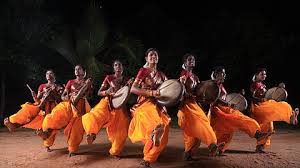
“I was rejected by village folk artistes as they didn’t believe a woman was strong enough to carry a parai and perform,” Sister Chandra remembered. It was the best of times, it was the worst of times for Dalit women to start performing Parai Attam, a traditional art form historically performed by Dalit men during funerals. Sister Chandra, the woman behind this quiet cultural revolution, had been doing community service in Dindigul when she noticed how poorly paid the men performing Parai Attam were. “I felt that people were not respecting the art or the artiste because of their social status,” she recalled. Sister Chandra also sensed the quick shift of the villagers’ interest from folk arts to community TV. “Each village has different art forms which they used to perform during festivals, but when people started enjoying television, art forms started dying,” she went on. Determined to revive the art form, Sister Chandra decided to form a troupe of her own. But being a woman, she had to also fight many gendered stereotypes around the art form, which was considered exclusively the domain of Dalit men. “I was rejected by village folk artistes as they didn’t believe a woman was strong enough to carry a parai and perform,” she remembered. At last, seeing her persistence, traditional village folk artiste Guru Ramadass taught her Parai Attam. Soon, Sister Felci and a group of village women joined, becoming the first batch of what would eventually be known as the Sakthi group. Now, Sister Felci has taken charge of it. As public perceptions changed, Sakthi’s popularity grew significantly. It began teaching more than 20 art forms including Parai Attam, Oyil Attam, and Silambam. Along with an offline batch of 20 students, two batches of online art classes were also introduced. They perform in and around several districts of Tamil Nadu and have also made their mark on the international stage. Sakthi is now flourishing. ‘Finally, you are making our girls take up Parai?’ In ancient Tamil society, parai, a hollow drum made out of a wooden frame and cow skin, was used as a percussion instrument to gather people and make announcements. Over time, it evolved into an art form predominantly performed by Dalit men. In the beginning, the idea of women performing Parai Attam was alarming to a society fed with stereotypical narratives on the art form. Concerned about their social status and perpetuating caste stereotypes, families strongly opposed the participation of their daughters. Parai artistes did not want their daughters to take up the art form as they believed their children would be discriminated against for their social status. “Initially, parents resisted sending their daughters to learn Parai Attam,” Sister Felci reminisced. They were met with questions filled with disbelief and anxiety such as ‘How can you make our girls take up Parai?’ Yet, against all odds, the team’s first performance became both a personal victory for Sister Chandra and a cultural milestone. “After that, we were invited to several villages to perform,” she said. Sakthi went on to become one of the earliest all-women Parai Attam troupes in Tamil Nadu. Sister Chandra and Sister Felci, driven by their mission to empower Dalits and women, were posted in Dindigul by their congregation, the Missionary Sisters of the Immaculate Heart of Mary, ICM. Every year, a new batch of twenty students joined Sister Chandra’s year-long residential course to learn various folk art forms such as Parai Attam, Oyil Attam, and Karagattam. The mix included young women who were school dropouts. “We encourage school dropouts to finish their studies and enroll in college. Some of them later became folk dance teachers in nearby village schools,” said Sister Chandra. Martial arts such as silambam and taekwondo are also taught by Sakthi. “This is a life-oriented program as women are also taught vocational skills such as tailoring, besides sex education and other lessons,” she said. Performances with social messages Rather than performing solely for entertainment, Sakthi’s programs are society-oriented. To spark a social dialogue and make society rethink its assumptions became the group’s goal. Sister Chandra believes that the dialogue initiated after performances has brought changes in society. She proudly spoke about how turning Parai Attam into an inclusive art form is part of such a change. “Now, women from non-Dalit communities also train for Parai Attam with the Sakthi group, which shows acceptance and how people are willing to challenge stereotypes,” she said. Sakthi’s unique style of incorporating social messages with performances made the team stand out. “Our performances raise awareness about social issues such as women empowerment, communal harmony, sexual harassment, caste, globalisation and unemployment,” said Sister Chandra. The importance of developing a reading habit is a recurring theme expressed by the team whenever it is invited for book launches and similar events. To instill confidence and capability among young talents, Sister Chandra believed that the group should be involved in choreographing, decision-making and every other aspect of their performance. This let the girls feel empowered by occupying spaces which were dominated by men, she said. ‘To build a better humanity, we have to break the chains of oppression’ is Sakthi’s motto. The group’s name reflects its goal of holding on to the female ‘energy’ and empowering women by creating a space exclusive to them. As recently as the early 2000s, women across different states were excluded from performing certain folk art forms. “For example, in Kerala, women were not allowed to perform chenda melam, an art form that involved drums. This trend is slowly changing nowadays,” said Sister Chandra. The logo of Sakthi depicts one foot of a performer bound by a chain, signifying the historical oppression, and the other foot adorned with an anklet, representing resilience and the struggle to break free from marginalisation. Taking Parai attam to the world The team of performers has kept changing over the years as many women dropped out after marriage and childbirth. However, that didn’t stop Sakthi from carrying forward its mission.
Dalit Youth Murder Sparks Outrage in UP, Heavy Police Force Deployed, Highway Blocked
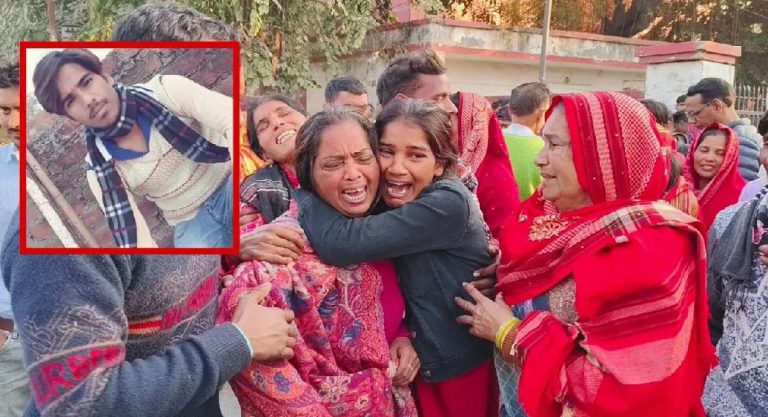
Bareilly: A tragic and shocking incident has come to light in Bareilly district of Uttar Pradesh. Rahul Sagar, a 26-year-old Dalit youth from Dohra village in the Baradari police station area, was brutally beaten to death by a group of men. After battling for his life in the hospital for a week, Rahul succumbed to his injuries during treatment. As soon as the news of the youth’s death spread in the village and surrounding areas, widespread anger erupted. Following Rahul’s death, his family members and villagers blocked the highway by placing his body in front of the post-mortem house. The protesters leveled serious allegations against the police and demanded justice. A heavy police force has been deployed at the spot, and officials are trying to pacify the people. Attack over borrowed money The family members allege that the incident took place on January 14. Rahul’s father, Pappu, said that Rahul had left home with Rs 30,000 to pay his brother-in-law’s hospital bill. On the way, he went to meet a man named Bhima with his two friends, Lalu and Sachin. Bhima owed Rahul Rs 20,000, which Rahul had been asking for for a long time. When Rahul asked for the money back, Bhima got angry. Bhima then called his accomplices, Lucky Labheda and Akash Thakur. The three of them surrounded Rahul near Kashiram Park and started brutally beating him with sticks and rods. Rahul was beaten until he fell unconscious. During the attack, the accused also snatched Rs 30,000 and his mobile phone from Rahul. Rahul’s friends tried to intervene, but the accused threatened to kill them as well. Somehow, Rahul was taken from there and admitted first to Abhiram Hospital and then to Narayan Hospital. Death during treatment, questions raised about the police Rahul’s condition was extremely critical. Doctors tried their best to save him, but he died after about a week. Rahul’s family is completely devastated after his death. His relatives allege that the police did not immediately arrest the accused after the incident. They claim that while Rahul was hospitalized, the police were trying to hush up the matter and pressure them into a compromise. Due to this anger, the enraged family members and villagers blocked the highway. The protesters are demanding that all the accused be arrested immediately and that action be taken against the police officers who were negligent. The people say that the protest will continue until they are assured of justice. A father’s protective shadow has been lifted from the innocent children. Rahul earned a living by working as a laborer to support his family. With his death, there is no one left to earn a living for the family. He leaves behind his wife Shivani and three young children. The youngest child is just 15 days old. The elder son, Aryan, is four years old, and the other son, Dev, is two and a half years old. These innocent children do not even understand that their father will never return. There is an atmosphere of mourning throughout the village. Every eye is teary, and everyone is asking the same question: when will this poor and Dalit family get justice? The villagers have demanded that the administration give the strictest possible punishment to the culprits. Courtesy: Hindi News
Dalit man refuses to hand over sunglasses, beaten with sticks in Gujarat’Patan district

Ahmedabad: A 26-year-old Dalit labourer was allegedly assaulted and abused with caste slurs in Piparala village of Santalpur taluka in Patan district after he refused to lend his sunglasses to a villager, police said on Wednesday. A complaint was filed late on Tuesday with Santalpur police. The complainant, Tulsi Solanki, a resident of Piparala village, told police that he was standing near the Hanuman temple in the village around 7pm, when the accused individual, Devshi Koli, approached him. Koli allegedly asked Solanki to take off his sunglasses and give it to him. When Solanki refused, the accused allegedly started abusing him and hurled caste abuses, leading to a brief argument, after which Solanki returned home. About 30 minutes later, Devshi Koli allegedly returned to Solanki’s house along with Bhikhu Koli on a motorcycle. The duo allegedly hurled caste-based abuses and questioned Solanki for not giving the sunglasses. When Solanki, along with his parents, Vela and Demaben, came out and asked them to stop abusing, a third accused, Mandan Koli, allegedly arrived on another motorcycle carrying a wooden stick. The complaint states that Mandan allegedly struck Solanki on his left shoulder with the stick, causing him to fall. He then allegedly hit Solanki again on his left leg below the knee. When Solanki’s father tried to intervene, Bhikhu allegedly pushed him to the ground. The accused allegedly continued to beat Solanki with fists and kicks and threatened to kill him with dire consequences. Hearing the commotion, villagers gathered at the spot, following which the three accused fled on their motorcycles. Solanki said he suffered severe pain and dialled the 108 emergency service. He was first taken to Santalpur govt hospital, where he was given preliminary treatment, and was later referred to Dharpur hospital for further care. Based on the complaint, Santalpur police registered a case against the three accused under sections of the Bharatiya Nyaya Sanhita and relevant provisions of the Scheduled Castes and Scheduled Tribes (Prevention of Atrocities) Act. Courtesy : TOI Note: This news is originally published on https:/timesofindia.com/bha and is used purely for non-profit/non-commercial purposes, especially human rights
Hindu on paper, Christian at heart: What lies behind Dalit reconversions in Kerala
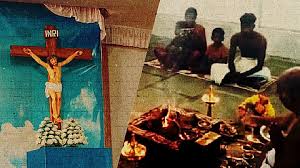
For many years now, organisations such as the Vishva Hindu Parishad have taken up the reconversion of Dalit Christians to Hinduism as ‘Ghar Wapsi’. But activists say without the reservation barrier, most Dalits would not leave Christianity, which is a core anxiety for Hindutva groups. Aneesh* read Kunju Kaaryangalude Odeythampuran, the Malayalam translation of Arundhati Roy’s The God of Small Things, when he was in college. He picked up the book prompted by a casual remark from a classmate. “He told me that there’s a character called Velutha in the novel who reminded him of me,” Aneesh recalled. “Velutha was a Dalit Christian like me, who was in love with a Syrian Christian woman,” he said, a faint, painful smile crossing his face. In the novel, Velutha is brutally tortured and killed for his ‘forbidden’ love. Though Aneesh, who belongs to the Pulaya community, has never faced physical violence like Velutha, he has encountered caste abuse, public humiliation, and social exclusion. “It was 2010. Ours was a hilly village in Kannur district. A girl from my parish and I were in a relationship. We went to the same school and attended catechism classes together. Our families were not very different financially,” he said. The relationship ended when the girl’s family came to know about it. “They publicly called me ‘Pelayan’, a casteist slur for Pulaya, ‘parassala christian’, and many other things. My skin colour, my caste, my family, everything was dragged out in public and insulted,” Aneesh said. ‘Parassala Christian’ is a derogatory term used for landless Dalit Christian families who moved from Parassala in Thiruvananthapuram to northern Kerala in search of work and land. Aneesh’s grandparents had converted to Christianity long ago. His parents had migrated to the village in Kannur nearly five decades earlier from Parassala. When the abuse began, Aneesh said there was no support from the church. “The church, the priest, no authority stood with us. It was a Syrian Christian-dominated area under the Syro Malabar Church. With that one incident, my family was casually ostracised,” he said. Unable to continue living there, Aneesh left the village and went to north India to pursue further studies. His parents eventually moved back to Thiruvananthapuram. Today, Aneesh is 40, married, and the father of two children. A few months ago, he, his wife, and their two children – both below the age of 10 – formally converted to Hinduism. The conversion, Aneesh said, was facilitated by the Vishva Hindu Parishad (VHP), a prominent right-wing Hindutva organisation. A ceremony was organised at a nearby temple. Volunteers helped him with the paperwork, to change his name through a gazette notification and obtain a caste certificate from the government. “My conversion has nothing to do with faith or spirituality,” Aneesh said. “I still go to church. I also go to the temple. But being Christian gave me nothing… no protection, no dignity, no opportunity. By converting to Hinduism, at least my children will be eligible for reservation.” Aneesh’s decision to convert was not rooted in faith but in paperwork. Like several others TNM spoke to, his move was driven by the loss of reservation benefits after generations within Christianity. This motivation runs through the data as well. Of the Dalits who converted to Hinduism in Kerala in 2024, a majority cited access to reservation in affidavits submitted to the VHP, which has been facilitating these conversions under the banner of ‘Ghar Wapsi’. Activists and church representatives argue that this is not incidental. They point out that the continued denial of Scheduled Caste status to Dalit Christians is part of a long-term political design, one that leaves families with little choice but to return to Hinduism on paper to access constitutional protections. Conversion then becomes less a matter of belief and more a survival strategy shaped by law, caste, and state policy. For several years now, organisations such as the VHP have taken up the reconversion of Dalit Christians to Hinduism as a mission. The VHP confirmed to TNM that it facilitated around 100 Dalit conversions to Hinduism in the past year. The organisation requires those seeking reconversion to submit an affidavit stating the reason for the change. According to VHP functionaries, many affidavits cite reservation as the primary reason. Anil Vilayi, VHP state president, however, says Dalit reconversions are not just about reservation. “Their ancestors may have gone to other religions due to false promises. When those promises were not fulfilled, they started returning. There is no forced conversion here. We are only helping them return to their swadharma, the faith to which they or their ancestors once belonged,” adding that they do not have any specific strategy. Anil also said that the VHP manages around 200 temples across Kerala, where the reconversions are facilitated. “Hindu communities are not economically strong. That is how Christian and Muslim organisations lure people, by offering money, housing, jobs abroad, and other material benefits,” he alleged. “Christian organisations receive foreign funding, which makes it easier for them to provide these incentives. Poor families are easily drawn in,” Anil said, invoking the common rhetoric against Christians used by the Sangh in the country. According to Anil, the VHP’s broader objective is to prevent people from leaving Hinduism. “Since the formation of the VHP, that has been our mission, in different forms,” he said. He further said that the organisation has identified around 70 taluks in Kerala – most of them in Kottayam and Thiruvananthapuram districts – where conversions from Hinduism are “rampant”. “In these regions, we are doing intensive and extensive work to prevent conversions. Across the state, we have around 100 Dharma Rakshakas who work at the ground level. They visit families and intervene,” he said. Anil also described the ritual process involved in reconversion. “There are Shuddhi Kriyas, or purification rituals, to embrace Hinduism, along with other ceremonies conducted by temple priests. In VHP-managed temples, a separate group called Aayams oversees these reconversion rituals,” he added. Another family TNM spoke to in Kottayam
Rs 269.9 cr sops released for Dalit, tribal entrepreneurs

Vijayawada: The state government released the second tranche of industrial incentives to support Dalit and tribal entrepreneurs, minister for micro, small and medium enterprises (MSME) Kondapalli Srinivas said on Wednesday. The minister said in a statement that during the current financial year so far, the government has extended industrial incentives amounting to Rs 269.90 crore to 11,451 Dalit and tribal entrepreneurs as part of its commitment to promote inclusive industrial growth. Acting on the directions of Chief Minister N Chandrababu Naidu, the government has taken these steps to further strengthen and expand entrepreneurship among Scheduled Castes (SCs) and Scheduled Tribes (STs), he added. The minister said that in the 2025–26 financial year, industrial incentives for Dalit and tribal entrepreneurs were being released in two phases. In the first phase, released in October 2025, the government had disbursed Rs 178.75 crore to 6,675 SC entrepreneurs and Rs 30.94 crore to 1,159 ST entrepreneurs. In line with the assurances given by the coalition government and to cover all approved industrial units, additional funds have now been released in the second phase, subject to budget availability, he said. Under this tranche, on Tuesday, incentives worth Rs 53.05 crore were released to 3,122 SC entrepreneurs, while Rs 7.16 crore was disbursed to 495 ST entrepreneurs. With this, during the 2025–26 financial year so far, a total of Rs 231.80 crore has been released to 9,797 SC entrepreneurs across two phases, and Rs 38.10 crore to 1,654 ST entrepreneurs, the Minister explained. Despite facing several fiscal constraints, the State government has adopted a phased approach to clear pending incentive payments, demonstrating its firm commitment to addressing the financial challenges faced by SC and ST entrepreneurs, Srinivas said. He noted that these incentives would significantly help beneficiary units meet their immediate operational requirements and support their long-term growth objectives, reinforcing the government’s resolve to empower Dalit and tribal entrepreneurs and bring them into the mainstream of industrial development. Courtesy : THI Note: This news is originally published on https:/thehansindia.com/bha and is used purely for non-profit/non-commercial purposes, especially human rights