
SC Commission chairman urges swift action on Dalit welfare schemes
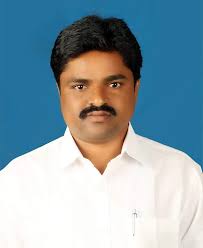
Andhra Pradesh Scheduled Castes Commission chairman K.S. Jawahar on Wednesday appealed to the officials to implement the welfare schemes meant for Scheduled Castes without delay. During interactions with Dalit leaders Mr. Jawahar received grievances on various issues before reviewing the implementation of the welfare schemes with officials. District In-Charge Collector Y. Megha Swaroop, East Godavari Superintendent of Police D. Narasimha Kishore assured timely action to execute the respective schemes and programmes of the government. The Hindu Bureau Courtesy : The Hindu Note: This news is originally published on https:/timesofindia.com/bha and is used purely for non-profit/non-commercial purposes, especially human rights
Kanimozhi meets Rahul in Delhi
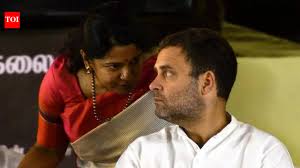
Chennai/Delhi: DMK parliamentary party leader K Kanimozhi met Congress leader Rahul Gandhi at his residence in New Delhi on Wednesday, when he urged the DMK to begin the seat-sharing talks for the Tamil Nadu assembly election at the earliest. DMK as well as Congress leaders said the talks were `pleasant and cordial.’ The subject of power sharing too cropped up during the discussions. Though the differences over power-sharing remain inconclusive, there was mutual respect for each other’s position, a Congress leader said. A DMK leader said the interaction helped ease tensions between the allies. Rahul Gandhi is learnt to have conveyed that the DMK should soon begin seat-sharing talks with the committee formed by Congress President Mallikarjun Kharge. The meeting has come a day after Tamil Nadu Congress election in-charge Girish Chodankar said they were waiting for nearly two months for a response from the DMK to begin formal alliance talks. Sources said the meeting between Kanimozhi and Rahul lasted for about 30-minutes. The interaction has reaffirmed the DMK – Congress alliance and put to rest speculation over alleged rifts. “Overall, it was cordial and positive,” he said. The focus of Wednesday’s meeting was on starting negotiations and that the number of seats were not discussed. Both sides agreed that formal talks would begin after chief minister MK Stalin constituted a negotiation committee, expected in early February. Congress general secretary KC Venugopal is likely to visit Tamil Nadu in the first week of February for the talks, party sources said. The meeting Rahul – Kanimozhi meeting has gained significance as a section of the state Congress was pushing for a larger share of seats and a coalition govt. Some Congress leaders publicly supported actor Vijay’s Tamilaga Vettri Kazhagam as a possible alternative, reflecting the unease within the party. The DMK has rejected the proposal for sharing power. “I am confident that we will together arrive at a good solution,” said K Selvaperunthagai, TNCC president. After the alliance framework is finalised, Congress leaders Rahul Gandhi and Priyanka Gandhi are expected to campaign in the state. Their planned January visit for village committee meetings was postponed due to the delay in concluding seat-sharing. Courtesy : TOI Note: This news is originally published on https:/timesofindia.com/bha and is used purely for non-profit/non-commercial purposes, especially human rights
‘Homebound’ actor Shalini Vatsa reveals ‘reading autobiographies written by Dalit women’ for Ishaan Khatter, Janhvi Kapoor, Vishal Jethwa starrer
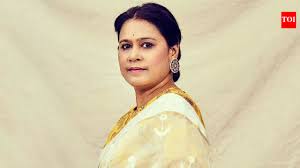
Actor Shalini Vatsa, who essays the role of Phool Kumari, Chandan’s mother, in Neeraj Ghaywan’s ‘Homebound’, recently spoke about the intense preparation that went into portraying the character with honesty and depth. The conversation took place just days before the 2026 Oscar nominations were announced, at a time when the film had already been selected as India’s official entry. Shalini Vatsa’s research for the role In a conversation with Free Press Journal, Shalini Vatsa revealed that preparing for Phool Kumari involved extensive reading and detailed workshops that helped her step into the world of film. “There were workshop sessions on the script, the character, the story. I usually like to prepare by reading books and other material, academic and fiction, related to the theme and the story of a film.” For ‘Homebound’, she read Dr B. R. Ambedkar’s ‘Annihilation of Caste’, autobiographies written by Dalit women, and Maya Angelou’s autobiographical works. She also worked closely on dialect and pronunciation. “I also had to work on the specific diction for this film. I thank Shreedhar Dubey who worked with us on the diction.” When asked whether she anticipated ‘Homebound’ making it to the Oscars when she first signed the project, Shalini Vatsa made it clear that awards were never on her mind. “When I join the team of a film, my fundamental concern is regarding my character, and my preparation to play it with sincerity and responsibility and to delve into the script and live up to the director’s vision. No, I was not thinking about the Oscars or any other awards.” Why working with Neeraj Ghaywan excited her Vatsa also spoke at length about her admiration for director Neeraj Ghaywan and his filmography, which played a key role in her decision to come on board. “I have loved all his works from ‘Masaan’ to ‘Geeli Pucchi’, and some episodes directed by him in ‘Made in Heaven’. It was exciting to be invited to be a part of his next.” ‘Homebound’ and Oscar 2026 While ‘Homebound’ couldn’t make it to the list, the movies that were nominated in the Best International Feature Film Category for the 98th Academy Awards are ‘The Secret Agent’, ‘It Was Just An Accident’, ‘Sentimental Value’, ‘Sirat’, and ‘The Voice Of Hind Rajab’. Chandan K Anand reflects on Homebound The film’s story revolves around two friends, Shoaib and Chandan, who take on the police recruitment exam, hoping that it will bring dignity to them while fighting caste discrimination in the society. But as they get closer to their objective, pressure and difficulties cause issues in their friendship. The film also showcases how they survive during the COVID-19 pandemic. The cast also includes Harshika Parmar, Shalini Vatsa, Chandan K Anand, and Vijay Vikram Singh. It was based on ‘A Friendship, a Pandemic, and a Death Beside the Highway’ by Basharat Peer. The 122-minute-long film premiered at the Cannes Film Festival in May 2025, while the movie was released in theaters on September 26, 2025. Courtesy : TOI Note: This news is originally published on https:/timesofindia.com/bha and is used purely for non-profit/non-commercial purposes, especially human rights
Rahul Gandhi to join stir seeking NREGA reinstatement in AP
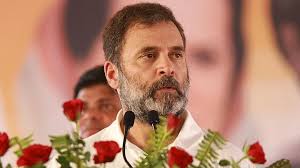
Vijayawada: APCC chief YS Sharmila announced that senior Congress leader and leader of opposition in Lok Sabha Rahul Gandhi will soon launch an agitation against the BJP-led NDA centre from Andhra Pradesh at Bandlapalli, where the NREGA scheme was first launched two decades ago, demanding the Centre to roll back the VB-G RAM G Act and reinstate the NREGA in its original form. Sharmila met Rahul Gandhi in New Delhi on Tuesday and requested him to participate in the agitation campaign. Responding positively to Sharmila’s request, Rahul Gandhi agreed to visit AP and take part in the agitation. Courtesy : TOI Note: This news is originally published on https:/timesofindia.com/bha and is used purely for non-profit/non-commercial purposes, especially human rights
From Bihar, which shook Indira’s power, now a challenge is being sounded against Rahul! Why did a lifelong Congressman call him a coward?
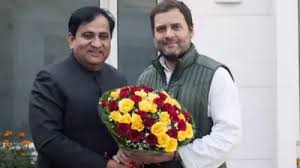
History is witness that sparks of protest rising from Bihar often shake the power in Delhi. After Indira Gandhi, a front has now opened against Rahul Gandhi from Bihar itself. Former Union Minister Dr. Shakeel Ahmed, a lifelong Congressman, has left the party and called Rahul a “coward” and “incompetent,” which is casting a shadow of crisis over the “shop of love.” Patna: The movement against Indira Gandhi started from Bihar, which led to the end of her rule. Now, the loudest voice of protest against Rahul Gandhi has resonated across the country from Bihar. History is witness that a voice of protest emanating from Bihar is never ineffective. Lest it happen that love departs from the shop of love, and only an empty shop remains. Why are those who love Congress leaving it? In reality, there cannot be a shop of love because it is a matter of the heart. Love is not a commodity that can be found in a shop. Now, the owner and proprietor of the shop (Rahul Gandhi) himself is being accused of lacking both competence and courage. Former Union Minister Dr. Shakeel Ahmed has been a lifelong Congressman. But what happened that he first left the Congress and is now calling Rahul Gandhi a cowardly leader? Grandfather was an MLA in 1937, father and son were MLAs 5 times each Can only those who flatter Rahul Gandhi and Sonia Gandhi remain in Congress? Can those with independent opinions not survive in Congress? Three generations of Dr. Shakeel Ahmed’s family served the Congress. His grandfather, Ahmed Ghafoor, was elected to the Bihar Assembly from Congress in 1937. His father, Shakur Ahmed, was an MLA five times from Congress between 1952 and 1977. After 1985, Shakeel Ahmed himself was a Congress MLA five times. He was also a Member of Parliament and a Union Minister. But after the 2025 assembly elections, he left the Congress party. If Shakeel Ahmed, a member of such a dedicated Congress family, has accused Rahul Gandhi of cowardice, there must be some truth to it. Rahul Gandhi lacks an understanding of electoral issues! If someone shows Rahul Gandhi a mirror, instead of fixing his appearance, he becomes intent on breaking the mirror. When Shakeel Ahmed left the party, he said that he still has unwavering faith in the party’s policies, but he has differences with some individuals at the top of the organization. This means his displeasure is with Rahul Gandhi. Some disgruntled Congress leaders say that Rahul Gandhi lacks an understanding of electoral issues. In Bihar, he worked tirelessly for 17 days through the Voter Rights Yatra to make SIR (State Information Commission) an election issue. He tried to create a favorable atmosphere by raising the slogan “Vote thief, leave the throne.” But all his efforts went in vain because it was not an issue in the eyes of the public. Not a single complaint was received against SIR. The debate on Rahul Gandhi’s shortcomings has started again. After Shakeel Ahmed’s statement, the debate on Rahul Gandhi’s shortcomings has intensified once again. It is alleged that Rahul Gandhi has destroyed the internal democracy of the party. When he resigned from the post of Congress president after the electoral defeat, he should have worked for the organization with a clear heart. He should have handed over the reins of the party to a capable leader from outside the family. But Rahul Gandhi could not free himself from the feeling of being the super boss. He did appoint Mallikarjun Kharge, a leader from outside the family, as president, but he kept all the powers in his own hands. Kharge is just a president in name; all the decisions are taken by Rahul Gandhi. Kharge’s signature is just a formality. Now, there is opposition to Rahul Gandhi even at the district level in Bihar. This strong voice against Rahul Gandhi emanating from Bihar will resonate far and wide. Now, even at the district level, Congress leaders have started questioning Rahul Gandhi’s incompetence. Currently, Bihar Congress leaders are holding public meetings in the districts under the ‘Save MNREGA Campaign’. A public meeting was held in Darbhanga on Tuesday. During this time, local leader Ram Narayan accused Rahul Gandhi, saying that the Congress party would not progress in Bihar until the buying and selling of tickets stopped. Local leaders started chanting slogans against Bihar in-charge Krishna Allavaru and state president Rajesh Ram. Authored by: Ashok Kumar Sharma • Edited by: Sunil Pandey About the Author Ashok Kumar Sharma is a senior journalist. He has more than three decades of experience in journalism. He understands the politics and society of Bihar very well and analyzes the changes taking place there with keen observation. He has done special reporting on Lok Sabha and Assembly elections in Bihar. Courtesy: Hindi News
‘A leader of the people’: PM Modi, CM Fadnavis, LoP Rahul Gandhi condole Maharashtra Deputy CM Ajit Pawar’s death
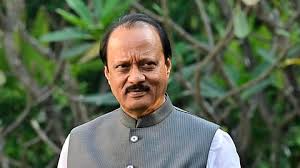
NEW DELHI: Prime Minister Narendra Modi expressed his condolences after Maharashtra deputy CM Ajit Pawar died in a plane crash on Wednesday in Pune district’s Baramati during landing. He said, “Shri Ajit Pawar Ji was a leader of the people, having a strong grassroots level connect. He was widely respected as a hardworking personality at the forefront of serving the people of Maharashtra. His understanding of administrative matters and passion for empowering the poor and downtrodden were also noteworthy. His untimely demise is very shocking and saddening. Condolences to his family and countless admirers. Om Shanti.” — narendramodi (@narendramodi) Prime minister also condoled the deaths of others who were on board along with Pawar. — narendramodi (@narendramodi) President Droupadi Murmu also gave her condolences. She said, “The news of the deaths of several people, including Maharashtra’s Deputy Chief Minister, Shri Ajit Pawar, in an aeroplane crash in Baramati, Maharashtra, is utterly heartbreaking. The untimely demise of Shri Ajit Pawar is an irreplaceable loss. He will always be remembered for his special contribution to Maharashtra’s development, particularly in the cooperative sector.” — rashtrapatibhvn (@rashtrapatibhvn) Maharashtra chief minister Devendra Fadnavis condoled the death of his deputy in a press conference. “This morning, a very tragic incident occurred. In extremely unforeseen circumstances, the news of the unfortunate demise of our state’s deputy chief minister, Ajit Pawar, in an aircraft accident reached everyone, spreading a wave of grief across Maharashtra. For Maharashtra, today is an extremely difficult day,” he said. Further talking about his friendship with Pawar, he added, “Such leadership takes many years to develop, and at a time when he was making very significant contributions to the state’s development, his passing is both unbelievable and shocking. Personally, I have lost a strong and generous friend. This is also an enormous loss for his family.” Leader of opposition Rahul Gandhi also condoled the deaths saying, “The news of the demise of Maharashtra’s Deputy Chief Minister Shri Ajit Pawar Ji and his fellow travellers in an aeroplane accident today is extremely heart-rending. In this hour of grief, I stand with the people of Maharashtra. I extend my condolences to the entire Pawar family and their dear ones in this time of sorrow. Defence minister Rajnath Singh expressed his “pain” on X saying, “Deeply shocked and pained to learn about the untimely demise of Maharashtra’s Deputy Chief Minister, Shri Ajit Pawar.” “Throughout his long public life, he remained committed to the development and prosperity of Maharashtra. He was known for his compassion for the people and his unwavering dedication to public service. I extend my heartfelt condolences to his family, well-wishers, and admirers,” he added. — rajnathsingh (@rajnathsingh) Union minister Nitin Gadkari, expressing condolences said, “The news of the untimely demise of Maharashtra’s Deputy Chief Minister Shri Ajit Pawar ji is extremely shocking, unfortunate, and heartbreaking. My heartfelt tribute to him. Over the past many years, while working together in the state legislature, I have shared a very close bond with Ajit dada. His administrative acumen, developmental vision, and ability to connect with people have ensured that Ajit dada’s place in Maharashtra’s politics remains unshakable. The premature passing of this people’s leader, who harboured aspirations for Maharashtra’s development, is a loss that cannot be compensated—not just for Maharashtra, but for the entire nation. At this sorrowful moment, my condolences are with the entire Pawar family. May God grant peace to the departed soul. Om Shanti.” Congress MP Priyanka Gandhi Vadra also shared her condolences saying, “I extend my condolences to the entire Pawar family and his supporters. I have spoken to Ajit Pawar’s wife and Supriya ji (Supriya Sule).” Commerce minister Piyush Goyal said, “We all are mournful today. He was a close friend and a tall leader in Maharashtra.” Union Minister of Civil Aviation, Ram Mohan Naidu Kinjarapu said, “Deeply saddened by the tragic passing of Shri Ajit Pawar in the plane crash in Baramati earlier today. My sincere condolences to his family, loved ones and all those affected by this loss. May his contributions to public life be remembered, and may the bereaved find strength in this difficult time.” Messages of condolence from across the country Many political leaders from various parts of country expressed their shock and offered condolences after the Maharashtra deputy CM’s demise. Congress president Mallikarjun Kharge also mourned the loss. “The news of the tragic demise of Shri Ajit Pawar, in a plane crash, is deeply shocking and profoundly distressing. It is an untimely loss of a leader who had a long and promising political career ahead,” he said. West Bengal chief minister also expressed her shock on social media, sharing her statement. “Deeply shocked and stunned by the suddden demise of Ajit Pawar! The Deputy Chief Minister of Maharashtra and his co-passengers have died in a disastrous plane crash at Baramati today morning, and I am feeling a deep sense of loss. My condolences to his family including his uncle Sharad Pawar ji, and late Ajitji’s all friends and followers. The incident needs proper investigation.” BSP chief Mayawati said, “The death today of Shri Ajit Pawar ji, Deputy Chief Minister of Maharashtra and one of the stalwart leaders of Maharashtra politics, in an aeroplane crash in Baramati is most heartbreaking. My deepest condolences to his family and the members of his party. May nature grant them all the strength to bear this sorrow.” Andhra Pradesh CM, NDA ally N Chandrababu Naidu also issued a statement on social media. He said, “Shocked and deeply saddened by the sudden passing of Maharashtra Deputy Chief Minister Shri Ajit Pawar ji in a plane crash this morning. I extend my heartfelt condolences to his family, friends, and followers. Om Shanthi.” “The tragic plane crash in Baramati, Maharashtra, which claimed the lives of Maharashtra’s Deputy Chief Minister Shri Ajit Pawar ji and other members, is extremely heartbreaking and soul-wrenching. My humble tribute to them. My condolences are with the bereaved families. I pray to Lord Shri Ram that he grants eternal peace
Dalit youth brutally beaten in Hathras: Attackers bit him with their teeth for resisting, police investigating
A case of brutal assault on a Dalit youth has come to light in Sikandra Rao, Hathras. The youth was seriously injured by goons in the Sikandra Rao police station area. The victim’s brother, Ranjit Kumar, has filed a complaint with the police. Ranjit Kumar, a resident of Mohalla Qazian, stated in his complaint that his brother Asharfi had gone to the forest to defecate around 4 pm. There, 4 to 5 youths surrounded him and started taking money from his pocket. When Asharfi resisted, the accused attacked him with sticks, rods, and kicks and punches. According to the complaint, during the assault, the attackers bit Asharfi on the back with their teeth, causing him to lose consciousness on the spot. Upon receiving information about the incident, the family members reached the spot and immediately informed the police by dialing 112. The injured Asharfi was taken to the hospital for treatment, where he is currently undergoing treatment. The victim’s family alleges that the attackers are the same goons who run a roadside eatery in the area and illegally sell liquor. Ranjit Kumar also stated that the accused had previously assaulted his brother. He has demanded strict action against the accused and expressed fear for his life. In this matter, Kotwali in-charge Shiv Kumar Sharma said that they have received the complaint and the matter is being investigated. Further legal action will be taken based on the investigation. Jaynendra Varshney | Sikandararao, Hathras Courtesy: Hindi News
Public hearing in Hyderabad highlights gaps in SC/ST Atrocities Act enforcement
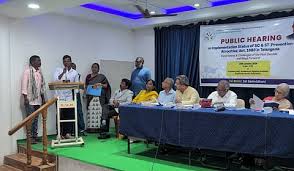
A seven-member civil society jury heard testimonies from Dalit and Adivasi victims at a public hearing in Hyderabad, where activists and legal experts flagged systemic failures in the implementation of the SC/ST (Prevention of Atrocities) Act in Telangana. The Telangana chapter of the National Alliance of People’s Movements (NAPM), along with other state-level anti-caste organisations, held a public meeting on Sunday, January 25, to review the implementation of the Scheduled Castes and Scheduled Tribes (Prevention of Atrocities) Act. A seven-member jury comprising civil society representatives heard testimonies detailing atrocities faced by Dalits and Adivasis from various parts of Telangana. The jury examined 90 cases presented before it, of which victims in 30 cases deposed in person at the review meeting held at Hyderabad’s Sundarayya Vignyana Kendram (SVK). The cases reflected a wide range of issues, including inter-caste and gender-based killings, sexual assault, police torture, custodial violence, and verbal abuse. Speaking at the meeting on the failure to effectively implement the SC/ST Act, retired judge Justice Nimma Narayana said that the Supreme Court and High Courts had not been sufficiently proactive in applying legislative rigour while examining cases under the Act. Advocate Darshanam Narasimha highlighted Section 4 of the Act, which provides for punishment of public servants, including police officers, for neglect of duty. Speakers such as Professors Sujatha Surepally, Rama Melkote, and Kalpana Kannabiran spoke on issues of gender, caste-based humiliation, and constitutional morality, stressing the need for strict and meaningful implementation of the SC/ST Act. The panel noted that the Telangana government must ensure uniform implementation of the Act across the state and demanded the establishment of district-level vigilance and monitoring committees in all districts. The jury said it would submit a list of demands to the Telangana government to ensure effective implementation of the Act in the foreseeable future. The public hearing forms part of a year-long Constitutional Justice Campaign initiated by NAPM Telangana from Republic Day 2026. Courtesy : TNM Note: This news is originally published on https:/thenewsminute.com/bha and is used purely for non-profit/non-commercial purposes, especially human rights
SC Commission member urges immediate FIRs for Dalit atrocities reports
The Andhra Pradesh State Commission for Scheduled Castes member Ravada Seetharam on Monday directed the police department to file First Information Reports (FIRs) immediately when Dalits approach them to report atrocities and other related cases. On the occasion of the 77th Republic Day, he interacted with Dalit leaders and explained the rights guaranteed by the Indian Constitution effective since January 26, 1950. Leaders and activists complained about delays in filing FIRs under The Scheduled Castes and Scheduled Tribes (Prevention of Atrocities) Act-1989 by the police when they approach them. Mr. Seetharam asked them to inform the commission about through the WhatsApp number 9701305417. He said that the Commission would hold a review meeting in February in regards to the pending grievances of Dalit families across the State. K Srinivasa Rao Courtesy : The Hindu Note: This news is originally published on https:/thehindu.com/bha and is used purely for non-profit/non-commercial purposes, especially human rights
From the memoir: A Dalit woman writer on domestic violence, casteism, and emotional subjugation
The savarnas in the village always used coercion to force the safai karamcharis to do the filthy work of collecting night soil. If anyone refused, the village headmen and businessmen would summon and question them. The Thakurs and Raghuvanshis hurled abuses and threats. “Do you want to live in the village or not? We will not spare your lives.” There was no point in leaving the village either, because people of our jati had to do this work everywhere. Besides, forming new relationships in a new place was a daunting task. Our refusal to do this work invited a flood of abusive words and poisonous behaviour, enough to keep our people in constant fear. The threat of sexual violence against our women also remained a powerful weapon of control. Even after the municipality was formed, the savarnas continued to hold on to their dominance. Once, the safai karamcharis of the municipality went on strike. Their monthly wages were a mere five rupees, and even that was never paid on time. They demanded an increase in their pay. The protestors would be summoned to the police station – sometimes urged to compromise, and at other times, beaten brutally by the police. Many people were badly injured. In Seoni, Hari Rathore, Phoolchand Baggan, Chhotelal Baggan, Gorelal, and Dulichand Rathore were the bold and outspoken men of our community. After striking work, a jati panchayat was called, and a unanimous decision was made to go on an indefinite strike. Our people were prepared for the worst, and the savarnas failed to intimidate them. The strike was announced publicly and lasted an entire week, throwing Seoni and Banapura into chaos. Villagers came to our homes, urging us to return to work. People of our jati were summoned to the police station and threatened with dire consequences, but this time, no one gave in. This was the result of their newfound resolve. The distraught women of our community described the condition of their injured husbands and sons to other women and wept over the uncertain future of their children. Another jati panchayat was held to discuss possible solutions to this grim situation. During the strike, policemen constantly patrolled our mohallas, forcing our men into hiding. When they couldn’t find the men, they summoned the women to the police station and made them sit there all day. The women were subjected to verbal abuse and humiliation, threatened with dire consequences, and told to persuade their men to end the strike. Terrified, the women yielded easily. Hearing them weep filled me with fear too. Kalicharan Bhaiya’s wife, Budhia Bhabhi, however, was a bold and fearless woman. Whenever she saw the policemen, she hurled abuses at them: “May you rot in hell! You envy our men and cast lustful eyes on our women. Don’t you have women at home?” The villagers always managed to break such strikes; this was true of strikes in places like Hardi, Itarsi, and Hoshangabad too, which would be forcibly brought to an end. On such occasions, a jati panchayat was convened, and the elders would advise the people of our community to compromise. But we continued to do the same work as before, and we continued to endure the same hardships. This pattern had been reproduced for generations. Young men who resisted and refused to work without pay were summoned to the police station and beaten. False charges of theft and robbery were levelled against them. Then they were given a choice – return to work or rot in jail. The constant threat of the police kept us living in fear. Many such atrocities were committed against our people in Madhya Pradesh, Rajasthan, and other states of northern India. Goons hired by casteist savarnas would storm into our mohallas, beat up our men, and publicly humiliate our women. They even set fire to our bastis. On hearing about such incidents from Pitaji and my brothers, Ma and Nani would tremble with fear and pray to God for protection. Yet the injustices and atrocities committed by the savarnas continued without end. And so, the safai karamcharis of the municipality in Seoni went on strike in 1968 to demand better wages and working conditions, but also to protest against the harassment they were constantly subjected to. I was in class eight then. This time, they showed unity and firm resolve. The demands that had been ignored by government officials for years were now quickly accepted. When the week-long strike ended, the villagers heaved a sigh of relief. After this incident, our people began to be treated with a measure of respect. This was a big achievement, yet our people never realised their own strength. Had they understood the meaning of this change, they could have moved further towards liberation from their oppression. After the strike ended, they struggled immensely clearing the backlog of work that had piled up over those eight days. The second major strike took place in protest against dry latrines. The workers stopped work for many days. Official notifications were issued, recognising the seriousness of the situation. Flush latrines were built to replace the dry ones. This was a major victory for us, yet the work of carrying night soil continued wherever dry latrines remained. Our people still did this degrading work – out of ignorance, fear, or helplessness. Gandhiji’s ideas about the upliftment of the Harijans were widely promoted in our region, but our people didn’t realise that they had brought no real improvement in our condition. Having deep faith in Gandhiji, they often said, “Mahatma Gandhi cleaned his toilet himself. Under his influence, even the traders and moneylenders had begun to pick up the garbage around their homes and dispose of it themselves. When such big businessmen didn’t hesitate to do this work, why should we? We were born into this caste and must do this work, whether we like it or not.” This was a kind of conspiracy, a trap to deceive innocent people and stop them from