
Hyderabad archbishop Cardinal Poola Anthony becomes first Dalit to head CBCI
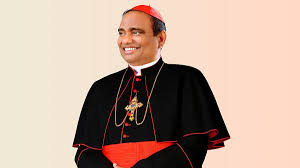
A CBCI statement said Cardinal Poola Anthony assumes office at a crucial time, bringing decades of pastoral experience and a strong commitment to faith, justice, and human dignity. KOCHI: Cardinal Poola Anthony has been elected president of the Catholic Bishops’ Conference of India (CBCI), becoming the first Dalit to head the apex body of the Catholic Church in the country. The 64-year-old cardinal, who serves as Archbishop of Hyderabad, was chosen during the 37th general body meeting of the CBCI, marking a historic moment for India’s nearly two crore Catholics. The election took place at the CBCI’s general body meeting in Bengaluru on February 7, attended by bishops from across India to discuss pastoral, social, and administrative matters. Alongside the president, new office-bearers were elected for a two-year term. Archbishop Thomas Mar Koorilos of Trivandrum was elected vice-president-first, and Archbishop Mathew Moolakkatt of Kottayam as vice-president-second. Archbishop Anil Couto was re-elected secretary general to continue coordinating CBCI’s national initiatives. The leadership reflects the Church’s ecclesial and liturgical diversity, with representation from the Latin, Syro-Malankara, and Syro-Malabar rites, highlighting CBCI’s inclusive character. The conference also expressed appreciation for the outgoing office-bearers—Archbishop Mar Andrews Thazhath, Archbishop George Anthonysamy, and Bishop Joseph Mar Thomas—for their leadership during the previous term. A CBCI statement said Cardinal Poola Anthony assumes office at a crucial time, bringing decades of pastoral experience and a strong commitment to faith, justice, and human dignity. Courtesy : TNIE Note: This news is originally published on https:/thenewindianexpress.com/bha and is used purely for non-profit/non-commercial purposes, especially human rights
‘Forced to Beg, Beaten with Sticks’: Dalit Student Attacked Near Hostel in Gujarat’s Mehsana
Dalit Student Beaten Near Hostel in Gujarat’s Mehsana An incident of alleged caste-based violence has been reported from Mehsana in north Gujarat, an area known as an educational hub. A Dalit student living in the hostel of a BBA BCA college was allegedly assaulted by four men following a minor argument. News subscription service The victim, who is originally from Porbandar and currently studying in Mehsana, said the incident began with a small verbal altercation on February 3 inside the hostel. He alleged that a fellow hostel resident, Mitesh Purohit, abused him during a casual exchange. When the student objected to the abuse, Mitesh allegedly threatened him with consequences the next day. According to the complaint, on the morning of February 4, when the student was leaving for college, Mitesh Purohit and three of his friends stopped him near a Hanuman temple close to the hostel. The accused allegedly pressured the student to fall at their feet and apologise. When he refused, they allegedly used caste-based slurs and assaulted him with wooden sticks and belts. “Their words were more painful than the beating. They abused me using my caste name and tried to humiliate me by forcing me to beg for forgiveness,” the victim told the police. The student suffered serious injuries in the attack. He first took primary treatment at a university hospital but was later shifted to Mehsana Civil Hospital by ambulance after his condition worsened. The victim later approached the Mehsana A Division police station along with his mother and filed a formal complaint. Police have registered a case under the Atrocities Act along with sections related to assault and criminal intimidation. Efforts are underway to trace and arrest the accused, who are currently absconding. A police official said, “A case has been registered under the SC ST Atrocities Act and other relevant sections. We are conducting raids to locate the accused.” The college administration has also taken action following the incident. Vice Principal V K Patel said the main accused student has been suspended from the hostel with immediate effect. “Considering the seriousness of the matter, the college committee has taken strict action. Further disciplinary steps will be decided after internal review,” he said. Courtesy : TOP Note: This news is originally published on https:/theobserverpost.com/bha and is used purely for non-profit/non-commercial purposes, especially human rights
‘Rahul became violent’: Ravneet Singh Bittu on ‘traitor’ face-off, says LoP came towards him after ‘losing his temper’
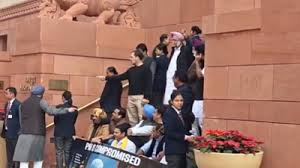
NEW DELHI: Union minister Ravneet Singh Bittu on Saturday reacted to his face-off with Rahul Gandhi over the latter’s “traitor” remark at Parliament earlier this week. Bittu alleged that the Lok Sabha leader of opposition lost his “temper” and became “so violent” that he had to be held back by other Congress leaders. The former Congress leader said that he was walking to the Parliament when Rahul came towards him “after losing his temper”, PTI reported. And he was offering a handshake, thinking that he is a ‘shahanshah’ (emperor), Bittu said. “His one arm was held by Congress leader K C Venugopal and the other by Gurdaspur MP Sukhjinder Randhawa,” PTI cited Bittu saying. “He became so violent, do not know what he had, only God knows,” claimed Bittu. The incident occurred outside Parliament’s Makar Dwar, the main entrance used by MPs to access the new Parliament building, where Rahul was standing with suspended Congress MPs, most of them from Punjab, who were protesting on the steps. “Here is a traitor walking right by. Look at the face,” Rahul said, directed at Bittu. He offered to shake hands, saying, “Hello brother, my traitor friend. Don’t worry, you will come back (to Congress).” Bittu refused to shake hands and retorted, “Desh ke dushman..” The verbal exchange was caught on camera. He further said that he did not quit the Congress mid-term, adding that he completed his third term as a Congress MP before joining the BJP Bittu joined BJP ahead of the 2024 Lok Sabha polls. He is a Rajya Sabha MP and was inducted as a minister during PM Narendra Modi’s third term in office. Courtesy : TOI Note: This news is originally published on https:/timesofindia.com/bha and is used purely for non-profit/non-commercial purposes, especially human rights
How Shashi Tharoor-Congress ‘Hum Saath Saath Hai’ moment gives UDF a timely lift before Kerala polls
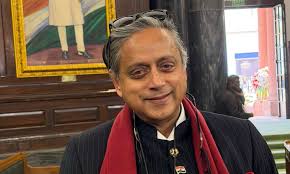
NEW DELHI: The recent patch-up and the ‘all is good’ moment between Shashi Tharoor and the Congress high command have given the Congress in Kerala much-needed momentum ahead of the April–May assembly elections. Tharoor’s meeting with Mallikarjun Kharge and Rahul Gandhi in New Delhi, after weeks of speculations about his strained ties with the party, has ended what many within the Congress described as an “awkward episode” and positioned him as a central campaign face for the Congress-led United Democratic Front (UDF). At a time when the ruling Left Democratic Front (LDF) is battling incumbency fatigue and the BJP is testing the limits of its expansion in the state, the reconciliation gives the UDF a renewed sense of coherence and momentum. ‘All is good’ at a critical moment The recent Tharoor–Congress thaw sends a strong signal of unity to cadres and allies alike at a crucial time. Tharoor reportedly had been upset over the treatment meted out to him by Rahul Gandhi at a Kochi event recently and attempts by some leaders to sideline him in Kerala. For a party often in crisis over factionalism in its state units, the optics in Kerala were damaging. The reconciliation addressed that head-on. The leader of the opposition in the assembly, VD Satheesan’s faction, and leaders seen as sympathetic to Tharoor now have little room for parallel power centres. The warmth also saves Congress from embarrassment in front of its own LDF allies. Last year, as Tharoor had pointed out, “absence of a leader” in the Kerala party unit, Indian Union Muslim League (IUML) chief Sadiq Ali Thangal had publicly asked the Congress to resolve internal differences, warning that visible discord would only benefit rivals. By bringing Tharoor back in confidence, that concern has now been allayed. This unity boost matters electorally. Since the late 1980s, Kerala voters have flipped governments every five years between the UDF and the LDF. However, this changed in the 2021 assembly polls, when the LDF failed to make gains and the LDF under Pinarayi Vijayan won a second consecutive term. The LDF improved its tally from 91 seats in 2016 to 99 in 2021, while the UDF dropped from 47 to 41 seats. Tharoor’s voter magnetism In the 2021 assembly polls, the biggest drive for the LDF sweep came from the Travancore belt, which includes Thiruvananthapuram, Kollam, Alappuzha, Pathanamthitta and Kottayam. The LDF won a majority of seats in Thiruvananthapuram and Kollam, traditionally swing-heavy areas. Tharoor’s Lok Sabha seat, Thiruvananthapuram, had also historically been a swing constituency, alternating between the Congress and the Left, and more recently becoming a BJP target seat. In the 2024 Lok Sabha elections, the BJP fielded Union minister Rajeev Chandrasekhar against Tharoor, but the Congress leader retained the seat for the fourth time by over 16,000 votes. The UDF swept 18 of 20 Lok Sabha seats. Tharoor’s appeal has been particularly visible among educated, salaried and first-time voters, segments that have shown increasing volatility in recent state and local elections. This cohort has not consistently aligned with the Congress organisation and has, at times, been receptive to the BJP’s urban outreach or the LDF’s governance pitch. Tharoor’s sustained wins in Thiruvananthapuram suggest an ability to arrest that drift, even when broader party trends are mixed. At a strategic level, this gives the UDF a pathway to expand beyond its traditional social bases without alienating them. Urban centres such as Thiruvananthapuram, Kochi and Kozhikode, where turnout fluctuates and margins are often narrow, are likely to play an outsized role in 2026. Tharoor’s presence allows the Congress to contest these spaces more credibly, particularly at a time when the BJP has signalled intent through incremental municipal gains and a recent mayoral victory. The Congress leadership’s decision to deploy Tharoor as a campaign spearhead, tasked with touring all 140 constituencies, adds star power to a contest that often hinges on narrative dominance. Tharoor’s oratory, media presence and ability to frame local issues within a national and global context give the UDF an edge in reaching undecided voters. Countering LDF and BJP narratives The patch-up blunts rival narratives at once. For the BJP, which has repeatedly highlighted Congress infighting to project itself as a disciplined alternative (recently by also using Tharoor’s name frequently), the reconciliation weakens the “internal chaos” line of attack. This comes at a moment when the BJP is seeking to capitalise on its recent mayoral win in Thiruvananthapuram municipal corporation, a symbolic breakthrough that signalled growing urban traction, even if assembly-level success remains elusive. Moreover, Tharoor’s active presence on the campaign trail is likely to help the UDF attract the younger demographic, especially aspirants and educated youth. The Congress leader’s credibility as an author, diplomat and global speaker also gives him unique traction among voters in Kerala, given the state’s high literacy rate. Both the LDF and the BJP-led NDA have also often portrayed the Congress as dynastic and directionless. The image of Tharoor standing alongside Rahul Gandhi will undercut those claims, at least for now. Risks contained, momentum regained Perhaps the most immediate benefit of the reconciliation is risk mitigation. Speculation that Tharoor might drift towards the LDF or even explore non-Congress platforms has been firmly quashed. His integration into the Congress election campaign gives a message of consistency. The memory of 2021 still looms large for Congress strategists. Despite favourable anti-incumbency indicators then, the UDF failed to convert opportunity into victory. The Tharoor patch-up is being seen as a corrective step, aimed at ensuring that organisational weaknesses do not once again squander political openings. By restoring unity, the Congress-Tharoor patch-up gives the opposition UDF a credible shot at turning the page after years of Left rule. Whether it translates into seats in elections will depend on execution, alliances and local dynamics, but for now with this ‘Hum Saath Saath Hai’ image, the UDF has scored an early and much-needed win before heading into the elections. Courtesy : TOI Note: This news is originally published on https:/timesofindia.com/bha and is used purely
Dalit woman alleges rape in Inayatnagar: Exploited for six months on the pretext of getting a job, case registered
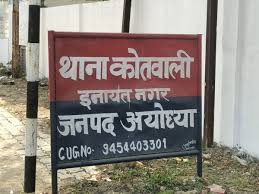
A Dalit woman from a village in the Inayatnagar police station area has accused a young man of rape, prolonged exploitation, assault, and death threats on the pretext of getting her a job. Based on the victim’s complaint, the police have registered a case against the accused under various sections and have started an investigation. In her complaint to the police, the victim stated that about six months ago, Ram Avtar, a resident of Mukimpur village, promised to get her a job. On this pretext, he took her to his house, where he allegedly drugged her and raped her. The woman alleges that the accused threatened to defame her by making the pictures of the incident public, due to which she continued to be exploited for six months. According to the victim, on Wednesday, the accused again called her to his room and tried to force her into an illegal relationship. When the woman resisted, the accused abused her with casteist slurs, brutally assaulted her, and threatened to kill her. Due to fear, the victim did not inform her husband about the incident at that time. The woman later reached the Inayatnagar police station and filed a complaint. Considering the seriousness of the matter, the police have registered a case against the accused under sections related to rape, assault, threats, and the Scheduled Castes and Scheduled Tribes (Prevention of Atrocities) Act, among other relevant sections. In this regard, Inayatnagar Station House Officer Ratan Kumar Sharma said that a case has been registered based on the victim’s complaint. The matter is being investigated thoroughly, and further legal action will be taken based on the evidence. Shiv Kumar Pandey | Milkipur Courtesy: Hindi News
Liquor shops around Dalit bastis are not a coincidence. It’s trauma seeking an outlet
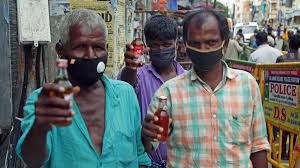
Markets follow vulnerability and the state taxes the bottle, while condemning the drinker. I’m not an F-up,” she always says. But little did Apurva know, it takes more than having a stable job to shake that label. She started smoking weed while studying at IIT-Kanpur. It quickly spiralled into owning a bong, grinders, rolling paper, and knowing how to score in every city—this 420 fascination became a lifestyle. Having no father figure and an emotionally absent mom, this neo-Buddhist Dalit girl slowly turned into a self-proclaimed “girl who likes to smoke up”. A one-dimensional personality. Across societies, substance abuse has long followed the fault lines of oppression. Native American communities in the United States struggle with alcoholism rooted in dispossession and cultural erasure. African Americans face higher rates of drug criminalisation and addiction shaped by slavery, segregation and systemic racism. These patterns are now widely understood as outcomes of historical trauma, not individual weakness. India, however, remains reluctant to apply the same lens to caste. When Dalits drink, smoke, or spiral into addiction, the dominant explanation is moral failure. Rarely do we ask what centuries of humiliation, violence and exclusion do to the human psyche and body over generations. Data already tells us what public discourse refuses to admit. National surveys consistently show that alcohol and tobacco use are higher among Scheduled Castes than among upper-caste groups. The National Family Health Survey (NFHS-5) records a higher prevalence of alcohol consumption among Scheduled Caste and Scheduled Tribe men compared to forward castes, a pattern mirrored in tobacco use among both men and women. Maharashtra, often projected as a progressive state, is no exception. Studies by Oxfam and state public health departments show disproportionate substance dependence in Dalit-dominated rural belts and urban slums, particularly among men engaged in informal, hazardous labour. Yet numbers alone do not explain why these patterns persist across generations. To understand this, one must confront inter-generational trauma—a concept still treated with suspicion in India, as if acknowledging psychological inheritance weakens personal responsibility. Trauma does not vanish with time; it embeds itself. When a community lives for centuries under graded inequality, is denied dignity, pushed into stigmatised labour, subjected to routine violence, and told repeatedly that they are less than human, the stress response becomes chronic. Cortisol levels remain elevated. Anxiety becomes an inherited behaviour. Silence becomes survival. Substance use, then, is not indulgence; it is regulation. In Maharashtra, the geography of addiction often overlaps with the geography of caste. Sugarcane cutters, sanitation workers, tannery labourers, construction hands, many from Dalit communities, operate in physically brutal environments with little job security and no mental health support. Alcohol becomes a painkiller, antidepressant, and social glue. Country liquor shops cluster around labour camps and Dalit bastis not by coincidence, but because markets follow vulnerability. The state taxes the bottle, while condemning the drinker. Moralising language, invisible struggle What makes caste trauma distinct from other forms of deprivation is its inescapability. Poverty can change; caste sticks. A Dalit child may grow up watching a parent humiliated at work, addressed by caste name, or denied basic respect. These experiences shape self-perception long before adulthood. Research in social neuroscience increasingly shows that chronic social stress alters neural pathways related to impulse control and reward. Addiction, in this sense, is not merely learned behaviour; it is embodied memory. Mental healthcare systems in India are neither equipped nor inclined to recognise this. Public de-addiction programmes focus on abstinence without addressing the cause. Counselling frameworks imported from Western psychology speak of “individual triggers”, while ignoring structural violence. For a Dalit man in a Maharashtra village, therapy that refuses to name caste is not neutral; it is erasure. As one Dalit rights activist from Marathwada puts it, “You cannot heal a wound while pretending the knife does not exist.” Women in Dalit communities carry a different, quieter burden. NFHS data shows lower alcohol consumption among Dalit women compared to men, but significantly higher tobacco use than upper-caste women. Chewing tobacco becomes a socially permissible coping mechanism in lives defined by unpaid labour, domestic violence, and economic precarity. Yet policy discourse rarely recognises this as addiction at all. Dalit women’s suffering is normalised to the point of invisibility. The moralising language around addiction also does real damage. When substance use is framed as a lack of willpower, the solution offered is punishment or shame. Families internalise blame. Communities fragment. Meanwhile, the structural conditions remain untouched. Contrast this with how addiction among urban, upper-caste youth is discussed—as stress, burnout, or existential crisis. Same substance. Different sympathy. There is also an uncomfortable political economy at work. The Indian state profits enormously from alcohol revenue, much of it extracted from marginalised communities. In Maharashtra, excise duty constitutes a significant portion of state income, even as alcoholism devastates Dalit households. Welfare schemes address the symptoms ie. hospitalisation, malnutrition, domestic violence, but never the root. It is easier to police bodies than to dismantle caste. Not a personal vice Breaking this cycle requires a shift from moral judgement to public health and social justice. Trauma-informed policy must recognise caste as a determinant of mental health. De-addiction programmes need to be community-based, culturally grounded, and explicitly caste-aware. Mental health workers must be trained to understand how humiliation, exclusion and inherited stigma shape behaviour. Employment, dignity, and psychological safety are as essential to recovery as sobriety. Most importantly, India must abandon the convenient fiction that caste no longer matters. Addiction in Dalit communities is not a personal collapse; it is a social indictment. It reflects what happens when a civilisation normalises inequality for centuries and then feigns surprise at its consequences. Until caste oppression is addressed as a lived, embodied trauma and not a historical footnote, the bottle will remain both refuge and ruin. Apurva has attended vipassana meditation course twice, even helping as a server. But addiction is hard to shake off when it becomes a personality trait and an escape mechanism. India likes to speak of addiction as a personal vice because that
Dalit teenage girl kidnapped in Ayodhya: Went missing from a wedding ceremony, accused arrested, case registered under POCSO Act

A case of kidnapping and rape of a Dalit teenage girl has come to light in the Inayat Nagar police station area of Ayodhya. The girl had gone to attend a wedding ceremony at a relative’s house, from where she suddenly went missing. Upon receiving the information, the police initiated action and arrested the accused young man within 24 hours and sent him to jail. Went missing late at night: According to the information, the teenage girl had gone to attend a wedding. Late at night, she disappeared under suspicious circumstances. The family members searched extensively in the surrounding area, but found no trace. They then informed the local police. Clue from the girl who accompanied her: The police, who arrived at the scene, questioned the girl who had accompanied the victim to the restroom. The girl said that a young man known to her came there and took the victim with him. Following this, the police intensified the search with the help of surveillance. Recovery and medical examination: The police recovered the accused along with the girl within 24 hours. The victim underwent a medical examination, and her statement was recorded in court. Further action was taken based on the report and statements. Case registered under POCSO and SC/ST Act: Police area officer Ajay Kumar Singh said that based on the complaint from the family members, a case has been registered against the accused under several sections, including rape, POCSO Act, and SC/ST Act. The accused was produced before the court and sent to jail. Vijay Pathak | Ayodhya Courtesy: Hindi News
12 Bangladeshi Transgender Nationals Living Illegally Detained in Mumbai, Deportation Process Initiated

The Anti-Terrorism Cell (ATC) of Versova Police has detained 12 Bangladeshi transgender nationals who were found to be . The Anti-Terrorism Cell (ATC) of Versova Police has detained 12 Bangladeshi transgender nationals who were found to be residing illegally in India. The action was carried out on February 4 and 5, 2026, at multiple locations in Andheri West and Malvani, According to police officials, the first operation was conducted in the early hours of February 4 at around 3:30 am at the premises of Shakrullah Shah Baba Dargah on JP Road, Versova. During routine bandobast duty, police personnel noticed nine transgender individuals conversing in the Bangladeshi dialect. On questioning, all of them admitted to being Bangladeshi nationals and revealed that they had entered India illegally without any valid documents or permission. The second operation took place on February 5 at around 1:30 pm in the Old Madha area of Andheri West, including Hanuman Mandir Lane and a nearby residential complex. Three more Bangladeshi transgender nationals were detained from the spot. During investigation, Bangladeshi mobile numbers, birth certificates and other digital evidence were recovered from their possession, confirming their nationality. Police investigations further revealed that all the detained individuals were using mobile applications to remain in contact with associates in Bangladesh. Action has been initiated against them under the Foreigners Act, and the process to deport them from India has begun. Regional Registration Office (FRRO), and the concerned Deputy Commissioner of Police. The entire operation was carried out under the leadership of Senior Police Inspector Dipshikha Bhagyashree Avhad Ware, under the guidance of the Additional Commissioner of Police and the Deputy Commissioner of Police, Zone-09. Police officials stated that such strict action against foreign nationals residing illegally in India will continue in the future. By vishal.singh Courtesy : Lokmat Times Note: This news is originally published on https:/lokmattimes.com/bha and is used purely for non-profit/non-commercial purposes, especially human rights
‘Habit of repeating false things’: Kharge targets PM Modi over RS speech; cites Naravane ‘memoir’ in fresh salvo
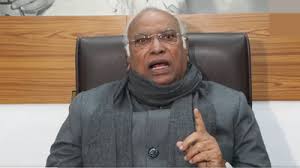
NEW DELHI: Congress president Mallikarjun Kharge on Friday criticised Prime Minister Narendra Modi and the Union government over what he called a denial of facts surrounding the publication of former Army chief General M.M. Naravane’s memoir, saying the issue was “right under your nose” and accusing the government of evading key questions raised by the Opposition. Kharge’s remarks came after Opposition parties walked out of the Rajya Sabha during the Prime Minister’s reply to the debate on the President’s address yesterday, alleging that their concerns – particularly on national security and China – were not addressed. “There is no need to react to the PM’s speech, but I would like to respond to the things he said. Because repeating the lies has been one of his habits,” Kharge said, referring to the Prime Minister’s speech. “In 97 minutes of this speech, the PM did not say anything conclusive, he didn’t reply to any of the concerns we had raised during the discussion, but only spoke about the last 100 years, 75 years and 50 years.” Referring to the controversy over former Army Chief General Naravane’s memoir, Kharge questioned the government’s claim in Parliament that the book had not been published. “When we talk about the country’s defences, we received the published book by General MM Naravane (Retd), but how did you not get it? And you say in the parliament that the book hasn’t been published. How can the Defence Minister say that the book is not published? It is a privilege. It is right under your nose,” Kharge said. He alleged that both home minister Amit Shah and defence minister Rajnath Singh repeated the same position in the House before Rahul Gandhi brought an alleged “memoir” of ex-Army Chief Naravane in Parliament. “In the end it turned out to be true,” he said. Kharge also questioned the government’s response when Leader of Opposition in Lok Sabha Rahul Gandhi raised the issue of China during the debate. “Why were they troubled when LoP Rahul Gandhi raised the issue (China issue)? Listen to the truth and reply… deny it,” he said. Kharge said the Opposition decided to walk out as it felt the Prime Minister had failed to substantively respond to the debate. “It is so unfortunate that he had no substance and answer to the issues we had raised in the House. Later, they only kept abusing me,” he said. Rejecting allegations that the Congress had insulted the Sikh community, after Rahul Gandhi’s comment calling Union minister Raveneet Bittu “traitor” snowbowled into a big controversy, drawing sharp reaction from BJP. Kharge said, “We respect the Sikh community.” He cited former Prime Minister Manmohan Singh, saying, “Dr Manmohan Singh, a renowned economist was appointed the Finance Minister and PM twice, the same post as Modi ji.” Accusing the ruling party of relying on attacks rather than governance, Kharge said, “In the last 10 years, what have they done except abuse the Congress?” Courtesy : TOI Note: This news is originally published on https:/timesofindia.com/bha and is used purely for non-profit/non-commercial purposes, especially human rights
Indo-US trade deal a death knell for farmers: Congress

Jandiala Guru: Congress leaders on Friday sounded alarm bells over the Indo-US trade deal, saying it will sound the death knell for the country’s farmers as the US agricultural products will flood Indian markets. They also alleged that Prime Minister Narendra Modi surrendered under pressure from the US President Donald Trump and was forced to accept these conditions, which were against the country’s interests. Addressing the ‘MGNREGA Bachao Sangram’ rally here on Friday, the Congress leaders resolved that, in the way PM Modi was forced to withdraw the three controversial “black” agricultural laws, the same way he will be forced to restore the MGNREGA by the Congress. Bhupesh promised that, in case the BJP govt does not restore the MGNREGA, the Congress govt, which will be formed in Punjab in 2027, will make special provisions for the poor labourers so that they are not affected by its withdrawal. Similarly, he said, once the Congress govt is formed at the Centre in 2029 with Rahul Gandhi as the PM, the MGNREGA will be restored in its original form. Referring to the Indo-US trade deal, he said it was the sign of a weak PM who completely surrendered before Trump. He said, under Modi, the country was seen as weak as it was being arm-twisted by the US and the Chinese. Speaking on the occasion, the Punjab Congress President Amarinder Singh Raja Warring blamed both the central and the state govt for the failure to implement the MGNREGA scheme in Punjab. He said that while Modi scrapped the scheme now, chief minister Mann already failed as Punjab was providing negligible work under this scheme. Warring also lashed out at the BJP and its leaders for trying to distort the conversation between Rahul Gandhi and Ravneet Singh Bittu. Giving details of the conversation, he said he was very much present on the occasion when Rahul addressed Bittu as his “traitor friend”. He condemned the BJP for trying to give communal colour to the issue and accuse Rahul of insulting the Sikhs. He pointed out it was Bittu himself who said it so many times that he started wearing a turban at the behest of Rahul Gandhi only. Moreover, he added, Rahul Gandhi had so much faith and respect for the Sikh religion that he performed seva at Darbar Sahib round the clock. “Can such a person really insult Sikhs?” he asked. Courtesy : TOI Note: This news is originally published on https:/timesofindia.com/bha and is used purely for non-profit/non-commercial purposes, especially human rights