
Pattas for 2BHK houses handed over to Dalit slum dwellers
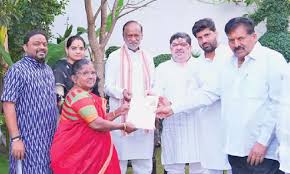
Hyderabad: Ina significant development for the Dalit slum dwellers of Vivekananda Nagar in Gandhinagar division under Musheerabad Assembly, double bedroom house pattas were allotted on Saturday with the support of Minister Ponnam Prabhakar and at the initiative of MP Dr K Laxman.Geographic Reference The allotment comes in the wake of the demolition of houses in the locality, which had left many families displaced. Rajya Sabha member Dr. K Laxman has been continuously fighting for justice for the affected families, bringing the issue to the attention of the National Commission for Scheduled Castes in Delhi and pursuing a political struggle against the state government. The distribution of pattas marks a major relief for the Dalit families, ensuring them secure housing and recognition of their rights. The program was attended by several prominent leaders including Musheerabad MLA Mutha Gopal, Rajya Sabha member Anil Kumar Yadav, and former Gandhinagar corporator Pavani Vinay Kumar, alongside Dr. Laxman. The leaders expressed solidarity with the residents and assured them of continued support in safeguarding their welfare. The move is seen as a step towards addressing long-standing housing issues faced by marginalised communities in Hyderabad. Courtesy : THI Note: This news is originally published on https:/thehansindiaindia.com/bha and is used purely for non-profit/non-commercial purposes, especially human rights
Dalits, backward classes lose out to SP’s core voter constituencies in Uttar Pradesh
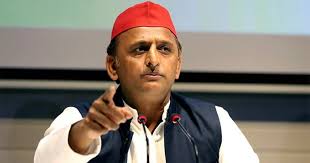
About 70% of SP’s 97 district and metropolitan presidents belong to Yadav and Muslim communities, raising questions over the enforcement of PDA slogan within the party organisation. LUCKNOW: When Samajwadi Party (SP) bagged 37 of 80 Lok Sabha seats in UP in 2024 polls by playing out its PDA (Pichhda, Dalit and Alpsankhyak) narrative, it was expected that leaders from backward classes, Dalits and Muslims would get wider representation in the party structure. However, the current organizational structure reflects the dominance of SP’s core M-Y (Muslim-Yadav) combination. About 70% of the party’s 97 district and metropolitan presidents belong to Yadav and Muslim communities, raising questions over the enforcement of the PDA slogan within the party organisation. Though the Yadav population in the state is estimated to be 8-9%, this core vote bank dominates the SP’s organisation. As many as 42 district president posts have gone to Yadavs. Muslims come second with 24 positions. Only seven people from the general category have been made district chiefs. “SP had achieved success in the 2024 Lok Sabha elections with PDA slogan. Akhilesh Yadav went to the Lok Sabha from Kannauj vacating his Karhal assembly seat. He had the opportunity to field a person from PDA category in Karhal bypoll, but he fielded his nephew Tej Pratap Yadav. SP’s PDA narrative now stands exposed,” a BSP leader said. BJP spokesperson Rakesh Tripathi said SP’s PDA model was a facade. “Outside the family, they will not give major responsibility to anyone. In the organization too, they don’t look beyond the M-Y equation,” he said. SP spokesperson Udayveer Singh said district presidents are chosen based on people’s opinion. “In the state committee, it is ensured that every section of society gets a place,” he said. Namita Bajpai Courtesy : TNIE Note: This news is originally published on https:/thenewindianexpress.com/bha and is used purely for non-profit/non-commercial purposes, especially human rights
In rejig, UP BJP to strike balance in upperCaste and OBC-Dalit representation
Lucknow: With assembly elections due early next year, the much-anticipated organisational rejig in the UP BJP, expected later this month, is likely to swing the spotlight back on party’s bid to strike a balance between the upper caste and the OBC-Dalit combo. Facing the heat over the controversy around UGC equity regulations and the face-off with Swami Avimukteshvaranand Saraswati during the Magh Mela, the BJP leadership is learnt to be treading a cautious path while making moves to consolidate the upper caste, which was the backbone of the party’s electoral success since the early 1990s. The party relayed initial hints recently when it released the fresh list of 11 district presidents, of which six were from the upper caste (three Brahmins and one each from the Thakur, Vaishya and Kayastha community), three were OBC and two were from the Dalit community. The distribution indicated that the party was unwilling to abandon its traditional base while simultaneously ensuring representation of backward and marginalised groups. All eyes are now on the new UP BJP state executive, which will steer the party’s organisational machinery in the election year. Changes are expected to be affected across the state leadership, which has a domination of the upper caste. Of the 18 vice-presidents, 10 are from the upper caste, five are OBC and three are Dalit. Likewise, of the seven state general secretaries, three are from the upper caste, three are OBC and one is SC. Similarly, of the 16 state secretaries, nine are from the upper caste, three are OBC and four are Dalits. As a matter of fact, while CM Yogi Adityanath is a Thakur, UP BJP president Pankaj Chaudhary and state general secretary (organisation) Dharam Pal Singh are OBC. At the same time, the BJP seeks a measured and accelerated outreach to the non-Yadav OBC and non-Jatav Dalit to augment its social coalition that formed the launch pad of its electoral success under the leadership of PM Narendra Modi in 2014. The OBC-Dalit combo has become all the more important for the BJP even as it faces a resurgent opposition and its Piccha Dalit Alpsankhyak (PDA) poll narrative, which is said to have dented the saffron brigade in the 2024 Lok Sabha elections when its tally came down from 62 to 33. Sources said that the UP BJP leadership was coordinating closely with the RSS, the party’s organisational fountainhead, while constituting a new team. The BJP-RSS coordination meetings have already been held in various organisational regions to draw up a formal blueprint of the organisational set-up. A senior UP BJP leader said that besides the caste balance, the party aims to bring in equitable representation of all six regions. Currently, the balance is tilted in favour of the Gorakhpur region, which happens to be the political backyard of not only Adityanath but also Chaudhary. Not surprisingly, the focus is expected to be on five other regions: Kashi, Braj, Awadh, West UP and Kanpur-Bundelkhand. “The party’s foremost priority was to give balanced representation to all castes, communities and regions based on the winnability factor. This would be factored in prominently when the new team is announced,” said UP BJP spokesperson Hero Bajpai. A senior UP BJP leader said that the party is expected to focus on the deployment of youth and women functionaries, the two key electoral blocs, in an attempt to cut across the caste spectrum. Analysts said that while young voters form a large share of UP’s electorate, women voters increasingly determine electoral outcomes. Courtesy : TOI Note: This news is originally published on https:/timesofindia.com/bha and is used purely for non-profit/non-commercial purposes, especially human rights
Ernakulam district panchayat to train transgender persons in cosmetology
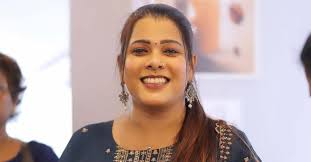
The initiatives focus on ensuring equitable access to basic needs such as employment and healthcare support, thereby creating sustainable livelihood opportunities for the community In an effort to make panchayats more inclusive and responsive to the needs of the transgender community, the Ernakulam district panchayat will implement projects to promote their welfare, dignity, and empowerment. The initiatives focus on ensuring equitable access to basic needs such as employment and healthcare support, thereby creating sustainable livelihood opportunities for the community. Discussions have already been held with members of the community. “One of their major concerns is finding a safe and secure workplace. The stigma they face from society, including in workplaces, needs to be addressed. We must ensure their holistic well-being so that they can lead a more dignified life,” said district panchayat president K.G. Radhakrishnan. As a pilot initiative, focus will be given to training individuals interested in starting their own entrepreneurial ventures. “A large section of the community have expressed interest in cosmetology. Training in cosmetology will be provided free of cost, while a subsidy will be provided to set up business ventures. Some are interested in setting up cafes. We will look at individual interests and formulate a programme,” he said. In the healthcare sector, the panchayat will go ahead with the ‘Marivillu’ programme, but starting this year, medicines will be offered through transgender clinics. Post-operative and hormonal medicines will be provided free of cost. The civic body is also planning to bring the members of the community under one umbrella. A challenge faced by the community is that a significant percentage of the them are living without disclosing their identities. “They are a highly scattered group. Most of them have arrived from different districts and have settled in Ernakulam. We can only include those residents belonging to our panchayats under our welfare schemes. We are considering how to address this,” he added Courtesy : The Hindu Note: This news is originally published on https:/thehindu.com/bha and is used purely for non-profit/non-commercial purposes, especially human rights
Rahul promises free travel for all women
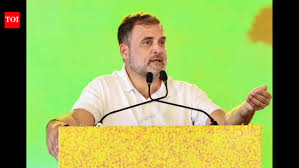
T’puram: Lok Sabha opposition leader Rahul Gandhi on Saturday launched the UDF’s campaign for the assembly elections by announcing five guarantees if it comes to power. Addressing a rally in the state capital, Gandhi promised free bus travel for women in KSRTC buses, a monthly stipend of Rs 1,000 for college-going girl students and an increase in monthly welfare pensions to Rs 3,000. He also announced a new health insurance scheme named after former chief minister Oommen Chandy, offering coverage of up to Rs 25 lakh for every household and the creation of a dedicated ministry for senior citizens. The UDF also promised interest-free loans of up to Rs 5 lakh for young entrepreneurs. Rahul also cautioned UDF leaders to remain united in the runup to the elections. Saying that this message came from the people of Kerala, he urged leaders of the alliance to work together if they wanted to return to power. Using the analogy of a group dance performance, he called on leaders to “dance together” to defeat what he termed the “corrupt” LDF govt and ensure a better future for the people of Kerala. He also expressed gratitude to the people of the state for their support during politically challenging times. The Congress leader also accused the Centre of selectively targeting opposition leaders through central agencies while sparing leaders of the ruling front in Kerala. He questioned why agencies such as the ED took action against opposition leaders but not against chief minister Pinarayi Vijayan or his family. Gandhi alleged that the BJP and the CPM indirectly worked together in the state. He said a UDF govt would focus on generating employment by supporting small and medium enterprises and creating new opportunities in the state. Earlier, Puthu Yuga Yatra led by opposition leader V D Satheesan concluded in Thiruvananthapuram. Addressing a rally, Satheesan said the people embraced the march as their own and described it as a strong endorsement of the new Kerala model proposed by the UDF. Expressing confidence about the alliance’s prospects in the upcoming elections, he said the UDF would form the govt with more than 100 seats and pledged to rebuild the state. Attacks Modi over US deal Rahul launched a sharp attack on Prime Minister Narendra Modi, accusing him of “betraying the country” by signing a deal with the US that he claimed would harm India’s farmers, small traders and national interests. Rahul said India’s vast data resources, generated by its 1.4 billion people through medical records, communications and mobility patterns, were among the country’s most valuable assets. He alleged that the deal would allow such data to be accessed by the US, which could have implications for India’s future in artificial intelligence and digital technology. This data was sold to the US as per the deal, he said. Addressing a UDF rally in the state capital, Rahul alleged that the agreement would open India’s agricultural sector to large American mechanised firms, putting small farmers in the country at a disadvantage. He said such a move was not undertaken by previous prime ministers and warned that Indian crops and agricultural livelihoods could be affected. Rahul also raised concerns about India’s energy security, claiming that the deal would force India to buy oil only from countries approved by the US. He alleged that this would limit India’s ability to independently procure oil, including from Russia. Rahul further alleged that imports from the US worth around Rs 9 lakh crore could enter India under the agreement, adding that no previous prime minister signed such a deal. Rahul claimed that several documents related to the Jeffrey Epstein case were yet to be made public and alleged that individuals close to Modi, including industrialist Anil Ambani and Union minister Hardeep Singh Puri, were mentioned in them. Rahul further referred to legal issues in the US involving industrialist Gautam Adani and alleged that the prime minister feared financial links connected to the BJP could be exposed. Rahul claimed that due to such pressures, Modi hurriedly agreed to the deal with the US and alleged that the US President publicly threatened to damage Modi’s political career. Hence, Modi was compromised, he added. Courtesy : TOI Note: This news is originally published on https:/timesofindia.com/bha and is used purely for non-profit/non-commercial purposes, especially human rights
AI might not eliminate jobs but change nature of work: Rahul Gandhi
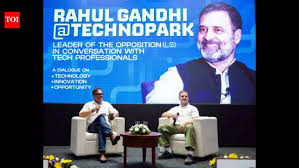
T’puram: Congress leader Rahul Gandhi interacted with technology professionals at Technopark on Saturday during a discussion on the theme ‘Technology, Innovation and Opportunity’. Around 200 invited IT professionals, including software engineers, start-up founders and company CEOs, attended the interaction, which focused on the role of technology in shaping employment, innovation and economic growth. During the discussion, Rahul said emerging technologies such as artificial intelligence might not eliminate jobs but were likely to transform the nature of work. He stressed the importance of developing new skills and capabilities to adapt to changing technological and economic conditions. Speaking about the growth of India’s IT sector, Rahul recalled that when former prime minister Rajiv Gandhi proposed promoting software development in the country, the idea was once dismissed by the CEO of General Electric as impractical. However, he said the vision eventually contributed to the rise of India’s IT industry on the global stage. He also emphasised the importance of curiosity and perseverance in innovation and said individuals should remain open to diverse ideas and approaches. Learning new things, he said, helps improve adaptability and performance in a rapidly changing environment. Referring to global economic trends, he noted that several critical components used in technologies such as drones are currently manufactured in China. Recalling his visit to Germany, he said India should move towards becoming a more production- and manufacturing-oriented economy rather than primarily a consumer-driven one. He also highlighted the need to democratise production systems so that technological advancements benefit not only large corporations but also small enterprises and start-ups. Rahul underscored the importance of data privacy, particularly in the context of sharing sensitive information such as medical and genetic data. As technology advances, he said society must remain vigilant about protecting individual privacy. He also suggested that reforms in the Goods and Services Tax system were necessary to provide greater support to small businesses and MSMEs. According to him, the govt should provide clear policy direction regarding the country’s economic future to help citizens and industries prepare accordingly. Courtesy : TOI Note: This news is originally published on https:/timesofindia.com/bha and is used purely for non-profit/non-commercial purposes, especially human rights
Disabled Dalit man and migrant worker murdered in Tirunelveli, Tamil Nadu
Five other people from the Other Backward Class community were also injured in the attack. On Monday, March 2, a group of nine people allegedly murdered a disabled Dalit man and a migrant worker from Odisha on the basis of caste in Tirunelveli district, Tamil Nadu. The incident took place in Perumapathu village, under the Nanguneri police station. According to The Siasat Daily, the deceased have been identified as 42-year-old John Mark, a resident of Perumapathu village, and 57-year-old Srinath Gadda from Odisha. Police have identified the accused as Kannan, Vasantha Kumar, Anthony Michel, Uchimahali alias Mittai, Raja alias Esakiraja, Subbaiah alias Subhash, and Kalyani, aged between 19 and 21 years. According to a Maktoob Media report, two of the accused were also named in an earlier attack on Dalits, although their identities were not disclosed under the Juvenile Justice (Care and Protection of Children) Act. Some of the attackers were traced and arrested on Tuesday, March 3, and police stated that strict action would be taken against the accused. An official, speaking on condition of anonymity, told PTI, “Police are taking strict action. Some people have been arrested and are being questioned in detail.” Five other people from the Other Backward Class (OBC) community were also injured in the attack. While police initially did not confirm the motive for the attack, later reports indicated that the young men, who belonged to an influential middle caste, allegedly planned the attack to intimidate Dalit youth in the area. How the incident unfolded According to PTI, the victims were at a tea stall on Monday night when a group of nine people on three motorcycles allegedly attacked them with sickles and other weapons, killing Mark and Gadda on the spot. Two of the injured are reported to be in critical condition at the hospital. Police immediately formed six special teams late Monday night and launched an investigation. A police officer, without providing further details, said, “This is a sensitive matter. The police will take strict action.” The incident drew widespread condemnation, and locals from the OBC and Dalit communities protested in the area, demanding the arrest of the accused. The deceased’s family demanded action. On Wednesday afternoon, March 4, the body of Srinath Gadda, a migrant worker from Odisha, was handed over to his family, after which he was cremated at the Tirunelveli Corporation crematorium. John Mark’s family reportedly refused to accept his body, demanding the arrest of the accused. They demanded strict action against the suspects. Tirunelveli District Police stated in a release that a case has been registered and the accused involved in the murder have been arrested and remanded to judicial custody. Police also reported that some individuals are sharing objectionable content related to the case on social media, using abusive and inflammatory language that could disturb public peace. Police stated, “Legal action is being initiated against those spreading such objectionable content on social media.” “Cases have already been registered at the Vijayanarayanam Police Station and Nanguneri Police Station, and efforts are underway to identify and arrest those responsible for such posts.” Tirunelveli Superintendent of Police, Dr. V. Prasanna Kumar, warned that strict legal action will be taken against individuals who spread inflammatory or inciting violence content on social media within the district. Courtesy: Hindi News
Man denies hall for dalit wedding in Erode, booked
Erode: The Perundurai police have booked a marriage hall owner under the Scheduled Castes and the Scheduled Tribes (Prevention of Atrocities) Act for refusing to rent the hall for a dalit couple’s marriage reception. An investigation officer said they booked C Ravi, 45, of Perundurai, who owns a small marriage hall near Anna Silai, based on a complaint lodged by K Rani, 45, a dalit woman from the same area. “Rani approached Ravi in the last week of Feb to book the marriage hall for her younger son’s wedding reception. Ravi confirmed the availability of the hall and agreed to rent it out to her for the event. When Rani met Ravi at the marriage hall’s office on March 3 to hand over advance payment for the hall booking, he asked her about her caste. When he came to know that she was a dalit, he refused to allocate the hall to her,” the officer said. Following this, Rani lodged a complaint with the Perundurai police the same evening. Police registered a case against Ravi under the SC/ST (Prevention of Atrocities) Act and picked him up for interrogation, during which he suffered high blood pressure and fell sick. He was rushed to a private hospital in Perundurai. The officer said Ravi, who was admitted to hospital, would be arrested as and when his condition improves. Courtesy : TOI Note: This news is originally published on https:/timesofindia.com/bha and is used purely for non-profit/non-commercial purposes, especially human rights
Trans “trusted sisters” in India bring healthcare to over 1,500 migrant kids
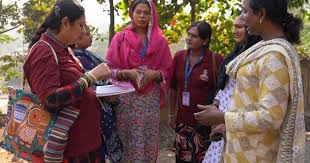
Twelve “Sakhee didis” were recruited for an innovative vaccination program. For two years in slum neighborhoods outside Mumbai in India, a group of trans women known as “Sakhee didis,” or trusted sisters, have been on a mission to vaccinate migrant children in the densely populated settlements. Twelve trans residents in the neighborhoods were recruited by two groups — NGO ZMQ and Gavi, the Vaccine Alliance — for the “Sakhee Project,” to educate and raise vaccination numbers among a population of mostly Muslim migrants from other Indian states. “People thought we had bad intentions,” recalled Tulsi Agarwal, one of the transgender women staffing the project. “Some even believed we would kidnap their children and turn them into eunuchs.” Trans women have conflicting reputations in India, as both modern-day outcasts and ancient bearers of blessings and good fortune for families and communities. Early days of the two-year pilot program were devoted to changing one estimation for the other. “We are always seen as beggars or troublemakers,” said Amrin Khan, another Sakhee didi. “We don’t get respectable jobs. This was a chance to earn with self-respect – but more than that, it was a chance to serve society.” Wadia Qureshi, another member of the group, said the Sakhee didis “were determined to make ourselves useful in a noble mission.” Program organizers recognized unique traits among trans women that would be helpful in the outreach effort. They were fluent in multiple languages and deeply embedded in informal neighborhood networks. The women often knew when a child was born or when a mother was pregnant before the formal health system did. And cultural skills — like storytelling, singing, and humor — could help turn intimidating public health messaging into “conversations that felt familiar rather than threatening,” organizers said. “Urban slums are crowded and complex,” said Hilmi Quraishi, founder of ZMQ. “Migrant families often fear authorities, especially if they lack documents. The program succeeded because it recognized strengths that already existed within the transgender community. We needed a bridge between the health system and the community.” “At first, we were chased away,” Amrin Khan said. “Later, people started inviting us in, offering us tea, and asking for advice. They would say, ‘Come in, sister. Sit down and talk.’” 1,500 children received life-saving vaccines over two years, with the Sakhee didis visiting approximately 40 households every day. Health workers reported they reached families they wouldn’t have otherwise. “They made our work much easier,” said Yasmeen Khan, an auxiliary nurse and midwife. “When we went with them, people opened up. They were excellent communicators and played a crucial role in overcoming vaccine hesitancy.” NGO ZMQ hasn’t said if a permanent program will follow the successful pilot, but the innovative outreach has changed the lives of migrant children and the Sakhee didis alike. The women said the work gave them a sense of legitimacy they hadn’t known before. “Earlier, people avoided us,” one worker said. “Now, when we talk about children’s health, they listen.” Subscribe to the LGBTQ Nation newsletter and be the first to know about the latest headlines shaping LGBTQ+ communities worldwide. Greg Owen writes about politics and culture for LGBTQ Nation. An award-winning writer, producer and journalist, he was recently recognized for Excellence in Online Journalism by NLGJA: the Association of LGBTQ Journalists for his coverage of the 2024 election. He’s written for Q Digital since 2015 and for LGBTQ Nation since 2022. Author Greg Owen Courtesy : LGBTQ Nation Note: This news is originally published on https:/lgbtqnation.com/bha and is used purely for non-profit/non-commercial purposes, especially human rights
Rahul Gandhi to launch UDF’s campaign in Kerala
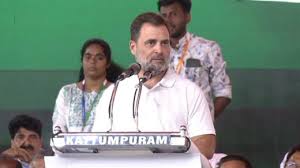
T’puram: Opposition leader in Lok Sabha Rahul Gandhi will inaugurate a public meeting in the capital on Saturday to mark the culmination of senior Congress leader V D Satheesan’s Puthu Yuga Yatra. UDF had started a statewide yatra from Kasaragod on Feb 6 ahead of the upcoming assembly election saying it would present solutions to the state’s problems before the people. UDF leaders claimed the public outrage against LDF govt was clearly mirrored throughout the yatra. Satheesan said that women and youth responded positively to his yatra and people, who did not represent political parties in UDF, also participated in the discussions held as part of the yatra. “A major portion of the yatra was set aside to discuss Kerala’s problems. It was the first time that a political yatra discussed in detail the magnitude of the damage LDF govt inflicted on key sectors, including health, education and agri. Vision documents were released on how UDF wants to rebuild health and higher education sectors,” he said. “Gandhi, who will kick-start UDF’s election campaign on Saturday, may announce some of the key promises and reforms to be included in the election manifesto,” he said. Courtesy : TOI Note: This news is originally published on https:/timesofindia.com/bha and is used purely for non-profit/non-commercial purposes, especially human rights