
Transgender Students Ke Liye Universities Mein 100% Fees Maaf

Government of Maharashtra ne transgender community ke students ke liye ek important decision liya hai. State ki public universities mein transgender students ki 100% academic fees maaf kar di gayi hai. Maharashtra ki sabhi public universities mein transgender students ko poori tarah free education milegi. Universities ko instruction diya gaya hai ki academic fees apne funds se cover karein. Government ka aim hai ki transgender students ko equal opportunity aur dignity ke saath education mile. Financial problems ki wajah se jo students padhai chhod dete hain, unko bhi higher education pursue karne ka mauka milega. Courtesy : Galli News Note: This news is originally published on https:/gallinews.com/bha and is used purely for non-profit/non-commercial purposes, especially human rights
Nod to changes to widen transgender definition

NEW DELHI: Cabinet Tuesday approved a proposal to amend the Transgender Persons (Protection of Rights) Act, 2019, seeking to expand the definition of transgender persons in what is being cited as an attempt to make the law more “inclusive” so that all bona fide persons receive benefits and protection. There has been debate over the implementation of the law, with community leaders raising concerns from time to time. Even Supreme Court has expressed concern over the tardy implementation of the law. While no official details of proposed changes were shared Tuesday, TOI has learnt that the bill proposes to bring clarity to the definition of transgender persons compared to the current provision. Officials said the bill proposes that the criteria for identifying transgenders would be spelt out more elaborately and ensure there is no misuse of provisions. The Transgender Persons (Protection of Rights) Act, 2019, which came into effect on Jan 10, 2020, lays down provisions to provide legal recognition, prohibit discrimination, and mandate welfare measures for transgender individuals. The rules to implement the law were notified on Sept 25, 2020. Sec 2 of the law deals with definitions and states that a “transgender person” includes trans-men/women, intersex persons, gender queer individuals, hijra and others, irrespective of surgery. “A ‘transgender person’ means a person whose gender does not match with the gender assigned at birth and includes trans-man or trans-woman (whether or not such person has undergone sex reassignment surgery or hormone therapy), person with intersex variations, genderqueer and persons having such socio-cultural identities as kinner, hijra, aravani and jogta,” the law states. Courtesy : TOI Note: This news is originally published on https:/timesofindia.com/bha and is used purely for non-profit/non-commercial purposes, especially human rights
Om Birla’s behaviour partisan, LoP cut off 20 times: Gaurav Gogoi
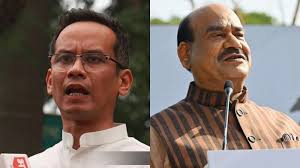
NEW DELHI: The Lok Sabha on Tuesday took up the opposition’s resolution on removal of Speaker Om Birla amid a heated debate over who should preside while the House discussed him. Opening the debate, Congress MP Gaurav Gogoi accused Birla of partisan behaviour. He said the Speaker made “baseless” allegations against women opposition MPs and repeatedly blocked Leader of the Opposition Rahul Gandhi from raising “critical issues” in the House. As soon as Congress member Mohammad Jawed read out the notice seeking to move the resolution, AIMIM leader Asaduddin Owaisi raised a point of order, questioning the decision to allow BJP’s Jagdambika Pal to chair proceedings as he was appointed to the panel of chairpersons by Birla. Congress and TMC MPs also said Pal was not elected by the House, and highlighted that the post of Deputy Speaker has been vacant for last 7 years. Mics are being used to silence MPs: Gogoi Congress and TMC MPs also said Pal was not elected by the House, and highlighted that the post of deputy speaker had been vacant for seven years. While TMC MP Saugata Roy said parliamentary affairs minister Kiren Rijiju should move a motion to appoint a presiding officer specifically for the purpose, Rijiju said Owaisi’s claim was irrelevant as Pal was competent to preside over LS proceedings when the resolution was taken up. Pal then put to vote the notice to move the resolution and asked at least 50 MPs to stand up in its support. The notice was then accepted and Jawed read out the resolution, which was admitted for discussion. Gaurav Gogoi raised questions over the manner in which Birla presided over the House when Rahul had to speak on the motion of thanks to the President’s address. “There was an expectation that the Chair would be neutral. But research of uncorrected versions would show the number of times the LoP was interrupted. While the LoP was on his feet, another member was called upon,” Gogoi added. “Is this parliamentary tradition we want to show? Microphones are being used to silence MPs. It stands in direct contradiction with the rituals of this House,” Gogoi said, pointing out how Shas-hi Tharoor’s mic was allegedly switched off in the middle of his speech on Feb 9. “When the LoP wanted to speak on the motion of thanks, he was interrupted 20 times by the Speaker, me-mbers of the chairpersons’ panel and senior MPs of the treasury benches… in a premeditated manner,” he said. Courtesy : TOI Note: This news is originally published on https:/timesofindia.com/bha and is used purely for non-profit/non-commercial purposes, especially human rights
Rahul Gandhi says PM Modi ‘betrayed the country’ by signing US trade deal
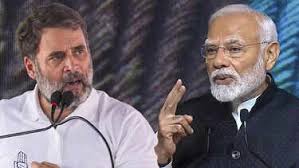
NEW DELHI: Congress leader Rahul Gandhi on Saturday accused Prime Minister Narendra Modi of having “betrayed the country” by entering into a trade agreement with the United States, claiming the deal would adversely affect farmers and small businesses in India. Gandhi made the remarks while inaugurating the valedictory function of the state-wide “Puthuyuga Yatra” led by Leader of the Opposition in the Kerala Assembly, VD Satheesan. “PM has let the country down. He betrayed the country. I believe the Prime Minister betrayed the country by signing the US deal,” Gandhi said. He alleged that ordinary citizens, particularly farmers and small business owners, would ultimately bear the burden of the agreement. “No Prime Minister before him opened Indian agriculture to US agriculture,” he said. Rahul said the entry of large and mechanised American agricultural corporations into the Indian market would put small farmers under severe pressure and could lead to “devastation” in the agricultural sector. He further alleged that the country’s energy sector had been compromised and claimed that US President Donald Trump had obtained Indian data through the agreement. The Congress leader also alleged that Modi was controlled by Trump, adding that the chief minister of Kerala was similarly controlled by Modi. During his address, Gandhi briefly referred to cricketer Sanju Samson, saying it was encouraging to know that the star wicketkeeper-batsman who featured in the T20 World Cup quarter-final comes from Thiruvananthapuram. The yatra, which began a month ago as part of the party’s campaign ahead of the upcoming Assembly elections, travelled across all districts of Kerala. Several leaders attended the event, including KPCC and AICC members such as Sachin Pilot and Deepa Dasmunshi, along with other leaders from the UDF alliance. Addressing the gathering, Satheesan described the yatra as the most meaningful experience of his political life. He said the UDF had presented a “charge sheet” against the LDF government during the course of the march. “Wherever the LDF government failed, the UDF will elevate the state,” he said. Satheesan added that the yatra helped the alliance gather public feedback from across the state, which would be used in shaping policies for Kerala’s future development. He said the UDF intended to introduce a “neo-Kerala model” focused on good governance and solutions to the problems faced by ordinary citizens. “The Kerala government secretariat will be made the most efficient in the country,” he said. Satheesan also promised greater accountability in governance and reforms in key sectors including health, education and employment. He added that specific initiatives would be undertaken to address the challenges faced by poorer sections of society. Expressing confidence about the upcoming Assembly elections, Satheesan said the UDF would return to power. “UDF will come to power winning more than 100 seats,” he said. Courtesy : TOI Note: This news is originally published on https:/timesofindia.com/bha and is used purely for non-profit/non-commercial purposes, especially human rights
Rahul attends wedding of farmer’s daughter in a Sonipat village
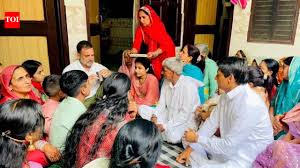
Sonipat: Lok Sabha leader of opposition (LoP) Rahul Gandhi on Tuesday attended the wedding of a farmer’s daughter in Medina village of Sonipat district, fulfilling a promise he made to the family during an earlier visit. The village falls under Baroda assembly segment in Gohana. Gandhi reached the village at 10.10am and spent nearly an hour at the ceremony hosted by farmer Sanjay Malik, whose daughter Tanu was getting married. He was accompanied by party MP Deepender Hooda and MLA Indu Raj Narwal. Villagers welcomed Gandhi by presenting him with a turban. When he walked towards the house where the rituals were underway, locals greeted him with “Ram-Ram, Rahul Bhai”, to which he responded with folded hands and a smile. During the ceremony, Gandhi met members of the bride’s family and blessed the couple. He interacted with villagers and spent some time seated among family members, enquiring about local customs and wedding traditions. Women in the household were singing traditional wedding songs as he joined them briefly and asked about the rituals associated with the ceremony. Gandhi also sampled traditional dishes served during the celebrations. He had churma with milk, tasted missi roti prepared by the bride, and also tried sweets including balushahi, laddoos and freshly prepared jalebis. At one point, he was seen offering jalebi to Deepender and the bride’s father, Sanjay Malik. Family members said they were surprised by Gandhi’s presence. Kirti Jakhar, a relative of the bride, said the family had invited him, but did not expect him to actually attend the ceremony. According to her, women in the house were singing ritual songs when the news of his arrival spread, creating excitement among the guests. The family also said a day before the wedding, Gandhi had sent a 55-inch LED television as a gift. During the ceremony, he presented the bride with a traditional ‘shagun’ envelope. The bride’s mother Sunita Devi said his presence at their home was itself the biggest blessing for the family. Gandhi’s association with the family dates to 2023, when he had visited Medina and joined Sanjay Malik in his fields. During that visit, he drove a tractor and participated in paddy transplantation, an interaction that drew considerable public attention. Later, he had invited Malik and several other farmers to his residence at 10 Janpath in New Delhi. Courtesy : TOI Note: This news is originally published on https:/timesofindia.com/bha and is used purely for non-profit/non-commercial purposes, especially human rights
Allegations of Sexual Exploitation Following a Fraudulent Marriage: Woman Arrives from Andhra Pradesh in Search of Accused; FIR Filed Against Youth from Rohtak
In Rohtak district, a woman hailing from Andhra Pradesh has accused a youth from Tilak Nagar of sexually exploiting her under the pretext of a fraudulent marriage. Furthermore, she alleges that he swindled lakhs of rupees from her under the guise of building a house. The victim, in collaboration with social organizations, has filed a complaint against the youth at the Civil Lines Police Station regarding this matter. The victim stated that she resides in a district within Andhra Pradesh. She had uploaded her profile on a matrimonial website. Coincidentally, the youth—a resident of Tilak Nagar in Rohtak—had also posted his profile on the same site. Their communication began in 2022 through this platform. Their interactions remained limited to phone calls for a period of approximately 6 to 7 months. The victim recounted that in 2023, the youth traveled to Andhra Pradesh and, while standing on a beach, accepted her as his wife by performing a symbolic ritual involving water held in his hands. When she requested that they solemnize their marriage according to full traditional rites, the youth claimed to be an Arya Samaji and asserted that such a ceremony constituted a valid marriage within his community. The youth also refused to allow the marriage to be officially registered. **Youth Takes Money and Returns to Rohtak; Fails to Return** The victim stated that the youth took approximately ₹40 lakhs from her—ostensibly for the construction of a house—and returned to Rohtak, never to come back. When she attempted to contact him via phone, she found that he had switched off his mobile number. Subsequently, she called the youth’s brother—who is posted as an Assistant Sub-Inspector (ASI) in Gurugram—but he, too, failed to provide any response. **Sexual Exploitation in Both Andhra Pradesh and Rohtak** The woman has alleged that, following the fraudulent marriage, the accused youth sexually exploited her in Andhra Pradesh for nearly four months while they lived together as husband and wife. Later, when she traveled to Rohtak in search of him, she claims she was subjected to further sexual exploitation on multiple occasions at a hotel there. **Youth Admits Guilt at Police Station, Then Retracts Statement** The woman revealed that, at the Civil Lines Police Station and in the presence of representatives from social organizations, the youth had admitted his wrongdoing and acknowledged her as his wife. A written settlement agreement was also drafted at the police station; however, that document has now mysteriously gone missing. Instead of taking the young man home with him from the police station, he took him to a hotel and, from there, dropped him off at the bus stand before leaving. **Allegations of Collusion Leveled Against the Family** The woman stated that the entire family of the accused is complicit in the matter. She alleged that the young man’s brother, who holds the rank of Assistant Sub-Inspector (ASI), is misusing his official position. Consequently, the police have refrained from taking any action. Under pressure from social organizations, the police did register a case under the SC/ST Act; however, they have yet to arrest the accused young man. **DSP and ASP Kept Informed** The woman alleged that both the ASP and the DSP were fully apprised of the details of the case immediately after the complaint was lodged. She claimed that the DSP’s Reader had even visited and inspected the hotels in question alongside the accused, yet no action has been taken. On the contrary, the police have transferred her FIR to Andhra Pradesh, despite the fact that she was also subjected to sexual exploitation in hotels within Rohtak. **We Will Fight Every Battle to Secure Justice** Social activist Surendra Panchal stated that, for the past two and a half months, the district administration has forced the victim to wander from door to door in search of redressal. Despite repeated attempts to meet with the Superintendent of Police (SP), the administration continues to adopt a lax and indecisive attitude. He alleged that the administration is mentally harassing the victim with the sole intent of sweeping the case under the rug. Under the SC/ST Act, immediate arrest is mandated; however, although nearly a month and a half has passed since the FIR was registered, the accused remains unarrested. **Administration Will Face Trouble if the Issue Takes on a Casteist Hue** Manisha Birla Bohat of the Bharat Mukti Morcha Women’s Wing asserted that a grave injustice has been committed against the woman, and the administration is failing to provide her with justice. She warned that if the community unites and launches a protest—framing the issue through the lens of caste-based discrimination—the administration will face severe repercussions. Therefore, she urged the police administration to act promptly to deliver justice to the victimized woman and to immediately apprehend the accused. Courtesy: Hindi News
Sivaganga dalit man custodial death case transferred to CB-CID
Sivaganga/Madurai: The state govt has transferred the case pertaining to the death of a 26-year-old dalit man who suffered injuries while in police custody in Sivaganga district to the CB-CID in Madurai. A senior police official told TOI that the case, which was registered by the Govt Rajaji Hospital (GRH) police station under Section 196 of the BNSS following the death of Aakash, would be transferred to and investigated by the CB-CID. Earlier, justice R Vijayakumar of the Madurai bench, while hearing a petition filed by Aakash’s father A Rajesh Kannan of Manamadurai in Sivaganga district, was informed by the state that the case had been transferred to the CB-CID. The govt submitted that it would comply with the directions issued by the court. The court then directed the GRH dean to conduct the postmortem on Monday itself in the presence of a judicial magistrate, as per guidelines. Officials of GRH said the autopsy was conducted as per the high court’s direction and the body was kept in the mortuary based on a request from the victim’s family. In his petition, Kannan sought a direction to the state to register an independent criminal case for the offence of murder arising out of the alleged custodial torture under the relevant provisions of the Bharatiya Nyaya Sanhita, 2023, along with provisions of the Scheduled Castes and the Scheduled Tribes (Prevention of Atrocities) Act, based on the complaint lodged by him. He also sought a direction to transfer the probe in the case to the CB-CID. The petitioner further sought a direction to conduct a postmortem in the case forthwith, in accordance with guidelines earlier issued by the court. The state submitted that it was not a case of custodial torture. The man was never taken to the Manamadurai police station and had jumped from a bridge while trying to escape from the police. He was initially taken to the govt hospital in Manamadurai, then to the Sivaganga Govt Medical College Hospital, and later to GRH in Madurai, where he died. The state further submitted that following the death of the man, people held a protest by blocking the national highway in Manamadurai, affecting the general public. In response, counsel for the petitioner submitted that he would request the family of the man to appeal to the protesters to disperse. The counsel also submitted that the petitioner would cooperate with the postmortem. The death of Aakash sparked allegations of police torture and custodial violence. Aakash was apprehended near the Melapasalai flyover following a machete attack on two individuals. Police claim that Aakash suffered a severe leg fracture after jumping off the flyover to evade arrest. His father, Rajesh Kannan, alleged that police intentionally crushed his son’s legs between stones, leading to fatal blood loss. Senior police officials categorised Aakash as a “C-category rowdy” with several pending cases and maintained that he died while under judicial custody and medical treatment. Courtesy : TOI Note: This news is originally published on https:/timesofindia.com/bha and is used purely for non-profit/non-commercial purposes, especially human rights
‘You didn’t vote for me… I won’t get any of your work done’: Watchman in Bhadohi set ablaze with petrol, dies in hospital; Village Head’s husband and son accused
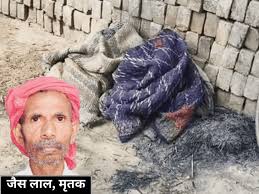
A watchman in Bhadohi, who was set on fire with petrol, passed away at 5:00 AM on Tuesday morning. The elderly man, who had sustained severe burns, was undergoing treatment at BHU (Banaras Hindu University), where he breathed his last. He had gone to the Village Head’s residence to collect a pipe needed for repairing a handpump. During this visit, an altercation broke out with the Village Head’s husband, who remarked, “You didn’t vote for me, did you? In that case, I won’t get any of your work done.” The dispute subsequently escalated into a physical altercation. Following the scuffle, the Village Head’s husband and her son doused the watchman with petrol and set him on fire. In this incident, the watchman sustained burns covering approximately 70 percent of his body. This entire incident took place in Pipergaon, located within the jurisdiction of the Gyanpur Kotwali police station. Jais Lal Saroj (55), a resident of Pipergaon, served as a watchman for the Gyanpur Kotwali police station. His wife, Phoolkumari, has been suffering from an illness (paralysis) for the past three years. Jais Lal Saroj is survived by six children—five sons and one daughter. His sons are Kadedeen (32), Raju (30), Sanjay (25), Ashuraj (23), and Santosh (20), while his daughter is named Priya Saroj (17). On Monday morning at 7:30 AM, Jais Lal rode his bicycle to the home of the village’s *Gram Pradhan* (Village Head), Chanda Devi, to collect a pipe required for handpump repairs. The distance between their respective homes is approximately one kilometer. Upon his arrival, the Village Head’s husband, Ramnayak, confronted him, saying, “You didn’t vote for me, did you? Then I won’t get any of your work done. Get out of my house… go to the Secretary instead.” In response, the victim, Jais Lal Saroj, asked, “If you are the *Pradhan*, why should I go to the Secretary? Please provide the pipe needed for the handpump repairs.” His request for the pipe enraged them. Ramnayak retorted, “Don’t talk back to me; leave immediately, or else I will start beating you.” At that very moment, his son, Kamlesh, poured petrol over the victim. When the victim attempted to flee the scene, he was set on fire using a matchstick. Upon receiving news of the incident, local villagers rushed to the spot and transported the injured elderly man to the hospital. He was initially taken in critical condition to the Maharaja Balwant Singh District Hospital in Gyanpur. From there, he was referred to the Trauma Center—and subsequently to BHU, Varanasi—for advanced medical treatment. According to his family members, he passed away early Tuesday morning while undergoing treatment. **Son Accuses the *Pradhan’s* Husband** The victim’s 17-year-old daughter, Priya, stated that she had gone to visit her brother’s in-laws’ home. She learned of the incident via a phone call around 8:00 AM, after which she immediately rushed back home. Meanwhile, the deceased’s son, Santosh Saroj, has alleged that his father was doused with petrol and burned alive. He has accused Ramnath Yadav (alias Ramnayak) and his son, Kamlesh Yadav, of being involved in the incident. **Victim’s Family Demands ₹1 Crore** The deceased’s elder brother, Babu Ram Saroj, has demanded strict action against the accused. He stated that rigorous measures must be taken against the culprits to ensure justice for the family. Additionally, he has demanded financial assistance of ₹1 crore from the government, a plot of land measuring one *bigha*, and that the government assume responsibility for the education of the deceased’s children. He further demanded that “bulldozer action” (demolition) be taken against the properties of those accused in the incident. **Police Force Deployed in the Village** Given the situation in the village, a heavy police force has been deployed. During this time, various political and social activists—including Bhim Army District President Pramod Kumar Chaudhary, District General Secretary Vinod Gautam, Azad Samaj Party State Secretary Ashok Gautam, and the Organizing Secretary—arrived to meet with the victim’s family. Bahujan Samaj Party District President Shiv Narayan Gautam, Mirzapur Division In-charge Ramashankar Saroj, Pappu, and Rajesh Gautam were also present. Furthermore, Lok Janshakti Party State President Rajiv Paswan, District President Vikas Dubey, Organizing Secretary Dhananjay Dubey, and State General Secretaries Ashutosh Gaharwar and Avneesh Tiwari also reached the scene. **Superintendent of Police Abhimanyu Manglik Stated:** “We have received information regarding the incident, and the accused have been taken into custody for interrogation. The police are conducting an investigation while taking all aspects of the case into consideration.” The police have registered a case against Kamlesh Yadav in this matter under Sections 109(1), 118(1), and 101(1), as well as under the SC/ST Act. Further legal action will be initiated only after the investigation is complete. Raj Kumar | Bhadohi Courtesy: Hindi News
Haunted Histories Of Faith And Dalit Christian Women’s Voices In Malayalam Literature
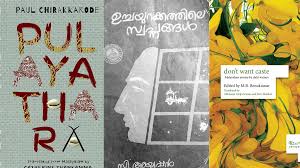
From the spectral testimony of Rosykutty to the everyday defiance of schoolgirls, these texts challenge the histories produced by upper-caste Kerala literature, which frequently marginalises or silences Dalit experiences. Dalit Christian literature emerges from a space of historical rupture, where the Dalit Christian self is continually compelled to view itself through the oppressive caste gaze. Conversion held the promise of equality, but caste ‘marks’ the body and name anyway, creating a fracture of being spiritually Christian, however socially treated as Dalit. Positioned within this hyphenated identity of being both Dalit and Christian, such writing becomes a crucial archive of resistance, recording the lived contradictions of Brahmanical Christianity and casteist society. The formation of Dalit Christian identity is inseparable from Kerala’s specific caste history, Christian institutional structure, and twentieth-century reform movements. Kerala’s caste order was structured not only around untouchability but also ‘unseeability’, with agrarian slavery binding communities such as the Pulayas and Parayas to upper-caste landlords (Mohan, 2015). By the twentieth century, Kerala witnessed powerful anti-caste and reform movements led by figures such as Ayyankali and Poykayil Appachan, that politicised questions of dignity, education, and collective mobilisation. These movements produced a new consciousness that inevitably entered literary production (Mariya, 2023). Crucially, such narratives also register the invisible burdens borne by Dalit Christian women, domestic labour, their embodied trauma, and systematic denial of speech within both caste society and ecclesiastical structures. The Quiet Work of Sustaining Family and Caste Honour When Paul Chirakkarode (1963) wrote Pulayathara, he was responding not only to caste oppression within Kerala, but also to the concrete social realities of the state, agrarian landlordism, anti-caste movements and Syrian Christian dominance within the church, alongside the persistence of Brahmanical hierarchies within both Hinduism and Christianity. Considered the first Dalit-Christian novel, Pulayathara (Pulaya Home/Land) reads as a yearning for belonging and dignity in a society that denied both. In Brahmanical Kerala, Pulayas and other ‘slave castes’ were historically landless, tied to the soil as bonded labourers but never permitted to own or inhabit it as their own. Conversion to Christianity appeared to offer a threshold into stability, access to mission land, the possibility of settlement, and a fragile claim to space, but Chirakkarode reveals how this ‘home’ was never truly theirs. The novel begins in the fields of nineteenth-century Kerala, where Thevan Pulayan bends over soil that will never belong to him. “This thara is all I have” (p. 12), he tells his son Kandankoran one evening, pointing to their fragile hut. During a particular instance following a minor mistake, Thevan is evicted without mercy, his home declared a temporary concession rather than his right. Dispossessed and humiliated, Thevan and Kandankoran seek refuge in the house of Pathrose, a Pulayan who has converted to Christianity. Kandankoran falls in love with Anna Kidathi, Pathrose’s daughter, but marriage requires what he still lacks: a home. To secure it, he converts, becoming Thomas. This new name does not grant him a new social body. He is mocked as a poocha kristiyani, a fake Christian, as his spiritual skin is still stained by untouchability. The soil, songs, and soul of his Pulaya heritage continue to call to him, reminding him and the readers of the emotional and cultural cost of leaving one world only to enter another that never truly accepts him. “He thought to himself, what a cursed creature he was!” (p. 115). Now, in this narrative, conversion and dignity are articulated through male crisis as in Thevan’s eviction, Kandankoran’s humiliation, and Thomas’s fractured identity. But the structure of that crisis depends on women. Anna is the reason for conversion, marriage, and settlement. Her body becomes the site that negotiates caste mobility, while her subjectivity remains unrecorded. This asymmetry reveals how Dalit Christian women occupy a precarious place within the intersection of caste and religion. The ‘search for home’ is therefore gendered. Men seek land and recognition; women sustain the fragile domestic space through labour and emotional endurance. After marriage, Anna Kidathi lives only a few hundred yards from her natal home, but never visits it because Kandakoran refuses to accompany her, knowing her mother disapproves of him. Anna fears that going alone would result in society labelling her an ‘incapable woman’. Her body marks the shift from daughter to wife, but she has no agency over movement between these spaces. When the narrator describes “a mist-like barrier” (p. 130) between the two houses, it signifies how caste anxiety and patriarchal norms quietly enforce her emotional and spatial exile despite physical proximity. Her longing intensifies the silencing that operates within both the household and the church. In such contexts, literature becomes the only viable space for articulation. This is powerfully echoed in C. Ayyappan’s short story Prethabhashanam (The Ghost Speaks), first published in his 1986 collection Uchayurakkathile Swapnangal (Dreams in the Afternoon Sleep), where those who were denied a voice in life return as ghosts to narrate their suffering. As John (2019) observes, “these characters were silenced and never given answers. Their ghostly afterlife becomes a paradoxical rebirth, an additional dimension of freedom that allows them to speak while still bearing the weight of their human wounds.” Haunting, Silence, and the Weight of Injustice Prethabhashanam unfolds through an unsettling monologue, the voice of Rosykutty, a Pulaya woman who returns as a ghost not to frighten but to finally speak. Sixteen days after her death, she enters the body of Kunchako’s sister, a Syrian Christian girl, to reveal the truth of her exploitation and death. In life, Rosykutty was only fifteen when Kunchako, an upper-caste man, seduced and abused her. When she became pregnant, he spat on her and beat her for daring to carry his child. As the story progresses, we find out that Rosykutty’s mother was also a victim of sexual exploitation by Kunchako’s father, revealing a haunting cycle of violence passed down through generations. This exposes Rosykutty as Kunchako’s illegitimate half-sister. Upon knowing, the spirit condemns God by asking, “How can an upper caste Christian have a Dalit girl
Dalit woman, UPSC AIR 1 at 22: How Tina Dabi topped India’s toughest exam in her first attempt

In May 2016, when the results of the Union Public Service Commission (UPSC) Civil Services Examination were announced, one name quickly travelled across the country: Tina Dabi. At just 22 years old, the Delhi-based student had secured All India Rank 1 in the 2015 UPSC exam and she had done it in her very first attempt. But the achievement carried a deeper significance. Dabi became the first Dalit woman to top the civil services examination, a moment many saw as both a personal triumph and a symbol of changing social realities in India. Her story is not just about a difficult exam cleared at a young age. It is about ambition, discipline, and the quiet power of persistence. Scroll down to read more. A childhood shaped by education Tina Dabi was born on 9 November 1993 in Bhopal, Madhya Pradesh. Her family later moved to Delhi in 2005, where she spent most of her formative years. Education was always central to her upbringing. Both her parents were engineers; her father, Jaswant Dabi, served in the Indian Telecom Service, while her mother, Himani Dabi, was an officer in the Indian Engineering Services. Growing up in a household that valued learning meant expectations were high, but it also meant support. Teachers and classmates often noticed her academic focus early on. She studied at the Convent of Jesus and Mary in Delhi, where she consistently performed well in school. Later, she joined Lady Shri Ram College for Women (LSR), Delhi University, one of India’s most prestigious colleges, graduating with a degree in political science. At LSR, she wasn’t just another student preparing for exams. She topped her college and was recognised as “Student of the Year,” reflecting both academic excellence and leadership potential. The decision to attempt UPSC For many students in India, the civil services exam is a distant dream, an exam known for its vast syllabus and extremely low success rate. Dabi decided to pursue it while still in college. Political science, her graduation subject, also became her optional subject for the UPSC examination, helping her build on what she had already studied deeply. Unlike many aspirants who spend years attempting the exam, she appeared for it only once and cleared it at the very first attempt. The scale of the achievement is difficult to overstate. Every year, hundreds of thousands of candidates apply for the UPSC exam, yet only a few hundred finally enter the prestigious Indian Administrative Service (IAS). At just 22 years old, Dabi finished ahead of everyone else in the country. A moment that sparked national conversation Her result triggered enormous media attention. News channels, newspapers and social media celebrated the young topper who had emerged from Delhi’s academic circles. But alongside admiration came another conversation, about caste and opportunity. As a Dalit woman topping India’s most competitive exam, Dabi’s success challenged deeply entrenched stereotypes about merit and social mobility. In fact, she later recalled that while congratulatory messages poured in immediately after the results, some media outlets quickly began asking about her caste rather than her preparation strategy. For many observers, the episode highlighted how achievements by individuals from historically marginalised communities often carry a larger social meaning. From topper to administrator After clearing the exam, Dabi joined the 2016 batch of the Indian Administrative Service (IAS) and was allotted the Rajasthan cadre. During her training at the Lal Bahadur Shastri National Academy of Administration in Mussoorie, she was awarded the Director’s Gold Medal, given to the best trainee officer. Her first posting came in 2017 as an assistant collector in Ajmer, Rajasthan. Over the years, she held several administrative roles in the state, working in areas ranging from governance to development initiatives. She later served as district collector in Jaisalmer and is currently posted as collector and district magistrate of Barmer in Rajasthan, one of the state’s largest districts. More than an exam result UPSC toppers often fade from public conversation after their results. Tina Dabi did not. Part of that is because of the larger story attached to her success, a young woman from a scheduled caste community rising to the very top of India’s most prestigious examination. But another reason is simpler: her journey represents the quiet possibility that education can reshape lives. At 22, when most graduates are still uncertain about their next step, Tina Dabi had already crossed one of the toughest academic barriers in the country. For thousands of UPSC aspirants studying late into the night across India, her story remains a reminder that the exam may be daunting, but sometimes, the first attempt is all it takes. Courtesy : TOI Note: This news is originally published on https:/timesofindia.com/bha and is used purely for non-profit/non-commercial purposes, especially human rights