
LGBTQIA+ community members protest against Transgender Act, term it regressive and demand withdrawal
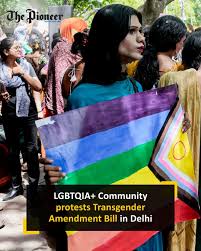
Pune: Members of the LGBTQIA+ community on Tuesday staged a protest march at the district collector’s office against the Transgender Persons (Protection of Rights) Amendment Act, which recently came into force after the Bill was passed by both Houses of Parliament and receiving Presidential assent on Monday. The protest coincided with International Transgender Visibility Day, observed globally on March 31. Activists and community members from across the city and state gathered with placards, alleging that the Act was passed sans consultation with stakeholders or members of the transgender community. Protesters raised strong objections to several provisions, claiming they violate privacy and roll back hard-earned rights. Disha Shaikh, a transwoman and spokesperson of the Vanchit Bahujan Aghadi (VBA), said, “Whatever we achieved through years of struggle has been lost with this Act. It feels like we have been pushed back 30 years.” She termed certain provisions “regressive” and alleged that the law criminalises aspects of identity in a manner reminiscent of colonial-era policies. Under the new Act, the provision for self-identification has been removed, making medical board approval mandatory before issuance of a gender identity certificate by the district magistrate. It also criminalises attempts to forcibly convert individuals into the transgender community. Manasvi Goilkar, a member of the community, said protests will be intensified across Maharashtra. “We have formed a state-level group to organise district-wise protests and submit our objections to authorities,” she said, adding that to fight their battle on legal front, a petition is also being prepared which will soon be filed in the court. “We are not seeking amendments — we want the Act withdrawn entirely.” Goilkar said that the Act completely ignores some categories of the transgender community. For instance, transmen and transwomen are not mentioned in the new Act, and the focus is mostly shifted to sociocultural groups like hijra, kinner and others. Shaikh alleged that safeguards recognised under the 2014 NALSA vs Union of India landmark SC judgment have been diluted. She questioned the alleged partiality against the transgender community by govt. “When schemes like Ladki Bahin or Mahila Samman Yojana were introduced, women were not asked to undergo medical tests. Why is the transgender community being subjected to this?” she asked, stating that self-declaration of gender should be allowed for them. Activists also expressed concern over the provision criminalising forced conversion, stating it could be misused. They fear it may lead to false allegations, including claims of child abduction — a narrative they say has surfaced in rural areas in the past. Dr Kanchan Pawar, a healthcare professional, who has been working with the transgender community for over 15 years, said the new Act raises several concerns. “The law appears discriminatory in many ways, particularly due to its narrow definitions and the lack of clarity on the process for certification,” she said. She also expressed concern over provisions requiring medical practitioners to report gender-affirming procedures. “This raises serious issues around doctor-patient confidentiality and privacy. Many in the medical fraternity are uncertain and anxious about the medico-legal implications of these amendments,” she added. Courtesy : TOI Note: This news is originally published on https:/timesofindia.com/bha and is used purely for non-profit/non-commercial purposes, especially human rights
Karnataka Dy CM DK Shivakumar, Randeep Surjewala slam Centre over soaring prices, LPG shortage
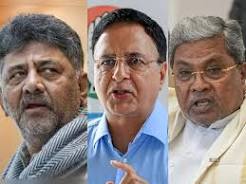
BENGALURU: Karnataka deputy chief minister DK Shivakumar and Congress state in-charge Randeep Singh Surjewala on Tuesday held a joint press conference at the Karnataka Pradesh Congress Committee headquarters, sharply criticising the Centre over soaring prices of essential commodities and alleged rollback of welfare benefits. Shivakumar said citizens are “suffering due to rising prices,” blaming government mistakes and international conflicts for straining households. He highlighted shortages in LPG supply, electricity unreliability, rising firewood dependence, and a Rs 60 hike in cylinder prices. Targeting the Centre’s Ujjwala LPG scheme, he said, “Ujjwala is gone, and they have started the firewood scheme. People now depend on firewood instead of gas. Power and railway fares have also increased.” The deputy CM accused the central government of waging a “price-rise war on ordinary people,” while presenting the Congress-led Karnataka government’s welfare measures as a counter. “Through our five guarantee schemes, we are directly supporting citizens. The Centre blames wars for inflation, but our programmes help people cope with rising costs,” he asserted. Shivakumar alleged the Modi government collected Rs 43 lakh crore in petroleum taxes over 11 years, terming it “brazen loot,” and claimed these funds contributed to high prices. In contrast, he said, Karnataka’s Congress model allocates Rs 1,18,000 crore for direct benefits to citizens. “Two models exist: Karnataka’s guarantees transfer Rs 1,18,000 crore directly to people to protect them from BJP-led inflation, while the Modi government continues to extract taxes and hike prices, looting citizens,” he said. Meanwhile, Leader of Opposition in the Lok Sabha, Rahul Gandhi, on Monday criticised Prime Minister Narendra Modi, highlighting the rupee’s fall, stock market crash, job losses, and economic hardships, calling PM Modi “compromised” in a social media post. “Rupee: Rs 95 + 100 Stocks: Crashing Economy: Collapsed Jobs: Gone Income: Falling Savings: Wiped out Cylinders: Unavailable. Why? PM Compromised,” Rahul Gandhi wrote, adding that the Prime Minister is “desperate to protect himself and his financial structure, but 140 crore Indians know India’s future has been surrendered.” Courtesy : TOI Note: This news is originally published on https:/timesofindia.com/bha and is used purely for non-profit/non-commercial purposes, especially human rights
‘So-called defender of Hinduism says nothing about Sabarimala’: Rahul Gandhi takes dig at PM Modi
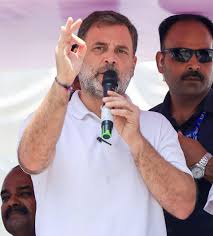
NEW DELHI: Congress MP and Leader of Opposition in Lok Sabha Rahul Gandhi on Tuesday launched a sharp attack on Prime Minister Narendra Modi accusing him of selectively raising religious issues and questioning his silence on the alleged Sabarimala gold theft case. Addressing an election rally in Kannur, Kerala, ahead of the upcoming Assembly polls, Gandhi said, “When the so-called defender (the PM) of Hinduism comes to Keralam, he says nothing about Sabarimala,” he said. He further alleged inaction over the issue and accused leaders of the ruling Left Democratic Front (LDF) of wrongdoing. “How is the BJP supporting the CM (Pinarayi Vijayan)? First, wherever the PM goes, he talks about temples, religion and gods. But when the PM comes to Keralam, he doesn’t raise the issue of the Sabarimala temple. CPM leaders stole gold from the Sabarimala temple, but no action has been taken against them,” Gandhi said. — ANI (@ANI) Gandhi claimed that there was an underlying understanding between the BJP and the ruling Communist Party of India (Marxist)-led LDF in Kerala. He alleged that the chief minister was being shielded by the Centre. “Narendra Modi controls the Chief Minister of Kerala. The CM of Kerala knows that Narendra Modi is not acting on his cases; the CM knows that Narendra Modi has the key to putting the CM in jail right now. You will hear Congress attacking Narendra Modi, but you will never hear Kerala CM attacking Modi or Modi attacking Kerala CM,” he said. In another remark, Gandhi jibed at PM Modi. “The way Donald Trump controls Narendra Modi, the same way Narendra Modi controls the Chief Minister of Kerala,” he said while addressing the rally. The Congress leader also claimed that the BJP preferred the LDF to remain in power in the state. “Modi wants LDF to win the Assembly elections in Kerala,” he said. Sharpening his attack on the Left, Gandhi said the CPI(M) had deviated from its ideological roots. “CPI(M) no longer Left party but extreme Right wing party,” he said. He framed the upcoming election as a contest between contrasting ideologies while alleging an unusual alignment between political rivals. “This election is a fight between two ideologies. The ideology of the Left Front CPM, the ideology of the UDF and the Congress party. And for the first time, we are seeing that there is a partnership between the BJP and the Left Front. Normally, this would be quite surprising that a Left party is allying with an extreme right party,” he said. The remarks come amid an intensifying political battle in Kerala, where both the ruling LDF and the opposition United Democratic Front (UDF) have accused each other of acting as the BJP’s “B-team.” Earlier, Gandhi had alleged that the LDF was “completely supported by BJP” and described the Left government as a “corporate-funded government,” claiming it no longer functioned as a true Left formation. He also suggested that the BJP preferred the LDF in power as it would be easier to influence compared to the Congress-led UDF. On the other hand, Kerala chief minister Pinarayi Vijayan has countered by accusing Rahul Gandhi and the Congress of acting as the BJP’s “B-team,” intensifying the war of words ahead of the high-stakes Assembly elections in the state. Courtesy : TOI Note: This news is originally published on https:/timesofindia.com/bha and is used purely for non-profit/non-commercial purposes, especially human rights
BJP can only win in Kerala with Congress support, says Govindan
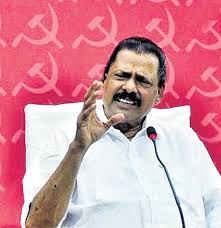
Thrissur: CPM state secretary M V Govindan on Tuesday said if at all BJP wins any assembly seat in Kerala, it would be at the expense of Congress. Addressing a news conference in Thrissur, Govindan said BJP had earlier won Nemom assembly seat and Thrissur parliament seat by cutting into Congress vote base. Asked whether CPM foresaw the possibilities of Congress supporting BJP in any constituency, Govindan said this would be known only after the elections. Countering the charges levelled by Congress leader Rahul Gandhi that CPM leaders were involved in the Sabarimala gold theft case, Govindan alleged that it was AICC general secretary K C Venugopal who first took the controversial figure Unnikrishnan Potti to Sabarimala, when he was the devaswom minister. He also alleged that UDF convenor Adoor Prakash and Anto Antony, MP, had taken Potti and Bellary-based gold dealer Govardhan to the house of Congress leader Sonia Gandhi, several times. Rahul must explain the true purpose of those visits, the CPM state secretary said. Govindan claimed that LDF has no alliance with SDPI. He, however, did not rule out the possibility of accepting SDPI votes. “Let Congress first say they will not accept the votes of Jamaat-e-Islami, then we will answer the question as to whether we will accept the votes of SDPI,” CPM secretary said. Meanwhile, CPM politburo member Brinda Karat said Rahul has shot a ‘self-goal’ by raking up Sabarimala issue during his election campaign. Rahul was asking who had stolen gold from Sabarimala, but he should have asked who had taken Potti to Sonia, Brinda told a news conference here. Courtesy : TOI Note: This news is originally published on https:/timesofindia.com/bha and is used purely for non-profit/non-commercial purposes, especially human rights
PM controls CM, wants LDF to win elections, says Rahul
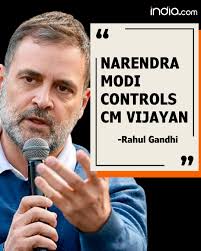
Kozhikode: Lok Sabha’s opposition leader Rahul Gandhi intensified his allegation of a partnership between CPM and BJP during roadshows in Kannur and Kozhikode on Tuesday. He claimed that Prime Minister Narendra Modi wants LDF to win the elections in Kerala. Addressing a public meeting in Kannur and later campaigning in Kozhikode, Rahul said BJP wants CPM to stay in power because it believes it can control the party, unlike UDF and Congress. He alleged that just as US President Donald Trump ‘controls’ Modi, the PM controls chief minister Pinarayi Vijayan. “The CM knows that Modi has the key to put him in jail right now but is not doing anything. That is why you hear Rahul Gandhi and Congress attacking Modi, but you will not hear the CM attacking Modi and you will never see Modi attacking the CM. If Modi says jump, the CM will jump and if he says lie down, the CM will lie down,” he said. Rahul added that while everyone who attacks BJP and RSS is not spared, they took no action in cases against Vijayan. “I have 36 cases against me, my house and my LS membership was taken away and ED interrogated me for 55 hours. If the CM opposes BJP, tell me why no action is taken on the corruption cases against him, explain why his children are not interrogated,” he asked. Modi’s failure to mention Sabarimala gold heist in his campaign speech is further proof of alleged collusion between CPM and BJP, he said. “CPM leaders stole gold from Sabarimala temple and replaced it with brass. No action was taken against them. The so-called defender of the faith came to Kerala and said nothing about Sabarimala because he wants LDF to win elections,” he said. Rahul said Modi has signed away India’s energy security and future by signing a trade deal with the US. “You will be amazed to know India can’t buy oil from who it wants. It must get US nod before buying oil,” he said. Touching upon the war in the Middle East, he warned of a financial earthquake and said fuel prices and inflation would rise. “You will see a financial earthquake in a month or two and then asked what the Centre, state govt did to protect the people,” he said. Rahul added that CPM and BJP are partnering because they are corporate parties. “Two veteran CPM leaders are sitting with us on the stage. They are here because what is today called the Left front is not the real Left party,” he said. Rahul addressed corner meetings at Kallachi, Perambra and travelled in a special bus to highlight UDF’s poll guarantees. Courtesy : TOI Note: This news is originally published on https:/timesofindia.com/bha and is used purely for non-profit/non-commercial purposes, especially human rights
The Promise of SC/ST Empowerment Remains Unfulfilled: A Mere 1.79% Share in Government Tenders; MP Prof. Varsha Gaikwad Seeks President’s Intervention

New Delhi—Under the Central Government’s Public Procurement Policy, the statutory target of procuring a minimum of 4 percent of goods and services from Micro and Small Enterprises (MSEs) owned by Scheduled Castes (SC) and Scheduled Tribes (ST) has, even after nine years, reached only 1.79 percent. This revelation emerged in a written response to Starred Question No. 171 in the Rajya Sabha on March 9. Lok Sabha MP Prof. Varsha Eknath Gaikwad (Mumbai North-Central) wrote to President Droupadi Murmu, appealing for immediate intervention regarding the “inconsistent and neglected” implementation of the policy. What Questions Were Asked in the Rajya Sabha, and What Answers Were Received? MP Golla Baburao asked the Minister of Micro, Small and Medium Enterprises: What are the objectives of the National SC/ST Hub Scheme currently being implemented for Scheduled Caste/Scheduled Tribe entrepreneurs? Is it not true that the government has mandated a 4 percent procurement from SC/ST-owned Micro and Small Enterprises under the Public Procurement Policy for MSEs? And (c) if so, what is the percentage of procurement made from SC/ST enterprises since the implementation of the mandatory 4 percent procurement clause—specifically in the context of the state of Andhra Pradesh? Responding to the question in the Rajya Sabha, the Minister of Micro, Small and Medium Enterprises (MSME), Jitan Ram Manjhi, clarified: (a) Objective of the National SC/ST Hub (NSSH) Scheme: Operational since October 2016, the scheme aims to promote SC/ST entrepreneurship and to facilitate the fulfillment of the mandatory 4% procurement target from MSEs under the Public Procurement Policy. (b) Confirmation of the 4% Target: Yes, under the Public Procurement Policy for MSEs Order, 2012, it is mandatory for all Central Government Ministries, Departments, and Central Public Sector Enterprises (CPSEs) to procure 25% of their total annual purchases from MSEs, and—within that allocation—4% specifically from SC/ST-owned MSEs. (c) Actual Figures: According to data recorded on the MSME Sambandh Portal (launched on December 8, 2017), the percentage of procurement from SC/ST-owned MSEs across the country has been as follows (as of March 5, 2026): Minister Jitan Ram Manjhi stated in the Rajya Sabha that the NSSH scheme has been operational since 2016 specifically to fulfill this 4% target. Nevertheless, the figures indicate that despite rising from ₹544 crore in 2017-18 to ₹3,364 crore in 2025-26, the actual percentage achieved remains far short of the stipulated target. The Minister also acknowledged that data is not maintained on a state-wise basis; therefore, separate data specifically for Andhra Pradesh is not available. What are the Government Regulations? (Public Procurement Policy, 2012) Procurement of 25% of total purchases from MSEs is mandatory. Within that, 4% must be procured from SC/ST-owned MSEs (constituting 4% of the *total* procurement value, not merely 4% of the 25% MSE quota). 3% must be procured from women-owned MSEs. Definition of an SC/ST-owned MSE: In a proprietorship, the owner must belong to the SC/ST category; in a partnership, SC/ST members must hold a 51% stake; or in a company, SC/ST members must hold 51% of the promoter shares. Provision for free tender forms, exemption from Earnest Money Deposit (EMD), reservation of 358 specific items for procurement, and mandatory Vendor Development Programs. The central policy mandates that a minimum of 10 percent of the total value of government procurement and tenders must be sourced from SC/ST entrepreneurs. How are these regulations being disregarded? Responses provided in the Rajya Sabha, along with data from the MSME Samadbandh portal, clearly demonstrate that over a period of nine years, the percentage has risen from a mere 0.48% to just 1.79%. In other words, not even 55% of the 4% target has been achieved. While many CPSEs (Central Public Sector Enterprises) and ministries successfully meet the 25% target for MSEs (Micro and Small Enterprises), they frequently overlook the sub-target specifically designated for SC/ST entrepreneurs. The reasons for this include: A lack of capacity building and market access for SC/ST entrepreneurs. The failure of certain departments to include SC/ST categories in tender documents, or their refusal to accord priority even when an L1 (lowest bid) is received from such entities. A tendency among state governments to either not fully adopt or not effectively implement the Central government’s policy. A lack of effective oversight and monitoring. Addressing this very issue of neglect, Prof. Varsha Gaikwad stated in a letter addressed to the President on March 24: “The Central policy mandates that a minimum of 10 percent of the total value of government procurement and tenders must be sourced from SC/ST entrepreneurs. This policy was formulated with the objective of fostering inclusive economic growth, encouraging entrepreneurship among marginalized communities, and ensuring their equal participation in national development. However, at the state level, this policy is being implemented inconsistently—and, in most instances, is being completely disregarded. Consequently, SC/ST entrepreneurs are being denied their rightful entitlements, and the broader objectives of socio-economic empowerment remain unfulfilled.” She urged the President to issue strict directives to all Central ministries, departments, and state governments to ensure the uniform and equitable implementation of this policy. Furthermore, she called for the establishment of robust monitoring mechanisms, the creation of awareness among procurement officials, and the launch of capacity-building programs specifically tailored for SC/ST entrepreneurs. Geetha Sunil Pillai Courtesy: Hindi News
Why is the participation of Dalit-Adivasi entrepreneurs in government tenders so low? The 4% promise exists only on paper, while in reality, it stands at a mere 1.79% | TM Special
The Promise of SC/ST Empowerment Remains Unfulfilled: A Mere 1.79% Share in Government Tenders; MP Prof. Varsha Gaikwad Seeks President’s Intervention New Delhi—Under the Central Government’s Public Procurement Policy, the statutory target of procuring a minimum of 4 percent of goods and services from Micro and Small Enterprises (MSEs) owned by Scheduled Castes (SC) and Scheduled Tribes (ST) has, even after nine years, reached only 1.79 percent. This revelation emerged in a written response to Starred Question No. 171 in the Rajya Sabha on March 9. Lok Sabha MP Prof. Varsha Eknath Gaikwad (Mumbai North-Central) wrote to President Droupadi Murmu, appealing for immediate intervention regarding the “inconsistent and neglected” implementation of the policy. What Questions Were Asked in the Rajya Sabha, and What Answers Were Received? MP Golla Baburao asked the Minister of Micro, Small and Medium Enterprises: What are the objectives of the National SC/ST Hub Scheme currently being implemented for Scheduled Caste/Scheduled Tribe entrepreneurs? Is it not true that the government has mandated a 4 percent procurement from SC/ST-owned Micro and Small Enterprises under the Public Procurement Policy for MSEs? And (c) if so, what is the percentage of procurement made from SC/ST enterprises since the implementation of the mandatory 4 percent procurement clause—specifically in the context of the state of Andhra Pradesh? Responding to the question in the Rajya Sabha, the Minister of Micro, Small and Medium Enterprises (MSME), Jitan Ram Manjhi, clarified: (a) Objective of the National SC/ST Hub (NSSH) Scheme: Operational since October 2016, the scheme aims to promote SC/ST entrepreneurship and to facilitate the fulfillment of the mandatory 4% procurement target from MSEs under the Public Procurement Policy. (b) Confirmation of the 4% Target: Yes, under the Public Procurement Policy for MSEs Order, 2012, it is mandatory for all Central Government Ministries, Departments, and Central Public Sector Enterprises (CPSEs) to procure 25% of their total annual purchases from MSEs, and—within that allocation—4% specifically from SC/ST-owned MSEs. (c) Actual Figures: According to data recorded on the MSME Sambandh Portal (launched on December 8, 2017), the percentage of procurement from SC/ST-owned MSEs across the country has been as follows (as of March 5, 2026): Minister Jitan Ram Manjhi stated in the Rajya Sabha that the NSSH scheme has been operational since 2016 specifically to fulfill this 4% target. Nevertheless, the figures indicate that despite rising from ₹544 crore in 2017-18 to ₹3,364 crore in 2025-26, the actual percentage achieved remains far short of the stipulated target. The Minister also acknowledged that data is not maintained on a state-wise basis; therefore, separate data specifically for Andhra Pradesh is not available. What are the Government Regulations? (Public Procurement Policy, 2012) Procurement of 25% of total purchases from MSEs is mandatory. Within that, 4% must be procured from SC/ST-owned MSEs (constituting 4% of the *total* procurement value, not merely 4% of the 25% MSE quota). 3% must be procured from women-owned MSEs. Definition of an SC/ST-owned MSE: In a proprietorship, the owner must belong to the SC/ST category; in a partnership, SC/ST members must hold a 51% stake; or in a company, SC/ST members must hold 51% of the promoter shares. Provision for free tender forms, exemption from Earnest Money Deposit (EMD), reservation of 358 specific items for procurement, and mandatory Vendor Development Programs. The central policy mandates that a minimum of 10 percent of the total value of government procurement and tenders must be sourced from SC/ST entrepreneurs. How are these regulations being disregarded? Responses provided in the Rajya Sabha, along with data from the MSME Samadbandh portal, clearly demonstrate that over a period of nine years, the percentage has risen from a mere 0.48% to just 1.79%. In other words, not even 55% of the 4% target has been achieved. While many CPSEs (Central Public Sector Enterprises) and ministries successfully meet the 25% target for MSEs (Micro and Small Enterprises), they frequently overlook the sub-target specifically designated for SC/ST entrepreneurs. The reasons for this include: A lack of capacity building and market access for SC/ST entrepreneurs. The failure of certain departments to include SC/ST categories in tender documents, or their refusal to accord priority even when an L1 (lowest bid) is received from such entities. A tendency among state governments to either not fully adopt or not effectively implement the Central government’s policy. A lack of effective oversight and monitoring. Addressing this very issue of neglect, Prof. Varsha Gaikwad stated in a letter addressed to the President on March 24: “The Central policy mandates that a minimum of 10 percent of the total value of government procurement and tenders must be sourced from SC/ST entrepreneurs. This policy was formulated with the objective of fostering inclusive economic growth, encouraging entrepreneurship among marginalized communities, and ensuring their equal participation in national development. However, at the state level, this policy is being implemented inconsistently—and, in most instances, is being completely disregarded. Consequently, SC/ST entrepreneurs are being denied their rightful entitlements, and the broader objectives of socio-economic empowerment remain unfulfilled.” She urged the President to issue strict directives to all Central ministries, departments, and state governments to ensure the uniform and equitable implementation of this policy. Furthermore, she called for the establishment of robust monitoring mechanisms, the creation of awareness among procurement officials, and the launch of capacity-building programs specifically tailored for SC/ST entrepreneurs. Geetha Sunil Pillai Courtesy: Hindi News
Newly Formed Nepal Government to Apologise to Dalits for Decades of Discrimination

Balendra Shah announced that Nepal’s government will formally apologise to Dalit communities for historical discrimination within 15 days. The move, part of a 100-point reform agenda, aims to address caste-based injustice and promote equality, though its impact will depend on effective implementation. The newly formed government of Nepal has decided to issue a formal apology to Dalit and historically marginalised communities for decades of discrimination and exclusion. Prime Minister Balendra Shah, popularly known as Balen Shah, took oath on March 27 and made the announcement as part of a 100-point Governance Reform Agenda approved in the Cabinet’s first meeting. Government to Acknowledge Historical Injustice According to the official plan, the state will recognise the injustices faced by Dalits due to long-standing social practices and state policies. “The government will formally apologise on behalf of the state within 15 days and announce programmes focused on justice, equality, and socio-economic upliftment,” the agenda states. This move is being seen as one of the most significant steps by any Nepali government to address caste-based discrimination. Deep Roots of Caste Discrimination Nepal has a long history of caste hierarchy linked to the traditional Hindu social order. The Muluki Ain of 1854 had legally enforced caste divisions and treated Dalits as “untouchables.” Although untouchability was abolished in 1963 and equality was guaranteed in later constitutions, discrimination continues in practice. Dalits, who make up around 13% of the population, still face barriers in education, jobs, and access to public resources. Reports by global organisations have repeatedly highlighted these inequalities. Balen Shah’s Rise to Power Shah became Nepal’s 47th Prime Minister after being appointed by President Ram Chandra Paudel. His rise reflects a shift in public mood, especially among younger voters demanding change. His leadership comes after major protests in 2025, led largely by young people, against corruption and poor governance. The protests resulted in the fall of the previous government and fresh elections. A former rapper and engineer, Shah is considered one of the youngest leaders to hold the post and represents a new political wave in the country. 100-Point Reform Plan Focuses on Governance and Justice The government’s 100-point agenda includes reforms in administration, anti-corruption measures, digital governance, economic policy, and public services. The inclusion of an apology to Dalits highlights the government’s focus on social justice along with governance reforms. Dalit leaders and activists have welcomed the decision. Many, however, stressed that the real impact will depend on how effectively the promised reforms are implemented. Next Steps and Expectations The government has set a 15-day deadline to issue the formal apology and announce detailed programmes for upliftment and inclusion. Observers say the move could mark a new phase in Nepal’s efforts to build a more equal and inclusive society. Courtesy : TOP Note: This news is originally published on https:/theobserverpost.com/bha and is used purely for non-profit/non-commercial purposes, especially human rights
Redefining Identity
India’s latest amendment to its transgender rights framework signals a decisive turn in how the state understands identity ~ not as something lived and asserted, but as something to be verified, certified, and, ultimately, controlled. India’s latest amendment to its transgender rights framework signals a decisive turn in how the state understands identity ~ not as something lived and asserted, but as something to be verified, certified, and, ultimately, controlled. This shift is striking because it departs from the constitutional trajectory set by the Supreme Court in NALSA v. Union of India, which affirmed self-identification as central to dignity and personal liberty. That judgment did not merely recognise a “third gender”; it located gender identity within the domain of individual autonomy, insulated from bureaucratic gatekeeping. The new amendment, by contrast, moves identity back into the hands of institutions ~ medical boards, district authorities, and definitional criteria tied to biology. The government’s argument is not without logic. Welfare systems require classification. Benefits must be targeted. In a country where resources are finite and vulnerabilities are layered, the state seeks clearer categories to ensure that those facing the harshest forms of marginalisation are not crowded out by broader or more fluid definitions. Administrative clarity, in this view, is a tool of social justice. But clarity, when imposed from above, often comes at the cost of exclusion. By narrowing the definition of who qualifies as a transgender, the amendment risks leaving out those whose identities do not conform to medicalised or traditional frameworks ~ particularly non-binary and gender-fluid individuals. More fundamentally, it transforms recognition from a right into a process. Identity becomes something one must prove, rather than something one possesses. This has consequences that extend beyond paperwork. In a society where transgender persons already face barriers in education, employment, and healthcare, the introduction of certification layers may deepen, rather than ease, access. A person denied recognition is not merely excluded from benefits; they are pushed further into invisibility, their existence rendered administratively uncertain. There is also a deeper constitutional tension at play. The logic of self-identification is rooted in privacy and dignity ~ principles that the Supreme Court has repeatedly expanded in recent years. Replacing that logic with medical verification raises an uncomfortable question: can the state both recognise a person’s identity and simultaneously subject it to institutional approval? The answer will shape not just transgender rights, but the broader relationship between the individual and the state. The amendment, then, is not a minor recalibration. It reflects a competing philosophy of governance, one that prioritises order over autonomy, and definitional precision over lived complexity. Whether this model delivers more effective welfare is an open question. What is clearer is that it redefines the terms on which recognition itself is granted. India now stands at a crossroads. It can either continue along a rights-based path that trusts individuals to define themselves, or it can move towards a system where identity is something the state confirms. The choice will determine not only how transgender citizens are seen, but how citizenship itself is understood. Courtesy : The Statesman Note: This news is originally published on https:/thestatesman.com/bha and is used purely for non-profit/non-commercial purposes, especially human rights
Manipur trans groups protest ‘regressive’ bill
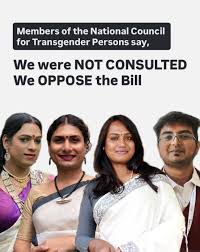
Imphal: Transgender rights groups in Manipur on Sunday staged a protest against the Transgender Persons (Protection of Rights) Amendment Bill 2026, terming it ‘regressive’ and contrary to the Supreme Court judgment which recognises self-identification of transgender individuals.Both Houses of parliament recently passed the bill. The protest was organised by the All Manipur Nupi Manbi Association (AMANA), Empowering Trans Ability (ETA), and the All Trans Men Association (ATMA) Manipur at the Mao Market in Imphal and Keishampat Leimajam Leikai in Imphal West. The transgender community gathered at the Mao Market in Imphal where they started the protest with a flash mob. Later, they staged a sit-in at Keishampat and burnt copies of the bill. Speaking to the media, AMANA secretary Santa Khurai said the bill undermines the landmark NALSA V/s Union of India ruling, which recognised the rights of transgender persons to self-identify their gender. “The bill is completely regressive and goes against the principle of self-identification. It attempts to pathologise transgender identity and impose restrictive definitions,” the activist said. The organisations alleged that the proposed law recognises only a limited set of identities such as Hijra, Kinnar and Jogappa, while ignoring diverse indigenous gender identities from the northeast. Santa cited identities such as Nupi Manbi and Nupa Manba in Manipur, along with similar culturally rooted identities in Mizoram, Arunachal Pradesh and Meghalaya, stating that the bill risks erasing these communities from legal recognition. “India is a diverse nation, yet this bill reflects a shallow outlook that fails to acknowledge identities beyond mainland constructs,” Santa said. “We did gender affirmative surgery before the bill came. We are going to continue doing gender affirmative surgery. This is our body. This is our identity. Whether the law recognised or not, we exist,” she added. Santa maintained the organisations are preparing to file a litigation in the Supreme Court along with partner organisations and build wider momentum to oppose the bill. Courtesy : TOI Note: This news is originally published on https:/timesofindia.com/bha and is used purely for non-profit/non-commercial purposes, especially human rights