
The Cockroach Republic: A Dalit founder, political spoof and India’s hunger for humour
Notwithstanding skepticism and cautious optimism, the Cockroach Janata Party (CJP) is a reminder that dissent, satire and self-mockery are democratic necessities Many of us remember popular, non-aligned political movements of angry young people not only from newspapers and history books but also from personal experiences. Recently, following the Israeli strikes on Gaza, universities across the West — notwithstanding threats of exile and jail from organisations like ICE (US Immigration and Customs Enforcement), targeting by the insidious and mysterious Canary Mission in the US, and brutal police thrashing elsewhere — erupted in outrage at what many considered the cruelty of man against man. It has been a long tradition of student and youth politics, especially after World War II, to do so, thanks to the protections offered by democratic societies. In India, the 1970s saw mass mobilisation of students and others that shook the foundations of what is often called India’s Grand Old Party, the Congress. In his 2018 book titled The University as a Site of Resistance (2018), Gaurav J. Pathania writes, “The history of global student activism shows that the University (as a democratic institution) has been fighting for its existence and autonomy while challenging existing traditions in the form of knowledge-production.” At various moments in the world, in the late 1960s and later, young people and progressives, upset with the rot in the bureaucratised politics of their countries, hit the streets calling for change and, in some places, eventually led movements that rang out the old system. The sway of public anger, especially among the young who refused to take things lying down, made its impact all over the world, resulting in the fall and rise of governments. India navigates global economic turmoil with austerity and smart diplomacy In the cities of India, India Against Corruption (IAC), which in late 2012 acquired a political form in the Aam Aadmi Party (AAP), reset, at least briefly, the status quo of Delhi politics by championing political entrepreneurship and lowering entry barriers for people aspiring to become part of the political decision-making process. The anti-corruption movement acted as a force multiplier in a country looking for change in the early years of the past decade. Which means hope often acquires a new meaning in politics when the young crave change and hit the streets vigorously, protesting to usher in a break from the old order. But do we see traits of such movements in the new entity on the block, an online version of earlier ones, the Cockroach Janata Party (CJP), which is all the rage now? A section of the foreign media sees this political organisation, launched by Boston-based Abhijeet Dipke, a 30-year-old millennial student at Boston University, as a challenger to established parties in the country. Dipke, who makes no secret of his Dalit identity, started it “as a joke”, in his own admission, following controversial comments reportedly made by Chief Justice of India (CJI) Surya Kant, who sought to liken unemployed young people in India to cockroaches and parasites. The CJI later said it was not a comment directed at the entire youth population. The joke somehow became India’s biggest viral political movement with the cockroach emerging as the superstar mascot. Clearly, political leaders are upset with CJP getting attention from all quarters, especially given how it has reached millions on social media, especially Instagram, a turf where Gen Z is known not only to congregate but also to shape opinions. Their worries are not unfounded. After all, India is home to an estimated 377 million Gen Z individuals, the largest such population in the world. This demographic, born between 1997 and 2012, accounts for roughly 26 to 28% of the country’s total population and is rated a key driver of the consumer economy. In addition, Gen Z voters, who make up close to a quarter of India’s vote base, have the potential to redefine political engagement, as evident from recent elections in Tamil Nadu where an outsider in the state’s bipolar politics, actor Vijay, cruised to victory. As of 2 pm IST on May 28, CJP has 22.6 million followers on Instagram. Besides politicians, several analysts are not enthused by the rise of CJP, arguing that its members are largely apolitical and unfamiliar with the methods of mobilisation on the ground, not to speak of the administrative experience required for running the most populous country in the world. Without doubt, political leaders in general have reasons to be anxious about what happened next door in Nepal, where a youth-led government came to power in March this year following the mass protests of last September that toppled the incumbent administration. Engineer-rapper Balendra Shah, 35, assumed power as Prime Minister after the Rastriya Swatantra Party (RSP) secured a resounding victory in the general election. Incidentally, in neighbouring Bangladesh too, it was Gen Z and the youth who swayed polls this year, thanks to their “Monsoon Revolution” of 2024 that threw out Sheikh Hasina. Now, notwithstanding the aversion to political parties that appear apolitical, observers, however, see sense in celebrating dissent, even if only for the sake of dissent. In fact, if one looks closely, some of the leaders such movements catapult into the national scheme of things are not as apolitical as they collectively appear while merely opposing corruption. I remember speaking to Tanuja Pandey, who turned 25 on September 15 last year and was among the prominent Gen Z names who helped topple Nepal’s government through an anti-corruption campaign. Pandey is a climate justice organiser and lawyer. I also spoke with award-winning journalist Namrata Sharma of the Center for Investigative Journalism, Nepal, to find some answers about the rise of this political frustration and its eventual outcome. She says: “The Gen Z did not start as a movement. It was not an organised movement. There were actually Gen Zs and other youth who had been continuously voicing their frustration with rising corruption, where top-level political leaders and established political parties were accused of involvement. They were also
Dalit youth murdered in Tenkasi last month, mother files complaint with TN DGP

The victim, Subash, from the Scheduled Caste Pallar community, was hacked to death last month in Sengottai, allegedly for being in contact with a Maravar (OBC) girl. Following yet another brutal ‘honour’ killing in Tamil Nadu, the mother’s victim has approached Director General of Police (DGP) Sandeep Rai Rathore for justice. The victim, Subash (21), from the Scheduled Caste Pallar community, was killed in Sengottai, Tenkasi district, on April 16. His mother, Leela, submitted a complaint to the DGP on May 26. So-called honour killings refer to the murders of individuals in inter-caste relationships. In Subash’s case, he had been in contact with a 16-year-old Maravar (OBC) girl. Maravars belong to the politically powerful Thevar caste cluster that also includes Kallars and Agamudaiyars. The accused have been identified as Marichelvam (27) and Dhanasankar (24), both from the Maravar community, and a 17-year-old boy belonging to another caste. According to the FIR, the investigating officer’s (IO) action taken report and Leela’s account to the DGP, the three accused drew Subash into a verbal altercation on May 15 for speaking to a Maravar girl. At around midnight on May 16, Dhanasankar phoned Subash saying he needed to speak with him. Subash then went to the road leading from Sengottai to Kannupulimettu, where all three accused were waiting for him. The accused allegedly abused Subash with casteist slurs before torturing and hacking him to death with a sickle. They then tied stones to Subash’s body and attempted to drown it in a disused well. Subash lived with his parents, Leela and Saami, in Bengaluru and all three had been visiting their hometown of Sengottai for a family function. At first, a missing person’s case was filed after Subash failed to return home. Police later retrieved his body based on a confession from the 17-year-old accused. The action taken report notes that Tenkasi Inspector Sivaramakrishnan interrogated the juvenile accused at his home in the presence of his parents. The boy allegedly confessed to committing the murder along with Marichelvam and Dhanasankar because Subash, a Dalit man, had been speaking to a Maravar girl. The report goes on to say that the juvenile accused led the police to the disused well in which they had attempted to hide Subash’s body. Dhanasankar also allegedly confessed to the crime after his arrest. Based on his confession, the murder weapon – a wooden-handled sickle – was recovered, the report adds. During their investigation, police also allegedly found liquor bottles, blood-splattered stones and sand at the crime scene, which have been sent for forensic investigation. A case has now been registered under Bharatiya Nyaya Sanhita (BNS) sections 103(1) (punishment for murder) and 238 (evidence tampering) and under the Scheduled Castes and Scheduled Tribes (Prevention of Atrocities) Act. All three accused have been arrested and remanded. Apart from her letter to the DGP, Leela has also submitted petitions to Tamil Nadu Chief Secretary M Sai Kumar and the National Scheduled Caste/Scheduled Tribes Commission. Her demands include denial of bail to the accused, filing of chargesheet within two months, and financial aid and protection for the family. Rising honour killing cases From 2017 to 2025, there had been 59 honour killings in Tamil Nadu, as TNM previously reported. The All India Anna Dravida Munnetra Kazhagam (AIADMK) was in power from 2011 to May 2021. The numbers saw a significant jump during the Dravida Munnetra Kazhagam’s (DMK) tenure, with 14 murders in 2023 alone. Subash’s killing and another case from earlier this month raise the tally to 61. Reacting to this dismal data, Dalit rights organisation Evidence’s director Kathir reiterated a long-standing demand in the state: Chief Minister C Joseph Vijay’s government must pass special state legislation to curb honour killings. Noting that Karnataka’s Legislative Council has already passed a similar law this year, Kathir asked, “Tamil Nadu claims to be a progressive state. What is the hesitation, then?” He added: “Women, youth, and Dalits are the most affected by honour killings. The Tamilaga Vettri Kazhagam (TVK) must remember that it is these same three groups who helped them win.” Over the years, despite repeated demands from victims’ families, activists, and political parties like the Communist Party of India-Marxist [CPI(M)] and the Viduthalai Chiruthaigal Katchi (VCK), no adequate efforts to pass such legislation have been made. “In the last nine years, seven judgements from various SC/ST special courts in Tamil Nadu have strongly recommended a special act to curb honour killings. The state government’s role is to listen to such recommendations and introduce policies that protect people,” Kathir said. In 2022, he submitted a people’s draft bill against honour killings to then CM MK Stalin. The bill was drafted by the Dalit Human Rights Defenders Network — a coalition of anti-caste organisations headed by Evidence. In October 2025, the DMK finally set up a commission headed by retired judge KN Basha. The commission was tasked with identifying measures to prevent honour killings. At the time, the DMK also promised to bring in special legislation based on the commission’s recommendations. In March this year, Kathir and honour-killing survivor and anti-caste activist Kowsalya met the KN Basha Commission in Chennai. They presented case-related documents, including FIRs, for all 59 honour killings, at least 50 verdicts from other such cases, and details on national-level measures. However, there is no clarity at present if the TVK government will dissolve the Commission or ask it to continue its work. Written by:Bharathy Singaravel, Edited by:Vidya Sigamany Courtesy : TNM Note: This news is originally published on https:/thenewsminute.com/bha and is used purely for non-profit/non-commercial purposes, especially human rights
People of Purpose: Kalki Subramaniam’s Sahodari Foundation Drives Trans Rights Through Art and Activism

Kalki Subramaniam, founder of Sahodari Foundation, has spent over 16 years using art, literature, livelihood projects, and courtroom advocacy to build a life of dignity for India’s transgender community, one story at a time. When Kalki Subramaniam was a teenager in Tamil Nadu, she watched her friend Manju, a transwoman, get raped. She watched another transgender friend hide in fear after her own brother tried to throw kerosene on her and burn her alive. She watched others flee their homes for Mumbai and bigger cities, only to end up begging or doing sex work to survive. These were not distant news stories. These were her people. That fury did not break Kalki. It built her. Artist, writer, activist, and entrepreneur, Kalki Subramaniam is the founder of Sahodari Foundation, one of India’s most significant organisations working for transgender rights and dignity. She has been part of the movement that contributed to the landmark 2014 Supreme Court recognition of transgender rights. She has used theatre, poetry, visual art, and sustainable livelihood projects to fight for a community that has long been pushed to the margins. And she has done all of it while remaining, at her core, a storyteller. Knowing Who You Are Kalki traces her sense of self far back, to a childhood defined by curiosity and creativity. “I was different and pursuing creativity always right from my childhood,” she told The Logical Indian. “I was interested to explore colours, nature, the universal wonders and beyond. I was so sure of who I was and had this urgency to put myself creatively as an artist and a writer, that is where I found my identity.” That certainty was not something she had to build over time. It was simply there. And importantly, it held steady even when criticism came. She was never put down by it. She knew her purpose. This grounded sense of self would later become the foundation for everything she built. The Moment Awareness Became Anger Growing up in Tamil Nadu, the reality of what structural marginalisation looked like was not abstract for Kalki. It had faces and names. Manju’s rape as a teenager was the turning point that sharpened everything into focus. The horror of that moment, combined with witnessing how her transgender friends were treated by their own families and where they ended up, made something very clear to her. “Their destiny and how society treated them, bringing them to the bottom, made me angry,” she said. “Those flames gave me the awareness that I need to be the change.” Crucially, she says there was no single defining moment that made her choose public advocacy over private struggle. It was a string of moments. Each incident added weight to a resolve that had been forming since her teenage years. By the time she was ready to act, she already knew exactly what she was fighting for: dignity, respect, and the right to exist without fear. Building Sahodari: From Void to Voice In 2008, Kalki founded Sahodari Foundation. She describes the landscape she saw then with striking clarity. “There was a vast, silent void between the transgender community and the rest of society. We were visible only as caricatures or ‘problems,’ but we had no platform to tell our own stories.” She had seen what happened to trans women like her friend Seema, who was denied education, forced into sex work or begging, and faced brutal violence with no legal recourse whatsoever. Sahodari was built to close that gap, to move, as Kalki puts it, “from being spoken about to speaking for ourselves,” with a focus on dignity, economic independence, and the power of storytelling. The institutional barriers in those early years were severe. “The biggest barrier was the wall of dehumanization,” she told The Logical Indian. “Socially, we were outcasts; families discarded us, and movies mocked us. Institutionally, we didn’t exist in the eyes of the law.” When Manju was raped, the police refused to even take her complaint, because they viewed her existence itself as a deviation. “We had to fight just to prove that we were human beings worthy of protection.” Kalki was part of the movement that led to the 2014 Supreme Court ruling recognising transgender rights, including the right to self-identify. She calls it “a historic sunrise.” But she is also clear-eyed about what followed. Legal change, she says, is not always social change. While ID cards and some welfare schemes followed the ruling, the grassroots reality remained marked by violence. She is particularly critical of the Transgender Persons Protection Act, which she argues actually dilutes the 2014 victory. It mandates medical screenings and, significantly, offers lighter sentences to those who assault transgender persons compared to those who assault cisgender women. “The law changed,” she said, “but the heart of the system is still catching up.” Art as Resistance, Art as Healing What makes Kalki’s approach distinct is her insistence on art as a vehicle for both resistance and healing. Two of Sahodari’s most notable projects reflect this. The Red Wall Project documents stories of sexual violence, written by the survivors themselves. The testimonies are rendered in red. “When people see these red-stained testimonies, they can no longer look away,” Kalki explained. “For the survivor, painting or performing is a way to ‘sever the pain’ (Vali Aruthen). It turns a traumatic memory into a powerful piece of resistance.” Thoorikai, another Sahodari initiative, similarly uses performance and art as tools for both resistance and healing. Kalki’s broader philosophy across both projects is that “art bypasses the intellect and goes straight to the soul.” It reaches people in ways that policy papers and press releases cannot. Livelihood and Long-Term Change Kalki is equally practical about the fact that advocacy alone cannot feed people. She defines empowerment not as charity but as agency. “Empowerment is the transition from survival to thrivability,” she told The Logical Indian. A one-time donation, she says, is not empowerment. What matters is whether a person has control over their
Centre seeks transfer to SC petitions filed in HCs against Transgender Persons (Protection of Rights) Amendment Act, 2026
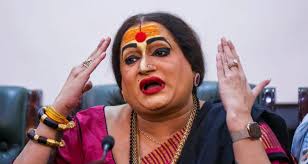
The SC had asked respondents to file replies after senior counsel AM Singhvi pointed out that the amendment took away transgender persons’ fundamental right to self-determination of gender “There are more than one High Court. There may be divergent views,” Solicitor General Tushar Mehta cautioned. File Photo The Centre on Wednesday sought transfer to the Supreme Court multiple petitions pending in various high courts challenging the Transgender Persons (Protection of Rights) Amendment Act, 2026 which introduced certain contentious changes in the legal framework governing the recognition, rights and protection of transgender persons. “We have filed transfer petitions to transfer the challenge to Transgender Amendment Act here in this court. Can the transfer petition be listed on Friday? If notice also goes, we can ask high courts to wait,” Solicitor General Tushar Mehta told a Bench of Chief Justice of India Surya Kant and Justice Joymalya Bagchi. “Sometimes, we can have an advantage of high courts’ views also,” the CJI said, noting that parallel proceedings before high courts could be beneficial to it. On May 4, the Supreme Court had issued notices to Centre, states and union territories on petitions challenging the validity of the Transgender Persons (Protection of Rights) Amendment Act, 2026. It had asked the respondents to file their replies after senior counsel AM Singhvi pointed out that the amendment took away transgender persons’ fundamental right to self-determination of gender. The petitioners contended that transgender persons receiving hormonal therapy would face problems due to the amendment. He, however, didn’t press for stay of the amendment as it had not been notified. Passed by Parliament in March this year during the Budget Session, the law amended the Transgender Persons (Protection of Rights) Act, 2019 and redefined who qualified as a “transgender person”. It also strengthened penal provisions to address serious offences such as forced identity and bodily harm. President Droupadi Murmu had given her assent to the ‘Transgender Persons (Protection of Rights) Amendment Act, 2026’ on March 30, 2026 Petitioners transgender persons Laxmi Narayan Tripathi, Zainab Patel and others – who have have challenged the validity of the amendment—alleged that it caused “irreparable constitutional injury” to the fundamental rights of transgender persons guaranteed under Articles 14 (right to equality), 15 (right to non-discrimination), 19 (right to freedom of speech and expression) and 21 (right to life and liberty) of the Constitution. Tripathi is the Acharya Mahamandaleshwar of the Kinnar Akhara, a Bharatanatyam dancer, author and social activist, Patel is the Director (Inclusion & Diversity) at KPMG India, and a Member of the National Council for Transgender Persons (Western Region). They wondered if the State, through legislation, could define who a person was by substituting biological or socio-medical classifications for a person’s lived and self-perceived identity. The PIL alleged that the amendment dismantled the principle of self-identification of gender recognised as a fundamental right by the Supreme Court in the landmark verdict in National Legal Services Authority (NALSA) versus Union of India (2014). Referring to the provision requiring the District Magistrate to issue a certificate of identity for a transgender person only after examining the recommendation of a medical board, the petitioners said it violated transgender persons’ right to privacy. “Parliament has, by the stroke of a legislative pen, repealed the statutory right that this Court held to be a fundamental right under Article 21. The impugned deletion does not even require elaborate constitutional analysis to expose its unconstitutionality: a provision that directly codifies a right declared fundamental by this Court cannot be omitted by ordinary legislation without violating Article 21 and the doctrine of non-retrogression of fundamental rights,” they submitted. The amendment has been criticised by LGBTQIA+ groups on the ground that they were not consulted before the introduction of the Bill. National Council of Transgender Persons (NCTP) members Kalki Subramanium and Rituparna Neog had resigned in protest. Former Delhi High Court judge Asha Menon who headed a committee set up by the Supreme Court to examine transgender rights has asked the Centre to withdraw the Bill. Article_Author Satya Prakash Courtesy : The Tribune Note: This news is originally published on https:/thetribune.com/bha and is used purely for non-profit/non-commercial purposes, especially human rights
Congress asks PM Modi to end silence on NEET-UG leak, CBSE OSM row, act against Pradhan

Kanhaiya Kumar asked why PM Modi, who hosts ‘Pariksha Pe Charcha’, stayed silent on paper leaks and questioned the appointment of an unqualified person as education minister. The Congress on Wednesday intensified its attack on the government over examination paper leaks, asking Prime Minister Narendra Modi to end his silence, act against what it called “incompetent” Education Minister Dharmendra Pradhan and bring in strict laws with zero tolerance for paper leaks. Congress leader Kanhaiya Kumar criticised the government over the NEET-UG paper leak and subsequent cancellation, as well as the controversy surrounding the CBSE’s On-Screen Marking (OSM) system, alleging that it was unable to conduct even a single examination properly. “The responsibility to conduct all important exams has been handed over to the NTA, on which questions are raised repeatedly,” Kumar said at a press conference in Delhi. A probe into the background of NTA Director Abhishek Singh would reveal how close he is to those in power and what political connections he has with people in the government, Kumar alleged. Kumar asked why such officials were appointed to key positions for political gains and why no action was taken against them after failure. “Narendra Modi, by shattering the dreams of the country’s youth, is selling them the spectacle of a developed India. What is happening in the country may be comedy for the government, but for children, it is a matter of life and death,” he said. How tragic it is that the Modi government can’t even conduct a single exam properly, Kumar said. The situation is such that when a 17-year-old student raised a plea about issues related to the CBSE, some journalists who have no spine labelled him a traitor, the Congress’ NSUI in-charge said. “The same prime minister who holds ‘Pariksha Pe Charcha’ before exams doesn’t utter a single word when there is a paper leak. First, reports of the NEET paper leak started surfacing, and then the CBSE issue came to light. What compulsion does Narendra Modi have that he appointed an unqualified person as the education minister?” Kumar said. He said the NSUI and the Indian Youth Congress have been continuously questioning the paper leaks, while the Leader of the Opposition in the Lok Sabha, Rahul Gandhi, is also consistently raising this issue. “Our demands are that the prime minister should break his silence and take action against the incompetent education minister. Strict laws should be enacted to stop paper leaks with zero tolerance,” he said. “When will the failed education minister be removed from his post. NTA is unable to conduct exams properly; this responsibility should be taken away from them. We want to tell the students that we stand with them, we will continue to fight their battle,” Kumar said. Kumar said the party was assisting NEET aspirants and would continue supporting students in the future as well, asserting that they should not have to risk their lives because of someone else’s failure. “CBSE affected students, who are facing difficulty in getting their answer sheets, or if there is any discrepancy in them, we have issued a number for them, 9268030030. Students can register their complaints and we will provide them full assistance,” the Congress leader said. Courtesy : TNIE Note: This news is originally published on https:/thenewindianexpress.com/bha and is used purely for non-profit/non-commercial purposes, especially human rights
Supreme Court backs 28 per cent GST levy on online gaming

According to the apex court, the GST demands raised by the tax department from these gaming companies under the law cannot be struck down solely by challenging the rules framed under the legislation In a major blow to the online gaming industry, the Supreme Court on Wednesday upheld the government’s retrospective levy of 28% Goods and Services Tax (GST) on these firms, thereby validating tax demands running into nearly Rs 2.5 lakh crore. With this verdict, the tax liability on the gaming platforms is likely to go up significantly, as the firms batted for GST to be applicable only on gross gaming revenue (GGR)—the commission retained by the platform — at 18%, instead of the entire pooled stake amount at 28%. As per the verdict of the court, online gaming platforms involving monetary stakes cannot be treated merely as intermediaries or facilitators, as they qualify as betting and gambling under the GST framework and thus cannot escape taxation. The court also gave the verdict in favour of the tax department validating Rule 31A of the Central GST Rules, which permits taxation on the full face value of bets placed, rather than just the platform fee or commission earned by gaming companies. “This decision is retroactive, meaning it could have an impact for the period even before 2023, when the law was amended. As a result, the gaming industry now faces substantial challenges, including significant past tax liabilities along with interest and penalty and the prospect of paying GST at 40% from September 2025. One will also need to consider the impact on other laws, which govern betting and gambling activities, which are prohibited in many states,” said Nitin Vijaivergia, Partner, Price Waterhouse & Co LLP. Industry executives and tax experts warned that the ruling could reshape India’s online gaming ecosystem, triggering consolidation and forcing firms to overhaul business models. Sivakumar Ramjee, executive director-indirect tax at Nangia Global said: “With reported tax exposure across the sector estimated at over Rs 1 lakh crore, this is no longer merely a litigation issue, it is a balance-sheet event.” Major gaming firms such as Gameskraft, Dream11, Mobile Premier League, Games24x7 and Delta Corp are likely face immediate pressure from ongoing tax disputes, higher compliance costs and investor scrutiny. For instance, the GST Intelligence Wing has served a show cause notice (SCN) of Rs 21,000 crore on Bengaluru-based online gaming company Gameskraft Technology last year. The court also made broader constitutional observations affirming the powers of states to regulate or prohibit online gaming activities in public interest, a signal that could encourage tighter state-level restrictions on real-money gaming platforms. Sudipta Bhattacharjee, partner at Khaitan & Co, said the GST ruling flowed from the court’s parallel judgment upholding state laws restricting online money gaming in Tamil Nadu, Karnataka and Kerala. However, Bhattacharjee cautioned that recovery of such massive tax dues may prove difficult because many gaming firms have already shut operations or pivoted to other businesses after regulatory tightening. He said: “It would be ideal if the government invokes its powers under Section 11A of the CGST Act to grant exemption and regularize the generally prevalent GST position adopted by everyone in this sector till September 2023.” Pushpita Dey Courtesy : TNIE Note: This news is originally published on https:/thenewindianexpress.com/bha and is used purely for non-profit/non-commercial purposes, especially human rights
TN CM Vijay unlikely to meet Sonia, Rahul in Delhi; set to return to Chennai
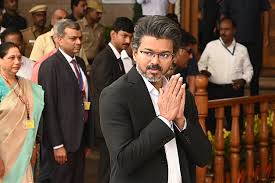
Tamil Nadu Chief Minister C Joseph Vijay is unlikely to meet senior Congress leaders Sonia Gandhi and Rahul Gandhi during his Delhi visit on Thursday, with party sources indicating that no appointment has been scheduled. The Chief Minister is expected to conclude his maiden official visit to the national capital after assuming office earlier this month and return to Chennai by a special flight. Airport sources said Vijay is likely to arrive in Chennai at approximately 12.40 pm. Vijay’s Delhi trip gained significance after his meeting with Prime Minister Narendra Modi on Wednesday, during which he raised a range of Tamil Nadu-specific concerns, including the contentious Mekedatu dam project, the arrest of Tamil Nadu fishermen by the Sri Lankan Navy, and the row surrounding Tamil Thaai Vaazhthu, the state invocation song. According to an official release, the Chief Minister urged the Centre to prevent Karnataka from proceeding with the proposed Mekedatu reservoir project across the Cauvery river, arguing that it runs counter to the final award of the Cauvery Water Disputes Tribunal and Supreme Court rulings. He also sought immediate intervention to secure the release of detained fishermen and their boats. Vijay reportedly requested the Prime Minister to issue clear directions permitting Tamil Thaai Vaazhthu to be sung at the beginning of government functions, amid an ongoing political debate over the issue. Courtesy : TNIE Note: This news is originally published on https:/thenewindianexpress.com/bha and is used purely for non-profit/non-commercial purposes, especially human rights
Siddaramaiah informs cabinet colleagues of his decision to step down as Karnataka Chief Minister
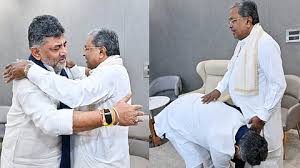
Amid growing speculation over a leadership change in Karnataka, Chief Minister Siddaramaiah, informed his cabinet colleagues of his decision to step down during the breakfast meeting hosted at his official residence on Thursday. His current deputy and possible successor, D K Shivakumar and other cabinet colleagues attended the breakfast meeting. “Congress high command proposed DKS as the next chief minister.I have agreed to this,” he said. Siddaramaiah is likely to formally tender his resignation at 2: 30 Pm. Photos shared by the Chief Minister’s Office showed Siddaramaiah embracing Shivakumar. In another image, Shivakumar was seen seeking Siddaramaiah’s blessings by touching his feet. Ministers including Priyank Kharge, KJ George, MB Patil, Ramalinga Reddy and HK Patil also attended the meeting at the Chief Minister’s residence under heightened security arrangements. According to CMO sources, the CM sought the Governor’s appointment after the party high command apparently asked him to make way for a leadership change in the state. However, Lok Bhavan sources said Siddaramaiah has not yet sought time to meet Governor Thaawarchand Gehlot, who he has left for his native, Indore, for personal reasons. Discussions over a possible transition have periodically surfaced since the Congress government crossed the halfway mark of its tenure in Karnataka. The Congress leadership, including Rahul Gandhi and party president Mallikarjun Kharge, had held several hours of discussions with Siddaramaiah and DK Shivakumar, both jointly and separately in Delhi recently. While some reports claim the Congress high command may be leaning towards a change and has conveyed its position to Siddaramaiah, the party has publicly rejected such suggestions. Meanwhile, the Karnataka State Federation of Backward Class Communities warned the Congress and its high command that the party will face consequences if Siddaramaiah is replaced. Asserting that Congress came to power because of the support of backward class and AHINDA (Kannada acronym for minorities, backward classes and Dalits) communities, federation leaders said there is no other leader of Siddaramaiah’s stature in the Congress party, and warned of agitation if he is made to step down. Shivakumar camp was jubilant, and his supporters broke into celebrations on Wednesday in many parts of the state, including Bengaluru and Ramanagara, amid reports that their leader was all set to become the next CM. Supporters of Siddaramaiah gathered outside his official residence, protesting amid intense speculation that he might step down. Courtesy : TNIE Note: This news is originally published on https:/thenewindianexpress.com/bha and is used purely for non-profit/non-commercial purposes, especially human rights
Vijayan calls ED raids ‘targeted crackdown’ on Opposition, says Rahul may get ‘mental satisfaction’

Former Kerala CM alleged that the BJP has been using central agencies against opposition leaders since it came to power and claimed the action against him was also part of that strategy. Former Kerala Chief Minister Pinarayi Vijayan on Wednesday alleged that Enforcement Directorate (ED) searches at his residence were part of a “targeted crackdown” on opposition leaders across the country. He also claimed the searches may provide “mental satisfaction” to leaders like Rahul Gandhi, alleging that the Congress leader had repeatedly questioned why his residence had not been searched and why he had not been arrested. Speaking to reporters after ED officials concluded hours-long searches at his rented house in Bakery Junction in connection with the alleged CMRL monthly payment case, Vijayan said the action would not weaken him or the CPI(M). “This is only a beginning. Nobody should harbour the illusion that such actions can intimidate or weaken us,” he said. The veteran CPI(M) leader alleged that the BJP-led Centre has been using central agencies against opposition leaders since it came to power, and claimed the action against him was also part of that strategy. Claiming that opposition leaders across the country were facing similar action from central agencies, Vijayan alleged that the Congress was maintaining silence over ED proceedings against leaders of other parties. The ED action is linked to allegations that Cochin Minerals and Rutile Ltd (CMRL) paid Rs 1.72 crore to Exalogic Solutions, owned by Vijayan’s daughter T Veena, between 2018 and 2019, without receiving any services in return. Officials said searches were being conducted at around 10 premises across Kerala under the Prevention of Money Laundering Act (PMLA). The searches came a day after the Kerala High Court dismissed a plea by CMRL seeking to quash the ED proceedings in the case. Courtesy : TNIE Note: This news is originally published on https:/thenewindianexpress.com/bha and is used purely for non-profit/non-commercial purposes, especially human rights
Centre fears ‘divergence of views’ among High Courts on new transgender law; asks SC to transfer cases to itself
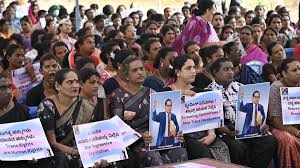
“We will see,” Chief Justice Kant said in response The Centre urged the Supreme Court on Wednesday (May 27, 2026) to transfer petitions challenging the constitutionality of the Transgender Persons (Protection of Rights) Amendment Act, 2026 from about four different High Courts to the apex court. Appearing before a Bench headed by Chief Justice of India Surya Kant, Solicitor General Tishar Mehta said the High Court are returning to work from summer recess in the first week of June. SC flags ‘risk’ of misuse in transgender self-identification debate The Supreme Court is already seized of several petitions challenging the 2026 Act, but it is is only partially working during June. Mr. Mehta, appearing for the Union government, said the High Courts may pre-empt the apex court by separately taking up the petitions before them and pass order. Mr. Mehta said the apex court should shift the cases pending in these High Courts to itself in order to avoid “divergent views” on the same Act. The top law officer urged the Chief Justice to list the Union government’s plea for transferring these petitions to itself on May 29. “We will see,” Chief Justice Kant said in response. The petitions in the apex court have criticised the controversial 2026 law of removing the right to self-identity. The 2026 Act requires a government-appointed medical board’s favourable recommendation for a District Magistrate to certify someone as a transgender person. NHRC asks Centre to review changes to trans law, ‘revisit’ community concerns on self-identification The petitioners, including activists like Laxminarayan Tripathi and others, said the Act disregarded transgender identity as an “authentic human identity, freely chosen”. They have argued that the requirement for a medical certification for gender recognition violated the rights of transgender persons and amounts to “medical gatekeeping” by the State. The government had countered that the intention of the Act was to ensure that deserving people from the community get benefits. He said forcible sex change was criminalised. The Transgender Persons Amendment Bill and the question of identity The petitioners highlighted that the Act had abruptly stopped ongoing sex-change therapies and treatment, leaving many in the community in dire straits. The petitions have argued that the 2026 amendments pull the carpet from under the 2014 NALSA judgment that declared that the right to self-identity was a fundamental right. It had held that identity was determined by the person, and not by biology, birth assignment or through State verification. Section 3 of the 2026 Act has omitted the right to self-perceived gender identity. The Hindu Bureau Courtesy : The Hindu Note: This news is originally published on https:/thehindu.com/bha and is used purely for non-profit/non-commercial purposes, especially human rights