
Rahul Gandhi to kick off Congress campaign on youth issues from Rajasthan’s Kota
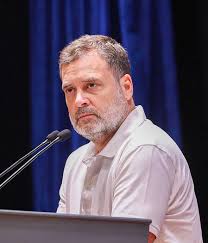
Rahul Gandhi will engage in a direct dialogue with students and aspirants preparing for competitive exams on paper leaks and major youth-related issues. JAIPUR: The Congress party will launch a nationwide movement on June 17 from Kota, renowned as the country’s “coaching capital”, to focus on issues such as paper leaks, examination irregularities, unemployment and other key issues affecting the youth. The Leader of the Opposition in the lok Sabha, Rahul Gandhi, will engage in a direct dialogue with students and aspirants preparing for competitive exams on paper leaks and major youth related issues. This effort is being viewed as not just a political event but as the launch of a new youth-centric narrative for the Congress to mobilize students across the country. The choice of Kota in Rajasthan is significant as it not only attracts thousands of students from across the country but also as it is represented in the Lok Sabha by Speaker Om Birla. The Congress is keen to corner the BJP in what is being seen as a major bastion for the saffron party and the RSS. Kota District Congress President Rakhi Gautam and Kota Rural Congress President Bhanu Pratap Singh stated that the decision was made to launch this nationwide campaign from Kota as it is the country’s “coaching hub”. Through this initiative, students across the nation will be connected, and their issues will be raised at the national level. Preparations for Rahul Gandhi’s proposed visit to Kota next week are already underway. Continuous contact is being maintained with students and coaching institutes regarding the student conference. Additionally, information about Rahul Gandhi’s interactive session is being disseminated to students via social media. At the Kota event, Rahul Gandhi will interact directly with students and the youth, listening to their concerns and suggestions. Discussions will cover various topics related to education and employment, including the repeated paper leak scandals, the NEET exam controversy, and key issues concerning the CBSE. The entire Congress team in Kota is actively engaged in preparing for the event. However, a final decision regarding the venue has not yet been reached. Congress leaders say that details of potential venues in Kota have been submitted to AICC officials and the venue will be announced once a final approval is received. Notably, this marks Rahul Gandhi’s second visit to Rajasthan within a fortnight. He had previously visited Pushkar in Ajmer district on June 1 to attend the concluding ceremony of the national training camp for Congress district presidents. It was during the Pushkar conference that he was invited to visit Kota. Kota is considered the country’s largest coaching hub, attracting thousands of students from all corners of the country every year for medical and engineering entrance exam preparations. Consequently, the Congress sees Kota as a most suitable platform to raise issues like paper leaks and transparency in the examination system. Rahul Gandhi had previously met with coaching students during a brief break from his ‘Bharat Jodo Yatra’ in December 2022. The Congress party also acknowledges that the NEET paper leak case has links to Rajasthan. Against this backdrop, Rahul Gandhi is set to hold a direct dialogue with students at the upcoming conference in Kota. At the Pushkar event recently, Rahul had praised the working style of state Congress chief Govind Singh Dotasra and Leader of the Opposition in the Vidhan Sabha Tikaram Jully. He remarked that the united manner in which the Congress organization is functioning in Rajasthan serves as a model for other states. Political analysts believe that Rajasthan was chosen for this national campaign because the party is considered organizationally strong there, and the participation of both party workers and the general public can be ensured for large-scale events. Kota is the parliamentary constituency of Lok Sabha Speaker Om Birla and is considered a stronghold of the BJP and the RSS. But Shanti Dhariwal, a senior Cabinet minister in the previous Congress government and a close confidante of former CM Ashok Gehlot, is the most influential Congress leader in Kota. Dhariwal is considered as a key figure in raising a formidable challenge for the BJP in Kota. Following the event in Kota, the first phase of the campaign will include programs in Allahabad on July 10, Patna on July 11, and Delhi on July 14. The Congress says this campaign will not be limited solely to the NEET paper leak issue. Instead, it will evolve into a nationwide movement addressing broader concerns such as the future of the youth, employment, transparency in recruitment exams, and much-needed reforms in the education system. Rajesh Asnani Courtesy : TNIE Note: This news is originally published on https:/thenewindianexpress.com/bha and is used purely for non-profit/non-commercial purposes, especially human rights
Kerala govt says Nipah, Shigella situation under control; Vijayan questions outbreak management

Kerala health minister K Muraleedharan on Sunday sought to reassure the public over concerns surrounding Nipah virus and Shigella infections, stating that both situations are being closely monitored and remain under control. Addressing reporters, the minister said one patient suspected of having Nipah virus remains on ventilator support, but extensive testing has so far not indicated a wider outbreak. On Shigella infections, the minister said 135 cases have been reported in the state so far. Three deaths linked to the infection — involving two children and a 59-year-old woman — have also been recorded. However, he stressed that the situation is under constant monitoring and that all necessary medical protocols are being followed. Opposition raises concerns The government’s handling of disease control efforts came under criticism from Opposition leader Pinarayi Vijayan, who compared the current response with the approach adopted during previous Nipah outbreaks under the Left Democratic Front (LDF) government. Vijayan said that during earlier outbreaks, the then health minister remained stationed in affected areas and personally coordinated containment activities. “”Replacing the person at the helm of the department at such a stage is not something that would normally be expected. But the Health Minister says that the transfer was made because of non-cooperation with the system. A system relating to transfers within the department has been functioning transparently,” Vijayan stated. DHS transfer sparks political debate Vijayan further questioned the government’s decision to transfer the Director of Health Services (DHS) during an ongoing public health challenge. “My understanding is that the DHS was transferred because he did not support the UDF government’s attempt to dismantle that system”, said Vijayan. He argued that replacing a senior official at a critical stage of outbreak management was unusual and could affect continuity in response efforts. Courtesy : TOI Note: This news is originally published on https:/timesofindia.com/bha and is used purely for non-profit/non-commercial purposes, especially human rights
Battle of real ‘TMC’ begins as rebel MPs merge with Nationalist Citizens Party

NEW DELHI/KOLKATA: The internal crisis in the Trinamool Congress appeared to intensify on Sunday after a group of dissident MPs claimed they had broken away from the party and announced their merger with the Nationalist Citizens Party. The rebel MPs met Lok Sabha Speaker Om Birla and sought recognition as a separate group in Parliament. Speaking to reporters after the meeting, rebel MP Kakoli Ghosh Dastidar claimed that two-thirds of the TMC’s Lok Sabha members had backed the move. “Two-thirds MPs of TMC have given a letter to the Speaker for a separate seating arrangement. We will merge with the Nationalist Citizens Party and support the NDA,” she said. Senior TMC leader and Lok Sabha MP Sudip Bandyopadhyay said the dissident group had already merged with the Nationalist Citizens Party, describing it as a regional party. The Nationalist Citizens Party is a lesser-known registered, unrecognised party from Tripura. The ‘real party disputes’ The move has triggered a fresh political battle over who represents the “real TMC”. Asked about the claim by the Mamata Banerjee-led faction, Bandyopadhyay said the matter would ultimately be decided by courts. “Court will decide later who is the real TMC. We met the Speaker and gave him our request,” he said. He added that the faction would also stake claim to the party’s electoral symbol of two flowers. Meanwhile, TMC leaders Kirti Azad and Sagarika Ghosh met Speaker Birla and submitted a letter from TMC Lok Sabha leader Abhishek Banerjee, urging him not to recognise any separate faction. The letter, dated June 10 and earlier sent through email, argued that the Constitution does not allow the creation of a separate group within an existing political party. It also said the anti-defection law does not permit such a split. Meanwhile, Rajya Sabha MP Kapil Sibal criticised the rebel MPs and called for their disqualification, arguing that they cannot merge with another party. Sibal said in a post on X, “TMC rebels: Will merge with Nationalist Citizens Party (NCP). Indian democracy has become the ‘theatre of the absurd’. A joke!” “The rebels of the TMC legislative party cannot merge with a political party; that can happen only if the TMC wished to do so!” he added. “Disqualify them!” he said. The earlier cases Shiv Sena split (2022-23): After the split between the Uddhav Thackeray and Eknath Shinde factions, the Election Commission recognised the Shinde faction as the Shiv Sena and allowed it to retain the party’s “bow and arrow” symbol. Nationalist Congress Party split (2023-24): After Ajit Pawar’s rebellion, the Election Commission recognised the Ajit Pawar faction as the real NCP and allotted it the party’s “clock” symbol. AIADMK dispute (2017): After the split between the factions led by Edappadi K Palaniswami and O Panneerselvam, the Election Commission decided that the Palaniswami faction was entitled to the AIADMK name and the “two leaves” symbol. Samajwadi Party dispute (2017): During the fight between Akhilesh Yadav and Mulayam Singh Yadav factions, the Election Commission recognised Akhilesh Yadav’s faction as the Samajwadi Party and allowed it to retain the “cycle” symbol. How are ‘real party’ disputes decided? The Election Commission decides disputes over a party’s name and election symbol by examining the claims of rival factions. In earlier cases, the poll panel has looked at factors including the support enjoyed by each faction among elected representatives and the party organisation before deciding which group can use the original party name and symbol. The EC’s decisions can later be challenged in courts. Courtesy : TOI Note: This news is originally published on https:/timesofindia.com/bha and is used purely for non-profit/non-commercial purposes, especially human rights
Kerala offers free KSRTC rides to women and transgender people
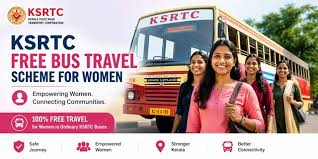
From June 15, women and transgender people in Kerala can hop on select KSRTC busses without paying a fare. This move, part of the Priyadarshini scheme and a big UDF election promise, is all about making public transport easier and more affordable for women and transgender people on select KSRTC busses. Seven KSRTC types covered and stickered The free rides cover seven types of busses, including Ordinary, City Ordinary, Limited Stop Ordinary, Fair-Stage Ordinary, Town-to-Town, Point-to-Point, and Gramavandi services. Launching in Thiruvananthapuram with Chief Minister V D Satheesan leading the way, eligible busses will have special stickers so you can spot them easily. The state government will cover any extra costs to keep the service running smoothly. Courtesy : NewsBytes Note: This news is originally published on https:/newsbytes.com/bha and is used purely for non-profit/non-commercial purposes, especially human rights
Dalit woman and son assaulted, caste-related abuse alleged: Victim’s family demands action from Superintendent of Police
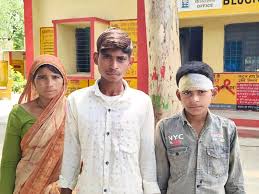
A woman in Bairaspur village, under the jurisdiction of the West Sharira police station in Kaushambi, has accused some villagers of using caste-related abuse, assaulting her, and threatening to kill her. The victim has submitted a complaint to the Superintendent of Police, demanding action. According to the complaint, Bairaspur resident Seema Devi stated that the incident occurred on June 12, 2026. She was at home with her son that day. It is alleged that a young man from the village arrived at her house and began calling her son out, using caste-related abuse. When Seema Devi’s son protested, the accused called other family members. The victim alleges that the accused attacked her son with a stick, causing serious head injuries and causing him to fall unconscious. Seema Devi, who tried to intervene, was also assaulted. Residents from the vicinity arrived at the scene, after which the situation was resolved. The woman says that after the incident, the accused threatened to kill her entire family if she complained. The victim also alleged that these men had previously assaulted her family. Seema Devi has urged the Superintendent of Police to conduct an impartial investigation into the matter, file a case against the accused, and take legal action. Jitendra Kumar | Manjhanpur, Kaushambi Courtesy: Hindi News
‘INDIA bloc has already won 2029 elections’: Rahul Gandhi lays out strategy of ‘resistance with unity’
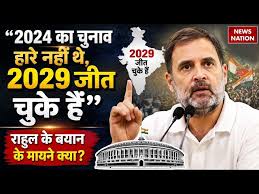
Lok Sabha LoP and Congress MP Rahul Gandhi on Saturday asserted that the INDIA bloc has effectively “already won” the 2029 Lok Sabha elections, while stressing that opposition parties must remain united to counter the BJP. Sharing a Hindi version of his speech delivered at the INDIA bloc meeting on June 8, Gandhi said unity and resistance were essential at a time when the country’s institutions and democratic values were under strain. ‘We did not lose 2024’ In a post on X, Gandhi said, “I am saying it again… We did not lose the 2024 elections, and we have already won the 2029 elections.” He maintained that the opposition would continue to organise people and collectively challenge what he described as the BJP’s takeover of institutions. “When India’s thinking, the soul of the country, is in crisis… when there is a takeover of institutions… when the voice of the people is suppressed… then only resistance with unity works,” he wrote. ‘Will defeat BJP’ Gandhi further expressed confidence that all INDIA bloc constituents would remain committed to defending the idea of India. “We will remain united, organize every individual, and defeat the BJP’s takeover of India’s institutions with the power of resistance.” In the meeting held on Monday, Rahul Gandhi gave a call to the opposition leaders to stay united, saying it is easy to beat the ruling Bharatiya Janata Party (BJP) “if we stand together and resist”. He also expressed disappointment over the lack of support from some partners on issues such as alleged “vote chori”. Dravida Munnetra Kazahagam (DMK) and Aam Aadmi Party (AAP) refrained from joining the meeting. Courtesy : TOI Note: This news is originally published on https:/timesofindia.com/bha and is used purely for non-profit/non-commercial purposes, especially human rights
Congress to hold student outreach events against paper leaks, exam irregularities: KC Venugopal

Congress general secretary (organisation) KC Venugopal said the programme aims to highlight concerns over paper leaks, examination scandals, rising costs of competitive tests and the Centre’s failure to protect the interests of students and job seekers. NEW DELHI: The Congress on Saturday announced a nationwide outreach campaign targeting students and young job aspirants, with a series of conventions focused on paper leaks, examination reforms, unemployment and accountability for recurring irregularities in recruitment and entrance tests. The campaign, to be led by Leader of the Opposition in Lok Sabha Rahul Gandhi, will begin with a student convention in Kota on June 17 and continue in Prayagraj on July 10, Patna on July 11 and Delhi on July 14. Launching the first phase of the initiative, Congress general secretary (organisation) KC Venugopal said the programme aims to highlight concerns over paper leaks, examination scandals, rising costs of competitive tests and what the party described as the Centre’s failure to protect the interests of students and job seekers. In a statement, Venugopal said the campaign would bring together students, competitive examination aspirants, youth organisations and educators affected by examination-related controversies. He alleged that repeated paper leaks, increasing examination fees and the absence of a transparent recruitment and education system were undermining the future prospects of millions of young Indians. The outreach will also seek to build support for a set of reforms previously advocated by Mr. Gandhi, including the decentralisation of the National Eligibility-cum-Entrance Test (NEET), the abolition of examination fees, strict action against those involved in paper leak rackets and greater accountability within the government for examination-related failures. Reiterating the party’s demand for the resignation of Union Education Minister Dharmendra Pradhan, the Congress said accountability must be fixed for repeated controversies surrounding examinations and recruitment processes. “The Congress Party will seek a comprehensive discussion in Parliament on the crisis confronting India’s youth and push for legislative measures to safeguard their interests, rights and future,” Venugopal said. The party plans to mobilise students through the National Students’ Union of India (NSUI), the Indian Youth Congress and its state and district units. The campaign will include campus visits, interactions at coaching centres, schools and universities, social media outreach, live screenings and direct engagement with students across the country. According to the Congress, the movement aims to bring together students beyond political affiliations and provide a platform for those affected by examination irregularities to share their experiences and demand corrective action. The party said Rahul Gandhi has consistently raised concerns over paper leaks, recruitment delays and unemployment, making issues of merit, fairness and equal opportunity central to his engagement with India’s youth. Courtesy : TNIE Note: This news is originally published on https:/thenewindianexpress.com/bha and is used purely for non-profit/non-commercial purposes, especially human rights
Sundargarh: Tribal and Dalit Contractors’ Association president attacked, two arrested

The president of the Tribal and Dalit Contractors’ Transport Association, Dilip Kumura, was allegedly subjected to a life-threatening attack in Odisha’s Sundargarh district. Sundargarh: The president of the Tribal and Dalit Contractors’ Transport Association, Dilip Kumura, was allegedly subjected to a life-threatening attack in Odisha’s Sundargarh district. Police have arrested two persons in connection with the incident and launched an investigation into the case. The arrested accused have been identified as Shiva Ghasi and Rukesh Khadia, both residents of Tileimal area in neighbouring Jharsuguda district. Police have booked them under various serious sections of the law and produced them before a local court. Two other individuals, identified as Biswa Majhi and Prakash Das, were initially detained for questioning but were later released after interrogation. Dilip Kumura alleges assault, death threats during return from Darlipali According to the complaint lodged by Kumura, he was returning to his residence in Sundargarh from the office of the association at Darlipali on June 11. The association is engaged in the transportation of fly ash from the NTPC Darlipali project. While on his way home, Kumura reportedly stopped by the roadside to attend a phone call. During that time, three youths — identified as Suraj Patel, Biswa Majhi and Prakash Das — allegedly arrived in a car and picked up a quarrel with him. The complaint alleges that Prakash Das took out an iron rod from the vehicle and attacked Kumura, striking him on the leg and causing serious injuries. It further states that Biswa Majhi and Suraj Patel allegedly brandished firearms and threatened to kill him. Hearing the commotion, some labourers passing through the area rushed to the spot, rescued the injured association leader and shifted him to a nearby hospital for treatment. Later that night, Kumura lodged an FIR at Bhasma police station, following which police detained Biswa Majhi and Prakash Das for questioning. During the course of the investigation, police reportedly found evidence suggesting the involvement of Shiva Ghasi and Rukesh Khadia in the assault and subsequently arrested them. By Chinmayee Dash Courtesy : Sambad English Note: This news is originally published on https:/sambadenglish.com/bha and is used purely for non-profit/non-commercial purposes, especially human rights
The khadi he wore, the Gandhi he kept: A Dalit memoir that refuses easy answers

Recently, I received a message from someone I had known since my Gandhinagar days, when I represented the Times of India from 1997 to 2012. He wanted to send me the English translation of a memoir he had written: “Homes Without Windows“. Thin, short, and darker in complexion than me, he would occasionally come down to my office in Akhbar Bhawan. His name is Chandu Maheria. Seen through a middle-class lens, Maheria had an unimpressive personality. But that didn’t concern me. I knew little about his background, except what he had told me — that he worked in the state education department, and if I am not mistaken, in its midday meal section. Whenever I met someone new, I would try to find out whether there was a story in them. Education interested me: that was my selfish reason for talking to him. Once, speaking on the phone, I asked Maheria to stop by my office on his way home to Gandhinagar, as he said he had a story. I was momentarily hesitant: he would have to arrange a drop to my office and back, since he did not drive a scooter. So I decided to meet him instead in the canteen of the Old Sachivalaya, where he had his office. Meeting him there directly, I felt, was also a better idea than going to his office, which might have exposed his closeness to a journalist. Much later, after my retirement, I discovered that he was regarded quite a buff — a respected one at that — in Dalit circles: an intellectual and a committed writer, one who could speak extensively on Dalit issues. I saw him speak at meetings at Dalit Shakti Kendra, an empowerment-cum-technical school for teenagers founded by the well-known human rights leader Martin Macwan, located off Ahmedabad. I found him very sharp. Until I received the book, all I knew about it was that it had been praised by the eminent historian of modern India, Ramachandra Guha, who called it a “truly remarkable and compellingly readable memoir” — a comment that had appeared on Facebook. With the book in hand, I began to randomly glance through it. But contrary to the anti-Gandhi views prevalent among most Dalit intellectuals across India, this is what I found him stating: “Gandhi might have been anything — call him whatever names — but one thing he was certainly not was anti-Dalit. Oh no, never. Alas!” This made me take a deeper look at the book and see what Maheria, a Dalit and a firm follower of Dr B.R. Ambedkar, thinks about Gandhi. Though a very reluctant reader, I read through its approximately 230 pages in a couple of sittings. Largely a personal account, the memoir describes how Maheria spent his early life in extreme poverty, growing up in a working-class chawl of Ahmedabad as the son of a mill worker — until he shifted to Gandhinagar on securing a government job. They lived in what he describes as “the squalid, tumble-down, cheek-by-jowl dwellings in the backstreets of the city, dubbed as the heart of the state.” Maheria describes how Dalits from different parts of Gujarat had settled in the chawls: “Our chawl was inhabited by the Rohits, people of the tanner caste, who had migrated from Charotar, a large swathe of fertile land covering districts like Kheda and Anand in central Gujarat”, and “the Vankars, people of the weaver caste, from Mehsana, a district in north Gujarat.” Belonging to different Dalit sub-castes, all of them would daily queue up for the dirty common toilet. He underlines, “A strange thing to say, but it was in these queues that I learnt my first lessons in social inequality.” According to him, “All these people were extremely beleaguered, a harried lot that had come here to escape poverty, untouchability, oppression and exploitation, and yet they saw hierarchy and hatred as natural ways of being, such that even the slightest breach in the set order resulted in exchanges of expletives and blows.” Pointing out that “all this cheek was for toilets that were no better than hellholes”, he states, “Though not untouchability in its conventional sense, these practices were rooted in direct discrimination, in an ordained difference between the high and the low, that had seeped right up to the bottom of the caste order.” Offering an example of intra-Dalit casteism, he gives the example of Neno Ma’raj, a man of the priestly Garoda caste, considered the highest among the Dalits. “A mill worker of no consequence, Ma’raj would, in a blatant exhibition of his caste pride, lay his string cot out on the footpath every evening and lounge there like a maharaja, a veritable badshah holding his royal court.” He explains, “In his exhaustive, eye-opening study of the forms of untouchability practised by non-Dalits and Dalits (among themselves) in Gujarat, my friend Martin Macwan has pegged the numbers at ninety-eight and ninety-nine, respectively.” Explaining caste discrimination and related issues through personal anecdotes, Maheria reveals why he believes a section of Dalit intellectuals’ anti-Gandhi stance has gone overboard. None of them, he feels, will admit that no other leader fought untouchability like Gandhiji. Indeed, the book’s chapter “That Fellow, Gandhido” particularly excited me. Maheria starts by stating that he likes wearing khadi as it suits his “short body and slim build”, and explains why his mother didn’t like it. The fabric was anathema to her. She would take a dig at him, saying, “You look like a ditto Gandhiyo in this pair.” An unlettered woman who had picked up the Gandhi-Ambedkar debate through household conversations, her “pet peeve was, ‘None but that fellow, Gandhiyo is responsible for erecting these caste enclosures’.” Yet Maheria graphically describes how, growing up in the working-class chawls, much of his early education happened in the suburb’s Municipal School No. 3-4, whose principal was a man called Balawantbhai Parmar. “A Dalit by birth, he was a thorough Gandhian. Clad in khadi kurta and khadi dhoti, with a topping of
‘He Abused Me With Caste Slurs’: Dalit Woman Alleges Assault by Village Head Representative in UP; Court Orders FIR
A Dalit woman from Uttar Pradesh’s Maharajganj district has accused a village head representative of assaulting her, abusing her with casteist slurs, and threatening to kill her. After allegedly receiving no help from the police, the woman approached the court, which has now ordered registration of an FIR in the case. The incident was reported from Lalkarpur village under the Bhitauli police station area. According to court documents, the complainant, Leelavati, wife of Deenanath and a resident of Lalkarpur, alleged that the incident took place on January 8, 2026, when she was travelling to her daughter’s in-laws’ house in Rajmandir. Dispute Over Money Led to Assault, Woman Claims Leelavati alleged that she met village head representative Ajay Patel, also known as Pintu, near a canal during her journey. She claimed that she had previously given ₹30,000 to the accused and had asked him to return the money. According to the woman, Patel became angry when she demanded the amount back. In her complaint, Leelavati alleged that the accused abused her using casteist remarks and verbally insulted her. “When I asked for my money, he got angry, abused me using caste-related words, and assaulted me,” the woman stated in her petition before the court. She further alleged that when she protested, the accused physically attacked her by kicking and punching her. Woman Says Accused Threatened to Kill Her The complainant said that a local woman reached the spot after hearing her cries and intervened, following which the accused allegedly fled. Before leaving, Patel allegedly threatened her with serious consequences. “The accused threatened to kill me before leaving the spot,” the woman alleged in her complaint. Police Allegedly Failed to Act Leelavati claimed that she immediately informed the local police about the incident, but no action was taken. She later sent a written complaint to the Superintendent of Police, but she alleged that authorities still failed to respond. With no police action, the woman moved the Special SC/ST Act Court seeking legal intervention. Court Orders FIR Against Accused Taking serious note of the allegations, the Special Judge under the SC/ST Act in Maharajganj directed Bhitauli police to register a case and initiate legal proceedings. Confirming the development, Bhitauli Station House Officer (SHO) Satyendra Kumar Rai said action is being taken following the court’s order. Courtesy : TOP Note: This news is originally published on https:/theobserverpost.com/bha and is used purely for non-profit/non-commercial purposes, especially human rights