
Karnataka to fill SC/ST backlog vacancies, says Dy CM Parameshwara

On some DSS leaders’ statements that the Dalit community is not benefiting from the five guarantee schemes, Dr Parameshwara said people from the community who are not receiving the benefits of the guarantees will be identified soon. BENGALURU: Karnataka Deputy Chief Minister G Parameshwara, who also holds the revenue portfolio, on Tuesday promised a delegation of Dalits that steps will be taken to fill backlog vacancies reserved for the SCs and STs in universities and other government departments soon. “Our government will fill 72,000 vacant posts in various departments. The SCs and STs will be recruited as per reservation. In addition, several posts reserved for various categories remain vacant. These backlog vacancies, including those in universities and some major departments, will be filled. The matter will be discussed with the chief minister,” he told reporters after meeting the delegation. Stating that the PTCL Act has been amended, Dr Parameshwara said provision D has been removed to facilitate transfer of land granted to Dalits to others. However, there are concerns that its implementation has been delayed. “I assured the delegation that the government will take an appropriate decision in this regard soon,” he added. On some DSS leaders’ statement that the Dalit community is not benefiting from the five guarantee schemes, Dr Parameshwara said people from the community, who are not receiving the benefits of the guarantees, will be identified soon. Steps will be taken to reach the benefits to them. On the demand to increase the post-matric scholarship of Rs 1,800 per student, he said it should be hiked to Rs 3,000. He promised that it will be revised after talks with the CM. This will be included in the next budget. Dr Parameshwara said the fees of SC/ST students studying abroad will be paid by the government. Neelavva Ningavva Harijan, member of the Indian squad that won the World Cup cricket for persons with disabilities last year, was living in a shed. The government provided her Rs 5 lakh last year. She will soon be allotted a residential site, he added. Dalit leaders Mavalli Shankar, Prof Indira Krishnappa, M Venkataswamy, Sridhar Kaliveera and Subbu Holeyar, Revenue Additional Chief Secretary Rajendra Kumar Kataria, Revenue Commissioner Meena Nagaraj, and Social Welfare Principal Secretary Mohan Raj were present. Courtesy : TNIE Note: This news is originally published on https:/thenewindianexpress.com/bha and is used purely for non-profit/non-commercial purposes, especially human rights
Parliament passes Transgender Persons Amendment Bill, 2026 with Rajya Sabha approving it today
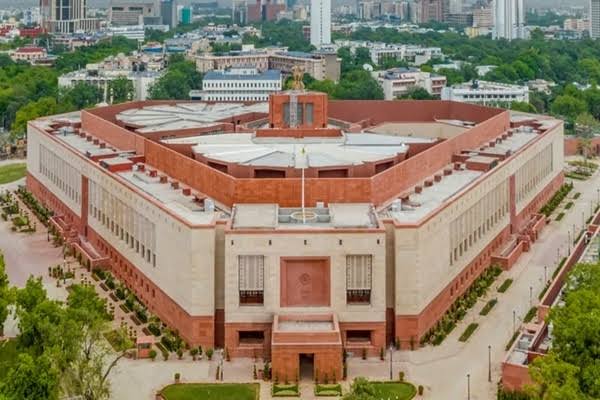
Parliament has passed the Transgender Persons (Protection of Rights) Amendment Bill, 2026, with the Rajya Sabha approving it today. The bill was passed by the Lok Sabha yesterday by a voice vote amid an Opposition-led walkout. The bill seeks to redefine the category of transgender, removes the provision of self-perceived gender identity and excludes several socio-cultural identities as well as transmasculine individuals from its ambit. It also further defines transgender persons within a biological framework, based on intersex variations and differences in sexual development. Replying to the discussion on the Bill in the Rajya Sabha, Social Justice and Empowerment Minister Dr Virendra Kumar said the government is compassionate towards the well-being of the transgender community. He said the Bill has provisions to empower the transgenders and give them dignity. The Minister said that the NDA government has taken several initiatives to bring transgender people to the mainstream and stop discrimination against them. Starting the discussion in the Upper House, Congress MP Renuka Chowdhury said this bill dilutes the privacy of an individual provided under the Constitution. Opposing the Bill, Ms Chowdhury said self-identification cannot be taken away through bureaucratic certification. Criticizing the government, she said that the proposed bill undermines the fundamental rights and dignity of transgender persons. Calling such a move wrong and illegal, she argued that forcing transgender persons to provide their identity through official certificates is against the spirit of equality and dignity guaranteed by the constitution. She also questioned the government’s approach for not properly consulting with the transgender community before bringing the Bill. She also referred to the Supreme Court’s landmark NALSA judgement of 2014, which recognized the right of transgender persons to self-identify their gender. Ms Chowdhury said the proposed Bill violates the principles laid down in that judgement and fails to respect an already established legal framework. DMK MP Tiruchi Shiva also opposed the Bill, saying that even if the Bill is passed in Parliament with a majority, it will be struck down by the Supreme Court. He further added that the Bill violates Articles 14, 15, 19 and 21 of the Constitution and it deprives the community of the right to freedom, dignity and self-determination. Supporting the Bill, BJP MP Medha Vishram Kulkarni said, ” This Bill ensures justice, dignity, protection from criminalisation and legal safeguards for transgender persons. She also thanked Prime Minister Narendra Modi for bringing this bill with certain amendments in order to ensure that the benefits reach the deserving people in a proper manner. She said there is a need for a law that brings justice to real transgender individuals and punishes fake ones. Mrs Kulkarni said the benefits should be extended to those who are transgender by birth. She said that the amendment to extend punishment will bring down the rate of crime and forced identities. TMC’s Saket Gokhale said that 31% of Transgender people in India have attempted suicide because of the discrimination that they are facing. He alleged that now the government is going to start discriminating against them as though social discrimination were not enough. He called it unacceptable. Mr Gokhale expressed concern that gender is going to be decided by the Chief Medical Officer and a District Magistrate, and the bill does not prescribe any qualifications for the Chief Medical Officer. Sanjay Singh of AAP said the Bill is a big let-down for the transgender community. He accused the government of not doing anything for the community. RJD’s Manoj Kr Jha said that prejudices against transgender people should stop, and they should be able to live with dignity. He added that self-determination of gender should not be taken away. CPI(M)’s John Brittas said it is a black-letter day and the Bill is taking India a century back. He pleaded with the government to either withdraw the Bill or refer it to a Select Committee. Jaya Bachchan of the Samajwadi Party also questioned the government over the legislation. She sought to know what the urgency was in bringing the Bill, without examining it with the depth and care that it deserved. Courtesy : NOA Note: This news is originally published on https:/newsonair.com/bha and is used purely for non-profit/non-commercial purposes, especially human rights
NEET protest: TVK slams govt; Rahul, Priyanka released from detention — top developments

NEW DELHI: Congress leaders Rahul Gandhi and Priyanka Gandhi Vadra were released after being detained by Delhi Police during a protest near Prime Minister Narendra Modi’s residence. The party had marched to Lok Kalyan Marg demanding the resignation of Prime Minister Narendra Modi and Union education minister Dharmendra Pradhan over the alleged paper leak and the police action against student protesters. The protests also drew support from several opposition leaders, while Tamilaga Vettri Kazhagam (TVK) strongly criticised the Centre over Rahul Gandhi’s detention and renewed its demand for the abolition of NEET. Meanwhile, the BJP accused the Congress of politicising the issue and defended the police action, saying the protest near the Prime Minister’s residence was held without permission. The developments came as thousands of protesters returned to Jantar Mantar to continue the agitation. FIR filed as video shows RAF jawan assaulted Delhi Police registered an FIR after a Rapid Action Force (RAF) jawan was allegedly chased and assaulted by a group of protesters during the Cockroach Janta Party’s (CJP) “Sansad Chalo” march in New Delhi. A video of the incident, widely shared on social media, appears to show the jawan being surrounded, pursued and beaten during Monday’s protest. Police said an investigation is under way to identify those responsible. TVK condemns Rahul’s detention, seeks NEET abolition Tamilaga Vettri Kazhagam (TVK) condemned the detention of Rahul Gandhi and criticised the police action against opposition leaders. “The crushing of democracy in the capital is strongly condemnable! The arrest of Lok Sabha Opposition Leader Mr. Rahul Gandhi, who joined the field in support of the youth’s non-violent protest held in Delhi, by being dragged by the Delhi Police and carried away in handcuffs, is a blatant attack on democratic rights. This is strongly condemnable,” the party said. TVK also renewed its opposition to the NEET examination. “From the moment the NEET exam was implemented, not only has its credibility been lacking, but students continue to face mental stress, with their future dreams turning into a massive question mark. The harm caused to students every year due to the NEET exam shows no sign of stopping. Therefore, we strongly demand that the Union government completely abolish the NEET exam,” it said. Rahul, Priyanka released after detention Rahul Gandhi, Priyanka Gandhi Vadra and several opposition leaders were detained after Congress workers marched towards the Prime Minister’s residence at Lok Kalyan Marg. Rahul Gandhi, Samajwadi Party chief Akhilesh Yadav and other leaders were taken to Chhatrasal Stadium before being released later in the day. Priyanka Gandhi was taken to Mandir Marg Police Station, where Congress Parliamentary Party chairperson Sonia Gandhi later arrived. Congress leaders said they protested because they were not allowed to raise the NEET issue in Parliament. Rahul Gandhi said they marched to the Prime Minister’s residence “to demand answers from him for the brutalities against young students yesterday” and demanded the resignation of the Prime Minister and the Home Minister. The protest was joined by Congress president Mallikarjun Kharge, KC Venugopal, Pawan Khera, Karnataka chief minister DK Shivakumar, Kerala Leader of Opposition VD Satheesan, Supriya Sule and several other opposition leaders. Pradhan hits out at Congress Union Education Minister Dharmendra Pradhan accused the Congress of using students for political purposes. “LoP Shri @RahulGandhi and @INCIndia continue to shamelessly exploit students as political tools to manufacture disruption during the Monsoon Session of Parliament,” he wrote on X. He said the government was ready for a discussion on NEET in Parliament but alleged that the Congress preferred “political spectacle over democratic debate”. “We owe our students more than outrage. We owe them answers, reforms and accountability. That is exactly what our government remains committed to delivering,” Pradhan said. BJP MP Sambit Patra also criticised the protest, saying demonstrations should be held only at designated locations. He said the Prime Minister’s residence is a high-security zone and staging a protest there without permission was “inappropriate”. Police detail injuries, register six FIRs Delhi Police said six FIRs have been registered in connection with the violence during Monday’s Parliament march. Two FIRs were registered at Parliament Street police station, while one each was registered at Connaught Place, Tilak Marg, Barakhamba Road and Kartavya Path police stations. DCP Northeast Delhi Rahul Alawal said six police personnel were injured during the violence. He said Constable Mohit suffered serious injuries to his head, below his eyes and on his legs and remains on medical rest. Additional DCP Sandeep Lamba, Inspector Rampal Goswami and some other officers have resumed duty despite being advised to rest. Station House Officer of Connaught Place police station Sukhbir Singh Malik said he was assaulted when a section of protesters allegedly turned violent near Regal Cinema. Malik said his helmet prevented a head injury, but he suffered injuries to his elbows, calf muscle and waist after being dragged to the ground. The police said several other personnel, including an ACP, an Inspector, a Head Constable and a driver, were also injured. Sonam Wangchuk continues fast Activist Sonam Wangchuk continued his indefinite hunger strike after being shifted from Safdarjung Hospital to Medanta Hospital in Gurugram following directions from the Delhi High Court. Sources told news agency ANI said Union Health Minister JP Nadda and Minister of State in the Prime Minister’s Office Jitendra Singh visited Medanta Hospital to enquire about Wangchuk’s health. The Delhi High Court directed Medanta Hospital to form a specialised medical team to supervise Wangchuk’s treatment while allowing him to continue his fast under constant medical supervision. His wife, Gitanjali Angmo, said he would continue the hunger strike in solidarity with students allegedly injured during the police action. Courtesy : TOI Note: This news is originally published on https:/timesofindia.com/bha and is used purely for non-profit/non-commercial purposes, especially human rights
‘Have some shame, spare us bhashans’: Mahua Moitra hits back at Dharmendra Pradhan over students remark
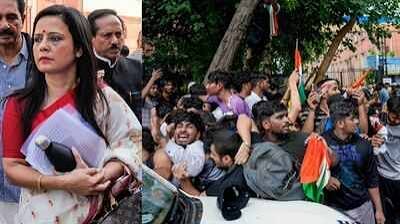
NEW DELHI: Trinamool Congress MP Mahua Moitra on Wednesday took a swipe at Union education minister Dharmendra Pradhan after he accused the Congress of exploiting students for politics, saying the only thing the government should be “committed to delivering” is his resignation. Pradhan, through a post on X, defended the Centre’s handling of the examination controversy and criticised the Congress for staging a protest outside Prime Minister Narendra Modi’s residence. To this, Moitra responded, “With all due respect have some shame & spare us the bhashans. The only thing your government should be committed to delivering right now is your resignation on a plate. Thank you.” Earlier, Pradhan had accused LoP Rahul Gandhi and the Congress of “shamelessly exploit(ing) students as political tools to manufacture disruption during the Monsoon Session of Parliament.” He alleged that despite the government’s willingness to hold a discussion on the issue, the Congress had chosen “political spectacle over democratic debate”. “We owe our students more than outrage. We owe them answers, reforms and accountability. That is exactly what our government remains committed to delivering,” Pradhan said. His remarks came after the Congress staged a protest over the alleged examination irregularities, while the Cockroach Janta Party’s (CJP) agitation over examination reforms continued. Activist Sonam Wangchuk continued his indefinite hunger strike, and Delhi Police registered an FIR in connection with Monday’s clashes during the CJP’s ‘Sansad Chalo’ march. Courtesy : TOI Note: This news is originally published on https:/timesofindia.com/bha and is used purely for non-profit/non-commercial purposes, especially human rights
Non-cognisable complaint lodged against transgender person for assaulting man in local train compartment
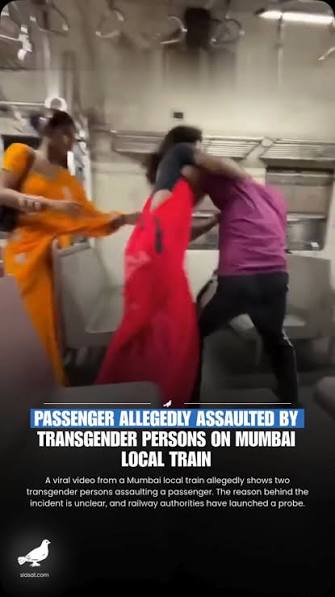
Mumbai: After a video clip capturing two transgender persons beating up a man inside a local train compartment went viral, the Govt Railway Police (GRP) tracked down the duo on Monday. One of them is a minor and was sent back to his guru with a warning. Police registered a non-cognisable complaint against the other and confirmed that preventive action will be taken against him. Elaborating on the incident, police said that the two transpersons were begging in local train compartments recently. When they asked for money from the man (captured in the video), he refused and argued that others had already taken money from him that day. This sparked an altercation, which ended in violence as the two transpersons rained kicks and blows on him. A co-passenger filmed the incident, which occurred on a Western Railway local between Mahim and Bandra stations in the general compartment. After the video was posted online, it came to the attention of the GRP. They tracked down the two and brought them to the Mumbai Central GRP chowky on Monday. “We registered a non-cognisable complaint against one of them and will take preventive action,” confirmed DCP (GRP) Pradnya Jedge. Courtesy : TOI Note: This news is originally published on https:/timesofindia.com/bha and is used purely for non-profit/non-commercial purposes, especially human rights
Karnataka HC questions 12-year delay in education quota for transgender persons
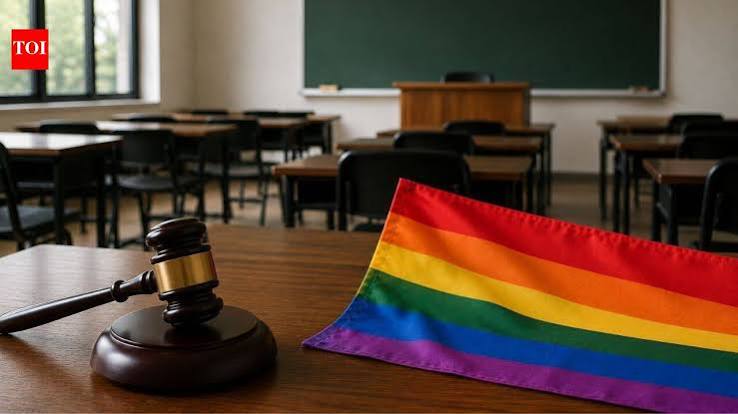
NEW DELHI: The Karnataka high court on July 17 questioned the state government for failing to implement reservation for transgender persons in educational institutions, nearly 12 years after the Supreme Court’s landmark 2014 NALSA ruling directed such action. How did the transgender reservation dispute reach the high court? In 2023, a transgender student filed a case after being denied admission to the National Law School of India University (NLSIU), Bangalore. The student asked the court to direct the university to follow the Karnataka State Policy on Transgenders, 2017, and give 0.5 per cent reservation to transgender persons in admissions, as per the report by LiveLaw. A single judge ruled in the student’s favour and asked NLSIU to give the reservation. NLSIU then challenged this order before a division bench. By the time this order came, the academic year 2023-24 had already started, so NLSIU said it could not admit the student in that batch. The court then asked if the student could instead be given a seat in any law college under the Karnataka State Law University (KSLU), since he had already lost valuable years of study. Earlier, the court had noted that KSLU had agreed to “try to accommodate” the student in one of its affiliated colleges — including BMS College of Law and Seshadripuram Law College — depending on his rank in the merit list and seat availability. Based on the student’s choice, the bench later asked KSLU to keep one seat reserved for him at each of these two colleges. Separately, earlier in the week, the high court had also asked the state government to speed up work on a full reservation policy for transgender persons in education, pointing out that nearly two years had passed since the policy proposal was first sent to different government departments. Why did the high court question the state government? A division bench of Justice Anu Sivaraman and Justice Venkatesh Naik T, while hearing the appeal, asked why the delay had gone on for so long and why the state government had been unable to follow the Supreme Court’s order. “This is the direction of the apex court… It is 12 years in the making now… We feel that it’s about time that positive directions are issued,” the court said. The court also pointed out that Karnataka had already given reservation to transgender persons in government jobs, so there was no reason for education to be left out. “Can the State say that it is still contemplating? It was the first State to implement reservation in the employment sector. Does that mean, the education sector, it can wait?” The court further explained that the state did not need to make a fresh policy decision on this, since the Supreme Court had already given clear directions in the NALSA judgment. The bench said: “There is no policy delay issue, there is a clear direction by the apex court. The apex court judgment has to prevail.” During the hearing, the state government told the court that one seat had already been reserved for the student in a law college affiliated with the Karnataka State Law University (KSLU), and that the formal admission notice would be issued once the degree results are announced. The student, who argued his own case in court without a lawyer, told the bench that even after getting admission, transgender students face many problems because there is no proper reservation policy in place. He said this affects basic things like access to hostels, toilets, documentation requirements, and fee concessions. The bench appreciated the way the student had presented his case, saying: “We want to make sure that his admission fructifies and he is given the benefits mentioned in the NALSA judgment. I am saying this as a person who has been on the Bench for the last 12 years, to someone who is very deserving, as a party-in-person conducting a case with such responsibility, we want to see something is done… The appeal is filed since there is no policy for the State government for reservation.” The court then posted the matter for further hearing. Courtesy : TOI Note: This news is originally published on https:/timesofindia.com/bha and is used purely for non-profit/non-commercial purposes, especially human rights
CM Yogi meets Lalita Gautam’s family, announces financial and other assistance

During his meeting with the victim’s family in Ghaziabad, CM Yogi assured financial assistance and a house each for the deceased’s father and uncle under the Chief Minister’s Housing Scheme. He also directed the family to receive priority benefits under the Ayushman Bharat Scheme, ration cards, and other eligible welfare schemes. The Chief Minister also assured the family of strictest legal action against the culprits. Ghaziabad. Chief Minister Yogi Adityanath met with the family of Lalita Gautam, a Dalit student from Meerut, at the PWD Guest House in Ghaziabad on Saturday, expressing his condolences and offering condolences. The Chief Minister announced immediate financial assistance of ₹5 lakh from the Chief Minister’s Discretionary Fund. During his meeting with the victim’s family in Ghaziabad, CM Yogi assured financial assistance and a house each for the deceased’s father and uncle under the Chief Minister’s Housing Scheme. CM Yogi has also directed that the family be given priority access to the benefits of the Ayushman Bharat Scheme, ration cards, and other eligible welfare schemes. Furthermore, the Chief Minister has assured the family of strict legal action against the culprits. After meeting the Chief Minister, the deceased’s father, Ved Prakash, and brother, Prashant, expressed confidence in receiving justice. They said that the Chief Minister listened to their plight with utmost patience and affection and assured them that not a single culprit involved in this heinous crime will be spared. They said that the meeting with the Chief Minister further strengthened the family’s confidence in receiving justice. Senior administrative and police officials, including Social Welfare Minister and Meerut District In-charge Minister Asim Arun, were present on the occasion. After the victims met with the Chief Minister and received financial and other support, the Samajwadi Party has now backtracked on this issue. The SP had been raising the issue repeatedly, and Akhilesh Yadav even met with the victim’s family in Lucknow. However, after CM Yogi’s meeting with the victim’s family and the family’s expression of satisfaction, there is hope that the politicizing of this matter will end. Courtesy: Hindi News
CasteWhy Should Readers Across the World Care About Dalit Literature?

This article is a lightly edited version of the introduction to Touchable/Untouchable: Dalit Literature from India in Translation, edited by K. Satyanarayana and S. Shankar. Touchable/Untouchable is a special issue of the journal Mānoa: A Pacific Journal of International Writing, and also a standalone volume published by University of Hawai`i Press. The volume can be accessed on Project Muse here and ordered here. The journal can be subscribed to here. Why should readers across the world care about Dalit literature? For one thing, contemporary Dalit literature is among the most interesting, the most vibrant, of literary enterprises currently underway in India. Contemporary Dalit literature has borne gripping witness to the centuries-old atrocious institution of exclusion and oppression known as caste – at the bottom of which Dalits are located as the most excluded – and broken invigorating new literary ground. For these reasons alone, the value of reading Dalit literature should be evident. Dalit literature deserves a global audience, which it has begun to receive in recent years. What does it mean to say Dalit works constitute a literature of witnessing? Not surprisingly – and here one might draw comparisons to slave narratives in the African American tradition – many early works of the contemporary boom in Dalit literature are testimonies, autobiographies and memoirs. These works can certainly be read as testifying to the oppressive conditions under which Dalits and other “lower castes” live. As Omprakash Valmiki, celebrated Dalit author of the Hindi-language Joothan, declared in the preface to his autobiography: “After a long period of procrastination, I started to write. Once again, I had to relive all those miseries, torments, neglects, admonitions. I suffered a deep mental anguish while writing this book. How terribly painful was this unraveling of my self, layer upon layer”. Excerpts from Tulsiram’s Hindi autobiography Murdaihya as well as Pradnya Daya Pawar’s poem, a kind of biography-in-verse of a famous Dalit folk singer, both of which appear in Touchable/Untouchable, provide fine examples of this kind of witnessing. On the other hand, literary critics have wondered whether the view of Dalit works as a literature of witnessing diminishes their aesthetic value. These critics have called their colleagues to account for having a unidimensional approach to Dalit literature – for essentially shoehorning Dalit works into a “witnessing” function. Because of the dangers of such shoehorning, it is important to recognise the many ways in which the literature produced by Dalits in the last 50 years challenges established literary conventions. For example, many Dalit writers eschew a high literary style, deliberately adopting in its place a vernacular/spoken one. The veteran Tamil writer Bama, an influence on the poet Sukirtharani, included in Touchable/Untouchable, is a case in point. Translator Lakshmi Holmstrom notes of her: “Bama is doing something completely new in using the demotic and the colloquial regularly…. She uses a Dalit style of language which overturns the decorum and aesthetics of received upper-class, upper-caste Tamil”. Linguistically as well as formally, Dalit writers challenge contemporary Indian literature, as Baburao Bagul’s essay in Touchable/Untouchable ruminating on the aesthetics of Dalit literature suggests. In the end, both when it bears witness and when it innovates, Dalit literature presents a human story of struggle as well as triumph in startlingly powerful ways. This struggle is vividly brought out in the excerpts included in Touchable/Untouchable from Bojja Tharakam’s Telugu novel narrating the lives of a family of Dalit bonded labourers across generations. Of course, the same human story of struggle is found in different ways in all the pieces included. These human stories are also deeply Indian, as much Indian as the more celebrated Indian writing in English, largely “upper caste,” well known to global readers. The picture of India in Dalit literature may very well be familiar to readers in some respects. In others, to readers not familiar with Dalit literature, it will certainly be startling, evocative, shocking, moving, and more. Origins of the term The term “Dalit literature” was coined in the first Dalit Literary Conference held in Mumbai (then Bombay) in 1958. Marathi Dalit writers created history by publishing several collections of poetry, short stories and autobiographical narratives and critical essays in the 1960s and 1970s. Poisoned Bread, a classic anthology of these writings in English translation, was published in 1992. Marathi Dalit literature was widely translated into several Indian languages and served as an inspiration to Dalit writers in other Indian languages. Contemporary Dalit literature emerged as a powerful literary movement in Kannada, Telugu, Tamil and Malayalam from the 1970s to the 1990s (see No Alphabet in Sight and Steel Nibs, co-edited by K. Satyanarayana). It became a pan Indian phenomenon with the rise of Dalit literatures in Hindi, Bengali and other Indian languages after the 1990s. Dalit literature in English translation acquired national and global visibility with the publication of autobiographies, novels, poetry and essays by mainstream publishers. Dalit literature is not simply a literary trend but a literary movement for social change. It describes and analyses Dalit life worlds and struggles based on first-hand lived experience. The distinctive term “Dalit” (literally “crushed down” or “broken”) is both identity and perspective. The Dalit Panthers, a group of insurgent intellectuals, popularized “Dalit” as a term to claim a dignified identity for “untouchables,” while rejecting demeaning caste/jati names. They used the term to broadly refer to “untouchable” caste groups, Adivasis (aka “tribals”), and other minorities. In the course of history, “Dalit” became synonymous with the “untouchable” (also known as “scheduled caste”) groups. Dalit critics theorised “Dalit” as a collective identity based on self-respect and human dignity. Dalit is a revolutionary term born out of anti-caste struggles and has shaped a Dalit perspective. In this sense, Dalit literature invents a canon and a normative Dalit character, and inaugurates a shift from the old understanding of caste as a feudal relic to a contemporary form of power. It contests the view that untouchability is a cultural practice based on religious notions of “purity” and “impurity” and suggests that untouchability is a
Woman who went to worship at temple accused of assault: Case filed under various sections including SC/ST Act

A Dalit woman who went to worship at a temple in Harchandpur village, under the Subeha police station area of Barabanki district, has accused some villagers of assaulting her and using casteist slurs. The woman’s son was also allegedly assaulted. Based on the victim’s complaint, police have registered a case under various sections including the SC/ST Act and have begun an investigation. Harchandpur resident Sant Dulari Rawat, wife of Raj Bahadur Rawat, stated in her complaint to the police that the incident occurred on July 19, 2026, at around 9 a.m. She had gone to worship at a temple near her home. It is alleged that Raghav Ram Mishra, Rajit Ram Mishra, Avadharam Mishra, Sahaj Ram Mishra (sons of Ram Shankar Mishra), and Mansha Devi Mishra, daughter of Ram Shankar Mishra, arrived at the scene and attempted to remove Sant Dulari’s worship materials kept near the temple. According to the victim, when she protested, the accused abused her, used casteist slurs, and began assaulting her. Hearing the commotion, her son, Diwakar, rushed to her rescue, but the accused assaulted him as well. Both the woman and her son are reported to have sustained injuries in the incident. The woman also stated that during the assault, her mangalsutra, weighing approximately two tolas, fell somewhere and was not found despite extensive searching. Based on the victim’s complaint, the police have registered a case under the SC/ST Act and other relevant sections. Inspector-in-Charge Bechu Singh stated that a case has been registered and the matter is being investigated. Further legal action will be taken based on the facts that emerge from the investigation. Idrish | Haidergarh Courtesy: Hindi News
Kerala Crime Branch Arrests Absconding Dental College Professor From Karnataka In Student’s Death Case

Police said the accused avoided using mobile phones and frequently changed locations across different states before he was finally tracked down in Kodagu. Kannur: The Kerala Crime Branch has arrested the absconding prime accused in the death case of first-year BDS student R L Nithinraj of Anjarakandy Dental College in Kannur district in Kerala. Dr M K Ram, a faculty member of the college, was taken into custody from a hideout in Kodagu, Karnataka, after being on the run for several months. The accused was apprehended late on Sunday and brought to Kannur on Monday, where he is being interrogated by the Crime Branch. Dr Ram’s anticipatory bail plea was rejected by the Supreme Court on July 13. Earlier, the Kerala High Court had also dismissed his bail application on June 19. Following the high court order, the Crime Branch had attempted to arrest him in Andhra Pradesh, but he allegedly managed to evade the police before approaching the apex court. After the Supreme Court refused him anticipatory bail, a special team led by Crime Branch Inspector Sreejith Koderi intensified the search. Investigators said the accused avoided using mobile phones and frequently changed locations across different states before he was finally tracked down in Kodagu. Reacting to the arrest, Nithinraj’s father Y Rajan, a daily wager, said the family welcomed the development but maintained that complete justice would be achieved only after all those allegedly responsible were brought to book. “We will get justice only when every accused in the case is arrested and punished,” Rajan told reporters. Nithinraj, a resident of Aryanad in Thiruvananthapuram district, died by suicide after jumping from the medical college building on April 10. His family alleged that the Dalit student had been subjected to sustained harassment by faculty members over his caste and skin colour. Fellow students also alleged that he faced repeated body shaming and mental harassment. Based on the complaint, police registered a case against Dr Ram and others under charges including abetment of suicide and provisions of the Scheduled Castes and Scheduled Tribes (Prevention of Atrocities) Act. Following protests by students, the college management dismissed Dr Ram from service. The investigation is now being conducted by a special Crime Branch team under the supervision of State Crime Branch SP K V Venugopal. While Crime Branch DySP Sudheer Kallan is probing the circumstances leading to Nithinraj’s death, DySP Jeevan George is investigating another angle involving alleged harassment by online loan recovery agents. According to investigators, Nithinraj had borrowed money through a loan app to meet educational expenses and fund his mother’s medical treatment. When he defaulted on repayments, recovery agents allegedly threatened him and contacted his teachers and others, causing severe mental distress. The case was initially investigated by the local police before being transferred to a special investigation team headed by the City Police Commissioner. Following objections raised by the family over the probe, the investigation was later handed over to the Crime Branch. Officials said the custodial interrogation of Dr Ram is expected to provide further clarity on the circumstances that led to the student’s death. Courtesy : ETV Bharat Note: This news is originally published on https:/etvbharat.com/bha and is used purely for non-profit/non-commercial purposes, especially human rights