
Pellet injuries: FIR filed after Rahul Gandhi sits on dharna

NEW DELHI: Delhi Police registered a case after leader of opposition in Lok Sabha Rahul Gandhi staged a five-hour dharna outside Parliament Street police station Friday, demanding an FIR in connection with pellet injuries suffered by 19-year-old Sahil Lochab during the July 20 Jantar Mantar protest, reports Abhay. Gandhi reached the police station with Lochab, his mother and their lawyer around 11.30am. He was later joined by Congress general secretary Priyanka Gandhi Vadra and other party functionaries, and met the DCP and other senior officers. Displaying Lochab’s medical reports, Gandhi said more than 200 pellets had entered the student’s body, including three that struck his eye and put his vision at risk. Some pellets, he added, were lodged near Lochab’s heart and could not be removed by doctors. He also displayed a pellet recovered from the student’s body during treatment. “Brutality against a peaceful protest is a serious crime. An offence has been committed and we are demanding registration of an FIR,” Gandhi said, alleging Delhi Police told them they had received instructions “from above” not to register the case. The charge was denied by police. After over five hours, Lochab’s complaint was filed and an FIR registered against unknown persons under sections 118(1) and 125 of Bharatiya Nyaya Sanhita (BNS), relating to voluntarily causing hurt by dangerous means and acts endangering life or personal safety. Gandhi termed it “a first step towards justice”. Thanking him, Lochab said: “When he called to ask about my health, I mentioned that my FIR wasn’t being registered. He immediately said, ‘Let’s meet tomorrow; I will go and get your FIR filed.’ It took eight hours to get the FIR registered, and perhaps it wouldn’t have been registered at all if the LOP hadn’t supported me.” According to Lochab, he submitted a seven-page complaint to police on Aug 14 seeking registration of an FIR, but no action was taken. In his complaint, Lochab, a Najafgarh resident, said he had joined the July 20 Sansad Chalo march against the alleged NEET paper leak. He alleged that when the lathicharge and teargas firing began, he ran with the crowd towards Connaught Place, but as he approached Palika Bazaar and Connaught Place carrying the tricolour, he was hit multiple times by metal pellets fired by a person in a blue uniform carrying a large gun. Lochab stated that he suffered injuries to his right eye, face, arm and chest, and lost vision in his right eye. He was taken to Lady Hardinge Hospital and later referred to Safdarjung Hospital and AIIMS. His first eye surgery was performed on July 22. He said his MLC recorded that the eye injury was caused by a pellet and that the chances of recovery were less than 1%. An AIIMS CT scan showed more than 200 pellets lodged in his body, including in his eye, neck, chest, jaw and arm, Lochab stated, adding some pellets near the eye nerve could not be removed. He underwent a second eye surgery on Aug 1, but his vision had not returned, he added. Lochab also said the injuries had disrupted his studies and ended his hopes of joining Delhi Police. In his complaint, he sought preservation of CCTV and drone footage, forensic examination of the pellets removed from his body and registration of an FIR. Courtesy : TOI Note: This news is originally published on https:/timesofindia.com/bha and is used purely for non-profit/non-commercial purposes, especially human rights
‘RSS believes it knows the truth for everyone’: Rahul Gandhi attacks Sangh over ideology
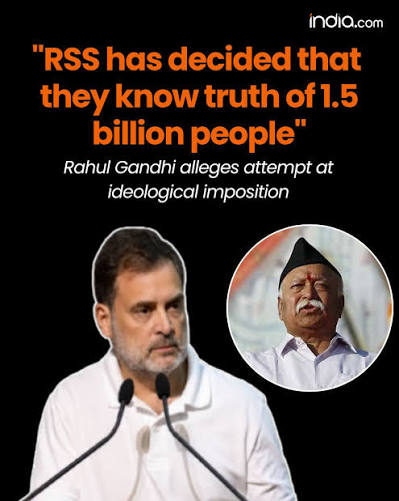
NEW DELHI: Lok Sabha leader of opposition (LoP) Rahul Gandhi Thursday accused the Rashtriya Swayamsevak Sangh (RSS) of trying to impose its idea of truth on people across India, arguing that every individual must have the freedom to find and define their own truth. Speaking at the “Hara Bhara Swaraj: A Tribute to Rajiv Gandhi’s Vision” programme in New Delhi, the Gandhi Scion described the ideological contest in India as a deeper struggle over how people understand themselves, freedom and their place in society. The Congress leader also drew a distinction between the RSS’s worldview and Mahatma Gandhi’s idea of ‘Swaraj’, saying no organisation or individual could claim to know what is true for another person. “What Gandhiji was saying was that every living being is a unique entity with their own path towards the truth. I cannot tell you what your truth is. Today, the ideological battle in India is precisely that. It is not fundamentally about environment, politics, or free media–those are symptoms. The real fight is that a small group of people have decided, because they control the system, that they know the truth of everyone in this country. That is my problem with the RSS: the RSS has decided that they know the truth of 1.5 billion people. And I say, no. Only 1.5 billion people can know their own truth,” Rahul Gandhi asserted. He said even he could not claim to understand another person’s truth because people’s experiences, families and circumstances are different. “And I say, no. Only 1.5 billion people can know their own truth. Even I cannot do that. If I begin to believe that I know your truth, I would be a madman. Because I am not you. I haven’t faced what you’ve faced; I haven’t seen what you’ve seen; I haven’t dealt with what you’ve dealt with. I don’t have the same parents, the same friends, or the same life. So how can I say that I know your truth?” he added. ‘My Experiments with Truth’ reflects individual journeys Rahul Gandhi then referred to Mahatma Gandhi’s autobiography, ‘My Experiments with Truth’, saying its title itself reflected the idea that truth is something each person explores through their own life. “Please notice, Gandhiji’s book was not called ‘The Truth’ or ‘My Understanding of the Truth’. It was titled ‘My Experiments with Truth’. I have experiments with my truth; you have experiments with your truth.” Rahul targets BJP-RSS over ‘exclusion’ The Congress leader also criticised the BJP and RSS over what he described as the exclusion of sections of Indian society. He said people from different religious and social communities must feel that they have an equal place in the country. “Imagine what the BJP and RSS have done. Imagine if I walked into this room and told 15-17 per cent of you–Muslims, Christians, Sikhs–‘You do not exist, and if you speak up, see what happens to you.’ Then telling 10 per cent Adivasis, ‘We will take your land whenever we want, and if you resist, we will shoot you,’ and Dalits, ‘You are complaining for nothing; everything is fine with the caste system.’ That is what is being done to our motherland. Every single person in this country–regardless of religion, community, or gender–must feel: ‘I belong here. I can walk freely in this country. I am loved, respected, and appreciated here, and my search for truth matters to the nation,’” he said. ‘Gandhi’s Swaraj is more than freedom’ Rahul Gandhi also explained why he believes ‘Swaraj’ should not simply be understood as the same thing as freedom or liberty in the Western sense. He used US President Donald Trump and Mahatma Gandhi to illustrate the difference, arguing that being legally free does not necessarily mean having control over one’s own actions and desires. “‘Swaraj’ is often confused with the Western word ‘freedom.’ People think that Swaraj means freedom; that it means liberty or independence. No–Swaraj means rule over oneself (Swa par raj / self-governance). If you go to America and ask, ‘Is Trump a free man?’, everyone will say, ‘Absolutely.’ But if you ask, ‘Does Trump rule over himself?’, the clear answer is, ‘No, he does not.’ Whereas Gandhiji in a prison 80 years ago would say, ‘I am not free, but I rule over myself. It is Swaraj,’” he explained. The Congress leader said this understanding of Swaraj makes it a personal responsibility rather than something that can simply be granted by a government or another person. “Swaraj is an Indian concept, and it carries deep responsibility. It is a way of thinking, and it is an individual project. I cannot give you Swaraj. Whatever I do… in a Western sense, I can grant you freedom by saying, ‘You are not in prison; I have given you freedom.’ But I cannot give you Swaraj. Because Swaraj is your personal relationship with the universe. Swaraj is an individual path. And Gandhiji’s conception of Swaraj was that every single person in this country should walk on this path.” His remarks placed the idea of individual self-rule at the centre of his criticism of the RSS, while presenting Gandhi’s philosophy of Swaraj as one based on personal responsibility and the freedom of each individual to pursue their own understanding of truth. Courtesy : TOI Note: This news is originally published on https:/timesofindia.com/bha and is used purely for non-profit/non-commercial purposes, especially human rights
‘Control disguised as concern’: Women share their experiences after Rahul Gandhi’s Instagram appeal
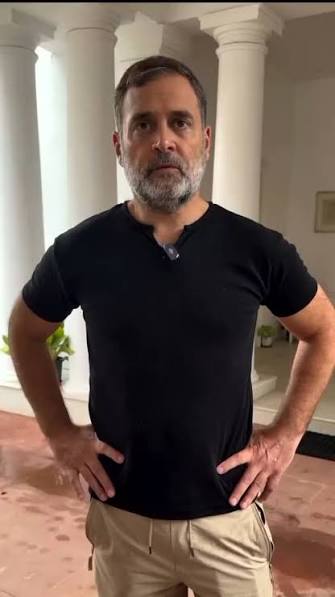
NEW DELHI: Congress MP and Lok Sabha Leader of Opposition Rahul Gandhi has asked women across the country to share what being an Indian woman means to them, seeking responses on their experiences, struggles, dreams and the challenges they face. In an Instagram video, Gandhi posed the question: “What does it mean to be an Indian woman?” “I want to know how you feel. Not society’s voice, not your family’s, but what does your own voice say?” he said, asking women to share their struggles, obstacles, perspectives and dreams. He also shared some of the responses he received, many of which highlighted experiences of control, patriarchy, discrimination and social expectations. Rahul Gandhi’s Instagram story ‘Constantly facing control disguised as concern’ One woman said she was “constantly facing control disguised as concern”, while another spoke about how paper leaks, unaffordable colleges and academic difficulties could push women towards early marriage. Another response said: “Patriarchy killing dreams, moral policing and being threatened for expressing.” Several women spoke about being unheard, overworked and misunderstood. One response read: “Unheard, compromising, misunderstood, made fun of, abused, weak, overworked but called devi.” Another said women “don’t get to choose how we want to spend our life.” Fear, struggle and sacrifice also emerged as recurring themes, with one woman describing herself as “somebody’s daughter, somebody’s wife” and saying women are marginalised. ‘From childhood, told you have to go to another home’ Some responses focused on the expectations placed on women from childhood. “Bachpan se yaad dilana ki tumhe kisi aur ke ghar jana hi hoga aur usi hisab se hume palna,” one woman wrote. Another spoke about restrictions on clothing, saying women are told they cannot wear certain clothes because “the men might lose control.” Other responses raised concerns over healthcare and governance, with one woman saying she felt “oppressed by the govt, & society” and that women were provided poor medical facilities. Gandhi says exercise helped him understand women’s experiences Gandhi said the idea came while his team was preparing material for his upcoming ‘Chhatron Ki Goonj’ programme, which is aimed at women. He said he asked women in his team to share their thoughts on being an Indian woman, including how society treated them, as well as the positive and negative experiences they had. The exercise, he said, helped him understand their experiences to some extent. “My team decided, why not open this up to everyone and make it accessible?” Gandhi said, inviting women attending the programme as well as those watching it to share their own experiences. Rahul Gandhi’s Pune event Gandhi is scheduled to participate in the ‘Chhatron Ki Goonj’ programme in Pune. The event received permission from the Maharashtra government subject to 30 conditions. The programme is being positioned as a platform for women to share their experiences and perspectives, with Gandhi now seeking responses from a wider audience ahead of the event. Courtesy : TOI Note: This news is originally published on https:/timesofindia.com/bha and is used purely for non-profit/non-commercial purposes, especially human rights
No change in Punjab Congress leadership, says Baghel
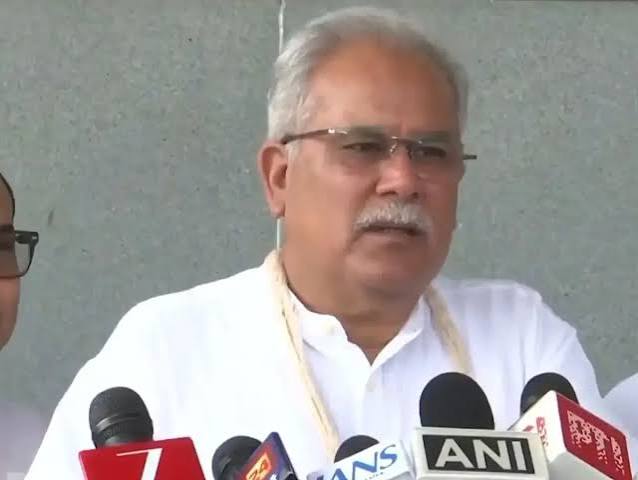
Chandigarh: Amid sustained pressure from a section of Punjab Congress leaders seeking a change in the state leadership, AICC general secretary in charge of Punjab Bhupesh Baghel on Thursday once again ruled out any change in the existing organisational structure, saying the focus was on expanding the committees already announced and bringing more leaders into the party’s election preparations. “There will be no changes now. Only expansion will take place,” Baghel said, making it clear that the existing committees would be enlarged by adding more members and new committees could also be constituted as part of the party’s organisational preparations. The development comes against the backdrop of an increasingly bitter power struggle within Punjab Congress, particularly between a group of senior leaders associated with former chief minister and Congress MP Charanjit Singh Channi and the camp led by Punjab Pradesh Congress Committee president Amrinder Singh Raja Warring. The differences became more pronounced after Congress, on July 1, retained Warring as the PPCC president while announcing several election-related committees. The camp of leaders backing Channi, including senior figures such as Sukhjinder Singh Randhawa, Rana Gurjeet Singh and Bharat Bhushan Ashu, has since expressed dissatisfaction with the organisational arrangements and pressed the party high command to address their concerns. They have been seeking the removal of Warring and a greater role for Channi. Baghel, however, dismissed the suggestion that senior Punjab leaders meeting the party high command were doing so merely to lodge complaints. Meanwhile, Congress is working on a proposal for a programme involving senior party leader Rahul Gandhi in Punjab, with the plan awaiting his approval. Baghel said a proposal had been submitted to Rahul Gandhi and that the party was waiting for his approval. As part of the tentative plan, Rahul Gandhi may begin a bus journey from Amritsar after paying obeisance at Golden Temple. He is expected to travel with senior Punjab Congress leaders in an apparent effort to bring them onto a common platform. According to party sources, the proposed first phase of the journey could cover the stretch from Amritsar to Hussainiwala, a distance of around 135 kilometres, and pass through approximately 25 to 30 Assembly constituencies. If finalised, the programme could provide Congress an opportunity to publicly project unity among its senior leaders at a time when factionalism has emerged as one of the party’s biggest challenges in Punjab. Congress leadership has held several rounds of meetings in recent weeks in an effort to ease tensions within the state unit and resolve differences among senior leaders. Party assessments have also underlined the need to contain infighting, which has repeatedly hurt Congress in Punjab. The internal rift became particularly visible during ‘Har Booth, Congress Mazboot’ campaign, when Baghel and Warring travelled across different parts of the state. Supporters of rival factions raised slogans at some programmes, while protests against Baghel were also witnessed. At some meetings, tensions between supporters of different groups reportedly escalated into scuffles. The infighting later spilled into a poster war, with posters portraying Baghel as General Dyer appearing at some places, while separate posters targeting Warring also surfaced. Courtesy : TOI Note: This news is originally published on https:/timesofindia.com/bha and is used purely for non-profit/non-commercial purposes, especially human rights
Rahul Gandhi asks Congress to monitor party netas’ social media stands
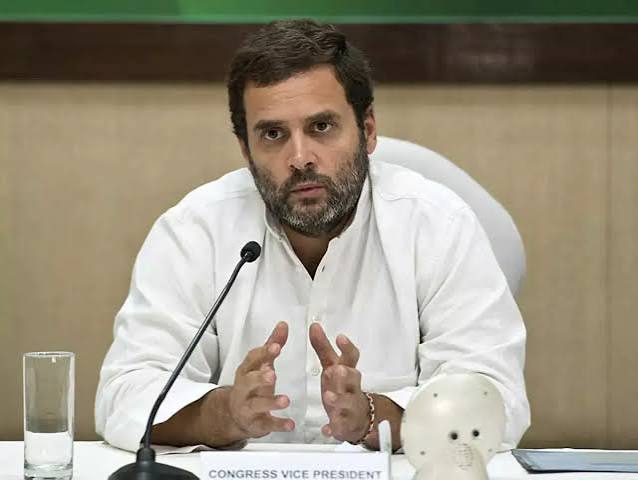
NEW DELHI: Congress MP Rahul Gandhi is learnt to have asked the party to monitor social media of functionaries if they are amplifying the party line on social justice issues. The direction came after Congress president Mallikarjun Kharge at CWC meeting Wednesday said that many netas don’t push the party’s stand in public. Kharge also lamented that he did not get enough support from the party when “RSS-BJP” workers did a “purification” of the rally venue in Haldwani where he had addressed a gathering – an act of caste discrimination. Interestingly, sources said, there was a difference of opinion between Rahul and Congress MP Manish Tewari at CWC meeting over the history and trajectory of students’ movements in the country. Tewari, sources said, argued that the big four students’ movements in the past including anti-Mandal Commission protests had been organic and not led by the students’ wings of the political parties. Rahul apparently argued that students were with the Congress till very late. A day later, apparently reflecting his pique over the exchange and an oblique warning to the leadership, Tewari tweeted a quote from Churchill, “Criticism may not be agreeable, but it is necessary. It fulfils the same function as pain in the human body; it calls attention to the development of an unhealthy state of things. If it is heeded in time, danger may be averted; if it is suppressed, a fatal distemper may develop.” On the Haldwani issue, sources said, when some leaders said that party functionaries had organised demonstrations and participated in them, Kharge took a dig that “those who write well and look good” did not raise the issue strongly and urged them to pitch in in future. Courtesy : TOI Note: This news is originally published on https:/timesofindia.com/bha and is used purely for non-profit/non-commercial purposes, especially human rights
Mumbai: Man Posing As Transgender Rapes Powai Woman on Pretext of Blessing Her With Child, Arrested
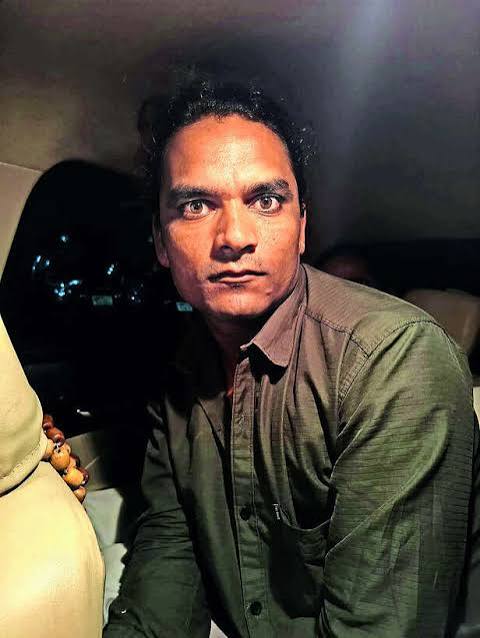
A 30-year-old man reportedly posed as a transgender person, entered a woman’s house in Mumbai’s Powai area and sexually assaulted her on the pretext of blessing her with a child. The accused, identified as Anil Shinde, was later arrested. The police nabbed accused Anil Shinde, 30, from Kalwa after tracing the autorickshaw which he had taken from the building. A 30-year-old man reportedly posed as a transgender person, entered a woman’s house in Mumbai’s Powai area and sexually assaulted her on the pretext of blessing her with a child. The accused, identified as Anil Shinde, was later arrested. The police nabbed accused Anil Shinde, 30, from Kalwa after tracing the autorickshaw which he had taken from the building. Woman Alone With Elderly Relative When Accused Entered Home The woman, who has been married for around five years, lives with her husband, who was away at the time of the incident, and an elderly relative, The Indian Express reported. The couple do not have a child, and Shinde used it as a pretext to enter the home and perform a ritual to bless them with a child. Shinde then s*xually assaulted the woman and fled the house with INR 2,000 on Wednesday afternoon, police was quoted as saying. The police nabbed the accused the same night after tracing the autorickshaw, which he had taken from the building after assaulting the woman. Befriended on Instagram, 14-Year-Old Girl Lured to Nalasopara Chawl and Gang-Raped; 2 Minors Arrested. How The Crime Took Place Anil Shinde allegedly arrived at the flat on Wednesday, posing as a transgender person, when the elderly relative of the couple opened the door for him. The woman’s husband was at work at that time. He initially pretended to bless the elderly woman, police was quoted as saying. But during his conversation with her, Shinde learnt that there was a young woman in the house and had no child despite being married for several years. He then offered to perform a ritual on the woman that would bless the couple with a child. He allegedly spoke to the young woman for some time and then asked her to lie down on the bed, police said. He first touched her head on the pretext of performing the ritual and then touched her inappropriately and raped her, the Indian Express report added, citing police. Raipur: 16-Year-Old Raped by Father, Passed Off as Adult; Newborn Sold, 8 Arrested. Woman Realised She Was Assaulted An Hour Later She realised that she had been s*xually assaulted almost an hour after Shinde left the house, telling her that she would be soon blessed with a child. Shinde demanded money before leaving, and the woman allegedly gave him INR 2,000. After realising that she had been raped, the woman informed her husband, and the couple approached Powai police station that evening. The police registered a rape case and began examining the CCTV footage from the building and surrounding areas, in which they allegedly spotted Shinde boarding an autorickshaw. He was traced to Kalwa and was detained on Wednesday night. Accused Was A Man Posing As Transgender, Police Probe Similar Cases During the investigation, police found that Shinde was indeed a man who was posing as a transgender person. He has been arrested and produced before a court, which remanded him to police custody till Monday. Police are now investigating if Shinde may have used a similar modus operandi to carry out similar crimes. Women and Child Helpline Numbers: Childline India – 1098; Missing Child and Women – 1094; Women’s Helpline – 181; National Commission for Women Helpline – 112; National Commission for Women Helpline Against Violence – 7827170170; Police Women and Senior Citizen Helpline – 1091/1291. (The above story first appeared on LatestLY on Aug 21, 2026 08:12 AM IST. For more news and updates on politics, world, sports, entertainment and lifestyle, log on to our website latestly.com). By Team Latestly Courtesy : LatestLY Note: This news is originally published on https:/latestly.com/bha and is used purely for non-profit/non-commercial purposes, especially human rights
Transgender influencer Jaanmoni Das held over anti-Modi remarks linked to NEET paper leak protest
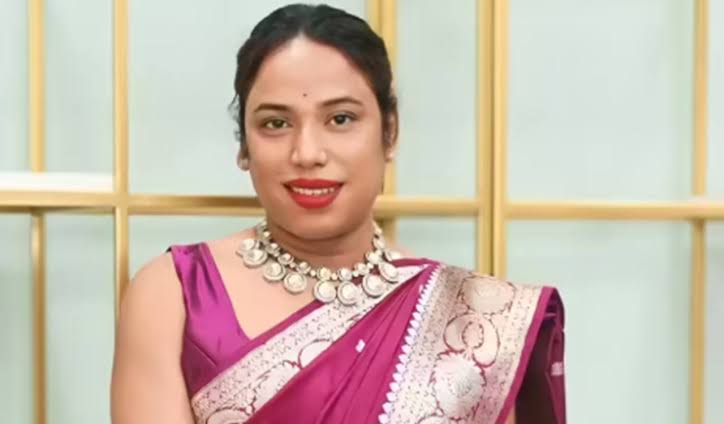
KOZHIKODE: Transgender make-up artist and social media influencer Jaanmoni Das was arrested by Kozhikode Cyber Police on Thursday over alleged derogatory remarks against Prime Minister Narendra Modi and his family in a video linked to protests over the NEET question paper leak, police said. Das and two others who had shared the video on social media were summoned by the cyber police, questioned and arrested, officials said. After evidence collection, interrogation and other procedures were completed, all three were released on bail. The case followed a complaint filed by BJP Mahila Morcha state president Navya Haridas on July 27. According to police, Das allegedly made the remarks in the context of protests over the NEET question paper leak. A video containing the alleged remarks subsequently circulated widely on social media. After the video triggered a controversy, Das posted an apology and said the remarks were made because of a lack of knowledge of the language. The case has been registered under Sections 192 (provocation for causing riot) and 356(2) (criminal defamation) of the Bharatiya Nyaya Sanhita and Section 120(o) (causing nuisance) of the Kerala Police Act. Police said all the offences invoked in the case are bailable. Das, who had shot into the limelight after appearing on a popular Malayalam reality show a few years ago, spoke to reporters after leaving the police station and said she had provided investigators with all the information they sought. She alleged that the case was an act of revenge over her participation in a Cockroach Janata Party protest in New Delhi against the NEET question paper leak. Das said the controversial video did not contain her own statement and claimed that she had only translated into another language a statement made by someone else in Hindi. “That was not my statement. I just translated what another person said. It shouldn’t have come from my mouth, and I have apologised for it. But still, people are targeting and bullying me,” Das said. She also said she was not a politician and had travelled to New Delhi to take part in the protest after several students from Kerala participated in it. Courtesy : TOI Note: This news is originally published on https:/timesofindia.com/bha and is used purely for non-profit/non-commercial purposes, especially human rights
The women India continues to ignore
It is 76 years into the adoption of the Indian Constitution. However, the fundamental promises of equality and dignity remain elusive for many communities – none more so than Dalit women. What is even starker is the sheer indifference of institutions towards their plight. This piece aims to highlight how the understanding of “women” does not mechanically encompass Dalit women and accentuate the underlying forces that precludes the empowerment of women from the most downtrodden sections of Indian society. The year 2024 will long be infamous for the gruesome rape and murder of a young doctor at the RG Kar Medical College in Kolkata. It rightfully sparked nationwide outrage and sustained public mobilisation. Yet around the same time a 14-year-old Dalit girl was gang raped, mutilated and murdered in Bihar’s Muzaffarpur district for refusing a marriage proposal from the prime accused. The alleged perpetrator was a 45-year old man from the dominant Yadav caste. Her story barely entered the national consciousness. The paradox is an uncomfortable reality: in India, violence against women does not evoke equal public concern. The visibility of a victim’s suffering is often mediated by caste. When there were nationwide candlelight marches and protests across the country against rape of Nirbhaya in 2014, Dalit scholars mourned the lack of similar uproar by the nation against the Khairlanji atrocity. In 2006, Surekha Bhotmange and her three children were brutally attacked and killed by dominant-caste villagers in Maharashtra’s Khairlanji village, after she resisted encroachment on her land. The dominant castes dragged Surekha, her daughter and two sons out of their home, paraded naked, raped and lynched them. Burnt charcoals were inserted into the private organs of the women. Most horrifyingly, the perpetrators included participation of Caste-Hindu women. However, it was more than a week before the Khairlanji massacre received coverage in the print media. When India’s speaks of women’s rights, it often collapses all women into a single box. In the meanwhile, it ignores the distinct and compounded forms of suppression endured by lower-caste women. The tragedy is – Dalit women are invisible not because they are women but because they sit at the intersection of caste, gender and poverty. The Nation’s selective outrage and Yashika Dutt Lower-caste women are raped in what appears to be more of an organised and systemic way. Dalit women are raped whenever they or the men of their community are seen as transgressing the caste hierarchy as evidenced by the Khairlanji rapes and murders in 2006 and the prevalent devadasi/jogini practices (temple prostitution). Dalit women experience caste violence aimed at controlling and monitoring their sexuality as their bodies are symbols of honour and caste authority and their exploitation has been justified by their lower social status. Dutt has noted – “every time a Dalit woman is assaulted, abused, raped or murdered, her caste matters. Even if she was not raped simply because she is Dalit, the conditions that lead to her assault are almost always affected by her status as lower-caste woman in an upper-caste male-dominated society”. Unfortunately, this is palpable in the context of public outrage – rapes, and murders of Dalit women rarely make headlines. This closely resonates with the mainstream media’s conspicuous apathy in covering the struggle for the most basic human rights in Manipur. The refusal of institutions to recognise the dehumanizing ordeal of Dalit women compounds psychological harm. Coverage of caste-based sexual violence is often episodic, with sustained public attention reserved for only a handful of extreme cases – the Hathras case of 2020 being one of them – where a 19-year old Dalit girl was gang raped and murdered in Uttar Pradesh’s Hathras district. The erasure of caste trauma from public discourse compels survivors to internally bear harms that are rooted in structural discrimination and require collective reckoning. The accounts and experiences of the Dalit women get obscured within the folds of the dominant narratives. The Protectors Are Perpetrators The Constitution guarantees equality, dignity and protection against caste discrimination. Yet Dalit women continue to experience sexual violence not merely because of social prejudices (to which the Indian female population is generally subjected to) but because the very foundational institution of the criminal justice system systematically fails them. As very little information or government data concerning the particular situation of Dalit women in India is available, I will rely on the commendable ground work done by the People’s Archive of Rural India (PARI) and the Swabhiman Society. Many incidents of sexual violence and rape against Dalit women that should be registered under the Scheduled Castes and Scheduled Tribes (Prevention of Atrocities) Act are not recorded as such by the Police. This has been attributed to political pressure seeking to project a decline in caste-based atrocities in order to exhibit their purported commitment to the appeasement rhetoric of cracking down on caste-based atrocities. Survivors of sexual violence, Dalit women and girls are silenced through threats by dominant castes. The constitutionally invalid Khap Panchayats often have an upper hand in refraining the victim families to report such instances. The most precarious fact about violence against lower caste women is the complicity of the administration. The police, a part of the state machinery, has been reported to decline the registration of complaints. Charges are not filed because the case is designated as false by the police. The authorities often belonging to the dominant upper caste shout caste-based slurs and sexist remarks. They take money from the financially influential accused persons and direct the evidence in their favour. In the Hathras Rape case in 2020, the girl’s brother testified that no arrest was made by the police even after 10 days of the incident was reported. A 15-year-old Dalit girl who was gang raped by security personnel in Odisha was incessantly threatened, harassed and lured by the police to say that she had not been raped by security personnel but by other local persons. When she refused to put up with the falsehood, her medical examination was re-done to obliterate any
A Dalit woman who went to the fields to defecate was raped and murdered, her body thrown into a well.
In Raichur, Karnataka, a Dalit woman was raped and murdered. She had gone out to defecate when the accused attacked her with lust. After the murder, the accused threw her body into a well. Police have detained the suspects and begun questioning them, and are awaiting the post-mortem report. A tragic and shameful incident has come to light from Raichur district, Karnataka. A Dalit woman was first raped and then brutally murdered in Hokarani village, Sirwar taluka. The deceased is said to be 21 years old. After the rape, the accused threw her body into a well. According to reports, the woman had gone out to defecate when the accused, who were lying in wait, attacked her. When she did not return home for a long time, her family began searching for her. The woman’s body was later recovered from a well in the village. Upon receiving information about the incident, local police arrived at the scene and began investigating. Acting swiftly, the police identified some suspects and took them into custody. Police are currently interrogating the arrested suspects to uncover the full truth of the incident. Awaiting the Postmortem Report A senior police officer stated, “In the case of the girl who was raped and murdered, we are still confirming whether it was rape or gang rape. The situation will become clear only after the postmortem report is received.” A Suspect Confirmed The officer further stated, “We have identified and arrested the suspects. One of them has been confirmed as the main suspect. The investigation is ongoing, so it would be inappropriate to comment further at this stage. The deceased was 21 years old, and the incident occurred when she had gone outside to relieve herself.” Sagay Raj Courtesy: Hindi News
‘Tu Sala N**ch’: Dalit Journalist Beaten In Udaipur, 2 FIRs Filed, 1 Against Him
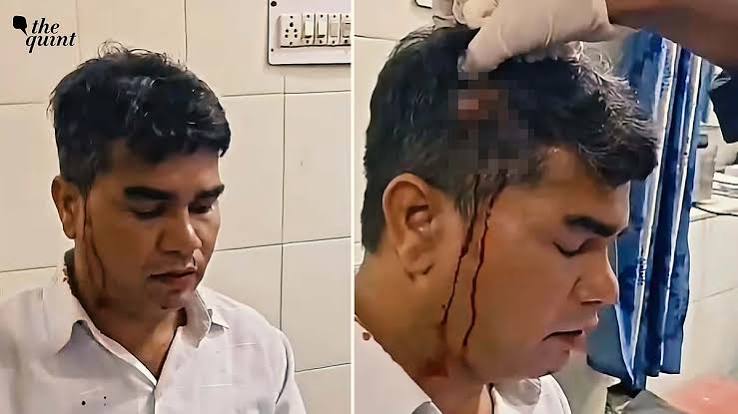
“He abused my caste and attacked me with a sharp object on my chest, neck, face and head,” alleged Lakhan Salvi. In Udaipur’s Gogunda, a Dalit journalist, Lakhan Salvi, 42, was brutally attacked in an alleged case of caste-based violence on Wednesday, 19 August. “I was called ‘neech’ right before I was beaten. I was just doing my job,” claimed Salvi. Salvi, an independent journalist was working on a story, covering people’s voices in Jaswantgarh who had come to submit a memorandum to the SDM Gogunda regarding their problems. Shortly after, as he went downstairs to talk to some people, the accused Gopal Lodha disrupted his work, said Salvi. “He abused my caste and attacked me with a sharp object on my chest, neck, face and head,” alleged Lakhan Salvi. The accused Gopal allegedly said, “Tujhe dekh loonga baad mein. After the byte was done he said, “Tu sala neech,” “Ye neech mujhe patrakarata sikha rha hain.” He called me ‘neech’ at least 15 times. He continued to abuse my caste identity and then said, “Tu sala neech Gogunda ko tu kha gaya, Gogunda ko loot rha hain, tumahra yahan kya hain?” he said, claimed Salvi. After this verbal assault, Salvi stated that Gopal punched him a couple of times and then some people separated the two of them. “He also tried to hit at my private parts but I stopped him,” noted Salvi. The Quint has seen the video of the crowd distancing them. “After 5-10 minutes, he returned. He had some sharp object in between his fingers. He punched me so hard that a part of the object cut through my lip and hit my teeth. There are injuries on my head, face, neck, arms and chest. My head was bleeding.” Lakhan Salvi to The Quint “He abused my caste and attacked me with a sharp object on my chest, neck, face and head,” alleged Lakhan Salvi. The assault did not stop there. After some locals took Salvi to a nearby hospital, the main accused, Gopal barged into the hospital with his brother, Kailash Lodha and attacked him again. “He came running and hit me on my head from behind as the nurses were tending to my injuries. CCTV footage also shows him running away,” said Salvi. The Quint has also seen the CCTV clip of the accused rushing out of the hospital. Noted activist and author Bhanwar Meghwanshi posted his video from the hospital and said, “His body was smeared with blood, and an FIR has been lodged regarding this matter at the Gogunda police station. We strongly condemn this attack on a journalist who comes from the Dalit community, and we request the administration to arrest the accused with immediate effect.” “He abused my caste and attacked me with a sharp object on my chest, neck, face and head,” alleged Lakhan Salvi. An FIR was registered under BNS sections 115(2), 126(2) and 3(5) and SC/ST sections on the day of the incident itself, however, another FIR, this time by the accused was filed against Salvi. Speaking to The Quint, the accused, Gopal had another story to tell. “Lakhan started it. He abused me first and punched me. Then I hit him and during the fight, he got hurt with my pen and ring. I did not abuse his caste. At the hospital, I did not mean to hit him, when he turned abruptly, my hand hit him,” he said. “He abused my caste and attacked me with a sharp object on my chest, neck, face and head,” alleged Lakhan Salvi. ‘Had FIR Been Filed Earlier…’ The accused, Gopal has filed an FIR against Salvi under BNS sections 115(2) – Punishment for voluntarily causing hurt and 126(2) – Punishment for wrongful restraint. Gopal works as a local stringer. Salvi alleged that he tried to disrupt his work before as well. One of his brothers is an informant to the police and the other works with Anganwadi workers. There is history that predates them. Around 4-5 years ago, Salvi has reported on a story which involved one of Gopal’s brothers. Salvi alleged, “His brother works with Angwanwadi workers, they are registered at his house. I got information that there were lapses in how many Angandwadi workers were there, who was getting food, ration or money. I reported on it and since then, Gopal has been targeting me.” Gopal has denied this and said he has not held grudges against him for any story. Meanwhile, the targeted attacks, according to Salvi progressed to social media. He posted against him in January this year as well, Salvi alleged. On 10 November 2025, Salvi field a complaint against him as Gopal had reportedly wrote slander against him on social media. Salvi said he also approached SC ST court but has not received any order yet. “Had they registered an FIR back then, he would have not done this today, abusing my caste and attacking me in broad daylight,” Salvi told The Quint. “He abused my caste and attacked me with a sharp object on my chest, neck, face and head,” alleged Lakhan Salvi. Complaint filed by Salvi but an FIR was not filed last year. “One journalist has to run here and there to get an FIR filed, to be heard. It has been almost 10 months but my complaint was not taken seriously and now there was a brutal attack. What does a journalist or a citizen have to do to be heard? asked Salvi. Aliza Noor Aliza has been a journalist for five years and is based out of Delhi and Lucknow. Primarily, she covers communalism, hate crimes, issues of human rights, social justice, gender and politics and is also involved our interactive hate tracker on our website. Topics: Rajasthan Dalit Journalist Attacked Courtesy : The Quint Note: This news is originally published on https:/thequint.com/bha and is used purely for non-profit/non-commercial purposes, especially human rights