
Congress leaders pay tribute to Mahatma Gandhi, protest changes to MGNREGA
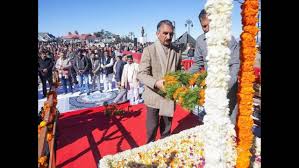
Shimla: Chief minister Sukhvinder Singh Sukhu, along with Congress leaders, paid floral tributes to the father of the nation, Mahatma Gandhi, on his death anniversary, observed as Martyrs’ Day, at the historic Ridge in Shimla on Friday. Following the tribute, the Congress leaders observed a two-hour fast from 11 am to 1 pm to protest against “renaming and dilution of the Mahatma Gandhi National Rural Employment Guarantee Act (MGNREGA)” by the BJP-led Union govt. Addressing mediapersons, the CM alleged that the central govt not only altered the name of MGNREGA but also weakened the core objectives of the scheme. He said thw MGNREGA was earlier a strong pillar of rural employment, particularly benefiting youth and women, but opportunities under the scheme are now being steadily reduced. Sukhu highlighted that village pradhans earlier had the authority to undertake development works such as road construction under MGNREGA, which ensured employment close to people’s homes. He added that during the Covid-19 pandemic, the scheme played a vital role in providing employment to a large number of people. However, he expressed concern that the powers of panchayat pradhans are now curtailed. The CM added that for nearly two decades, MGNREGA guaranteed employment and also provided unemployment allowance when work was not made available. He said the two-hour fast was a symbolic protest against the systematic dismantling of the scheme. He also pointed out that while the central govt earlier bore 100% of the expenditure, it now shifted to a 90:10 funding pattern, which could adversely affect states like Himachal Pradesh. Responding to a question, Sukhu said he raised concerns over the proposed reduction in import duty on apples from New Zealand with Union minister Piyush Goyal, cautioning that it could severely impact apple growers in Himachal Pradesh. Courtesy : TOI Note: This news is originally published on https:/timesofindia.com/bha and is used purely for non-profit/non-commercial purposes, especially human rights
30 yrs on, man accused of attemptto rape of Dalit girl gets 5 yrs in jail
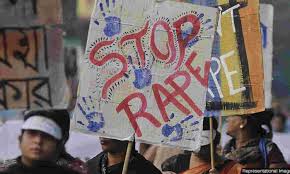
Agra: A special SC/ST court in Firozabad has sentenced a convict, now 60, to five years’ imprisonment and imposed a fine of Rs 14,000 in a case dating back over three decades, involving the attempt to rape of an 11-year-old Dalit girl. “The incident took place on May 6, 1995. The case remained pending in court. Now, under ‘Operation Conviction’, police traced the girl (now 41, married and settled in another district) and produced her before the court for testimony. Also, retired police personnel who were witnesses in that case were identified and located,” Narendra Solanki, additional district govt counsel, told TOI. The ADGC added: “After examining all witnesses and evidence, the court of additional district judge, Navneet Kumar Giri, on Wednesday finally held the accused man guilty and sentenced him to five years’ jail. The court also stated that half the fine amount should be given to the victim.” After the court’s verdict, the convict was taken into custody and sent back to jail. Meanwhile, police in Firozabad, in its statement, stated, “The victim was only 11 years old at the time of the incident. Through tireless efforts, she was located. There were a total of four police officers who were witnesses in this case, all of whom retired (on pension) over time. Their testimonies provided a logical and strong basis for the case.” In 1995, after receiving a complaint by the girl’s father, an FIR was registered under IPC section and the SC/ST Act. The accused was arrested and sent to jail. He later got bail. Police then submitted a chargesheet in court. In the complaint, the father had stated, “The accused forcibly took away our daughter while she was asleep. He grabbed her and attempted to rape her. When she screamed out aloud, he thrashed her, repeatedly. Villagers came out and identified the man, before he managed to flee.” Notably, ‘Operation Conviction’ was initiated by UP Police to deliver swift and time-bound justice in serious criminal cases, particularly against hardened criminals. Courtesy : TOI Note: This news is originally published on https:/timesofindia.com/bha and is used purely for non-profit/non-commercial purposes, especially human rights
Transgender succumbs to burn injuries

Virudhunagar: A 21-year-old transgender, who allegedly set herself ablaze outside Srivilliputhur Town police station on Jan 25 to protest police questioning her friend, died at Govt Rajaji Hospital in Madurai on Thursday morning. The deceased, Mutharasi, sustained 75% burn injuries and was undergoing treatment at the hospital. Police said they received a complaint regarding two transgenders, Sharmi, 22, and Isha, 24, seeking alms and behaving rudely with the public at Srivilliputhur bus stand on Sunday. A woman SI reached the spot and dispersed them. Later in the day, the policewoman noticed one of them seeking alms in another locality in the town. The SI reprimanded her and asked her to report to the station for a formal inquiry. Following this, Mutharasi, along with others, gathered outside the station demanding immediate release of the person detained. While the inquiry was in progress, Mutharasi allegedly poured petrol on herself and set herself alight outside the station. She was rushed to Virudhunagar govt medical college hospital and subsequently referred to GRH for further treatment. Srivilliputhur Town police registered a case and are conducting investigations. Courtesy : TOI Note: This news is originally published on https:/timesofindia.com/bha and is used purely for non-profit/non-commercial purposes, especially human rights
Refusal to see caste discrimination, not ‘false complaints’, is the real crisis on campus
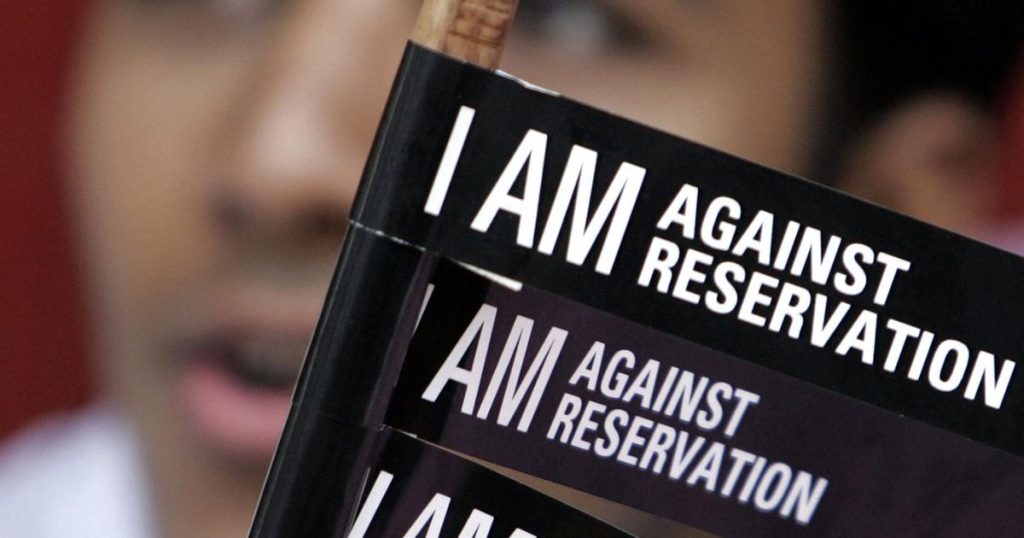
Little will change until institutes recognise the experiences of Dalit, Adivasi and OBC students. An Indian student during a protest rally against the government’s recommendation for 50% reservation for backward classes in education and government jobs, in this photograph from Bengaluru in May 2006. The University Grants Commission’s updated rules to address caste discrimination in higher education institutes have sparked outrage among Savarna commentators and students. They claim that they will become victims of false complaints and that the provisions will be weaponised against them. But this reflects a continuing refusal to listen to experiences of caste discrimination on campuses, something I have witnessed closely since 2022 when I became the first elected student representative of the Equal Opportunity Cell at the Indian Institute of Technology, Delhi. As part of student committees and through my research on caste injustice, I have seen how the claim that Dalit, Adivasi and OBC students misuse guidelines against general category students is invoked when a caste discrimination complaint is filed. This negative framing favours the student or professor accused of casteism and rarely accounts for the humiliation or insensitive behaviour faced by the student making the complaint. Over the past few days, Savarna students have framed themselves as potential victims of the UGC rules, issued on January 13, recentering the issue of casteist discrimination around their anxieties. On January 29, the Supreme Court stayed the new rules after hearing a public interest litigation which claimed that the guidelines were vague and could be misused. Akhil Kang, a queer Dalit scholar who has extensively written about “upper-caste victimhood”, argues that claims of upper-caste victimhood are not about actual harm. Instead, they are about preserving moral innocence in the face of caste accountability. Illustrating Kang’s observation, upper-caste students are floating hypothetical situations in which they could be victimised by the UGC guidelines. For example, one Instagram post claims that a general category female student is now afraid of being accused of caste discrimination if she rejects the advances of a male student from the Scheduled Caste/Scheduled Tribe category. Such claims displace attention from the everyday experiences of discrimination of Dalit and Adivasi students, who remain unacknowledged in classrooms and are rendered invisible on campuses where merit is routinely read through caste. Caste on campus As part of a meeting called by the National Task Force set up by the Supreme Court on January 12, I highlighted three crucial observations based on my experience of observing casteism on campus. The meeting was attended by anti-caste intellectuals, academics, activists and student representatives from universities in Delhi. First, caste is seemingly invisible and so it is difficult to prove that it exists. But the discriminatory effects of caste are primarily experienced by Dalit, Adivasi and OBC students. For example, a professor may make a student wait outside their office hours every day just to address one concern or speak to them. The student could wait for days on end, often feeling humiliated. But this will not be recognised as “casteism”. This same professor could ask about the student’s rank in the entrance exam – using the phrase “hawa kya hai?”, or what’s the AIR, or all India rank. Ambedkarite student collectives across the IITs have stressed that asking a student’s rank should be counted as caste discrimination. Rank indicates whether a student was admitted in the general or Dalit, Adivasi and OBC students. The student might then be labelled incompetent and underperforming, and the professor could suggest that they be expelled from IIT Delhi for not being meritorious. The student could find their admission and place at the institute being attacked and so end up writing to the administration and Equal Opportunity Cell, or SC/ST cell, seeking legal recourse. The Equal Opportunity Cell registers the student’s complaint, and thereafter, a committee is set up to inquire into caste discrimination. This illustrates how faculty and resource persons in an institution refuse to listen to a student who feels neglected or socially excluded. Congress workers protest against the death by suicide of doctoral scholar Rohith Vemula, in this photograph from January 2016. Credit: AFP. Second, caste reveals itself through networks and support systems. A general category student might instantly feel a sense of belonging in the classroom while a Dalit, Adivasi or OBC student may continuously invest energy in proving or defending their merit. As a student representative, I have observed that the network of Savarna scholars does not easily offer support to Dalit, Adivasi and OBC students and often has preconceived notions about who is meritorious or deserving. Savarna students travel easily through these networks, receiving guidance on scholarships abroad, building academic connections, seeking funding and finding opportunities to get published. But Dalit students have to hustle merely to get signatures on recommendation letters. Even if students have got admission on merit, they are always made to feel inadequate. “No matter how I perform, I feel invisible in the classroom,” a Dalit BTech student told me off the record on campus. “The Savarna professor never acknowledges my greeting.” Such an environment attacks the confidence of Dalit, Adivasi and OBC students. The demoralisation shows itself in lesser grades, poor progress reports and lonely or isolated students in campus spaces. It is a challenge to define this experience of being made to feel invisible, but what can be defined are broader actions – the implicit or explicit bias on the campus. Many Dalit and Adivasi scholars report feeling depressed, which I believe is a result of an uncaring institutional structure that does not provide motivation, appreciation nor respond to their efforts properly. In 2022, I emailed the IIT-Delhi mental health team asking why caste-based trauma was missing from the counselling options of gender, LGBTQ+, violence, relationship problems and campus problems. It was aimed at making the institute recognise the reality of the trauma of caste. IIT-Delhi positively implemented this, by adding “caste-based trauma” as an option on its YourDost website, which provides counselling to enrolled students. The third observation was the
Tamil Nadu, Karnataka lead list of Dalit, tribal & OBC judges in lower courts
SCs, STs and OBCs make up 45.7% of district court judges in the country; south India leads New Delhi: The district and subordinate courts in the country have 14.15% Dalits, 5.12% tribals and 26.64% OBCs as judges, with statistics showing that diversity among them is higher in south India with Tamil Nadu and Karnataka leading the spot compared to the rest of the count It showed that the lower judiciary is more representative compared to the High Courts where appointments since 2018 showed only 3.89% of 847 judges were Dalits, 2% tribals and 12.27% OBCs. These statistics were provided by Law Minister Arjun Meghwal in a written reply to senior RJD MP Manoj K Jha. States like Uttar Pradesh, Bihar, Maharashtra and Madhya Pradesh have impressive representation in lower courts while the statistics placed in Parliament showed “zero” SC, ST and OBC judges in lower courts in West Bengal and Andaman Nicobar Islands. According to the statistics, 45.76% or 9,534 – Civil Judge (Junior Division), Civil Judge (Senior Division) and District Judge – of 20,833 judges in district and subordinate courts are from SC, ST and OBC communities as on January 21. Of this, 14.15% (2,949) are SCs, 5.12% (1,068) STs and 26.64% (5,517) are OBCs. Among the big States, Tamil Nadu has 97.65% (1,205 of 1,234) from these categories – SC 20.66% (255), ST 1.21% (15) and OBCs 75.76% (935). SCs, STs and OBCs accounted for 88.82% (996) of 1129 district and subordinate court judges in Karnataka. Dalit judges numbered 226 (20.01%) and 47 (4.16%) were tribals while OBCs accounted for 733 (64.92%). Other south Indian States – Andhra Pradesh, Telangana and Kerala – also fared well in representation in lower judiciary. The OBC judges in Kerala accounted for 50.60% while Dalits accounted for 7.45% and 0.69% tribals while Andhra’s count were 38.98%, 18.88% and 5.59% and Telangana 44.71%, 15.28% and 8.98%, respectively. Overall, Uttar Pradesh has 53.56% or 1,414 of 2,640 judges belonging to the three communities – Dalits accounted for 20.22% (534), 1.43% tribals (38) and 31.89% (842) OBCs. Bihar has 253 or 20.01% Dalit judges in district and subordinate courts while the figures for tribals was 0.84% (14) and 28.76% (479) OBCs. Overall, 44.8% or 746 of 1,665 judges in Bihar districts belonged to SCs, STs and OBCs. While only those persons who are recommended by the Supreme Court Collegium are appointed as Judges of the Supreme Court and High Courts, the state governments in consultation with the respective High Courts frame the rules and regulations regarding appointment and recruitment of judicial officers in the respective State Judicial Service. Judges in districts and representation – State | Scheduled Caste% | Scheduled Tribe% | OBC% Tamil Nadu / 20.66 / 1.21 / 75.76 Karnataka / 20.01 /4.16 / 64.92 Kerala / 7.45 / 0.69 / 50.60 Andhra Pradesh / 18.88 / 5.59 / 38.98 Telangana / 15.28 / 8.98 / 44.71 Uttar Pradesh / 20.22 / 1.43 / 31.89 Bihar / 15.19 / 0.84 / 28.76 Maharashtra / 11.70 / 0.36 / 25.77 Madhya Pradesh / 16.04 / 14.15 / 18.79 Overall / 14.15 / 5.12 / 26.64 Shemin Joy DHNS Courtesy : DH Note: This news is originally published on https:/deccanherald.com/bha and is used purely for non-profit/non-commercial purposes, especially human rights
A Padma Shri & a visit by PM Modi: What’s behind BJP’s Dera Ballan outreach in Punjab
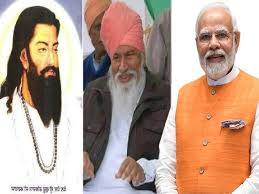
The visit is seen as a targeted strategy by the BJP to woo Dalit voters, particularly the Ravidasias and Ad-Dharmis, who often play a key role in close electoral battles in Punjab. Prime Minister Narendra Modi will visit Dera Sachkhand Ballan on February 1 for Guru Ravidas Jayanti. This is a strategic move by the BJP to attract Punjab’s significant Dalit voters, particularly the Ravidasias, ahead of next year’s Assembly polls. The visit aims to leverage identity recognition and secure support from this crucial demographic. *AI-generated summary. Check context in original text. Chandigarh: Prime Minister Narendra Modi is scheduled to visit Dera Sachkhand Ballan near Jalandhar on 1 February on the occasion of Guru Ravidas Jayanti, a move seen as part of the Bharatiya Janata Party’s (BJP) political outreach in the state to woo Dalit voters ahead of next year’s Assembly polls. The visit comes within days of the dera head, Niranjan Dass, being honoured with the Padma Shri. In December, the dera head, along with senior party leaders, met Modi and invited him for Gurpurab celebrations on 1 February. The dera head also requested the prime minister to centrally organise countrywide celebrations to mark the 650th birth anniversary of Guru Ravidas next year. With one year to go for the assembly polls in the state, experts see the prime minister’s visit as a more targeted strategy to reach out to specific caste communities that hold the key in closely contested electoral battles, particularly the Ravidasias and Ad-Dharmis, who constitute the largest subgroup among the Dalits in Punjab. “Ravidasias and other Dalit voters do not vote en bloc for a single party; they often shift depending on local issues, candidates and coalitions. The overt reaching out to the Ravidasia dera is strategically significant for the BJP,” says Dr Kanwalpreet Kaur of the department of political science, DAV College, Sector 10, Chandigarh. “The Ravidasias have been demanding recognition as an independent community, and the BJP intends to do just that—leverage identity recognition, aligning with the community’s demands for national visibility and respect for its spiritual leadership,” she added. ThePrint explains the significance of the prime minister’s visit to the central institution of the Ravidassia sect in the state. Also Read: BJP’s Ravidas Jayanti push to woo Dalits in poll-bound states — shobha yatras, sant sammelans BJP’s bid for a slice of the pie The BJP, once a junior partner of the Akali Dal, has been trying to build an independent electoral footprint in Punjab after the SAD-BJP alliance ended in 2020 over the contentious farm laws brought in by the BJP-led centre. The BJP’s strategy in the state has been successful enough for it to improve its vote share from 6.60 percent in the 2022 Vidhan Sabha elections to 18.56 percent in the 2024 parliamentary elections, cutting into the vote share of the AAP and the Congress. In the past year, the party has focused on increasing its foothold in rural areas dominated by Sikh peasantry. Dalits constitute almost 32 percent of Punjab’s population, the highest in the country. However, the Dalits are divided among Sikhs, Hindus and Christians, many of whom also follow deras. Deras, widespread on Punjab, are socio-religious centres of various sects and organisations. Unlike Sikh gurudwaras, where the Guru Granth Sahib is considered a living guru, derad are generally led by a living guru with a personal following. Dera Radha Soami Satsang Beas, Dera Sacha Sauda (headquartered in Sirsa) and Dera Sachkhand Ballan are the three most followed deras in Punjab, commanding a following running into several lakhs. Among the Dalits, the Ravidasias, Ramdasias and Ad-Dharmis are the major sub-groups, concentrated in the Doaba region districts of Jalandhar, Hoshiarpur, SBS Nagar and Phagwara. According to Dalit studies expert Ronki Ram of Panjab University in Chandigarh, the Ravidasias are the most prominent Dalit community in Punjab. “Out of the 39 SC castes in Punjab, the four major castes of Chamar (23.45 percent), Ad-dharmi (11.48 percent), Balmiki (9.78 percent) and Mazhabi (29.72 percent) constitute 74.44 percent of the total SC population,” he said. “Chamars are further divided into Ravidasias (leather workers) and Ramdasias (weavers). The Ravidasias are the most prominent for several reasons. They utilised the availability of reservation in education well, and are the most upwardly mobile. Many went abroad and constitute a large section of the NRIs from Doaba,” he added. As a result, Ronki Ram said, they have “become financially well-to-do”. “They have invested in Guru Ravidas deras and now have substantial social capital. They are also networked and, as a community, enjoy political clout,” he added. Guru Ravidas The Ravidasia identity is rooted in the teachings of Guru Ravidas, a 15th-century Bhakti saint and social reformer of the Chamar caste whose egalitarian message resonates with Dalit communities. “Ravidas was born into the Chamar caste, also known as Kutbandhla, one of the Scheduled Castes (SC) in Uttar Pradesh. Chamars are known by their profession of leather and tanning. They were oppressed and their touch and sight were considered polluting by the upper castes. Ravidas revolted against this inhuman system of untouchability. He adopted bhakti as a mode of expression for his revolt,” said Ronki Ram, quoting from his research paper. Guru Ravidas’s poetic hymns are also included in the holy text of the Guru Granth Sahib, considered a living Guru by Sikhs. “Ravidas holds a special place in the heart of Dalits, as he was one who unleashed a frontal attack on the traditional practice of caste-based social exclusion and oppression. Belonging to one of the lowest castes, his iconic figure continues to act as a catalyst in the emergence of a separate Dalit identity in Punjab,” said Ronki Ram. “Ravidas, as a spiritual figure who Omvedt (Gail Omvedt, an American sociologist) boldly called ‘the bhakti radical’, commands a massive following among his caste fellows, especially the Chamars in Punjab, who consider him their guru. They have built temples, gurdwaras, bhawans (memorial halls), educational institutions/ chairs, cultural organisations and hospitals in his name all over
Elderly Dalit Woman Cremated on Road in Bihar After Family Barred from Village Cremation Ground
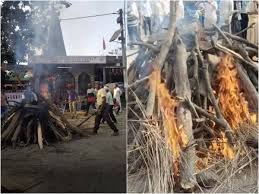
An elderly Dalit woman was cremated on a public road in Bihar’s Vaishali district after her family was allegedly stopped from accessing the village cremation ground, triggering outrage and tension in the area. The incident took place on Thursday at Sontho Andhari village under the Goraul police station limits. The woman, identified as Jhapki Devi, 95, belonged to a Mahadalit family. According to locals and police, when her family tried to take her body to the cremation ground, some people blocked the route, leaving the family with no option but to perform the last rites on the road. Family members and residents said the obstruction has been a long-standing issue. “Every time we take a body for cremation, the way is blocked. This has happened earlier too, but no permanent solution was given,” said a local resident from Manjhi Tola, expressing anger over repeated denial of access. As tensions rose, the funeral procession stopped at Andhari Gachi Chowk, where the body was placed on a pyre in front of a Shiva temple and cremated on the road. Angry villagers alleged that the pathway from the main road to the cremation ground has been encroached upon by local landowners. Police and administrative officials later reached the spot. A fire brigade vehicle was called to extinguish the pyre, and the road was cleaned after the cremation. Public representatives who arrived at the scene were reportedly chased away by protesting villagers, who accused the administration of ignoring their complaints for years. Vaishali Superintendent of Police Vikram Sihag said the issue arose due to the absence of a clear path. “Earlier, there was a route to the cremation ground, but some people built a temple on that path. Due to the lack of access, the family carried out the cremation on the road,” he said. He added that discussions were held with local officials and that arrangements would be made to restore access to the cremation ground. “The situation is currently under control,” the SP said. Block Development Officer Pankaj Kumar Nigam and Circle Officer Divya Chanchal said the area has been cleared and the matter is being investigated. “All aspects will be examined, and steps will be taken to ensure that such incidents do not happen again,” they said. Courtesy : TOP Note: This news is originally published on https:/theobserverpost.com/bha and is used purely for non-profit/non-commercial purposes, especially human rights
Evening news wrap: Ajit Pawar laid to rest, govt assures time-bound probe into plane crash, and more
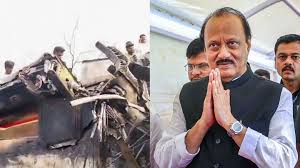
Ajit Pawar laid to rest: Maharashtra Deputy Chief Minister Ajit Pawar was cremated with full state honours in Baramati as the civil aviation ministry assured a time-bound probe into the Learjet 45 plane crash that killed him and four others. SC halts new UGC rules: The Supreme Court stayed the UGC’s new higher education regulations amid nationwide protests and issued notices to the Centre and the commission on petitions challenging the rules. Economic Survey projects 7.4% growth: The Economic Survey 2025–26 projected India’s GDP growth at 7.4% for FY26 and said inflation was at historic lows despite global economic uncertainties. Tharoor meets Congress leadership: Congress leader Shashi Tharoor met Rahul Gandhi and Mallikarjun Kharge, dismissing speculation of differences and saying he was on the same page with the party leadership. Minor sexually assaulted in Delhi: A six-year-old girl was allegedly sexually assaulted in northeast Delhi’s Bhajanpura, with two minor accused held, one absconding, and locals staging a protest demanding justice. Here are five news from the day: Ajit Pawar laid to rest, govt assures time-bound probe into plane crash Ajit Pawar was given full state honours as his body was taken to the Vidya Pratishthan ground for the funeral, while supporters assembled outside Ahilyabai Holkar Government Medical College to bid him a final farewell. The ministry of civil aviation (MoCA) issued a statement on the probe into the plane crash at Baramati airport that killed Maharashtra deputy chief minister Ajit Pawar and four others on Wednesday. The ministry said the probe into the Learjet 45 aircraft crash is progressing expeditiously. Read full story SC stays new UGC rules amid uproar The Supreme Court put on hold the UGC’s new regulations for higher education institutions, which were framed to promote equality, following widespread protests over the rules’ contentious definition of discrimination. A bench comprising Chief Justice Surya Kant and Justice Joymalya Bagchi issued notices to the Centre and the UGC on petitions challenging the regulation. Read full story Tharoor meets Rahul, Kharge, says ‘we are all on same page’ Congress leader Shashi Tharoor met party president Mallikarjun Kharge and Leader of Opposition Rahul Gandhi amid speculation about differences between him and the party leadership. After meeting Rahul Gandhi and Kharge, Tharoor asserted that “all is good” and that he was on the “same page” with the Congress leadership. Read full story 6-year-old girl sexually assaulted in Delhi; 2 boys held, one absconding A six-year-old girl was sexually assaulted, allegedly by three boys, aged between nine and 16 years, in northeast Delhi’s Bhajanpura. A case was registered under Pocso Act and two of the boys were apprehended. The survivor’s family and neighbours are said to have blocked a road on Monday in protest against the incident that had taken place in the evening of Jan 18. Read full story GDP growth pegged at 7.4%, inflation at historic lows, says Economic Survey 2025-26 India is likely to remain the fastest-growing major economy, with real GDP growth estimated at 7.4% in FY26 despite global headwinds such as geopolitical tensions, fragmented trade and financial vulnerabilities, according to the Economic Survey 2025–26. Presented in Parliament by Union finance minister Nirmala Sitharaman, the survey said India’s macroeconomic foundations had improved on the back of strong domestic demand, prudent fiscal consolidation and a healthier financial sector, while stressing the need for strategic resilience amid rapid changes in the global economic order. Follow live updates Courtesy : TOI Note: This news is originally published on https:/timesofindia.com/bha and is used purely for non-profit/non-commercial purposes, especially human rights
‘All is good’: Shashi Tharoor meets Mallikarjun Kharge, Rahul Gandhi – Inside details of nearly 2-hour meeting
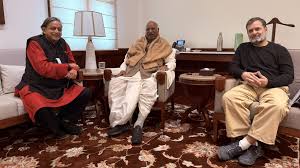
NEW DELHI: After weeks of visible discomfort, Congress president Mallikarjun Kharge and Lok Sabha leader of opposition Rahul Gandhi finally met the senior leader Shashi Tharoor on Thursday. The PTI sources described it as a detailed “redressal” meeting ahead of the crucial Kerala assembly polls. The meeting, held in Kharge’s chamber in the Parliament House complex, lasted for over an hour and forty-five minutes and came amid party concerns that the Tharoor episode could snowball into a larger messaging problem in Kerala, where Congress is pushing hard to return to power after a decade in opposition. Emerging from the meeting, Tharoor struck a deliberately upbeat tone. “We had a discussion with my two party leaders, the LoP and the Congress president. We had a very good, constructive, positive discussion,” he told reporters. Shutting down recent speculations, he said, “All is good and we are moving together on the same page. What more can I say.” — ShashiTharoor (@ShashiTharoor) Inside the meeting Sources told news agency PTI that it was a “comprehensive” meeting in which “a wide array of subjects were covered” and that Kharge and Gandhi made “the time necessary for a thorough discussion.” Tharoor later reinforced the truce with a post on X, thanking both leaders for a “warm and constructive discussion” and repeating the now-official line that they were “all on the same page” as the party moves forward “in the service of the people of India.” A photo from the meeting showing Tharoor, Rahul and Kharge smiling was also put out on social media. What wasn’t discussed: CM face Asked if the issue of the chief ministerial face for Kerala was discussed, Tharoor attempted to close that door firmly. “That was never the issue,” he said, adding: “I am not interested in being the candidate for anything. At the moment I am already an MP … I have their interest to look after in Parliament, that is my job.” The meeting comes after Tharoor was reportedly upset about the treatment meted out to him at a recent Kochi event and what his camp saw as attempts by some state leaders to sideline him. The immediate tipping point, sources close to him had said, was Rahul Gandhi allegedly not acknowledging Tharoor on stage at the ‘Maha Panchayath’ in Kochi on January 19, even while mentioning other leaders. Tharoor, a four-time MP and one of the Congress Working Committee members from Kerala, was present on the dais. Soon after, he skipped a key Kerala strategy meeting chaired by Kharge, triggering speculation that internal tensions were deepening at precisely the wrong moment. Congress is seeking to wrest power from the Left after 10 years in opposition. In that backdrop, the last thing the leadership can afford is the spectacle of internal rivalries, especially when the BJP is also attempting to expand its footprint and the LDF remains organisationally tight. A senior Congress source told PTI: the “proof of the pudding will be in the eating” and the next few weeks will show whether the “same page” line translates into actual political coordination. Courtesy : TOI Note: This news is originally published on https:/timesofindia.com/bha and is used purely for non-profit/non-commercial purposes, especially human rights
Modi Playing the Dalit Caste Card to Push Rahul Gandhi Out of the Ring and Don the Mantle of Dalit Messiah
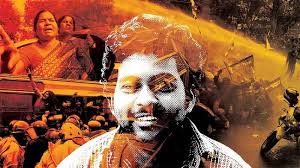
The Supreme Court’s decision to stay the recent University Grants Commission (UGC) regulation on the ground that it adopted a non-inclusive definition of caste-based discrimination and excluded certain categories from institutional protection is certainly not a setback for Narendra Modi. Instead, it could significantly elevate his stature in the eyes of Dalits and the poor. Politically, the most important observation made by the bench of Chief Justice Surya Kant and Justice Joymalya Bagchi—“If we don’t intervene, it will lead to dangerous consequences, divide society, and have grave impact”—will have far-reaching implications. The court also observed that by limiting the scope of “caste-based discrimination” only to SC, ST, and OBC categories, the UGC had effectively denied institutional protection and grievance redressal to individuals belonging to the “general” or non-reserved categories who may also face harassment or bias based on caste identity. However, this order also raises a crucial question: why did the court not take suo motu cognisance when hundreds of SC, ST, and OBC students in IITs and IIMs allegedly died by suicide due to discrimination? With the epithet “Hindu Hridaya Samrat” losing relevance amid the mushrooming of multiple claimants, Narendra Modi appears to have chosen a new path in saffron politics—to don the crown of a Dalit Messiah. For the first time in his eleven-year rule as Prime Minister, Modi has made a politically astute move by antagonising traditional upper-caste supporters through measures perceived as protective of Dalits and marginalised students. Modi refused to heed the advice of friends and well-wishers to retrace his steps, despite being aware of the consequences. Some protesters even targeted his caste identity, claiming that “the Teli is out to destroy our future” (Modi belongs to the Teli community, an OBC group). Yet Modi appears unmoved. He seems confident that upper-caste voters will not desert the BJP despite their anger over the new rules. With the 2029 Lok Sabha election in view, winning over Dalits and EBCs appears to be at the top of his priority list. Shivam Singh, one of the founders of the Savarna Sena (Forward Caste Army), stated that protests would be withdrawn if the government assured that general-category students would not be affected. Data shows that complaints related to caste discrimination in universities were around 173 in 2016–17 but rose to over 350 in the 2023–24 academic year, indicating a significant increase. Even memories of 1990, when upper-caste youth launched violent protests against the implementation of the Mandal Commission report, do not seem to deter Modi. During that agitation, over 150 people attempted suicide, with at least 63 succumbing to their injuries. The protest, which began after Prime Minister V.P. Singh announced the implementation of the Mandal Report, turned violent as many students resorted to self-immolation. Rajeev Goswami’s attempt became the symbolic face of the agitation. The compulsion to identify with Dalits and the proletariat has become so acute for Modi’s political survival that he has sought to reinvent himself as a modern Dalit Messiah. This shift also reflects the rise of hardline Hindutva leaders such as Yogi Adityanath within the BJP ecosystem, many of whom are associated with the “Hindu Hridaya Samrat” image. Modi, unwilling to be overshadowed by any rival within the saffron camp, appears determined to chart an independent path by aligning himself with Dalits and EBCs. Recent political developments have significantly strengthened Rahul Gandhi’s appeal among Dalits. What was once a peripheral issue has become a central ideological plank of his leadership as Leader of the Opposition. Although the Congress had historically lost Dalit trust in the 1990s, Rahul Gandhi has attempted to reclaim this space by linking social justice with the demand for a caste census—what he calls an “X-ray of the country.” He is increasingly perceived by Dalits and EBCs as a potential liberator. By placing the caste census at the centre of his political narrative, Rahul Gandhi has moved beyond tokenism. He aims to demonstrate the underrepresentation of Dalits, Adivasis, and OBCs in corporate, media, and academic institutions. He has targeted what he calls BJP’s “Manuvaad” and accused the government of weakening constitutional protections for marginalised communities. His claim that 95 per cent of upper-caste bureaucrats decide the fate of Dalits and the poor has found resonance among these communities. With Rahul Gandhi aggressively shaping the Dalit narrative, Modi appears left with little option but to reposition himself. Yet he faces competition not only from regional leaders but also from the BJP’s own targeted outreach strategies. After V.P. Singh, no national leader could fully capture the imagination of Dalits as a Mandal Messiah, although regional leaders like Mulayam Singh Yadav, Lalu Prasad Yadav, Ram Vilas Paswan, and Nitish Kumar emerged as protagonists of Mandal politics. Over time, however, they came to be seen largely as caste leaders rather than representatives of collective Dalit empowerment. Experts and liberals fear the emergence of violent protests similar to those witnessed after the Mandal Commission’s implementation in 1990. Upper-caste students in Bihar and Uttar Pradesh have already taken to the streets against the UGC’s Promotion of Equity in Higher Education Institutions Regulations, 2026. Sit-in protests have been organised across universities, with demonstrators claiming that the rules would lead to caste conflict and disrupt social harmony on campuses. Critics argue that the rules are one-sided and lack safeguards against false complaints. They question the effectiveness of “Equity Squads” and the potential for increased conflict. The regulations require every university and college to establish an Equal Opportunity Centre and an Equity Committee, with representation from SC, ST, and OBC communities. Institutions must address complaints within 24 hours, failing which they risk severe penalties. The 2026 regulations mark a legally binding step towards safer and more equitable campuses, aiming to curb the sharp rise in reported caste-based discrimination cases between 2019 and 2024. Yet a crucial question remains: why did the Modi government choose this moment and this mechanism to introduce such rules? In 2022, the Supreme Court had directed the UGC to formulate accessibility guidelines for students with