
Rahul Gandhi meets kin of slain Navy officer Vinay Narwal in Karnal
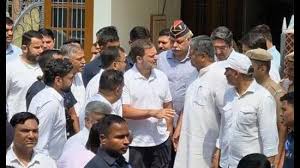
Karnal: Leader of opposition Rahul Gandhi visited the family of Pahalgam terror attack victim Navy Lieutenant Vinay Narwal at their house in Karnal’s Sector 7 on Tuesday. Accompanied by Haryana Congress chief Udai Bhan and Rohtak MP Deepender Hooda, Rahul extended his heartfelt condolences to the bereaved family. The Rae Bareli MP spent around two hours with the family Deepender said that Rahul paid his respects by laying a floral tribute at the late lieutenant’s photograph before engaging in a private conversation with the grieving family for over an hour. Hooda described Rahul’s visit as a personal gesture of solidarity. Trollers ‘real nation traitors’ Colonel Rohit Chaudhary (retd), head, Congress’s ex-servicemen also met with the family to offer encouragement. He slammed the online harassment targeting Narwal’s wife, Himanshi. He asserted the unwavering support of the Indian Army for the family and labeled those who denigrate the widow of a fallen officer as “real nation traitors” Chaudhary issued a 24-hour ultimatum demanding the removal of offensive social media posts, warning of a potential FIR if the demand is not met. MSID:: 120931706 413 | Karnal: Leader of opposition Rahul Gandhi visited the family of Pahalgam terror attack victim Navy Lieutenant Vinay Narwal at their house in Karnal’s Sector 7 on Tuesday. Accompanied by Haryana Congress chief Udai Bhan and Rohtak MP Deepender Hooda, Rahul extended his heartfelt condolences to the bereaved family. The Rae Bareli MP spent around two hours with the family Deepender said that Rahul paid his respects by laying a floral tribute at the late lieutenant’s photograph before engaging in a private conversation with the grieving family for over an hour. Hooda described Rahul’s visit as a personal gesture of solidarity. Trollers ‘real nation traitors’ Colonel Rohit Chaudhary (retd), head, Congress’s ex-servicemen also met with the family to offer encouragement. He slammed the online harassment targeting Narwal’s wife, Himanshi. He asserted the unwavering support of the Indian Army for the family and labeled those who denigrate the widow of a fallen officer as “real nation traitors” Chaudhary issued a 24-hour ultimatum demanding the removal of offensive social media posts, warning of a potential FIR if the demand is not met. MSID:: 120931706 413 | Courtesy : TOI Note: This news is originally published on https://timesofindia.com/ and is for use by the non-military/non-commercial community, especially those in the human rights sector.
Rahul, Lalu… Everyone poured nationalism from their heart on Operation Sindoor, in 2019 they were defeated in front of PM Modi by questioning him
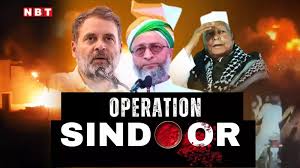
Operation Sindoor: Operation Sindoor, carried out by the Indian Army by entering Pakistan against the terrorists, has united the ruling party and the opposition. Along with the ruling party, all the opposition leaders are raising slogans of success of the Indian Army in one voice. Patna: After Operation Sindoor, a wave of nationalism ran among all the leaders of Bihar. In showing nationalism, whether the ruling party or the opposition, everyone is expressing gratitude to the Indian Army in one voice and praising the government wholeheartedly. It is worth noting that this also includes those leaders who were criticizing Prime Minister Narendra Modi for the delay in the attack and were pleading for his 56-inch chest. Anyway, Operation Sindoor has tied the voice of the ruling party and the opposition in the tune of patriotism. Let’s know who said what and when? Proud of the army: Rahul Gandhi Congress’s Yuvraj Rahul Gandhi did not delay in reacting to the military attack this time. Reacting to Operation Sindoor, he wrote, ‘I am proud of my Indian Army.’ RJD supremo’s patriotism awakened As soon as Operation Sindoor was successful, RJD supremo Lalu Yadav reacted and wrote on X handle ‘Jai Hind! Jai Hind ki Sena!’ Yuvraj Tejashwi Yadav was also not going to miss it. He also wrote – Jai Hind! Jai Bharat! Neither there should be terror, nor there should be separatism! We are proud of our brave soldiers and Indian Army.’ Attack welcomed: Owaisi AIMIM MP Asaduddin Owaisi wrote on social media platform X, ‘I welcome the targeted attacks carried out by our defense forces on terrorist bases in Pakistan. Pakistani deep state should be taught such a strict lesson that there is never another Pahalgam again. Pakistan’s terror infrastructure should be completely destroyed. Jai Hind!’ Answer of 56 inch chest: Vijay Sinha Bihar Deputy Chief Minister Vijay Kumar Sinha welcomed Operation Sindoor and said that when the Pahalgam attack took place, it was decided on the same day that now the terrorists of Pakistan will not be spared. Today, under Operation Sindoor, India has given a strong blow to the hideouts of 9 terrorists hiding in Pakistan and PoK. This is the answer of 56 inch chest! Jai Bharat! Jai Hind! Satyamev Jayate: Chirag Paswan Lok Janshakti Party (Ram Vilas) National President Chirag Paswan also expressed his feelings on Operation Sindoor in this way. Union Minister Chirag Paswan wrote in his social media post, Satyamev Jayate! Jai Hind ki Sena. Opposition did not make any mistake This time the opposition did not give any statement in haste on the military attack so that the wrong message does not go among the people of the country. In the 2019 Lok Sabha elections, the opposition leaders had shown their negative role on the air strike and demanded proof of the air strike from the military force. Then Rahul Gandhi had accused Prime Minister Narendra Modi of taking credit for the Balakot air strike and said that Modi should just pick up a rifle for five minutes or travel alone in a bus in Jammu and Kashmir. In 2019, RJD supremo Lalu Yadav took a dig at Prime Minister Narendra Modi’s statement in which he had said that during the Balakot air strike, he told the Air Force experts how we can avoid Pakistani radar due to clouds. Lalu Prasad Yadav tweeted in his familiar style, ‘Hey, you fool, where is your attention, the radar is here.’ But this time Lalu Yadav was very cautious. That is why the opposition also did not make any mistake regarding the army’s attack so that the ruling NDA does not get the benefit of their mistake in the Bihar Legislative Assembly. Edited by Abhishek Kumar | Reported by Ramakant Chandan About the author Abhishek Kumar I work at NavbharatTimes.com. My hobby and profession are both journalism. I have had the good fortune of working in prestigious organisations like DLA, Aaj Samaj, Dainik Bhaskar, Amar Ujala, Hindustan, Network18, NDTV, ZEE Media. Writing fearlessly on contemporary events and learning new techniques is my nature. Courtesy : NBT, Hindi News Note: This news is originally published on https://navbharattimeshindinews.com/ and is for use by the non-military/non-commercial community, especially those in the human rights sector.
Mahatma Phule Jayanti 2025: Apart from Buddha and Kabir, this is Dr. Ambedkar’s third guru—know what Babasaheb learned from them
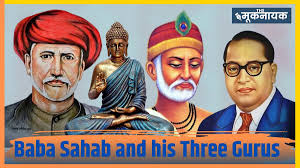
In a radio message in his last days in 1956, Babasaheb said, “Mahatma Phule was the first soldier of logic and human dignity. Without him our fight would have been incomplete.” New Delhi- On the occasion of the 198th birth anniversary of Mahatma Jyotirao Govindrao Phule on April 11, the country is once again preparing to remember his revolutionary contribution. On this occasion, the deep relationship between Phule and Dr. Bhimrao Ramji Ambedkar—fondly called Babasaheb—is in the news. Both fought against the caste system and dreamed of uplifting the oppressed sections of society. Babasaheb considered Jyotiba Phule along with Gautam Buddha and Kabir as his three gurus. In his speech at Purandare Stadium in Mumbai on 28 October 1954, Baba Saheb had said, “I have three gurus. Everyone has a guru, so do I. I am not a sadhu or a recluse, but my first and greatest guru is Buddha … I believe that only Buddhism can do the welfare of the world. The second guru is Kabir..my father was a Kabirpanthi. So Kabir’s life and principles also had a great influence on me. According to my opinion, Kabira knew the real secret of Buddha’s philosophy … Mahar, Mang, Chabar taught and Phule taught the lesson of humanity. These are my three gurus. Their teachings have made my life.” Let us know what Babasaheb said about Jyotiba Phule and what is the similarity between these two great reformers. Jyotiba Phule was born in Satara, Maharashtra in 1827. He challenged the Brahminical system and changed the society by making education a weapon. In 1848, he opened the first school for girls with his wife Savitribai. In 1873, he started a campaign to break the shackles of caste and religion by forming Satyashodhak Samaj. His book Gulamgiri shook people. On the other hand, Babasaheb, born in 1891 in Mhow, Madhya Pradesh, took forward these ideas of Phule. By becoming the architect of the Constitution, he gave legal rights to the Dalits and the oppressed. Both of them considered the Vedas and Puranas to be the weapons of the upper castes. Phule, in his public book Satya Dharma, talked about a religion that brought equality to all. Babasaheb also gave the same message by adopting Buddhism in 1956. In 1848, Jyotiba Phule and Savitribai Phule opened India’s first women’s school in Pune, which was an important step in the field of education for women at that time. On the other hand, the slogan – “Educate, Awaken, Organize” – was the basic mantra of Babasaheb’s life. After signing the Poona Pact on 27 September 1932, Babasaheb said, “I pay tribute to Mahatma Phule, whose struggle against social injustice inspired us to this fight for justice.” The pact was a major step towards political rights for Dalits, and Babasaheb remembered Phule’s inspiration in it. At a Satyashodhak Samaj event in Mumbai in 1940, Babasaheb said, “Jyotiba Phule was the first Indian to raise his voice against the slavery of Shudras and Ati-Shudras. His pen was a sword against injustice, and his life an example of courage.” He described Phule as the man who showed the path to awakening to the oppressed. In the preface of his book Who were the Shudras? (1946), Babasaheb wrote, “Mahatma Phule’s slavery opened my eyes to the fact that the caste system is a historical fraud. He taught us that Shudras were not born to serve, but were enslaved by false myths.” This idea of Phule was very important for Babasaheb. During the Mahad Satyagraha in 1927, when Dalits demanded the right to drink water from the Chavdar pond, Babasaheb said, “Mahatma Phule showed us the way to break the chains of caste. Today we are walking on that path.” In 1954, when he visited Phule’s house in Pune, he said, “It is here that the seed of our freedom was sown.” In a radio message in his last days in 1956, Babasaheb said, “Mahatma Phule was the first soldier of reason and human dignity. Without him our fight would have been incomplete.” Babasaheb appreciated Jyotiba Phule’s questioning of the dominance of Brahmins and exploitation of Shudras in ‘Gulamgiri’, and later he also expressed similar ideas in ‘Riddles in Hinduism’ and ‘Who were the Shudras?’, in which Shudras were described as the first Kshatriyas. Phule believed that Brahmins were descendants of outside Aryan invaders who oppressed the local people. Babasaheb took this further in Who Were the Shudras? and said that the Shudras were the first Kshatriyas who were pushed down by the Brahmins. Phule’s Satyashodhak Samaj became the base of Babasaheb’s organisations. Both spoke in the language of the common people—Phule wrote Powada, Babasaheb wrote books and gave speeches in simple words. In 1868 Phule opened his well to the untouchables, and in 1927 Babasaheb took the right to water in Mahad—both had the same thinking. The spark that Phule lit was turned into the torch of the Constitution by Babasaheb. Scholars say that Phule prepared the ground, and Babasaheb built a palace of rights on it Babasaheb not only considered Phule his guru, but also lived his thinking at every step. As he said, “Without Phule our fight would have been in the dark.” On this birth anniversary, this relationship reminds us that the dream of equality is the gift of these two great souls, which shows us the way even today. Courtesy: Geetha Sunil Pillai, Hindi News
“How dare you come to the wedding procession of Brahmins..?”, the incident recorded in ‘Jyoti Kalash’ which made Jyotiba Phule a revolutionary
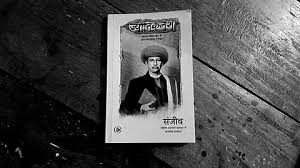
The incident of casteist insult in Mahatma Phule’s childhood which lit the spark of social revolution within him, is described in detail in Sanjeev’s book ‘Jyoti Kalash’. In the childhood of Mahatma Jyotiba Phule, a great hero of extraordinary personality who staked everything for the marginalized society in Indian history, an incident happened after which he got inspired to start a big movement against casteism, Brahminism, superstition and ostentation. The book “Jyoti Kalash” written by Sanjeev, who edited popular magazines like “Hans”, wrote columns and authored many novels, is in itself a sequential document of true events related to the life of Mahatma Jyotiba Phule. In this book published by Rajkamal Prakashan, Sanjeev, who has been awarded the “Sahitya Akademi Award”, mentions an incident from Phule’s life at the very beginning of the book after which Jyotiba Phule became firmly committed to the welfare of the Dalit-backward society. In the book Jyoti Kalash, Sanjeev tells that Jyotiba receives an invitation card for his classmate Paranjape’s wedding. It says, “Tum nahi aaye to kutti?” [If you don’t come, the friendship will end.] On seeing the invitation card for his classmate’s wedding, Phule happily starts dressing up to go to the wedding procession. Seeing him getting ready, his father Govindrao asks, “Where are you going?” Phule says, “I told you, right? I have received an invitation to go to Paranjape’s wedding procession.” Seeing his son’s enthusiasm to go to the wedding procession, Govindrao remembers some humiliating incidents in the Brahmins’ wedding procession. These were pricking him like thorns. But he did not think it right to dampen his son Jyotiba’s enthusiasm. The wedding procession had started with the sound of drums and cymbals. The boys were busy dancing and singing. Paranjape was sitting on a chariot with a sword and crown on his head, his younger brother was beside him. Jyotiba felt like meeting Paranjape. Then he came to know that the Patil who would fire the fireworks was missing. People were whispering that who would fire the fireworks now? It was also important to fire the fireworks at that time. The dancing and singing boys were asked, “Will you fire the fire?” Many said, “I am afraid.” Then Phule came forward and said, “I am not afraid.” He moves forward with the ball and then returns and starts firing the ball with the torch in front of the procession.” At that time, a person wearing a Tripund, Tilkit and a turban, who was garlanding everyone, stood in front of Jyotiba. He said, “You…?” Phule stopped. He asked, “You are Govindrao Gonhe’s son, right?” Phule replied, “Yes!” Immediately, he pounced upon Phule. He said, “How dare you come to the procession of Brahmins?” Phule said, “I had invited you!” Tripund, “Huh invitation! He (Paranjape) did whatever he wanted, but how did you forget that you are a Shudra and this is a procession of Brahmins. You had lost your senses. Since when did you become equal to Brahmins?” Then the kind Brahmin interrupts, “Let him go now, he is a boy. Thinking him to be a friend, the boy called his friend, so the poor guy came! Both are children. He also threw the ball…” “Forgive me considering him to be a child. Find a way out.” The turbaned man says, “Okay, then go to the back where the Ramoshis [a socially lower caste] and the people carrying the luggage are following behind.” Jyotiba goes and stands next to them. Feeling completely insulted! A Ramoshi standing apart from the procession comes near him. He says, “The Brahmins have thrown you out of the procession, right? What were you thinking when you came here? Have you forgotten the old days when the Brahmins used to treat the Shudras and the untouchables? Go home, child! This garland is not for you, the musical instruments are not for you, the torches, the incense, the ceremony is not for you. You are a Shudra! Shudra! You were dragged out of the ceremony by holding your arm.” Jyotiba returned home. Govindrao saw his son’s sad face, “What happened? Didn’t you go?” The son told him the whole story. The father kept listening to the tale of insult and kept looking at his son’s dark face. He remembered his humiliated past and said, “I wanted to stop you! But I kept quiet thinking that your heart will be broken.” He paused for a while and then said, “They didn’t beat you, didn’t punish you – isn’t that enough son! It was your mistake, why did you go?” “But”, Jyotiba’s eyes filled with tears. Govindrao immediately said, controlling himself, “No son, no! How can we be equal to them? They are Brahmins and we are Shudras!” Jyotiba’s wounded heart was struggling again and again. Just then Ramoshi, hiding behind the tree, interrupted, “Why did you come to the Brahmins’ wedding procession? I don’t go.” “This is the result of your previous birth that they were born as Brahmins, you were born as Shudras and I was born as Ramoshi. What can you do?” He said. That heavy night passed with great difficulty. This was perhaps the first incident in Phule’s life that shook him to his core. In his book Jyoti Kalash, Sanjeev also mentions many such incidents and those untold things that Mahatma Jyotiba Phule saw, heard, endured and faced bravely in his life. Courtesy: Rajan Chaudhary, Hindi News
UP: Dalit child who used to go to school barefoot became the first 10th pass student of the village, now he will become an engineer!
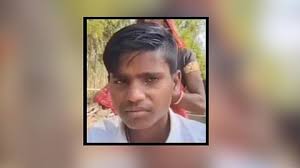
Ramkewal, a Dalit student who used to earn by carrying lights at weddings, became the first 10th pass student of Nizampur, the district administration is taking responsibility for his further studies. Uttar Pradesh: An inspirational news has come from Nizampur, a small Dalit dominated village in Barabanki district. 15-year-old Ramkewal broke the decades-old shackles of the village and became the first student of his village to pass the 10th board examination. The UP Board results were declared on April 25, but the news of Ramkewal’s achievement made headlines on Sunday, when the story of his struggle and courage came to light. Ramkewal studies during the day and at night he carries battery operated lights on his head at weddings, which earns him 250 to 300 rupees per night. In a year, he gets such work for 20 to 40 days, with which he runs his household expenses and buys his own study material. “I bought my own books and stationery. If I don’t get work at weddings, I work as a farm labourer. I mostly study at night,” Ramkewal told reporters in his village, 28 kilometres from the Barabanki district headquarters. His mother Pushpa is a cook at the village’s government primary school, while his father Jagdish Prasad works as a farm labourer. His father never went to school and his mother studied only till class V. The school in Nizampur is only till class V. After that, children have to enrol in the government high school in Ahmedpur, 5 kilometres away. But most of them either drop out or fail in Class X. “I was enrolled in the Ahmedpur school along with two other boys from my village. Lovelesh dropped out in class VIII and Mukesh, who failed this year, will try again next year,” Ramkewal said. Ramkewal is now enrolled in Class XI and dreams of becoming an engineer. His mother Pushpa says, “We have four children – two sons and two daughters. Ramkewal is the eldest. He never asked us for money. He studies hard. If he doesn’t get work, he goes to the fields and studies at night.” On Sunday, District Magistrate Shashank Tripathi called Ramkewal and his parents to his office and announced that the district administration will now take responsibility for his further studies. District School Inspector O.P. Tripathi said, “For now, arrangements have been made for his studies till Class 12, but we will ensure that he can study as much as he wants.” Villagers said that when Ramkewal’s teachers came to know that the DM was going to meet them, they bought new clothes and shoes for their student. Till now he used to go to school barefoot. Ramkewal’s success has infused new energy in the village. Lovelesh’s father Nanku said, “I have studied till Class 8 and work as a labourer in the fields. But now I want my son to start studying again. Education is the only way.” Many women of the village also expressed happiness and said that now they are more determined than before to educate their children. In a village where dreams used to die before they could even be born, now a child has not only picked up the lights but has also lit up the hopes of the entire village. Courtesy : Rajan Chaudhary, Hindi News
‘How can you be a Hindu if you criticise Manusmriti?’: Jyotirmath Shankaracharya justifies Rahul Gandhi’s expulsion from Hinduism
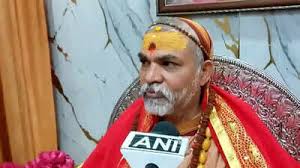
NEW DELHI: Jyotirmath Shankaracharya Swami Avimukteshwarananda Saraswati on Tuesday reiterated his decision to “excommunicate” Congress MP Rahul Gandhi from Hinduism, citing the leader’s critical remarks on Manusmriti as an insult to Sanatan Dharma. Justifying his move, the Shankaracharya questioned, “How can Rahul Gandhi be considered a Hindu if he criticises Manusmriti? Any true follower of Sanatan Dharma would object to this.” — ANI (@ANI) He further drew parallels with other religions, saying, “If someone claims to be a Muslim but criticises the Quran, would they be called a Muslim? If people say they are Christian but criticise the Bible, would they still be considered one? Similarly, if someone criticises Manusmriti, he cannot call himself a Hindu.” The seer first announced Rahul Gandhi’s ‘ouster’ from Hinduism last week at the Shankaracharya Ashram in Badrinath, stating that Gandhi’s remarks made in Parliament—where he said Manusmriti “protects rapists”—were deeply offensive to the faith. Swami Avimukteshwarananda said a letter seeking clarification was sent to Gandhi three months ago, followed by a reminder, but no response was received. “We waited patiently. But with no explanation forthcoming, we were left with no option,” he added. The remarks have sparked fresh controversy, with opinions divided across political and religious lines. “During his speech, he first targeted ruling party members and then made the comment against Manusmriti. It is our dharm-grantha (religious text). Pointing a finger at the ruling party’s benches, Gandhi had said it is written in ‘your book’, which means he does not regard himself as a Hindu. A person who does not regard Manusmriti as his text cannot be a Hindu.” The Shankaracharya said Gandhi was acting against Hinduism. “We took a decision that he should be banned from temples and priests should not perform pooja for him,” he said. Courtesy : TOI Note: This news is originally published on https://timesofindia.com/ and is for use by the non-military/non-commercial community, especially those in the human rights sector.
Why did Rahul Gandhi suddenly reach PMO? Met Prime Minister Modi
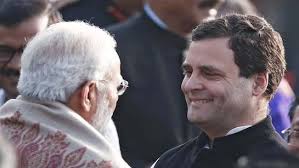
Lok Sabha Leader of Opposition Rahul Gandhi reached to discuss the appointment of CBI Director with Prime Minister Narendra Modi. The appointment of CBI Director is done by a high-level committee, which includes the Prime Minister, Leader of Opposition and Chief Justice. New Delhi: Lok Sabha Leader of Opposition and Congress MP Rahul Gandhi has reached PMO. He met Prime Minister Narendra Modi. According to sources, Rahul Gandhi reached to meet PM regarding the appointment of the next CBI Director. Apart from Rahul Gandhi, CJI Sanjeev Khanna has also reached to meet PM. Who appoints the CBI Director? The selection process and possible candidates for the post of CBI Director are to be discussed. The opinion of the Leader of Opposition is considered important in the appointment of CBI Director, as this selection is done by a high-level committee, which includes the Prime Minister, Leader of Opposition and Chief Justice of India. This committee is chaired by the Prime Minister. How is the CBI Director appointed? The appointment of CBI Director is done under the Delhi Special Police Establishment Act, 1946. The candidate for this post is selected by a committee consisting of the Prime Minister (Chairman), the Leader of the Opposition in the Lok Sabha and the Chief Justice of India or a Supreme Court judge nominated by him. The tenure of the Director is two years, which can be extended subject to conditions prescribed by the Central Government. Candidates are usually senior officers of the Indian Police Service (IPS), who are selected on the basis of their experience, impartiality and administrative ability. Opposition has raised questions on CBI in the last few years In the last few years, the opposition has constantly raised questions about the impartiality and autonomy of the CBI. Other opposition parties including the Congress have been alleging that the CBI is being used by the central government to target political opponents. The controversy deepened after the removal of the then CBI Director Alok Verma in 2018, when the opposition called it an attack on the independence of the investigating agency. Apart from this, the opposition has also questioned the pace and direction of the CBI’s investigation in many high-profile cases, with some cases being allegedly run at the behest of the government. About the author Anubhav Shakya After studying journalism from IIMC in 2021, he entered journalism with Zee News. Born in Etah, UP but studied in Aligarh. After writing national and international news there for about one and a half years, he is now working in the news team at Navbharat Times. Courtesy: Anubhav Shakya, NBT, Hindi News
Caste enumeration announced with an eye on Bihar elections: Surjewala
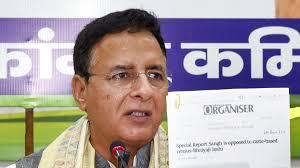
Patna: Expressing doubts over the NDA govt’s recent announcement of caste enumeration in the upcoming census, All-India Congress Committee general secretary Randeep Singh Surjewala on Monday said the announcement by the Narendra Modi govt is an election stunt of the BJP as neither the date of its commencement was announced nor the deadline to complete it. Surjewala, while talking to reporters in Patna, cited the govt’s official statements in Parliament and shared some affidavits it submitted in the Supreme Court in the past to prove his point. He even said the govt buckled under Congress leader Rahul Gandhi’s pressure on this issue. “Congress wants caste census for bringing social changes in society while the BJP-led govt announced it with an eye on Bihar elections scheduled in Oct-Nov. Share in power as per one’s population is not a mere rhetoric for the Congress but the crux of its ideological fight for over a decade,” he said, adding the determination of the party and its leader Rahul Gandhi “shook the foundation of the Modi govt, which announced the caste enumeration along the census.” Surjewala accused the BJP of conspiring against the backward communities in the country. “The UPA govt conducted a caste census in 2011. Its report was presented in July 2015, but the Modi govt did not release it. Since then, the Congress has been struggling determinedly for conducting the caste census,” he said in Patna. Surjewala added the BJP and RSS had publicly denied the idea of the caste census. “While RSS leader Bhaiyyaji Joshi clearly opposed it in 2010, the NDA govt constituted an expert group under Niti Aayog vice-chairman Arvind Panagariya to study the 2011 census report and submit a caste-wise analysis. But, despite the cabinet decision on July 16, 2015, PM Modi and his govt didn’t appoint any member in the ‘expert group’,” Surjewala said, accusing them of throwing the 2011 census report in dustbin and cited an affidavit submitted on Sept 21, 2021, in the apex court to prove his point. The case pertains to the then Maharashtra govt’s petition in the Supreme Court in 2021 against the Centre regarding OBC reservation in panchayats. “The Modi govt strongly opposed it and asserted that it was not appropriate to conduct caste census along with the census. By doing this, all the data of the census itself will get distorted. It is also administratively impossible to collect caste data of backward classes in the census and even if done so, it will neither be complete nor accurate,” Surjewala said, quoting the govt. He added when Bihar decided to conduct caste survey, the Modi govt, in an affidavit in a case on August 28, 2023, rejected the right of the state govt to conduct the caste census. “As an uproar started, the Modi govt filed a new affidavit and removed paragraph 5 from it,” he alleged. Courtesy : TOI Note: This news is originally published on https://timesofindia.com/ and is for use by the non-military/non-commercial community, especially those in the human rights sector.
Union government yet to respond, HC dismisses Rahul Gandhi’s citizenship PIL
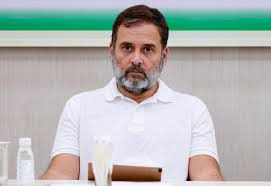
LUCKNOW: Allahabad HC’s Lucknow bench declined Monday to spend any more court minutes hearing a PIL challenging Lok Sabha leader of the opposition Rahul Gandhi’s citizenship, saying the petitioner was at liberty to seek alternative legal remedies. Justices AR Masoodi and Rajiv Singh reasoned that since the Union govt was unable to set a timeframe to resolve the petitioner’s complaint, there was no justification in keeping the PIL pending. Petitioner S Vignesh Shishir, a BJP worker from Karnataka, claimed to have acquired documents and emails from the UK govt proving that Rahul was a British citizen and, therefore, ineligible to contest elections and become an MP. India doesn’t allow dual citizenship. In the previous hearing on April 21, the court was told that the Centre had written to the UK govt seeking details about claims that Rahul held British citizenship. The bench gave the Union govt until May 5 to state its response to Shishir’s representation seeking cancellation of Rahul’s election to the Lok Sabha from Rae Bareli last year. The Centre’s counsel told the court that no time limit could be set for this since information from the UK govt was still awaited. Courtesy : TOI Note: This news is originally published on https://timesofindia.com/ and is for use by the non-military/non-commercial community, especially those in the human rights sector.
Denied dignity: How the Indian State enables caste system through manual scavenging
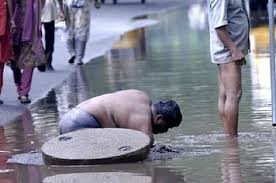
India’s persistent failure to eliminate manual scavenging, despite constitutional guarantees, progressive laws, and technological alternatives, stems not from a legal vacuum but from entrenched behavioural and sociological norms. Across the world, May 1 is set aside to honour the dignity of labour and the long struggle for workers’ rights. In India, this reverence is starkly at odds with the everyday reality faced by its poor and vulnerable working class. Despite being the world’s fifth largest economy, India continues to bury hundreds of its most marginalised citizens, mostly Dalits, in its sewers, septic tanks, and graveyards. The Indian State claims to have abolished manual scavenging, but the reality stinks of apathy, casteism, and systemic failure. The death toll of denial Since 2018, more than 400 workers have died while cleaning sewers and septic tanks in India, according to the Ministry of Social Justice and Empowerment’s admission in Parliament. This figure is widely seen as underreported. Civil society groups like the Safai Karmachari Andolan (SKA) estimate the actual number to be far higher. These deaths aren’t accidents, but caste murders. The victims are overwhelmingly Dalits, forced by social and economic discrimination to enter India’s filthiest spaces, often without safety gear. Take the case of Joy, a 42-year-old sanitation worker in Kerala’s capital, Thiruvananthapuram, who died in July last year while cleaning a clogged canal. His story is not unique. Similar deaths have occurred in Hyderabad, Delhi, Kolkata, Mumbai—cosmopolitan cities where manual scavenging is explicitly illegal, yet continues in plain sight. The contrast between legal prohibition and lived reality is stark. India outlawed manual scavenging over three decades ago, first with the Employment of Manual Scavengers and Construction of Dry Latrines (Prohibition) Act, 1993. The law was expanded in 2013 through the Prohibition of Employment as Manual Scavengers and their Rehabilitation Act, which went further to mandate rehabilitation, alternative employment, and the complete mechanisation of hazardous sanitation work. And yet, the State has largely failed to implement these provisions. The Supreme Court’s 2014 judgement reinforced the ban, ordered compensation of Rs 10 lakh to the families of deceased workers, and even applied this rule retrospectively. Yet compliance remains abysmal. Many states have failed to complete the most basic requirement — identifying the people still forced into this occupation. As a result, their deaths are often unrecorded, uncompensated, and unacknowledged. The court also directed governments to mechanise sanitation, but this remains a broken promise in most places. Machines are either unavailable, dysfunctional, or locked away behind bureaucratic red tape. In many municipalities, mechanisation exists only on official procurement sheets, not on ground. In Delhi, manual cleaning persists under the label of ‘voluntary’ labour performed by contract workers. What emerges is a story of institutional abandonment. At every level – from policy design to municipal governance – the system tolerates this caste-based exploitation. The deaths are not merely technical failures, but moral indictments. Each time a worker enters a sewer without protection, it represents a chain of failures — the failure to mechanise, rehabilitate, record, compensate, and above all, the failure to care. To end manual scavenging, India does not need more laws. It needs political will, administrative integrity, and a rupture with the caste logic that continues to justify this violence. Bone scavenging: A new horror If cleaning human excreta was not already a grotesque affront to human dignity, India now confronts an even more disturbing case in its caste ordeal — bone scavenging. A joint study report by the World Sanitation Workers’ Alliance, the South Asian Sanitation Labour Network (SASLN), and the Safai Karmachari Ekta Manch uncovers this harrowing practice in parts of West Bengal, Odisha, and Rajasthan, where marginalised Dalit communities – many already trapped in manual scavenging – are now collecting human bones from graveyards and cremation sites to earn their bread. This is not macabre curiosity or criminality; it is economic desperation forged by caste dynamics. In districts like Birbhum, Siliguri, and Cooch Behar, at least 178 individuals, mostly Dalits, are engaged in this invisible trade. The bones are sold to unregulated networks supplying calcium-processing units and cosmetic industries. The returns are shockingly low, often just Rs 200 per transaction, underlining the dual economic and social exploitation that defines their existence. This practice is more than illegal; it is profoundly inhumane. It reveals how caste and class conspire to extract value from the oppressed, not only in life but even after death. Historically relegated to ‘impure’ labour such as burial, leatherwork, and waste collection, Dalit communities are once again reduced to their perceived utility. Their suffering is attached even to death, and is monetised. To see bone scavenging as merely an outcome of poverty is to miss the point. This is the machinery of caste capitalism, where certain bodies are made economically viable through morally invisible, caste-coded labour. As anthropologist Veena Das argues, disposability becomes normalised in postcolonial governance. Here, it is institutionalised. The dead are harvested because the living are abandoned. Philosopher Achille Mbembe’s concept of necropolitics – the power to decide whose life matters and whose death is meaningful – finds terrifying resonance here. In India, Dalit death is doubly invisible — their lives are undervalued, and their deaths unacknowledged. The “economy of bones” turns the remains of the oppressed into industrial raw material, commodifying them beyond death and outside the gaze of the State and society. Even more damning is the ritual and moral collapse this exposes. Across cultures, the dead are honoured. The bodies are sacred, and their resting places inviolable. But in India, the poor, especially Dalits and Adivasis, are denied even this final dignity. The graveyard, meant to be a place of peace, becomes another site of caste-determined labour. Dignity is not just denied in sewers and toilets, but also beneath tombstones and smouldering pyres. The State’s silence is deafening. There are no relief packages, no targeted rehabilitation, no serious crackdowns on this underground economy. Welfare legislation like the Prohibition of Employment as Manual Scavengers and Their Rehabilitation Act (2013) ends at the