
CPI’s D Raja condemns ‘cold-blooded killing’ of Maoist leader and Adivasis in Chhattisgarh
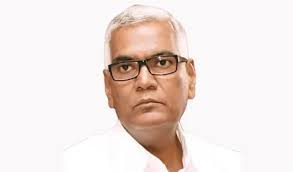
The Communist Party of India said “a democratic society cannot allow the State to become the judge, jury, and executioner.” Synopsis: The Communist Party of India has condemned the killing of senior Maoist leader Nambala Keshava Rao and over two dozen others by Indian security forces in Chhattisgarh’s Abujhmad region, calling it a “cold-blooded” and extrajudicial act. CPI General Secretary D Raja accused the State of bypassing constitutional safeguards and demanded an independent judicial inquiry into the operation. The Communist Party of India (CPI) has strongly criticised the “cold-blooded killing” of senior Maoist leader Nambala Keshava Rao and over two dozen others in Chhattisgarh’s Abujhmad region on 21 May by Indian armed forces. In a strongly worded statement released on Wednesday, CPI General Secretary D Raja accused the state of bypassing constitutional safeguards and engaging in extrajudicial actions that disproportionately affect Adivasi communities. “CPI strongly condemns the cold-blooded killing of a senior Maoist leader along with several Adivasis in Chhattisgarh. It is yet another instance of extrajudicial action carried out under the guise of counterinsurgency operations. The repeated use of lethal force instead of lawful arrest raises serious concerns about the State’s commitment to democratic norms and the rule of law,” the statement read. “If the authorities had credible intelligence about the whereabouts of the leader, why was a legal arrest not pursued? Why was due process – guaranteed by the Constitution – so blatantly ignored?” He further said Adivasi communities have often found themselves caught in military operations without access to justice or protection. “These killings not only point to a dangerous pattern of State violence but also expose the ongoing marginalisation of Adivasi communities in the region. Time and again, these communities are caught in the crossfire of a conflict they did not initiate, and are treated as collateral in operations marked by impunity.” The CPI demanded an independent judicial investigation into the killings. “CPI demands an independent judicial inquiry into this episode and the entire Operation Kagar. The people of Chhattisgarh – and India at large – deserve to know the truth. A democratic society cannot allow the State to become the judge, jury, and executioner. Justice must be served, and the dignity and rights of Adivasi lives must be upheld.” “CPI calls upon all democratic and progressive forces to raise their voices against this injustice and stand in solidarity with the people of Chhattisgarh.” Operation Kagar and the ‘neutralisation’ of over 50 Maoists The CPI’s statement followed soon after Union Home Minister Amit Shah announced the killing of at least 27 Maoist cadres, including senior leader Nambala Keshava Rao, also known as Basavaraj, in an alleged encounter in the Abujhmad forests of Narayanpur district, Chhattisgarh. Basavaraj, 71, was the General Secretary of the Communist Party of India (Maoist), the banned left-wing insurgent group that has operated across large parts of central India for over four decades. The encounter reportedly took place between the Maoists’ Company-7 unit and the District Reserve Guard (DRG), a specialised force raised by the Chhattisgarh police. The gun battle occurred in the dense forests near Maad, a known Maoist stronghold straddling the Narayanpur and Bijapur districts. Union Home Minister Amit Shah called the operation a “landmark achievement,” as part of the Centre’s commitment to eliminating “Naxalism” by 31 March 2026. Since early April, as part of Operation Kagar, a prolonged and expansive counterinsurgency campaign, the Centre has “neutralised” over 50 Maoists, including a previously reported 31 Maoists, among them 16 women, in the Karreguttalu Hills along the Chhattisgarh-Telangana border. That operation involved joint action by the Central Reserve Police Force (CRPF), Special Task Force (STF), DRG, and state police units, and was presented as a decisive shift in the National Democratic Alliance (NDA) government’s battle against left-wing extremism. Yet, activists and political parties like the CPI and the Bharat Rashtra Samithi (BRS) have consistently raised concerns about civilian deaths, lack of transparency, and the targeting of tribal populations. (Edited by Dese Gowda) Courtesy : TSF Note: This news is originally published on https://thesouthfirst.com/ and is for use by the non-military/non-commercial community, especially those in the human rights sector.
‘Forced to drink own urine’: Kidnapped Dalit student in Andhra alleges torture; Police deny caste angle
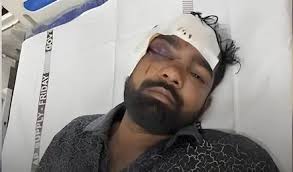
Tirupati police have confirmed that the kidnapping took place but have disputed several aspects of the survivor’s account. Synopsis: A Dalit engineering student in Tirupati, Andhra Pradesh, has alleged that he was abducted, tortured, and subjected to caste-based abuse by a group led by a former college mate. In a video with visible injuries, the student claimed he was confined, beaten with iron rods, humiliated for his caste, and forced to drink his own urine. While police have confirmed the assault, they dispute the caste angle, attributing the incident to past college group rivalries. A Dalit engineering student in Andhra Pradesh’s Tirupati has alleged that he was kidnapped, beaten, and subjected to caste-based abuse by a group led by a former college mate. He further claimed that the assailants forced him to drink his own urine during the ordeal. James, a fourth-year B.Tech student at Sri Vidyanikethan College, released a video in which he appeared with visible injuries. In it, he alleged that a group of history-sheeters tortured him for over a day and a half, led by his former college mate named Yashwanth. “I went to meet my cousin when Yashwanth, Jagga, KT Road Chotta Blade, and other rowdy-sheeters picked me up,” he said. He alleged that the group confined him in a hotel room, where he was tied up, beaten with hockey sticks, iron rods, and subjected to casteist abuse. “They kept me there for a day and a half. They tied me and used a sharp object to make cuts on my head,” he said in the video. “They humiliated me for being a Dalit and for speaking up.” James further alleged that he was stripped and forced to drink his own urine. “They threatened to kill me if I told anyone,” he added. He also accused the local police of initially refusing to file a complaint. “After I went to the police, they refused to register a case against them, asking me to leave out two names,” he alleged. “They even offered me money to drop the case.” Former Chief Minister and YSRCP chief YS Jagan Mohan Reddy condemned the incident, calling it a reflection of deteriorating law and order in the State. “The incidents show the growing attacks on Dalits and the failing law and order situation in the State, which is not protecting weaker sections and those who raise their voice against injustice,” he wrote in a post on X. Police refute James’ version of events Tirupati police have confirmed that the kidnapping took place but have disputed several aspects of the survivor’s account. “The incident occurred during the early hours of 15 May. James was kidnapped by the assailants and taken to a nearby hotel for about two hours,” Sub-Divisional Police Officer Bethapudi Prasad, who is leading the investigation, told South First. “It is true that James was kidnapped and assaulted. However, the incident did not occur because of caste. It was a case of college groupism.” Yashwanth, the main accused, is a second-year college dropout who had previous run-ins with James, according to Prasad. “They had spats during their time in college, which dragged on until now, culminating in the assault,” he said. Responding to James’ allegations, he further said: “After the investigation, James admitted to us that he made the claims because he wanted to garner attention to his assault,” Prasad said. “Furthermore, all of James’ injuries are from blunt weapons, not blades. However, it must be noted that James was tied up and held in the washroom.” A case has been registered under relevant sections, and seven persons have been named as accused. Police said no arrests have been made yet and that investigation is underway. Saicharan Sana (Edited by Dese Gowda) Courtesy : TSF Note: This news is originally published on https://thesouthfirst.com/ and is for use by the non-military/non-commercial community, especially those in the human rights sector.
Has Shashi Tharoor’s association with Congress reached dead end?
Has Shashi Tharoor’s association with Congress reached dead end?Has Shashi Tharoor’s association with Congress reached dead end? NEW DELHI: For several times in the last few months we have heard the Congress “distance” itself from Shashi Tharoor’s remarks. But now, in an interesting turn of events, it appears that Shashi Tharoor is “distancing” himself from the Congress. The gap between Congress and Tharoor, that first appeared on the surface in February this year when the Thiruvananthapuram MP openly praised Prime Minister Narendra Modi’s US visit, seems to have widened in the last few days. The government’s move to nominate Tharoor for its global diplomatic outreach post Operation Sindoor, bypassing the Congress leadership, has perhaps brought the differences to a tipping point. Congress veteran P J Kurien’s recent remark: “If people suspect Tharoor is leaning towards the BJP, no one can blame them for thinking so” sums up the visible strain in the relationship. It has raised the obvious question: Is Tharoor on his way out of the Congress? Well, we may not have a clear answer to this question right now. But there are enough hints to suggest that Congress and Tharoor are drifting apart. Here’s what they had to say about each other after the latest round of stand-off trigerred by the government’s nomination move. Tharoor, when asked about not being nominated by the party, said, “My party leadership is entitled to its opinion of my abilities or lack thereof, and I think that is really for them to explain. I have absolutely no comment to make on that. I am honoured to have been entrusted with the responsibility, and I will fulfil that responsibility just as I have fulfilled every responsibility entrusted to me in my rather long working life, whether at the United Nations or in the Congress Party.” When asked if the party was trying to insult him by releasing the names suggested by it for the delegation, Tharoor said that he cannot be insulted so easily. “I know my worth,” he asserted. Tharoor also echoed the government line and said “To my mind, this has nothing to do with party politics. It’s all to do with what our country has been through in recent times and the need for us to present a united front. It is a good reflection of national unity at a time when unity is important.” The Congress, unhappy with Tharoor’s ready acceptance of the responsibility ignoring the party stand, said: “There is a difference between being in the Congress and being of the Congress. The Congress is like the mighty Ganga, which has many tributaries… Some of them dry up and some get polluted.” Tharoor’s many messages to the Congress That Shashi Tharoor and the Congress were not on the same page on several issues in the last few months was an open secret. There were several instances when Tharoor praised PM Modi’s policies without bothering much about the party line. On PM Modi’s US visit “PM Modi’s US visit has yielded some positive outcomes for the Indian people. I welcome the fact that there is now an agreement to have a negotiation for the next 9 months on trade and tariffs. It’s far better than Washington hastily and unilaterally imposing some tariffs on us, which could have damaged and hurt our exports. It seems to me that something good has been achieved, and I applaud that as an Indian. We can’t always speak only in terms of party interests. I am not a party spokesman. I am an MP elected by all the people of Thiruvananthapuram, and on that basis, I speak as a responsible stakeholder in Indian democracy.” On Russia-Ukraine war “India’s diplomatic approach had given the Prime Minister a unique position to hug both the president of Ukraine and the president of Moscow two weeks apart and be accepted in both places. I am still wiping the egg off my face because I was one person in the parliamentary debate who actually criticised the Indian position at the time back in February 2022.” On Covid vaccine diplomacy “India’s vaccine diplomacy during the Covid pandemic stands out from amid the horrors of that time as a powerful example of international leadership rooted in responsibility and solidarity. By delivering made-in-India vaccines to over 100 nations, India demonstrated its capacity to extend a helping hand when it mattered most. “This initiative during the dark days of the Covid pandemic reinforced India’s standing as a force for good in the world, reflecting its humanitarian spirit and adding to the allure of its soft power. It carried the values of compassion, cooperation, and global partnership to the world, building goodwill, strengthening diplomatic ties, and elevating India’s global stature.” On intelligence failure in Pahalgam terror attack “Obviously, there was no full proof intelligence. There was some failure… But we have got the example of Israel, the world’s best intelligence services according to everybody, which were taken by surprise on October 7, just two years ago. It seems to me, just as Israel is waiting till the end of the war before they demand accountability, similarly, I think we too should see the present crisis through and then demand accountability from the government. No country can ever have a foolproof 100 per cent intelligence.’ Clearly, Tharoor’s praise for PM Modi and his policies was not an one-off transgression, but a sustained campaign to perhaps send across some message to the Congress leadership. When pointed out that his remarks were at variance with the party’s stand, Tharoor strongly defended his position. “For 16 years, I have been in politics. My attitude has been that when somebody in the government, whether it’s our government or some other party’s government, does the right thing or does something well, one should acknowledge and praise it, and when they do something badly, one should criticise it,” Tharoor said in February when objections were raised to his praise for PM Modi’s US trip. ‘Sleepless night’: PM Modi’s ‘Tharoor’ swipe
Dalit woman’s complaint: Peroorkada ASI suspended
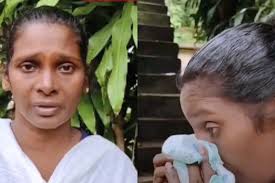
Case pertains to illegal detention of domestic worker on a trumped-up charge of stealing gold necklace from her employer’s house The State Police suspended another officer attached to the Peroorkada police station in connection with the illegal detention of Nedumangad native Bindu R., a Dalit woman and domestic worker, on a trumped-up charge of stealing a gold necklace from her employer’s house. District Police Chief (Thiruvananthapuram City) Thomson Jose issued orders suspending grade assistant sub-inspector Prasannakumar for mistreating the woman at the police station. An inquiry conducted by the Assistant Commissioner of Police, Cantonment, found Prasannakumar guilty of dereliction of duty while being in charge of the General Diary entry on the particular day (April 23). The complainant had also accused him of harassing her and hurling abuses. She also alleged that the officer had asked her to drink water from the washroom when she asked for water. The disciplinary action comes two days after Peroorkada sub-inspector Prasad S.G. had been suspended, pending inquiry, in connection with the incident. Official sources indicated that the ongoing inquiry will continue, with possible action being adopted against more officials who were present at the station when the incident had occurred. Courtesy : The Hindu Bureau, The Hindu Note: This news is originally published on https://thehindu.com/ and is for use by the non-military/non-commercial community, especially those in the human rights sector.
Trump foisted ceasefire on Modi with trade threats: Revanth
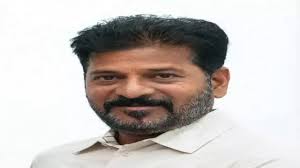
Hyderabad: Chief minister A Revanth Reddy Wednesday waded into the controversy sparked by US President Donald Trump claiming that he negotiated a ceasefire between Indian and Pakistan amid Operation Sindoor. Revanth claimed people felt the Narendra Modi govt succumbed to the pressure exerted by Trump with trade-related threats and took a back-step instead of using the opportunity to crush terrorism and defeat Pakistan post the Pahalgam terrorist attack. “Former prime minister Indira Gandhi turned down the US president’s offer to mediate and stop the war with Pakistan in 1971,” Revanth claimed after paying tributes at the statue of Rajiv Gandhi on his death anniversary, also observed as National Anti-Terrorism Day. “But post-Operation Sindoor, it is unfortunate that the present US president said he initiated a ceasefire. After the terrorist attack in Pahalgam followed by the India-Pakistan conflict, the people of the country are remembering Iron Lady Indira Gandhi for teaching Pakistan a lesson by breaking it in two — Bangladesh and Pakistan.” He added the entire country, including Congress top leaders Mallikarjun Kharge, Rahul Gandhi, Sonia Gandhi, stood in support of Modi. “But the Centre did not utilise this opportunity. If the Modi govt had gone ahead and crushed terrorism, defeated Pakistan, and given India a victory, the world would have welcomed and praised him.” In an indirect reference to the Tiranga Yatras organised by BJP following the India-Pakistan military conflict, the chief minister charged the BJP leaders with trying to “hide their inability”. “They (BJP) started criticising Rahul Gandhi only to hide their incompetence,” he added. He said the Telangana govt took out the first rally in support of the Centre and the armed forces when the India-Pakistan conflict began. “(Union minister) Kishan Reddy was sleeping at home then,” Revanth said. “He should have stood with us in support of the Modi govt and armed forces. Instead of commenting to hide their incompetence, the BJP leaders should focus on controlling terrorism.” In a jibe at the BRS, Revanth said some narrow-minded leaders were criticising the decision to install Rajiv Gandhi’s statue near the secretariat. “The statues of Rajiv Gandhi, Indira Gandhi, PV Narasimha Rao, B R Ambedkar, and a memorial of Telangana martyrs should be an inspiration,” he insisted. He added the Congress would not indulge in politics when it comes to the country’s security, integrity, and protecting the lives of citizens. The Congress achieved independence for the country, and it was the responsibility of the party to protect the country and extend support for the cause, he said. Courtesy : TOI Note: This news is originally published on https://timesofindia.com/ and is for use by the non-military/non-commercial community, especially those in the human rights sector.
Third Dalit worker dies in manual scavenging tragedy in Tamil Nadu’s dyeing factory
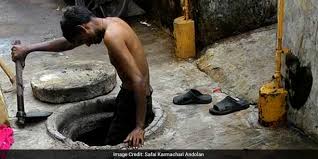
Add Your Heading Text HereThree Dalit men have died after inhaling toxic gas while cleaning a sewage tank at a Tiruppur dyeing factory, exposing the deadly persistence of manual scavenging despite a legal ban. The death toll in a manual scavenging tragedy in Tamil Nadu’s Tiruppur, has risen to three, after another person, identified as Hari Krishnan, succumbed to his injuries on Tuesday. He was one of the four Dalit men who were hospitalised following exposure to toxic gas in a sewage tank. The other two, who died of asphyxiation on Monday, were identified as Saravanan and Venugopal. A fourth man, Chinnaswamy, is currently undergoing treatment at a private hospital. According to police in Tiruppur, five men were engaged to clean a seven-foot-deep sewage tank at a private dyeing factory in Karaipudur without any protective gear. The cleaning operation turned fatal when the workers inhaled toxic methane gas released from the tank. The tragedy unfolded within seconds, with the men losing consciousness almost immediately after entering the confined space. Despite swift medical attention, Saravanan and Venugopal were declared dead upon arrival at the hospital on Monday. With Hari Krishnan’s passing, the incident has now claimed three lives. An initial FIR has been registered against the factory owner Naveen, manager Dhanabal, supervisor Balasubramaniam and vehicle owner Chinnasamy. The accused have been booked under sections 125A (endangering life) and 106(1) (causing death by negligence) of the Bharatiya Nyaya Sanhita, section 3(2)(v) (serious offences) of the Scheduled Castes and Scheduled Tribes (Prevention of Atrocities) Act, and section 9 of the Prohibition of Employment as Manual Scavengers and their Rehabilitation Act, 2013, which prohibits the engagement of anyone for the cleaning of sewers and septic tanks. Courtesy : India Today Note: This news is originally published on https://indiatoday.com/ and is for use by the non-military/non-commercial community, especially those in the human rights sector.
AJL: ED says Sonia, Rahul Gandhi got Rs 142 crore in ‘proceeds of crime’ in National Herald case
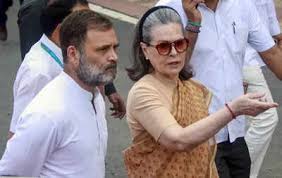
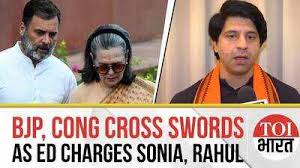
NEW DELHI: Enforcement Directorate on Wednesday told a special court here that Congress veteran Sonia Gandhi and her son Rahul received Rs 142 crore in “proceeds of crime” after acquiring Associated Journals Ltd (AJL) through Young Indian, a company in which they together held 76% stakes. The agency told the court of special judge Vishal Gogne that a ‘prima facie’ case of money laundering was established against Sonia, Rahul and others in the case involving the acquisition of AJL – publisher of Congress mouthpieces National Herald and Qaumi Awaz – by Young Indian. The court will continue hearing arguments in the case on a day-to-day basis from July 2-8. In its prosecution complaint (chargesheet), ED has made Sonia and Rahul accused No. 1 and No. 2, respectively, besides naming five others, including close associates Sam Pitroda and Suman Dubey. ED: Gandhis gained from Herald scam, Cong & its donors are victims ED’s case is based on the charge that Congress provided an interest-free loan of Rs 90 crore to AJL, which owns significant real estate in different parts of the country. When AJL failed to repay, Congress, then led by Sonia, transferred AJL to Young Indian, a newly promoted “not-for-profit” in which she was a director along with Rahul, and they together held 76% stakes. As a result, Young Indian ended up controlling assets worth Rs 752 crore, mostly in the form of buildings or land in Delhi, Mumbai, Lucknow, Indore, Chandigarh and Patna, allotted to AJL by Congress govts for bringing out National Herald and other party journals. ED has also alleged that Young Indian paid Rs 50 lakh – arranged through a Kolkata-based shell company Dotex Merchandise Pvt Ltd – to repay AJL’s Rs 90-crore loan to Congress as full and final settlement. The company is one of the seven accused named in the chargesheet, which was filed before the court on April 9. Young Indian was launched in Nov 2010, with Dubey and Pitroda as directors and a paid-up capital of Rs 5 lakh, according to the chargesheet. By early next year, they had transferred their shares to the Gandhis, clearing the way for them to acquire assets, and going by an assessment done by the Income Tax department, these were worth Rs 752 crore. The current market value of the assets is worth Rs 2,000 crore, according to the ED chargesheet. Appearing for ED, additional solicitor general S V Raju told the court that the Gandhis and other accused were enjoying proceeds of crime of Rs 142 crore until the ED attached these (AJL) properties (worth Rs 752 crore in Nov 2023). As Raju and advocate Zoheb Hossain, special counsel for ED, pressed the court to take cognisance of the chargesheet, senior advocate Abhishek Manu Singhvi, appearing for Gandhis, sought time until July on grounds that voluminous records and documents needed scrutiny. The court allowed ED to proceed with its opening arguments, despite Singhvi’s objection. The hearing took an interesting turn when Raju suggested Congress and those who made donations to it were also victims of the alleged scam. He argued that while it was Congress that loaned Rs 90 crore to AJL, assets of the company were transferred to Gandhi-controlled Young Indian and not the party – an interesting line of reasoning which in the coming days may develop into a larger argument about Sonia and Rahul allegedly benefiting at the expense of Congress members as well as its donors. Meanwhile, the court directed ED to provide a copy of its chargesheet in the matter to Subramanian Swamy, based on whose private complaint the agency had lodged the present money laundering case. During the hearing, Raju and Hossain focused on the generation of proceeds of crime, which, Hossain said, not only included those properties obtained from the scheduled offence but also other activity such as getting ‘donations’ and ‘bogus’ rentals. “Rental income worth Rs 142 crore received by the accused will be included in this,” Hossain said. He submitted that the matter pertains to criminal conspiracy allegedly involving three entities – AJL, Young Indian and Congress. On Sonia and Rahul becoming shareholders of Young Indian, the judge asked, “The underlying allegation is ownership, is implicitly transferred to the first two accused, so who owns the properties as of date, Young Indian or AJL?… In very simple words, if property of ‘A’ is usurped by ‘B’, does it become proceeds of crime in the hands of ‘B’?” The judge also asked if there is a forensic auditor with ED and said he wants to understand exactly how companies work and in what ways they are allowed to issue shares. Responding to the query, Hossain said he will get back with answers. He added, “Whenever there is a fraud, then the court will probe into who are the real beneficial owners, which PMLA enables the court to do.” Courtesy : TOI Note: This news is originally published on https://timesofindia.com/ and is for use by the non-military/non-commercial community, especially those in the human rights sector.
Attack on Dalit newlyweds exposed BJP govt’s claims: Akhilesh
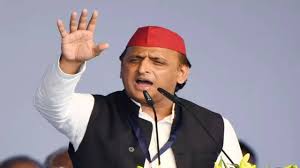
Lucknow: Samajwadi Party president Akhilesh Yadav on Wednesday cited the alleged attack on newlyweds in Mahoba by local upper caste people for wearing slippers as another incident that has exposed the reality behind BJP govt’s claims of ‘Sabka Saath, Sabka Vikas’ in the state. He also questioned the govt’s claims of ‘zero tolerance’ towards crime and criminals and went on to cite incidents of crime, particularly against women, to maintain that the crime graph was rising in UP. “People belonging to the same caste as those in govt, forced a Dalit newlywed and their family who were on their way to the temple, to take off their slippers while walking past them. When the groom resisted, they attacked him and his family members. The incident has exposed the govt which talks of ‘Sabka Saath, Sabka Vikas’,” Akhilesh said in a post on X in Hindi. Quoting an undated newsclip containing details of the incident narrated by the victims themselves, Akhilesh raised questions over delay in police action. The family claimed that they visited the local police station, but their complaint was not taken up. “If the govt fails to initiate any action against the accused, the PDA community will not forgive the govt,” he added. “The PDA community will not remain silent on such injustice. If the Chief Minister tries to hush up the incident to save the accused, the incident will go down in history as an example of the present govt’s weakness. The PDA community will not forget the humiliation that the Dalit bride had to face. This has exposed the BJP govt’s ‘Nari Vandan’ symbolism,” Akhilesh said. In a statement on Wednesday evening, Akhilesh referred to the gang rape of a girl in Moradabad, rape of a nurse in Meerut, murder of an old woman who was fast asleep in her house in Farrukhabad as examples of “lawlessness” in the state. He claimed that UP tops the list of deaths in police custody in the country because of which people are losing faith in police. ‘Give ex gratia to kin of electrocution victims’ Lucknow: Samajwadi Party chief Akhilesh Yadav on Wednesday expressed grief over the death of four people in Ghazipur due to electrocution after they came in contact with a high-tension wire. Akhilesh demanded ex gratia to the kin of those killed and proper medical care for those injured in the incident. He also demanded a thorough probe into the accident and stringent action against those responsible for the loss of human life. He held the power department responsible for such incidents and demanded that errant officials must be sacked. Courtesy : TOI Note: This news is originally published on https://timesofindia.com/ and is for use by the non-military/non-commercial community, especially those in the human rights sector.
Caste Census: Harsh Rules for ‘Untouchables’ in Villages that Prompted Dr. B.R. Ambedkar to Write— “Thank God the Constituent Assembly Did Not Adopt It”
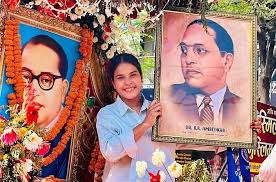
Baba Sahab described villages as “Indian ghettos” where Dalits were trapped in “corporate bondage,” with Touchables monopolizing land and resources. New Delhi- As India prepares for its upcoming caste census in 2025, the nation stands at a pivotal moment where caste identities will once again shape policy and welfare programs. While some argue that highlighting caste in modern India is divisive and that discrimination is a relic of the past, the lived experiences of those historically oppressed reveal a starkly different reality. In his seminal work The Indian Ghetto—The Centre of Untouchability—Outside the Fold, Dr. B.R. Ambedkar exposed the oppressive realities faced by Untouchables (Dalits) in Indian villages, shattering the romanticized notion of rural India as an ideal social structure. Ambedkar’s stark revelations highlight a rigid social code enforced in Hindu villages, designed to subjugate Untouchables socially, economically, and culturally. Baba Sahab writes: The average Hindu is always in ecstasy whenever he speaks of the Indian village. He regards it as an ideal form of social organization to which he believes there is no parallel anywhere in the world. It is claimed to be a special contribution to the theory of social organization for which India may well be proud of. How fanatic are the Hindus in their belief in the Indian village as an ideal piece of social organisation may be seen from the angry speeches made by the Hindu members of the Indian Constituent Assembly in support of the contention that the Indian Constitution should recognize the Indian village as its base of the constitutional pyramid of autonomous administrative units with its own legislature, executive and judiciary. His relief at the Constituent Assembly’s rejection of the village as the constitutional base—“From the point of view of the Untouchables, there could not have been a greater calamity. Thank God the Constituent Assembly did not adopt it.” The term “Untouchable” is historically accurate when referring to the social practices Ambedkar described, but its use today is sensitive due to its derogatory connotations. The Myth of the Ideal Village The glorification of Indian villages as autonomous, self-sufficient “little republics” originated not from ancient Hindu tradition but from Sir Charles Metcalfe, a 19th-century East India Company official. In his Revenue Papers, Metcalfe described villages as resilient communities that endured through invasions and political upheavals, largely self-contained and independent. This portrayal flattered Hindu sentiments, leading to its adoption as a point of national pride. During the Constituent Assembly debates, some Hindu members advocated for villages to form the base of India’s constitutional structure, viewing them as ideal units of governance. However, Ambedkar saw this as a catastrophic proposition for Untouchables. He described villages as “Indian ghettos” where Dalits were trapped in “corporate bondage,” with Touchables monopolizing land and resources. For Ambedkar, elevating villages to constitutional prominence would have entrenched caste oppression, denying Untouchables any chance at equality. The term “Untouchable” is historically accurate when referring to the social practices Ambedkar described, but its use today is sensitive due to its derogatory connotations. The Social Code: A System of Oppression Ambedkar detailed a stringent code in Hindu villages that Untouchables were forced to follow, with violations deemed offenses punishable by severe social and collective consequences. These rules were not codified in any legal penal code but were enforced with absolute authority by the Touchable castes. The key rules included: Segregation of Settlements: Untouchables were compelled to live in separate quarters outside the main village, isolated from Hindu habitations. Breaking this rule was an offense. Auspicious Direction Restriction: Their settlements had to be in the southern direction, considered the most inauspicious, reinforcing their inferior status. Pollution by Distance or Shadow: Untouchables were required to maintain a physical distance to avoid “polluting” Hindus with their shadow or breath, with violations treated as offenses. Wealth Prohibition: Acquiring wealth, such as land or cattle, was forbidden, ensuring economic dependency and subjugation. Housing Restrictions: Building houses with tiled roofs was prohibited, marking Untouchables’ dwellings as inferior. Clothing and Ornaments Ban: Wearing clean clothes, shoes, watches, or gold/silver ornaments was an offense, enforcing visible markers of inferiority. Naming Conventions: Untouchables were barred from giving their children respectable names; names had to reflect contempt to signify their low status. Social Conduct Rules: Sitting on a chair in a Hindu’s presence, riding a horse or palanquin, or organizing processions through the village were offenses. Language and Respect: Speaking a cultured language or failing to salute Hindus was punishable. Silence on Sacred Days: On fasting days, Untouchables were forbidden from speaking, as their breath was believed to pollute Hindu air and food. Mandatory Inferiority Markers: Untouchables had to maintain symbols of inferiority, such as contemptible names, unclean clothes, and non-tiled houses, with any deviation considered an offense. These rules were enforced through collective punishment, where the entire Untouchable community faced repercussions for an individual’s transgression, ensuring systemic control and fear. The term “Untouchable” is historically accurate when referring to the social practices Ambedkar described, but its use today is sensitive due to its derogatory connotations. Duties Imposed on Untouchables Beyond these rules, Untouchables were burdened with specific duties to serve the Touchables without any remuneration. These included: Messenger Role: Untouchables had to carry messages about events like deaths or marriages in Hindu households to their relatives, no matter how far the villages were. Service at Weddings: During Hindu marriages, Untouchables were required to perform menial tasks like breaking firewood or running errands. Escorting Brides: Untouchables had to accompany a Hindu bride from her parental home to her husband’s village, regardless of the distance. Festivals: During festivals like Holi or Dasara, Untouchables were tasked with performing preliminary menial tasks. Humiliation of Women: On certain festivals, Untouchable women were subjected to indecent mockery by the village community. What Sir Charles Metcalfe said about Indian villages Sir Charles Metcalfe—a civil servant of the East India Company. Metcalfe, who was a revenue officer, in one of his Revenue Papers described the Indian village in the following terms : “The village communities are little republics, having nearly
‘Great son of India’: PM Modi, Congress leaders pay tribute to former PM Rajiv Gandhi on 34th death anniversary
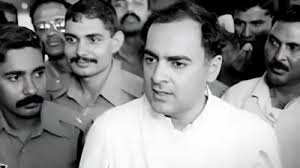
NEW DELHI: Prime Minister Narendra Modi on Wednesday paid tribute to former prime minister Rajiv Gandhi on his 34th death anniversary. In a post on X, PM Modi wrote, “On his death anniversary today, I pay my tributes to our former Prime Minister Shri Rajiv Gandhi Ji.” — narendramodi (@narendramodi) Congress leaders also paid homage at Veer Bhoomi, Rajiv Gandhi’s memorial. Among them were his son Rahul Gandhi, Congress president Mallikarjun Kharge, and party leader Sachin Pilot. Rajiv Gandhi served as country’s Prime Minister from 1984 to 1989, leading the last Congress government with a full majority. He took charge of the party after the assassination of his mother, then Prime Minister Indira Gandhi, in 1984, becoming the country’s youngest Prime Minister at 40. He was assassinated by the LTTE, a Sri Lanka-based terrorist group, on May 21, 1991, while campaigning in Sriperumbudur, Tamil Nadu. His son Rahul Gandhi now serves as the leader of the opposition in the Lok Sabha. Courtesy : TOI Note: This news is originally published on https://timesofindia.com/ and is for use by the non-military/non-commercial community, especially those in the human rights sector.