
Telangana to Provide Indiramma Housing to TTransgender ransgender TTraffic raffic Assistants in Hyderabad
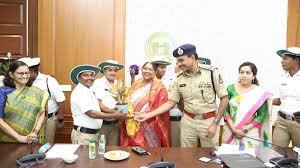
Telangana to allot Indiramma housing to transgender traffic assistants in Hyderabad, promoting equality and inclusion in government services. In a landmark move promoting inclusivity, the Telangana government has announced that transgender traffic assistants employed in Hyderabad will be allotted homes under the Indiramma Housing Scheme. This was confirmed by Minister for Panchayat Raj and Women & Child Welfare, Danasari Anasuya, during a review meeting at the Secretariat on Monday. The Minister, popularly known as Seethakka, highlighted the historic recruitment of 44 transgender individuals as Traffic Assistants in December 2024, calling it a significant milestone for both Telangana and India. “This program has delivered dignity, opportunity, and inclusion,” she said, emphasizing the government’s commitment to equal opportunities. Currently, 38 of these transgender assistants serve with the Hyderabad Police Traffic Department. Minister Anasuya further revealed plans to allot houses under the disability quota and explore more government job roles for transgender persons. “Our goal is equality in opportunity and building a society that embraces everyone,” she added. The government is also expanding support through initiatives like the Maitri Clinics in various districts and intends to broaden transgender employment across departments. Hyderabad Police Commissioner C.V. Anand praised the swi recruitment process, completed within ten days under Chief Minister A. Revanth Reddy’s directive. He lauded the traffic assistants’ exemplary discipline and performance, noting no complaints have been filed against them. The department will also support those interested in private security roles Anitha Ramachandran, Secretary of Women and Child Welfare, said Telangana’s inclusive step has gained national attention, with other states seeking guidance. Traffic officials confirmed that the assistants have integrated well, managing duties with dedication and professionalism. Members of the transgender community expressed heartfelt gratitude, sharing how the initiative transformed their lives aer years of marginalization. “For 76 years, we were invisible. Today, we stand proudly alongside police officers,” said one assistant. They requested benefits equivalent to those given to home guards and thanked the government for recognizing them as equals rather than exceptions. Based on the positive feedback, Telangana plans to further expand this pioneering initiative, becoming the first state in India to formally integrate transgender persons into government service. Courtesy : THI Note: This news is originally published on https://thehansindia.com/ and is for use by the non-military/non-commercial community, especially those in the human rights sector.
Female prisoners, transgenders observe rituals in jail
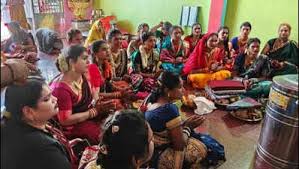
Berhampur: Chanting of shlokas pierced the high walls of Berhampur Circle Jail here on Monday when female prisoners performed the rituals of Sabitri Brata. Twelve out of 55 women prisoners, including undertrials, performed the ritual on the jail premises, said D N Barik, senior superintendent of the circle jail. “We provided them with new saris, different types of fruits, and other materials used for the ritual,” he said. The jail authorities allowed women prisoners, who performed the ritual, to meet their husbands. “We also allowed prisoners to meet their wives near the jail gate,” he said. “During previous years, he was at home during ‘Sabitri Brata’. This year he was in jail after police arrested him in a clash in the village,” said a woman from Golanthara. Several transgenders also observed ‘Sabitri Brata’ at a temple in Gandhi Nagar. They dressed up in saris and ornaments to perform the ritual like married women. “We perform Sabitri puja in different temples. This year, we chose the temple in Gandhi Nagar,” said Sweety, a transgender person. Courtesy : TOI Note: This news is originally published on https://timesofindia.com/ and is for use by the non-military/non-commercial community, especially those in the human rights sector.
OBC outreach: Congress pushes for caste census, urges BJP to announce timeline
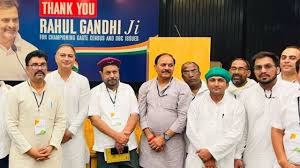
JIND: Following the example of the BJP, the Congress has now gone into active mode to woo OBC voters. For the first time at the national level, the Congress Party organized a large-scale meeting with OBC leaders, in which more than 500 leaders from across the country participated. A few selected OBC leaders from Haryana took part in this meeting and held discussions with the Congress leadership to formulate future strategies. The OBC leaders from Haryana who attended the meeting said that this was the first such initiative by the Congress, which was much needed given the current political climate. The meeting included positive discussions on the OBC caste census and the future of politics, which are expected to yield good results in the times ahead. Surender Kumar, AICC National Coordinator and hails from Haryana’s Hisar district who attended the meeting, said that Rahul Gandhi fought the battle for caste census from the streets to Parliament. He received overwhelming support from the people of the country. It was under this pressure that the BJP had to accept Rahul Gandhi’s demand for a caste census. Surender Kumar stated that the backward classes have now found a strong and committed voice in Rahul Gandhi. “Whatever Rahul ji said, he delivered. The day is not far when the BJP will not only have to accept the caste census but also agree to Rahul Gandhi’s stand on other issues concerning the backward classes,” he added. Kumar further said that the BJP’s ideology does not support giving equal rights to the backward classes. “The BJP merely talks about the backward classes but denies them their constitutional rights and representation, such as reservation. The Prime Minister identifies himself as belonging to the backward class and seeks votes in their name, but even today, participation of backward classes in central universities, the judiciary, bureaucracy, private sector, and businesses is negligible compared to their population share.” He added that Rahul Gandhi is now strengthening the fight for social justice, inspired by Mahatma Jyotiba Phule and Bharat Ratna B.R. Ambedkar, from Parliament to the streets. “At a time when the BJP is intent on weakening the Constitution, every Congress worker under Rahul Gandhi’s leadership will strongly fight to protect it. The Constitution is the greatest weapon in the fight for the rights and entitlements of the backward classes,” he said. Talking to TOI, Captain Ajay Yadav, former national president of the OBC cell, stated that many issues were discussed during the meeting, especially the caste census. He said the Congress is planning a mega rally on this issue soon. All OBC leaders expressed gratitude to Congress president Rahul Gandhi for raising the caste census issue, which subsequently compelled the BJP to announce a caste census. However, he emphasized that it should not merely be an eyewash ahead of the Bihar elections. The BJP must announce a clear timeline for the caste census at the national level. He further stressed the need for a proper and transparent process while conducting the caste census so that the public gets a clear picture. Yadav pointed out that the BJP has given significant space to many OBC leaders in Haryana, such as Chief Minister Nayab Saini, Rao Inderjeet Singh, Bhupender Yadav, Sudha Yadav, and others. Therefore, the Congress must also offer prominent positions to OBC leaders in the state for the better survival of the party. “We raised our issues and hope for a better future,” he added. Courtesy : TOI Note: This news is originally published on https://timesofindia.com/ and is for use by the non-military/non-commercial community, especially those in the human rights sector.
Gogoi slams BJP, seeks ‘fitting reply’ to Pahalgam attack
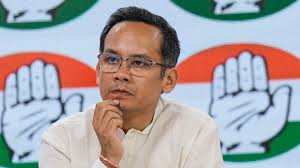
Patna: New Assam Congress chief Gaurav Gogoi on Monday said his party still expects a “solid and fitting reply” from PM Narendra Modi to Pakistan over the April 22 terror attack in Kashmir’s Pahalgam, which killed 26 tourists. “After the Pahalgam terror attack, our party extended full support to PM Modi. Rahul Gandhi, as leader of the opposition, clearly said that Pakistan must be given a strong reply,” Gogoi told reporters at Patna airport. India had launched retaliatory strikes, Operation Sindoor, on May 6-7, targeting nine terror hubs in Pakistan and POK, including airbases. A ceasefire was announced on May 10. Responding to Assam CM Himanta Biswa Sarma’s remark that he was “on Pakistan’s payroll,” Gogoi said, “I am here on AICC’s behalf for the ‘Jai Hind’ programme in Muzaffarpur. I will reply to the Assam CM’s allegations back in Assam.” Gogoi also thanked party leaders for his elevation and said, “I am grateful to Congress president Mallikarjun Kharge, Rahul Gandhi and others. This is a big responsibility to work towards building a new Assam.” He credited his father, the late Tarun Gogoi, Assam’s longest-serving CM, as a source of inspiration and praised outgoing chief Bhupen Bora. Meanwhile, at Sadaquat Ashram, AICC general secretary Krishna Allavaru met former district Congress presidents, urging them to guide the party’s revival in Bihar. “You carry the party’s legacy. We need your leadership to strengthen the state unit,” he said. Courtesy : TOI Note: This news is originally published on https://timesofindia.com/ and is for use by the non-military/non-commercial community, especially those in the human rights sector.
When Ambedkar said – Now even if God forbids, I will not remain a Hindu! Know the shocking truth behind conversion
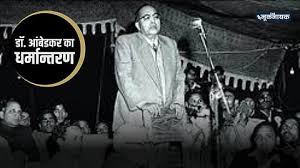
Dr. Bhimrao Ambedkar’s conversion: When and how did this historic journey begin? Know the inspiring events and ideology behind his decision. ‘A Part Apart the Life and Thought of B.R. Ambedkar’ gives information about when Dr. Bhimrao Ambedkar’s direct inclination towards conversion began. It reveals many interesting facts about the role of his conversion. By combining facts from many such works, the book ‘Dharma Conversion: Ambedkar Ki Dhamma Yatra’ compiled by Dr. Ratan Lal, published by Rajkamal Prakashan, brings many untold stories to the reader. In the middle of 1935, a rumour spread that Baba Saheb Dr. Ambedkar was retiring from public life. Whatever thoughts Ambedkar had about retiring from public life, they were soon negated by an important decision. In August 1935, he wrote to Henry Knight, the Home Secretary of Bombay Province, that he would formally end the Kalaram Mandir Satyagraha by announcing his renunciation of Hinduism. 2 months later, Knight reminded Ambedkar of the letter. Then in a letter written on 11 October 1935, Ambedkar told Knight that he had not forgotten it. Meanwhile, preparations were underway for the historic mass meeting of followers at Yeola. Letters written by Ambedkar to Bhaurao Gaekwad show that plans to hold the Yeola conference were underway since 1932. Finally, the historic day arrived on 13 October 1935 when Ambedkar made his historic announcement at Yeola. While describing in detail the unbearable suffering of the untouchable society, Ambedkar announced his decision to renounce Hinduism in these words: “Unfortunately, I was born with the stigma of being an untouchable Hindu. Although this was not in my control. But it is in my power to shake off this inferior status and improve the situation, and no one should have any doubt about this that I will do it. Today I am clearly telling you that I will not die calling myself a Hindu. Which religion the untouchables will adopt after renouncing Hinduism will depend entirely on their own will. They will only have to ensure that they accept only that religion in which they have the right to equality.” Ambedkar’s announcement of conversion led to an explosive reaction among various forums, organizations and individuals. There was also a detailed discussion in the media. Newspapers like The People, Indian Witness, Janmabhoomi, Prajamitra, Jam-e-Jamshed, Navakal, The Congress Socialist, Sanghshakti, Satyashodhak Ratnagiri, Loksatta, Kesari, Subodh Patrika criticized the conversion in their own way. On the other hand, articles were written in support of conversion in newspapers like Lokmanya, Gyanprakash, Vihar, Sevak, Rashtraveer, Deen Mitra, Vividh Vrit. The magazine ‘Nirbhid’ edited by Anant Hari Gadre, a Brahmin playwright with reformist ideas, also supported Ambedkar. When the announcement of conversion spread all over the world, then the big representatives of Christianity, Islam and Sikhism started coming to meet Ambedkar and tried to include him in their respective religions. Arya Samaj leader Pandit Shrutbandhu Shastri was ready to give his daughter for Ambedkar’s son, but he never brought his daughter to Rajgriha to show her. Sardar Dilip Singh Thobia, Vice President of Golden Temple, Amritsar, sent a telegram to Baba Saheb from Amritsar requesting him that Sikhism believes in monotheism based on equality, so he should accept this religion. Dharmanand Kosambi went to his residence Rajgriha and met him. There was a deep discussion between the two on Buddhism. Dharmanand Kosambi felt that Ambedkar was not yet bound to any religion, but he was inclined towards Buddhism. Aga Khan also told his followers in one of his meetings that untouchables want to leave Hinduism and accept another religion. Therefore, it is our duty to bring them to our religion and develop them all-round. The youth of our sect should work for this task. By doing this, they will be called servants of Islam. But the followers of Aga Khan did not make any such effort. According to chapter 6 of ‘Babasaheb Dr. Ambedkar: Life and Thoughts’, published by Samyak Prakashan in 2017 by Khairmode, the general secretary of the Mahabodhi Society, Banaras, sent a telegram to Ambedkar requesting him, “If you have decided to convert, please accept Buddhism. There are Buddhists all over the Asian continent, there is no caste discrimination among them and if you adopt this religion, our Dhamma preachers will be sent to help you.” Khalid Gauba, who was earlier a Hindu Arya Samaji, sent a telegram to Ambedkar requesting him to accept Islam. He wrote, “In this religion, you and your community will be given full rights.” On the other hand, the Sanatani Hindus of Nashik were happy with Ambedkar’s announcement because now the untouchables would not create obstacles in their Rath Yatra, due to which the Rath Yatra ceremony would be completed without any hindrance. On the other hand, some Hindu leaders passed the proposal of Paanv Poojan, Janeu Pehnaao program and inter-caste marriage and community meals to please the untouchables. But Ambedkar did not show any interest in these programs. Caste system exists in all religions in India. Ambedkar had a clear ideology that by becoming a Muslim, we are not going to become Nawab in a day or two, even after accepting Sikhism, we are not going to become Sardar immediately, and by becoming a Christian, we will not become a sinner. That is, no matter which religion we adopt, we will have to struggle for our self-respect and bright future. Ambedkar was determined, he said: “Now even if Hindus make their God stand with me, I will not remain in Hinduism. Whether the touchable Hindus do anything for the untouchables or not, one thing is certain that now I will renounce Hinduism.” Courtesy : Rajan Chaudhary, Hindi News
The story of appointment, dismissal and return of Rajasthan tribal judge Pinky Meena: Supreme Court said—Participation of women in judiciary will break gender stereotypes
The court said, “Pinky Meena has proved her merit in the Rajasthan Judicial Service Examination while fighting social stigma and completing her education under difficult circumstances. Her dismissal is akin to a ‘death sentence’ given for a minor irregularity (omission to hide information).” New Delhi- The Supreme Court, while giving a historic verdict in an important case of Rajasthan High Court, has provided great relief to Pinky Meena, belonging to the tribal community, against her dismissal from the services of a civil judge. In its judgment given on 22 May 2025, the Supreme Court quashed the order of 24 August 2023 passed by the Rajasthan High Court, in which Pinky Meena’s writ petition was dismissed. Along with this, the Supreme Court also quashed the show cause notice issued on 17 February 2020 and the dismissal order of 29 May 2020. In this decision, Pinky Meena has been directed to be reinstated in service with immediate effect and to provide all consequential benefits such as seniority fixation and pay fixation (excluding the previous salary). Background of the case Pinky Meena had got selected for the post of Civil Judge and Judicial Magistrate in Rajasthan Judicial Service (RJS) on the basis of her educational qualification and hard work. She has a degree of Bachelor of Arts (BA), Bachelor of Education (B.Ed), Bachelor of Laws (LLB) and Master of Laws (LLM). She started serving as a second class teacher in the Education Department of Rajasthan Government from 30 December 2014. On 18 November 2017, an advertisement was issued by the Rajasthan High Court for the post of Civil Judge, in which Pinky applied and cleared the preliminary examination, main examination and interview. On 11 February 2019, she was issued an appointment letter as Civil Judge, and she started training from 6 March 2019, which she completed with excellent performance on 7 March 2020. However, after her appointment, complaints were filed against her by persons named Abhishek Verma and Ram Niwas Meena, based on which the Rajasthan High Court issued a show cause notice against her and later terminated her services. High Court’s decision and appeal in the Supreme Court The Rajasthan High Court on 24 August 2023 dismissed the writ petition of Pinky Meena, upholding the show cause notice and dismissal order. The High Court in its judgment held that Pinky had concealed information regarding her previous government job and educational qualifications as a teacher, which amounted to irregularity under Rule 14 of the Rajasthan Judicial Service Rules, 2010. Against this, Pinky filed a Special Leave Petition (SLP) in the Supreme Court, which was heard by a bench of Justice Satish Chandra Sharma and Justice B.V. Nagarathna. Allegations against Pinky Meena and her reply The Rajasthan High Court had levelled five main allegations against Pinky: Pursuing LLB and B.Ed simultaneously: The High Court alleged that Pinky obtained LLB and B.Ed degrees in the same year, which is not permissible under Rajasthan University Ordinance 168-A. Pinky responded by saying that the LLB first year examination is not considered the main examination of the degree. Fraud in attendance during LLM: The High Court claimed that Pinky obtained the LLM degree as a regular student while serving as a teacher, which is improper. Pinky clarified that regular classes for LLM are not usually held. Concealing information about previous job: The High Court said that Pinky concealed information about her government job at the time of interview. Pinky replied that at the time of interview (November 2, 2018) she had already resigned, and there was no column in the checklist to provide such information. Absence of NOC: The High Court alleged that Pinky did not obtain a No Objection Certificate (NOC) from the Education Department for the RJS exam. Pinky said that there is no such condition in the RJS rules. Concealment of appointment information: The High Court claimed that Pinky concealed information about her RJS appointment from both the Education Department and the High Court. Pinky responded that she was not in government service at the time of appointment, so there was no need to provide any information. The Supreme Court examined these allegations and found that all these allegations relate to the time when Pinky was not in judicial service but was working in the Education Department. The Court held that no action was taken by the Education Department in these matters, and it is not appropriate to make them the basis for her dismissal in judicial service. What the Supreme Court said The Supreme Court, in its 21-page judgment, not only ordered the reinstatement of Pinky Meena in service, but also made it clear that her dismissal violates the principles of natural justice and Articles 14 and 16 of the Constitution. The court made several important observations in its judgment, which underline the gravity and social context of the case. The court said, “Pinky Meena has proved her worth in the Rajasthan Judicial Service Examination while fighting social stigma and completing her education under difficult circumstances. Her dismissal is akin to a ‘death sentence’ for a minor irregularity (omission to conceal information).” The court also held that Pinky did not disclose information about her previous government job, but it is not a serious misconduct, as she had resigned from her job on 25 October 2018, and at the time of the interview (2 November 2018) she was not in government service. The court stressed on the violation of the principles of natural justice and said, “Pinky was not given an opportunity of a fair hearing during the investigation. The inquiry officer conducted the investigation behind her back, and the investigation report was not provided to her. This is a clear violation of the principles of natural justice.” Citing the case of Shamsher Singh vs State of Punjab (1974), the Court clarified that if the termination of service of a probationer is done on the ground of misconduct, it is mandatory to give him an opportunity for proper inquiry and hearing, otherwise it would
Punishment for raising questions on Rafale deal! Case registered against Dalit student leader — Know the whole matter
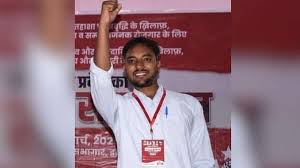
Police registered case against Dalit PhD student leader who demanded answers from the Central Government on Rafale deal, student organizations protest across the country Prayagraj (Allahabad), Uttar Pradesh — Uttar Pradesh Police has registered a case against Manish Kumar, a Dalit PhD scholar and student leader of Allahabad University, for raising questions on the Central Government on the Rafale fighter aircraft deal on social media. Manish Kumar, who is the Uttar Pradesh state president of the All India Students Association (AISA), posted on Facebook and raised questions about the Rafale deal and the alleged losses in the India-Pakistan conflict after the Pahalgam terror attack. 26 people were killed in this terrorist attack. In his post, Manish wrote, “Why has the Modi government not yet denied the reports claiming that India lost several Rafale jets during the conflict? Why has no transparency or clarity been given on this till now?” On May 14, the police filed an FIR against Manish under Section 353(2) of the Indian Penal Code (BNS) and Section 67 of the Information Technology (IT) Act, which deal with statements and online content that are deemed inflammatory, offensive or misleading. The police have not clearly stated the reason for filing the case under these sections, but activists and student organisations say such action threatens the right to debate and dissent in academic institutions. At present, Manish has not been arrested, but the legal process is ongoing. According to a report by Clarion India, several Hindutva groups are preparing to challenge the FIR in court, saying it violates the freedom of expression guaranteed by the Constitution. The AISA issued a statement condemning the FIR, saying, “The FIR against Comrade Manish is no exception. It is part of the ongoing crackdown on dissent across the country after the Pahalgam attack and Operation Sindoor. There have been over 3,000 arrests in Jammu and Kashmir alone.” The statement further said that 42 people were jailed for ‘pro-Pakistan’ posts in Assam, while 30 arrests and 40 FIRs have been registered in Uttar Pradesh so far. AISA said in its statement, “Students, artists and citizens are being targeted across the country. This is not democracy, but the rule of fear.” Courtesy : Rajan Chaudhary, Hindi Newsw
Caste-related abuses, dragged by hair, attempt to tear clothes — tragedy for Dalit couple in Bhadohi! Police register case against 6
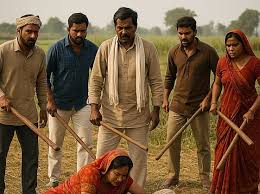
Brave attack on Dalit farmer and his wife in Anaich village of Bhadohi in dispute over cattle grazing, caste-related abuses and assault, police register case against 6 accused. Bhadohi (Uttar Pradesh): A Dalit farmer and his wife were brutally assaulted and caste-related abuses were hurled at them on Friday morning in Anaich village under Unjh police station area of Bhadohi district. Police gave this information on Sunday. The incident took place after a dispute over cattle entering the field and grazing the crop. Police have registered a case against six people in this matter. According to the police, the complainant Deepak Kumar Pasi is a landless Dalit farmer who cultivates urad (black lentil) on sharecropping basis on the land of a village landlord. Superintendent of Police (SP) Abhimanyu Mangalik said, “When Deepak complained about Rajaram Yadav’s cows and buffaloes entering his crop, Rajaram got angry. He abused Deepak using caste-related language and along with his associates beat him with sticks and iron rods.” According to the complaint, the attackers dragged Deepak’s wife Sumitra by her hair around the field, beat her and tried to tear her clothes. Deepak, Sumitra and other members of their family were injured in the attack. Deepak and Sumitra were admitted to the hospital due to serious injuries, while the other four members of the family were discharged after first aid. Based on Deepak’s complaint, the police have registered a case against Rajaram Yadav, Diljeet Yadav, Arvind Yadav, Rajendra Yadav, Parvati Devi and Tara Devi. The police is investigating the matter. Courtesy: Rajan Chaudhary, Hindi News
Congress launches national push for caste census, positions Telangana model as blueprint for social justice
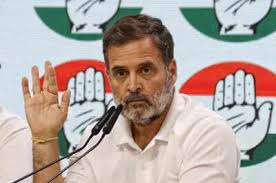
Hyderabad: In a strategic political move aimed at reshaping the national discourse on social justice and representation, the Congress on Monday brought together its top OBC leaders from across the country for a high-level meeting in Delhi. At the heart of the deliberations was a plan to launch a nationwide campaign highlighting Rahul Gandhi’s push for a caste census, with Telangana’s successful caste survey presented as a replicable model of inclusive governance. The Congress leadership intends to drive home the message that it was Rahul Gandhi who first made caste census a political priority—long before the Modi govt followed suit. The Socio-Economic, Education, Employment, Political, and Caste (SEEEPC) survey in Telangana, conducted after the Congress came to power in the state, is being positioned as proof of the party’s commitment to ‘jitni aabadi, utni bhagedari’—a slogan now central to the party’s national agenda for BCs, Dalits, minorities, and other marginalised communities. The leaders underscored that the Telangana caste survey was a direct result of Rahul Gandhi’s promise that wherever the Congress comes to power, a caste census would be implemented. The Congress leaders also plan to highlight how consistent pressure from Rahul Gandhi and the party forced the Modi govt to make a belated announcement about conducting a caste census alongside the delayed decadal population census. To amplify the issue nationally, the meeting decided to organise a massive public rally on the caste census, to be addressed by Rahul Gandhi. While most leaders favoured holding the rally in Delhi for maximum national impact, a section proposed Telangana as the ideal venue, given its successful implementation of the survey. A final decision on the location is pending. Among the prominent leaders from Telangana who participated were BC welfare minister Ponnam Prabhakar, Telangana Congress president B Mahesh Kumar Goud, Dalit rights activist Kancha Ilaiah, and party veteran V Hanumanth Rao. The Telangana delegation gave a powerpoint presentation on the survey’s planning and execution, detailing pre-survey consultations with stakeholders and legal experts, the model and methodology adopted, and the training of over one lakh govt staff, including teachers, to collect household data through a printed questionnaire. Ponnam told TOI that the meeting also agreed to raise public awareness about the Telangana state assembly’s passage of two bills enhancing BC reservations to 42% in education, employment, and local body elections. These bills were sent to the Centre for approval, but the Modi govt has not acted on them, he claimed. Mahesh Goud emphasised that the SEEEPC survey had provided granular data on the socio-economic and political status of every community in Telangana. “This proves that the Congress stands for real social justice. No govt can craft targeted welfare policies for the deprived without this kind of data. Telangana now has it—and we must take this model across India,” he said. Last Friday, Rahul Gandhi had directed party leaders to vigorously communicate the success of the Telangana caste survey in their respective states. He reiterated that the party’s commitment to a nationwide caste census is not an electoral gimmick, but a moral and constitutional obligation to uplift SCs, STs, OBCs, minorities, and even the underprivileged among forward castes. Monday’s meeting drew a powerful cross-section of party leadership, including former chief ministers, PCC presidents, ex-PCC chiefs, and senior AICC office-bearers. The event was organised by the Telangana Congress with the approval of Rahul Gandhi, according to party sources. Courtesy : TOI Note: This news is originally published on https://timesofindia.com/ and is for use by the non-military/non-commercial community, especially those in the human rights sector.
Dalit family thrashed, woman disrobed over cattle row in UP village; six booked

SP Abhimanyu Manglik said Rajaram Yadav got enraged when Deepak objected to his cattle grazing and, with others, hurled caste slurs and assaulted him with rods. BHADOHI: A Dalit farmer and his wife were beaten with sticks and iron rods and subjected to caste-based abuse in a village in UP, police on Sunday said. The incident took place Friday morning in Anaich village, under the Oonjh Police Station area, over grazing of cattle. Six people have been booked in the matter. According to police, the complainant was Deepak Kumar Pasi, a landless Dalit farmer, who cultivates urad (black gram) on a sharecropping basis in a local villager’s field. Deepak, police said, objected to another villager’s cattle grazing in his field when he, his wife, Sumitra, his elder brother, and his mother were assaulted. Superintendent of Police (SP) Abhimanyu Manglik said, “When Deepak complained about Rajaram Yadav’s cattle grazing in his field, Rajaram became enraged. He hurled at Deepak casteist slurs and with the help of others beat him with sticks and iron rods.” According to the complaint, the attackers dragged Sumitra by her hair across the field, beat her, and disrobed her. Deepak and Sumitra were admitted to a hospital due to the serious injuries, while the four other of his family members were discharged with little treatment. Based on Deepak’s complaint, police have booked Rajaram Yadav, Dilajeet Yadav, Arvind Yadav, Rajendra Yadav, Parvati Devi, and Tara Devi. Courtesy : TNIE Note: This news is originally published on https:/thenewindianexpress.com/ and is for use by the non-military/non-commercial community, especially those in the human rights sector.