
40-year-old Dalit manual scavenger falls into manhole in Tamil Nadu; dies

In January this year, the Supreme Court banned manual scavenging in all major cities, including Hyderabad, and warned criminal action against officers or contractors still engaging in it. A 40-year-old Dalit manual scavenger died on Sunday, June 8, after he accidentally slipped into a manhole while trying to clean a sewage in Tamil Nadu’s Thoothukudi district. The incident occurred behind the Tiruchendur Government Hospital. The deceased has been identified as Sudalaimani, who hailed from Tirunelveli district. Sudalaimani worked as a contract worker. On Sunday, he along with other sanitation workers, was deployed by the Tiruchendur municipality to clear a blockade in an underground drainage system located behind the hospital. While trying to enter the manhole, Sudalaimani slipped and fell inside. Although he was pulled up by the fire and rescue team and rushed to the government hospital, doctors pronounced him dead on arrival. A case under section 194 (accidental death) was registered. However, there is mention of death due to manual scavenging, The News Minute reported. Manual scavenging in India The Manmohan Singh-led UPA government introduced the Prohibition of Employment as Manual Scavengers and Their Rehabilitation Act, 2013, banning all forms of manual scavenging, including the handling of human excreta, in India. It is a cognizable and non-bailable offence. Lakdikapul Gated CommunitySt JosephsGermanten Hospital However, under Section 2(g) of the Act, a manual scavenger is defined as a person who manually cleans, carries, disposes of, or handles human excreta from insanitary latrines, open drains, or pits connected to such latrines, as well as from railway tracks or similar locations. Importantly, this definition does not cover those working in sewers or septic tanks and further states that workers who use protective equipment are not considered manual scavengers. In 2014, the Supreme Court ordered compensation of Rs 10 lakh to families of those who died while cleaning sewers and septic tanks. In January this year, the top court banned manual scavenging in all major cities – Chennai, Hyderabad, Delhi, Bengaluru, Kolkata and Mumbai – and warned criminal action against officers or contractors still engaging in it. Courtesy : TSD Note: This news is originally published on https:/thesiasatdaily.com/ and is for use by the non-military/non-commercial community, especially those in the human rights sector.
Dalit youth shot dead after dispute over ration distribution in Chhatarpur

Bhopal: A dalit youth was shot dead while his brother got injured after a routine ration distribution turned violent in Chhatarpur district of Madhya Pradesh. The incident took place at Bilhari village under Naugaon police station area on Sunday. Pankaj Prajapati, 19, was killed, and his brother Ashish was injured after gunfire erupted during a scuffle at the local ration shop. The incident triggered outrage in the region. The violence broke out around 10 am at the Gram Panchayat’s ration shop, which is being run from the house of local resident and advocate Praveen Pateria. Video footage of that incident surfaced on Monday. Eyewitnesses told police that Pankaj and Ashish Prajapati from Kumhartoli village got into an argument with Pateria over the non-distribution of ration for the past three months. The altercation intensified when the two brothers returned to the shop with their family members. It is alleged that Praveen Pateria, along with Naveen Pateria and Ramsevak Arajaria, began hurling abuses. The situation went out of control when Praveen climbed onto the roof and opened fire. One bullet struck Pankaj in the thigh, and although he was referred to Gwalior for treatment, he succumbed to his injuries en route. Ashish sustained an injury and was released after receiving primary care. Two videos of the incident went viral on Monday — one capturing the altercation, and the other showing Praveen firing a gun from the rooftop. The victim’s family gathered at the Naugaon hospital and refused to allow a postmortem, citing inaction by the police. They later blocked the road outside the tehsil office in protest. During the demonstration, a man attempted self-immolation by dousing himself in petrol, but was stopped in time by the police. Initially, police filed a case against only one accused, which intensified the villagers’ anger. After nearly five hours of protest, the police registered a case against all three — Praveen, Naveen, and Ramsevak — under charges including murder and relevant sections of the SC/ST (Prevention of Atrocities) Act, Arms Act, and the Bharatiya Nyaya Sanhita (BNS). The FIR includes charges under Sections 115(2), 109(1), 296 of the BNS, and Sections 3(1)(d), 3(1)(dh), 3(2)(v), 3(2)(va) of the SC/ST Act, along with Sections 25-27 of the Arms Act. Courtesy : TOI Note: This news is originally published on https:/timesofindia.com/ and is for use by the non-military/non-commercial community, especially those in the human rights sector.
‘Free of cost’: EC counters Rahul Gandhi’s voter roll demand; says polls details already provided
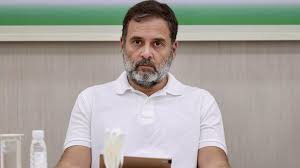
NEW DELHI: After repeated attacks on the Election Commission by Congress leader Rahul Gandhi, the chief electoral officer of Maharashtra on Monday advised the Leader of Opposition in the Lok Sabha to download the voter rolls of the Maharashtra legislative elections from its website — “free of cost”. Hours after Rahul asked the EC to specify the exact date by which it would furnish the voter rolls, the Commission said it maintains the practice of sharing the details with recognised political parties — first at the draft stage and again after finalisation. “Electoral Rolls are revised annually through a participatory exercise. During this annual exercise, the Electoral Rolls are shared, free of cost, with recognised political parties, including the INC — first at the draft stage and again after finalisation. A similar exercise was carried out in 2009, 2014, 2019, and 2024, and copies of such Electoral Rolls were then shared with the INC as well as other political parties,” the EC said in a statement. “A complete copy of the Electoral Roll used in the General Elections to the Legislative Assembly, Maharashtra–2024 is also available on the website for the public to freely download. Even for earlier electoral rolls, a copy of the finalised Electoral Rolls is retained by the District Election Officer. Under Rule 33 of the Registration of Electors Rules, 1960, any person, including the INC, can apply to the concerned District Election Officer and obtain a copy of the retained Electoral Rolls on payment of the prescribed fee. The CEO, Maharashtra, reiterated this statutory position on 22nd May 2025 to a Hon’ble Member of Parliament from the INC who sought a copy of electoral rolls that had already been provided to the INC during revisions in 2009, 2014, 2019, and 2024,” it added. Earlier, Rahul had asked the Election Commission to specify the exact date by which it would furnish the voter rolls of the Maharashtra and Haryana legislative elections. In a social media post on X, Rahul welcomed the EC’s decision and said, “Good first step taken by EC to hand over voter rolls.” “Can the EC please announce the exact date by which this data will be handed over in a digital, machine-readable format?” he asked. The Leader of Opposition in the Lok Sabha also shared a screenshot of a media report claiming that the EC had cleared the way for sharing electoral-roll data for Haryana and Maharashtra from 2009 to 2024, following an assurance it gave to the Delhi High Court earlier this year. This development came a day after Rahul, in an article, outlined a “step-by-step manipulation” of the 2024 Maharashtra Assembly elections. “My article shows how this happened, step by step: Step 1: Rig the panel for appointing the Election Commission. Step 2: Add fake voters to the roll.Step 3: Inflate voter turnout. Step 4: Target the bogus voting exactly where BJP needs to win.Step 5: Hide the evidence,” Gandhi wrote in a post on X. “It’s not hard to see why the BJP was so desperate in Maharashtra. But rigging is like match-fixing — the side that cheats might win the game, but damages institutions and destroys public faith in the result. All concerned Indians must see the evidence, judge for themselves, and demand answers,” Gandhi had said. “Because the match-fixing of Maharashtra will come to Bihar next, and then anywhere the BJP is losing,” the Leader of Opposition claimed. Later, the poll body issued a statement calling Rahul’s allegations of “match-fixing” in the electoral process “completely absurd.” “The entire nation is aware that each election process — including the preparation of electoral rolls, polling, and counting — is held by government staff, and that too in the presence of authorised representatives formally appointed by political parties/candidates from polling station up to constituency level,” the EC said. “Any misinformation being spread, by anyone, is not only a sign of disrespect towards the law, but also brings disrepute to the thousands of representatives appointed by their own political party and demotivates lakhs of election staff who work untiringly and transparently during elections,” it added. “After any unfavourable verdict by the voters, trying to defame the Election Commission by saying that it is compromised is completely absurd,” the statement by the ECI read. In the 2024 Assembly elections, the Mahayuti coalition of BJP, Shiv Sena, and NCP won 235 of the 288 seats, with BJP securing 132 alone. Shinde’s Sena secured 57 seats, and Ajit Pawar’s NCP got 41 seats. On the other hand, it was a disappointing show by the Maha Vikas Aghadi (MVA), which had hoped for a grand comeback. Uddhav’s Sena got 20 seats, Congress 16, and Sharad Pawar’s NCP secured 10 seats. Courtesy : TOI Note: This news is originally published on https:/timesofindia.com/ and is for use by the non-military/non-commercial community, especially those in the human rights sector.
‘Ink of dictatorship …’: Opposition slams 11 years of Modi govt; Cong releases report card for ‘detailed expose’
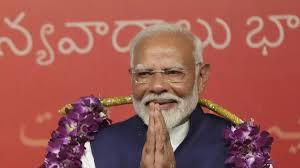
NEW DELHI: While the Bharatiya Janata Party (BJP) on Monday lauded 11 years of Prime Minister Narendra Modi’s government, describing it as a period marked by a “remarkable transformation” in Indian politics, the opposition parties sharply criticised the Centre shortcomings across multiple key areas, accusing it of failing to deliver on several important fronts. Leader of Opposition in Lok Sabha Rahul Gandhi latched on the Mumbai railway accident to attack the government and accused it of “selling dreams of 2047.” “11 years of Modi government = no accountability, no change, only propaganda. The government has stopped talking about 2025 and is now selling dreams of 2047. Who will see what the country is facing today?” Rahul wrote on X. He added in another post: “The 11 years of the Modi government have been full of humiliation, violence, and discrimination against Dalits, Adivasis, backward classes, and minorities. The conspiracy to institutionally make them second-class citizens and keep them away from the mainstream is continuing.” ‘Wasted 11 years rubbing the ink of dictatorship’ Congress president Mallikarjun Kharge claimed that the “Modi government has wasted the last 11 years rubbing the ink of dictatorship on every page of the Constitution.” “In the last 11 years, the Modi government has caused severe damage to Indian democracy, the economy, and the social fabric,” Kharge said. “BJP-RSS weakened every constitutional institution and attacked their autonomy—whether by stealing public opinion and toppling governments through the back door or by forcibly imposing one-party rule. During this period, the rights of the states were ignored and the federal structure was weakened. There have been continuous efforts to spread hatred, threats, and fear in society. Exploitation of Dalits, tribals, backward classes, minorities, and weaker sections has increased. The conspiracy to deprive them of reservation and equal rights continues. The unending violence in Manipur is the biggest proof of the BJP’s administrative failure,” he added. “BJP-RSS made the country’s GDP growth rate accustomed to 5–6%, compared to 8% on average during the UPA era. Instead of the promise of 2 crore jobs every year, crores of jobs have been lost. Due to inflation, public savings are at their lowest in 50 years, and economic inequality is at a 100-year high. Demonetisation, flawed GST implementation, unplanned lockdown, and the blow to the unorganised sector have ruined the future of crores of people. Make in India, Startup India, Stand Up India, Digital India, Namami Gange, and 100 Smart Cities—all have failed. Railways have been ruined. The Modi government is only cutting ribbons of infrastructure built by the Congress-UPA,” he said. ’11 Saal, Jhoothe Vikas ke Vaade’ Congress also presented a report card of PM Modi’s tenure by releasing two sets of documents to “expose the BJP’s broken promises.” At a press conference, AICC research department head Rajeev Gowda, who prepared the booklet, alleged, “This government is very good at fake news and propaganda. It is our job as the Opposition to let people know the grim reality.” The booklet ‘Ek Aur Baar Jumla Sarkar’, he said, focuses on promises made by the BJP in its 2024 manifesto. The second, ’11 Saal Jhoothe Vikas Ke Vaade’*, is a “detailed exposé” of the BJP’s hollow claims. “In the 11-Saal document, one of the first themes they (BJP) highlight is care for the poor and marginalised. They boast that 81 crore people are getting free food grains under PMGKAY. But the basic problem of hunger is a much larger crisis in India, which ranks 105th out of 127 countries on the World Hunger Index. “Its implications: malnutrition is affecting our children terribly. Stunting is at 35.5%, wasting at 19.3%, and underweight children at 32.1%,” Gowda said. Congress also accused PM Modi of failing to protect the country, claiming that “52 terrorist attacks” had occurred in the last year. “In one year of the Modi government: 52 terrorist attacks; 36 soldiers martyred; 53 soldiers injured; 56 civilians killed; 82 civilians injured,” the party stated. “Narendra Modi has failed in protecting the country,” it added. ‘People of the BJP are working against each other’ Meanwhile, Samajwadi Party chief Akhilesh Yadav also raised questions about the Centre’s performance in education, employment, and economic activity. He alleged a lack of coordination between the BJP-led central and Uttar Pradesh governments, citing their ongoing schemes. Speaking to reporters, Yadav said, “There’s a phrase in Hindi—‘Ek pe ek gyarah’ and the other ‘Nau Do Gyarah’. This might be their 11 years. If we add 11 years of the Central government and 9 years of the Uttar Pradesh government, that totals 20 years. The government must give an account of these 20 years. What have they done for the people? How far have we progressed in education? How successful have we been in providing employment or attracting investment?” “The people of Uttar Pradesh will analyse this more closely, since the Prime Minister himself is an MP from the state. There is no coordination between Delhi and Lucknow—it’s evident in the schemes. If even the adopted villages haven’t changed, it raises serious questions. The BJP leaders are working against each other. There are many unanswered questions on both achievements and failures. The people will evaluate. There is large-scale unemployment and inflation in Uttar Pradesh.” ‘This is Amrit Kaal’ In contrast, addressing a press conference in the national capital, BJP president JP Nadda said the past 11 years had seen a decisive shift from politics based on “appeasement” to one driven by “performance, accountability, and responsible governance.” “It should be written in golden letters that under the leadership of PM Shri Narendra Modi, a remarkable transformation has taken place over the past 11 years. PM Modi has reshaped Indian political culture. In the past, politics was driven by appeasement strategies aimed at preserving power. Now, under PM Modi, the focus is on performance, accountability, and responsible governance. This has become the new normal,” Nadda said. Calling the NDA a “people-led government,” Nadda claimed that the Modi administration had created a forward-looking, transparent, and futuristic model
Rahul seeks immediate action against culprits
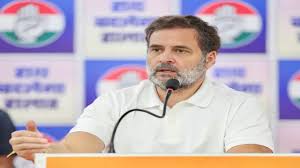
Bhopal: Lok Sabha LOP Rahul Gandhi on Monday said that the 11 years of Narendra Modi govt was full of humiliation, violence, and discrimination against Dalits. Rahul Gandhi was reacting to the death of 19-year-old Dalit youth Pankaj Prajapati in Bilahari, Chhattarpur district on Sunday. Taking to X, Rahul Gandhi said, “In Madhya Pradesh, 19-year-old Pankaj Prajapati was shot dead in public only because he, being a Dalit, demanded his share of rights. FIR was not registered, postmortem was postponed – because the guilty leader is sitting in the lap of power and the power belongs to Manuwadi and anti-Bahujan BJP.” He added, “The 11 years of Modi govt was full of humiliation, violence, and discrimination against Dalits, adivasis, backward classes, and minorities. The conspiracy to institutionally make them second-class citizens and keep them away from the mainstream is continuing. The culprits should be arrested immediately and given the harshest punishment. I stand with the Prajapati family and every Bahujan of the country. This is a fight for respect, justice, and equality, and we will win this fight at all costs.” State Congress president Jitu Patwari said that the Bilahari firing incident exposes the failure of law and order in MP. “This heinous crime has once again exposed the deteriorating law and order situation in Madhya Pradesh under the BJP govt,” he said. TNN Courtesy : TOI Note: This news is originally published on https:/timesofindia.com/ and is for use by the non-military/non-commercial community, especially those in the human rights sector.
Dalit youth shot dead at MP ration centre: Rahul Gandhi slams BJP govt, demands justice
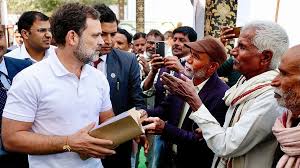
Chhatarpur, Jun 10: In a deeply disturbing incident that has sparked outrage, a 19-year-old Dalit youth, Pankaj Prajapati, was allegedly shot dead during a scuffle at a government-run ration distribution centre in Bilhari village, Chhatarpur district of Madhya Pradesh on Sunday. The youth, who had reportedly gone to collect his entitled ration, was caught in a heated argument with the local ration distributor, Ramsevak Arjaria. The verbal spat soon escalated as others joined in, and amid the chaos, Pankaj sustained a gunshot wound and collapsed on the spot. Though he was immediately rushed to a nearby hospital, doctors declared him brought dead. As the investigation unfolds, police have booked three individuals in connection with the incident — including local BJP worker Praveen Pateria, his brother Naveen Pateria, and the ration distributor, Ramsevak Arjaria. They have been charged under Sections 115(2), 109(1), and 296(5) of the Bharatiya Nyaya Sanhita (BNS). The exact identity of the shooter, however, remains unclear as the probe is still underway. Reacting sharply to the incident, Congress leader and newly appointed Lok Sabha Leader of the Opposition Rahul Gandhi took to social media platform X (formerly Twitter), holding the BJP-led Madhya Pradesh government responsible and accusing them of enabling caste-based violence. “Pankaj Prajapati was shot dead in broad daylight simply because he was a Dalit and had the courage to demand his rightful share,” said Gandhi in a scathing post. He used the occasion to highlight what he described as “11 years of humiliation, violence, and systemic discrimination” under the leadership of Prime Minister Narendra Modi. Demanding immediate arrest and strict punishment of the culprits, Rahul Gandhi extended his solidarity to the bereaved family, stating, “I stand with the Prajapati family and every Bahujan in this country. This is not just about one life — it is a fight for dignity, equality, and justice. And we will win this fight at any cost.” The tragic death of the young Dalit man has reignited conversations around caste-based discrimination and violence, particularly in rural parts of Madhya Pradesh. Authorities continue to investigate the matter even as pressure mounts from civil society and political circles for swift and impartial justice. Courtesy : Daijiworld Note: This news is originally published on https:/daijiworld.com/ and is for use by the non-military/non-commercial community, especially those in the human rights sector.
Beyond Binaries: The Kerala High Court Judgement On Transgender Parenthood
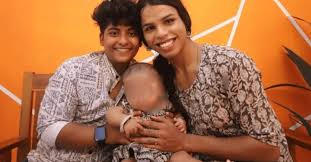
The Kerala High Court recently ruled in favour of a writ petition filed by a transgender couple seeking the issuance of a birth certificate for their child which mentioned them as “parent” rather than “mother” and “father”. n a recent historic and landmark judgement, one that could ripple beyond Kerala and can have a resounding impact on the institutional visibility of the queer community, the Kerala High Court recently ruled in favour of a writ petition filed by a transgender couple seeking the issuance of a birth certificate for their child which mentioned them as “parent” rather than “mother” and “father”. Stating the concerns raised as valid, the single Judge Bench of Ziyad Rahman A.A., J., held that the issuance of a certificate in the format as prescribed under the provisions contained in the Registration of Births and Deaths Act, 1969 (RBD Act) and Kerala Registration of Births and Deaths Rules, 1999, can cause severe difficulties to the child in life ahead. The Court also asserted that the laws that are not in line with societal changes need to evolve, and the Court must intervene to address the concerns of the concerned parties. Birth certificates being foundational documents determine access to a host of rights. Thus allowing the use of gender-neutral terminology, this ruling holds significant importance as it challenges one of the many structural ways the state invisiblises the queer community. The case in detail: challenging the binary institutional framework The couple, Ziya Paval (transgender woman) and Zahad (transgender man), had made waves back in 2023 when they became the first known transgender couple in India to have a biological child. Upon birth the Kozhikode Corporation issued a birth certificate that listed Zahad as the “mother (transgender)” and Ziya as the “father (transgender)”, ignoring and contradicting their self-identified genders. The couple felt distressed, stating that such a discrepancy could create serious problems in the life of the child—with regards to identification documents and school admission— since the biological mother of the child identified herself as a male under the Transgender Persons (Protection of Rights) Act, 2019, and was living as a male member of the society. Source: YourStory They approached the Kozhikode Corporation to issue a new birth certificate describing them simply as “parent” rather than mother and father or mentioning their gender. The Corporation dismissed their request, stating that the certificate was prescribed in accordance with the format contained in the RBD Act 1969 and the Kerala Registration of Births and Deaths Rules, 1999, which only accommodates the traditional binary nomenclature. The couple’s request was not entertained, as the corporation held that there were no other statutory provisions under which they could issue an alternative gender-neutral birth certificate. This decision led the couple to file the writ petition seeking a legal route to reinstate their fundamental rights of equality and the right to self-perceived gender identity as stated under the Transgender Persons (Protection of Rights) Act, 2019. This decision led the couple to file the writ petition seeking a legal route to reinstate their fundamental rights of equality and the right to self-perceived gender identity as stated under the Transgender Persons (Protection of Rights) Act, 2019. ‘Since scientifically there’s some contradiction in the fact that males give birth to a child, the petitioners requested the authorities to avoid the names of the father and mother but simply write ‘Parent’ to avoid further embarrassment which the third petitioner (child) would have to face during her lifetime, viz., school admission, Adhar Card, PAN Card, Passport and various other documents including job and connected matters,’ the transgender couple had explained in their petition. The apprehension of discrimination based on lived realities of transgender individuals The Kerala Court evoked the National Legal Services Authority v. Union of India (2014) judgement where the Supreme Court legally recognised the “third gender”/transgender persons and ruled that they are entitled to the fundamental rights and protection under the Constitution. Represented by Padma Lakshmi, Kerala’s first transgender lawyer argued that the rejection of their request violated their fundamental right to equality under Article 14 of the constitution. The Court maintained that the grievance raised by the couple can not be sidelined since the parental status of the couple was totally in contradiction to the life pursued by them presently. Thus, the confusions and prejudices, as perceived by the couple, in prospect were genuine and very likely to occur. Source: Rediff The Court also adjudicated that even though the child—the recipient of the birth certificate— was not a transgender person, his identity was linked and inseparable from that of the parents, who are a transgender couple, thus providing him equal protection under the Transgender Persons Act 2019. Legal precedent and the evolving nature of society Further, the court stated that the law cannot remain static, and the laws need to evolve in accordance with the changes in the society and lifestyle of people. This was consolidated by referencing the Supreme Court verdict in the Badshah v. Urmila Badshah Godse (2014) judgement, where the Supreme Court had addressed the importance of adopting different approaches in “social justice adjudication” and “social context adjudication” when interpreting laws. This meant that courts need to interpret the legal meaning reflecting the lived realities rather than being congested by the rigid and outdated categories. This statement signified the importance of purposive interpretation of existing laws to accommodate arrangements that usually expunge the queer community, thus allowing one to look beyond cis-heteronormativity. The Court also pointed out that the RBD Act was framed considering the binary concept of gender, and there was no concept of legal recognition of the third gender. The Court also pointed out that the RBD Act was framed considering the binary concept of gender, and there was no concept of legal recognition of the third gender. It held that necessary modifications could be made in appropriate cases where the interests of the transgender persons were involved. It also held that when statutory language does not account for the societal transformation,
Who is Riley Gaines, the swimmer at the center of a viral transgender sports clash involving Simone Biles?

The social media clash between Olympic gymnast Simone Biles and NCAA swimmer-turned-activist Riley Gaines over transgender inclusion in sports seems to be non-stop. The row began after Gaines criticized the Minnesota State High School League for disabling comments on a post celebrating Champlin Park High School’s girls’ softball team, which includes a transgender woman player. Gaines suggested the league was shielding the team from public scrutiny. In response, Simone Biles publicly condemned Gaines on X (formerly Twitter), calling her “truly sick” and a “straight up sore loser,” referring to Gaines’ tie for fifth place with transgender swimmer Lia Thomas at the 2022 NCAA Championships. Biles urged Gaines to stop “bullying” trans athletes and instead focus on creating inclusive spaces in sports—possibly through new competition categories. “One thing’s for sure,” Biles added, “no one in sports is safe with you around.” As the clash sparks wider attention, here’s a closer look at who Riley Gaines is, what drives her activism, and how she became one of the most polarizing figures in the sports and political landscape. Early life and education Born and raised in Nashville, Tennessee, Riley Gaines comes from a deeply athletic family. Her father, Brad Gaines, played football at Vanderbilt University, and her mother, Telisha Gaines, was a softball player at Donelson Christian Academy and Austin Peay State University. Riley attended Station Camp High School in Gallatin, where she quickly made a name for herself in competitive swimming, winning both the 100-yard butterfly and freestyle at the 2017 TISCA High School Swim & Dive Championship. She later attended the University of Kentucky, competing at the highest collegiate level in NCAA Division I swimming. While her exact degree remains unpublicized, her athletic record was formidable. Swimming career and turning point Gaines earned 12 NCAA All-American honors during her college swimming career. Her most notable—and controversial—finish came at the 2022 NCAA Women’s Championships, where she tied for fifth place in the 200-yard freestyle with transgender swimmer Lia Thomas. This moment proved pivotal. Gaines later said she felt “cheated, betrayed, and violated,” claiming it was unfair to compete against a transgender woman. She retired from competitive swimming shortly after and shifted her focus to activism. Media presence and activism Since leaving the pool, Gaines has emerged as a high-profile conservative commentator and vocal critic of transgender inclusion in women’s sports. In 2023, she launched the Gaines for Girls podcast, which tackles topics like gender identity and fairness in athletics. She has become a fixture on right-wing media platforms such as Fox News and OutKick. In August 2024, Gaines founded the Riley Gaines Center at the Leadership Institute, aimed at supporting legislation and advocacy to ban transgender women from competing in women’s sports categories. One of the most notable flashpoints in her public activism came in April 2023, when she was invited to speak at San Francisco State University by conservative student group Turning Point USA. Protests erupted, and Gaines claimed she was physically assaulted and had to be escorted out by police. Political ties and legislative efforts Gaines is deeply connected to conservative politics. She initially endorsed Florida Governor Ron DeSantis for president in 2024 but later switched her support to Donald Trump following an assassination attempt against him. She appeared alongside Trump in February 2025 as he signed an executive order banning transgender girls and women from participating in women’s sports. She has also lent her voice and image to campaigns for Republican figures like Rand Paul, Herschel Walker, Daniel Cameron, Kim Reynolds, and Tudor Dixon. She’s testified before multiple state legislatures, including those in Texas and Kansas, backing laws that restrict transgender participation in women’s sports. In May 2025, she became part of a lawsuit filed by Female Athletes United, arguing that transgender inclusion violates Title IX protections. Net worth and media earnings As of June 2025, there is no verified estimate of Riley Gaines’ net worth. However, speculative figures from unconfirmed sources place it between $500,000 and $2 million. Her income likely stems from media appearances, podcast hosting, speaking fees, and her role at the Leadership Institute. Courtesy : TOI Note: This news is originally published on https:/timesofindia.com/ and is for use by the non-military/non-commercial community, especially those in the human rights sector.
Ambedkar Nagar News: BJP Mandal Vice President along with his friend beat up a Dalit girl, case filed
Baskhari (Ambedkar Nagar). The officials of BJP organization, who talk about women’s rights, are busy tarnishing the image of the party. The latest case is from a village in Hanswar. Here, a Dalit girl returning from the field with her younger brother was beaten up by BJP’s Hanswar Mandal Vice President along with his friend. The girl got injured due to the beating. Advertisement: 0:13 This is being told to be the third case of Dalit harassment against the Mandal Vice President. Sandhya, who lives behind Hanswar market, had gone to the field with her younger brother on the evening of June 6. She was returning from the field in the evening. It is alleged that Anoop Yadav, resident of Takiya and BJP Mandal Vice President Sumit Tiwari, resident of Babhanhiya, started quarreling with the girl. They abused her, and when she protested, they beat her up. Due to this, the girl got injured. She was also threatened with death if she complained to anyone. Inspector in-charge Virendra Bahadur Singh said that both the accused were taken into custody and challaned for disturbing peace. The injured girl is being medically examined. Courtesy : Hindi News
Rahul’s claims absurd, bring into disrepute Cong’s own polling reps, say EC officials
NEW DELHI: Election Commission officials on Saturday slammed Leader of the Opposition Rahul Gandhi for accusing it of “fixing” Maharashtra polls, saying that the “absurd” allegations – already dismissed in a letter to the Congress dated Dec 24, 2024 – not only demotivate lakhs of govt staff who work untiringly to deliver transparent elections but also “bring into disrepute” party’s own representatives from the polling station to the constituency level. “Any misinformation being spread, by anyone, is a sign of disrespect towards the law, under which polls are held. After an unfavourable verdict by the voters, trying to defame the Election Commission by saying that it is compromised, is completely absurd,” an EC functionary told TOI.EC also found it strange that the LoP, instead of directly writing to the EC, has thus far chosen to air his grievances at various other forums – party meetings, Lok Sabha, even interactions on foreign soil and, now, an Op-Ed article. “If he is aggrieved, why is he shying from write to EC directly or seeking a meeting?” asked the functionary mentioned above. On Rahul faulting the appointment process of CEC and election commissioners, officials underlined that it was only under Modi govt that the law was amended to allow LoP a say in the appointments. “All CECs and election commissioners under previous Cong govts were appointed at the sole will of the Executive,” said an officer. Stating that Rahul, in his Op-ED article, has only harped on the allegations denied by the poll panel in December 2024, with additional clarifications published in TOI on April 22, EC officials rejected his charge of extraordinary surge in last two hours. It emphasised that over 6.4 crore electors in Maharashtra, who reached the polling station from 7 am to 6 pm on November 20, 2024, had voted. Thus, about 58 lakh votes were polled per hour on an average. “Going by these average trends, nearly 116 lakh voters could have voted in the last two hours. Therefore, casting of 65 lakh votes by electors in two hours is much below the average hourly voting trends,” an EC functionary pointed out. As regards the anomalies alleged by Rahul in roll revision, the functionary underlined that over 27,000 booth level agents (BLAs) appointed by the Congress were actively involved at every step of the summary revision of Maharashtra rolls ahead of the state polls, including raising claims and objections against the draft roll. Interestingly, while electors increased by 8.1% in Maharashtra since the last assembly poll, the corresponding rise was 13.4% for Jharkhand and 16.2% for Telangana. Congress won both Jharkhand (in alliance with JMM) and Telangana polls. Even after the final roll was published with a total 9.7 crore electors and its copies shared with all political parties including the Congress – allowing them to file two-point appeals, if dissatisfied – only 89 appeals were filed before the first appellate authority (district magistrate) and one before the second (chief electoral officer). “It is thus amply clear that there was no grievance of Congress or any other political party before the conduct of Maharashtra polls,” said the EC functionary. As regards allegations of irregularities in polling, EC officials shared that polling agents of all candidates and parties, including Congress, were present at the polling stations. “Congress’s nominated candidates or their authorized agents did not raise any substantiated allegations with regard to any kind of abnormal voting at the time of scrutiny before the returning officer and the election observers,” said an officer. “It appears that all these facts brought to the Congress notice by EC in its letter dated December 24, 2024, have completely been ignored,” said an EC functionary. Courtesy : TOI Note: This news is originally published on https:/timesofindia.com/ and is for use by the non-military/non-commercial community, especially those in the human rights sector.