
Punjab’s inter-caste marriage horror: Dalit family evicted from village, house vandalised and looted
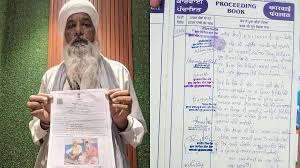
After an inter-caste marriage in Muktsar’s Eena Kheda village, a Dalit family had to leave the village, house vandalised and looted. Police arrested three people. Bathinda: A Dalit family of Eena Kheda village in Muktsar district of Punjab has been living outside the village for the past one month after their son’s inter-caste marriage. The family alleges that the house was vandalised and looted in their absence, which is being done by the girl’s relatives. 22-year-old Surinder Singh, who belongs to the Dalit community, married an 18-year-old Jat Sikh girl from his own village on July 7. The marriage took place at a gurdwara in Sri Ganganagar (Rajasthan) and both of them also received a legal marriage certificate. But this marriage spread tension in the village, as earlier the Panchayat had passed a resolution opposing ‘marriages within the same village’. Surinder’s father Malkit Singh, an Amritdhari Granthi, and his uncle Gurmeet Singh, a painter by profession, said they had to leave the village and take shelter with relatives after their son and daughter-in-law eloped and got married. They allege that a few days later, a group led by the girl’s family broke into their house, broke things and stole things. When they returned home, they were abused with casteist slurs. The family has filed a police complaint and demanded justice. “The village panchayat may oppose our son’s return, but that does not mean we have to suffer humiliation and violence,” Malkit Singh said. Police action Malout DSP Iqbal Singh Sandhu said action was taken after receiving a complaint on Friday. Police arrested three people, including the girl’s father and brother, under Section 126/170 of the BNSS as a precautionary measure. “We are taking steps to prevent the situation from worsening and turning into a full-blown caste conflict,” he said. This incident has come to light after the case when on July 29, the mother of a youth was also attacked in Ghal Kalan village of Moga district because her son had married a girl from the same village. In that case, the Punjab State Women Commission had taken cognizance and an FIR was registered against many accused including the village sarpanch. Opposition to marriages in the same village increased Panchayats of many villages in Punjab have passed resolutions in recent months opposing marriages taking place in the same village. Panchayats justify this by citing social tradition and pressure on the community. However, rights activists and legal experts are calling these resolutions unconstitutional and discriminatory. Rajan Chaudhary Courtesy : Hindi News
Give affidavit within 7 days or apologise: CEC to Rahul
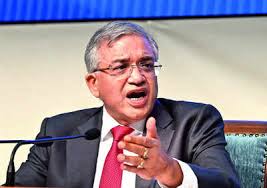
NEW DELHI: Chief Election Commissioner Gyanesh Kumar on Sunday set a seven-day deadline for leader of opposition in LS Rahul Gandhi to either submit a declaration under oath along with proof of electoral roll irregularities alleged by him, or apologise to the nation as his ‘vote theft’ claims are rendered baseless and invalid. “There is no third option,” said a combative Kumar while addressing his first press conference as CEC. He was flanked by election commissioners S S Sandhu and Vivek Joshi. “If one does not point out errors within these timelines and also fails to file an election petition within 45 days to challenge the result, but still tries to mislead the voters with false allegations of ‘vote chori’, is this not a subversion of the Constitution?” asked Kumar. “A lie, if repeated several times, does not become a truth.” “The voter knows the motive behind such baseless allegations,” the CEC said while accusing parties of firing from the Election Commission’s shoulder. Explaining the procedure for pointing out errors in electoral rolls, Chief election commissioner (CEC) Gyanesh Kumar said an elector of an assembly constituency (AC) or booth level agents (BLAs) appointed by parties can file claims and objections on the draft voter list with the sub-divisional magistrate (SDM), a state govt employee who is also the electoral registration officer (ERO), or use the two-point appellate process to get corrections made after the final electoral roll is published. ‘We don’t discriminate between parties’: CEC “EC does not discriminate between parties. It simply discharges its duties as enshrined in the Constitution,” he added. Kumar reiterated that EC, as required by Article 326 of the Constitution, is committed to enrolling every Indian citizen who is 18 years and above, as voters. “The commission stands fearlessly like a rock with every voter, be he/she poor or rich, elderly or young, or from any caste or religion,” said Kumar. Elaborating on the poll body’s insistence on a signed declaration from Rahul, but not using the same yardstick with BJP MP Anurag Thakur after he made similar allegations, the CEC said EC believes in graded response. He further explained that any elector from an AC has the right to complain about exclusion; similarly, BLA can also complain under oath. “But if the complainant is not a voter in that AC, and is making serious allegations about exclusion of 1.5 lakh voters while calling EC a ‘chor’, it warrants an escalated response as per Rule 20(3) (b), which requires ERO to administer an oath to the complainant as a witness,” he said. “EC cannot act based on a PPT presentation with wrong facts,” added Kumar. Though Thakur had alleged fake voters in constituencies, including Rae Bareli and Wayanad, during 2024 LS polls, he did not cast any aspersions on EC. Drawing a distinction between voter list errors and actual voting, Kumar said while there may be electors in the voters’ list who are dead, permanently shifted or enrolled at multiple places, the commission chose not to delete them by simply using technology and instead required statutory forms to be filled. With SIR, starting with Bihar, such entries can be identified and weeded out after due house-to-house verification. “But when it comes to voting, one person can only cast one vote,” he stressed. On demand for machinereadable rolls, the CEC said a machine-readable voter list is different from a searchable voter list. The latter, he said, can be searched with EPIC number. As regards machinereadable roll, Supreme Court had in 2019 prohibited it from being shared, citing voters’ privacy concerns. Courtesy : TOI Note: This news is originally published on https:/timesofindia.com/bha and is used purely for non-profit/non-commercial purposes, especially human rights.
Oppn show of strength in Bihar as allies join Rahul yatra
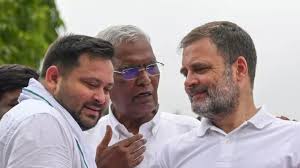
SASARAM: INDIA bloc members on Sunday joined Rahul Gandhi at the launch of ‘Voter Adhikar Yatra’ here against SIR of electoral rolls and “vote theft” in Bihar, with the occasion also becoming a show of strength for the “mahagathbandhan” in the state that is set to go to polls later this year, reports Ambika Pandit. RJD, CPM, CPI(M-L) Liberation, CPI and Vikassheel Insaan Party chiefs along with those from Congress came together setting off the 16-day yatra from Sasaram. The ground, brimming with a large crowd of euphoric supporters and party workers, was dotted by RJD and Congress flags. CPI(ML) Liberation general secretary Dipankar Bhattacharya, CPM’s Subashini Ali, CPI’s P Sandosh Kumar, and VIP’s Mukesh Sahani spoke vociferously against SIR and its impact on marginalised voters. Lalu Prasad stole the show with his trademark style. Despite his frail health, he launched blistering attacks on his rivals, leaving the audience in fits of laughter. “Lagal, lagal jhulaniya ke dhakka, balam Kalkata chala (We will push the opponent so hard that they will go far away),” he said. Tejashwi issued a warning to PM Modi and home minister Amit Shah, saying, “We will not let anyone snatch democracy from Bihar.” Courtesy : TOI Note: This news is originally published on https:/timesofindia.com/bha and is used purely for non-profit/non-commercial purposes, especially human rights.
Rahul’s yatra launch becomes INDIA bloc’s show of strength in Bihar
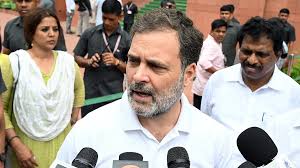
Sasaram: INDIA bloc leaders on Sunday joined Rahul Gandhi at the launch of the ‘Voter Adhikar Yatra’ here against the special intensive revision (SIR) of electoral rolls and “vote theft” in Bihar, with the occasion also becoming a show of strength for the “mahagathbandhan” in the state that is set to go to polls later this year. RJD, CPM, CPI(M-L) Liberation, CPI and Vikassheel Insaan Party (VIP) leaders along with those from Congress came together setting off the 16-day yatra from the BIADA ground in Sasaram. The horizon of the ground, brimming with a large crowd of euphoric supporters and party workers, was dotted by RJD and Congress flags. Amid loud sloganeering against “vote chori” and in the presence of RJD chief Lalu Prasad Yadav and leader of opposition in the Bihar assembly Tejashwi Yadav, Rahul asked the crowd “apka mood kaisa hai” and after the audience settled to listen, he launched a scathing attack on BJP and RSS, accusing them of trying to “wipe-out” the Constitution by stealing elections. He said the campaign against vote theft and SIR was “a fight to save the Constitution”. CPI(ML) Liberation general secretary Dipankar Bhattacharya, CPI(M)’s Subashini Ali and CPI’s P Sandosh Kumar and VIP’s Mukesh Sahani spoke vociferously against SIR and its impact on marignalised voters. Referring to SIR, Rahul alleged it was the latest conspiracy to “steal” the Bihar elections by deleting and adding voters but people and INDIA bloc will not let the Modi govt do that. He said the country now knows what EC is doing and Congress showed how it is carrying out this “theft”, as he highlighted alleged irregularities the Maharashtra polls and referred to Congress’s study of the Mahadevapura assembly segment in Karnataka’s Bengaluru Central LS constituency. Lalu Prasad stole the show with his earthy humour and trademark style during the launch of the yatra. The 77-year-old, despite frail health, launched blistering attacks on his rivals, leaving the audience in fits of laughter. “Lagal, lagal jhulaniya ke dhakka, balam Kalkata chala (We will push the opponent so hard that they will go far away),” he said, drawing loud cheers from the crowd. The line, a regular feature of his campaign speeches, once again brought his supporters to life. Accusing the BJP of being involved in “vote thefts,” Lalu urged the masses not to let BJP to power. “Throw out the vote thieves from power and help us win elections in the state,” he said, calling upon people to remain united. He added that uprooting the NDA govt was essential to “strengthen democracy.” Tejashwi issued a warning to PM Narendra Modi and home minister Amit Shah, saying, “We will not let anyone snatch democracy from Bihar — referred to as land that is seen to be the mother of democracy”. He described SIR as not “vote chori” but “vote dacoity”. Courtesy : TOI Note: This news is originally published on https:/timesofindia.com/bha and is used purely for non-profit/non-commercial purposes, especially human rights.
Blocked Drains, Denied Dignity: Dalit Family in UP Faces Caste-Based Discrimination

The root of the problem lies in a discriminatory practice: while drainage water from upper-caste households flows freely into the village pond, the drain serving the Dalit community is deliberately blocked, forcing the filth to accumulate near their homes. Firozabad- Despite constitutional safeguards and stringent laws like the SC/ST (Prevention of Atrocities) Act, 1989, caste-based discrimination continues to manifest in insidious ways. For Dr. Pardeep Kumar, a PhD holder in Mathematics from Dayalbagh University, Agra, the battle is not just against systemic neglect but also against the silent atrocities inflicted by caste prejudice in his own village. A resident of Gadora village in Firozabad district, Dr. Kumar, who is specially abled, lives with his family in conditions worse than urban slums, surrounded by stagnant, sewage-filled water that floods their home during rains. The root of the problem lies in a discriminatory practice: while drainage water from upper-caste households flows freely into the village pond, the drain serving the Dalit community is deliberately blocked, forcing the filth to accumulate near their homes. In Gadora village, Firozabad district, drainage water from upper-caste households flows freely into the village pond. However, the drain serving the Dalit community is intentionally blocked, forcing sewage to accumulate near Dr. Kumar’s home. During monsoons, the stagnant water floods his house, mixing with waste and buffalo dung dumped by an upper-caste neighbor. The filth has turned the area into a breeding ground for mosquitoes, leading to severe health consequences. Dr. Kumar’s mother and niece recently suffered from dengue, a direct result of the unhygienic conditions. Despite multiple complaints to local authorities and the Uttar Pradesh government, no action has been taken. “This is not just about dirty water, it’s about dignity,” says Dr. Kumar. “Even with education and awareness, we are denied basic rights because of our caste.” Academicians and activists highlight that while violent caste crimes grab headlines, systemic neglect—such as denying proper drainage—is an equally brutal form of oppression. “These silent atrocities reinforce untouchability,” says Dr. Krishan Kumar, a scholar on Dalit issues. “Authorities must recognize such discrimination and act under the SC/ST Act.” The case also exposes the failure of schemes like Swachh Bharat Mission, which promise sanitation for all but remain inaccessible to marginalized communities. Local officials claim the matter is “under review,” but villagers allege caste bias is delaying justice. Legal experts stress that such cases warrant immediate intervention under anti-atrocity laws. As Dr. Kumar’s family waits for justice, their plight indicates a harsh truth: caste still dictates who gets dignity, and who is denied even the most basic rights. — ✍️ Dr. Krishan Kumar Courtesy : The Mooknayak Note: This news is originally published on https:/themooknayak.com/bha and is used purely for non-profit/non-commercial purposes, especially human rights.
Clean City, Dirty Truth: The Invisible Suffering of Bhopal’s Sanitation Workers Behind the 7-Star Swachh Bharat Glory
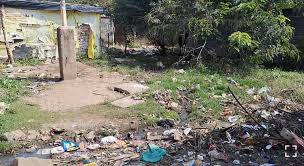
Sanitation workers employed under the Bhopal Municipal Corporation, who risk their lives and health in one of the most physically demanding public roles, are being paid on minimum wages and on temporary basis. Bhopal- On 17th July 2025, Bhopal , the capital of Madhya Pradesh was declared the second cleanest city in India in the Swachh Survekshan 2024-25 rankings, in the category of municipalities with populations above 10 lakhs. The city also achieved the status of a 7-Star Garbage Free City and was certified as a Water Plus City under the Swachh Bharat Mission. But while the city celebrates these achievements, the lives of those who made this success possible remain trapped in neglect, poverty, and exploitation. Behind every clean street and every garbage-free locality are thousands of sanitation workers, most of whom belong to historically oppressed castes, working in dangerous, dehumanising conditions. Despite being essential to the city’s public health and image, their rights are being exploited by the very Municipal corporation and are treated as disposable. The wife of the sanitation worker doing kitchen chores. The wife of the sanitation worker doing kitchen chores. Pragya Sharma/The Mooknayak “We are human too, but nobody seems to care about our condition.” This was the quiet pain in the voice of a sanitation worker I met in Sargam Basti, a slum in Bhopal that many safai workers, call home. He did not want to be named, but his words carried the weight of generations of injustice. “The Bhopal Municipal Corporation pays me ₹8,200 per month. I have three small children who go to school. My wife manages the household. We need milk, sometimes medicine, school fees . How are we supposed to manage everything with this amount?” There was no anger in his voice. Just exhaustion. The exhaustion of someone who rises at 4 a.m. every day to clean the city yet cannot afford to fix the leaking roof of his jhuggi. He added, “Sometimes I wonder , even if my children study hard and get educated, will their life be any different from mine? But then I think, maybe their fate can change. That hope is what gets me out of bed every morning.” Sanitation workers, many of whom are hired on contract, are denied basic facilities , no health insurance, no safety gear, no permanent employment status, and no social security. In another home nearby, a woman shared her family’s daily struggles: “My husband works in the municipal corporation as a sanitation worker. He earns approx. ₹10,000 a month, but that’s not enough to run the house. I have to go to two or three houses every day to wash dishes and clean floors. We both work from morning to evening, yet we still can’t make ends meet.” “We’re always in debt. Sometimes it’s school fees, sometimes medicine, sometimes basic groceries. There’s always something.” These are not isolated stories. There are hundreds of families like theirs, living in slum areas (jhuggi-bastis)around Bhopal. Ironically, they clean the city every day but live in places with no proper sanitation, surrounded by garbage, open drains, and the very unhygienic conditions they are hired to remove from public view. Their suffering is undocumented and unacknowledged. The house of a sanitation worker from inside. The house of a sanitation worker from inside.Pragya Sharma/The Mooknayak Workers Who Clean the City but Are Denied a Life of Dignity The Swachh Bharat Mission, despite its visible outcomes in city like Bhopal, has failed to protect the rights and welfare of the very people implementing it on the ground. Sanitation workers, many of whom are hired on contract, are denied basic facilities , no health insurance, no safety gear, no permanent employment status, and no social security. The BMC continues to employ them at minimum wages, sometimes through third-party contractors. These are not just labour issues , they are structural caste injustices. The fact that the majority of these workers come from Dalit communities is not a coincidence. It reflects a deeply rooted caste division of labour, where certain communities are still forced into degrading work with no safety net, no voice, and no visibility. The roof of the workers house they called home. The roof of the workers house they called home. Pragya Sharma/The Mooknayak Wages Below Legal Minimums The injustice becomes even more stark when we compare their earnings to the Collector Rate, the minimum wage set by the District Collector for daily wage laborers in Madhya Pradesh. These rates, revised in April 2025, are meant to act as a benchmark for fair wages. According to the revised rates: Skilled workers: ₹570.93 per day or ₹12,294/month Highly skilled workers: ₹633.43 per day or ₹13,919/month Despite this, sanitation workers employed under the Bhopal Municipal Corporation, who risk their lives and health in one of the most physically demanding public roles, are being paid on minimum wages and on temporary basis. According to the Urban Administration and Development Department and the provisions under the Municipal Corporation and Municipal Council Acts, there is a clear mention of providing special financial allowances to sanitation workers. However, in practice, no such special allowance is given by the municipal corporations. This is despite the fact that sanitation workers carry out the most hazardous and lowest-paid work, putting their health and future at risk to fulfill the responsibility of keeping cities clean. This isn’t just a legal failure. It’s a moral one. Many of these workers are kept on temporary contracts without any form of health insurance, paid leave, or job security. Several suffer from occupational illnesses like skin diseases, respiratory issues, tuberculosis, and injuries from unsafe waste-handling practices. But because they remain undocumented or informal workers, no health surveys or welfare policies reach them. Ironically, while the Swachh Bharat Mission mandates regular audits and rankings of cleanliness infrastructure, there is no nationwide mechanism to track the conditions or health of sanitation workers. Their labour remains essential, but invisible. The fact that the majority of these workers come from Dalit communities is
Over 30 Organisations Condemn Arrest of Dalit Activist Advocate Rajat Kalsan
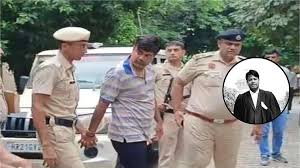
Over 30 organisations and prominent individuals denounce the arrest of Dalit lawyer Rajat Kalsan, allege unlawful detention, torture, and fabricated charges. New Delhi – More than 30 student groups, civil society organisations, and prominent individuals have issued a joint statement condemning the arrest of Dalit activist and lawyer Adv. Rajat Kalsan, who was allegedly abducted by men in plain clothes from the Auto Market in Hisar on July 30 without being shown an arrest warrant or legal documents. According to the statement, the arrest was linked to a case concerning the murder of a woman in Budana village, Hisar. Rajat Kalsan, who had been representing a survivor of caste atrocity and sexual assault, was accused of circulating a video alleging corruption in the investigation. Although he secured interim bail in the matter, he was subsequently booked in another case for allegedly obstructing police officials. The statement alleges that while in custody, Kalsan was denied access to his lawyers and family, subjected to torture, and faced casteist abuse. It also claims that his house had been raided multiple times in the past month, his movements kept under surveillance for a year, and his social media account blocked by the Haryana police. Kalsan has been booked under several provisions of the Bharatiya Nyaya Sanhita (BNS), including Sections 121(1), 132, 196, 62, 49, 115, 126, 353(1), 353(2), 356(2), 352, 351(3), and 3.5. The signatories note that some of these offences are non-bailable and carry punishments ranging from two to ten years of imprisonment, fines, or both. They allege that these charges have been “strategically framed” to ensure his prolonged incarceration. Long-standing Activism The statement highlights Kalsan’s role in pursuing cases of caste atrocities in Haryana, including the Mirchpur violence, Hisar gang rape, Daulatpur assault, and Bhatla social boycott incidents. He also took part in mobilisations against the 2018 dilution of the SC/ST (Prevention of Atrocities) Act, which, the groups argue, made Dalits and marginalised communities more vulnerable to caste violence. According to the signatories, his consistent work for Dalit rights has made him a target of state repression. Broader Context of Repression Drawing parallels with the Bhima Koregaon arrests and detentions during anti-CAA protests, the statement alleges that Kalsan’s arrest reflects a broader pattern of silencing voices that challenge caste domination, communalism, and authoritarianism. “This is not an isolated instance, but part of a growing trend of state repression against those who challenge communal hatred, caste oppression, and fascist rule,” the statement reads. Demand for Immediate Release The joint statement calls for the withdrawal of all charges against Adv. Rajat Kalsan and urges solidarity with others incarcerated for “resisting injustice.” Signatories Among the 35 organisations endorsing the statement are the All India Students Association (AISA), JNU Students’ Union, Students Federation of India (SFI), Birsa Ambedkar Phule Students’ Association (BAPSA), and Fraternity Movement. Notable individual signatories include Prof. Achin Vanaik, Adv. Sudha Bharadwaj, Dr. Anand Teltumbde, and Women’s rights activist Kalyani Menon Sen. Courtesy : Tne Mooknayak Note: This news is originally published on https:/themooknayak.com/bha and is used purely for non-profit/non-commercial purposes, especially human rights.
Bombay High Court orders SIT probe into custodial death of Dalit law student
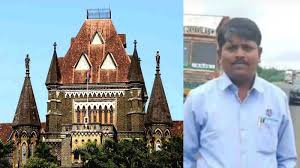
The Aurangabad Bench of the Bombay High Court dissolves earlier inquiry panel; says constitutional rights “prima facie violated” in Somnath Suryawanshi case. In the custodial death case of Somnath Suryawanshi, the Aurangabad Bench of the Bombay High Court has directed the Maharashtra Director General of Police (DGP) to set up a Special Investigation Team (SIT) within one week. The court orally passed the order on August 14, 2025. A Division Bench comprising Justice Vibha Kankanwadi and Justice Sanjay A. Deshmukh observed that the Inquiry Committee earlier appointed by the Maharashtra Government will be dissolved, and all documents related to the 35-year-old Dalit law student Suryawanshi’s custodial death will now be handed over to the new SIT. Magisterial probe holds cops responsible for custodial death of Parbhani protester “If the petitioner, Vijayabai Venkata Suryawanshi, has any objections to the members of the SIT, she may register them before the court,” the Bench observed. Advocate Hitendra Gandhi representing Ms. Suryawanshi, told The Hindu, “The High Court’s direction to constitute a SIT in the custodial death case of Somnath Suryawanshi is a significant step forward, we hope the SIT will conduct a fair and thorough investigation to deliver justice that has long been denied. This order restores faith that the truth cannot be buried, and accountability will have to follow.” On July 4, 2025, the court directed the Parbhani police to register a First Information Report (FIR) within a week, noting prima facie evidence of custodial torture and violation of fundamental rights. The Bench passed the interim order in response to a petition filed by Mr. Suryawanshi’s 61-year-old mother, Vijayabai Vyankat Suryawanshi. The petitioner alleged that her son was subjected to brutal torture during his illegal detention following a protest in Parbhani on December 11, 2024, and that authorities subsequently attempted to cover up his death as a cardiac incident. Mr. Suryawanshi, a final-year law student and a member of a Scheduled Caste family from Latur, was reportedly arrested while filming a protest against the desecration of a replica of the Constitution near a statue of Dr. B.R. Ambedkar. The petition alleged that despite the peaceful nature of the demonstration, he and several others were picked up during an indiscriminate police crackdown, subjected to custodial assault, and denied timely medical attention. On July 30, 2025, the Supreme Court dismissed a petition filed by the Maharashtra government challenging a Bombay High Court order directing the police to register a FIR. Mr. Suryawanshi, a final-year law student and a member of a Scheduled Caste family from Latur, was reportedly arrested while filming a protest against the desecration of a replica of the Constitution near a statue of Dr. B.R. Ambedkar. The petition alleged that despite the peaceful nature of the demonstration, he and several others were picked up during an indiscriminate police crackdown, subjected to custodial assault, and denied timely medical attention. The petition stated, “In the videos, it could be seen that Somnath was carrying the book of the Constitution of India and recording the incident in the protest. His arrest was illegal and then he was subjected to inhuman atrocities. He as well as other persons were produced before the Magistrate on 12.12.2024. The others were also subjected to brutality and their injuries were visible, swollen, however, they were afraid to speak to the Magistrate due to the threats those were given.” It further said that the Court had granted police custody of two days. “Further brutal assault was given to Somnath. His situation worsened when he was again produced before the Magistrate on 14.12.2024. Thereafter, his custody was transferred to Magisterial custody. Around 6.49 a.m. suddenly Somnath died on 15.12.2024, while in judicial custody,” the petition read. It was further submitted that police claimed Mr. Suryawanshi had complained of chest pain prior to his death. The petitioner also alleged that on reaching Parbhani, she was taken by Police Officer Ashok Ghorband to the Inspector General of Police, where she was informed that Somnath’s brothers could be offered police jobs and was advised to perform the last rites in Latur instead of Parbhani. She further claimed she was offered ₹50 lakh to refrain from filing a complaint. She declined, demanding that her son’s death be acknowledged as custodial murder and not classified as death by natural causes. The court noted that the post-mortem, conducted by a seven-member medical team, had recorded 24 visible injuries and concluded that the cause of death was “shock following multiple injuries”. A judicial inquiry under Section 196 of the Bhartiya Nagrik Suraksha Sanhita (BNSS) also reportedly found gross human rights violations and directly linked the death to custodial assault. “This Court cannot remain a mute spectator when constitutional rights of a person in custody are prima facie violated,” the Bench observed, criticising the State for failing to register a cognisable offence despite substantial evidence from the post-mortem, inquest report, and the magistrate’s findings. The Bench further questioned the delay by the CID in acting on the findings and expressed concern over the credibility of the internal inquiry, which bypassed the autopsy doctors and instead sought a second opinion from J.J. Hospital, Mumbai. The court directed that an FIR be registered based on the petitioner’s complaint dated December 18, 2024, and that the investigation be handed over to a Deputy Superintendent of Police. The prior order restraining CID officer D.B. Talpe from submitting a final report has been vacated following this direction. Purnima Sah Courtesy : The Hindu Note: This news is originally published on https:/thehindu.com/bha and is used purely for non-profit/non-commercial purposes, especially human rights.
‘Chori chori, chupke chupke’: Rahul Gandhi shares new video as part of ‘vote theft’ campaign; watch
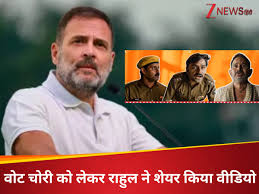
NEW DELHI: A fresh jibe added to Rahul Gandhi’s string of attacks on the Election Commission, as the Congress MP and Lok Sabha LoP on Saturday used a parody clip from the Hindi film “Laapataa Ladies” to target the poll body.Sharing a one-minute video inspired by Kiran Rao’s Laapataa Ladies, Rahul posted on X: “Chori chori, chupke chupke… Ab aur nahi, jantaa jaag gayi hai” (Now, no more, the public has woken up). — RahulGandhi (@RahulGandhi) In the video, a man walks into a police station to report a theft. While the policeman lists usual stolen items, the man responds that he has fallen victim to “vote theft.” Meanwhile, the Congress party has urged people to join its “Vote Chori se Azaadi” campaign in support of Rahul’s allegations against the Election Commission and BJP. Rahul also announced the launch of “VoterAdhikarYatra” from August 17 in Bihar, calling it a direct fight against vote theft. “From August 17, with #VoterAdhikarYatra, we are launching a direct fight against vote theft from the soil of Bihar,” he said on X. This comes amid INDIA bloc protests and Rahul’s repeated charge that elections are being manipulated. On August 7, he alleged: “Elections are choreographed. Our internal polling told us we would win 16 seats in Karnataka; we won nine. We then focused on seven unexpected losses. We chose one Lok Sabha, and our team decided we could only focus on one Vidhan Sabha (seat). So we focused on Mahadevapur. Here is the broad math. All data is 2024 data from the Election Commission. Total votes polled in the Lok Sabha were 6.26 lakh. The BJP won with 6,58,915, securing a margin of 32,707. But then we look at Mahadevapura, where Congress polls 1,15,586 and BJP polls 2,29,632. Congress wins all Vidhan Sabhas but this one. This seat wins them the election.” He also said on August 7 that “Elections are choreographed and EC colluding with the BJP.” Courtesy : TOI Note: This news is originally published on https:/timesofindia.com/bha and is used purely for non-profit/non-commercial purposes, especially human rights.
Independence Day: Rahul, Kharge absent from Red Fort event; BJP questions no-show
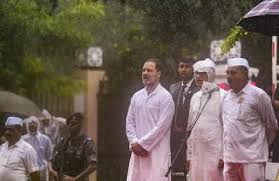
NEW DELHI: The Bharatiya Janata Party (BJP) criticised Rahul Gandhi and Mallikarjun Kharge over their absence from the official Independence Day celebration at the Red Fort on Friday. Rahul Gandhi is the leader of the opposition in the Lok Sabha, and Mallikarjun Kharge holds the same post in the Rajya Sabha — both official positions whose holders mostly attend the event. “Rahul Gandhi, leader of opposition, was missing from the Independence Day celebrations at the Red Fort. At the Congress HQ event, he appeared visibly disoriented. The nation deserves to know — is he well?” wrote BJP I-T cell chief Amit Malviya on X. He further said, “And why did he choose to skip the official ceremony? For someone in his position, such absence sends a poor message about his commitment to national occasions.” — amitmalviya (@amitmalviya) There has been no official statement from the Congress party over the two leaders not attending the Red Fort ceremony. Earlier, Rahul Gandhi greeted the nation on X and wrote: “Happy Independence Day to all countrymen. This freedom, achieved by the sacrifice of great freedom fighters, is a pledge to build such an India — where justice is based on truth and equality, and there is respect and brotherhood in every heart. It is our duty to protect the pride and honour of this precious heritage. Jai Hind, Jai Bharat.” Congress President Mallikarjun Kharge also posted on social media and said, “Heartiest greetings and congratulations to all countrymen on Independence Day. We pay our humble tribute to the countless great freedom fighters who made invaluable contributions to the national movement. “Today is an important day because we, the people of India, are now fighting for our rights, protection of constitutional institutions, social justice, economic empowerment, and brotherhood. Let us take this struggle forward together and pledge to protect the interests of every Indian. Jai Hind,” he further wrote. Courtesy : TOI Note: This news is originally published on https:/timesofindia.com/bha and is used purely for non-profit/non-commercial purposes, especially human rights.