
Varansi News: Will Rahul Gandhi explode hydrogen bomb in Varanasi, on the same day Modi will donate his mother’s pind in Gaya ji
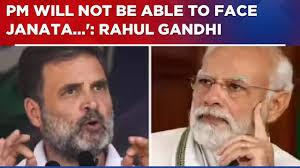
Rahul Gandhi News: Modi is going to donate his mother’s pind in Gaya ji, Bihar. On the same day Rahul Gandhi is coming to explode hydrogen bomb in Prime Minister Modi’s parliamentary constituency Varanasi. There is a lot of discussion about this. Abhishek Kumar Jha, Varanasi: Rahul Gandhi’s statement on hydrogen bomb is being discussed a lot. In a media byte, opposition leader Rahul Gandhi had targeted the entire election process and talked about hydrogen bomb. With the data of a Lok Sabha constituency of Karnataka, Rahul Gandhi had said that if there was no theft in the elections, the government would not have been formed. Meanwhile, amid the sound of Bihar elections, PM Narendra Modi will donate his mother’s pind in Gaya ji According to the information received by NBT Online on the same day, Rahul Gandhi will explode hydrogen bomb in PM’s parliamentary constituency. 17 September is when PM Modi will donate his mother’s pind. At the same time, Rahul Gandhi will be raising questions about Modi’s election process in his parliamentary constituency. Screening of 1600 houses, more than 500 names on one house NBT Online has received information that Rahul Gandhi will hold a press conference with a list of more than 1600 houses. In this press conference, Rahul Gandhi will be accompanied by Ajay Rai, the state president of Congress and the candidate of the Grand Alliance in the Lok Sabha. In the press conference, Rahul Gandhi will release a list of about 1600 houses, where the number of voters will be unusually high. This will also include such houses or residential addresses, where there will be more than 500 voters. Not only this, the addresses of PM Modi’s old parliamentary office are also included. NBT Online has received information that Rahul Gandhi will reach Varanasi late in the evening of the 16th for this press conference. PM will be offering Pind Daan to Maa Heera Ben in Gaya Ji However, there is no official information yet as to what time PM Modi will reach Gaya Ji and offer Pind Daan to Maa Heera Ben, but on the same day, opposition leader Rahul Gandhi can start a campaign to damage PM Modi’s Bihar election campaign. According to the information, PM Modi is going to Gaya ji for the Pind Daan of his mother Hira Ben. After this news, AI generated videos have also been circulated as a taunt from the social media handles of opposition parties, especially Congress. Politics has started on the Pind Daan program of a son for his mother. Edited by: Vivek Mishra About the author Vivek Mishra is a senior digital content producer at Navbharat Times. His focus remains on the news of Uttar Pradesh and Uttarakhand. Apart from this, he keeps writing opinion and political analysis. Birthplace is Barabanki and work place has been many cities of three states. Started career in print media in 2013. Has worked on sports for one and a half years in Madhya Pradesh Jansandesh. Has worked in hyper local in Patrika, Hindustan, Amar Ujala. Apart from this, he has worked for one and a half years in Dainik Jagran Noida in Delhi, and one year in Noida-Ghaziabad. Has been working with Navbharat Times since December 2020. Courtesy : Hindi News
BRS secretly aligning with BJP, says TPCC chief
Hyderabad: Telangana Congress president and MLC B Mahesh Kumar Goud on Saturday accused BRS working president KT Rama Rao of attacking Rahul Gandhi merely to appease BJP leaders in Delhi, aiming to shield his party’s top brass from a CBI probe in the Kaleshwaram lift irrigation project case. “KTR doesn’t have the stature to question Rahul Gandhi. How can he involve AICC leaders in the turncoat MLAs issue when the Speaker decides the matter? BRS’s secret deal with the BJP is clear after they refused to support the INDIA bloc’s vice-presidential candidate, Justice B Sudershan Reddy, indirectly backing the NDA candidate,” Mahesh Goud alleged. He recalled that K Kavitha, daughter of former CM K Chandrasekhar Rao, had accused KTR and T Harish Rao of planning to merge BRS with BJP, blaming them for corruption in the Kaleshwaram project. “KTR should clarify these allegations. His meetings with PM Modi in the past cannot be used to question Congress MLAs meeting CM Revanth for development. Telangana’s people now see BRS’s psychological merger with the BJP,” he said. He further accused BJP Union ministers, G Kishan Reddy and Bandi Sanjay, of staying silent after demanding a CBI probe, suspecting them of shielding the KCR family. “The CBI hasn’t even begun the investigation. Is a formal BRS-BJP merger in the works?” he questioned. On notices issued to party leader Kota Neelima, he alleged the Election Commission acted under BJP pressure and promised legal action to support her. Courtesy : TOI Note: This news is originally published on https:/timesofindia.com/bha and is used purely for non-profit/non-commercial purposes, especially human rights
‘Good he is going’: Rahul Gandhi welcomes PM Modi’s upcoming Manipur visit; brings focus back on ‘vote chori’
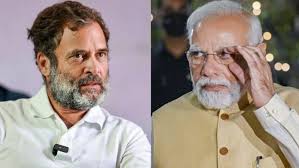
NEW DELHI: Congress leader Rahul Gandhi on Friday welcomed Prime Minister Narendra Modi’s upcoming visit to Manipur. However, he added that the larger concern in the country was “vote chori” which still needs to be addressed. Speaking to reporters, Gandhi said: “The issue in Manipur has been ongoing for a long time. It is good that he is going there now. But the main issue in the country is that of ‘Vote Chori’.” The leader of opposition alleged that the election mandates in Haryana and Maharashtra had been “stolen,” adding that people across the country were calling the prime minister a “vote chor.” — ANI (@ANI) Prime Minister Modi is scheduled to visit both Mizoram and Manipur on September 13. This will be his first trip to Manipur since ethnic clashes broke out between the Kuki and Meitei communities in May 2023. The violence, which has claimed more than 260 lives, displaced thousands of families, and destroyed homes and businesses. It led to the imposition of President’s Rule in the state in February this year following the resignation of chief minister N Biren Singh. According to officials, PM Modi will inaugurate and launch development projects worth Rs 8,500 crore during the visit. His itinerary includes programmes in Churachandpur and Imphal, symbolic centres of the Kuki-Zo and Meitei communities. He is expected to meet displaced families and announce rehabilitation packages. Analysts say the dual engagement is being seen as an attempt to strike a balance between the two communities and signal neutrality in the ongoing humanitarian and political crisis. The prime minister is also scheduled to address a gathering at Kangla Fort in Imphal. His visit comes amid continuing uncertainty in the state, where thousands of displaced families are still struggling to rebuild their lives. The Mizoram Chief Minister’s Office confirmed on X the Prime Minister’s visit. It said the state was “fully prepared to receive the Hon’ble Prime Minister” and that the people were “eagerly looking forward” to it. Courtesy : TOI Note: This news is originally published on https:/timesofindia.com/bha and is used purely for non-profit/non-commercial purposes, especially human rights
‘Rising From the Dust’: Luminous short stories about Dalit lives on both sides of the Bengal border

The anthology contains 12 stories curated and translated by Aruna Chakravarti. Aruna Chakravarti’s exceptional skills as both a translator and a writer of meticulously researched historical fiction are widely acknowledged and evidenced by her much-acclaimed oeuvre so far. This time, however, she has mobilised her art of translation to cast some light on the plight of the Dalits of Bengal, more specifically, of Dalit women, who confront a three-pronged dilemma: the stigma of their caste, gender-based injustice, and ubiquitous poverty. The result is Rising From the Dust: Dalit Stories from Bengal. Many Bengals For this anthology Chakravarti has translated 12 stories spread across a century, including works by both contemporary Dalit writers and those written about the community by non-Dalit writers who wrote sensitively about the condition of Dalit women. Apart from the sheer enjoyment of reading these stories, which I shall deal with later, I must mention here that for me, this book, at many levels, is an eye-opener and offers multiple layers of pleasure, like a matryoshka doll, encasing within itself a variety of linked worlds of personal and literary associations and significance. I come to it not just as a reader but as an expatriate Bangladeshi-Italian, and an anglophone writer and translator myself. There is also my background of being born in undivided Pakistan, and growing up in both East and West Pakistan, which enables me to relate to the stories where Bangladesh or East Bengal is mentioned. Also, to read in this anthology the works of some of the contemporary writers of Bengali Dalit literature, like Manoranjan Byapari, Manohar Mouli Biswas or Nakul Malik, all new to me and all born in East Pakistan, gives me a special insight into, at least, the geographic if not the economic or social circumstances of their remembered world. This is true also of the great Mahasweta Devi, many of whose stories about Adivasis I helped translate into Italian, and had the pleasure of meeting her during a film festival in Rome, in 2010, where the cinematic version of one of her stories was being screened as Gangor by the Italian director Italo Spinelli. Each story in this collection has a powerful impact, representing as it does a specific professional group of Dalits. The diversity here is tremendous: there are fisherfolk and boatmen, farmers and snake-charmers, doms and sweepers, tanners and drum-makers, basket-weavers, and rickshaw pullers. Even dung-cake-makers. Here, Mothos and Duleys, Bedeys and Vaishnavs, and poor Muslim farmers all exist side by side. Women at the centre There are strong female protagonists: Sarama in Manoranjan Byapari’s “The Fortress,” who makes her body her last battlefield. (“She is a pot brimming over with poison.”). In Chintay in Bimalendu Haldar’s “Salt,” we see the spirit of resistance among fisherwomen united against exploitation. (“Men…scorn us as weak and helpless. Let’s show them that we…can do everything they can. We are four women together.”) In Mahasweta Devi’s “Nalini’s Story,” we witness heartwarming female solidarity as Nalini’s friend, Mukundo’s mother, constantly stands up for Nalini against her greedy family. “You’re here to grab the old woman’s house and sell it … But it won’t be that easy. We’re with her.”) In Manohar Mouli Biswas’s “Shonkhomala,” the eponymous character, a rare, educated woman of the dom community, inspires her husband to help them escape their constraining circumstances. “Let us cast off the surname that brings us only shame and dishonour.” In Shankini, the beautiful and fiery leader of the band of bedeys, snake charmers in Prafulla Kumar Roy’s “Snake Maiden,” presents a version of the career-driven woman’s dilemma confronting domestic bliss versus ambition. (It wasn’t as though she herself was not lured by the prospect of putting down roots. “But I love my life as a bedeyni even more. The danger and excitement of sailing over tumultuous waters…We have been nomads for generations.”) Shefali, the wife in Nakul Mallik’s “Illegal Immigrant”, runs all the way from the slums of Bongaon to the Petrapole border office looking for her immigrant husband, and, when stopped from crossing the border, she rages at the officer. (“What passport? … I’m going to my husband. How dare you try to stop me?”) Larani in Anil Ghorai’s “Insect Festival” questions societal and religious rules. (“All these decrees are given out by evil men…in the name of the gods.”) And the pathetic old recluse Shora is seen as a fiendish creature in Tarasankar Bandyopadhyay’s psychologically complex story “The Witch,” about the battle of self-worth against public perception. (“There was no doubt in her mind now. What people said was right. She possessed a demoniac power…a power that destroyed everyone she loved.”) And even when the protagonists are frail or passive, their stories by dint of their narrative power, have the strength to move readers to tears, as in Saratchandra Chattopadhyay’s “Abhagi’s Heaven” where a dignified cremation with full funeral rites is craved by the lowborn protagonist as her most dazzling goal; or Mahasweta Devi’s “The True-Life story of Ulli-Bulli’s Mother” where a skilful use of dual points of view effectively reveals the mind of an unhinged old woman living in her past, searching for her lost twin daughters; orTarasankar Bandyopadhyay’s “Raikamal”, where a young Vaishnavi Kamal quietly struggles to embody the purity of spiritual love while suppressing her physical instincts. As to the faith of the other characters, whether the gods actually hear their fervent prayers or not, we see the wives of fishermen near the Sunderbans go to shrines of Bonbibi, the lady guardian spirit of the forest venerated by both Hindus and Muslims;,while the snake charmers bow to both Allah and Bishohari, another name for Manasha, the snake goddess. Some characters give offerings at Ma Sheetala’s temple, others at Kalighat. Translation and details Within a single volume one journeys through diverse settings and locations: refugee camps and slums, forests, fields of wild reeds, bulrushes, tussock grass, teeming bazars, urban alleys, streets and train stations, salt fens and muddy banks of rivers, bamboo groves, fish warehouses, paddy fields, dusty stretches
Dalit boy stripped and beaten up ‘for visiting friend’s home’ in TN

The 17-year-old boy and the girl had been friends since studying together in Choolaimedu. CHENNAI: The Secretariat Colony police on Friday arrested two men under the SC/ST (Prevention of Atrocities) Act for allegedly stripping, beating and abusing a Class 12 boy who visited a Class 10 girl at her house. The accused were identified as Saravanan, said to be a former BJP functionary, and his brother Logesh. Police said the girl’s mother has also lodged a complaint under the Pocso Act, alleging the boy abused her daughter, though no case has yet been registered. The 17-year-old boy and the girl had been friends since studying together in Choolaimedu. Though later in different schools, they remained in touch via social media. On Friday, when the boy visited her at Secretariat Colony, the girl’s relatives confined him in a room before calling Saravanan. He and Logesh allegedly assaulted the boy before releasing him. Courtesy : TNIE Note: This news is originally published on https:/thenewindianexpress.com/bha and is used purely for non-profit/non-commercial purposes, especially human rights
Traffic police orders beggars, transgenders off intersections
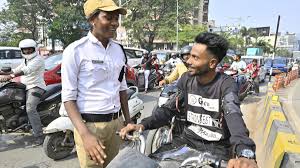
New Delhi: Delhi Traffic Police have directed all personnel to ensure there are no disruptions in the smooth flow of traffic due to the presence of beggars, transgender persons, vagabonds or hawkers at intersections. Sources said the move comes in response to increasing observations that gatherings of such individuals at busy traffic points significantly impede vehicular movement and contribute to congestion. Police sources said field staff have been instructed to take stringent measures and ensure these groups aren’t allowed to loiter, gather or carry out any activity that may hinder traffic flow or cause inconvenience to commuters. Additionally, personnel have been asked to meticulously document the locations where such gatherings frequently occur. This information then needs to be compiled and forwarded to the area’s social welfare nodal officer and Delhi govt’s social welfare department. To ensure effective implementation of the directives, deputy commissioners of police and officers in charge of traffic ranges have been tasked with monitoring compliance. A senior police officer said the objective is to maintain smooth traffic flow, enhance public safety, and uphold law and order across the city’s busy road networks. He said there have been instances when beggars and hawkers suddenly appear at traffic signals and do not move even when the light turns green, causing traffic to stop and raising the risk of accidents. He added police have received numerous complaints from the public about this issue. Police said on June 28, five Bangladeshi nationals engaged in begging were found presenting themselves as transgender persons in northwest Delhi. Police said they admitted to adopting these disguises and undergoing minor surgeries and hormonal treatments to alter their sex to evade detection. Courtesy : TOI Note: This news is originally published on https:/timesofindia.com/bha and is used purely for non-profit/non-commercial purposes, especially human rights
Team USA transgender cyclist Chelsea Wolfe calls Charlie Kirk a Nazi and cheers his killing during Donald Trump ally’s Q&A in Utah

Chelsea Wolfe, a transgender BMX freestyle rider who once joined Team USA as an alternate at the Tokyo Olympics in 2021, shocked many this week with social media posts about Charlie Kirk’s death. Kirk, the 31-year-old conservative activist and ally of Donald Trump, was shot while answering questions at Utah Valley University in Orem, Utah, on Wednesday, September 10, 2025. He was hit by one bullet in the neck and died later at Timpanogos Regional Hospital. Wolfe reacted online with celebratory messages that drew strong backlash. Team USA cyclist Chelsea Wolfe shares shocking Instagram posts after Charlie Kirk killing On Thursday, September 11, 2025, Chelsea Wolfe posted several messages on Instagram, celebrating Charlie Kirk’s murder. One story showed a USA Today news headline with a sticker from the children’s cartoon Dora the Explorer saying, “We did it!” In another, Wolfe shared a smiling selfie with thumbs up and wrote: “Being a Nazi is completely optional btw. He didn’t have to do all that, but he did and now he’s dead.” Wolfe added that Kirk lived in a way that made the world “better” after his death. Team USA transgender cyclist Chelsea Wolfe calls Charlie Kirk a Nazi and cheers his killing She continued with more comments calling Kirk a “Nazi” and “fascist.” Wolfe reposted another message that accused Kirk of spreading racism, homophobia, transphobia, xenophobia, and anti-immigrant hate daily. Many people, including sports icons, reacted with anger. Tennis legend Martina Navratilova described Wolfe’s comments as “sickening.” USA Cycling quickly released a statement clarifying that Wolfe has not been part of the national team since 2023. The group stressed that her comments are her personal opinions and do not represent the organization or its values. Charlie Kirk’s assassination sends shockwaves across the country Charlie Kirk was killed while hosting a Q&A session during his American Comeback Tour event at Utah Valley University. The gunshot came from a rooftop about 200 yards away while Kirk was speaking to students about mass shootings. — cartlanddavid (@cartlanddavid) He collapsed on stage, and security rushed him to Timpanogos Regional Hospital, where doctors confirmed his death soon after. Police detained two people briefly but later released them. By Friday, September 12, 2025, authorities confirmed that one suspect was in custody. President Donald Trump, who himself survived being shot in the ear at a campaign rally in Pennsylvania in July 2024, expressed sadness over Charlie Kirk’s killing, calling him “legendary” and saying the country had lost “a great fighter.” Charlie Kirk leaves behind his wife, Erika Frantzve, and their two young children, a three-year-old daughter and a 16-month-old son. The family had celebrated their fourth wedding anniversary in May 2025. Courtesy : TOI Note: This news is originally published on https:/timesofindia.com/bha and is used purely for non-profit/non-commercial purposes, especially human rights
54 Rajputs tied and brutally attacked:Women gangraped, victims buried alive; Congress never regained Bihar Chief Ministership after the massacre

In the second episode of Dainik Bhaskar’s election series ‘Massacre’, today is the story of the Dalelchak Baghaura massacre, after which the Congress, which ruled Bihar for 40 years, could never make its CM again… One night of May 29, 1987. Location – Aurangabad district of Bihar. The same Aurangabad where the country’s only west-facing Sun Temple is located. A crowd of about 500 people was advancing, chanting the slogan ‘MCC Zindabad’. They had guns, axes, sickles, and cans of kerosene oil in their hands. After a while, everyone stopped at one place. They talked for a bit. Then half of them started moving towards Baghaura village and the other half towards Dalelchak. Both villages are one kilometer apart. Here, the Rajputs had dominance. Gaya Singh of Baghaura was the head clerk in the forest department. He had the only concrete house in the village. He had built it with passion. The eyes would stop at the gateway from afar. Around 8 PM, suddenly some noise was heard. When he opened the door and looked, a crowd of 200-300 people was standing in front. Gaya Singh hastily closed the door. They hadn’t even taken two steps when the crowd pushed and broke the door. First, the men of the house were dragged out and lined up. Meanwhile, two boys tried to escape unnoticed, but the attackers fired shots. Both fell right there. The attacker went near them. Their breaths hadn’t completely stopped yet. He struck a machete on the neck. Then, wiping his sweat, he said- ‘What are you looking at… go and bring their women.’ 20-25 attackers entered and started throwing women and children outside. Everyone was screaming- ‘Don’t kill us. Let us go. We beg you.’ One attacker spoke up- ‘#&#$% these people show a lot of arrogance. They make our women work. Dishonor their women in front of them. Only then will the revenge be complete.’ The attackers pounced on the women and girls. They tore their clothes. They began to rape them. After a while, a middle-aged man spoke up- ‘Enough. Now kill them all.’ The attackers dragged the women into the veranda. They placed their necks on the cot and pressed hard. One attacker picked up an axe and one by one beheaded the five women. Blood spread all over the veranda. The attacker said- ‘Dispose of them all.’ 8-10 people started digging a pit in front of the house with shovels. In a short time, the pit was ready. The attackers put the women’s bodies in the pit and filled it with soil. ‘Now tie these #@$%*& and take them to the banyan tree. The villagers should also see what happens when they clash with us.’ Hearing this, the attackers tied the hands and feet of Gaya Singh and his family members. They dragged them to the banyan tree. There was a large banyan tree at the beginning of the village. 30 May 1987, Dalelchak Baghaura village. Rajputs were killed by tying them to this banyan tree. Source: Library 30 May 1987, Dalelchak Baghaura village. Rajputs were killed by tying them to this banyan tree. Source: Library By now, there was chaos in the village. The attackers were dragging women, men, and children from Rajput families one by one to the banyan tree. Many people were jumping from the roofs and running towards the fields. The attackers were continuously firing. Some people were killed on the spot. A 40-year-old man was returning home with a tractor. Seeing the attackers, he screamed, ‘Oh uncle, we are not Rajputs. We work at their house. We are Harijans, Harijans.’ #$%@#$ Lying… saying this, a middle-aged man struck him on the back with an axe. Two attackers tied him to the seat of the tractor. Then they poured a can of kerosene oil on the tractor and set it on fire. Within minutes, the driver died in agony. Meanwhile, in the nearby village of Dalelchak, Kamla Kunwar had just returned from her in-laws’ house a few hours earlier. Her father was preparing for a feast. Guests had already arrived. Suddenly, the dogs started barking. Kamla said to her sister Lalita- ‘Go and see who is outside?’ Lalita peeked and saw hundreds of armed men advancing towards the village. She screamed- ‘Papa, Mummy, everyone run, the Naxalites have come.’ Both sisters, their parents, and other relatives started running towards the fields. Just then, the people next door stopped them. They said- ‘You people are not in any danger. Just hide in the house.’ Within minutes, the crowd stormed into the village. They entered the Rajputs’ houses and started a massacre. Kamla and Lalita hid in a pile of hay behind the house. The rest of the family and relatives were caught. A two-year-old child was sleeping on the bed. He started crying upon seeing the crowd. The attacker shouted – ‘Kill this bastard first.’ As soon as he heard this, a middle-aged man picked up the child and threw him on the threshold. His head split open. The attacker grabbed the child by the hair and lifted him. Another struck the child’s neck with an axe. The child’s head remained in the attacker’s hand, and the body fell to the ground. 30 May 1987, the children of the Dalelchak Baghaura massacre whose entire families were killed in the massacre. Source: Library 30 May 1987, the children of the Dalelchak Baghaura massacre whose entire families were killed in the massacre. Source: Library One pointed towards the women and said, ‘Violate their honor and finish them off.’ The attackers did just that. After raping, they beheaded the women and girls. Kamla’s father could not bear to see this. He charged at the attackers, cursing them, but they caught him. Two attackers held his legs and two held his arms. A 20-year-old boy struck him in the stomach with an axe. He screamed. Then the attacker shoved the butt of a gun into his mouth. Within minutes, he was writhing in
Opinion: We must talk about Savarna women’s complicity in caste violence

Dominant caste women are not a monolithic entity. Their engagement with caste may not be uniform. Some might be victims of it. Some are complicit in it. Some resist only the misogyny. But true liberation is possible only if they dismantle both caste and patriarchy. There appears to be a marked shift in the caste discourse after the brutal murder of Kavin Selvaganesh, a 27-year-old Dalit IT professional. Onus was placed on Subhashini, and suspicions were raised about her culpability. Her video, defending her parents’ innocence, garnered severe criticism. And she was chastised for her appeals to “drop” the issue, whitewashing the crime and failing to take a stance against the perpetrators. Many also questioned the Dravida Munnetra Kazhagam-led (DMK) state government’s ineffectual anti-caste politics and its general apathy towards Dalits. People shared their anxieties regarding the increase in violent caste pride among intermediate castes. On July 27, Kavin was brutally hacked to death in Tirunelveli for his relationship with Subhashini, a woman from the dominant Maravar caste. Kavin was an IT employee based in Chennai and was killed in broad daylight at KTC Nagar in Tirunelveli. Both victim and perpetrator The criticism of Subhashini deviated from how public narratives largely frame dominant caste women as victims of so-called honour killings. The murders of Dalit individuals who are in intercaste relationships are often referred to as ‘honour’ killings. The caste-supremacist view dictates that such relationships are a threat to the maanam (honour) of dominant communities. In a caste-punitive society, murder is wielded as a means to keep intercaste relationships in check and uphold caste endogamy. In many caste killings, the loss of life has been that of a Dalit man, either hacked to death in broad daylight like Shankar in 2016 or found dead on deserted railway tracks like Ilavarasan in 2013. Each of them was punished for being in love with dominant caste women. In 2016, V Shankar, a Dalit man, and his wife Kowsalya, who belongs to the Kallar caste, were brutally attacked in Tiruppur district. While Shankar succumbed to his injuries on the spot, Kowsalya survived despite her wounds. Kowsalya held firm and testified against her family, seeking justice for her husband. Events after the 2013 caste killing of Dalit youth Illavarasan in Dharmapuri district played out differently. Following the suicide of her father, Divya, Illavarasan’s partner, returned home to her mother. Divya is from the Vanniyar community. She succumbed to the pressures of a caste society a few days before Ilavarasan’s death. Kowsalya is now a fierce anti-caste activist, while Divya leads a quiet life, staying out of the limelight. However, both women were considered victims. The reason why Subhashini was held accountable by social media users is the changing perspectives of women’s roles in Tamil caste society. Dominant caste women are no longer regarded solely as victims but as active benefactors of the system. Several critiques even flipped the derogatory narrative of naadaga kaadhal (fake love), using it to describe how Subhashini cost Kavin his life. The term naadaga kaadhal was first used by the Pattali Makkal Katchi (PMK), a Vanniyar-majority party, to falsely accuse Dalit men of ‘luring’ dominant caste women. Vanniyars are categorised as Most Backward Class (MBC). There is no denying that caste, like patriarchy, oppresses all women. Both systems rob women of their autonomy, agency and personhood and fundamentally treat them as mere birthing vessels meant to further male and caste lineage. The practice of endogamous monogamy was institutionalised in order to ensure the idea of ‘purity’ in bloodlines. As a result, a woman’s freedom was curbed, and restrictions were placed to control who she can love and marry. Despite the knowledge that both patriarchy and casteism thrive on women’s subjugation, dominant caste women’s critique and opposition have been uneven. While women from all quarters put up a fierce fight to dismantle patriarchy, the struggle against casteism is largely led by Dalit women. Many dominant caste women content themselves with tepid criticisms. This is because the hierarchical and gradational nature of caste offers them considerable privilege. A privileged caste position provides women with social and cultural capital that their gender identity does not. Caste privilege helps them navigate patriarchal hurdles and even reap some extra benefits along the way. Challenging portrayals of Savarana women in cinema Mari Selvaraj’s portrayal of dominant caste women in his films offers insightful examples of how such caste privilege works. In director Mari Selvaraj’s Maamannan (2023), Rathnavel’s (Fahadh Faasil) wife Jyothi (Raveena Ravi) is docile and subservient. She, quite literally, has a silent presence in the film, as she has no dialogues. Despite being confined to her house for the most part, she ultimately bags a seat at the Legislative Assembly, clearly a fruit of her dominant caste status. One can argue that she stands in the election only at her husband’s bidding and is a puppet in his hands, calling attention to her oppression as a woman. Nevertheless, it is undeniable that her path to power is relatively easier and not as arduous as that of the film’s eponymous Dalit protagonist (Vadivelu). His life and dignity and that of his family’s are perpetually at stake. A reading like this might go against the grain of what the director believes in and wants to convey. Mari, in many of his interviews, maintains the conviction that women are hapless victims and that their victimisation by patriarchy is worse than the caste marginalisation faced by a man. Regardless of his position, due to the realistic tenor of his films, the caste privilege of dominant caste women is apparent in the upper hand they have over Dalit men. Take, for instance, Jo (Anandhi) from Pariyerum Perumal (2018). When the dominant caste Jo falls in love with Pariyan (Kathir), she has the freedom and space to be honest about her feelings and express them boldly. On the other hand, Pariyan, a first-generation Dalit law student, is attacked multiple times to force upon him the realisation that he is forbidden
4 years’ jail for AAP MLA in Dalit woman assault case
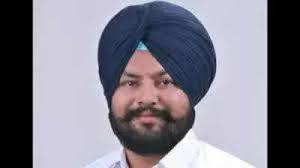
TARN TARAN: A court in Punjab’s Tarn Taran district sentenced Manjinder Singh Lalpura, AAP MLA from Khadoor Sahib, to four years in prison in a 12-year-old case of assault and molestation of a Dalit woman. On Wednesday, the court had convicted 11 people, including six policemen, in the case. Pronouncing the sentence on Friday, additional sessions judge Prem Kumar awarded four-year jail term to Lalpura and six others, while three accused were sentenced to one-year imprisonment each. One of the accused, Harvinder Singh, currently lodged in Delhi’s Tihar Jail, did not appear in the court and his sentencing is scheduled on Sept 16. Another accused, Paramjit Singh, died during the trial. “The court also imposed a fine of Rs 50,000 on each of the accused and directed that compensation be paid to the victim as per the law,” the survivor’s lawyer, Amit Dhawan, said. Following the pronouncement of the sentence, the MLA was taken into custody and sent to jail. On Sept 4, 2013, a taxi driver and a few other men assaulted and molested a 19-year-old woman when she and her family members were attending a wedding. A police team that arrived at the scene also assaulted the woman. Courtesy : TOI Note: This news is originally published on https:/timesofindia.com/bha and is used purely for non-profit/non-commercial purposes, especially human rights