
Supreme Court adjourns plea on horizontal reservation for transgender doctors in NEET-PG admissions

The plea contends that the absence of horizontal reservation contravenes the Supreme Court’s NALSA ruling, which mandated affirmative action for transgender persons in education and public employment The Supreme Court on Thursday (September 18, 2025) adjourned till next week the hearing of a plea by three transgender doctors seeking implementation of one per cent horizontal reservation for transgender candidates in postgraduate medical admissions under NEET-PG 2025–26. The examination was held on August 3, and the results were declared on August 19. Senior advocate Indira Jaising, appearing for the petitioners, urged a Bench of Chief Justice of India (CJI) B.R. Gavai and Justice K. Vinod Chandran to pass an “innocuous order” earmarking two seats under the all India quota and two under the State quota for transgender candidates. The Chief Justice said such a direction could create uncertainty in the admission process. “We cannot keep seats everywhere in limbo. You are asking for two seats in the all India quota, two in the State quota,” he remarked. The Bench also noted the submission of the National Medical Commission counsel that counselling had not yet begun for the postgraduate medical courses and that no immediate urgency warranted such an order. “Counselling has not started. We will keep this matter for next week high on board,” the CJI said. The plea relies on the Supreme Court’s 2014 landmark ruling in NALSA v. Union of India, which recognised transgender persons as a “third gender” and mandated their inclusion through affirmative action in education and public employment. During the proceedings, Ms. Jaising informed the court that petitioner Kiran A.R. had withdrawn from the case and that only petitioners 2 and 3, from the OBC and general categories respectively, would continue with the plea. Appearing for the Union government and medical authorities, Additional Solicitor General Archana Pathak Dave submitted that Solicitor General Tushar Mehta wished to personally address the broader issue of reservation for transgender persons. The Bench then posted the matter for hearing on September 23. The top court had earlier observed that if there was a judicial direction mandating a quota for transgender persons, it ought to be implemented. Addressing the Solicitor General, the Chief Justice had remarked, “If the 2014 judgment requires reservation to be provided, you have to comply. Why don’t you implement it within the 15% quota?” Notably, 85% of seats in government medical colleges are reserved under the State quota, while the remaining 15% fall within the all India quota. Affirmative action The petitioners have also challenged the April 16 notice and April 17 information bulletin issued by the National Board of Examinations in Medical Sciences, contending that the omission of such a quota contravenes the court’s 2014 ruling, which mandated affirmative action and reasonable accommodation for transgender persons in education and public employment. “As a result of the impugned notice, the petitioners are left with a right without remedy, whereby there are now no reservations for transgender persons in postgraduate medical education despite the binding declaration of the law by this court,” said the plea, filed through advocate Paras Nath Singh. The plea argued that in the absence of horizontal reservation, transgender students would be deprived of equal opportunity, as no specific reservation is currently extended to them to ensure representation in postgraduate medical education, despite the community facing entrenched social barriers. It added that the 2014 verdict had recognised the fundamental rights of transgender persons under the Constitution, including the right to self-determination of gender identity. In March 2023, a Supreme Court Bench led by then Chief Justice D.Y. Chandrachud had refused to entertain an application seeking clarification on whether the NALSA judgment mandated horizontal reservation. Aaratrika Bhaumik Courtesy : The Hindu Note: This news is originally published on https:/thehindu.com/bha and is used purely for non-profit/non-commercial purposes, especially human rights
MU syndicate proposes PhD in Tulu, opportunities for transgender candidates
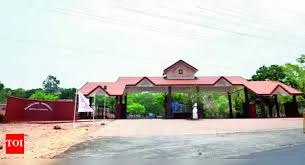
Mangaluru: The Mangalore University (MU) syndicate has proposed introducing PhD in the Tulu language and providing opportunities for transgender individuals to pursue doctoral studies. Additionally, the syndicate resolved to appoint eligible lecturers as PhD guides in several colleges under the university’s jurisdiction. These proposals were discussed during the past syndicate meetings and are currently awaiting a detailed response from the university. Raghuraj, a syndicate member who tabled the agenda on three proposals, told TOI that although MU is located in a region where Tulu is widely spoken and celebrated, there are limited academic research opportunities available at the university. He observed that the Tulu MA programme has only a limited number of students. “The proposal for a PhD is aimed at enabling those interested in research to pursue it, which will also benefit the growth of the local language. We have urged Mangalore University to introduce a PhD in Tulu, and officials have been asked to clarify whether this can be implemented under the statutes,” Raghuraj said. The second proposal calls for allowing members of the transgender community to pursue PhDs. “Education is the right of every individual, including transgender community. I have suggested that interested candidates from the community be given the opportunity to enrol in PhD programmes, based on their academic eligibility. The university statutes also provide scope to facilitate this,” he added. MU’s campus in Konaje is recognised as a postgraduate and research centre. However, with the majority of senior professors retiring, the campus lacks sufficient PhD guides. This shortage has deprived many PhD aspirants of opportunities. “With the help of the university, we are trying to reach out to experienced faculty from aided and private institutions and are also considering allowing eligible institutions to become research centres to guide PhD aspirants,” Raghuraj pointed out. Courtesy : TOI Note: This news is originally published on https:/timesofindia.com/bha and is used purely for non-profit/non-commercial purposes, especially human rights
EC rejects charges, cites action it took for Karnataka seat
NEW DELHI: EC rejected Rahul Gandhi’s allegations regarding deletion of electors in Aland in 2023, saying that it had on its own authority filed an FIR at the time against “certain unsuccessful attempts” at deletions, after which the Karnataka chief electoral officer shared all relevant information pertaining to the case with the state police. The Karnataka CEO posted on X that all information available with EC was handed over to Kalaburagi, SP on Sept 6, 2023 itself. The shared information included the objector’s name, EPIC number and mobile number used for login, Form 7 reference number, mobile number provided by the objector for processing software application medium, IP address, applicant’s place, form submission date and time, and user creation date. “Basically, the information that Rahul has asked EC to provide in a week was shared by the Karnataka CEO with the state CID two years ago,” said an EC functionary, while contrasting this with Rahul refusing to submit a signed affidavit in support of his allegations regarding roll irregularities in Mahadevapura, for which CEC Gyanesh Kumar had set him a similar deadline. As regards Rahul’s allegations regarding addition of fake voters in Maharashtra’s Rajoura constituency, the electoral registration officer of Rajoura said that between Oct 1 and 17, 2024, the constituency had received 7,592 applications for new voter enrolment. “On scrutiny by booth level officers, 6,861 applications were found invalid. These included fictitious identities, invalid photographs, documents and incorrect addresses. These applications were rejected,” the ERO said, stressing that no fake names were added to the roll. He added that taking cognisance of the irregularities, the district election officer had directed a comprehensive probe and criminal action. Courtesy : TOI Note: This news is originally published on https:/timesofindia.com/bha and is used purely for non-profit/non-commercial purposes, especially human rights
Maha ‘Vote Chori’ In Chandrapur’s Rajura, Says Rahul, questions EC over deletion of 6,800 voters after Cong plea
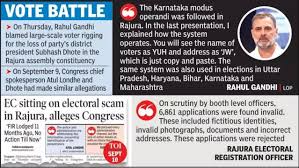
Nagpur/Chandrapur: Congress leader Rahul Gandhi on Thursday accused Election Commission of India (ECI) of ignoring large-scale voter rigging in the Rajura assembly constituency of Chandrapur district during last year’s assembly polls in Maharashtra. Gandhi took cue from the Maharashtra Pradesh Congress Committee’s accusations of manipulation in the Rajura voter list, 10 days ago. In Delhi, Gandhi alleged “over 6,800 fake voters were deleted quietly” after Congress lodged a complaint with ECI, but no accountability followed. In the fiercely fought Rajura contest, Congress district president Subhash Dhote lost to BJP’s Devrao Bhongle by a margin of 3,050 votes. Gandhi claimed the numbers raise questions, with deletions almost doubling the margin of defeat. “This is not a small irregularity, it is a deliberate attempt to tilt the balance,” he claimed. “The Karnataka modus operandi was followed in Rajura. In the last presentation, I explained how the system operates. You will see the name of voters as YUH and address as ‘JW’, which is just copy and paste. The same system was also used in elections in Uttar Pradesh, Haryana, Bihar, Karnataka and Maharashtra,” he added. Hours after Gandhi’s diatribe, the electoral registration officer (ERO) of Rajura clarified that prompt administrative action had prevented bogus voter registrations from entering rolls. Between October 1-17, 2024, the constituency received 7,592 applications for new voter enrolment. “On scrutiny by booth level officers, 6,861 applications were found invalid. These included fictitious identities, invalid photographs, documents and incorrect addresses. These applications were rejected,” the ERO said, ensuring no fake names were added to the rolls. He added that taking cognisance of irregularities, the district election officer directed a comprehensive probe and criminal action under Representation of the People Act, 1950, and Information Technology Act, 2000. On September 9, Congress chief spokesperson Atul Londhe and Dhote had made similar allegations against the ECI in Mumbai. Both claimed large-scale voter manipulation in Rajura was comparable to the Mahadevapura case in Karnataka during the 2024 Lok Sabha elections, which Gandhi had earlier highlighted. “In just five months between the Lok Sabha and Assembly polls, Rajura’s voter count jumped by 55,000,” they said. “Between October 1-15, 2024, over 11,600 bogus voters were registered online. Following our complaint, 6,861 entries were deleted, and an FIR was lodged.” According to them, despite an FIR lodged nearly 11 months ago, officials are yet to investigate the matter, prompting the party to threaten legal recourse. Both Londhe and Dhote had threatened to move court if ECI failed to take remedial steps. They also accused BJP of colluding with EC to manipulate voter registrations. “Still, authorities have not provided access to IP addresses, email IDs, or mobile numbers linked to these fake registrations,” both had said. The duo accused police and administration of withholding this information, preventing identification of the perpetrators. They also pointed out that the victorious BJP candidate was caught with materials, including Rs 61 lakh in cash and election equipment, were seized by EC’s team, and an FIR was registered at Gadchandur police station, but no further action was taken. BJP MLA Bhongale, however, refuted the charges, stating there is a natural rise in the number of voters between Lok Sabha and assembly elections due to Election Commission’s special registration drive. “In Rajura, thousands of new voters were added, which is in line with the trend in other constituencies. It was BJP that first raised concerns about the sudden spike in voter numbers here. Following our complaint, a detailed investigation was conducted, and 6,861 bogus voters were struck off the rolls. I demand a thorough probe,” he said. Courtesy : TOI Note: This news is originally published on https:/timesofindia.com/bha and is used purely for non-profit/non-commercial purposes, especially human rights
‘Will prevent vote chori’: Rahul Gandhi’s shoutout to Gen Z; BJP hits back, asks why wouldn’t they drive you out?
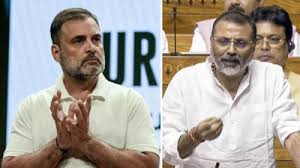
NEW DELHI: Leader of opposition in Lok Sabha Rahul Gandhi’s shoutout to Gen Z to “stop vote theft” sparked a sharp retort from the BJP, with Nishikant Dubey quipping: “They are against corruption, why wouldn’t they drive you out?” The comments came in after Nepal Gen Z protest toppled the “corrupt” government and elected its first woman chief as its interim prime minister, and that too on gaming app Discord. After his presser claiming deletion of voters from Karnataka’s Aland constituency, Rahul said in a post on X, “The youth of the nation The students of the nation The Gen Z of the nation Will protect the Constitution, defend democracy, and prevent vote theft. I will always stand with them. Hail India!” Reacting to this, BJP MP Nishikant Dubey claimed that the Gen Z wants “an Islamic state in Bangladesh and a Hindu state in Nepal, why wouldn’t they make India a Hindu state?” “Gen Z is against family rule. Why would they tolerate Rahul Ji after Nehru Ji, Indira Ji, Rajiv Ji, Sonia Ji? They are against corruption, why wouldn’t they drive you out? They want an Islamic state in Bangladesh and a Hindu state in Nepal, why wouldn’t they make India a Hindu state? Get ready to leave the country, they are coming,” he said. — nishikant_dubey (@nishikant_dubey) Rahul’s comments drew reaction from Janata Dal United leader Neeraj Kumar too, who said that India was a “democracy” unlike “Bangladesh, Nepal,” adding that “our people do not accept dictatorial ideas.” “In countries like Nepal, where politics is driven by religion, such problems have to be dealt with differently. But India is a democracy, it is neither Bangladesh nor Nepal; our people do not accept dictatorial ideas. If one is comparing India with Nepal, they should consider India’s economic strength and the resilience of our people,” he said. — PTI_News (@PTI_News) Courtesy : TOI Note: This news is originally published on https:/timesofindia.com/bha and is used purely for non-profit/non-commercial purposes, especially human rights
This killer stalking Kerala attacks through the nose
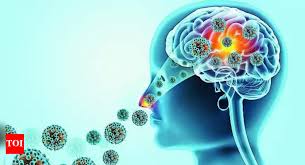
On Sept 1, two patients — a threemonth-old baby and a 52-year-old woman — died within hours of each other at Kozhikode Govt Medical College. Doctors confirmed that both were being treated for primary amoebic meningoencephalitis (PAM), an infection caused by the free-living parasite Naegleria fowleri. By mid-Sept, the toll had risen to 19, with 69 suspected or confirmed cases across Kerala. Victims ranged from infants to middle-aged adults. The scale is extraordinary: globally, researchers have identified only 488 documented infections since 1962. Rare And RuthlessPAM is one of the deadliest infections known to science. The parasite lives in warm, stagnant freshwater — ponds, lakes, unchlorinated swimming pools, poorly maintained tanks — and can infect people only when contaminated water is forced up the nose. From there, it travels along the olfactory nerve, burrows into the brain and begins dissolving tissue, unleashing catastrophic inflammation. Symptoms can begin in one to 12 days (typically 3-7 days): fever, headache, nausea and vomiting. Within days, they give way to stiff neck, confusion, seizures, hallucinations and coma. Across six decades, fewer than 20 survivors are documented globally, most with lasting neurological damage. The fatality rate is 97%. There is no vaccine or proven cure. Drugs such as Amphotericin B, Azoles, or Miltefosine are used in combination, sometimes with induced hypothermia, but success is rare. Crucially, PAM does not spread person to person and is not caused by drinking contaminated water; infection occurs via the nose Why Kerala? Worldwide, PAM tends to appear as sporadic, one-off cases, usually tied to a single contaminated reservoir or swimming pool. Kerala’s outbreak is different. Cases have surfaced across Thiruvananthapuram, Kozhikode, Thrissur and Malappuram, with no single identified source. The state’s position as a public health bellwether makes the outbreak more unsettling. Kerala has often been the first to detect emerging threats: India’s first Nipah outbreak in 2018, its early Covid-19 cases in 2020 (detected in returning medical students from Wuhan), and Zika virus in 2021. The arrival of a rare, near-uniformly fatal amoeba on this list has alarmed both doctors and the public. “Eight people died in 15 days. What is the protocol? What are people supposed to do? Even a baby was infected — was that child in a swimming pool?” Opposition leader V D Satheesan asked in the state assembly this month. Protests have broken out in several districts, with residents demanding that wells and public taps be tested. Doctors caution that Kerala’s higher numbers also reflect better detection. “The symptoms — headache, fever and vomiting — are similar to bacterial and viral brain infections. If you don’t suspect amoeba, you’ll miss it completely,” said Dr Rajeev Jayadevan, convener of the Indian Medical Association’s research cell. How Kerala Is Responding Amid mounting panic, Kerala has launched ‘Jalamanu Jeevan (Water is Life)’, a statewide chlorination drive covering wells, pools, etc. Schools have been told to disinfect storage units regularly, while panchayats and municipalities are checking public taps and wells. Hospitals, particularly in Kozhikode, Thrissur and Malappuram, are on high alert. Doctors have been instructed to treat any meningitis-like illness with a history of water exposure as potential PAM. Rapid-response teams have been sent to test community water sources, though no contaminated reservoir has been found yet. Drugs, including Miltefosine, have been stocked. But officials concede that treatment rarely saves lives. Survivors worldwide are exceptional, often treated with a cocktail of antifungals, antibiotics and cooling therapies. That is why prevention — keeping contaminated water out of the nose — remains the focus. Lessons For The World A 2025 review in the Journal of Infection and Public Health, which analysed 488 cases across 39 countries since the disease was first described, shows how there is little room for error — and what others can learn as climate change reshapes risk. The parasite is not the same everywhere: N. fowleri has multiple genetic strains; genotypes II and III predominate in Asia, North America and Europe. Clean water is the strongest defence: Free chlorine ≥ 2.0 mg/L in storage tanks/ pools can eliminate the amoeba; countries like Australia monitor disinfection as a routine public health practice. Surveillance changes the numbers: Strong labs and routine testing mean more detection (not necessarily more disease). Country tallies include India (26), Mexico (33), Czech Republic (17), New Zealand (9), Nigeria (4), Venezuela (7). Everyday habits can raise or reduce risk: In Pakistan, first cases were reported in Karachi in 2008; >140 cases have since been documented. Many were linked to nasal rinsing during ablution or showering, not swimming. A similar ablution-linked case has also been confirmed in the US. Courtesy : TOI Note: This news is originally published on https:/timesofindia.com/bha and is used purely for non-profit/non-commercial purposes, especially human rights
Dalit youth attacked with sword: Bullies slit his vein after he stopped him from drinking alcohol; Chandrashekhar Azad threatens agitation
A case of a sword attack on a Dalit youth by bullies has come to light in the Bachhrayun police station area of Amroha. The incident occurred on August 17th, when Shivam Singh, a resident of Musallepur village, stopped some people from drinking alcohol outside his house. A man named Siddhant Deora was drinking alcohol with his friends outside the victim’s house. When he objected, the accused called his other friends. The bullies beat Shivam and his father, attacking them with a sword, severing a vein in Shivam’s hand. The victim was admitted to a private hospital in Meerut in critical condition, where he remained for 15 days. According to doctors, the severed vein in his hand will no longer function. Shivam works as a scrap dealer with his father, and their home is located on the roadside outside the village. Azad Samaj Party chief Chandrashekhar Azad has raised the issue on the social media platform X. He has demanded the state government arrest the accused. Chandrashekhar has warned that if the culprits are not arrested soon, his organization will launch a mass movement. Rohit Prajapati Courtesy: Hindi News
‘Honour killing’ of Dalit man: Mom of girlfriend arrested under SC/ST Act
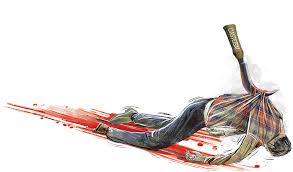
To investigate the case further, the deputy superintendent of police, Balaji, has been appointed the investigation officer. MAYILADUTHURAI: Following up on the murder of Dalit youth K Vairamuthu on Monday by a gang allegedly led by the brothers of a woman with whom he was in a relationship, the Mayiladuthurai police on Wednesday booked her mother K Vijaya, under the Scheduled Castes and Scheduled Tribes (Prevention of Atrocities) Act, 1989, and arrested her along with three others. With their demand for Vijaya’s arrest having been met, Vairamuthu’s family members gave up their protest and received his body, which was kept at the Mayiladuthurai government hospital, for last rites. Vairamuthu (28) of Adiyamangalam was hacked to death on Monday night by a six-member gang over his relationship with K Malini, the daughter of an inter-caste couple, sources said. According to Vairamuthu’s family members, Malini’s mother Vijaya, who is from the BC community, was against her daughter’s relationship with a Dalit. According to Vairamuthu’s family members, Malini’s mother Vijaya, who is from the BC community, was against her daughter’s relationship with a Dalit. Alleging that Malini’s mother may have instigated Vairamuthu’s murder, the family members of the deceased and members of political parties refused to receive his body until she was arrested. On Wednesday, the Mayiladuthurai town police arrested Vijaya, her son K Gugan (21), A Anbunithi (19) and S Baskar (42) in connection with Vairamuthu’s murder. Following this, Vairamuthu’s family members and others demanding Vijaya’s arrest ended their protest and received his body from the GH. To investigate the case further, the deputy superintendent of police, Balaji, has been appointed the investigation officer. Courtesy : TNIE Note: This news is originally published on https:/thenewindianexpress.com/bha and is used purely for non-profit/non-commercial purposes, especially human rights
Protest against quota for other castes in Gorakhpur’s Dalit hostel: Students and MLCs take to the streets, demanding immediate intervention from the administration.
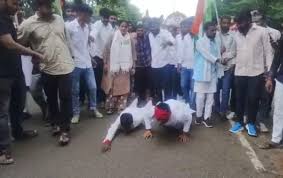
Dalit students in Gorakhpur today protested against the state government’s order. The Uttar Pradesh government has decided to reserve 30 percent of seats in the state-run Scheduled Caste hostel for students from other castes. Students say this move will affect their rights and the learning environment. The protest started from Town Hall Chowk and reached Ambedkar Chowk. A large number of students participated in the protest and protested the government’s order through sloganeering. Students say that giving a 30 percent quota to students from other castes in a hostel built solely for Dalit students’ studies and accommodation is completely unjust. The students warned that if the order is not withdrawn, the agitation will intensify. MLC Devendra Pratap Singh extends support Gorakhpur MLC Devendra Pratap Singh was also present at the protest with the students. He said that this order is not only unjust but also violates the rights of Dalit students. He assured the students of justice and his support for their struggle. Indeed, MLC Devendra Pratap Singh was injured in a road accident yesterday. Despite this, he participated in the protest with the students today. He said, “Just as Rana Sanga suffered 80 wounds in the war and still continued to fight, today I stand up for the rights of Dalit students.” Students threatened to intensify the agitation. The students insisted that the hostel was built solely for the convenience of Dalit students and that the 30 percent quota for students from other classes was wrong. They warned that if the government did not withdraw the order, the agitation could escalate. The students reiterated their demand for justice from the local administration and the state government. Abhijeet Singh Courtesy: Hindi News
Dalit man hacked to death by lover’s family in Tamil Nadu; four arrested
“After ten years of love, everything has been destroyed. He couldn’t even live peacefully in the house he built,” his inconsolable lover told reporters. Posted by Veena Nair In yet another disturbing caste killing case in Tamil Nadu, a 28-year-old Dalit man was hacked to death by the family of the woman he loved. K Vairamuthu from Adiyamangalam village of Mayiladuthurai district was brutally attacked with sickles on the night of September 15, sustaining serious injuries on his neck and wrists. He was rushed to the Mayiladuthurai Government Hospital but he succumbed to his injuries. Vairamuthu, a two-wheeler mechanic, was in a decade-long relationship with 26-year-old Malini, an MBA graduate from Chennai. However, her family, especially her mother, Vijaya, vehemently opposed it. Reports suggest that Vijaya once turned up at the Dalit’s workplace and hurled casteist slurs at him.”My life has already been ruined like this; at least my daughter’s life should not be wasted,” she reportedly told him. Vijaya belongs is a Chettiar (OBC) who married Malini’s father, from the Paraiyar community. On September 14, two days before the murder, both families were counselled by the police. At that time, Malini expressed her desire to marry Vairamuthu and reportedly moved in with him. Her family disowned her and submitted a written statement that they would not interfere in the young couple’s matter hereafter. Excited to start a new chapter in their life, Malini went to Chennai to collect documents for her registered marriage. However, her dreams were shattered as on the very same night, Vairamuthu was hacked to death by her family. On Wednesday, September 18, police arrested Vijaya, K Gugan, 21; A Anbunithi, 19 and S Baskar, 42. A case under the SC/ST (Prevention of Atrocities) Act was registered. Following the arrest, the Dalit man’s distraught family accepted his body. They staged a roadblock on the Mayiladuthurai–Kumbakonam highway, demanding the immediate arrest of his murderers. However, an inconsolable Malini cannot fathom a life without Vairamuthu. “After ten years of love, everything has been destroyed. He couldn’t even live peacefully in the house he built. Police assured us of safety, but no one protected us,” she told reporters. The killing of Vairamuthu is another caste horror coming from the southernmost state of India. In July, a 27-year-old Dalit software engineer working in Chennai was allegedly hacked to death by his girlfriend’s brother in Tamil Nadu’s Tirunelveli district. Kavin Selvaganesh was murdered by his girlfriend’s brother, Surjith Saravanan, in front ot the former’s mother at a Siddha hospital in Tirunelveli. The young Dalit’s mother, Tamilselvi, witnessed the brutal murder of her son. “While he (Surjith) was shouting, he suddenly attacked my son with a machete, injuring his arm. Kavin then started running, and Surjith chased him and hacked him to death. He told me to take the body and leave. ‘My parents will be peaceful only after this,’ he said,” her police complaint stated. Police arrested Surjith and his father Saravanan, who worked as a sub-inspector in the Tamil Nadu police force. Courtesy : TSD Note: This news is originally published on https:/thesiasatdaily.com/bha and is used purely for non-profit/non-commercial purposes, especially human rights