
‘Kaalamaadan’ — Bison: Caste, colour, and anti-caste politics in mainstream cinema
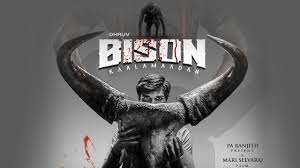
We live in an era where actors, regardless of their social background, eagerly await roles in movies by Dalit filmmakers such as Mari Selvaraj and Pa. Ranjith. Negating these historical and contemporary realities and confining the debate only to the ‘fair’ female leads in their movie is an elite conspiracy to subvert the political discourses constructed by Dalits. Kaalamaadan is a cultural icon associated with the beliefs and traditions of Dalit socio-cultural life. However, the term Kaalamaadan, especially in the cultural sphere of Kerala, often refers to people who act in ways that disturb public conscience, challenge morality, or defy social conditioning. Kaalamaadan has always carried a negative connotation and is used to blame or otherise people who adopt different perspectives or approaches in their thought processes or activities. This should also be understood as a historical continuity of caste practices to antagonise or defame the Dalit cultural symbols or icons. By naming the movie Bison, or otherwise known as Kaalamaadan, Mari Selvaraj is definitely dismantling the sarvarna gaze. Inspired by real-life incidents, the movie is set against the backdrop of socio-political happenings in southern Tamil Nadu during the 1990s. It discusses the survival, resilience, and triumph of Kittan, the Dalit protagonist. Relevance of Bison The social history of Tamil Nadu is, in fact, a history of caste conflicts. Especially the southern districts of Tamil Nadu are infamous for their brutal violence against Dalits. The (dis)honour killing of a Dalit IT professional, Kavin Selva Ganesh, by the family of his girlfriend was one of the latest caste atrocity reported from southern Tamil Nadu. The girl’s family hails from the dominant Maravar community, and both her parents are police inspectors. This reflects the current scenario of caste atrocities in southern Tamil Nadu, making the movie Bison more politically relevant. Though Bison doesn’t deal with the subject of honour killings, the film is presented in the larger context of the historical continuity of caste conflicts in Tamil Nadu. The Pandiaraj-Kandasamy rivalry in the movie actually refers to the Dalit-Nadar conflict that happened in southern Tamil Nadu during the 1990s and early 2000s. The disputes, retaliations, and the feud between the Dalit leader Pasupathi Pandian and the Pannaiyar family have been effectively referenced in the movie. And this narrative has been successfully conveyed through the life and struggles of the Dalit protagonist, Kittan, inspired by the life of the Arjuna Award-winning Kabaddi player Manathi Ganeshan. Dalit aesthetics The film is structurally built on the notion of Dalit aesthetics and socio-cultural nuances. As many critics have observed, a specific pattern or preset template is being followed in Mari’s filmography. And the repetition of these patterns has invited criticism of Mari’s films, including Bison. But what does this pattern really indicate? The heroic presentation of Dalit imagery, signifiers, gods, and belief systems is the fundamental characteristic of Mari’s style of filmmaking, and it is not an artistic limitation. In fact, these are counter-narratives against the epistemic violence in cultural representation created by the mainstream cinema for years. The symbolic presentation of animals pertinent to Dalit social life, and their incorporation into the aesthetics of cinema, are essentially political acts. Even if it is repetitive in his filmography, it is a deliberative aesthetic of resistance and a new technique among the established imaginations of mainstream cinema. Mari’s films, including Bison, subvert the established patterns, methods, and aesthetics of mainstream cinema and construct a counter-public discourse. It disturbs the public conscience, dominant perspectives, and morality constructed in films through different ages. So, the actual problem with critics is not the pattern of Mari but its content and politics. They are also triggered by the anti-caste politics occupying space in the public sphere through popular culture. Pride and prejudice Recently, veteran director Adoor Gopalakrishnan has made casteist and gendered remarks against aspiring Dalit and women filmmakers, saying that they should be given ‘special’ training for filmmaking if they are receiving government funds for making movies. This thought, which shares concerns about the public fund when it is allocated to the marginal communities, is fundamentally a casteist idea. This also stems from the belief that filmmaking is meant for people from elite social backgrounds, as they are ‘naturally’ talented, while those outside this social structure lack the skills and ‘merit’ to create movies. The criticism against Mari, based on the ‘patterns’ in his movies, also originates from a similar savarna gaze. Because Mari has not just made some random movies, he directed films that deconstruct existing belief systems, culture, and politics, and he also made them commercially successful. Had his movies been a failure at the box office, none of the critics would have even cared about the pattern, content, or quality. Therefore, the pattern he follows in his movies is successful in a political sense, as it disturbs the Gramscian idea of common sense. Loud questions and silence The criticisms that have erupted recently are negating the identities of Mari, Vedan, Arivu, and Dhruv, who are integral parts of the movie, and revolve solely around the ‘fair’ skin of non-Dalit female actors. It seems that even the skin tones—or the absence of dark skin tones—of female actors in Mari’s movies disturb the public, as they do not meet casteist expectations. The idea of equating Dalits with dark bodies is actually a casteist notion. Why do people never question the non-Dalit filmmakers for not casting dark-toned and/or Dalit actors? Why is this burden solely placed on Dalit filmmakers? How can Dalit filmmakers who entered the industry after years of struggle be held accountable for the absence of Dalits and dark-toned artists? These unfair criticisms emerge from a larger caste-ridden society. Furthermore, who decides that only Dalit actors should be portrayed as Dalit or characters with dark complexions? But suppose the intention behind this question stems from a democratic concern about the absence of Dalits or Dalit women in cinema, why is this question being raised only against Dalit filmmakers? Why is there no question directed against the elite
Bihar Polls: 32% of First-Phase Candidates Face Criminal Cases, Says ADR Report

A new report by the Association for Democratic Reforms (ADR) and National Election Watch has revealed that 32 percent of candidates contesting in the first phase of Bihar Assembly elections have declared criminal cases against themselves. Out of these, 27 percent face serious charges such as murder, attempt to murder, and crimes against women. The analysis covered 1,303 out of 1,314 candidates who are contesting in the first phase of the elections scheduled for November 6 and November 11. The votes will be counted on November 14. According to the report, 423 candidates admitted to having criminal cases, while 354 are accused in serious offences. “Serious criminal cases are those that involve non-bailable offences, electoral crimes, or crimes such as murder, kidnapping, rape, or those punishable with at least five years in prison,” ADR said. Among the major political parties, 76 percent of Rashtriya Janata Dal candidates have criminal cases, followed by 65 percent from the BJP, 39 percent from JD(U), and 65 percent from Congress. In smaller parties, 93 percent of CPI(ML) Liberation candidates, 54 percent from LJP (Ram Vilas), and all candidates from CPI and CPI(M) have declared criminal records. The report also found that 33 candidates are accused in murder cases, 86 in attempted murder cases, and 42 in crimes against women, including two who face rape charges. ADR also highlighted the increasing influence of money in elections. About 40 percent of all candidates have declared assets worth over ₹1 crore. Among the major parties, 97 percent of RJD candidates are crorepatis, followed by 92 percent in BJP, 91 percent in JD(U), and 78 percent in Congress. Educational qualifications also vary widely. Around half of the candidates are graduates or have higher degrees, while 40 percent studied between Class 5 and Class 12. Only 9 percent of the total candidates are women. The watchdogs urged immediate action to curb the growing criminalisation of politics. “The Supreme Court of India, being the ultimate guardian of justice, should reprimand political parties for their complete lack of will and failure to act,” ADR said in a statement. The report recommended that candidates convicted of heinous crimes like murder, rape, smuggling, or kidnapping should be permanently disqualified. It also suggested disqualifying candidates charged with serious offences punishable by at least five years in jail if the case was filed six months before the election. ADR and National Election Watch further called for cancellation of tax benefits to political parties that field such candidates and demanded that all parties be brought under the Right to Information Act. “Any political party that knowingly gives a ticket to a tainted candidate should be deregistered and derecognised,” the report concluded. Courtesy : TOP Note: This news is originally published on https:/theobserverpost.com/bha and is used purely for non-profit/non-commercial purposes, especially human rights
Dalit Farmer, Wife Assaulted and Abused with Caste Slurs in Aligarh’s Vijaygarh Area
In Aligarh’s Vijaygarh area, a Dalit farmer and his wife were allegedly attacked and abused with casteist slurs by a group of men riding a tractor. The incident took place on Thursday night when the couple was returning home from their field around 8:30 pm. According to the complaint, the tractor riders stopped the couple and ordered them to move aside, hurling caste-based insults. When the farmer protested, the men allegedly assaulted him and his wife. Hearing their cries for help, the farmer’s father, Chetram, and a neighbour, Lalit, rushed to the spot, but they too were beaten and verbally abused. Chetram, son of Babulal and a resident of Bhankari Ahibasi village, lodged a complaint naming Yogendra Sharma alias Munna, Rohit, Deepak, and Ankur, all from the same village, as the accused. Police have registered a case under relevant sections and the SC/ST Act. The injured were sent for medical examination, and officials said an investigation is underway to verify the sequence of events and arrest those responsible. Courtesy : TOP Note: This news is originally published on https:/theobserverpost.com/bha and is used purely for non-profit/non-commercial purposes, especially human rights
Swami Prasad Maurya Accuses BJP of Fueling Violence Against Dalits and Muslims in Uttar Pradesh
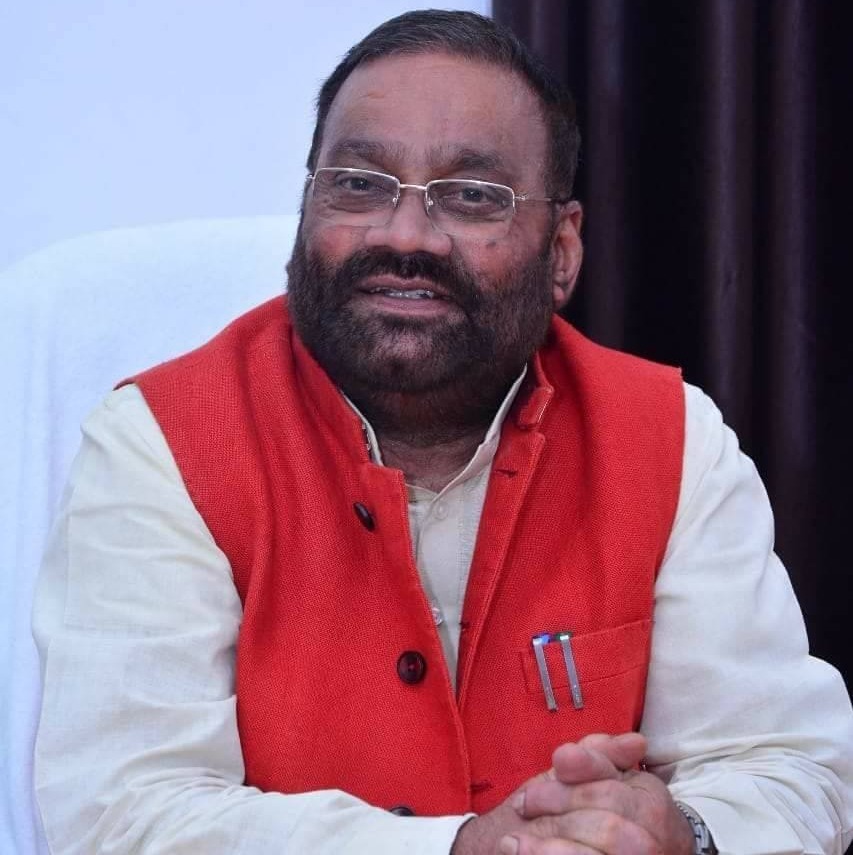
Former Uttar Pradesh cabinet minister Swami Prasad Maurya launched a scathing attack on the Bharatiya Janata Party (BJP), accusing it of allowing rising violence against Dalits and Muslims under its rule. Speaking to the media on Saturday, Maurya said, “Dalit and Muslim communities are being targeted. Homes of the poor are being bulldozed, while criminals linked to the BJP enjoy full protection. Law and order has completely collapsed in the state.” Maurya alleged that religious slogans such as “Jai Shri Ram” and “Jai Bajrangbali” were being misused to justify violence. “These chants have become tools to vandalize Muslim homes and mosques. Today, people of one religion have resorted to terrorist activities,” he said. He further claimed that the BJP was deliberately trying to disturb communal harmony. “The tomb in Fatehpur was attacked using the same slogan. In Aligarh, a conspiracy was hatched to incite Hindu-Muslim riots by writing ‘I love Mohammad’ on a temple wall,” he added. Citing the latest National Crime Records Bureau (NCRB) data, Maurya said, “Uttar Pradesh ranks number one in crime, rape, murder, and caste-related violence. The same situation exists in BJP-ruled states like Gujarat, Madhya Pradesh, and Rajasthan, where Dalits and backward classes continue to face oppression.” He accused the BJP government of shielding criminals. “Under BJP rule, the number of lawless elements has increased sharply. The Chief Minister neither takes cognizance of incidents nor takes action. This is why gangsters and the mafia are openly flouting the law,” Maurya said. Condemning recent attacks on the judiciary, Maurya said, “Two Presidents were stopped from entering a temple, and now a shoe has been thrown at a judge. This is an attack on the justice system and the Constitution. Even the judiciary is not safe under BJP rule.” Announcing statewide protests, Maurya said that if the person who threw the shoe at a Supreme Court judge is not arrested, demonstrations will be held outside every district magistrate’s office on November 3. During the protest, memorandums addressed to the President will be submitted, highlighting the breakdown of law and order, atrocities against Dalits, and government inaction. Courtesy : TOP Note: This news is originally published on https:/theobserverpost.com/bha and is used purely for non-profit/non-commercial purposes, especially human rights
Muzaffarnagar News: Dalit youth stabbed to death, blood-soaked body found in sugarcane field
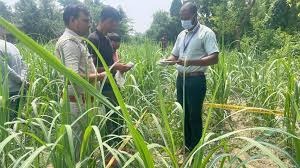
Muzaffarnagar News: A Dalit youth was brutally stabbed to death on Saturday in the Kakrauli police station area of Muzaffarnagar district, Uttar Pradesh. The youth’s body was recovered from a sugarcane field, bearing deep stab wounds. The incident has caused a stir in the area. The deceased has been identified as 29-year-old Sonu. Sonu’s body was found in a sugarcane field in Garhi Firozabad village, under the Kakrauli police station area, on Saturday. Additional Superintendent of Police (Rural) Aditya Bansal told reporters that the body bore multiple stab wounds. Sonu had left home after receiving a phone call Police recovered a blood-stained knife and the deceased’s motorcycle from the scene. According to ASP Bansal, Sonu had left home after receiving a phone call but never returned. The motive behind the murder and the identity of the attackers have not yet been established. Police have registered a case against unknown assailants and sent the body for post-mortem examination. ASP Bansal stated that an investigation has been launched and efforts are underway to identify the culprits. By Raghvendra Mishra Courtesy: Hindi News
Kharge calling for RSS ban under Gandhi family’s pressure: Shobha
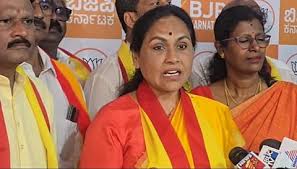
Bengaluru: Union minister Shobha Karandlaje Saturday accused AICC president Mallikarjun Kharge of demanding a ban on Rashtriya Swayamsevak Sangh (RSS) under pressure from Sonia Gandhi and Rahul Gandhi. “I respect Mallikarjun Kharge; he is a senior politician with vast experience. However, he is unable to think independently because of the influence of one family in his party. In his 50 years of political life, Kharge never made any statement against RSS,” she said, adding: “After listening to Sonia Gandhi and Rahul Gandhi, Kharge has now started demanding a ban on the organisation… During the UPA govt, you (Kharege) were a Union minister, yet you never spoke against RSS. Why now? It’s appeasement politics to please a community.” Her remarks came amid the controversy over minister Priyank Kharge’s letter to the CM seeking a ban on RSS activities and action against officials linked to the organisation. Courtesy : TOI Note: This news is originally published on https:/timesofindia.com/bha and is used purely for non-profit/non-commercial purposes, especially human rights
Muted tributes to Indira Gandhi in Punjab Congress raise questions
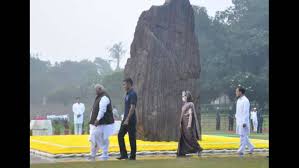
Chandigarh: While Congress units across the country paid floral tributes and organised remembrance events on the 40th death anniversary of former Prime Minister Indira Gandhi, the Punjab Congress appeared largely subdued, with only a few leaders posting brief messages on social media. The low-key observance has raised questions within party circles, with some attributing it to the ongoing Tarn Taran by-election. Barring Punjab Pradesh Congress Committee (PPCC) President Amrinder Singh Raja Warring and senior leader Bharat Bhushan Ashu, most senior figures of the state unit refrained from public tributes. Warring, while resharing Rahul Gandhi’s post on X, wrote, “Humble tributes to Smt. Indira Gandhi Ji on her death anniversary.” Ashu also posted a message that read, “Remembering the towering leader and first woman Prime Minister Indira Gandhi on her death anniversary.” Although an event was organised by the Punjab Congress at the party headquarters in Chandigarh, no senior leader was present, further underscoring the subdued nature of the observance. Expressing disappointment, Iqbal Singh Grewal, former National Secretary of the Indian Youth Congress and ex-NSUI Punjab President, posted a strongly worded message on X. “Indira Gandhi was not just a Congress leader — she was a symbol of decisive leadership and national strength. Her death anniversary should have been a day of remembrance, reflection, and inspiration for every Congress worker,” Grewal wrote. He said, “In Punjab, the silence was deafening — no major event, no visible tribute, and not even a clear ideological message from most senior leaders. When leadership seems detached from the party’s legacy, how can the cadre at the ground level stay ideologically driven?” Grewal said the Punjab Congress today suffers not from a lack of workers, but from a lack of direction from its senior leadership, arguing that the organisation’s failure to honour one of its most iconic leaders reflected a deeper disconnect between the top brass and the grassroots. Political observers believe the party’s muted response may have been influenced by the Tarn Taran Assembly by-election, and they also note that Indira Gandhi’s legacy in Punjab remains complex and often contradictory. While many regard her as a strong leader credited with shaping the modern political and economic framework of Punjab, others view her as a divisive figure, whose decisions, particularly Operation Blue Star in 1984 and its aftermath, left a lasting imprint on the state’s social and political landscape. Courtesy : TOI Note: This news is originally published on https:/timesofindia.com/bha and is used purely for non-profit/non-commercial purposes, especially human rights
Art exhibition at Lalit Kala Akademi features themes of dalit resilience, justice, equality, and nature
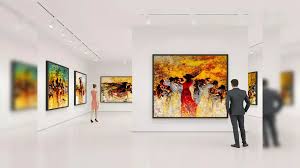
Chennai: The narrow lanes of Mint Street are compact, packed with houses, with broken compound walls plastered with movie posters. There are overflowing dustbins, drunk men sleeping on the platform, and women running their households. This was everyday life for dalit artist S Venkatesan, and is what has been translated in his work. “North Chennai has a strong influence on my work , especially the topics I choose matriarchal households, motherhood, marginalization by oppressors, and politics. Women are a fierce force and I can’t help but try to honour them through my work,” says Venkatesan, whose works are part of an ongoing art exhibition ‘Becoming: Weaving the Commons’ organized by Neelam Cultural Centre at Lalit Kala Akademi, Chennai. The exhibition also features dalit artist K Natarajan, who along with Venkatesan, explores themes of ecology, memory, and equality, as acts of reclamation. Venkatesan’s art captures landscapes of urban North Chennai, its workers, streets, grace, and melancholy in the ordinary. Natarajan’s work, rooted in Buddhism and dalit resilience, turns lived struggle into collective renewal. Venkatesan says, having lived in a 150sqft house with his family created a lasting impact on how he perceives things. “All my subjects are often cramped to the centre, while the rest of the canvas space is empty. When I look at my subject, I look at it multi-dimensionally,” he says. Growing up in the foothills of Jawadhu, Tiruvannamalai, Natarajan has always felt one with nature. His work has powerful themes with subtle imagery that reflect stories of forest preservation, role of women, man versus animal conflict, and the innocence of youth. “With women playing huge roles in preserving nature during the ongoing Sudan and Gaza genocides, and in Jaipur this year, where hundreds of women formed a human chain to protest plans to cut down more than 2,500 trees, I noticed how it’s women who stand in solidarity for nature,” he says. For him preserving nature is about fairness and justice. “My work is a way to reclaim what has been taken. The forest, the soil, and the women who protect them, appear in my work as signs of hope and continuity. Through them, I ask what it is to live in harmony when survival has become an act of resistance,” says Natarajan. The exhibition will be on display till Nov 2 . Courtesy : TOI Note: This news is originally published on https:/timesofindia.com/bha and is used purely for non-profit/non-commercial purposes, especially human rights
Jogi burns invite over omission of dalit MP Mini Mata’s name
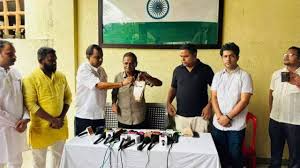
Raipur: The Janata Congress Chhattisgarh (J) has intensified its protest against the state govt, alleging the deliberate omission of Chhattisgarh’s first Dalit MP, Mini Mata’s name, from the invitation card for the new Assembly building’s inauguration. JCC(J) state President Amit Jogi, son of former CM late Ajit Jogi, burned the inauguration invitation card in protest, accusing the govt of insulting Chhattisgarhi pride, women’s empowerment, and Dalit representation by erasing Mini Mata’s legacy. He appealed to all MLAs and former MLAs to boycott the Prime Minister’s event if the name is not reinstated. “Today, as the state prepares to inaugurate a new Assembly building on its 25th foundation day, we received an invitation from Assembly Speaker Dr Raman Singh. The shocking and infuriating aspect is that the name ‘Mini Mata’ is not mentioned anywhere on this invitation card,” Jogi said. He termed the omission a “planned conspiracy or a grave error.” Courtesy : TOI Note: This news is originally published on https:/timesofindia.com/bha and is used purely for non-profit/non-commercial purposes, especially human rights
Bihar Votes On Caste, Not Change: Dalits Still Left Out Of Power

The political foundation in Bihar is caste which carries the burden of its own class Bihar’s politics continues to be shaped by deep caste hierarchies where class and caste intersect, with Dalits remaining at the bottom of both social and economic structures. Despite their sizable population and history of political assertion, Dalits remain fragmented by sub-caste divisions and largely excluded from real power, even under leaders promising social justice. Ahead of the 2025 Assembly polls, Chirag Paswan’s LJP (RV) faces the challenge of expanding beyond its Paswan-Dalit base and balancing its alliance with the NDA against its claim of representing Dalit interests. The more things change in Bihar, the more they remain the same. Not because people are averse to change, but their level of acquiescence to the so-called ‘system’ is such that they accept, at the end of the day, the status-quo as something which has been ordained to them. This could be seen in the formation and the affectivity of the caste-based associations and groups. The power-relations, embedded in the caste-ties, controls impulses, emotions and motivations so firmly that any socio-cultural transformation is met either with oppression or political violence. The caste wars in Bihar are replete with the stories of tyranny and hope. Bihar is, to put it succinctly, a history of a ‘surrealistic tale of violence’, a politics of ‘an inversion of insurgent citizenship’, a sociology of the ‘construction of docile bodies through hegemony’ and an economics of ‘a behavioural irrationalism in the dismal rules of the game’. The stakes of State-power, caste and class essentially try to sustain, what Jeffrey Witsoe once remarked about Bihar, a ‘feudal democracy’. Typically, Bihar is a case of ‘class-in-caste’ politics, wherein the political foundation is caste which carries the burden of its own class. Tanvir Aeijaz Courtesy : Outlook India Note: This news is originally published on https:/outlookindia.com/bha and is used purely for non-profit/non-commercial purposes, especially human rights