
Dalit Mythology: The Durga of Dalit Narrative
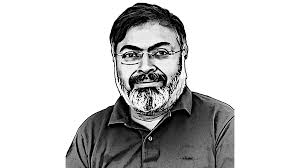
Because this retelling comes from a Dalit scholar, any challenge to it is immediately painted as casteist. In recent years, there has been a growing clash between ‘Sanatani mythology’ and ‘Dalit mythology’. During the festival season last month, a well-known Dalit activist argued that the worship of Durga is nothing but the celebration of an Aryan invasion of Dravidian lands. In his retelling, Mahishasur, the buffalo demon, represents dark-skinned Dravidians while Durga represents fair-skinned Aryans. Because this retelling comes from a Dalit scholar, any challenge to it is immediately painted as casteist. But the Dalit retellers are following the toolkit long used by Sanatani activists who brand their critics as anti-national or communist. This is how ideological battles are fought today. Labels need to be weaponised. Myths need to be reimagined. Political groups across the spectrum have always bent old stories to fit new narratives. In his 1873 book Gulamgiri (Slavery), Jyotiba Phule reimagined the Devas-Asuras wars as colonisation of ancient Dravidian lands by Aryan infiltrators. Great Asura kings like Prahalad, Virochana, and Bali were seen as demons. By turning ‘gods’ into colonisers and ‘demons’ into heroes, Phule gave Bahujan communities a counter-history. If Brahmins could use mythology to establish their supremacy, surely Dalits could use the same for social justice. Sanatanis have long tried to debunk the Aryan Invasion Theory (AIT), arguing it was simply colonial propaganda. Some even propose the Out of India Theory (OIT) that claims Brahmins gave civilisation to the world. Ironically, it was Balgangadhar Tilak, the founding father of the Sanatani political ideology, who first decoded astronomy-based Vedic hymns to show that the Aryan homeland may have been north of the Himalayas, near the Arctic, probably. The Vedic ‘Usha’ hymns spoke of a land where there were dawns without any visible sun. In the 20th century, Babasaheb Ambedkar rejected AIT as it was a racial theory aimed at establishing Brahmin-European-Aryan superiority. He argued caste was a social, economic, and political problem, not a racial one. But now, in the 21st century, we have a new source of evidence – genetics! DNA studies clearly show migration of Steppe pastoralists and horses into India took place over 3,000 years ago. Aryans did come to India. But not as invaders who destroyed the Harappan cities. They came to trade Central Asian horses for Indian iron, 500 years after Harappan cities had ceased to exist. Both Sanatani and Dalit activists rarely bother with art or ritual history. The image of Durga with many arms, killing the buffalo, first appeared around 2,000 years ago in Kushan art (100 AD). It was first carved in stone during the Gupta period (400 AD). The Sanskrit story of Durga being created by the gods and restoring paradise to Indra appears much later in the Markandeya Purana (600 AD). Across India, especially in the Deccan, there are folk traditions where worship of the goddess involves a ritual slaughter of a buffalo. These orally transmitted tales are fragmentary and layered. The young, virile priest who performs the ritual is called Pota Raju, the Buffalo King. He, typically, hails from a ‘low’ caste. He calls himself the servant and son of the goddess. He leads the procession to the temple. The goddess is pleased by rituals involving violence (fire-walking, hook-swinging, blood sacrifice). Every year, a young male buffalo (reda, in the local language) is chosen to be slaughtered the following year, a ritual mimicry of the renewal of earth’s fertility. This suggests that the festival originally had little to do with grand cosmic battles between gods and demons. It was an agricultural ritual, deeply tied to cycles of sowing and harvesting. This story has nothing to do with the Vedic world. Brahmins, who rarely participate in such boisterous village rituals, insist the goddess of the village was once a Brahmin girl. She was tricked into marrying a beef-eating man. When she discovered this, she killed him, and that event is remembered each year. They argue this is why many goddess temples are now vegetarian – the Chamunda temple in Mysuru, the Ambabai temple in Kolhapur. In fact, many Sanatanis think Bengalis need to stop offering meat and fish to Durga during their annual Pujo. Dalit myth-makers are using this very same story to make the outraged Brahmin’s daughter the symbol of Aryan oppression and her beef-eating husband the embodiment of the oppressed. Today, young Dalit activists are raising foundational questions: who makes the rules of Hinduism? Do those categorised as ST/SC have any say in the matter? Who classified those who eat cow meat as impure and those who drink cow urine as pure? It could not have been the goddess or the buffalo. The writer works with gods and demons who churn nectar from the ocean of Indian, Chinese, Islamic, Christian, even secular mythologies. Disclaimer: The views expressed above are the author’s own. They do not necessarily reflect the views of DH. Devdutt Pattanaik Courtesy : DH Note: This news is originally published on https:/deccanherald.com/bha and is used purely for non-profit/non-commercial purposes, especially human rights
‘Mahagathbandhan fighting Mahatma’s battle’: Priyanka Gandhi Vadra targets PM Modi; calls for ‘change’ in Bihar

NEW DELHI: Congress general secretary Priyanka Gandhi Vadra on Saturday said the opposition Mahagathbandhan alliance, of which her party is a part, is fighting the same battle in Bihar today that Mahatma Gandhi fought during India’s freedom struggle. Addressing an election rally in Kadwa, Katihar district, ahead of the second and final phase of polling on November 11, she likened the Congress and Mahagathbandhan’s campaign to a fight for citizens’ rights and democracy. “The battle that the Congress Party and the Mahagathbandhan are fighting today is the same battle that Mahatma Gandhi fought back then. Even today, we are fighting for your rights, for the truth, against an empire — and that is the empire of Narendra Modi. Today, he is running this country in the same way, by suppressing people,” the Wayanad MP remarked. Priyanka Gandhi Vadra also accused the BJP of attempting to “weaken” the Constitution and “undermine” the democratic process. “The rights Mahatma Gandhi fought for are at risk. One of the most essential rights is the right to vote. The BJP has tried its best to weaken the Constitution — they have even started stealing votes,” she alleged. Her comments come amid ongoing opposition claims of electoral manipulation. Her brother and Leader of Opposition in the Lok Sabha, Rahul Gandhi, has addressed three press conferences since August — including one on Wednesday, the eve of the first phase of voting — alleging that the Election Commission and the ruling BJP “colluded” to “steal” votes in the 2024 Lok Sabha elections and state polls before and after. Both the BJP and the Election Commission have dismissed the accusations. The first phase of polling in Bihar covered 121 assembly constituencies, while the second phase will be held across the remaining 122 seats on November 11. Counting of votes for all 243 constituencies will take place on November 14. Courtesy : TOI Note: This news is originally published on https:/timesofindia.com/bha and is used purely for non-profit/non-commercial purposes, especially human rights
Rahul calls for district-level action, to target all households before 2028

Bhopal: Leader of Opposition in Lok Sabha Rahul Gandhi is on a two-day visit to Pachmarhi where he held an in-depth session with state party seniors and then held a marathon meeting with newly appointed district presidents. Rahul Gandhi arrived by a special plane from Delhi on Saturday afternoon and then headed for Pachmarhi in a chopper. Just before boarding the special flight to Bhopal, Rahul Gandhi took to X and posted a video of children eating their mid-day meal on fragments on newspapers and not plates. “I am going to Madhya Pradesh today,”@RahulGandhi wrote. “And ever since I saw this news that children are being served mid-day meals on newspapers, my heart has broken.” Reacting to this tweet, the state BJP said that it is an old video, and action was taken after the news surfaced. “The self-help group responsible for this was blacklisted,” the state BJP tweeted. Upon reaching Pachmarhi, Rahul Gandhi addressed senior state party leaders on decentralisation of the state unit – how to make the district offices strong and take district-based decisions there. Sources said that Rahul Gandhi instructed that strengthening of district units will enable the party to reach the villages. The target is to reach every household before the 2028 assembly elections. In a state where the party has been out of power since Dec 2003, except for the 15-month Kamal Nath govt, the Congress wants to return to power through the districts. The party so far has been unable to match the organisational strength of the ruling BJP. On June 3, Rahul Gandhi launched the Sangathan Srajan Abhiyan in the state with the goal of strengthening the organisation at the districts to panchayat levels. These newly elected district presidents were appointed under that campaign – some of whom are popular faces like Jaivardhan Singh, son of former chief minister Digvijaya Singh, former ministers Omkar Singh Markam, Priyavrat Singh and former NSUI state chief Vipin Wankhede. Those present in the hour-long senior leaders’ meeting included former chief minister Digvijaya Singh, former LoPs Ajay Singh and Dr Govind Singh, PCC chief Jitu Patwari, LoP Umang Singhar, Rajya Sabha MP Vivek Tankha, former Union ministers Kantilal Bhuria, Arun Yadav and others. However, former chief minister Kamal Nath could not come to Pachmarhi because of medical reasons. After the meeting, leaders who spoke to reporters emphasised that Rahul Gandhi wants action and hard work in the field. Former LoP Ajay Singh refused to divulge the instructions given to the party top-brass, but said, “If anybody does not work, whether at the district or state level, the person will now be held accountable. Inactivity means that the person will be changed.” This was confirmed by former minister and party veteran Govind Singh, “Work review will be done. And inactivity means that you can be removed.” Later, he addressed the 72 organisational district presidents who were seated on the floor of a metal roofed hall with Rahul Gandhi walking in the centre and speaking to them. Family members including children of the district presidents were invited to Pachmarhi to have dinner with Rahul Gandhi. Rahul halted the night in Pachmarhi. He is scheduled to hold a small meeting with Congress leaders on Sunday morning before leaving around 10:30 am for the campaign in Bihar. Courtesy : TOI Note: This news is originally published on https:/timesofindia.com/bha and is used purely for non-profit/non-commercial purposes, especially human rights
Bihar polls: AP minister Lokesh steps onto national stage, urges voters to support NDA

Vijayawada: By participating in the Bihar election campaign, the TDP national general secretary and minister for ITEC&HRD, Nara Lokesh, not only made his presence felt at the national level but also hinted at the leadership transition in the party. In the recent past, Lokesh made several whirlwind tours to the national capital, Mumbai, and also abroad, a trademark working style of his father and chief minister, N Chandrababu Naidu. Lokesh took on the Leader of the Opposition in Lok Sabha, Rahul Gandhi, who has been levelling allegations of vote chori. “On one hand, he alleges vote chori, and on the other hand, he fights against SIR, which is meant to correct the mistakes in voter lists. He should stick to one thing as both cannot be possible at once,” Lokesh said, adding that the voter list is one thing which every political party monitors very closely. “I am quite surprised Rahul Gandhi realised the importance of the voter list now,” he said. Lokesh stressed the continuation of the govt and appealed to the people of Bihar to continue the NDA govt for the continuation of development. He said that in Andhra Pradesh, people voted for change once but paid a heavy price. Now, they have voted for NDA again with a 94% strike rate. He said that a double engine sarkar will help the state to grow at a faster rate. The TDP national general secretary further said that while NDA is talking about empowering people by promoting one entrepreneur in every house, the opposition is promoting dependence by promising one govt job in every house, which is an impossible task. He appealed to the people of Bihar to choose wisely between the political parties. Before leaving for Patna, Lokesh participated in a meeting in Kalyandurg marking the 538th birth anniversary of Bhakta Kanakadasa and unveiled a statue of the saint. Lokesh said the TDP has been a party for the Backward Classes since its formation and that BCs have stood by the party throughout. He said the govt is committed to the empowerment of BC communities and announced that Kanakadasa Jayanthi would be celebrated as a state festival. He said Kanakadasa’s life and teachings continue to guide society. Courtesy : TOI Note: This news is originally published on https:/timesofindia.com/bha and is used purely for non-profit/non-commercial purposes, especially human rights
Mathura News: Powerful people encroach upon Dalit’s land
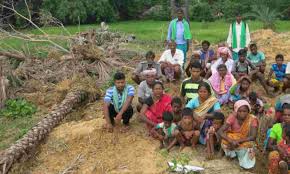
Nauhjheel. A Scheduled Caste farmer from the village of Managarhi in the town has written to the Prime Minister, accusing powerful people of encroaching upon his land. The victim alleges that despite complaints to the District Magistrate and the Public Hearing Portal, his grievances are still unheard. Farmer Satpal, a resident of Managarhi village, wrote in his letter to the Prime Minister that the previous government had allotted approximately six bighas of land to his elders because they were a landless family. Currently, Jogendra and Premchand, who are disabled since birth, are co-owners of the land. However, named powerful people from the village have encroached upon approximately one and a half bighas of his land. These powerful people constantly threaten him. Deputy Tehsildar Rakesh Upadhyay stated that the matter is under consideration. Saturday has already been scheduled for the repossession. Courtesy: Hindi News
Madhya Pradesh: Court issues major decision in Dalit forced urine case, accused to remain behind bars

A major decision has been reached in the Bhind Dalit case. The Madhya Pradesh High Court has rejected the bail plea of the accused. A Dalit youth was beaten and forced to drink urine in Surpura, Bhind district. Police arrested three accused and took action under the SC-ST Act. Madhya Pradesh Bhind Peshab Kand News: A major court decision has been reached in the highly publicized case of a Dalit youth being forced to drink urine in Bhind district, Madhya Pradesh. The Madhya Pradesh High Court has rejected the bail plea of the accused. Now, the accused will remain behind bars. A Dalit youth was beaten in the Surpura area of Bhind district. It is alleged that he was then forced to drink urine. The Bhind District Court had already rejected the bail plea in this case. Now, the Gwalior bench of the High Court has also denied bail. Senior advocate Anil Mishra represented the accused, Alok Sharma. It should be noted that on October 20, 2025, Gyan Singh Jatav, a Dalit, was beaten and forced to drink urine in Bhind district. Acting swiftly in response to the harassment, Bhind police registered a case under various sections of the SC/ST Act, including assault, kidnapping, and the SC/ST Act, and arrested the accused, Sonu Barua, Alok Sharma, and Chhotu. The entire story of the Dalit youth being forced to drink urine in Bhind is that Gyan Singh is a driver by profession. He claims that on October 18, Sonu Barua, a villager, asked him to work as a driver on his vehicle. In a media interview, Gyan Singh stated that these individuals were criminal in nature, so he refused to drive their vehicle. They then abducted him from his home at gunpoint, assaulted him, and forced him to drink urine. A major decision has been reached in the Bhind Dalit case. The Madhya Pradesh High Court has rejected the accused’s bail plea. The incident of a Dalit youth being beaten and forced to drink urine occurred in Surpura, Bhind district. Police arrested three accused and took action under the SC-ST Act. Reported by: Dev Shrimali, Edited by: Vishwanath Saini Courtesy: Hindi News
Dalit woman and Kshatriya man marry in a temple: Some family members offered blessings, while the woman’s mother filed a police complaint seeking action.
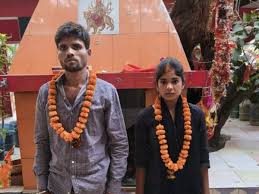
A Dalit woman and a Kshatriya man were married in a temple in the Kumarganj police station area of Ayodhya district. Following this inter-caste marriage, some of the woman’s family members blessed the newlyweds, while her mother filed a police complaint seeking action. According to reports, a Dalit woman from a village in the Kumarganj police station area was in a love relationship with a young man working as a part-time driver at the Agricultural University in Kumarganj. They wanted to marry, but their families disapproved. After disagreement with their families, the woman left with her lover. After considerable efforts by her family, she returned, but remained adamant on marrying the man. The matter even reached the Kumarganj police station, where the police refused to intervene, calling it a family dispute. However, the police were secretly involved in the marriage. Following police guidance, the couple married in the famous Jalipa Bhavani temple complex. They exchanged garlands and vowed to live together. The village head representative and some of the woman’s family members reportedly blessed the marriage. The man is a resident of a village in the Pura Qalandar police station area of Ayodhya. According to sources, the woman’s mother has filed a written complaint with the police regarding the entire incident. When contacted, Kumarganj police stated that the man and woman had come to the police station, but they had no information about where they were married or where they had gone. The police also did not provide any information about the complaint letter submitted by the woman’s mother. However, a police station employee stated that the outpost in-charge was aware of the matter and efforts were being made to recall them. Courtesy: Hindi News
‘Faith Can’t Be Fenced By Caste’: Madras High Court Allows Temple Car Route Through Dalit Colony
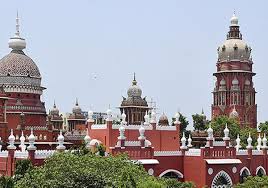
Discrimination can’t be wrapped in sanctity of tradition; no one can dictate who is entitled to stand before the deity, Court added. The Madras High Court recently paved the way for a temple car to pass through a Dalit colony. Justice PB Balaji remarked that God never discriminates and no street was unworthy of the chariot or the god it carried. “Faith cannot be fenced by caste or creed and divinity cannot be confined by human prejudice. God does not reside in certain streets alone. No street is unworthy of the chariot or the god it carries. God never discriminates. So discrimination cannot be wrapped in the sanctity of tradition,” the court said. The court added that through Article 17 of the Constitution, untouchability was abolished not just in physical form but in letter and spirit also. The court added that no one could dictate who could or could not stand before the deity and worship and there was no bar for any person to enter any temple and worship. “The Constitution of India under Article 17, abolished untouchability. Such abolition was not just in physical form but in true letter and spirit. Therefore, none can dictate terms as to who is entitled to stand before the deity and worship and who cannot. In any event, all the respondents, have in unison, stated that there is no bar for any person belonging to any community to enter the Temple and worship the deity. In the light of the above, I do not see any difficulty in recording the stand of the respondents and this would sufficiently address the grievance and apprehension of the petitioner with regard to one part of the prayer in the writ petition,” the court said. The court was hearing a petition filed by a man belonging to the Scheduled Caste community. The man had approached the court seeking directions to the Kancheepuram District Collector, Superintendent of Police, HR & CE Joint Commissioner, Tahsildar and other caste Hindus to permit him and other people belonging to his community to enter the Muthu Kolakki Amman temple and to participate in the ritual activities. He also sought directions to permit the persons from the community to participate in the car festival, by allowing the temple car to come to the Dalit colony. The petitioner had alleged that there had been resistance from the persons belonging to the upper caste community against the participation by members of the downtrodden communities. He further argued that though the temple was being managed by the Hindu religious and Charitable Endowment Department, the discrimination continued even now, and the caste Hindus had taken law into their own hands and were not permitting members from the Scheduled Caste community to worship the deity. The petitioner further submitted that, though representations were given to the authorities, no action had been taken, prompting him to approach the court. The District Collector informed the court that as per a previous order, a field inspection was conducted and there was no prohibition for the petitioner or persons belonging to his community to either enter the temple, worship the deity or from participating in the festivals including the temple car festival. The private respondents, however, objected to the plea and argued that a particular car route had been adopted and was being followed for the past several decades. It was argued that there was no necessity to change or alter the route, which would only lead to more complications. It was argued that if the request was permitted, other persons would also want the temple car to visit their streets, and there would be no end. The private respondents also denied allegations of untouchability and argued that the community was never prevented from participating in the temple functions. The District Collector, after examining the routes, informed the court that the requested extension was feasible without affecting the historic character of the procession. Taking note of the Collector’s report, the court directed the Collector to proceed on the lines of the proposed integrated route, both during the trial run and the main run. The court directed the official respondents to ensure that the temple procession was conducted peacefully and that sufficient protection was provided both during the trial run and main run. Upasana Sajeev Courtesy : Live Law Note: This news is originally published on https:/livelaw.com/bha and is used purely for non-profit/non-commercial purposes, especially human rights
Dalit man dies in RPF custody in Gonda, family alleges torture with iron rods and knives
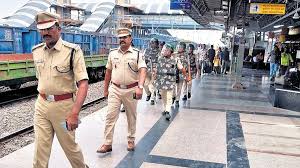
Three Railway Protection Force personnel are suspended and charged with murder as protests erupt in Gonda over alleged custodial killing and demand for justice intensifies A Dalit man has died in Railway Protection Force custody in Gonda district, his family alleging the body had “deep injury marks” indicating an assault with “iron rods and knives”. The doctor who conducted the postmortem said Sanjay Kumar Sonkar, 36, had been “dead when brought” and that the cause of death was unclear, while hinting at possible viscera tests. Three personnel of the RPF, which reports to the central government, have been charged with murder and suspended. This is the third allegation since October of a Dalit being tortured to death in Uttar Pradesh. A farm labourer was allegedly beaten to death by a rich landowner and his associates on Sunday for demanding ₹2,500 in unpaid wages in Amethi. On October 1, a Dalit was branded a “drone thief” and lynched in Rae Bareli. Three RPF men had picked up Sanjay — a farm labourer — from his home in village Kinki on Tuesday “to question him” about the theft of petrol from a goods train, his younger brother Raju told reporters. “They let him off after a few hours. They returned after a while and took him to a shopkeeper in the adjoining village of Barua,” Raju said. “They then took him to an unknown place, and later to the local medical college hospital on Wednesday. Someone told us in the evening that he had been brought dead to the hospital and that we had to collect his body.” He added: “They (RPF) held him for over 20 hours. We saw several deep injury marks on his body as if he had been hit by iron rods and knives.” Vivek Trivedi, the officer in charge of the local police station, said RPF sub-inspector Surendra Kumar, constables Karan Singh Yadav and Amit Kumar Yadav, and “an unidentified person” had been booked for murder. “The RPF was probing oil theft from a goods train near Baruachak railway station on September 28. Sanjay was picked up on suspicion,” he said. Aniruddh Rai, the officer in charge of the local RPF post in Motiganj, said the three accused personnel had been suspended and a departmental probe ordered. “The RPF wanted to know from Sanjay who was involved in the crime. The RPF was also looking for one Rampher Kumar,” Rai said. “Sanjay told them that Rampher had gone to his in-laws’ home in Mankapur, a village some distance away from Kinki. The team took him to Mankapur but Rampher had already fled. Sanjay’s condition deteriorated during interrogation and he was taken to the medical college.” Rai neither confirmed nor denied torture. Mahendra Prasad Dubey, assistant security commissioner of the RPF in Gorakhpur, said: “A custody death is a serious matter. We are probing all aspects.” Dr Kuldeep Pandey, who did the postmortem but asserted the cause of death remained unclear, was quoted as saying: “We have preserved his viscera for future investigation.” Raju said Sanjay’s wife Geeta had been unconscious since learning of his death and had been admitted to the emergency ward of the same hospital. “RPF people come to our village every now and then and threaten to beat or arrest us if we commit any crime,” he said. “The nearest RPF post is 10km from our village. This was the first time they took away someone with them.” Police sources said a large number of local Dalits had gathered in Kinki to protest the “custody murder”. Gonda additional superintendent of police Manoj Kumar Rawat said: “We have stationed forces in the village to maintain law and order.” Piyush Srivastava Courtesy : The Telegraph India Note: This news is originally published on https:/thetelegraphindia.com/bha and is used purely for non-profit/non-commercial purposes, especially human rights
Allahabad HC orders Dalit women to return ₹4.5 lakh compensation after they retract their complaints
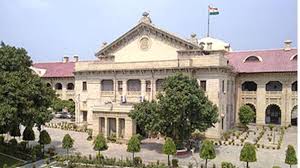
Court also slapped 5 lakh fine on accused for manipulating the victim The Allahabad High Court on Thursday (November 6, 2025) ordered three Dalit women to return the ₹4.5 lakh compensation they had collectively received from the Uttar Pradesh government after they retracted their statements recorded before a magistrate. The Allahabad High Court on Thursday (November 6, 2025) ordered three Dalit women to return the ₹4.5 lakh compensation they had collectively received from the Uttar Pradesh government after they retracted their statements recorded before a magistrate. A Bench of Justice Shekhar Kumar Yadav also slapped a ₹5 lakh fine on the 19 men, accused of assaulting the women, for manipulating the victims. The matter pertains to a complaint filed by a woman and her two daughters-in-law against 19 upper-caste men, for trespassing, assault, criminal intimidation and offences under the SC/ST (Prevention of Atrocities) Act at Yamunapar police station in Prayagraj district in July last year. The matter is currently at the trial stage in a local court, which had summoned the accused persons. The accused later approached the HC seeking quashing of the cognisance and summoning orders from the trial court. During a hearing earlier this month, the complainant told the court she never lodged any complaint with the police and claimed that her thumb impressions were taken on a blank paper. However, the lawyer representing the State submitted that the complainant and her daughters-in-law’s medical reports and statements recorded before the magistrate, in which they unequivocally supported the prosecution. The court was also informed that each woman received ₹1.5 lakh compensation from the government. “The Court finds it deeply disturbing that the complainant now denies having filed the FIR, despite having made statements under Section 164 Cr.P.C. affirming the allegations and having availed of substantial monetary compensation under the statutory scheme meant for genuine victims of atrocities,” the court said, ordering the women to return the compensation. Justice Yadav noted that the women’s conduct prima facie reflects a “serious abuse of the process of law” and “a gross misuse of the benevolent provisions of the SC/ST Act”. Terming the sequence of events as “deliberate attempt to manipulate the criminal justice process after wrongfully obtaining public funds, thereby committing a fraud upon the State”, the court also imposed a ₹5 lakh cost on the appellants to deter recurrence of such manipulative conduct. Ishita Mishra Courtesy : The Hindu Note: This news is originally published on https:/thehindu.com/bha and is used purely for non-profit/non-commercial purposes, especially human rights