
Many within TMC uneasy over ‘giving BJP a talking point’ ahead of elections
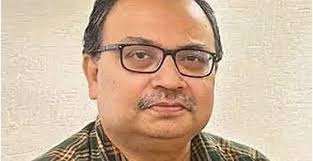
Kolkata: A large section within Trinamool Congress is livid at the Salt Lake stadium fiasco which, they think, has given the opposition a stick to beat the govt with. Many of these netas, cutting across the generation gap and personal loyalties, are upset that a “pro-TMC narrative” — accruing out of both “positive work by the state administration and the Centre’s political mistakes” — was “disturbed” before the assembly polls due early next year. A cross-section of Trinamool seniors called the stadium pandemonium “completely uncalled for”. “Both CM Mamata Banerjee in Bengal and our party MPs in Parliament were fighting out on the Special Intensive Revision (SIR), which caused genuine apprehension and anxiety in people’s minds. Ahead of Bengal polls, this is a critical issue that will have a direct impact on the poll outcome. This diversion, which could have been easily avoided, has now given BJP a talking point,” a senior TMC MP said, adding that the party brass was “unhappy” with the incident. Another Trinamool neta said since Lionel Messi is an international name, “any incident around him will be followed the world over”. “This called for extra caution, not the casual approach with which this was treated both by the department concerned and police,” he added. The TMC functionary also pointed out how the CM was striving to bring Bengal to the global stage after UNESCO’s intangible heritage recognition to Durga Puja. In Nov, the India Tourism Data Compendium 2025, compiled by the Union tourism ministry, showed that the highest number of foreign tourists in 2024 was recorded in Maharashtra, followed by Bengal, he added. The unease appeared apparent when TMC spokesperson Kunal Ghosh took to X and later told reporters that “selfie-crazed people”, whom he referred to as “greedy”, should also be made to pay for the Salt Lake damages. “Why should the state exchequer only foot the bills for Salt Lake repairs? Let these people be identified and asked to pay along with the ‘Jai Shri Ram’ chanting vandals. Salt Lake stadium is an emotion for many of us who love football. Messi played an international match against Venezuela here in 2011. Salt Lake stadium successfully hosted the FIFA Under-17 World Cup,” Ghosh said, quickly adding that he was speaking as a Mohun Bagan office-bearer. Some Trinamool netas also directly pointed fingers at state sports minister Aroop Biswas. “He should have kept the state administration in the know. The Bengal govt has handled much more sensitive international football and cricket events seamlessly. This could have been handled in a better way, especially when the invitees included the chief minister herself,” a senior north Kolkata functionary said. But Ghosh dismissed this. “This was a private event. Biswas was there only as a sports minister, an invitee. In fact, the day before (on Friday), he was waiting at Salt Lake stadium for event organizer Satadru Dutta from 12.45 pm to 3.45 pm. He called Dutta multiple times to know the final plans and whether he could help. The calls were unanswered. Later, two officials (from Dutta’s firm) told him that everything was in order,” Ghosh claimed. Biswas said on Saturday that pending investigations, he would not speak on the issue. Another TMC senior also questioned how party netas and their kin had what they called “close-proximity passes”, giving them access to Messi on the ground. He said some of these passes had either the state sports dept stamped on them or were countersigned by police. Ghosh did not respond to this, only saying: “The enquiry will bring out all facts.” Courtesy : TOI Note: This news is originally published on https:/timesofindia.com/bha and is used purely for non-profit/non-commercial purposes, especially human rights
Dalit Teenager Lured Away by Young Man: In Bareilly, the accused fled after the father filed a complaint with the police; investigation begins
In Nawabganj, Bareilly, a young man has been accused of luring a Dalit teenager into a love affair and committing sexual assault. After the girl’s father filed a complaint, the police began an investigation, and the accused abandoned the girl near her home and fled. The incident took place in the Nawabganj police station area. The girl lived with her family. A young man from Jahanabad, Pilibhit, ran a tire repair shop in one of the shops located at her house. During this time, the young man came into contact with the girl and lured her into a relationship. When the family learned about this, they had the young man vacate the shop. However, the accused continued to meet the girl secretly. It is alleged that three days ago, the accused took the girl with him and sexually assaulted her. When the girl went missing, her father filed a complaint at the police station, demanding strict action against the accused. In this regard, Station House Officer Arun Kumar Srivastava said that the complaint has been received and appropriate action will be taken after the investigation. Vivek M Courtesy: Hindi News
UP: Dalit Woman Beaten, Molested Before Paralysed Husband in Pilibhit
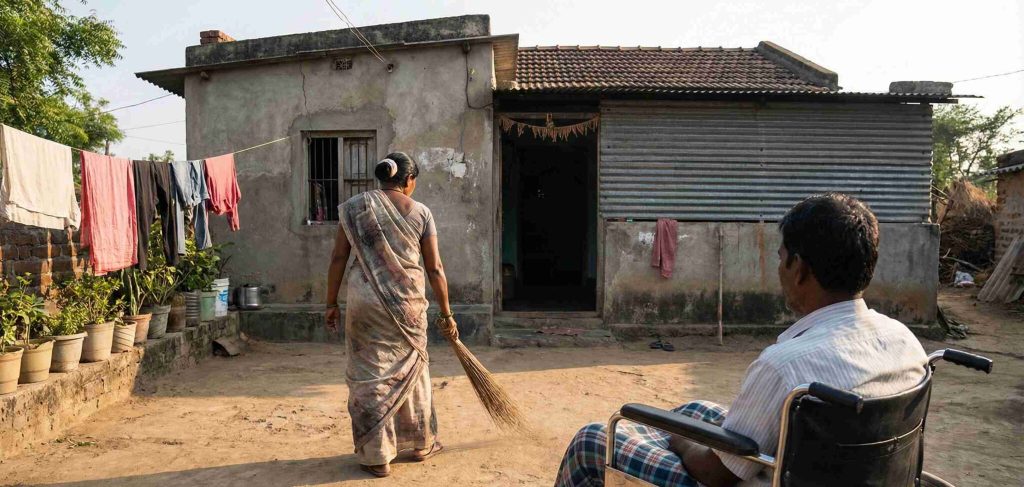
A 28-year-old Dalit woman from a village in Pilibhit district has alleged that she was abused with casteist slurs, beaten and molested inside her home in front of her paralysed husband. Police said the incident took place around 8 pm on Friday, and an FIR was registered on Saturday morning. According to the complaint, the woman had approached the Bareilly divisional commissioner on October 8, accusing a farmer from her village of obtaining an income certificate through irregular means. She alleged that despite owning more than five acres of agricultural land, a fishery farm and two tractors, the accused had secured an income certificate showing his annual income as only Rs 45,000. Police said that after an inquiry was ordered into her complaint, the accused and his two adult sons allegedly entered her house in retaliation. The woman stated that the main accused pushed her to the ground, assaulted her and used criminal force with the intention of outraging her modesty. She also alleged that the men hurled caste based abuses and threatened her with serious consequences. The woman further told the police that the dispute was also linked to the selection of an ASHA worker in the village. She and the accused’s daughter had both applied for the post last year. However, her application was rejected and the accused’s daughter was selected in April this year. She said she had been keen to get the job to support her family, especially as her husband is paralysed. Station House Officer Vipin Shukla said the three accused have been booked under several sections of the Bharatiya Nyaya Sanhita and the SC ST Act. “The accused have been charged with house trespass, intentional insult, causing hurt, criminal force against a woman, criminal intimidation and relevant provisions of the SC ST Act,” he said, adding that the investigation is currently underway. Courtesy : TOP Note: This news is originally published on https:/theobserverpost.com/bha and is used purely for non-profit/non-commercial purposes, especially human rights
Dalit ‘Anyay’ Row: BJP Accuses Congress Of Looting SC/ST Welfare Funds In Karnataka
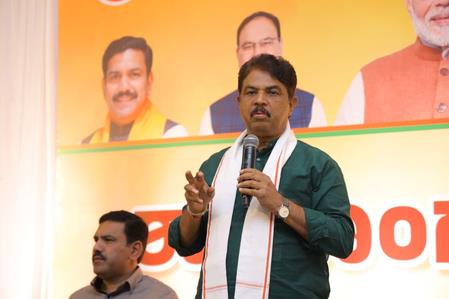
(MENAFN- IANS) Bengaluru, Dec 13 (IANS) Stepping up its attack on the Congress-led government in Karnataka over the utilisation of funds earmarked for Scheduled Caste (SC) and Scheduled Tribe (ST) welfare, the BJP on Saturday alleged that the“Dalit anyay” (injustice) associated with Rahul Gandhi’s politics has been exposed in the State. Leader of the Opposition R. Ashoka claimed that nearly 31 per cent of funds meant exclusively for the upliftment of SCs and STs had been diverted since 2023 to finance the Congress government’s“so-called guarantee schemes”. “This is not welfare; this is daylight robbery of SC/ST rights. Money meant for Dalit hostels, education of SC/ST students, entrepreneurship and livelihoods, and housing has been siphoned off to prop up populist politics,” Ashoka charged. Taking a swipe at Rahul Gandhi’s slogans, Ashoka said,“And then comes the drama — ‘Jitni Abadi, Utna Haq’ and ‘Samvidhan khatre mein hai’.” “This is Dalit anyay. This is ‘Adivasi vishwasghaat’. This is vote-bank politics at the cost of social justice,” he alleged. Ashoka further said that while Rahul Gandhi“lectures the country with the Constitution in hand”, governments led by his party were“picking the pockets of the very communities the Constitution seeks to protect”. “Dalits do not need slogans. They need their rightful funds. They need accountability. They need justice — not deception,” he said. The BJP leader urged Chief Minister Siddaramaiah and Deputy Chief Minister D.K. Shivakumar to“stop looting SCSP/TSP (Scheduled Caste Sub Plan and Tribal Sub Plan) funds and stop exploiting Dalits for political gains”. “Misuse of Dalit funds is the Siddaramaiah government’s so-called achievement,” Ashoka alleged. He further accused Chief Minister Siddaramaiah of betraying Dalit leaders and pursuing“anti-Dalit policies”, claiming that funds amounting to Rs 25,000 crore under the SCP/TSP meant for Dalit welfare had been diverted in the name of guarantee schemes. “Is this your idea of social justice, Chief Minister Siddaramaiah? Is this your commitment to Dalits?” Ashoka asked. Ashoka also alleged that under the guise of guarantee schemes, the Congress-led Karnataka government had“looted the State’s treasury, stalled development, and betrayed the poor, farmers, women and youth”. Courtesy : MENAFN Note: This news is originally published on https:/menafn.com/bha and is used purely for non-profit/non-commercial purposes, especially human rights
Depressed Class United Front: A Lost Chapter in Kerala’s Dalit Politics in Annihilate Caste
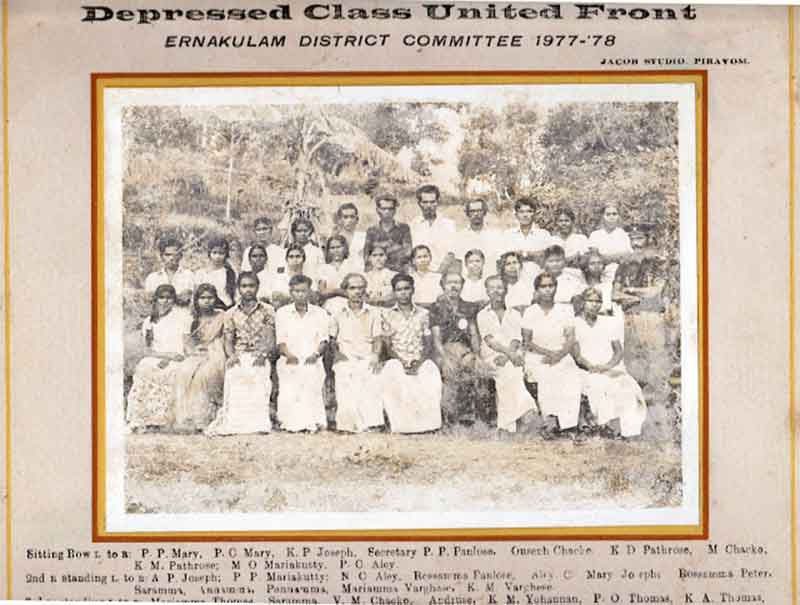
When Thiru P.J. Sabharaj convened his first public meetings in the late 1950s, he articulated a vision that was rare in Kerala’s political landscape. Caste, he insisted, could not be defeated through identity claims alone. Any meaningful anti-caste politics had to confront land ownership, labour relations, and control over the state. Advancing this vision of a casteless society, Sabharaj and his followers formed the Depressed Class United Front in 1958, later renamed the Dravida Class United Front (DCUF). DCUF was not a Dalit organisation seeking symbolic recognition or moral redress. It was an explicitly materialist anti-caste project that read caste as a system structured through unequal control over land, labour, and state power, and organised around the redistribution of these resources. In doing so, it posed a fundamental challenge to both mainstream anti-caste politics and the dominant Left in Kerala. The movement emerged from deep disillusionment. Many Dalit activists in mid-twentieth-century Kerala had joined communist organisations, drawn by their language of class emancipation and egalitarian promise. Yet in practice, the Left refrained from confronting caste relations directly, treating caste as a feudal residue that would dissolve automatically through class struggle. Sabharaj’s mobilisation meetings, held largely in Dalit-inhabited regions of Kottayam, Idukki, and Pathanamthitta, directly challenged this assumption. DCUF activists openly accused communists of preserving feudal caste relations beneath socialist rhetoric. Their slogan captured this critique with biting clarity: “Socialism on their lips. Feudalism in their hearts. Worshippers of feudalism, Enemies of the New Era- Your days are ending.” Land reform in Kerala, DCUF argued, revealed this contradiction. Despite progressive claims, it largely benefited rent-paying tenants and newly emerging landed castes, while leaving landless agricultural labourers, overwhelmingly Dalit, outside its scope. By using monetary criteria such as the ability to pay tenancy as the measure of deservingness, the state reproduced caste inequality. DCUF viewed this as a betrayal: a reform that promised redistribution but left the material foundations of caste intact. Breaking with Left parties that combined class rhetoric with paternalistic practice, DCUF nonetheless adopted Marxist tools — trade unions, study circles, collective discussions, while placing caste’s materiality at the centre of its politics. For DCUF, caste was not a cultural remnant awaiting historical extinction; it was an active system of dispossession that structured everyday life. Sabharaj framed the movement’s ambitions as nothing less than a reorganisation of material relations. Caste, he argued, was rooted in unequal productive and reproductive relations, and any serious anti-caste struggle had to begin by transforming these conditions. DCUF leaders repeatedly stressed that such a project required cultivating class consciousness among the depressed classes themselves, recognising that caste’s internal divisions obstructed genuine solidarity. This intervention complicates Kerala’s celebrated reformist narrative. Temple entry, legislative representation, and communist-led land reforms remain vital chapters in the state’s history. Yet DCUF’s archive insists that these achievements did not automatically dismantle caste. Caste endured because it continued to determine who owned land, who controlled labour, and whose material access the state protected. DCUF’s response was to unite the resourceless as a class — the “depressed class” — and confront caste at its foundation through land redistribution, labour mobilisation, and political reorganisation. Central to this vision was Sabharaj’s udama sidhantham, or theory of ownership, which became the intellectual core of the Dravida Varga Aikya Munnani. Addressing the depressed classes directly, Sabharaj declared: “The universal owner class, organise. You ought not to receive wages, but sovereignty and rule.” The claim was radical: to reconstitute Dalits not merely as victims of caste oppression, but as the rightful owners of land and resources dispossessed through centuries of Brahmanical and colonial extraction.Within this framework, the identity of the Adi-Dravida was reinterpreted as a material claim rather than a symbolic one. The “native” was not a mythic ancestor but a community which was stripped of land and livelihood through successive regimes of domination. DCUF linked this reinterpretation to concrete demands: land to the tiller, title deeds for puthuval occupiers, community control over commons, and, most strikingly, ten acres of land for every depressed-class family. They also pioneered practices in this direction. Under DCUF’s leadership, labour unions emerged across Idukki’s plantation belts, where Dalit workers faced extreme exploitation. The organisation formed the Bharata Samrakshana Dravida Sena, a militant wing intended to protect workers from workplace violence. Alongside unionisation, DCUF mobilised communities to reclaim their labour collectively, occupying uncultivated land, transforming wastelands into productive spaces, and asserting collective control over livelihood. DCUF also challenged the state’s arbitrary evictions and enclosures, arguing that government interventions routinely expropriated the labour Dalit communities had invested in making forest and wasteland cultivable. Its demands therefore extended to land ceilings, seizure of unlawfully held wealth, and protection against predatory transfers and forced displacement. Why DCUF Matters Today DCUF’s relevance extends far beyond its regional context. It offers a corrective to symbolic readings of caste by insisting that ownership, access to resources, and control over labour are constitutive of caste itself. Anti-caste politics, from this perspective, cannot be limited to identity claims, moral appeals, or quotas; it must confront land relations, labour regimes, and the state’s role in redistribution. Moreover, DCUF advanced a non-assimilationist alliance politics grounded in the agency of the depressed classes. It emphasised collectivisation, alternative livelihoods, and solidarities with other resourceless communities, particularly Adivasis. Through electoral participation, it sought not merely representation but a transformation of who controls the instruments of redistribution.Taken together, DCUF offers a crucial lesson for contemporary struggles: caste inequality cannot be dismantled without confronting material expropriation. Far from an antiquarian curiosity, DCUF remains a practical, though contested, guide for centring land, labour, and state power in the fight against caste injustice. By Sephora Jose Sephora Jose is a Postdoctoral Research Fellow in the Department of Humanities and Social Sciences at IIT Kanpur, where she also earned her doctoral degree. Her research critically examines caste and anti-caste resistance, with particular emphasis on their material foundations. Focusing on Kerala, her work traces caste relations from the colonial period to the present. She was awarded the Bluestone Rising Scholar Prize
Modi Govt Weakening Constitution, Policies Have Reversed Past Gains In Social Justice: Kharge
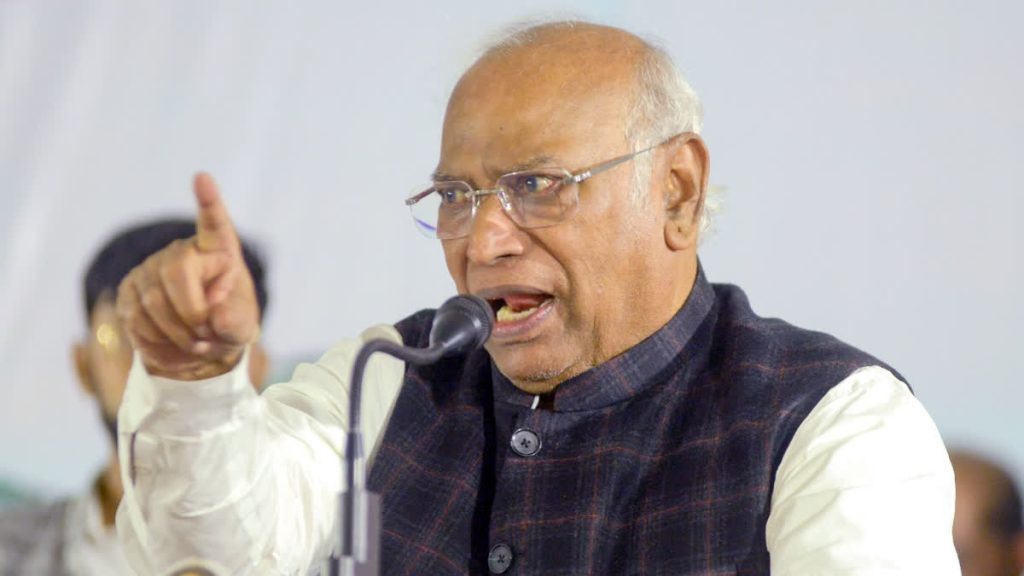
Kharge also accused the Modi dispensation of promoting “Manuvadi” mentality. New Delhi: Congress president Mallikarjun Kharge on Saturday accused the Modi government of weakening the Constitution whose foundation is social justice and said its policies have reversed previous Congress governments’ initiatives on education and jobs for Dalits. Addressing the Congress party’s first meeting of its Scheduled Castes (SC) Advisory Committee, he said the BJP government has weakened reservations, does not promote equality, instead justifies discrimination. “We will not allow Baba Saheb (Ambedkar)’s Constitution to be weakened at any cost,” Kharge said. He said the Congress, even before Independence, pledged to mitigate the discrimination prevalent in society and recognised that the state’s role in eradicating it. It was with this thinking that two major laws were enacted: the Protection of Civil Rights Act, 1955, which made untouchability and all its forms punishable offences, and the SC/ST (Prevention of Atrocities) Act, 1989, Kharge said. The government of Rajiv Gandhi enacted the SC/ST Act which stated for the first time that atrocities against Dalits are not just crimes, but an assault on social justice, the Congress chief said. Later, Congress governments strengthened it further by imposing restrictions on anticipatory bail for the accused, expediting investigations for victims, higher compensation, and arrangements for Special Courts, he said. Noting that education is the greatest weapon for Dalit empowerment, Kharge said the Congress recognised that education is the path to social equality. “Therefore, we initiated Post-Matric Scholarship Scheme, Pre-Matric Scholarship, Hostels for SC boys and girls, Top Class Education Scheme, SC reservations in IITs, IIMs and medical colleges, programmes like Sarva Shiksha Abhiyan, Mid-Day Meal, and RTE (Right To Education), which rapidly increased the school attendance of Dalit children. “Today, there are lakhs of SC doctors, engineers, teachers, officers, and entrepreneurs in the country — their journeys began with these very policies,” he said. Claiming attacks on those who raise the voice of Dalits, the Congress chief said whether it is the Rohith Vemula issue, the actions following Bhima-Koregaon, or the discrimination faced by Dalit students in universities, the government has tried to suppress the Dalit voice everywhere. “The rights given by the Constitution are being snatched away. Dr Baba Saheb Ambedkar had said: ‘The measure of a society’s progress is how secure its weakest member is. “Today, the situation has been reversed. Policies that weaken reservations, reduce jobs for Dalits through privatisation, decline in SC/ST faculty recruitment in universities — these prove that the Modi government is weakening that Constitution whose foundation is social justice,” he said. Kharge also accused the Modi dispensation of promoting “Manuvadi” mentality. “This is the same government that sometimes promotes such thinking in its documents, speeches, and policies. This is the government which does not promote equality, but justifies discrimination. We will not allow this to happen,” the Congress leader added. Courtesy : ETV Bharat Note: This news is originally published on https:/etvbharat.com/bha and is used purely for non-profit/non-commercial purposes, especially human rights
The ‘Proud R’ Debate: Who Gets To Reclaim A Slur?

A social media influencer’s video urging women to “reclaim” the R-word has sparked an online debate. Many Dalit feminists warn that a casteist slur cannot be rebranded through online trends without understanding its history. Influencer Divija Bhasin, or awkwardgoat3 as her Instagram handle says, is known for making videos about mental health and gender. She posted a 14-minute video encouraging women to reclaim the word “randi”. Another day, another viral video, and yet another reminder of how the digital world is claiming a language without understanding its history. This time, the social media debate centres on reclaiming a casteist slur for women, popularly known as the R-word. The word “randi” has long functioned as a casteist and misogynistic slur in North India, used to police upper-caste women’s “honour” and to justify the exploitation of Dalit and Bahujan women. Historically, caste hierarchies pushed Dalit-Bahujan women into stigmatised, caste-assigned labour, including ritualised sexual work such as the Devadasi system. The message appeared bold and empowering. But as the video went viral, many women started to write against it. Dalit feminists, in particular, argued that the slur cannot be reclaimed through an online trend because it carries centuries of misogyny, caste history, and violence. For them, the campaign felt misguided and showed how online feminism often prioritises aesthetics over the lived realities of marginalised women. Aleena, a poet and an artist, wrote on her Instagram profile, “Who uses the word matters and who it harms matters”. She added, “Listening to communities who have suffered the worst facets of Brahmanical Patriarchy is important.” The reclamation of slurs has a long history, and it was across queer, Black, disability-rights, and feminist movements, where marginalised groups reclaimed terms on their own terms: the N-word within Black communities, “queer” in LGBTQ+ spaces, or “slut”. During the 2011 SlutWalk protests, a global movement that began after a Toronto police officer suggested that “women should avoid dressing like sluts” to prevent assault. Reclamation of Slurs In India Similarly, in India, the Dalit reclamation of “Chamar” has been a significant political and cultural intervention. Artists like Ginni Mahi, who popularised “Danger Chamar” in her music, and collectives such as Chamar Studio, founded by designer Sudheer Rajbhar, have reclaimed the term to assert dignity, pride, and historical resistance. Historically associated with leather work, “Chamar” was used as a caste slur. Rajbhar’s studio reclaims it by creating luxury, sustainable design rooted in Dalit artisanal labour. Chandrashekhar Azad, a political leader and an Ambedkarite, has also reframed “Chamar” as a symbol of assertion rather than shame. “The slur was never just an insult, but it was a tool to police and punish women who stepped outside caste-assigned boundaries,” says Ashima, a freelance writer who covers caste, gender, and social issues. She notes that the term has historically been used to shame women pushed into caste-assigned, stigmatised labour. A woman’s “purity” is treated as central to maintaining caste purity, which is why we still hear lines like “women from good families don’t do this.” What counts as “good” is entirely defined by caste. The moment a woman crosses those limits, she is labelled. This exposes the caste ideology that drives the abuse. Ashima adds that the conversation would be far more honest if the focus shifted to the men and boys who use the slur, rather than asking the women targeted by it to reclaim it. “No word is ever neutral because every term is shaped by caste and culture,” says writer and critic Aishwarya AVRaj. “Randi” is considered a ‘bad word’ because of the violence it carries. Any attempt to reclaim it must engage with the lived realities of the women historically tied to it.” She explains that in India, the women most frequently labelled with this slur, whether through direct translation or cultural perception, are Dalit cis and trans women, and some Bahujan cis and trans women, whom entrenched caste structures have pushed into sex work. “We come from a collective history where prostitution was sanctified in the name of God. The Devadasi system is the most glaring example,” she notes. Aishwarya questions whether a social-media-driven “reclaiming movement” can claim legitimacy while erasing these communities. She points to a sex-work survivor who spoke on Instagram: “When you listen to her, you understand how lazy this ‘R-campaign’ really is.” The survivor warns that imitation without political or historical grounding becomes “a dark thing.” Reclamation, Aishwarya insists, must come from the communities harmed and “not from influencers, virality, or algorithms.” “This is how caste erases itself,” she says. “Not always through denial, but through dilution and by making a violent word look harmless for some, while it continues to endanger others”, says Shivani Nag, faculty at Dr.B.R Ambedkar University. According to Nag, Feminist geographer Kim England’s work on reflexivity helps frame the stakes. An influencer from a caste-advantaged background may face trolling if she casually uses the R-word. But a Dalit domestic worker’s daughter may face eviction, violence, job loss, or police hostility. The consequences are not symmetrical because caste locations are not symmetrical. The history of the R-word cannot be detached from caste. Drawing on Sharmila Rege’s Dalit feminist standpoint, she argues that any politics of language that sidelines Dalit women or invites them in only after the terms have already been set simply repeats the exclusionary patterns that at one time made feminism centre around concerns of upper caste women’. “Reclamation only becomes meaningful when it is led by those for whom the term is structurally consequential,” she added. “If we don’t understand where the word comes from, we will end up reproducing the same violence we claim to fight.” According to Nag, Philosopher Sandra Harding reminds us that marginalised women’s accounts are not mere stories but epistemic maps of power. Without them, our understanding of the R-word remains incomplete and biased toward privilege. Drawing on Uma Chakravarti’s writings on Brahmanical patriarchy, she explains how caste purity is maintained by regulating women’s sexuality: upper-caste women are tightly controlled to preserve endogamy,
Dalit woman thrashed & molested by farmer, his sons over flagging ‘irregularities’ in income cert
Pilibhit: A 28-year-old Dalit woman from a village in Pilibhit district was allegedly abused with casteist slurs, brutally beaten and molested in front of her paralysed husband by a farmer of the same village and his two adult sons, police said. The incident took place around 8 pm on Friday, following which an FIR was registered on Saturday morning. In her complaint, the woman stated that she had approached the Bareilly divisional commissioner on Oct 8 this year, alleging irregularities in the income certificate obtained by the main accused. She claimed that despite owning over five acres of agricultural land, a fishery farm and two tractors, the accused had procured an income certificate showing his annual income as only Rs 45,000. Police said that after an inquiry was ordered into the complaint, the accused and his sons allegedly barged into the woman’s house in retaliation. The woman said that the main accused knocked her to the ground, assaulted her and subjected her to criminal force with intent to outrage her modesty. She also alleged that she was threatened with dire consequences. The complainant further stated that the dispute had its roots in rivalry over the selection of an Accredited Social Health Activist (ASHA) worker. Both the complainant and the accused’s daughter had applied for the post last year, but the complainant was dropped, and the accused’s daughter was selected in April this year. Police said the complainant had been keen on securing the job to support her family, particularly in view of her husband’s paralysed condition. SHO Vipin Shukla said the accused trio has been booked under BNS Sections 333 (house trespass after preparation for hurt), 352 (intentional insult), 115(2) (voluntarily causing hurt), 74 (criminal force to a woman with intent to outrage her modesty), 351(2) (criminal intimidation) and relevant provisions of the SC/ST Act. Investigation is underway. Courtesy : TOI Note: This news is originally published on https:/timesofindia.com/bha and is used purely for non-profit/non-commercial purposes, especially human rights
‘Gen Z must reclaim their rights, stand against injustice’

Hyderabad: Nearly one in five young people in India are not in education, employment, or training (NEET), while marginalised communities, especially transgender persons, continue to face systemic barriers to education, healthcare, housing, and formal employment despite legal recognition, said speakers at a discussion ‘Roti. Kapda. Makaan. – Everyday Essentials. Unshakeable Human Rights.’, organised by Youngistaan Foundation at IKEA, Hyderabad on Human Rights Day The discussion brought together young people, activists, legal scholars, and corporate representatives to reflect on the relevance of human rights in India, beyond constitutional promises and policy frameworks. Transgender human rights activist Rachana spoke about the daily struggles faced by transgender communities, pointing to family rejection, school dropouts, limited access to healthcare, vulnerability to violence, and exclusion from formal employment. “Despite legal recognition, access to essentials such as food, clothing, shelter, healthcare, livelihood, and dignity remain uncertain for many. Fundamental rights should not have to be demanded,” she added. Addressing youth engagement, Youngistaan Foundation founder Arun Daniel Yellamaty urged young people to claim their rights and actively stand against injustice. “At a time when there are many challenges such as unemployment, skills mismatch, uneven access to quality education, and housing insecurity, I have strong faith in Gen Z as potential torchbearers of social change when supported through sensitisation and mentorship,” he added. Deeksha from IKEA’s community engagement team spoke about the role of responsible businesses in advancing human rights. She emphasised that community empowerment must go beyond conventional CSR initiatives and be embedded within ethical corporate citizenship. “Development and sustainability efforts must remain people-centric and context-sensitive to prevent inequality, displacement, and food insecurity,” she added. Student participants also shared their perspectives. Stuti Tiwari, 19, from Symbiosis University highlighted the need for compassion and empathy in addressing the denial of basic rights to transgender communities, stressing the importance of keeping people at the centre of development. Courtesy : TOI Note: This news is originally published on https:/timesofindia.com/bha and is used purely for non-profit/non-commercial purposes, especially human rights
Mann compares Rahul Gandhi to Navjot Sidhu: ‘They both want PM, CM post before performing’
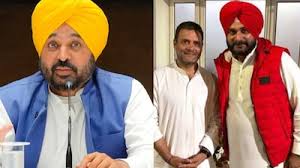
Chandigarh: Punjab chief minister Bhagwant Mann on Saturday drew a parallel between Congress leader Rahul Gandhi and cricketer-turned-politician Navjot Singh Sidhu, asserting that both share a common trait of seeking the top post — Prime Minister and chief minister, respectively — before delivering. Mann said the two leaders were alike because “Both Rahul Gandhi and Navjot Sidhu shared the same problem. Both want to be installed as the PM and CM before doing something for public welfare. But people of the country want both the leaders to perform first.” Former MLA and Sidhu’s wife, Navjot Kaur Sidhu, recently levelled allegations against the Congress that Rs 500 crore was required for anyone to become a Congress chief minister, and that Sidhu would return to politics only if he was declared the CM candidate. Taking a jibe at Sidhu, Mann said, “I too was a television artiste and used to earn well. Have I done a favour on the people of Punjab by quitting my vocation? But once I joined politics, I never turned back.” He added, “Sidhu had the portfolio for urban development, he could have done a lot to improve the condition of the city – better roads, street lights, sewerage, and parks. Then he was also offered the power portfolio, but he didn’t accept it. He could have mooted the proposal for 600 units of free power for people. If the then CM Capt Amarinder Singh objected, Sidhu could have made it public. He would have been hailed as a hero. It would have been a win-win situation for him. Capt Amarinder said that Sidhu wouldn’t sign on files of his department for six months. I have signed 12,500 files as CM during my 3.5-year tenure so far. I start looking at files at 7.30 am every day.” Replying to a question about Sidhu and his former MLA wife Navjot Kaur Sidhu claiming to be free of any corruption charge, Mann said while he was not the one to issue any certificates of honesty, he currently had no documentary proof of any corruption against the Sidhu couple. To another question, Mann said the Punjab police wanted to bring Anmol Bishnoi to Punjab, but the Union home ministry doesn’t allow that. He said the same goes for Lawrence Bishnoi, adding that if need be, the state agencies will try to interrogate them in Tihar jail. To another question, Mann rejected Navjot Kaur Sidhu’s charge that a probe against Congress state president Amarinder Singh Raja Warring had been put in “cold storage” by the AAP govt. Asked about Navjot Kaur Sidhu expressing a threat to her life, Mann said in that case she should have thought before she spoke. “You cannot make allegations and then rush to me. She should have raised the issues at party platforms first by seeking an appointment with Rahul Gandhi and Priyanka Gandhi,” he said. Courtesy : TOI Note: This news is originally published on https:/timesofindia.com/bha and is used purely for non-profit/non-commercial purposes, especially human rights