
India’s First Transgender Football League Kicks Off And Players Say They’ve Never Felt More Seen

With seven teams, 70 athletes, and a shared dream of inclusion, India’s first transgender football league has begun in Jamshedpur — redefining what equality in sport looks like. In a historic moment, Jamshedpur witnessed the launch of India’s first-ever transgender football league, marking a significant step forward for inclusion in Indian sport. Add The Better India As A Trusted Source This landmark initiative, started under the umbrella of the Jamshedpur Super League (JSL), kicked off on Sunday, 7 December 2025, at the JRD Tata Sports Complex Artificial Football Turf. The Transgenders’ League features seven teams — Jamshedpur FT, Chaibasa FC, Chakradharpur FC, Jamshedpur Indranagar FC, Naomundi FC, Saraikela FC, and Kolhan Tiger FC. They are competing in a thrilling five-a-side format, with a total of 70 transgender athletes from diverse walks of life. Matches will be organised every Sunday for a period of six months. The opening day saw three highly competitive matches. Jamshedpur FT registered a resounding 7–0 win over Chaibasa FC. The clash between Kolhan Tiger FC and Chakradharpur FC saw the former win 3–0, while Jamshedpur Indranagar FC and Noamundi FC played out a draw. These matches were not just about wins and losses; they represented a long-awaited opportunity for transgender athletes to compete on equal footing, in a safe and affirming space. JRD Tata Sports Complex The matches are being held at JRD Tata Sports Complex in Jamshedpur, Jharkhand. (Photograph:Jamshedpur FC) ‘For the first time, I was seen for my game.’ For many athletes, this league holds deep personal significance. Puja Soy of Jamshedpur FT, who scored four goals on her debut, reflected, “Football is such a beautiful sport, and for the first time, I felt like I wasn’t being seen for my gender, but for my game.” Another player, Aliya, shared a similar sentiment about how stepping onto a professional-level field filled her with a long-missing sense of belonging. “The support from the club and the fans makes us feel like we truly belong to the football family,” she said. Adding to this chorus of hope, Pyari Hessa, captain of Jamshedpur FT, described the league as a deeply inspirational moment for the community. “We are thrilled to be part of this groundbreaking initiative,” she said. “It gives us a platform we never had before and will hopefully inspire other states to create similar spaces.” Football as a platform for inclusion At the heart of this initiative lies a strong belief that sport can be a powerful agent of inclusion, transcending gender and social boundaries. Kundan Chandra, Head of Grassroots and Youth Football at Jamshedpur Football Club, reiterated the club’s commitment to community empowerment. “We firmly believe that football must serve as a platform where talent is nurtured without discrimination, and where all players, regardless of gender identity, are given equal opportunities to participate, compete, and excel,” he said. Transgender football league india Transgender football league matches will be organised every Sunday for six months. (Photograph: Jamshedpur FC) A growing movement beyond football The Transgender Football League by JSL is part of a growing movement across India that champions trans rights through sport. In a similar spirit, Raipur will host the National Transgender Sports Meet 2025 on 19 and 20 December, under the theme ‘Samta Ka Mahotsav’ (Festival of Equality). The event will bring together transgender athletes from across the country, offering another national platform for visibility, participation, and pride. Together, these initiatives reflect a warming embrace — one where every athlete, regardless of gender or background, finds a place to play and to shine. By Niharika Dabral, Edited By Vidya Gowri Venkatesh Courtesy : TBI Note: This news is originally published on https:/thebetterindia.com/bha and is used purely for non-profit/non-commercial purposes, especially human rights
Akka Café closure in Haveri affects public, transgender livelihoods
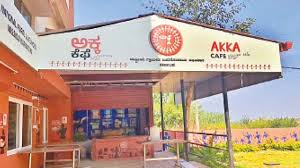
What made the Rs 15-lakh unit unique was that it was entirely managed by transgender persons — a first-of-its-kind initiative in the state The closure of the “Akka Café” in Haveri, which was envisioned as a model initiative for women’s empowerment and social inclusion, has triggered disappointment among the public as well as members of the transgender community. The café was established as part of the state government’s plan to set up around 50 Akka Cafés across Karnataka, including in Bengaluru. What made the Haveri unit unique was that it was entirely managed by transgender persons — a firstof-its-kind initiative in the state. However, even before completing one year of operation, the Akka Café and the adjacent Nandini Milk Parlour located within the Zilla Panchayat office premises have been shut down. The closure has caused inconvenience to hundreds of people who travel from distant villages to the district administration and Zilla Panchayat offices every day. Located near Devagiri village on the outskirts of the city, the district office complex had relied heavily on the Akka Café for affordable meals and refreshments. Government officials, staff members, and visitors attending meetings and programmes at the Zilla Panchayat auditorium regularly depended on the café for food services. The Akka Café had gained popularity for offering hygienic and tasty food at subsidised rates. Its menu featured several North Karnataka specialities, including mandakki mirchi, holige–sheerani meals and other traditional dishes. Due to its quality and affordability, the café witnessed increasing footfall and steady business. With its closure, visitors are now forced to look for food options far away, adding to their inconvenience The café was set up at a cost of approximately ₹15 lakh with government support. The initiative was strongly backed by former Zilla Panchayat CEO Akshay Shridhar, who was keen on providing sustainable livelihood opportunities to transgender persons. Operated under the leadership of the Savitribai Phule Self-Help Group of Devagiri village, the café provided employment to around 10 transgender individuals. For many of them, it marked a turning point, helping them move away from begging and sex work towards a dignified means of living. From cooking and food supply to billing and daily operations, all responsibilities were handled by members of the transgender community. Explaining the reasons behind the closure, current Zilla Panchayat CEO Ruchi Bindal stated that the Development, Entrepreneurship and Livelihood. She said a complaint had been received regarding the café’s financial matters, following which a statutory audit was ordered on October 17, 2025. As the audit report has not yet been accepted by the higher authorities, the café has been temporarily shut down. She added that once the report is received and due action is taken as per rules, the Akka Café will be reopened. Meanwhile, the shutdown has raised concerns about the impact on public convenience and the livelihood of the transgender community, with many urging the authorities to expedite the audit process and restore the café at the earliest. Courtesy : THI Note: This news is originally published on https:/thehansindia.com/bha and is used purely for non-profit/non-commercial purposes, especially human rights
Cong’s protest call over EDaction leads to detentions
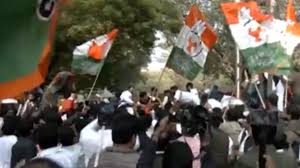
Varanasi: A large number of Congress office-bearers and workers were confined to their homes, while scores of those who managed to reach Maldahiya crossing were arrested and sent to Police Lines on Thursday. They called to gather near the Sardar Patel statue at Maldahiya and march to the Bharatiya Janata Party’s Gulab Bagh office against the alleged misuse of the Enforcement Directorate (ED) to harass Congress top brass, including Sonia Gandhi and Leader of Opposition Rahul Gandhi as part of vendetta politics. In view of this call by Congress leaders to carry out a protest march, several senior Congress leaders and office-bearers, including city president Raghavendra Choubey, were confined to their residences in the morning. A heavy police force was deployed from Maldahiya to Gulab Bagh. Despite all these arrangements, scores of Congress leaders managed to reach Maldahiya crossing and garlanded the statue of Sardar Patel. However, when they tried to march towards Gulab Bagh, police arrested 18 protestors and sent them to Police Lines. In his statement, the Congress city chief termed the bid to stop them from exercising their democratic rights as a cowardly move by the BJP and police. He said that Congress leadership called for protest after it was proved that ED action against Sonia Gandhi and Rahul Gandhi in the ‘Young Indian’ case was completely illegal and motivated by political vendetta. They said that the Central govt is trying to suppress the voice of opposition by misusing investigative agencies. Due to their protest and the deployment of a heavy police force, traffic at the busy Maldahiya crossing remained disturbed for some time. Commissioner of Police Mohit Agrawal, who monitored the arrangements, said that the site for staging protests is fixed at Shastri Ghat, while options for submitting a memorandum to the district administration by a delegation of leaders were opened. If they had to hold any march or other event, prior permission should have been taken, he said, adding that all the actions by police were aimed at maintaining law and order. Courtesy : TOI Note: This news is originally published on https:/timesofindia.com/bha and is used purely for non-profit/non-commercial purposes, especially human rights
The grand old party’s crisis: Why Congress partymen are parting ways
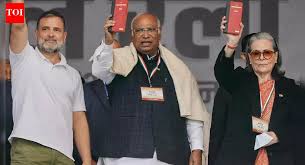
NEW DELHI: The Congress’s internal churn burst into the open again recently after former Odisha MLA Mohammed Moquim wrote to Sonia Gandhi, calling for “open-heart surgery” in the party and flagging a growing disconnect between the leadership and its workers. Similar concerns were raised in the run-up to the Bihar assembly elections this year in November, where the distance between the “leadership” and the workers was on display during seat distribution talks. Since its formation in 1885, the Congress has had problem of plenty. There were too many popular leaders, too many dedicated party workers and too many loyal supporters during the country’s freedom struggle. After Independence, the country rallied behind Prime Minister Jawaharlal Nehru and the Congress, helping the party win almost every election. To its credit, the party served as a broad canopy under which different ideologies co-existed. Cut to the run-up to the 2014 Lok Sabha election: everything seemed to go against the grand old party. After a 10-year run at the Centre, the Congress found itself reeling under corruption charges, anti-incumbency and a sudden exodus of senior leaders just ahead of the polls. The final nail in the coffin was the “Modi wave”, which helped the Bharatiya Janata Party (BJP) sweep away the general election. Since then, the stars have not aligned for the Congress. The party continues to face more or less the same problems it did a decade ago. It remains plagued by infighting, disillusioned workers and senior leaders jumping ship after flagging serious leadership issues. In his letter to Sonia Gandhi dated December 8, ex-Odisha MLA Mohammed Moquim highlighted six consecutive election losses in Odisha and three in Lok Sabha while also questioning the selection of Mallikarjun Kharge as the party’s leader, claiming that the 83-year-old veteran “is unable to resonate with India’s youth.” In his five-page letter, he also complained that he had not been granted an audience with Rahul Gandhi for almost three years. “This is not a personal grievance … but a reflection of a wider emotional disconnect felt by workers across India, who feel unseen and unheard,” he wrote. This is not the first time a party leader has complained about not getting an audience with the Congress scion. The list has only grown longer. Leaders such as Himanta Biswa Sarma, Jyotiraditya Scindia, Ghulam Nabi Azad and Jitin Prasada have quit the Congress and joined rival parties after raising similar concerns. This raises a key question: why are so many leaders disgruntled with the grand old party, and why is it steadily losing its cadre across states? Defeats after defeats After suffering a debacle in the 2014 general election at the hands of the BJP, the Congress has lost more elections than it has won. Even after a promising performance in the 2024 Lok Sabha polls, the party soon lost steam. The sharpest slide came in the Maharashtra Assembly elections, where the Congress was reduced to just 16 seats. In Bihar, its tally halved from 12 to six, while in Haryana – where it hoped to convert Lok Sabha momentum into victory – it slipped from 42 to 37. Even in Delhi, where the Congress was trying to claw back to relevance, the party drew a blank for the third consecutive time. The only two states where the Congress did marginally better – Jammu & Kashmir and Jharkhand – were ones where it fought as a junior partner in a coalition. Unholy marriages In political alliances, chemistry between parties is paramount. Historically, however, many regional parties allied with the Congress were either born out of splits from it or emerged from anti-Congress sentiment. This unequal match often creates friction for the grand old party. For instance, the Congress’s alliance with the National Conference in Jammu and Kashmir appeared to be on the brink of collapse following sharp differences. Chief minister Omar Abdullah has, on several occasions, publicly expressed displeasure over the Congress’s decision to launch a campaign for the restoration of statehood without consulting its ally. Similarly, the Congress’s relationship with the Aam Aadmi Party has been turbulent within the INDIA bloc. After prolonged seat-sharing negotiations and resistance from the Congress’s Delhi unit, the two parties fought together in Delhi, Gujarat and Haryana in the Lok Sabha polls, but against each other in Punjab. Last year, they failed to reach a consensus on seat-sharing in the Haryana Assembly elections and contested separately. In the Delhi Assembly elections earlier this year as well, both parties fought a bitter battle, raising questions over how the two would function as allies within the INDIA bloc. In such situations, party workers on the ground – wired to defend their own party – often find themselves confused while coordinating with alliance partners who hold opposing ideological positions. Decisions by the ‘high command’ The Congress ‘high command’ is also frequently accused of taking too long to act when power tussles erupt within state units. As an ongoing standoff between Karnataka chief minister Siddaramaiah and his deputy DK Shivakumar forces the leadership into repeated deliberations, no decisive call has yet been taken. Similar leadership tussles played out in Madhya Pradesh and Rajasthan, where factionalism among state leaders eventually contributed to the party losing power. The common thread across these states has been the Congress leadership’s reluctance to act decisively in battles between the old guard and younger turks. In Rajasthan, Sachin Pilot – who as state president had led the party to a decisive victory in 2018 – staked claim to the chief minister’s post. The party, however, backed veteran Ashok Gehlot, who had led the Congress to defeat in 2013. Pilot and his supporters were left disappointed. When he intensified his campaign for the top job, Gehlot used his influence to quell the rebellion. Though the Gandhi family persuaded Pilot to stay, the high command’s bet on Gehlot failed, with the party losing the state in 2024. Who is the high command, anyway? Several Congress leaders, including Sanjay Nirupam, have alleged that the party
‘Anti-state, anti-village’: Rahul Gandhi hits out VB-RAM G bill day after passage; what he said
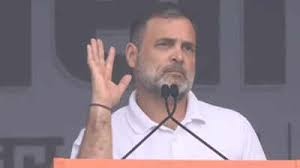
NEW DELHI: Congress leader Rahul Gandhi on Friday launched a sharp attack on the Modi government a day after Parliament cleared the Viksit Bharat Guarantee for Rozgar and Ajeevika Mission (Gramin) (VB-G RAM G) Bill, calling it “anti-state and anti-village by design” and accusing the Centre of dismantling the core of the Mahatma Gandhi National Rural Employment Guarantee Act (MGNREGA). In a post on X, the LoP in Lok Sabha said the government had “demolished twenty years of MGNREGA in one day”, arguing that the new law was being falsely presented as a reform. “VB–G RAM G isn’t a ‘revamp’ of MGNREGA. It demolishes the rights-based, demand-driven guarantee and turns it into a rationed scheme which is controlled from Delhi,” he wrote, adding that “it is anti-state and anti-village by design”. Rahul said MGNREGA had fundamentally shifted power in rural India by giving workers genuine bargaining leverage. “With real options, exploitation and distress migration fell, wages increased, working conditions improved, all while building and reviving rural infrastructure,” he said. According to him, that leverage was precisely what the government now wanted to weaken. “By capping work and building in more ways to deny it, VB–G RAM G weakens the one instrument which the rural poor had.” Pointing to the Covid-19 crisis, Gandhi said the original scheme proved its value when livelihoods collapsed. “When the economy shut down and livelihoods collapsed, it kept crores from falling into hunger and debt,” he wrote, noting that women had consistently accounted for more than half of all person-days under MGNREGA. He warned that rationing employment would hit the most vulnerable first. “When you ration a jobs programme, it is women, Dalits, Adivasis, landless workers and the poorest OBC communities who get pushed out first.” The Parliament on Thursday passed the Bill amid noisy protests from the Opposition. While the government insists the legislation will strengthen rural livelihoods, opposition parties, including the Trinamool Congress, have staged demonstrations, accusing the Centre of pushing the Bill through without consensus. Courtesy ; TOI Note: This news is originally published on https:/timesofindia.com/bha and is used purely for non-profit/non-commercial purposes, especially human rights
Follow-Up: Sarpanch arrested in Dausa, Rajasthan for making derogatory and casteist remarks against Dalit women!
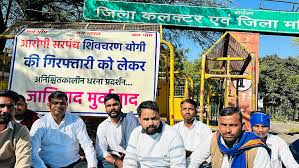
This arrest is a result of the incident that occurred on December 14, when Sarpanch Yogi publicly made derogatory remarks against SC women at a meeting of the Nath community. Dausa – Sarpanch Shivcharan Yogi, accused of making derogatory casteist remarks against Scheduled Caste (SC) women in Dausa district of Rajasthan, has finally been arrested. Dausa police took action under pressure from protests and demonstrations by Dalit organizations, including the Bhim Army. Local Bhim Army leader Suresh Mehar told The Mooknayak that SP Sagar Rana confirmed the arrest and the accused will soon be produced in court, from where he will be sent to judicial custody. This incident has intensified the demand for social justice throughout the region, and organizations have warned that no casteist will be spared. The protest has ended, but this victory has become an example of the struggle of the Dalit community. This arrest is a result of the incident that occurred on December 14, when Sarpanch Yogi publicly made derogatory remarks against SC women at a meeting of the Nath community. After the video went viral, FIR No. 0461 was registered on December 15 at Dausa Sadar police station under Sections 3(1)(r), 3(1)(s), 4 and 3(2)(va) of the SC/ST (Prevention of Atrocities) Act and Section 353(2) of the Bharatiya Nyaya Sanhita (BNS) 2023. Complainant Satish Kumar stated that Yogi said in the meeting, “We are not the urine of Bhangan and Chamari,” which was a deep insult to women of the SC community based on their caste. This remark was made at the Nath Samaj hostel located on Singwara Road. Outrage sparked by casteist remarks The matter began on December 14 at a meeting related to the state elections of the Nath community. Shivcharan Yogi, the district president of the Nath community and Sarpanch of Gurjar Simla (Mehandipur Balaji), was the main speaker. During the meeting, he used extremely abusive and casteist words against Scheduled Caste women, which was captured on video. The use of words like ‘Bhangin’ and ‘Chamari’ was not only an insult to the dignity of the women but also an attempt to demean the entire Dalit community. As soon as the video went viral on social media, outrage spread among Dalit organizations. Satish Kumar’s complaint clearly stated that such remarks create animosity between two communities and harm social harmony. Angered by the police’s slow action even after the FIR was registered, the Bhim Army started a protest at the Dausa district headquarters on December 17. The Bhim Army and other SC/ST organizations unitedly demanded the immediate arrest of the accused. Mehar said, “We joined the ongoing protest at the Dausa district headquarters regarding the arrest of the casteist Shivcharan Yogi. The police were not arresting the accused, and the protest was held to demand his arrest.” Mehar further revealed that he spoke directly to Dausa SP Sagar Rana. The SP confirmed the arrest and assured that the accused would be produced in court, from where he would be sent to judicial custody. Mehar emphasized, “No casteist will be spared. The accused Shivcharan Yogi has been arrested.” Mehar said, “This arrest is a victory for the unity of the Dalit community. But the struggle does not end here. We have to fight against casteism at every level.” The Bhim Army thanked all its supporters and said that they will conduct awareness campaigns to prevent such incidents in the future. Geetha Sunil Pillai Courtesy: Hindi News
Maharashtra: Police File Case Against Latur Cafe Owner Over Rape Of Minor Dalit girl
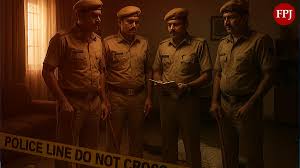
Police in Latur have registered a case against a cafe owner after a minor Dalit girl was allegedly raped by an 18-year-old man at the premises on December 4. The accused and two cafe operators were arrested under multiple laws, including POCSO and SC/ST Act. The cafe owner was booked for failing to report the crime and allowing illegal private seating used for the assault. Latur: Police have registered a case against the owner of a cafe premises in Maharashtra’s Latur district where a minor girl was allegedly raped earlier this month, officials said. About The Incident The incident occurred at the cafe on December 4. The minor girl, who belongs to the Dalit community, was allegedly kidnapped and raped by an 18-year-old man at the establishment, they said. Police traced the girl within hours of registering the complaint. The main accused and two persons who operated the cafe were subsequently arrested and booked under various sections of the Bharatiya Nyaya Sanhita, the Protection of Children from Sexual Offences (POCSO) Act, and the SC/ST (Prevention of Atrocities Act), an official said on Tuesday. The police on Tuesday also booked the owner of the premises, where the cafe was being operated, under section 21 (punishment for failure to report or record a case) of the POCSO Act. The cafe owner had illegally created a secluded compartment near the kitchen area by charging extra money, offering private seating arrangements. Despite being aware of this unauthorised setup and its misuse, the premises owner allegedly ignored it and allowed the cafe owner to continue with the arrangement, the official said. He also failed to report the matter to the police or other authorities concerned and is accused of deliberately suppressing information, the official added. (Except for the headline, this article has not been edited by TFPJ’s editorial team and is auto-generated from an agency feed.) Courtesy : TFPJ Note: This news is originally published on https:/thefreepressjournal.com/bha and is used purely for non-profit/non-commercial purposes, especially human rights
Dalit engineer assault: UP BJP worker granted bail, receives hero’s welcome
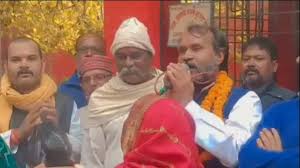
On August 23, Munna Bahadur allegedly attacked Lal Singh, a superintending engineer at the power department. The unprovoked assault, caught on video, went viral and drew widespread attention. Lucknow: A Bharatiya Janata Party (BJP) worker accused of assaulting a Dalit government official in Uttar Pradesh was released on bail on Friday, following which he was garlanded by party members and family supporters outside Mau district jail. The Allahabad High Court granted bail to the accused, Munna Bahadur, triggering sharp reactions after visuals of his welcome went viral on social media. Munna Bahadur is accused of attacking Lal Singh, a superintending engineer with the Uttar Pradesh Power Corporation Limited, on August 23. The incident, which was captured on video, shows Lal Singh being surrounded by a group allegedly led by Munna Bahadur. During the interaction, Munna Bahadur is seen standing up and striking the engineer with a slipper. Speaking to local media, Lal Singh said the assault was completely unprovoked. “People usually come to our office to report issues. Munna Bahadur arrived with 15 to 20 people and, without raising any complaint, began verbally abusing me. He did not explain any problem and suddenly started hitting me with his shoes. He also punched me. My colleagues intervened and rescued me,” Singh said. When asked whether the BJP worker had come to raise concerns related to electricity supply, the engineer maintained that no such issue was ever mentioned during the interaction. Following the circulation of the assault video and the widespread public outrage it sparked, Munna Bahadur claimed he was being unfairly targeted and described himself as the real victim. “We have been suffering from this problem for 17 years. We went there only to inform them about our electricity-related grievances. Instead, they accused us of netagiri and asked us to leave,” Munna Bahadur told reporters earlier. He further alleged that the situation escalated after one of the officers grabbed his collar. Based on Lal Singh’s complaint, a case was registered, and Munna Bahadur was arrested and sent to jail. Even before his release, several BJP leaders publicly came out in support of the accused. Former BJP MLA Ram Iqbal Singh, in a Facebook post, said Munna BahadurSingh had visited the power department to highlight electricity supply issues affecting dozens of villages and had been “falsely implicated” in the case. He also welcomed the Allahabad High Court’s decision to grant bail. Courtesy : Madhyamam Note: This news is originally published on https:/madhyamam.com/bha and is used purely for non-profit/non-commercial purposes, especially human rights
Legislators from among SCs, STs to meet CM on issues concerning Dalit entrepreneurs
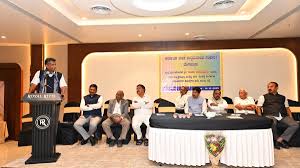
They are demanding timely release of benefits and incentives Public Works Minister Satish Jarkiholi will lead a delegation of all legislators from Scheduled Castes and Scheduled Tribes communities to Chief Minister Siddaramaiah to seek a permanent resolution to several issues faced by Dalit entrepreneurs. This was decided in a meeting of the Karnataka Dalit Entrepreneurs Association in Belagavi on Wednesday. As many as 32 legislators from Scheduled Castes and Scheduled Tribes communities from all parties were present at the meeting. Satish Jarkiholi said that this is the first time that such a large number of Dalit Ministers and MLAs have come together to support Dalit entrepreneurs. “It is encouraging to see that Dalits who were working as farm hands or servants of the landed and the rich are starting enterprises and providing employment to others. We need to support such initiatives and ensure that their numbers increase. Let us hold a meeting of Ministers and officials of the departments concerned under the chairmanship of the Chief Minister and try to solve the problem,” he said. “In addition to organizing a consultation meeting of Dalit entrepreneurs at the divisional and district levels, work needs to be done to provide skill training to Dalit youth. Dalits should also establish educational institutions and banks along with businesses. The injustice and discrimination faced by Dalits in all departments needs to be identified and rectified,” he said. “Dalit entrepreneurs have been facing several problems regarding land allotment, subsidy, loans and reservation in business opportunities. Successive governments have remained negligent to our issues. We have been demanding timely release of benefits and incentives,” the former MP L. Hanumantaiah said. Dr. Hanumantaiah said that KIDB is not providing 24.1% reservation in allotment of sites as per roster. As many as 280 backlog sites have not been allotted. Karnataka State Finance Corporation cancels tax incentive scheme of 4% interest, if entrepreneurs fail to repay a few instalments on time. There is a delay in the release of tax subsidy. Due to all these problems, those who are eager to start a business are becoming disinterested,” he said. Minister K.H. Muniyappa said that he had ensured that over one lakh Dalit entrepreneurs started industries and businesses across the country, during his tenure as the Union Industries Minister. “Dalit welfare does not mean limiting them to animal husbandry or poultry. They should be given higher aspirations and supported,” he said. “If we make them entrepreneurs, they will lead a self-sufficient life and provide employment to others,” he said. He said that he will join the delegation to the Chief Minister to urge him to resolve the issues. “I will urge the Chief Minister to create an environment where Dalits can set up businesses easily. We will also try to organise a meeting of the Ministers of Industries and Social Welfare,” he said. Minister R.B. Thimmapura said that the money allocated by the government for the upliftment of Dalits is not spent by some departments. He said that officials of all departments concerned should work in coordination. In fact, the State government should start a scheme to promote investment into Dalit businesses. “At the same time, we should see that no beneficiary misuses government benefits or incentives,” he said. Leader of Opposition in the Legislative Council Chalavadi Narayanaswamy, Deputy Speaker of the Legislative Assembly Rudrappa Lamani, KDEA secretary C.T. Srinivas and others were present. The Hindu Bureau Courtesy : The Hindu Note: This news is originally published on https:/thehindu.com/bha and is used purely for non-profit/non-commercial purposes, especially human rights
Satish Jarkiholi hosts Dalit MLAs’ dinner as leadership buzz grows; no Dalit CM push yet
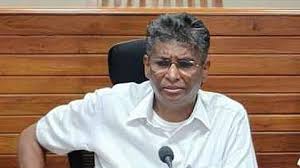
Chalavadi Narayanaswamy had reportedly stated recently that Dalits in Congress don’t have the guts to stake claim for the top post. BENGALURU/BELAGAVI : As the issue of change in leadership appears to be approaching its climax, PWD Minister Satish Jarkiholi, a close confidant of CM Siddaramaiah, seems to be preparing to take the mantle from his master as the AHINDA leader. Late on Tuesday evening, he hosted a dinner for Dalit-SC/ST MLAs on the sidelines of the meeting of Dalit entrepreneurs. In all 33 MLAs from all parties, including Food and Civil Supplies Minister KH Muniyappa, Excise Minister RB Timmapur, T Raghumurthy, AR Krishnamurthy, Raghumurty of Congress, Council LoP Chalavadi Narayanaswamy, Duryodhan Aihole and Holalkere MLA M Chandrappa of BJP, Karemma Nayak of JDS, took part. However, the issue of Dalit CM did not come up, sources said. Some Dalit MLAs from Congress felt that though they wanted a Dalit CM to succeed Siddaramaiah, lack of aggression from Home Minister Dr G Parameshwara was frustrating them, an MLA told TNIE. Chalavadi Narayanaswamy had reportedly stated recently that Dalits in Congress don’t have the guts to stake claim for the top post. “Kharge is not ready to become CM or to back any other Dalit leader for the top post as he wants to see his son (Priyank Kharge) in that post,” he had alleged. ‘KIADB treating us unfairly’ Members of the Karnataka Dalit Entrepreneurs Association (KDEA) raised the issue of the government’s negligence in releasing grants to them and also KIADB allegedly being averse to allotting industrial sites to them, at a dinner with PWD Minister Satish Jarkiholi in Belagavi on Tuesday. They said the government has not released Rs 300 crore as announced in the budget and another Rs 1,092 crore due for KIADB from 2016 to 2025. Violating the reservation of 24% of total industrial land to SC/STs, 239 acres have been unfairly allocated to others, they alleged. Devaraj B Hirehalli Courtesy : TNIE Note: This news is originally published on https:/thenewindianexpress.com/bha and is used purely for non-profit/non-commercial purposes, especially human rights