
BMC Elections 2026: Congress Expands Base With VBA Tie-Up, Aims To Consolidate Dalit & Minority Votes
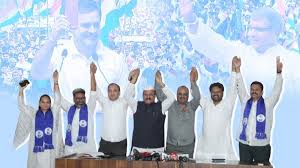
Congress and the Prakash Ambedkar-led Vanchit Bahujan Aghadi (VBA) have formed a surprising alliance for the Mumbai BMC elections, ending 25 years of rivalry. Congress will contest 150 seats, VBA 62, and Rashtriya Samaj Paksha 9-12. The alliance aims to consolidate Dalit, minority, and north Indian votes, posing a challenge to Sena-MNS and BJP ahead of 2029 polls. Mumbai: Burying political animosity of the past 25 years, Congress on Sunday sprung a surprise by joining hands with the Prakash Ambedkar-led Vanchit Bahujan Aghadi (VBA) for BMC elections. Under the arrangement, Congress will contest 150 seats, while VBA will field candidates in 62 wards, leaving 9-12 seats for Rashtriya Samaj Paksha led by Mahadeo Jankar. The alliance was announced by Maharashtra Pradesh Congress Committee (MPCC) president Harshwardhan Sapkal, along with VBA state vice-president Dhairyavardhan Pundkar. Mumbai Congress chief Varsha Gaikwad was absent, reportedly due to her engagement in a screening committee meeting to finalise candidates. The coming together of the Congress and the Vanchit Bahujan Aghadi (VBA) has once again proved that anything and everything is possible when it comes to politics. If we look back into recent electoral history, we will remember that not once but twice the VBA gnawed into the Congress vote base. During the 2014 Lok Sabha and state Assembly elections, the VBA in alliance with the All India Majlis-e-Ittehadul Muslimeen (AIMIM), contributed to the defeat of Congress’ several candidates. In the 2019 elections again, it significantly dented the Congress-NCP alliance’s chances of returning to power on its own. According to Congress leaders, the VBA ensured the defeat of at least 25 candidates from the Congress and the NCP. The party attracted a substantial share of Dalit votes, which traditionally belonged to the grand old party. The VBA is said to have polled 41 lakh votes in the 2024 Lok Sabha elections and 24 lakh votes in the Assembly elections held the same year. Its candidates finished second in 10 constituencies and third in several others. In the 2024 Assembly elections, the VBA impacted nearly 20 seats where the Maha Vikas Aghadi (MVA) lost to the Mahayuti by margins of less than 10,000 votes. Similarly, in the Lok Sabha elections held last year, the MVA lost a few seats due to the presence of VBA candidates in constituencies such as Akola, Buldhana, Hatkanangle and Mumbai North West. The emerging understanding between the Congress and the VBA is being seen as a precursor to a possible alliance ahead of the 2029 elections, according to a party leader. “The Congress cannot remain dependent on the Shiv Sena (UBT), especially as it may continue its alliance with the Raj Thackeray-led MNS, which is against our ideology,” the leader said. The Congress is also keen on expanding its base in Vidarbha, a region that has traditionally been a party bastion. Even in the recent municipal council elections, the party secured its maximum number of seats from Vidarbha. With upcoming elections to municipal corporations and Zilla Parishads, the alliance with the VBA could prove advantageous, the leader added. On the other hand, a Congress-VBA alliance is likely to pose challenges for the Sena (UBT)-MNS combine as it could attract a large share of Dalit votes along with support from north Indian voters and minorities. “North Indians and minorities do not vote for the MNS and this could significantly affect the Thackeray brothers,” the leader said. For the BJP and the Shinde Sena, the alliance may create problems in a few constituencies. However, by denting the Thackeray vote bank, it could also indirectly benefit the Mahayuti. The BJP primarily relies on Gujarati and north Indian voters and requires substantial support from Marathi voters across communities. For the Shinde Sena, the Congress-VBA candidates could come to its aid – provided they draw votes away from the Thackeray faction. Ravikiran Deshmukh Courtesy : TFPJ Note: This news is originally published on https:/thefreepressjournal.com/bha and is used purely for non-profit/non-commercial purposes, especially human rights
20 transgenders hired as sanitation workers in Vizag
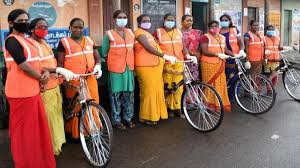
Visakhapatnam: Vizag city police, with support from local bodies and various organisations, are helping transgender individuals find employment. Under “Mission Jyotirgamaya,” Vizag city police chief Dr Shanka Brata Bagchi has been working to provide livelihood and dignity to the transgender community in the city. As a first step, 20 transgender persons have been appointed as sanitation workers with GVMC, and five others have availed loans from SBI to start small businesses. The city police said they aim to create employment opportunities for all transgender individuals in Vizag in the coming days. Courtesy : TOI Note: This news is originally published on https:/timesofindia.com/bha and is used purely for non-profit/non-commercial purposes, especially human rights
‘Congress all united’: Digvijaya Singh after RSS remark; condemns BJP’s ‘attempts to sow discord’
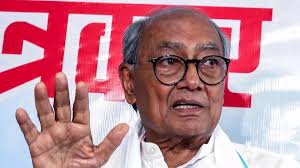
NEW DELHI: Veteran politician Digvijaya Singh reacted to the RSS praise controversy on Sunday, categorically assuring that Congress was “united”. He targeted the Bharatiya Janata Party for attempting to “sow discord” within the “Nehru-Gandhi family”. “There is no difference in ideology. We (Congress) are all united, and this Nehru-Gandhi family is a family in which two people have been martyred. I strongly condemn the BJP’s attempts to sow discord within this family,” Singh said. The reaction came on the day Congress marked its 140th foundation anniversary. “Rahul Gandhi has started this initiative (strengthening the organisation) from the district level and below. The process for that is underway. It will be completed soon,” he added. — ANI (@ANI) Singh triggered a controversy by posting a black-and-white image showing Prime Minister Narendra Modi seated on the floor beside senior BJP leader LK Advani in Gujarat. In his post, Singh remarked on how grassroots workers can rise through the party hierarchy to become chief minister and even prime minister, crediting the “strength of organization” for such upward mobility. He also tagged several senior Congress leaders, including party chief Mallikarjun Kharge, MPs Rahul Gandhi and Priyanka Gandhi Vadra, Jairam Ramesh, Prime Minister Modi, and the official Congress accounts. — digvijaya_28 (@digvijaya_28) BJP claimed that Digvijay Singh’s remarks lauding the organisational strength of the BJP and the RSS amounted to “open defiance” of Rahul Gandhi’s leadership within the Congress. BJP national spokesperson Sudhanshu Trivedi alleged that Gandhi was turning the party “on its head” after being pushed to the margins of its leadership structure. “It’s because our Narendra Modi is ‘guddri ke lal’ (diamond in the rough) and their leader is ‘Jawahar ke lal’ (great-grandson of Jawaharlal Nehru). Since our Narendra Modi has risen to top from bottom, he is taking the party (BJP) also to the top from bottom,” Sudhanshu Trivedi said. Singh later clarified that although he acknowledges the importance of a robust organisational framework, he continues to strongly oppose the RSS and PM Modi. “I support the organisation. I am against the RSS and Modi ji. You have misunderstood. I have praised ‘sangathan’. I was, am, and will remain a staunch opponent of the RSS and Modi. Is it a bad thing to strengthen and praise the organisation?” he said. Courtesy : TOI Note: This news is originally published on https:/timesofindia.com/bha and is used purely for non-profit/non-commercial purposes, especially human rights
‘Congress not just a party, but voice of India’s soul’: Rahul Gandhi on party’s foundation day; hails legacy
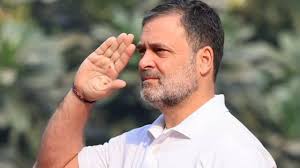
NEW DELHI: Leader of opposition in the Lok Sabha, Rahul Gandhi, on Sunday asserted that Congress is not just a political party but “the voice of India’s soul” that has always stood with the weak, the deprived and hardworking people. His remarks came on the 140th Foundation Day of the Indian National Congress. Rahul attended the celebrations at the party’s Indira Bhawan headquarters in New Delhi. Sharing a message on X, Rahul Gandhi wrote, “The Congress is not merely a political party; it is the voice of India’s soul – standing steadfast with every weak, every deprived, and every toiler.” — RahulGandhi (@RahulGandhi) The Rae Bareli MP extended greetings to party members and paid tribute to the Congress’s legacy. “Heartiest greetings to every Congressman on the Foundation Day of the Indian National Congress today. We pay homage to that historic legacy and those great sacrifices that won freedom for India, laid the foundation of the Constitution, and strengthened the values of democracy, secularism, social justice, and equality,” he said. “We resolve to fight even more resolutely for truth, courage, and the defence of the Constitution against hatred, injustice, and tyranny,” he added. Courtesy : TOI Note: This news is originally published on https:/timesofindia.com/bha and is used purely for non-profit/non-commercial purposes, especially human rights
Mallikarjun Kharge: Congress an ideology and ideologies never die
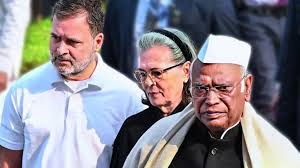
NEW DELHI: Party president Mallikarjun Kharge asserted that “Congress is an ideology and ideologies never die”, as Indian National Congress marked its 140th foundation day on Sunday. The event at Indira Bhawan headquarters of Congress in New Delhi to mark the occasion was attended by Sonia Gandhi, Rahul Gandhi, K C Venugopal, Ajay Maken and other party functionaries and members. On X, Rahul said that Congress is not just a political party, but the voice of India’s soul that has stood with every weak, deprived and hardworking person. “The resolve is to fight even more strongly the battle for truth, courage, and to protect the Constitution against hatred, injustice and dictatorship,” he said. Addressing the gathering, Kharge said that “to those who say ‘Congress is finished’, I want to tell them that our power may be less, but our spine is still straight”. “We have not compromised – not with the Constitution, not with secularism, and not with the rights of the poor. We may not be in office, but we will not bargain,” he said. He took the opportunity to urge Congress workers across country to unite and reach out to people at grassroots level to build a mass movement for restoration of MGNREGA, calling it a “vital lifeline for the poor and vulnerable”. Calling for a united fight to ‘save the democracy’, Kharge said the Constitution and democracy are under grave threat. “This fight is not merely electoral. It is a battle for the soul of India. If Congress does not fight, who will protect the Constitution and democracy?” he asked. Kharge alleged that in past 11 years, BJP-led govt has systematically weakened institutions built by Congress. Courtesy : TOI Note: This news is originally published on https:/timesofindia.com/bha and is used purely for non-profit/non-commercial purposes, especially human rights
‘Service, commitment, ethics’: Revanth Reddy praises Sonia Gandhi amid Digvijaya Singh’s RSS post; lauds Congress
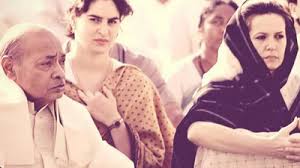
NEW DELHI: Amid the ongoing controversy over Digvijaya Singh’s remarks praising the RSS’s organisational strength, Andhra Pradesh chief minister Revanth Reddy hailed Sonia Gandhi’s role in Congress leadership, citing examples of elevation of Manmohan Singh and P V Narasimha Rao to the post of Prime Minister. In a social media post on X, Reddy, on the 140th foundation day of the Congress, said that the party “has shaped every defining chapter of modern India.” “Congress: a force for the people of India was born 140 years ago on this day. The story of the Indian National Congress is the story of Indian democracy in motion. When one reflects on the leadership of Smt Sonia Gandhi Ji, we find service, commitment, ethics and values,” Reddy said. — revanth_anumula (@revanth_anumula) “Under Smt Sonia Gandhi Ji’s leadership, it became possible for Shri P V Narasimha Rao garu, who started his public career from a remote village in Telangana, to rise to become Prime Minister of the country. Smt Sonia Gandhi Ji also made an economist like Dr Manmohan Singh Ji the Prime Minister. From leading India’s freedom struggle to framing the Constitution, from building democratic institutions to uniting a diverse nation, the Indian National Congress has shaped every defining chapter of modern India,” he added. This comes after Digvijaya Singh stirred a controversy by sharing a black-and-white photograph of Prime Minister Narendra Modi sitting on the floor near senior BJP leader L K Advani in Gujarat. Singh commented on the ability of grassroots workers to ascend through the ranks to become chief minister and eventually Prime Minister, attributing it to the “power of organisation.” He tagged several senior Congress leaders, including party president Mallikarjun Kharge, MPs Rahul Gandhi and Priyanka Gandhi Vadra, Jairam Ramesh, Prime Minister Modi, and the official Congress handles. Reportedly, the former Madhya Pradesh chief minister rued “over-centralisation” in the Congress and pushed for decentralisation in the presence of top leadership at the CWC meeting held on Saturday. He also complained that district and state chiefs were appointed by the AICC and questioned why decisions taken at the Udaipur Chintan Shivir, including setting up an election management department, had not been implemented. Last week, Singh had also praised Rahul Gandhi for his stance on socio-economic issues, giving him “full marks,” while calling for internal reforms within the Congress. Drawing a parallel with Rahul Gandhi’s push for Election Commission reforms, Singh argued that the party itself needed similar changes. In another post on X, he wrote, “Rahul ji, you are absolutely ‘bang on’ in matters of socio-economic issues. Full marks. But now please look at Congress also. Like the Election Commission needs reforms, so does the Indian National Congress. You have started with ‘Sangathan Srijan’, but we need more pragmatic, decentralised functioning.” He added, “I am sure you would do it because I know you can do it. The only problem is that it is not easy to ‘convince’ you!!” Courtesy : TOI Note: This news is originally published on https:/timesofindia.com/bha and is used purely for non-profit/non-commercial purposes, especially human rights
Barabanki: In the presence of a revenue officer and a land record officer, goons ran a tractor over a Dalit farmer; the victim is battling for his life at the district hospital.
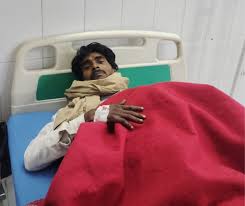
Barabanki, Uttar Pradesh: A serious case of hooliganism and caste-based oppression has come to light in Rampur Khargi village under Ramnagar tehsil of the district. It is alleged that in the presence of a revenue officer, goons plowed over the standing crop of a Scheduled Caste woman farmer with a tractor. When she protested, the goons allegedly tried to kill her husband by running him over with the tractor, leaving him seriously injured and fighting for his life at the district hospital. The victim, Kusum, wife of Mannu Lal, a resident of Rampur Khargi village (Ramnagar police station and tehsil), belongs to the Scheduled Caste. According to the victim, several families have been cultivating land and making a living on approximately 40 bighas of land in the village for many years. On a part of this land, Chandrapal Yadav of the same village has dug a pond, while the remaining land has been under ancestral cultivation by the victim and other villagers. The victim stated that she had wheat and mustard crops standing on about 5 bighas of land. On December 25, 2025, at around 2 PM, Chandrapal Yadav, his son Narendra Yadav, Suresh Verma, Master Jagat Narayan Verma, and Sandeep Verma arrived at the spot with two tractors. It is alleged that the local revenue officer Rajendra Yadav and a land record officer were also present with them. The victim says that after the measurement, the revenue officer and the land record officer told the goons to immediately plow and destroy the standing crop. The victim’s husband, Mannu Lal, and other villagers requested that the measurement be done after the harvest, but the revenue officer allegedly said that Chandrapal Yadav was a close relative of his and that they would only leave after plowing the crop. It is alleged that when they protested, the goons used casteist slurs, hurled abusive language, and threatened to kill them. During this time, the tractor driver ran the tractor over Mannu Lal, seriously injuring him. In an injured condition, his family members first took him to the Ramnagar Community Health Center, from where, seeing his critical condition, the doctor referred him to the district hospital. The victims allege that the incident was reported to Dial 112, but the police who arrived at the scene took no action. Shortly after, the perpetrators returned with a tractor and completely ploughed and destroyed the crops of the victim and other villagers, causing a loss of approximately 3 lakh rupees. The victims say that a video of the entire incident exists, yet no case has been registered so far. The victims have demanded that the district administration immediately conduct a medical examination of the injured farmer, register a case against the culprits under strict sections of the law, and provide security to the family. On the other hand, this incident has raised serious questions about administrative inaction and the oppression of Dalits. KAMRAN ALVI Courtesy: Hindi News
What Has Mayawati’s Sarvjan Politics Done to the Ambedkarite Political, Social, and Buddhist Movements of Dalits?
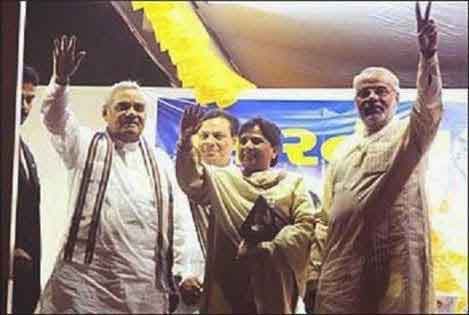
Mayawati is one of the most powerful and symbolically significant Dalit leaders in post-Ambedkar India. Rising from Kanshi Ram’s Bahujan movement, she became Chief Minister of Uttar Pradesh multiple times and led the Bahujan Samaj Party (BSP) to unprecedented electoral success. For many Dalits, her ascent represented dignity, visibility, and the possibility of rule by the historically oppressed. in Annihilate Caste Yet, alongside these achievements, Mayawati’s version of Bahujan politics has had deeply contradictory consequences for Ambedkarite political, social, and Buddhist movements. While it consolidated electoral power and symbolic representation, it simultaneously weakened ideological depth, dismantled autonomous social movements, and marginalized Ambedkar’s religious–ethical project. This essay examines these consequences across three domains: political, social, and Buddhist movements. Impact on Ambedkarite Political Movement 1.1 From Ideological Politics to Power-Centric Governance Ambedkar viewed politics as a means for social and moral reconstruction, not an end in itself. Mayawati, inheriting Kanshi Ram’s framework, further shifted Dalit politics toward power-centric pragmatism. Electoral success, administrative control, and survival of the party apparatus became overriding priorities. As a result: Ideological debates within Dalit politics declined, Ambedkarite principles such as constitutional morality, fraternity, and social justice were rarely articulated as governing philosophies and politics became managerial rather than transformative. Dalit political power became visible but ideologically shallow. 1.2 Centralization and Decline of Democratic Culture Under Mayawati, the BSP evolved into an extremely centralized organization: decision-making rested almost entirely with the leader, internal dissent was punished and Cadre-based leadership and second-line Ambedkarite thinkers were systematically eliminated. This destroyed the institutional culture necessary for a long-term political movement. Unlike Ambedkar’s organizations—which encouraged debate, education, and intellectual autonomy—the BSP under Mayawati functioned as a command structure, producing obedience rather than consciousness. 1.3 Electoral Dependency and Post-BSP Vacuum Because Ambedkarite politics became tightly bound to BSP’s electoral fortunes, its decline after 2012 produced: organizational collapse, leadership vacuum and fragmentation of Dalit political energies. The absence of parallel ideological institutions meant that once electoral power weakened, Ambedkarite political mobilization lacked sustainability. Impact on Ambedkarite Social Movement 2.1 Symbolic Assertion Replacing Social Reform Mayawati’s most visible contribution was symbolic politics—statues, memorials, parks, and iconography of Ambedkar, Kanshi Ram, and Dalit icons. These symbols restored dignity and countered centuries of erasure. However, symbolism was not matched by: mass educational movements, land redistribution initiatives, sustained campaigns against caste violence and Grassroots legal empowerment. Thus, Dalit assertion became representational rather than structural. 2.2 Depoliticization of Everyday Caste Oppression Ambedkarite social movements historically addressed everyday caste practices—segregation, humiliation, violence, religious exclusion. Under Mayawati: social activism was subordinated to electoral discipline. Independent Dalit movements were discouraged or absorbed and criticism was treated as political betrayal. This led to a weakening of grassroots resistance to caste oppression, particularly in rural areas where social domination remained intact despite Dalit political representation. 2.3 Emergence of Social Passivity The message implicitly conveyed was: “The state will take care of Dalit interests.” This discouraged autonomous social mobilization. Dalits increasingly became spectators of politics rather than participants in social transformation, eroding the culture of protest, self-organization, and community reform central to Ambedkar’s vision. Impact on Ambedkarite Buddhist Movement 3.1 Marginalization of Navayana Buddhism Ambedkar considered conversion to Buddhism the culmination of Dalit liberation, providing a new moral universe based on equality, rationality, and compassion. Mayawati, however, treated Buddhism as politically inconvenient: It risked alienating Hindu OBC allies. It did not translate directly into electoral arithmetic. Consequently: no state-supported Buddhist education or cultural institutions were developed. Mass conversion movements were absent. Buddhist intellectual traditions stagnated. The Ambedkarite Buddhist movement remained peripheral and under-resourced. 3.2 Reduction of Ambedkar to a Political Symbol Under Mayawati, Ambedkar was increasingly presented as: A constitutional icon, a Dalit leader and a symbol of pride, but not as a radical critic of Hinduism and caste religion. His Buddhist philosophy—ethical, rational, anti-Brahmanical—was softened or ignored. This de-radicalization made Ambedkar more acceptable to dominant caste sensibilities but weakened the spiritual foundation of Dalit emancipation. 3.3 Loss of Ethical–Moral Framework Buddhism provided Ambedkarite politics with: ethical discipline, rational morality and Universalist humanism. Its neglect created a moral vacuum in Dalit politics, which was increasingly filled by: electoral pragmatism, welfare populism and personality worship. Politics without ethics became vulnerable to corruption, opportunism, and stagnation. Broader Consequences for Dalit Emancipation 4.1 Fragmentation of Ambedkarite Tradition Ambedkarite thought—once a synthesis of politics, social reform, and religion—became fragmented: politics without ideology, social assertion without reform and Buddhism without institutional support. This fragmentation weakened the coherence of Dalit emancipation as a civilizational project. 4.2 Rise of Post-BSP Ambedkarite Movements The limitations of Mayawati’s Bahujan politics partly explain the emergence of: Dalit student movements, Bhim Army / Azad Samaj Party and Independent Ambedkarite intellectual circles. These groups emphasize education, ideology, street mobilization, and constitutional rights—often explicitly distancing themselves from BSP-style politics. Mayawati’s Bahujan politics produced historic political representation and symbolic empowerment for Dalits, achievements that cannot be dismissed. However, this success came at a significant cost to the Ambedkarite political, social, and Buddhist movements. By prioritizing electoral power over ideological depth, symbolism over social reform, and pragmatism over ethical–religious transformation, her leadership: weakened autonomous Dalit social movements, marginalized Ambedkarite Buddhism and reduced Ambedkarism to electoral symbolism. In Ambedkar’s vision, political power was only one pillar of emancipation, alongside social revolution and moral–religious reconstruction. Mayawati’s politics strengthened the first while neglecting—and sometimes undermining—the other two. The challenge for contemporary Dalit movements is not merely to regain political power, but to reintegrate Ambedkar’s triadic vision of politics, society, and ethics, without which Dalit emancipation remains incomplete and reversible. By SR Darapuri SR Darapuri, National President, All India Peoples Front Courtesy : Counter Currents Note: This news is originally published on https:/countercurrents.org/bha and is used purely for non-profit/non-commercial purposes, especially human rights
‘Hate for Dalit’: BJP attacks Gandhi-Vadra family over Kharge’s treatment in presser; shares Jairam clip
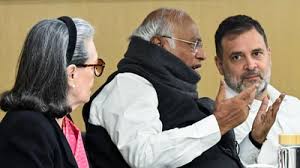
NEW DELHI: The BJP on Saturday targeted the Gandhi–Vadra family, alleging that “their hate for Dalit is so open.” The charge from the saffron party came shortly after the Congress held a press conference in which party president Mallikarjun Kharge initially said he would not read the full note aloud and would instead circulate it to the media, before being interrupted moments later by the party’s general secretary, who urged him to read it out. Sharing a clip of the exchange, BJP spokesperson Pradeep Bhandari accused the Congress leadership of disrespecting Kharge. He wrote on X, “Be it Rahul Gandhi, Priyanka Gandhi or Jairam Ramesh, their hate for a ‘DALIT’ is so open! Congress president Mallikarjun Kharge clearly stated that he would not read the full note and would circulate it to the press instead. Within seconds, Jairam Ramesh cut in and directed him to read it out. And Kharge ji complied. This is how Gandhi – Vadra family treats their own President!” At the press conference, the Congress announced a nationwide protest against the Centre’s decision to replace the rural employment scheme MGNREGA with what it called the VB G Ram G Act. Following the Congress Working Committee meeting, Kharge said replacing a scheme named after Mahatma Gandhi amounted to an insult to the Father of the Nation. Meanwhile, leader of opposition in Lok Sabha Rahul Gandhi alleged that Prime Minister Narendra Modi took the decision to scrap MGNREGA without consulting relevant ministers or even the Union Cabinet. The LoP also pledged to oppose the move, saying, “As Kharge ji has said, we are going to resist it. We are going to fight it. And I’m confident that the entire opposition is going to be aligned against this action.” Courtesy : TOI Note: This news is originally published on https:/timesofindia.com/bha and is used purely for non-profit/non-commercial purposes, especially human rights
BSP’s New Strategy: Shifting from Dalit to OBC Leader, Will the Elephant Run in Purvanchal in 2027?
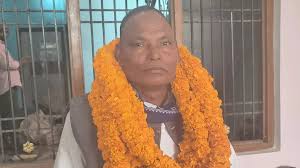
The Bahujan Samaj Party has surprised everyone by handing over the reins of Ghazipur district to an OBC leader. This could have an impact in Purvanchal in the 2027 UP Assembly elections. This time, the BSP is working with full force. Amitesh Kumar Singh, Ghazipur: The Bahujan Samaj Party (BSP) has appointed a new district president in Ghazipur keeping in mind the 2027 UP Assembly elections. Ramesh Singh Kushwaha reached the party office for the first time on Saturday after being appointed as the BSP president of Ghazipur. He was given a grand welcome there. After about 20 years, the BSP has played a new political gambit by appointing a full-time OBC district president. The BSP seems to be working on a strategy to make significant inroads into the OBC vote bank along with its traditional Dalit voters. Harinaath Rajbhar was made District President in 2007 BSP Varanasi Divisional In-charge Pramod Kumar Prabhakar told NBT Online that earlier in 2007, the party had appointed Harinaath Rajbhar as the district president. At that time, the BSP was in power in UP and party supremo Mayawati was the Chief Minister. After that, in 2023, Bujharat Rajbhar was made the district president, but his tenure was limited to just 2 months. Thus, it can be seen that after about 20 years, the party has once again made a fundamental change in its political strategies by betting on an OBC face. Prabhakar said that the BSP is a political party. Like all parties, the BSP also has every right to take decisions keeping political equations in mind. The UP Assembly elections are to be held in 2027. Keeping that in mind, the party high command has decided to appoint the district president. Ramesh Singh Kushwaha has been associated with the party for a long time. He is an articulate speaker. His appointment as district president by the BSP will directly connect the backward votes with the BSP. The party will perform brilliantly under Ramesh’s leadership – Umesh Former Lok Sabha candidate and BSP leader Dr. Umesh Kumar Singh said that the Bahujan Samaj Party works keeping all sections of society in mind. Ramesh Singh Kushwaha is an old and strong cadre of the BSP. Under his leadership, the party will perform brilliantly in the upcoming elections. Edited by: Vivek Mishra About the Author Vivek Kumar Mishra is a Senior Digital Content Producer at Navbharat Times. His focus is on news from Uttar Pradesh and Uttarakhand. He also writes opinion pieces and political analyses. He was born in Barabanki and has worked in several cities across three states. He started his career in print media in 2013. Courtesy: Hindi News