
Catholic Church in India reaches out to transgender community
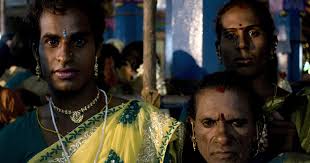
The Catholic Church in southern India has launched a new pastoral initiative for the transgender community. The archbishop of the Roman Catholic Archdiocese of Madras and Mylapore formally inaugurated a dedicated “Catholic Desk” for transgender persons during a parish visit to Kadarkarai Sagaya Madha Church in Ennore, a coastal district of Chennai, on February 26. The opening followed the blessing of newly completed parish facilities and is understood to be the first structured ministry of its kind within the archdiocese. Church officials indicated that the initiative is intended to offer practical assistance as well as spiritual accompaniment. Among the services envisaged are help with employment opportunities and access to professional counselling, which diocesan representatives described as part of a commitment to uphold human dignity while responding to acute social vulnerability. India’s transgender population is estimated at around half a million. Many belong to the Hijra community, officially recognised in several South Asian countries as neither exclusively male nor female, drawing on Hindu, Islamic and local traditions. Historically, they have occupied ritual roles at births and weddings. Previously, in 2017, clergy, Religious and lay leaders in Kerala established a support network under the aegis of Pro-Life Support, a Church-based social service movement aimed at addressing pastoral and social needs among transgender people in that state. The initiative followed public remarks by Pope Francis urging pastoral care for those who identify as LGBT, comments cited by clergy in India seeking to expand outreach. Kerala has since witnessed a series of practical measures involving Catholic institutions. Religious sisters from the Congregation of the Mother of Carmel made premises available for an educational project for transgender school dropouts after numerous landlords reportedly declined to rent space for such a venture. Caritas India, the Church’s charitable arm, has also announced programmes designed to counter discrimination and promote social inclusion. Activists in Kerala have acknowledged Church support for pilot educational schemes, arguing that religious institutions can exert influence at grass-roots level in shaping social attitudes. Such cooperation has not been without controversy in a country where questions of gender identity intersect with deeply rooted religious traditions and where Christian communities themselves constitute a minority. The Hijra identity predates Christianity’s arrival in India and is intertwined with Hindu mythology. Devotion to the goddess Bahuchara Mata and the composite deity Ardhanarishvara, a form of Shiva embodying both masculine and feminine aspects, remains significant within parts of the community. The Catholic Church teaches that every human person is created in the image and likeness of God, male and female, and possesses an inviolable dignity that no circumstance can erase. Magisterial teaching holds that sexual difference is not incidental but constitutive of the human person. For that reason, the Church has rejected theories that detach gender from biological sex or propose a self-defined identity independent of the body. In 2023 the Dicastery for the Doctrine of the Faith reiterated that so-called “gender ideology” obscures the reality of sexual complementarity and risks reducing identity to subjective construction. Although no magisterial document addresses the South Asian Hijra community specifically, the Church’s universal moral teaching applies. Cultural expressions of a “third gender”, including practices historically associated with ritual castration or religious symbolism drawn from pre-Christian traditions, would be judged incompatible with Christian tradition, which affirms the integrity of the sexed body as part of God’s design. The Church does, however, insist that all people are treated with respect and made in the image and likeness of God. Therefore, pastoral programmes which seek to mitigate the plight of the socially downtrodden and excluded, which much of India’s Hijra community are, can be seen as expressions of this teaching. Courtesy : The Catholic Herald Note: This news is originally published on https:/thecatholikherakd.com/bha and is used purely for non-profit/non-commercial purposes, especially human rights
‘India must be morally clear’: Rahul Gandhi urges PM Modi to ‘speak up’ on Iran crisis

NEW DELHI: Congress leader Rahul Gandhi on Tuesday urged Prime Minister Narendra Modi-led government to take a clear and moral stand amid escalating hostilities between the United States, Israel and Iran. In a post on X, Rahul said the region was being pushed “toward wider conflict” and warned that millions, including nearly a crore Indians, faced uncertainty due to the deteriorating security situation. “Escalating hostilities between the United States, Israel and Iran are pushing a fragile region toward wider conflict. Crores of people, including nearly a crore Indians, face uncertainty,” Rahul said. “While security concerns are real, attacks that violate sovereignty will only worsen the crisis. The unilateral attacks on Iran, as well as Iran’s attacks on other Middle Eastern nations, must be condemned. Violence begets violence – dialogue and restraint remain the only path to peace,” he added. Rahul said India’s foreign policy traditions demand clarity during periods of global instability. “India must be morally clear. We should have the courage to speak plainly in defence of international law and human lives. Our foreign policy is rooted in sovereignty and the peaceful resolution of disputes — and it must remain consistent,” he said. In a pointed remark aimed at Prime Minister Narendra Modi, Rahul Gandhi questioned the government’s position on recent developments. “PM Modi must speak up. Does he support the assassination of a head of state as a way to define the world order? Silence now diminishes India’s standing in the world,” he added. Meanwhile, the ministry of external affairs (MEA) said on Tuesday that limited flight operations have resumed from Dubai amid continued airspace disruptions in the region. US and Israel conducted airstrikes across multiple Iranian cities on February 28, targeting military command centres, air-defence systems, missile sites, and key regime infrastructure. These strikes resulted in the death of Iranian Supreme Leader Ayatollah Khamenei and four senior military and security officials, with large explosions reported in Tehran and other major cities. Courtesy : TOI Note: This news is originally published on https:/timesofindia.com/bha and is used purely for non-profit/non-commercial purposes, especially human rights
Kishan Reddy seeks white paper on Telangana finances
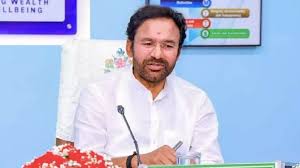
Hyderabad: With the budget session set to begin on March 16, Union coal minister G Kishan Reddy has written to chief minister A Revanth Reddy, urging the state govt to release a white paper on Telangana’s financial position. In his letter, Kishan Reddy referred to the Congress party’s election promises and recalled the CM’s remark that the “state treasury is empty like mud pots instead of treasure.” He also cited a recent comment suggesting that ₹1,000 crore could go to Sonia Gandhi and Rahul Gandhi’s family and the Congress, calling the statements contradictory. The Union minister said Telangana, which began as a surplus state, is now facing rising per capita debt and increasing dependence on borrowings for routine expenditure. He urged the govt to present facts through the white paper before the budget session. Kishan Reddy said that the NDA govt led by PM Modi has extended about ₹12 lakh crore to Telangana over 12 years through tax devolution, infrastructure allocations, welfare schemes, farm support, institutional lending and interest-free loans for key infrastructure projects. Courtesy : TOI Note: This news is originally published on https:/timesofindia.com/bha and is used purely for non-profit/non-commercial purposes, especially human rights
Parliament must debate ‘dissonance’ in foreign policy: Congress MP Sonia Gandhi
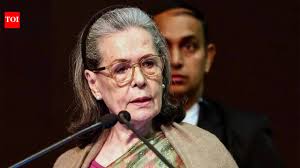
NEW DELHI: Terming the PM Modi govt’s “silence” on Ayatollah Ali Khamenei’s targeted assassination and attack on Iran as signalling a “tacit endorsement” of the tragedy, Congress MP Sonia Gandhi has demanded that Parliament discuss the “dissonance” in foreign policy when it resumes next week – suggesting that the opposition will strongly raise the recent events of West Asia in the Budget session. She said the killing of a sitting head of state in the middle of ongoing negotiations marks a grave rupture in contemporary international relations. Leader of the opposition Rahul Gandhi asked if PM Modi “supports the assassination of a head of state as a way to define the world order”. Urging Modi to speak up, Rahul said silence diminishes India’s standing in the world. In a media article, Sonia said Modi’s recent visit to Israel and “his unconditional support” for the Benjamin Netanyahu govt just two days before the US-Israel attacks on Iran has raised serious questions, besides the abandoning of an old ally like Iran. She asked why the “Global South” would trust India to defend its territorial sovereignty when it cannot even defend that principle. The attitude of govt has raised serious doubts about the direction and credibility of India’s foreign policy, she said. Sonia emphasised the need for “us to rediscover” the moral strength of the values India has stood for – sovereignty, peace, justice, non-violence. She said the PM ignored the massive US-Israeli attack on Iran, and condemned Iran’s retaliatory strike on the UAE without addressing the sequence of events that preceded it. Noting that India’s ties with Israel have in recent years expanded across defence, agriculture and technology, Sonia said India’s relations with both Tehran and Tel Aviv give it the space to urge restraint. Courtesy : TOI Note: This news is originally published on https:/timesofindia.com/bha and is used purely for non-profit/non-commercial purposes, especially human rights
Karnataka: A major initiative against untouchability; the government opened a salon after a barber refused to cut the hair of Dalits.
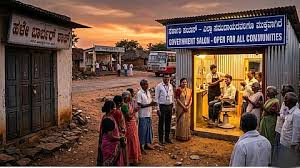
Following the high-handedness of barbers in Gadag, Karnataka, the government launched a historic initiative, opening a “government salon” in a village to eradicate untouchability and caste discrimination. Karnataka: The Karnataka government has taken a significant step towards eradicating caste discrimination. After local barbers in Singatalur village, Gadag district, refused to provide services to Dalits, the government opened a new salon in the village at its own expense. This is likely the first government initiative of its kind in the state. This government salon has been built on government land near the village bus stand. Several officials from the Social Welfare Department and the Gram Panchayat were present at the inauguration. Constructed at a cost of ₹1.2 lakh The Social Welfare Department spent approximately ₹1.2 lakh on the construction and necessary equipment for this tin-framed shop. Initially, a barber from Mundargi was specially called in to run this salon. What was the whole controversy? According to officials, the Hadapada family, traditionally engaged in barbering, had been refusing to cut the hair of Dalits in the village for several years, citing religious beliefs. An official explained that the Hadapada family are devotees of the village deity, Veerbhadreshwar. They believe that the deity visits their homes during a specific time of the year, and therefore, they cannot provide services to Dalits during that time. The matter escalated when Dalit youth began demanding their legal right to receive services at the village’s only barber shop. They approached the district administration, stating that denying service based on caste is completely illegal. Administrative Strictness and New Solution As the controversy escalated, the old shop was closed. Subsequently, the district administration held several meetings with the villagers and the barber community. They were persuaded to reopen the shop and offer services to all sections of society. When negotiations failed, notices were issued threatening legal action, but the problem remained unresolved. Finally, with no other option left, officials decided to establish a separate government salon to ensure equal rights for all. At the administration’s request, Devu Hadapada, the state president of the Hadapada Annappa Samaj, agreed to send his brother (who is also a barber) to run the new shop. A Step Towards Social Change Devou Hadapada supported the move, saying, “It’s very sad that the sick mentality of looking down on the backward classes still exists in society. But we have extended our full support to the government to end such practices. This shop is now open to all communities.” Mundargi Taluka Panchayat Executive Officer Vishwanath Hosamani explained that the problem had been ongoing for nearly two years. He added, “Now, with the coordination and efforts of all concerned departments, we have been able to find a peaceful solution to the issue.” Villagers heave a sigh of relief Villagers have wholeheartedly welcomed the administration’s move. Mariyazza, a resident of Singatalur, expressed hope that this initiative will help eliminate discriminatory practices. She said, “This step has given us hope that this evil practice of untouchability will now end forever.” Officials also believe that this unique initiative could serve as a role model for addressing such discrimination elsewhere in the state. Rajan Chaudhary Courtesy: Hindi News
The suffering of the SC/ST/OBC community in India is unique in the world: Why did senior IRS officer Netra Pal call it more serious than America’s ‘Black Victimhood’?

“Approximately 50 million SC, ST, and OBC students will be affected by the UGC Regulations 2026; demanding rights cannot be called victimhood.” New Delhi – In a recent Science Journey podcast, senior IRS officer Netra Pal sharply criticized the controversial statement made by Jawaharlal Nehru University Vice Chancellor Shantishree Dhulipudi Pandit. He stated that Madam is saying that Dalits have become addicted to victimhood, playing the victim by claiming they haven’t had water for centuries. Netra Pal called this clear bias and prejudice and pointed out that the person making this statement is the head of an institution with a very high number of SC, ST, and OBC students. He emphasized that approximately 90 million SC, ST, and OBC students are studying in universities across India, which is a very large number, yet displaying such a mindset exposes prejudice. Presenting comparative data, Netrapal explained that Harvard University, which is among the top 10 universities in the world, states in its 2023 Diversity Report that faculty of color, i.e., non-White faculty, represent 22 percent, of which 232 include Black, Hispanic, and other faculty. Meanwhile, SC, ST, and OBC faculty representation at IITs is only 1.92 percent, while at IIMs it is less than 0.8 percent. This is data from five or six years ago, and while there may have been some slight improvement, the difference is not significant. He said that while the Black community has been oppressed in the United States for centuries, their representation is still good due to affirmative action. In India, the problems of Dalit, OBC, and tribal communities are unique in the world and even more serious than Black victimhood. This community, which constitutes over 85 percent of the population, lacks even 2 percent representation in institutions like IITs and IIMs. He emphasized that this comparison is incorrect, as there is no affirmative action even in the private sector in India. Right now, the UGC will form an equity committee, but who will head it? The Vice-Chancellor. What will happen if SC/ST/OBC victims approach the Vice-Chancellor? They will say they are victims, so how will they rule in their favor and deliver justice? In the podcast, Netrapal also deeply analyzed the controversy surrounding the UGC 2026 Regulation. He explained that those opposing the regulation are claiming that it will divide Hindu society and that OBCs were included for political reasons. However, the truth is that the 2012 UGC Regulation was only for SCs and STs, and OBCs were added later on the recommendation of a parliamentary committee. A 31-member parliamentary committee, majority upper-caste, reviewed the data, acknowledged the atrocities against OBCs, and recommended their inclusion. Following the Rohith Vemula and Payal Tadvi suicide cases, the Supreme Court also mandated proper implementation of the 2012 regulations. Netrapal clarified that while OBC reservations were implemented in 2006, they were implemented in universities only in 2013, and in medical education only in 2021. He also cited historical evidence that during the British era, Shudras were not admitted to institutions like Hindu College; only some Kayasthas were exempted because their social status was comparable to that of the upper castes. From the 1901 caste census to current data, 50-70 percent of OBCs are extremely backward, denied access to higher education and government jobs. Netrapal said that SCs and STs received reservations after 1947, but OBCs had to fight until 1990 and wait until 2012 for university admissions, ruining generations. Education data revealed that the general category’s representation at the primary level is only 11.85 percent, which rises to 50 percent in higher education. While SC, ST, and OBC students are higher in primary education, their enrollment declines due to increased dropout rates. SCs’ primary enrollment falls from 21 percent in primary education to 14.82 percent in secondary education and 4.72 percent in engineering. The situation is similar among OBCs. Dropout and suicide rates at IITs are higher among SCs, STs, and OBCs, while at institutions like Anna University, this is not the case, proving institutional discrimination. OBC professors in central universities are only 1.1 percent, compared to 33 percent in state universities. Muslims are represented as high as 45 percent because they have separate institutions. “SCs, STs, and OBCs are automatically a minority in universities because there are no members of this class in all the top faculty positions. At IITs, there are 1-2%, a maximum of 10%, and even in the administration, there are very few non-faculty cadres. Here, SCs, STs, and OBCs are a significant minority. There are many more outside. That’s why they are backward, right? We’re not getting higher education so easily. So what’s the situation here? We’re the ones facing discrimination.” The most shocking statistic is the vacancies for faculty positions. In central universities, 95.5 percent of OBC professor positions are vacant, 91.95 percent of associate professor positions are vacant, while 78 percent of SC positions are vacant. There are no SC/ST principal positions at Delhi University. Netrapal stated that this is institutional discrimination, where low interview marks, NFS, and vacancies are deliberately created. The conviction rate for SC/ST atrocity cases in Uttar Pradesh is 70-80 percent, far higher than murder and rape, yet the case is often called a fake one. At the end of the podcast, Netrapal concluded that approximately 50 million SC, ST, and OBC students will be affected by this regulation. Education is their only weapon, so discrimination cannot be tolerated. Demanding rights cannot be labeled victimhood. He also suggested opening a Buddhist minority university. The podcast stated that data never lies and the Bahujan community should spread this information to ensure equality and justice. Geetha Sunil Pillai Courtesy: Hindi News
SCSP-TSP fund diversion BJP plans major offensive, Congress govt uncomfortable
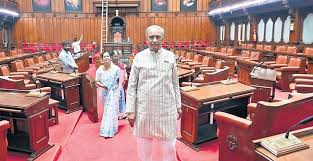
While the government has defended the move, arguing that many beneficiaries of the guarantees belong to SC and ST communities, the issue has triggered dissent among Dalit legislators within Congress. BENGALURU: Even as tensions continue to simmer within Congress over the alleged diversion of funds under the Scheduled Caste Sub-Plan (SCSP) and Tribal Sub-Plan (TSP), BJP is preparing a strategy to corner the state government ahead of the budget. It is said that funds earmarked exclusively for Scheduled Castes (SC) and Scheduled Tribes (ST) welfare are being redirected to finance the five guarantees. While the Siddaramaiah government has defended the move, arguing that many beneficiaries of the guarantees belong to SC and ST communities, the issue has triggered dissent among Dalit legislators within Congress. Sensing an opportunity, BJP has stepped up its political campaign. A pre-budget round table has been convened in Bengaluru at noon on Tuesday at the Legislators’ House Auditorium. The event, organised by the Reservation Protection Forum for Scheduled Castes and Scheduled Tribes, Karnataka, is aimed at mobilising public opinion against what the opposition terms as “diversion” of constitutionally mandated funds. Senior BJP leaders, including Council Opposition Leader Chalavadi Narayanaswamy, former Union minister A Narayanaswamy and others, are expected to attend, and they could use the platform to highlight what the party calls a betrayal of Dalit and tribal interests by the Congress government. Within Congress, the issue has reportedly been raised during Legislature Party meetings with some Dalit MLAs expressing concern over reallocation of funds. The discontent could complicate budget preparations if not addressed decisively, party insiders say. BJP is likely to intensify its outreach to SC/STs in the coming weeks, framing the issue as one of social justice and financial accountability. Political observers said this could be a flashpoint during the budget session, as the opposition is poised to mount pressure inside and outside the Houses. It is said that the Congress government has diverted Rs 27,000 crore over two year as against an allocation of around Rs 81,000 crore. BJP claims that this violates the law under 7(c), which allows diversion of funds for education, health and child labour, whereas the guarantees have no relevance to these categories One Dalit legislator said, ‘Congress which justified diversion under 7(c) has not read this provisions properly.’’ Bansy Kalappa Courtesy : TNIE Note: This news is originally published on https:/thenewindianexpress.com/bha and is used purely for non-profit/non-commercial purposes, especially human rights
“You Are Low Caste… LLB Is Not for You”: Dalit Student Files FIR Against Churu Professor
An LL.B student of Government Law College, Churu, files FIR under SC/ST Act alleging caste abuse, threats and discrimination by two professors.AI generated image A third-semester Dalit LL.B student of Government Law College in Churu, Rajasthan, has filed a police complaint alleging caste-based abuse, threats and discrimination by two professors. The police have registered an FIR under relevant sections of the SC ST Prevention of Atrocities Act and started an investigation. According to the complaint filed at Kotwali Police Station in Churu on February 27, Meena Meghwal, 30, has accused Professor Apoorva Sharma and Professor Anil of using derogatory caste remarks, threatening to fail her and deliberately giving her low marks. Police have registered FIR number 44 2025 under sections 3 (1) (r) and 3 (1) (s) of the SC ST Prevention of Atrocities Act. The case has been forwarded to RPS Sunil Kumar Jhajharia of Circle Churu for further investigation. Student Alleges Public Caste Abuse in College Event In her written complaint, Meena Meghwal, daughter of Toruram Meghwal and a resident of Kharia village in Jhunjhunu district, stated that the alleged incident first took place during a college event in December 2025. She said that Professor Apoorva Sharma became angry when she asked a question during the event. According to the complaint, the professor allegedly used casteist slurs in front of other students. She claimed that the professor said, “You are chamari, you are from a lower caste. You cannot do LL.B. It is not your job,” and also threatened to fail her. The student stated that several classmates, including Akash Deep, Akash Mishra, Himanshu and Prem Prakash, were present at the time. Allegation of Deliberate Failure in Practical Exam Meena Meghwal further alleged that after the December incident, the professor continued to humiliate her. She claimed that in her practical examination, she was given only 6 marks out of 20, while in other subjects, she received 12 to 13 marks from different professors. On February 21, when she asked the reason for the low marks, she alleged that Professor Apoorva Sharma told her, “It is my wish. I did it. You people are low caste.” The student said she submitted a written complaint to the college administration, but no action was taken. Local Reaction and Social Media Discussion After the matter became public, it sparked discussion at the local level. Naveen Kumar Nandan, a journalist associated with BAMCEF, shared a copy of the FIR on social media platform X and wrote, “It is very dangerous if the allegations are true.” Some local sources claimed that there were earlier complaints about the behaviour of the accused professor. It has also been alleged by some students that during examinations, Scheduled Caste students felt targeted and faced discriminatory treatment. However, these claims have not been independently verified. Students reportedly expressed fear about speaking openly, saying they are worried about attendance shortages or low marks in practical exams. No Official Response Yet So far, there has been no official statement from Government Law College Churu or from the accused professors. The police investigation is ongoing. The incident has once again brought attention to the issue of caste discrimination in higher education institutions in Rajasthan. Authorities have said that further action will depend on the findings of the investigation. Courtesy : TOP Note: This news is originally published on https:/theobserverpost.com/bha and is used purely for non-profit/non-commercial purposes, especially human rights
‘Take it or leave it’: DMK makes 25-seat offer to Congress for assembly polls, party holds out for 41; alliance talks in limbo
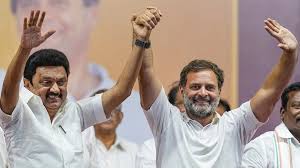
CHENNAI: Seat-sharing talks between DMK and Congress have hit a dead end with DMK making a virtual ‘take it or leave it’ offer of 25 seats and a Rajya Sabha seat. Congress, which demanded 41 assembly seats and two RS seats, has conveyed that it cannot accept the alliance leader’s offer. DMK organisation secretary and seat-sharing panel member R S Bharathi told TOI that the party’s offer was “clearly communicated” during the talks with Congress representatives. “Now they have to take it or reject it,” he said. “There will be no change in our offer.” He, however, added that his party has not set any deadline. AICC leader Girish Chodankar said the negotiation panel has submitted a report to party president Mallikarjun Kharge, conveying that DMK has not acceded to their demand. Sources told TOI that Chodankar has reported to the leadership that the talks have hit a dead end as DMK did not respond positively to the demand for power-sharing and more seats. Sources said seat-sharing did not come up during the short conversation when Congress leader Rahul Gandhi called up DMK chief M K Stalin on Sunday evening to convey his birthday wishes to the CM. Later that night, Congress high command reached out to party MLAs in Tamil Nadu to seek feedback on alliance options. “AICC general secretary K C Venugopal and a few others reached out to MLAs here,” said a TNCC leader. “Most favoured continuing in the DMK alliance, while a small number said the party could consider TVK if DMK does not offer more seats.” TNCC president K Selvaperunthagai struck a conciliatory note, saying there was no confusion or crisis in the alliance. “Negotiations happen in every election. Every party asks for more seats, and a settlement is eventually reached. The same will happen here. We are asking for a few more seats, and talks are continuing,” he said. Selvaperunthagai denied any talks with TVK or any directive from the high command to explore alternative alliances. “There is no backdoor politics,” he said. TVK functionaries also said no discussions took place between their party and AICC leaders. Responding to reporters’ questions on whether TVK could align with Congress, C T R Nirmal Kumar, joint general secretary of TVK, said alliances can change even at the last minute. Courtesy : TOI Note: This news is originally published on https:/timesofindia.com/bha and is used purely for non-profit/non-commercial purposes, especially human rights
Nation needs Rahul as PM more than ever: Revanth
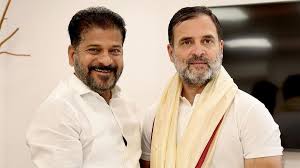
Hyderabad: Chief minister A Revanth Reddy on Monday said the country and its people need Rahul Gandhi as the Prime Minister more than ever. He called upon the newly appointed district Congress committee (DCC) presidents and party workers to work towards making Rahul the nation’s leader. ‘Roadmap for party’ Revanth made the remarks at the concluding session of a training camp for DCC presidents from Andhra Pradesh and Telangana in Vikarabad. Rahul, the chief guest, had a photo session with all DCC chiefs and their families and later addressed them, providing a roadmap for party work. Speaking to the gathering, Revanth said Rahul must become PM in the interest of the country. “Rahul Gandhi does not seek the post because his grandfather, grandmother, and father served as Prime Ministers of India. He is challenging Modi and striving to keep India united by connecting with people like a common citizen. Given the present situation, everyone should work hard to make him PM,” the CM said. The meeting was held in-camera, and some details were later shared by the Congress party. It stated that Rahul nodded in agreement to Revanth’s assertion that current circumstances make him essential as PM to serve the people and maintain national unity. Revanth added, “We came to power in Telangana in Dec 2023 in the name of Sonia Gandhi. Rahul is fighting against injustices faced by SCs, STs, BCs, minorities, women farmers, and against attempts to alter reservations and amend the Constitution. He is addressing multiple issues in the interest of the country.” ‘Raise public issues’ The CM also shared his political journey with the DCC presidents, from becoming a ZPTC 19 years ago to MLC, MLA, MP, and now as CM. “This is possible for all of you if you raise public issues, listen to people’s grievances, work to solve them, and avoid mistakes. Many cases were filed against me; I was even jailed, and faced defamation suits, yet I continued to raise people’s concerns,” he said. Earlier, Rahul and Revanth briefly discussed Rajya Sabha candidates for the two Telangana seats. The TPCC chief said no names had been finalised, and decisions are expected in a day or two. Courtesy : TOI Note: This news is originally published on https:/timesofindia.com/bha and is used purely for non-profit/non-commercial purposes, especially human rights