
Rahul Gandhi demands Bharat Ratna for BSP founder Kanshi Ram; writes to PM Modi

NEW DELHI: Congress MP and Leader of Opposition Rahul Gandhi on Sunday wrote a letter to Prime Minister Narendra Modi demanding that the Bharat Ratna be conferred posthumously on Bahujan Samaj Party founder Kanshi Ram. In a post on X, he wrote, “I demand that the Government of India honor the great warrior of social justice and the guiding light of Bahujan consciousness, the esteemed Shri Kanshi Ram Ji, with the Bharat Ratna. This highest national honor will be a tribute to Shri Kanshi Ram Ji and the entire movement that showed millions of Bahujans the path to rights, participation, and self-respect.” In his letter to PM Modi, Gandhi highlighted Kanshi Ram’s transformative role in Indian politics. He also pointed out that calls from Dalit intellectuals and leaders for the Bharat Ratna have been consistent and deeply felt. “Recently, I attended a programme in Lucknow where this demand was reiterated strongly by the leaders and participants present, reflecting a widespread sentiment. Conferring the Bharat Ratna on him posthumously would recognise his immense contribution to our nation. It would honour the aspirations of millions of people who continue to view him as a symbol of empowerment and hope.” Earlier Congress leader paid tribute to Kanshi Ram on his birth anniversary. In a post on X, he wrote: “On the birth anniversary of the Bahujan hero, the respected Manyavar Kanshi Ram Ji, I pay my humble respects. His tireless struggle and dedication for the rights of the poor, Dalits, and the deprived is an inspiration for all of us.” Kanshi Ram founded BSP in 1984 with the aim of uniting Scheduled Castes, Scheduled Tribes, Other Backward Classes and religious minorities into a formidable political force. He dedicated his life to the upliftment and empowerment of the marginalised and to carrying forward the ideas of Dr BR Ambedkar. BSP chief Mayawati paying tributes to the founder in a post on X wrote, “On the occasion of the birth anniversary of the founder and architect of the Bahujan Samaj Party (B.S.P.), the revered Shri Kanshi Ram Ji, I, along with my leadership, offer a hundred salutations and boundless tributes of reverence from his followers across Uttar Pradesh and the entire country.” Yesterday, Mayawati questioned the Congress over its proposal to confer the Bharat Ratna on BSP founder Kanshi Ram if it comes to power at the Centre, pointing out that the party never honoured BR Ambedkar while in power. In a post on X, she wrote: “The Congress never gave due honour to Babasaheb Dr Bhimrao Ambedkar — the messiah of Dalits and the principal architect of the Constitution — nor did they ever confer upon him the title of Bharat Ratna… How can the same party now honour Kanshi Ram,” she said in her post.” Courtesy : TOI Note: This news is originally published on https:/timesofindia.com/bha and is used purely for non-profit/non-commercial purposes, especially human rights
Cong banks on Kerala to end its long season of electoral upsets
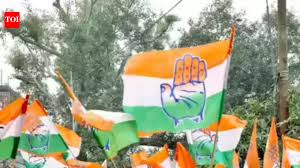
NEW DELHI: Congress’s fortunes post-2014 have followed a familiar pattern: rout in the national elections and then a long wait for assembly wins. It was an extended barren patch of three and a half years before Congress won a state poll (Himachal) after being routed in the Pulwama-dictated 2019 Lok Sabha contest. This time, Congress is hoping that the wait – which should have ended immediately after the 2024 LS polls with wins in Haryana and then Maharashtra – will finally be over through a win in Kerala. The polls in four states and one UT are an opportunity for Congress to get back into the reckoning, which the party prematurely hoped that the creditable performance in the difficult 2024 polls would ensure. If Kerala-2026 is the essence of Congress’s stakes in the coming battles, the principal opposition party is aiming to score significant political points in Assam, TN and Bengal, given that arch-rival BJP has positioned itself as a player across the national geography. After all, in the years since the Modi-led party turned into a political juggernaut, the Rahul Gandhi-run Congress has chosen to define itself ideologically and in sole opposition to BJP – a process which has also led to greater convergence among foes within the secular camp. For once, Congress ended the longstanding dichotomy of being an ally of CPM at the national level and in Bengal, while being a rival in Kerala – which provided BJP with an easy line of attack. It decided early to go solo in Bengal. Like many of the ‘Congress vs BJP’ fields, Assam has turned barren for the former with back-to-back defeats. Communal polarisation, marginalisation via defections and Assam-specific delimitation have made its political task a challenge. Congress belatedly plumped for Gaurav Gogoi, a young face with socio-political pedigree, as its flag-bearer. By all indications, Congress is hoping for a respectable performance that can debunk the growing perception of Assam becoming a one-party turf and keep the party alive in the state. After an unexpected public squabbling with DMK, Congress settled for a minor seat share for the polls. Given that BJP has inserted itself in the AIADMK-led bloc, and speculations are rife that TVK of Tamil superstar, Vijay, can be “influenced” by BJP after elections, Congress is eager that DMK sails through. The post-Jayalalithaa landscape in the state has proved easier for DMK, as witnessed in the 2024 LS polls, but TVK’s emergence and the prospect of a three-way split of votes have created uncertainty. Reduced to less than a fringe player in Mamata Banerjee’s fief, Bengal Congress is moving with a two-fold target in its solo run. The party believes it cannot go below 2021’s pathetic result of zero seats and 3% votes. AICC state in-charge Ghulam Ahmad Mir said the party’s vote share should move upwards of 15%. Courtesy : TOI Note: This news is originally published on https:/timesofindia.com/bha and is used purely for non-profit/non-commercial purposes, especially human rights
Under fire for no-show, Rahul plans four rallies by month-end
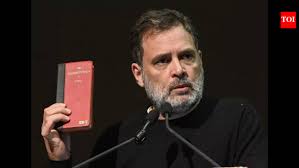
Chennai: Amid criticism from opposition parties over Rahul Gandhi not holding any campaign visits to Tamil Nadu even after the completion of seat-sharing talks, Tamil Nadu Congress Committee said the Congress leader would tour the state later this month and address four rallies in different parts of the state. As per the tentative plan, Rahul would address the campaign meetings over a period of two to three days. The exact dates and venue would be announced once the plan is finalised, said TNCC president K Selvaperunthagai. Opposition parties, however, questioned the delay. BJP state vice-president N Jayaprakash said Prime Minister Narendra Modi visited Tamil Nadu three times this year so far. “The prime minister visits the state frequently because he is concerned about the welfare of Tamil people,” he said, asking why Gandhi visited Kerala and Telangana but chose not to visit TN. BJP leader Vinoj P Selvam said the only time Rahul came to Tamil Nadu this year was to visit a school in Gudalur, close to his Wayanad constituency. AIADMK functionaries alleged that Rahul’s absence from campaign activity was a sign of friction in DMK–Congress alliance. “Forget campaigning, Rahul did not even post a congratulatory message on the finalising of seat-sharing talks,” he said. Though Congress was demanding 35 seats and a share in power, DMK turned down both demands, leaving the Congress to settle for 28 seats. During the campaign for the 2021 assembly election in the state, Rahul had made multiple visits to the state, including a three-day tour in Jan during which he held roadshows and addressed public meetings. Selvaperunthagai denied the charges, attributing the delay in Rahul’s visit to the standard operating procedures (SOP) governing political meetings in the state. Under the existing rules, applications for major rallies by parties have to be submitted two to four weeks in advance, he said. Courtesy : TOI Note: This news is originally published on https:/timesofindia.com/bha and is used purely for non-profit/non-commercial purposes, especially human rights
Congress MLA’s PA arrested for cheating dalit woman in Bhupalpally

Chityal police arrested and remanded the personal assistant of Bhupalpally MLA Gandra Satyanarayana Rao for allegedly cheating a Dalit woman by promising marriage. The accused was also booked under provisions of the SC/ST (Prevention of Atrocities) Act Bhupalpally: Chityal Police in the district arrested and remanded Gandra Satyanarayana Rao’s personal assistant, Ch Srinivas, for allegedly cheating a Dalit woman. Srinivas was accused of physically exploiting the woman, promising to marry her while making arrangements to marry another woman. When the Dalit woman confronted him about the matter, he verbally abused her using her caste identity. When a panchayat was held in the presence of family elders, he refused to marry the Dalit woman. Based on a complaint by her parents, Srinivas was booked under the provisions of the Scheduled Castes and Scheduled Tribes (Prevention of Atrocities) Act besides Sections 69 (false promise of marriage), 296(b) (uttering obscene words) and 351(2) (criminal intimidation), informed CI Mallesh Yadav. Courtesy : Telangana Today Note: This news is originally published on https:/telanganatoday.com/bha and is used purely for non-profit/non-commercial purposes, especially human rights
Mayawati Lashes Out at Rahul Gandhi: Asks—How Can the Very Congress Against Which the BSP Was Formed Now Propose to Award Kanshi Ram the Bharat Ratna?

BSP Supremo Mayawati has lashed out at Congress leader Rahul Gandhi. Speaking on Saturday, she stated: “The very Congress—whose anti-Dalit mindset led to the formation of the BSP, and which failed to declare a period of national mourning upon Kanshi Ram’s passing—is now talking about awarding him the Bharat Ratna. Therefore, one must remain vigilant against the Congress.” Notably, on Friday, the Congress party organized an event in Lucknow to mark Kanshi Ram’s birth anniversary—a first for the party. During the event, a resolution was passed demanding that Kanshi Ram be conferred with the Bharat Ratna. It was decided that this demand would be raised in Parliament through Rahul Gandhi. Speaking at the event, Rahul Gandhi remarked: “Kanshi Ram advocated for equality within society. Had Jawaharlal Nehru been alive today, Kanshi Ram would have served as a Congress Chief Minister. However, the BJP has now divided society into two segments: the ’15 percent’ and the ’85 percent.’ Only the 15 percent are reaping the benefits, while the remaining 50 percent have been marginalized and isolated.” Key Points Raised by Mayawati… 1. The Congress Never Honored Babasaheb:** Writing on ‘X’ (formerly Twitter), Mayawati stated: “It is a well-known fact that the Congress party held power at the Centre for a prolonged period; yet, it never accorded due respect to the ‘Messiah of Dalits’ and the ‘Architect of the Indian Constitution,’ Babasaheb Dr. Bhimrao Ambedkar. Nor did it ever confer upon him the Bharat Ratna. Given this history, the pertinent question arises: How can the very same Congress party now propose to award the Bharat Ratna to Kanshi Ram?” 2. Congress Failed to Declare National Mourning Upon Kanshi Ram’s Demise:** The former Chief Minister observed: “Upon Kanshi Ram’s passing, the Congress government failed to declare even a single day of national mourning. At that time, the Samajwadi Party (SP) was in power in Uttar Pradesh, and it, too, failed to declare any state mourning. Similarly, numerous Dalit organizations and political parties—formed under the influence of other political factions—have consistently sought to merely exploit his name for their own political gain.” 3. Parties Employing Tactics to Weaken the BSP: Mayawati stated, “Today, various parties are engaged in weakening the BSP by employing a multitude of tactics. Therefore, our followers and supporters need to remain vigilant.” 4. Need to Be Wary of the Congress Party: The BSP Supremo remarked, “We need to be wary of the Congress party, as it was precisely due to its anti-Dalit mindset that the BSP had to be formed. I appeal to our party workers to ensure the success of the programs organized on March 15, 2026—the birth anniversary of Kanshi Ram—across the entire country, including Uttar Pradesh.” Mayawati also issued a press release. Here is what she said: The BSP Supremo stated, “Kanshi Ram carried forward the ideals of Dr. Bhimrao Ambedkar. By organizing the Dalit community, he empowered them politically. Today, the Congress and the SP are invoking Kanshi Ram’s memory solely for their own political gain. This is sheer opportunism.” “The reality is that casteist thinking and the politics of discrimination persist to this day. The reservation norms established for Dalits and Backward Classes are being diluted. Consequently, the system of exploitation is being further entrenched. In such a scenario, the crucial question remains: how can the Bahujan Samaj place its trust in these parties and their leaders?” “Therefore, listen to what everyone has to say, but under no circumstances allow your unity—and the power of your vote—to fall into the hands of self-serving leaders. This would be the truest tribute to the struggles of Baba Saheb and Kanshi Ram.” At JNU, Prof. Vivek Kumar observed that the Congress party remained in power in this country for over 70 years, yet during that entire period, it never once thought of the Dalits. Now that they have been ousted from power, they are merely feigning respect for prominent Dalit icons. “Why did the Congress never promote a Dalit leader to a prominent position within the party? Why was Dr. Ambedkar compelled to leave the Congress? Ultimately, why did the condition of Dalits fail to improve during their rule? Why did Kanshi Ram find it necessary to form a separate political party specifically for Dalits?” “Furthermore, in the states where the Congress currently holds power, why are they not appointing Dalits to key, high-ranking administrative positions?” The truth is that, for them, Dalits are merely a vote bank. The Congress party may use Dalits as a stepping stone to ascend to power, but it will never seat them upon the throne of power itself. **Understanding the Power of Dalit Voters in UP** Dalits constitute 21% of the electorate in Uttar Pradesh. Out of the state’s 403 Legislative Assembly seats, 84 are reserved for Scheduled Castes (SCs). Furthermore, there are 40 to 50 additional seats where Dalits make up between 20% and 30% of the voting population. In essence, Dalits hold a decisive influence over 130 seats across the state. In the 2022 Assembly elections, the BJP and its allies secured victory in 63 of the 84 reserved seats. In contrast, the Samajwadi Party (SP) achieved success in 20 seats, while one seat went to Raja Bhaiya’s party, the Jansatta Dal Loktantrik. In Lucknow, Rahul Gandhi spoke for 35 minutes in an effort to woo the Dalit vote. The occasion was the birth anniversary of Kanshi Ram; however, the Modi government was the primary target of Rahul’s address. Speaking before the Dalit audience, Rahul invoked the name of Narendra Modi far more frequently than that of Kanshi Ram. He asserted, “Narendra Modi does not subscribe to the ideology enshrined in the country’s Constitution. Go to Apollo Hospital sometime and look at the doctors’ nameplates; nowhere will you find the 85% [Dalits and Backward Classes] represented. You will not find Dalits or members of Backward Classes among the CEOs of major corporations.” Courtesy: Hindi News
Kanshi Ram Becomes Indispensable to All Parties; Fierce Race to Woo the Dalit Vote Bank Intensifies

These days, a visible competition is unfolding among all political parties to commemorate BSP founder Kanshi Ram. These days, a visible competition is unfolding among all political parties to commemorate BSP founder Kanshi Ram. This is not merely a gesture of symbolic respect; rather, it is driven by the underlying power of the Dalit vote bank. This is precisely why, alongside the BSP, the Samajwadi Party and the Congress are also actively involved in celebrating Kanshi Ram’s birth anniversary, whereas the BJP appears relatively subdued in this regard. **The SP’s Strategy** BSP founder Kanshi Ram’s birth anniversary falls on March 15. Ahead of this date, all major parties have already announced various commemorative programs. The BSP is organizing a public rally in Lucknow, while special events are also being held in other states. The Samajwadi Party has announced that it will celebrate Kanshi Ram’s birth anniversary across all districts. The Congress, for its part, organized a birth anniversary ceremony and a ‘Dalit Dialogue’ session on Friday. Speaking at the event, Rahul Gandhi—the Leader of the Opposition in the Lok Sabha—drew a lifelike sketch of Kanshi Ram using his pen and asserted that Kanshi Ram should be conferred with the Bharat Ratna. Rahul Gandhi further remarked that had Jawaharlal Nehru been alive, Kanshi Ram would have become a Chief Minister. **Electoral Calculus and the Significance of the Dalit Vote** According to analysts, the sudden surge of affection for Kanshi Ram among various parties is merely a component of their political strategy. In Uttar Pradesh, the Dalit population stands at approximately 21%, and 85 of the state’s Assembly seats are reserved for Scheduled Castes (Dalits). Furthermore, even in the remaining constituencies, the Dalit vote bank possesses the potential to significantly influence electoral outcomes. Ramakant Shukla Courtesy: Hindi News
Brutal Attack on Dalit Family by Local Bullies in Chhatarpur; Mother and Daughter Injured

Chhatarpur: In the Chhatarpur district of the Bundelkhand region, the reign of terror unleashed by local bullies against Dalits shows no signs of abating, even today. A recent incident has come to light in which a young Dalit man was beaten with shoes simply for using his mobile phone while standing at a shop; when the women of his family rushed to his rescue, they too were attacked with axes and sticks. The injured victims have been admitted to a hospital by the police, where they are currently undergoing treatment. Dalit Family Beaten with Shoes Over a Trivial Dispute The dominance of local bullies in Maharajganj village—located within the jurisdiction of the Civil Lines Police Station in Chhatarpur district—was starkly demonstrated when a Dalit family was publicly beaten with shoes over a trivial matter. The young Dalit man’s only transgression was that he was standing at a village shop and using his mobile phone. The victim, Virendra Ahirwar, stated, “The bullies first beat me with their shoes and hurled caste-based slurs at me; subsequently, they attacked us with sticks and axes, injuring four members of my family.” Specifically, the victim, Virendra Ahirwar—a resident of Maharajganj village under the Civil Lines Police Station area—recounted, “On Friday night, I went to the village shop to purchase some supplies. During this time, Bharat Lal Patel, G. Lal Patel, and another local bully from the same village began verbally abusing me and physically assaulting me.” When Virendra’s father, Bhagirath Ahirwar; his mother, Habbu Bai Ahirwar; and his sister, Naina Ahirwar, arrived to intervene, the accused attacked them as well—using shoes, sticks, and an axe—while continuously hurling caste-based slurs. **Four Members of Dalit Family Injured** Four members of the family sustained severe injuries during the incident. Upon receiving information about the matter, the Civil Lines police reached the scene and transported all the injured individuals to the District Hospital, where they are currently undergoing treatment. Meanwhile, the police have registered a case against the accused in connection with the incident and have initiated an investigation. **The Victim’s Allegations** Speaking on the matter, the victim, Virendra Ahirwar, stated, “I had gone to the village shop to purchase some supplies. I started using my mobile phone while at the shop; this led to me being beaten with shoes initially, and subsequently, my family members—who had come to my rescue—were also assaulted. However, we are not satisfied with the police’s actions; the specific legal sections that should have been invoked in this case have not been applied.” **The Police’s Response** Regarding the incident, Civil Lines TI (Town Inspector) Satish Singh stated, “An FIR has been registered against the accused in this matter. The injured individuals have been admitted to the hospital, and a search for the accused is currently underway.” Courtesy: Hindi News
Dalit and Adivasi food on the menu, stigma on the plate. ‘I was told it is fed to cattle’

At a Heritage Dialogues talk, author Shahu Patole and food entrepreneur Aruna Tirkey discussed Dalit and Adivasi food traditions and why many still hide or disown what they eat. Dalit and Adivasi food traditions, long stigmatized, are now appearing in mainstream menus and books. Writer Shahu Patole and entrepreneur Aruna Tirkey are documenting and reviving these cuisines, promoting cultural pride and sustainable livelihoods. Tirkey’s restaurant, Ajam Emba, champions Adivasi ingredients like millet, combating historical prejudice and internalized stigma surrounding these vital foods. New Delhi: A millet that farmers grow for their cattle. Sausages made with animal blood. A kheer sweetened with mahua flowers foraged from the forest floor. Foods that Dalit and Adivasi families have eaten for generations, out of necessity, and usually behind closed doors, are now appearing in restaurant menus and books. At Humayun’s Tomb Museum, Dalit writer Shahu Patole and Adivasi food entrepreneur Aruna Tirkey spoke about how culinary traditions and recipes from their communities are disappearing, and their initiatives to document them— even as the internalised stigma around these foods lingers. The talk, held on 27 February as part of the public lecture series The Heritage Dialogues, was titled ‘Pride and Prejudice on the Indian Plate: What We Can Learn from Dalit and Adivasi Cultures Today’. For Patole, author of The Dalit Kitchens of Marathwada, culinary practices such as meat drying or eating the carcasses of certain animals have long been obscured by caste taboos and politics. “Adivasis and Dalits are never vegetarian,” said Patole. “Dalit food is about survival. Whatever my grandparents ate to survive is why I am still alive. My simple objective was to find what my community ate, not to criticise other communities or castes.” Tirkey’s efforts to revive the food traditions of her Oraon community are hands-on. In Ranchi, she runs Ajam Emba, a restaurant and training centre specialising in Adivasi ingredients and cooking traditions. It’s part of a movement to champion slowly disappearing Adivasi food practices. For anyone living in an Indian city, the menu would seem exotic, with ingredients such as mahua flowers, jirhul flowers, roselle, and dozens of local leafy greens. Seasonal offerings include dishes like madua (finger millet) momos, rice tea, and desi chicken bhaat. Over the course of two hours, the discussion ranged from identity and discrimination to sustainability and food supply chains. A new life for gondli One of the accomplishments Tirkey is most proud of is reviving gondli, a type of millet, through her restaurant. The grain, which was once seen as unfit for human consumption, now appears in dishes such as gondli kheer and millet momos at her restaurant. “When I went to buy gondli in the local market years ago, I was told it is fed to cattle,” said Tirkey. That encounter gave Tirkey the idea for Ajam Emba. She realised she wanted to bring back heirloom grains rooted in local food traditions while also creating livelihoods. The restaurant was launched in 2017, well before fancy millet preparations became a staple of state banquets for foreign dignitaries. “Now with the millet revival, its prices have soared, and it’s become a delicacy,” she added. “These ingredients have a low carbon footprint, require little or no inputs, and include a wide variety of uncultivated foods.” At the restaurant, food is served in reusable earthen pots and plates, as well as biodegradable leaf plates. Takeaways are packed in raw green sal leaves. Everything is sourced from local growers, and the kitchen is managed entirely by tribal women and girls. “Our approach is to link indigenous food revival with female entrepreneurship and employment, making it a sustainable business model,” said Tirkey. Her endeavour is also to instil pride in local food traditions, and create awareness about hyperlocal ingredients and cooking practices — something Patole’s book also attempts. A glossary of Dalit food In 2015, Patole’s book was published as Anna He Apoorna Brahma (‘food is an incomplete creation’). The title plays on the popular Marathi proverb Anna he poornabrahma, which means food encompasses all of creation. The book was later translated into English by Bhushan Koragaonkar as The Dalit Kitchens of Marathwada in 2024. “I wrote my book in Marathi, and no one cared. But when it came out in English translation, everyone called it a great literary work,” said Patole. The recipes in the book are foods everyone in his community would recognise, according to him. Many even asked why he needed to write about them. But for Patole, it was about creating a glossary that no one else had bothered to compile. “I looked at Hindu mythological texts where the four varnas have been mentioned, along with what each should eat. We come under tamasic, perhaps even below that,” Patole said. “A common proverb in these texts says you become what you eat. But most people do not have a choice in what they eat, and yet certain qualities are attached to each food group. I have tried to bring together these different ideas in my book.” One chapter describes hunting rabbits and ghorpads (monitor lizards) for their meat at the start of the monsoon, as well as eating the eggs of pigeons, quails, ducks, and peahens when they could be found. Preparation methods and cultural meanings are described in sensory detail. Through Savarna eyes Dalits often look at themselves through the eyes of the upper castes, according to Patole. Many disavow the community’s traditional practices. “Everyone wants to hide, and say things like ‘We don’t eat all that’. There is an aspiration to be like the upper castes. Eating their food will not make us them. As long as there is a caste system, no matter what you eat, you cannot change your caste,” said Patole. Tirkey agreed. “Since gondli has been associated with poverty, local people will grow and sell it, but they will still not eat it,” she said. At the same time, some of these foods are getting new traction. Many even romanticise the ‘forbidden’ foods of Dalits, Patole
Dalit Family Beaten, Woman Dragged by Hair and Threatened With Gun at Wedding in Lakhimpur Kheri; FIR Not Filed for Two Days
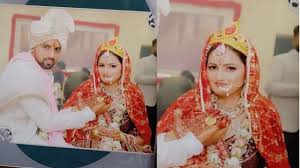
Victim’s family releases video threatening suicide if case not registered; Bhim Army warns of protest at SP office; accused allegedly linked to Bajrang Dal.Middle East news A Dalit family in Lakhimpur Kheri threatened to end their lives on social media after police refused to register an FIR two days after a brutal caste attack. A deeply disturbing incident of caste-based violence that took place on March 10 in the Tikunia police station area of Lakhimpur Kheri district, Uttar Pradesh, has come to light after the victim’s family released a video on social media threatening to end their lives if an FIR was not registered within 24 hours. Two days after lodging a complaint, no case had been registered, and the accused remained free. According to the victim’s family, during a marriage ceremony, a group of around 40 people from the Awasthi family forcibly pulled family members off the road, locked them inside a room and subjected them to brutal physical assault. The attackers allegedly hurled casteist abuses throughout the attack. A woman in the family had her hair pulled, was crushed underfoot and was threatened with being shot. The victim also alleged in her complaint that her son’s clothes were smelling of urine, suggesting he too was subjected to humiliation during the assault. Police arrived at the scene and managed to extract the victims from the locked room, but no arrests were made, and no FIR was registered despite the seriousness of the incident. Station In-Charge Accused of Pressuring Family to Compromise What has drawn equal outrage is the alleged conduct of the Tikunia police station in-charge after the incident. The victim’s family and Bhim Army State Coordinator Dr Kuldeep Bhargava alleged that instead of registering a case, the station in-charge was pressuring the family to reach a compromise with the accused and was actively working to protect them. The accused are said to be officials associated with the Bajrang Dal, which the family and activists say explains the alleged police reluctance to act. The victim’s family released a video on social media detailing the attack and warning that if the FIR was not registered within one day, they would take their own lives. The video quickly went viral, with large numbers of users tagging UP Police and the Director General of Police demanding immediate action. Bhim Army Warns of Protest, Demands SC/ST Act Case Bhim Army District General Secretary Advocate Deepak Jatav warned that if the victim’s family continued to face pressure and was denied justice, the Bhim Army would march to the SP office in Lakhimpur and stage a protest. The organisation demanded the immediate registration of an FIR under the SC/ST Prevention of Atrocities Act and other applicable sections, an impartial investigation and security for the affected family. Dr Bhargava said the incident was a clear case of upper-caste aggression against a Dalit family. “In Tikunia police station area of Lakhimpur Kheri district, some upper caste bullies forcibly pulled two members of the family from the road, locked them in a room and brutally beat them,” he said, adding that the failure to register an FIR amounted to a grave injustice. Amid the mounting social media pressure, Kheri Police responded on the platform, saying that the Tikunia in-charge inspector had been directed to take necessary action in the case. Whether a formal FIR has since been registered and arrests made remains to be confirmed. Courtesy : TOP Note: This news is originally published on https:/theobserverpost.com/bha and is used purely for non-profit/non-commercial purposes, especially human rights
Why has Transgender Persons Amendment Bill drawn widespread flak?

Activists, legal experts, and political parties argue the bill undermines self-identification, privacy, and the rights recognised under the 2019 Act and SC’s NALSA verdict The Union government’s move to introduce the Transgender Persons (Protection of Rights) Amendment Bill, 2026 in Parliament has come under fire from transgender rights groups, activists, and opposition parties. The bill, tabled in the Lok Sabha by Union Social Justice Minister Virendra Kumar, proposes significant changes to the existing law governing the rights and recognition of transgender persons in India. The controversy is primarily about the proposal to remove the provision recognising “self-perceived gender identity”, a principle that had been incorporated in the Transgender Persons (Protection of Rights) Act, 2019. Under the current law, transgender persons could identify their gender based on self-declaration while applying for a certificate from the district administration. The amendment bill seeks to omit that clause and introduce a more structured process for determining transgender status. Trans rights under threat According to reports, the amendment aims to introduce a narrower legal framework for identifying transgender persons and determining eligibility for official recognition. The bill proposes that certification would involve a medical board headed by a Chief Medical Officer, with the final decision subject to scrutiny by the district magistrate before identity documents are issued. The proposed changes have triggered strong reactions from sections of the transgender community and civil society organisations. Activists argue that removing the principle of self-identification marks a major shift away from the framework established by the Supreme Court more than a decade ago. In a joint statement issued by a group of transgender activists and community supporters, the amendment was described as a “We jointly demand the withdrawal of the amendment to the Transgender Act, 2019. The bill violates the Supreme Court’s judgement recognising the rights of transgender persons, undermines their fundamental rights and runs contrary to international human rights principles,” the activists said. Medical boards over self-identification The statement points to the landmark verdict delivered by the Supreme Court in the National Legal Services Authority vs Union of India case. The ruling recognised the right of individuals to identify their gender as male, female or third gender based on their self-perception. Activists say the new amendment departs from that principle by introducing a system of verification by medical boards and district authorities. “The amendment removes the right to self-determination and replaces it with compulsory state verification through medical boards and administrative scrutiny. This intrudes upon the privacy and dignity of transgender persons and places their identity under continuous state surveillance,” the statement said. Another area of concern raised by community organisations is the redefinition of the term “transgender person”. According to activists, the proposed changes narrow the definition and could exclude several identities that were previously recognized under the 2019 law. Privacy concerns spark outrage The earlier legislation explicitly acknowledged trans men, trans women, gender queer persons and other diverse gender identities within the scope of protection. Critics argue that the amended definition risks leaving many individuals outside the legal framework meant to safeguard their rights. The amendment has also drawn criticism for provisions related to gender affirming medical procedures. Activists say the bill includes clauses that require hospitals to inform district authorities about such procedures, raising concerns about medical confidentiality and privacy. Health decisions, activists argue, should remain confidential between patients and medical professionals rather than becoming part of administrative reporting systems. Political backlash over amendment The controversy has also drawn political responses. The CPI (M) has strongly opposed the amendment, describing it as a violation of constitutional guarantees and a rollback of rights already recognised by the judiciary. In a statement, the party’s Polit Bureau said the amendment fundamentally negates the principle of gender self-determination affirmed by the Supreme Court. “These amendments fundamentally negate the principle of self-determination of gender identity affirmed by the Supreme Court in the NALSA judgement. The bill substitutes self-perceived identity with certification by a medical board and scrutiny by district authorities, subjecting transgender persons to invasive bureaucratic and medical oversight,” the statement said. The party also criticised the narrowing of the definition of transgender persons under the proposed amendment. According to the CPI(M), the earlier law recognised a range of gender identities including trans men, trans women and gender queer persons. CPI(M) flags regressive approach “The amended definition drastically restricts recognition and effectively erases trans men, non-binary persons and gender fluid individuals from the ambit of legal protection,” the Polit Bureau said. The party further argued that the amendment represents a broader ideological attempt to impose rigid social categories. According to the statement, the bill reflects what the party described as a regressive approach to gender and social order. It also referred to the Union government’s position before the Supreme Court regarding restrictions on blood donation by transgender persons. The CPI(M) said that legislation affecting the rights of a marginalised community should not be introduced without consultations with the stakeholders concerned. Legal challenges likely ahead Legal experts say the controversy surrounding the amendment is likely to reopen debates about the constitutional principles governing gender identity. Many lawyers working on LGBTQ rights issues point out that the right to identity and dignity is closely linked to the right to privacy recognised by the Supreme Court. They argue that subjecting gender identity to medical and bureaucratic verification could raise constitutional questions if challenged in court For transgender activists, the debate is not merely about administrative procedures but about recognition and autonomy. Many in the community recall that the 2019 law itself had faced criticism for introducing bureaucratic processes in identity certification. The current amendment, critics say, risks strengthening those mechanisms instead of addressing long-standing concerns. As the bill moves through Parliament, the debate around it is expected to intensify. Civil society organisations, political parties and legal groups are already preparing responses ranging from public campaigns to possible court challenges. Rajeev Ramachandran Courtesy : The Federal Note: This news is originally published on https:/thefederal.com/bha and is used purely for non-profit/non-commercial purposes, especially