
Rahul Gandhi’s speech sparks row in Lok Sabha
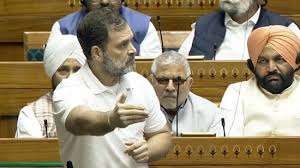
NEW DELHI: The Lok Sabha on Thursday witnessed a ruckus after Rahul Gandhi was interrupted during his speech on the energy crisis when he took a jibe at oil and gas minister Hardeep Puri for his name allegedly appearing in the files of an American sex-offender. He also attacked the govt over the US waiver to India to buy crude from Russia. “It has been a very puzzling fact why a nation the size of India would allow any other nation… the President of another nation to give us permission to buy Russian oil… I have figured the puzzle out. And the puzzle is about compromise,” he said and referred to Puri’s alleged link. This led to interruptions in the House, forcing Speaker Om Birla to intervene, saying the member cannot raise this issue, even as Gandhi insisted that he was speaking on energy and economic security. Later, opposition members entered the well of the House and Puri had to read out his statement amid sloganeering. Courtesy : TOI Note: This news is originally published on https:/timesofindia.com/bha and is used purely for non-profit/non-commercial purposes, especially human rights
Rahul to visit Chaibasa on March 31 to address Congress dist presidents of 2 states
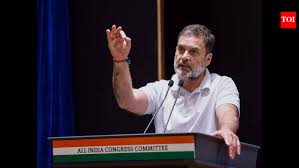
Ranchi: Congress MP and leader of opposition in the Lok Sabha, Rahul Gandhi, will make a day-long visit on March 31 to address newly appointed district party presidents of Jharkhand and Odisha, the state Congress unit announced here on Saturday. State Congress president Keshav Mahto Kamlesh said the party has decided to organise 10-day training camp from March 22 to 31 for the newly inducted district presidents in Chaibasa (West Singhbhum). “Rahul Gandhi will attend the programme to interact and guide all of us on the concluding day,” he said. Kamlesh said the Congress, which is part of the ruling alliance in Jharkhand, is conducting the programme as part of its ‘Sangathan Srijan Abhiyan’ (organisational rebuilding and strengthening) which was initiated about a year ago in the state. Kamlesh added that during the training, district presidents will be acquainted with the party’s rich history in various fields, will be trained to strengthen the party at the grassroots, establish better communication and coordination with workers, leadership capacity, among others. “This training camp will be significant for further strengthening the party in Jharkhand. During this period, district presidents will go on field visits for two days and establish communication with the people,” he said, adding that 35 district presidents from Odisha and 25 from Jharkhand will take part in the programme. On the party expelling former minister Yogendra Saw for three years for speaking against chief minister Hemant Soren and the alliance govt after the Hazaribag administration demolished his house two days ago to pave the way for NTPC’s coal mine project’s expansion, Kamlesh said, “No one is above the party and its set principles.” Courtesy : TOI Note: This news is originally published on https:/timesofindia.com/bha and is used purely for non-profit/non-commercial purposes, especially human rights
Sharp inflation in offing after assembly polls, alleges Rahul
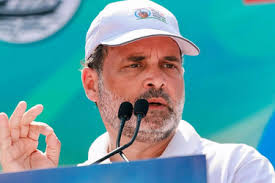
NEW DELHI: Warning of sharp inflation in the coming weeks, Congress’ Rahul Gandhi on Saturday said the Modi govt will hike the prices of petrol, diesel and LPG after the coming assembly elections, as he accused BJP of lacking strategy and direction to manage the country’s economy. Congress also accused the Modi govt of “moral cowardice” and “betrayal of civilisational values” for its “failure to condemn” the US-Israel attack on Iran. In a post on X, Rahul said the weakening of the rupee, which is “heading towards 100” against the dollar, and a sharp rise in industrial fuel prices are signs of looming inflation. “Govt may call it ‘normal’, but the reality is: Production and transport will become more expensive, MSMEs will be hit the hardest, prices of everyday items will go up, and FII money will flow out even faster, putting more pressure on the stock market. In other words, it’s certain to have a direct and deep impact on every family’s pocket,” he said. Meanwhile, with the war in West Asia completing 21 days, Congress spokesperson Jairam Ramesh said, “PM Modi has not been able to use his much-vaunted friendship with US President Trump and Israeli PM Benjamin Netanyahu to bring about a ceasefire.” He said, “Has the Modi govt condemned or criticised or deplored the brutal efforts of the US and Israel to force a regime change and state collapse that could lead to civil war in Iran? The answer is no.” Courtesy : TOI Note: This news is originally published on https:/timesofindia.com/bha and is used purely for non-profit/non-commercial purposes, especially human rights
Reinventing Kanshi Ram
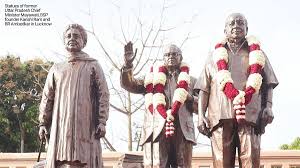
How the Dalit icon’s radical politics is being softened ON MARCH 15, India’s political class performed a familiar ritual of remembrance, except that this time it carried an unmistakable edge of competition. Across party lines, leaders queued up, on social media and at memorials, to pay tribute to Kanshi Ram, the founder of the Bahujan Samaj Party (BSP) and one of the most consequential mobilisers of Dalit political consciousness in post-Independence India. Describing him as a symbol of “empowerment and hope”, Congress leader Rahul Gandhi urged the government to confer the Bharat Ratna on him. Two days earlier at a public meeting in Lucknow, Gandhi also said that had Jawaharlal Nehru been alive, Kanshi Ram would have become a Congress chief minister. Uttar Pradesh Chief Minister Yogi Adityanath, in a message on X, described the BSP founder as a “pioneer of social justice” who “dedicated his entire life to the upliftment of the Dalits, the exploited, and the deprived”, offering his “humble tributes” to the Dalit icon. Samajwadi Party (SP) chief Akhilesh Yadav called Kanshi Ram a “hero of social change” and highlighted how he “secured a dignified place for the Bahujans within Indian society”, while also reiterating the need to carry forward the struggle for social justice envisioned by him and BR Ambedkar. BSP chief Mayawati paid homage to her mentor but also used the occasion to attack other parties for what she described as selective remembrance. She said that tributes to Kanshi Ram had become an “opportunistic fashion”, accusing parties like SP and Congress of invoking his legacy only for electoral gain. “It is due to Congress’ anti-Dalit mindset and mentality that BSP had to be created in the fit place,” she said. With crucial state elections on the horizon, not least in Uttar Pradesh, invoking Kanshi Ram has become as much a gesture of reverence as a signal of intent. His project of consolidating Dalit assertion, once seen as disruptive to established political hierarchies, is now claimed by parties that once stood in opposition to it. As a result, in this choreography of commemoration, the line between homage and appropriation keeps on blurring. The scramble carries an added urgency as every major party begins recalibrating its Dalit outreach. As the Dalit vote remained decisive in a fragmented electoral landscape, Kanshi Ram offered a potent symbol. For decades, he represented a distinct strand of political thought: organisational pragmatism, sharp anti-upper-caste rhetoric, and the creation of BSP, designed to convert the numerical strength of the “Bahujan” into power. Unlike Ambedkar, whose legacy now carries near-universal reverence, Kanshi Ram was once a more polarising and openly confrontational political figure. The “Ambedkarisation” allows parties across the spectrum to appropriate the BSP founder without inheriting the radicalism of his original project. What this produces is a subtle but consequential reframing—Kanshi Ram is no longer invoked primarily as a disruptor of caste hierarchies, but as a precursor to a more consensual, development-inflected politics of inclusion. His sharper edges, like his critique of entrenched social power, his insistence on independent Dalit political assertion, and his scepticism of upper-caste-led parties, are softened or omitted altogether. In their place emerges a curated Kanshi Ram: a social reformer rather than a political insurgent, a figure who can be seamlessly inserted into broader narratives of welfare, governance, and national progress. It is a process not unlike the earlier ‘sanitisation’ of Ambedkar, whose radicalism was gradually subsumed within a consensual national canon. This transformation also reflects the changing incentives of electoral competition. As Dalit voters become more mobile and less tethered to a single party, their symbolic capital has expanded. Political actors are therefore less interested in replicating Kanshi Ram’s autonomous model of mobilisation, which required long-term cadre-building and ideological discipline, and more in selectively borrowing from it features like the language of dignity, the invocation of representation, and the optics of outreach. The result is a shift from structural challenge to rhetorical accommodation. For example, for BJP, it means including Kanshi Ram in a calendar of Dalit icons. For SP, it entails celebrating March 15 as “Bahujan Divas” in all districts of Uttar Pradesh. With Dalit vote expected to play a decisive role in the 2027 Uttar Pradesh elections, the question is no longer who follows Kanshi Ram’s politics, but who gets to redefine it. In that contest, memory itself becomes a site of negotiation; it is a negotiation shaped not by fidelity to his methods, but by the strategic needs of the present. When Kanshi Ram began organising government employees in the 1970s, he was not seeking moral recognition but building the infrastructure of power. Born in 1934 in a Ramdasia Sikh family in Punjab, he worked briefly as a government scientist before turning to activism after encountering the writings of Ambedkar. But while Ambedkar had emphasised social reform and constitutional rights, Kanshi Ram was preoccupied with electoral arithmetic. He founded organisations with names that sounded like molotov cocktails: the All India Backward and Minority Communities Employees Federation (BAMCEF), and later, the Dalit Shoshit Samaj Sangharsh Samiti, or DS-4. Their purpose was clear: mobilise the oppressed majority—Dalits, Other Backward Classes and minorities—against what Kanshi Ram called the domination of the “15 per cent”, shorthand for upper castes. His most famous formulation captured the spirit of the project: “Jiski jitni sankhya bhaari, uski utni hissedari”, or, in other words, representation proportional to population. Democracy, he believed, was fundamentally a numbers game, in which the Bahujan, if it voted in unison, could rule. In 1984, he founded BSP, the vehicle that would convert this theory into power. The party’s early years were marked by sharp rhetoric and relentless grassroots mobilisation. Kanshi Ram travelled ceaselessly across North India, addressing small gatherings in dusty villages and industrial suburbs. His speeches were unsparing. He mocked Congress for co-opting Dalit leaders and accused upper castes of monopolising the state. For supporters, he was a revolutionary organiser, while for critics, he remained a divisive populist. More than four decades ago, when Netrapal Singh
85-Year-Old Dalit Woman Alleges Crores Worth Land Grab in UP’s Mainpuri, Claims Fraud and Coercion
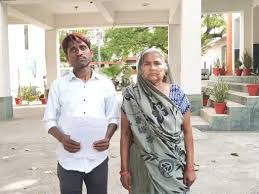
An 85-year-old Dalit woman in Mainpuri alleges her land worth crores was fraudulently transferred, claiming she was coerced into signing blank documents An 85-year-old Dalit woman has accused several individuals of fraudulently transferring her land worth crores in the Kurawali area of Mainpuri.Education news updates The victim, Resham Devi, has submitted a formal complaint to the District Magistrate, demanding strict action against the accused and cancellation of the alleged forged land documents. Allegations of Conspiracy and Coercion In her complaint, Resham Devi alleged that multiple individuals, including Ganesh Yadav, Raghunandan, Shailendra Kumar Yadav, Ajay Kumar, Vishal Diwakar, Ravi Gupta and Deepak Pal, conspired to cheat her. She claimed that the accused first contacted her and warned that her land was at risk, and told her that certain legal formalities were needed to “protect” it. “When I reached Kurawali, they took me in a car to Mainpuri and made me sit there for a long time,” she alleged. “I was not told anything clearly, but they kept asking me to put my thumb impression on papers.” Thumb Impressions Taken on Blank Papers According to the complaint, two of the accused got down from the car during the journey and later returned, after which they allegedly took Resham Devi to an office. There, she was made to put her thumb impression on multiple documents without being informed about their contents. “I was not told what those papers were. They just kept taking my thumb impressions,” she said. She further alleged that she was threatened with serious consequences if she spoke about the incident to anyone. Land Transferred Without Consent The alleged fraud came to light when the family later examined official documents. They discovered that the entire land under Gata number 299 in Mauza Sujarai Dehat had been transferred to Vishal Diwakar on March 9, 2026. Resham Devi has stated that she never agreed to sell the land and did not receive any payment for it. “I have not sold my land. I did not get any money. This has been done fraudulently,” she said. Suspicious Financial Transaction The documents also mention a cheque of Rs 5 lakh dated June 10, 2025, shown as part of an agreement. However, a bank inquiry reportedly revealed that the amount had already been withdrawn, raising further suspicion about the transaction. Family Alleges Caste Abuse and Threats The victim’s family has also alleged intimidation and caste-based abuse. According to them, when her son contacted one of the accused, he was abused using caste slurs and threatened with death. “They said they would kill the entire family if we pursued the matter,” the family alleged. Police Begin Investigation Following the complaint, local police have taken note of the matter. Lalit Bhati, Station House Officer of Kurawali police station, confirmed that an investigation is underway. “The complaint has been received. The matter is being investigated, and appropriate action will be taken based on findings,” he said. Courtesy : TOP Note: This news is originally published on https:/theobserverpost.com/bha and is used purely for non-profit/non-commercial purposes, especially human rights
Thakur, Dalit, Brahmin: Uttarakhand CM’s new Cabinet balances caste, regions
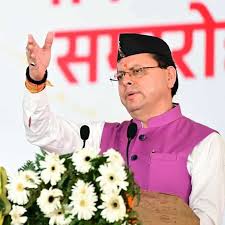
The Dhami Cabinet is now at its full strength, with 12 members. Inducting new faces into the Cabinet highlights the BJP’s strategy of balancing social and regional equations in the state ahead of the 2027 Assembly elections. Chief Minister Pushkar Singh Dhami has expanded his Cabinet, inducting five new faces. The Dhami Cabinet is now at its full strength, with 12 members. Inducting new faces into the Cabinet highlights the BJP’s strategy of balancing social and regional equations in the state ahead of the 2027 Assembly elections. While two ministers belong to the Thakur community, the newly-expanded Cabinet has one member each from the Dalit, Brahmin and Punjabi communities. The Garhwal region and the plains are represented by two ministers each, while the Kumaon region has a lone representative. Khajan Das hails from the Dalit community and has previously served as a minister. In the 2022 Assembly elections, the senior BJP leader won his seat by a margin of 11,163 votes. His political journey began in 2007 when he was elected from Dhanaulti. Bharat Singh Chaudhary, MLA, Rudraprayag Bharat Chaudhary (66) belongs to the Thakur community. Chaudhary is known for his strong command over Hindi, English, and Sanskrit. Before joining the BJP, he unsuccessfully contested the 2012 Assembly elections as an Independent. Ram Singh Kaida, MLA, Bhimtal (Nainital) Ram Singh Kaida, who began his political career with the Congress, contested the 2017 Assembly election as an Independent and won. Later, he gravitated toward the BJP and formally joined the party in 2021. Madan Kaushik, MLA, Haridwar Madan Kaushik is a five-time MLA. A former president of the BJP state unit, he has held various portfolios in previous state governments. Hailing from the Brahmin community, Kaushik commands a strong support base in the Haridwar region. Pradeep Batra, MLA, Roorkee A businessman with interests in hotels, retail and other sectors, Pradeep Batra is a third-term MLA from Roorkee. Batra, who won the 2012 Assembly election on a Congress ticket, joined the BJP prior to the 2022 polls. Ankit Sharma Courtesy : India Today Note: This news is originally published on https:/indiatoday.com/bha and is used purely for non-profit/non-commercial purposes, especially human rights
Physics Wallah Teacher’s Shameful Casteist Remark: “It would be difficult if I looked like a ‘thief-Ch***r’…”

Community Outraged After Clip Goes Viral New Delhi—A video is rapidly going viral on social media, alleging that a teacher at Physics Wallah (PW) made derogatory casteist remarks against the Dalit community. In the video, the teacher is heard telling students, “It is a big deal that I bear some resemblance to Ravi Kishan; if I looked like a ‘thief-Ch***r,’ it would be difficult—at least now you will look at me…” During this exchange, he used offensive language, which is being perceived as an insult to the Dalit community. Physics Wallah (PW) is a popular Indian educational platform founded by Alakh Pandey, offering affordable online classes, live sessions, video lectures, study notes, and mock tests for students in grades 6–12, as well as for JEE, NEET, and other competitive examinations. Available on the Google Play Store, the platform assists students in their learning journey through interactive tools and doubt-clearing sessions. The incident reportedly involves a colleague of Alakh Pandey. Sharing the video, the ‘Dalit Voice’ account posted: “A teacher insulted the hardworking community in the classroom, going so far as to use the casteist slur ‘thief-Ch***r.’ This exposes the deep-seated prejudice present among such individuals.” Following the viral video, social media users have expressed massive outrage. Many users have demanded immediate and strict action from Physics Wallah and Alakh Pandey. One user wrote, “If a teacher is making casteist remarks, what can we expect from others? @PhysicswallahAP, please take strict action, Sir.” Other users described the incident as “regressive” and “shameful,” accusing the teacher of harboring prejudice against the community. Some users have identified the teacher as “Rishi Jain, Economics teacher (Hindi medium) at PW”; however, no official statement has been issued by Physics Wallah regarding the matter yet. As of now, there has been no news regarding the suspension or termination of the teacher. Physics Wallah has not issued any response or update regarding this matter. This incident comes at a time when protests are underway across the country concerning the UGC (Promotion of Equity in Higher Education Institutions) Regulations, 2026. In January 2026, the Supreme Court stayed these regulations, terming them “too sweeping” and “vague.” The Court had scheduled a hearing for March 19, but the hearing could not take place. The next hearing is expected to be held next week. Meanwhile, Dalit organizations and student groups are demanding the implementation of these regulations, while students from the General Category have opposed them. Linking this controversy involving Physics Wallah to the dispute over the UGC equity regulations, many users have asserted that casteism still persists in educational institutions and that strict laws are needed. Geetha Sunil Pillai Courtesy: Hindi News
Over 44 student groups oppose changes to transgender rights Bill
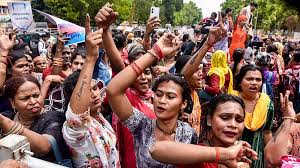
Over 44 student groups from law schools opposed the Transgender Rights Amendment Bill 2026, alleging it weakens self-identification rights and dilutes protections upheld by the Supreme Court. More than 44 student organisations from over 25 law schools across India on Friday condemned the proposed amendments to the Transgender Persons (Protection of Rights) Amendment Bill 2026, alleging that it undermines the dignity, autonomy and constitutional safeguards of transgender, intersex and genderqueer persons. The Bill, introduced in the Lok Sabha on March 13 by Union Social Justice and Empowerment Minister Virendra Kumar, seeks to provide a precise definition of “transgender” while excluding “different sexual orientations and self-perceived sexual identities” from its ambit. In a joint statement, student bodies including NALSAR Queer Collective, Feminist Alliance at NLSIU, Jamia Queer Collective, and groups from Government Law College, Mumbai, and Delhi University’s Faculty of Law, said the amendment “threatens self-identification, transition, and chosen family structures”. “This bill…effectively seeks to dilute the protections recognised in NALSA v. Union of India, which affirmed the right to self-perceived gender identity, dignity, and expression. We, the undersigned, are queer and allied student groups across Indian law schools. The proposed amendment threatens…the very existence of many trans persons, while stripping away already limited benefits,” the statement said. The groups further alleged that the proposed changes echo “the dark colonial legacy” of laws such as the Criminal Tribes Act and Eunuchs Act, which historically treated transgender communities as subjects of control. The Bill states that a transgender person “shall not include, nor shall ever have been so included, persons with different sexual orientations and self-perceived sexual identities”, asserting that the law is intended to protect a specific class facing “extreme and oppressive” discrimination, not all gender identities or fluidities. However, the student organisations argued that this position contradicts existing provisions. “This explicitly goes against Section 4(2) of the Act, which the Bill seeks to omit. This provision recognised the right to self perceived gender identity,” the statement said, questioning the government’s claim of a “vague definition” without substantiating enforcement issues. They also pointed to implementation gaps, noting that only 12 states and Union Territories have constituted transgender welfare boards, attributing shortcomings to “systemic failures in resources, infrastructure, and political will”. The proposed amendment has also drawn protests from transgender rights activists, the Student Federation of India, the Communist Party of India (Marxist), and Anish Gawande. The Bill introduces a revised definition that includes socio-cultural identities such as kinner, hijra, aravani and jogta, as well as intersex persons and individuals with congenital variations in sex characteristics. It also includes persons allegedly compelled to assume a transgender identity through coercive means. Student groups rejected what they described as a narrowing of the definition to limited cultural identities and physiological markers. “It conflates the distinct identities of intersex and transgender peoples and excludes all trans identities that do not fall into this narrow criteria,” the statement said. They further alleged that the amendment was introduced without adequate consultation with the community and fails to address longstanding demands on issues such as sexual violence, reproductive rights and marriage equality. “It is a deep irony that a statute claiming to protect the rights of transgender persons, is now proposed to penalise ‘coercing or alluring’ people to be transgender… This shows a deeply twisted view of transgender identity as a result of compulsion and coercion, rather than a representation of a person’s autonomy and agency,” the statement added. Courtesy : NAI Note: This news is originally published on https:/newsarenaindia.com/bha and is used purely for non-profit/non-commercial purposes, especially human rights
Delhi CM holds pre-budget meeting with transgender community

NEW DELHI: Delhi Chief Minister Rekha Gupta on Friday interacted with members of the transgender community and sought their suggestions for the upcoming annual budget to be tabled in the assembly next week. In an X post, Gupta said she held a meaningful dialogue with members of the third gender community at the Delhi Secretariat. They welcomed the Delhi government’s decision to issue them Pink smart cards for free bus rides, she said. “They also shared suggestions and expectations. These suggestions will be incorporated into the upcoming budget, moving towards building an inclusive and developed Delhi,” she said. The chief minister has been holding a series of meetings with various sections of the society, including working women, gig workers, labourers, farmers, teachers, students, medical professionals and others ahead of the budget presentation on March 24. PTI Courtesy : TOI Note: This news is originally published on https:/timesofindia.com/bha and is used purely for non-profit/non-commercial purposes, especially human rights
‘Now only into writing fiction’: Former Army chief Gen MM Naravane after uproar over unpublished memoir
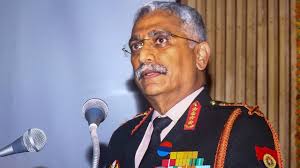
NEW DELHI: Former Army chief General MM Naravane said that he would only write fiction now. The statement came at a book signing event on Friday. Naravane’s unreleased memoir ‘Four Stars of Destiny’ created an uproar in Parliament last month with Lok Sabha leader of opposition Rahul Gandhi used excerpts from the book published in a magazine and accused PM Narendra Modi of “not fulfulling responsibility” during the 2020 India-China military clashes in Ladakh. “I’ve always been writing from time to time, not only military reports but also for various academic journals of the Army. I had also written a few short stories, one of which was even published in the Femina. I am now only into writing fiction,” he added. “My book ‘The Cantonment Conspiracy’ was released last year, and I’m glad to say that the book is relatively well for a first-time author who had no idea how to write. It has been an interesting journey to write this book and transition from being a soldier to being a storyteller. So I enjoyed writing it, and I’m sure all those who read it will enjoy reading it too,” he said. During the Motion of Thanks on the President’s Address on February 2, the Lok Sabha saw heated exchanges after Leader of the Opposition Rahul Gandhi attempted to quote a magazine article featuring excerpts from an unpublished memoir by Naravane. Gandhi’s remarks were interrupted by defence minister Rajnath Singh, who objected to citing material from an unauthenticated and unpublished book. Members of the ruling benches also opposed the move, intensifying the confrontation in the House. The dispute escalated further when Opposition MPs moved a no-confidence motion against Om Birla, alleging that Gandhi was not being allowed to speak. However, the motion was later defeated through a voice vote during the second phase of the Budget Session of Parliament. Courtesy : TOI Note: This news is originally published on https:/timesofindia.com/bha and is used purely for non-profit/non-commercial purposes, especially human rights