
Dalit girl manhandled in hostel
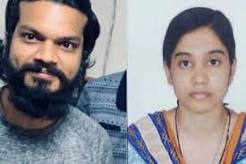
Lucknow: A Dalit girl residing at Lucknow University’s BR Ambedkar Hostel was allegedly manhandled and targeted by a group of girls from the same hostel for uploading a photograph of BR Ambedkar as the display picture in the WhatsApp group of the hostel, of which she was an admin. The incident took place on March 26 at LU’s second campus. On Wednesday, the panel formed by the proctor started a probe into the incident and recorded the statements of the complainant and accused girls. The complainant, an LLB III student, told TOI, “I was physically manhandled and verbally abused with casteist slurs by some girls in the hostel just because of the WhatsApp group profile picture. The provost and Dean Students’ Welfare also came to meet me but did not offer any help, after which I mailed my complaint to the proctor of the university.” The video of the incident also went viral on Instagram. Courtesy : TOI Note: This news is originally published on https:/timesofindia.com/bha and is used purely for non-profit/non-commercial purposes, especially human rights
Over 65 Dalit, Adivasi groups back UDF ahead of Kerala polls, criticises Left govt’s development model
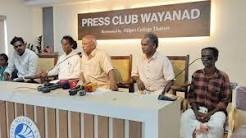
The Ambedkarite Democratic Front (ADF) on Wednesday announced its support for the Congress-led United Democratic Front (UDF), alleging that development initiatives undertaken by the Left government have sidelined Adivasi, Dalit, and other marginalised communities. In a statement, the ADF said that large infrastructure projects such as the Vizhinjam Port, national highways, and tunnel roads follow a development model that does not benefit ordinary taxpayers, including Dalits, Adivasis, fishermen, and low-income groups. Addressing a press conference, ADF working president K Ambujakshan claimed that only 10% of the Plan Fund, constituting just one-seventh of the State’s total budget, is allocated for SC/ST development, and that a substantial portion of this remains underutilised. He alleged that ₹7,411 crore earmarked for SC/ST welfare has been wasted over the past nine years, adversely affecting sectors such as education. According to him, delays in the disbursement of e-grants have forced nearly 150 SC/ST students to drop out of their studies. The ADF, a joint platform representing around 65 SC/ST organisations, said there is growing concern among these communities that the continuation of Left rule could threaten the survival and welfare of marginalised sections. The organisation also disputed Minister O R Kelu’s claim that e-grants were distributed without arrears. ADF general convenor M Geethanandan alleged that merely renaming colonies as “Unnathi” has not resulted in meaningful change. He further claimed that 19,000 acres of land allocated by the central government for landless people remain undistributed. Additionally, he alleged that although a significant share of funds under the LIFE housing scheme comes from SC/ST allocations, beneficiaries from these communities continue to be overlooked. The Kerala Legislative Assembly Election 2026 will be held in a single phase on April 9, 2026, with the counting of votes scheduled for May 4, 2026. Courtesy : Makytoob Media Note: This news is originally published on https:/maktoobmedia.com/bha and is used purely for non-profit/non-commercial purposes, especially human rights
‘Where Will I Go?’: Inside Delhi’s Trans Shelter Home As Care Networks Face Uncertainty
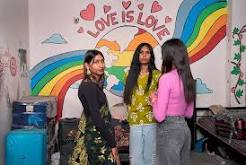
Denial of self-identification and narrowing definitions have left residents worried about identity recognition, access to schemes and the future of care systems. Summary of this article Shelter homes often face chronic underfunding and limited reach, with staff warning that existing facilities are far from sufficient. New provisions raise concerns that offering shelter or support could be legally challenged, while stricter identity requirements may restrict access to care networks. Despite fear and instability, community members continue to rely on each other for emotional and practical support, even as their futures grow uncertain. ‘Panchhi banoo udti phiroon mast gagan mein, Aaj main azad hoon duniya ke chaman mein.’ (Like a bird, I wish to soar merrily in the boundless sky; Today I am free in this garden of the world.) Sanam, who identifies as a trans woman, quoted this song to describe how she felt after India overturned a 19th-century ban on homosexuality. However, she feels differently now. On the day the Trans Amendment Bill was tabled in the Rajya Sabha, Sanam, 22, was in Delhi’s Kalkaji, overwhelmed by anxiety. Unable to collect her thoughts, she broke down and cried all the way to the Garima Greh where she lives. “Men were catcalling me even as I struggled to catch my breath. They misbehave with us all the time, now they’ll feel emboldened to do so,” Sanam said gazing blankly from the balcony, her expression settling into a faint smile. It has just been four days since she began hormone therapy. Now, with the President’s assent, she feels her existence hangs by a thread. It has been over a year since Sanam left her home, where she said she was constantly monitored, and began living in the shelter home. She says she feels familiarity there—accepted for who she is. After the new Act, she questioned, quietly: “Where will I go? I don’t know what to do.” Sanam lives with at least 25 other transpeople in Delhi’s Garima Greh, the only one enlisted on the government’s website in the national Capital. As per the 2011 Census, Delhi has 4,213 transgender persons, while India’s total stands at 4,87,803; a number the community members say is grossly underreported. As per an August 2025 Press Release, at present, the Department of Social Justice and Empowerment runs 18 such shelters across India, and approval has been granted to set up three more in 2025-26. A total of 429 people are currently residing in these shelters. “These facilities are simply not enough,” said Ankit*, a trans man who works as a project manager at the shelter home. He explained that the shelter accepts anyone who comes seeking help, and while they try their best to manage, finances are often strained. With lack of access to shelter, the homeless transpeople may never come out, or take extreme steps like suicide, he said. Kanta, the programme manager at the Garima Greh, which has been running since 2021, said they struggle with funding and sometimes go up to six months without support. The point of this scheme was to provide transpeople with a home, she said. “This is a government-run shelter home. We have not received a single penny from the government in this financial year,” she claimed. The new act has removed the right to gender self-identification recognised by the Supreme Court in the landmark National Legal Services Authority v. Union of India in 2014 and introducing medical certification for identity recognition. It has also changed the definition of a transgender person, only including intersex people and socio-cultural identities as kinner, hijra, aravani and jogta, or eunuch. With the changes, the community is faced with a range of unanswered questions about the funding of government run shelter homes, welfare schemes, the validity of the transgender identity cards which have already been issued, and access to the care community. “If the process of recognising identity becomes more restrictive, then access to these schemes will also become more uncertain,” Don Hasar, a Queer-Trans rights activist explained. It will affect how beneficiaries are identified, she said. She continued to note that ideally, shelter homes should not require a trans ID card for entry. People often arrive through informal networks, referred by someone they trust, even if they do not yet have a trans ID. Shelters do not turn them away; instead, they provide support and help them obtain the necessary documents. “Many of these shelters are run by community members,” she said. However, certain clauses in the new act raise concerns about how such support could be interpreted. “Even if somebody wants to help somebody who needs shelter home access, a case could be filed against them, saying that this is allurement. So how will organisations function now?” she questioned. In the new act, the government has introduced four new offences in addition to the existing ones, one of which carries a punishment of 10 to 14 years’ imprisonment, said Kanmani Ray, a trans woman and advocate based in Chennai. One provision addresses cases where a child is, by “force, threat, coercion, allurement, deception, inducement, undue influence or otherwise”, made to present as a transgender person and is then exploited for begging, solicitation, servitude, or any form of forced or bonded labour. Ray stated that there are already kidnapping and abduction provisions under the Bharatiya Nyaya Sanhita, which are regularly being invoked. Introducing a new set of offences was not needed. “Of course, as long as it is a criminal offence and it is not explicitly stated, the State has the burden to prove that they have a case. But let me make this clear, it is not about whether you did the offence or not. It is about the fact that the process is the punishment,” Ray said. At Delhi’s shelter home, hope has dimmed. Community members, some employed, some undergoing hormone therapy, some recovering from traumatic experiences at home, and others still finding their footing, are struggling to understand why the new law has redefined their identities. “I had so
Community members seek repealing of Transgender Bill, warn of protest

Hisar: Members of the transgender community have warned of a nationwide protest if the proposed Transgender Bill is not withdrawn, with a demonstration planned at Jantar Mantar in New Delhi on April 6. Speaking at the national convention of the Kinnar Samaj (transgender community) in Hisar on Wednesday, Chandni Kinnar said if their demands were not met, they would move the Supreme Court and might also launch a hunger strike at Ramlila Maidan. The convention, held at Agrasen Bhawan, saw participation from around 1,500 transgender representatives from across the country. Chandni Kinnar, a head figure of the community, was joined by Raj Haseena and Shobha Nehru during the media interaction. Chandni criticised the provision of mandatory medical examination in the proposed legislation, calling it “insulting and discriminatory”. “In a country where individuals are not required to produce medical proof of identity, imposing such a condition on the transgender community is unjust,” she said. Appealing to Prime Minister Namenda Mode, Chandni sought the withdrawal of the proposed bill. In an emotional address, she called for dignity and respect for the community, stressing that their identity should not be subject to medical validation. Community leaders at the event described the bill as a threat to their existence, arguing that it would disrupt long-standing social structures and traditions. They maintained that the community had historically regulated its own social systems and identity. Responding to media questions, Chandni said the community was not issuing threats but making a peaceful appeal for the bill’s repeal. She added that the transgender community sought recognition, respect and protection of its identity in return for its contributions to society. Caption of photo: Chandni Kinnar, along with Raj Haseena and Shobha Nehru, interacts with journalists in Hisar. Courtesy : TOI Note: This news is originally published on https:/timesofindia.com/bha and is used purely for non-profit/non-commercial purposes, especially human rights
‘Hat-trick of defeat for Congress certain’: PM Modi takes ‘rajkumar’ dig at Rahul Gandhi in Assam

NEW DELHI: Prime Minister Narendra Modi on Wednesday launched a sharp attack on the Congress in Assam, taking a swipe at Lok Sabha leader of opposition Rahul Gandhi by calling him a “Rajkumar” and predicting a string of defeats for the grand old party, even as he expressed confidence that the Bharatiya Janata Party-led NDA would secure a “hattrick” in the state, mentioning the strong state leadership under Sarbanand Sonowal and now of Himanta Biswa Sarma. Addressing a public rally in Gogamukh, the Prime Minister struck an aggressive tone, targeting former Congress president Rahul Gandhi with an indirect jibe, referring to him as a “self-proclaimed prince”. PM Modi said, “This is my first public meeting after the announcement of the Assam elections. This ocean of people in front of me, the enthusiasm of the youth, the blessings of the sisters and daughters, this love is an open declaration that this time a hat-trick is certain.” Reiterating his confidence, PM highlighted both his own electoral record and the party’s performance in the state. Prime Minister Narendra Modi said, “With the blessings of all of you, I received the opportunity to achieve a hat-trick as Prime Minister. With your blessings, I also received the opportunity to hit a hat-trick on this ground. I have come here for the third time. And with your blessings, the government in Assam is also going to achieve a hat-trick.” He credited the state’s governance over the past decade to former chief minister Sarbananda Sonowal and incumbent CM Himanta Biswa Sarma, asserting that Assam had entered a new phase of development and stability. Prime Minister Narendra Modi said, “First under the leadership of Sarbananda Sonowal and then under the leadership of Himanta Biswa Sarma, Assam has witnessed a new era of service and good governance in the past 10 years. These Assam elections are the election to build a developed Assam for a developed India. This time, the BJP-NDA government is set to complete a hat-trick. And the Congress is also set to face a hat-trick of defeats… The self-proclaimed prince of Congress is set to score a century of defeats.” The Prime Minister also referred to the BJP’s recently released manifesto, describing it as a blueprint for the state’s future. Prime Minister Narendra Modi said, “…The Assam BJP released a splendid manifesto yesterday. It was Tuesday yesterday, and this manifesto released on Tuesday is set to bring more ‘Mangal’ (auspiciousness) to Assam… This is the ‘Mangal Patra’ that arrived on Tuesday.” Highlighting key promises, PM Modi spoke about governance reforms and social initiatives, including the proposed implementation of a Uniform Civil Code in the state. PM Modi said, “To ensure that no deceit is done to our daughters, many major announcements have also been made to ensure the dignity, respect, and safety of our daughters’ lives. Implementing Uniform Civil Code in Assam and protecting the traditions of our tribal society, Sixth Schedule areas, or saving Assam’s identity are very big announcements. The BJP does what it says.” Drawing a contrast with past governments, the PM accused Congress of presiding over a period marked by instability and violence, while crediting the NDA for ushering in peace and development. Prime Minister Modi said, “In the past decade, Assam has traversed a long journey of development. These 20-25-year-old youngsters have only witnessed the good governance of BJP-NDA. They have not seen the dark era of Congress rule, when news from Assam was only about bombs, guns, riots, and curfews. The double-engine government has shown Assam a new path to lasting peace. Thousands of Assam’s sons and daughters have, in the past decade, put down the gun and connected to a new future.” He also outlined plans to position Assam as a hub for modern technology, including semiconductor manufacturing. PM Modi said, “There was a time when Assam was discussed in the world for its tea. Now, Assam will be recognised by the world not only for tea but also for chip. That day is not far when chip production will begin from Assam’s semiconductor plant. This will develop Assam as a major hub for modern technology. In the coming times, be it phones, cars, TVs, or fridges, all these products will run on chips from Assam. This is our roadmap for a developed Assam.” On infrastructure, PM Modi accused previous Congress governments of neglect, particularly in building connectivity over the Brahmaputra river. Prime Minister Modi said, “Assam has been gifted so much by nature; Assam has never lacked resources. But for the sake of power, Congress divided the society of Assam and never allowed the two banks of the Brahmaputra to connect. In 60-65 years, Congress built only 3 bridges over the Brahmaputra. Due to the lack of bridges, we lost so many people. The double-engine government understood this problem and completed 5 major bridges over the Brahmaputra in just 10-11 years.” The Prime Minister also took aim at Congress over the issue of illegal infiltration, asserting that the NDA government would continue strict action. Prime Minister Narendra Modi said, “Congress wants to settle foreigners in Assam and make the native sons and daughters of this land a minority…The BJP-NDA government will not allow the land of our farmers, tribals, and our forests to be under the occupation of infiltrators. Against illegal occupation, the BJP-NDA government’s action will continue. Assamese pride and identity will continue. This is Modi’s guarantee.” The rally marked a high-voltage campaign event in Assam, which is set to vote in a single phase on April 9, with results to be declared on May 4. Courtesy : TOI Note: This news is originally published on https:/timesofindia.com/bha and is used purely for non-profit/non-commercial purposes, especially human rights
Pushed out by Jyoti Basu, eclipsed by Mamata, crushed by BJP: Congress’ 50-year exile in West Bengal

NEW DELHI: Nearly 50 years have passed since the Congress party’s Indira Gandhi era, when stalwart Siddhartha Shankar Ray helmed West Bengal as chief minister. His tenure ended in 1977, giving way to a sweeping communist surge led by veteran marxist Jyoti Basu, who would become the state’s longest-serving chief minister. The decades of Left dominance systematically eroded the Congress’s influence. The party of the iconic Bidhan Chandra Roy was pushed so far to the margins that it now struggles to project itself even as a credible third force. The Left’s long hegemony was eventually shattered by Mamata Banerjee. Her political ascent relegated the communist brigade to the sidelines, but in the most recent elections, it was the Bharatiya Janata Party (BJP) that emerged as the primary challenger to her Trinamool Congress (TMC) in last elections that took place in 2021. Amidst these seismic shifts, the Congress’s footprint remains a shadow of its former self as the next assembly polls approach. The decline is stark when compared to 1972, when the Congress secured a landslide victory with over 200 seats and nearly half the total vote share. However, following the rise of the CPM-led Left Front under Jyoti Basu, the party began a long retreat from the center of power. In the 1977 elections, the grand old party suffered a crushing defeat, eclipsed by the CPM wave. This collapse was fuelled in part by the backlash against Indira Gandhi’s Emergency, which also led to the Congress’s first-ever defeat in Centre, losing general election that same year. By 1977, the party had lost more than half the vote share it held in 1972. It never returned to a commanding position. While Congress remained a relevant opposition force for years, the turn of the millennium saw its political space seized by Mamata Banerjee. Having broken away to form the Trinamool Congress in 1998 under the “Jora Ghas Phul” symbol, Banerjee achieved power within 15 years, filling the vacuum left by the declining Left and a stagnating Congress. In many ways, the TMC managed to ascend to the top while more than a century older Congress languished. Even as national leadership transitioned from Indira to Rahul Gandhi, West Bengal’s electorate showed little interest in returning to the Congress fold. The 2021 elections marked a final turning point. The BJP surged to 77 seats, becoming the principal opposition. While the BJP could not unseat Mamata Banerjee, its rise dealt a devastating blow to the Congress, which failed to win a single seat, cementing its position as a distant third. Now, facing an uphill battle for relevance, the Congress is preparing to fight back. As the state gears up for elections across 294 seats, the party hopes to transition from a faded memory to a renewed political force in a state where the results will define the next chapter of Bengal. Courtesy : TOI Note: This news is originally published on https:/timesofindia.com/bha and is used purely for non-profit/non-commercial purposes, especially human rights
‘Double-ghulami govt’: Priyanka Gandhi calls PM ‘slave’ of US, Assam CM Himanta that of Modi

NEW DELHI: Congress leader Priyanka Vadra on Wednesday took a swipe at the BJP-led central and state government, accusing Prime Minister Narendra Modi and chief minister Himanta Biswa Sarma of running a “government of double-slavery” in Assam. Addressing a rally in Nazira, Priyanka targeted the BJP’s central campaign pitch, saying it had failed to deliver on its promises. She further said that PM has become a slave to America and CM Hemanta is that of Modi. “They had spoken of a double-engine government. Didn’t they say so in the last election? Modi ji used to come and say that now they will run a double-engine government. But they have run a government of double-slavery. Modi ji has become a slave to America and because of his policies today the entire country is in crisis. And Hemanta ji is Modi ji’s slave. And on top of that, they want this government of double-slavery to make the people of this beautiful and self-respecting state of Assam slaves, keep them suppressed,” she said. “They only work for you when they see some benefit in it for themselves. This has not been the tradition of this country. Even today, we want a government in Assam which doesn’t scare you, doesn’t threaten you, doesn’t serve its own selfish interests, but serves you, works honestly for you, advances and strengthens your culture and your civilisation,” she added. She further alleged that the BJP government in Assam was functioning through intimidation and corruption, claiming that public resources were being misused. “It is not just that one leader is prospering. The biggest thing that happens due to corruption is that your money is snatched away. This money is meant to be used for you—schools, hospitals, roads, taps—but instead it is being used to build palaces and enrich families,” she said. Targeting the state leadership, Priyanka claimed that “only one family is looting everything in Assam,” while ordinary citizens continue to struggle. She also accused the BJP of failing to fulfil key promises, including raising wages for tea garden workers and granting Scheduled Tribe status to several communities. “Various tribal communities have been demanding ST status for years. The BJP had promised to accord ST status to them, but they failed to give it,” she said. Raising concerns about governance, the Congress MP alleged that people were being coerced into attending rallies. “PM Modi and CM Himanta are ruling the country and state with fear and threats. Our fight is against that fear, and for protecting Assam’s culture and civilisation,” she said. Highlighting Congress’ promises, Priyanka outlined welfare measures her party would implement if voted to power. “If you want such an Assam, then choose the Congress government. Our first guarantee is that for women, if you want to start some small work or business, you will be given Rs 50,000. Whatever scheme we bring for women, its cash will be transferred directly to the bank accounts of women,” she said. “You will get health insurance up to Rs 25 lakh. The government will provide free treatment up to Rs 25 lakh for whatever disease you have. Our government has already shown this in Rajasthan,” she added. Priyanka also raised the issue of justice for Assamese singer Zubeen Garg, asserting that it was a legitimate public concern. “The Congress government wants Zubeen Garg ji to get justice. Within 100 days, as soon as our government is formed, we will get him justice,” she said. Further rejecting accusations of politicising the issue, she said, “I honestly don’t believe that such things should be politicised. But I think that when there is a demand among the public that somebody who they revered and respected is not getting justice, then, as politicians, isn’t it our duty to say that yes, we are going to make every effort to give justice? How is that politicisation?” Calling for a political change, she urged voters to envision a “new Assam.” “Raise your heads, puff out your chests, and make up your mind that with the new government, a new Assam will come. Your Assam, that Assam which was Zubeen Garg ji’s dream, that Assam which is in your hearts, that Assam which is everyone’s dream, in which your children’s future becomes bright, in which this corruption stops,” she said. Congress is anti-development: PM Modi Meanwhile, Prime Minister Narendra Modi also mounted a strong counterattack on Congress during his rallies in the state. Addressing a gathering in Biswanath, he accused the party of being “the root cause” of corruption in independent India. “The entire country knows that Congress is anti-development and has been the root of corruption in independent India. In Assam, Congress committed acts that the people are well aware of. Congress has played with Assam’s identity, pride, and security. Since independence, it compromised Assamese identity for the sake of power and repeatedly neglected Assam’s interests,” he said. He further alleged that Congress had encouraged illegal infiltration for political gains. “They (Congress) have compromised with Assam’s ‘aatma’ (soul), ‘shaan’ (pride), ‘pehchan’ (identity) and ‘suraksha’ (security),” Modi said, adding that the BJP government had taken steps to remove encroachments and protect local identity. The Prime Minister also reiterated the BJP’s governance record, stating that the party’s “double-engine government” had ushered in development and stability. “The BJP’s 10-year rule heralded a new dawn of ‘seva’ (service) and ‘sushasan’ (good governance) in Assam,” he said. Modi further promised key policy measures if the BJP returns to power, including implementation of the Uniform Civil Code and protection of tribal rights under the Sixth Schedule. He also expressed confidence in securing a third consecutive term in the state. The political exchange comes as Assam heads into a high-stakes assembly election, with polling for all 126 constituencies scheduled for April 9 and counting set for May 4. The contest is expected to be a direct fight between the ruling BJP-led NDA and the Congress, with both sides intensifying their campaigns and sharpening their attacks in the final stretch. Courtesy :
Andhra Pradesh: TDP-RSS call for building Rama temple leads to tensions with Dalits
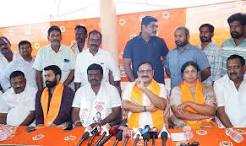
The violence in Akividu traces back to a March 7 visit by Andhra Pradesh Deputy Speaker Raghu Rama Krishna Raju, who, along with RSS members, announced plans to construct a Ramalayam at the site. Tensions broke out between Dalit residents of an Andhra Pradesh village and leaders and workers of the Telugu Desam Party (TDP) and Rashtriya Swayamsevak Sangh (RSS) on March 27, over a dispute regarding the construction of a Rama temple at a structure that houses a local deity. The incident took place in Akividu in Andhra Pradesh’s West Godavari. According to a fact-finding report published by the Human Rights Forum (HRF), alleged illegal attempts were made to convert a Gonthenamma temple into a Ramalayam (Rama temple) in the Pedapeta area of Akividu. Gonethenamma is a deity of the Mala community (Scheduled Caste), the HRF report said. The move was statedly led by TDP MLA and Assembly Deputy Speaker K Raghu Rama Krishnam Raju, along with the RSS. According to HRF, the structure housing the Gonthenamma idol is not a temple in the conventional sense. Instead, it is a choultry (inn) where the idol was also placed. A few decades ago, idols of Rama and Sita were also placed in the building, with the assent of the Gonthenamma temple caretaker, the HRF fact-finding report noted. It is the allegedly “dilapidated condition” of this structure that gave rise to the RSS demand for a Ramalayam. The plan faced pushback from the Dalit residents of Akividu, who opposed the plans to demolish the place of worship of their local deity. Groups led by Deputy Speaker K Raghu Rama Krishnam Raju visited the region twice — first on March 7 and then on March 27, the festival of Sree Rama Navami. The proposal was opposed by a section of villagers, leading to repeated confrontations that escalated further after objectionable social media posts. Speaking at Akivudu on March 7, Raghu Rama Krishna Raju said, “In this Scheduled Caste (SC) colony, how many Hindus are there and how many Christians? Is there no Hindu here?” he asked, allegedly ridiculing their Christian identity. In a separate interview with a Telugu channel, Raghu Rama Raju said that they are all “Hindus at the end of the day.” Following a scuffle that broke out on the first visit on March 7, cases were booked against both sides. However, in the aftermath of the violence that broke out on March 27, only the Dalits were charged with cases. The police booked 58 Dalit persons, of whom 27 were arrested and remanded to judicial custody, the HRF report said. Three days after violence broke out on March 27 in Akividu in Andhra Pradesh’s West Godavari district, representatives of civil rights group Human Rights Forum (HRF) on Monday, March 30, published a fact finding report. The violence broke out on March 27 during Srirama Navami celebrations, leaving three persons injured. The renovation proposal has also been backed by Union Minister of State Bhupathiraju Srinivas Varma. “No matter who comes together or not. We will build a Ram temple in Akividu,” he said. Former Amalapuram MP GV Harsha Kumar on Monday, March 31, proposed a compromise—developing a temple that accommodates both Lord Ram and the local deity—while urging authorities to first consult residents and constitute a committee to address concerns. HRF has urged the Telugu Desam Party (TDP) led Andhra Pradesh government to conduct an impartial inquiry and fix accountability for the clashes. Courtesy : TNM Note: This news is originally published on https:/thenewsminute.com/bha and is used purely for non-profit/non-commercial purposes, especially human rights
Nepal to issue formal apology to Dalits within 15 days

KATHMANDU: Nepal’s new govt said it would issue a “formal state apology” to Dalits and other historically excluded communities within 15 days under prime minister Balendra Shah’s 100-point reform agenda, in what activists described as a historic acknowledgment of generations of caste-based discrimination, exclusion and denial of opportunity. The proposed apology is to be accompanied by measures on social justice, inclusive restoration and historical reconciliation. The agenda said: “We will formally acknowledge the injustice, discrimination and deprivation of opportunities inflicted on Dalits and historically marginalised communities by the state, society and policy structures, and prepare the basis for social justice, inclusive restoration and historical reconciliation.” It added that a reform-oriented programme would be announced too. The promise has drawn attention in a country where Dalits make up about 13-14% of the population but continue to face entrenched exclusion despite constitutional guarantees and laws against caste-based discrimination and untouchability. Activists said nearly 42% of Dalits lived below the poverty line, literacy remained below the national average, and representation in key institutions stayed disproportionately low. For many, the issue remained deeply personal. Saraswati Nepali, president of the Dalit Society Development Forum in Baitadi, recalled that as a child she was not allowed to drink from the same water jar as her classmates and had to walk home for water because she was Dalit. “The state’s official apology will be like a balm for our wounds,” she said. “But for it to heal entirely, govt must effectively ensure all our guaranteed rights. That would give us justice and ensure our dignity.” Dalit activist Hira Lal Bishwakarma welcomed the announcement, but said its meaning would depend on implementation. “The current decision is honourable, but there is fear that it will only be lip service like in the past,” he said. “After announcing such programmes, policies, budgets, and structures are needed. Without them, it is good to show such announcements externally, but the Dalit community does not get justice.” Amrita Ban, 23, a Gen Z activist, told TOI the move had raised expectations among young voters. “A state apology to a community that has faced discrimination for generations is historic and a positive beginning. I strongly welcome the decision…I am hopeful it will also bring concrete measures to end discrimination at its roots.” Rakshya Bam, 26, said, “If govt backs this with budgets, enforcement and accountability, it could mark a significant shift in Nepal’s response to caste injustice. Without that, the apology could become a powerful acknowledgment of the past, but fall short of changing the present.” Courtesy : TOI Note: This news is originally published on https:/timesofindia.com/bha and is used purely for non-profit/non-commercial purposes, especially human rights
Rape Convict Sentenced to 10 Years in Sonbhadra: Court Imposes Fine of ₹55,000 in Case Involving Rape Under False Pretext of Marriage
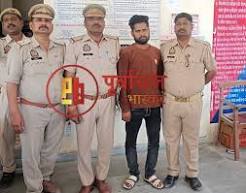
In a significant verdict delivered on Tuesday, the court of Special Judge (SC/ST Act) Abid Shamim in Sonbhadra convicted Dhanesh—alias ‘Stander’ Patel—of rape and sentenced him to 10 years of rigorous imprisonment. The court also imposed a monetary fine of ₹55,000 on the convict. The court clarified that in the event of non-payment of the fine, the convict would be required to undergo an additional six months of imprisonment. The period already spent in judicial custody will be adjusted against the sentence. Half of the imposed fine amount is to be awarded to the victim. This case dates back approximately five years, when a young Dalit woman from the Karma police station area filed a complaint. The woman alleged that Dhanesh—alias ‘Stander’ Patel (son of Rajkumar Raja Patel, a resident of Khairpur Sirsiya Thakurai, under Karma Police Station, District Sonbhadra)—had engaged in sexual relations with her on multiple occasions under the false pretext of marriage. According to the victim, when Dhanesh announced his intention to marry a girl from his own caste community and was confronted about it, he verbally abused her and issued death threats. Subsequently, on May 17, 2021, the Karma police registered an FIR against him under various sections, including those pertaining to rape and the SC/ST Act. The Circle Officer (CO) investigated the matter and, based on sufficient evidence, filed a chargesheet in the court. The court heard the arguments presented by the counsels for both the prosecution and the defense, recorded the statements of seven witnesses, and conducted a thorough examination of the case records. Based on all these facts, Dhanesh—alias ‘Stander’ Patel—was found guilty. Government Counsel C. Shashank Shekhar Katyayan represented the prosecution during the arguments. Manoj Kumar Verma | Sonbhadra Courtesy: Hindi News