
Dalit community’s Bindooli attacked in Hariyav, Udaipur, pelted with swords and stones

Udaipur, The joy of a Dalit family in Hariyav village, under the Dabok police station area of the district, was disrupted last night when miscreants attacked the Bindooli while hurling casteist slurs. Applicant Bhairulal Meghwal stated in his police complaint that at around 10 pm on April 29, his daughter Pooja’s Bindooli was passing through the main road of Dhira Talai when Laxman Singh, Madhu Singh, Kishan Singh, Uday Singh, Arjun Singh, along with other family members and women from the village, blocked the way. It is alleged that Madhu Singh’s daughter, Manju Kunwar, grabbed a young man’s collar, hurled casteist insults at him, and threatened to cause bloodshed if the Bindooli continued. Then, the attackers suddenly stopped the DJ, forced the bride off the horse, and attacked the wedding party and guests with sticks, rods, and swords. In this violent clash, a man named Takhat Singh reportedly attacked with a sword, injuring several people, including Vardi Chand, Ganesh, Jitu, and Manju Meghwal. Stones were also pelted during the attack, seriously injuring women and children. The victims allege that, in addition to the assault, the attackers snatched gold mangalsutras from the women’s necks and committed robbery. The incident has created an atmosphere of tension in the entire area. The applicant has appealed to the Dabok police station officer to take strict legal action against the named accused and ensure justice. The police are now investigating the matter. By Sohail Khan Courtesy: Hindi News
Mathura Dalit woman assault: Dalit woman assaulted in Mathura, victim identified by jurisdiction; demand for protection and action

Mathura Dalit woman harassment: A Dalit woman in Magorra, Mathura, has accused villagers of assault, casteist remarks, and poisoning a goat. Citing threats to her life from the bullies, the victim has appealed to the police for protection and strict action. Mathura Dalit woman harassment: A Dalit woman in Nagla Bhuchan village, under the Magorra police station in the Govardhan tehsil area of Mathura, has accused some villagers of assault, abuse, and casteist remarks. The woman also alleges that the accused poisoned her goat to death. The victim has filed a police report and demanded strict action and protection. According to Pooja Devi, wife of Rajkumar, a resident of Nagla Bhuchan village, some villagers abused her and used casteist slurs on April 15th. She filed a complaint with the Magorra police station on the same day, but no action was taken at that time. The victim alleges that on the morning of April 28, 2026, when her husband was not at home, the accused poisoned a goat tied outside their house, causing its death. When her husband protested, the accused assaulted him. The victim’s husband was rescued only after locals arrived at the scene and intervened. It is alleged that the accused also threatened to kill her while leaving. On Thursday, the victim submitted a complaint to Circle Officer Anil Kumar, stating that the accused have a domineering nature and encroach upon the land of the poor. Because of this, her family is terrified. The jurisdictional officer stated that a complaint has been received. The Magorra police station has been directed to investigate, file an immediate report, and take necessary action. Strict action will be taken against the culprits. Courtesy: Hindi News
Protest against playing Baba Bhimrao Ambedkar songs: Violence in Dalit girl’s wedding procession, 5 booked, wedding held under police protection

In Sambhal, people protested against the playing of Baba Bhimrao Ambedkar songs during the wedding procession of a Dalit girl. An altercation broke out between the two parties, which later escalated into a physical altercation. Eight to ten people from the bride’s side were injured in the incident. The incident occurred in Allipur Buzurg village, located in the Baniyatheer police station area of Chandausi tehsil in Sambhal district. The wedding procession of Tejpal, son of Lakhan, a resident of the village, arrived in Allipur Buzurg from Akbarpur Chitauri village at around 5:30 pm on April 29th. The procession was passing by the post office in the village. It is alleged that songs related to Baba Bhimrao Ambedkar were being played on a Tata Magic DJ system, which was objected to by Ram Bahadur, son of Pati, Ajay, son of Khempal, Aman, son of Subhash, Bablu, son of Dinu, and Prempal, son of Jagatpal. They are also accused of assaulting members of the Dalit community. Several videos of the altercation have surfaced, showing a young man standing on the roof holding a stick while people standing below are fighting among themselves. Acting police station in-charge Roshan Singh stated that a named report has been filed against five people based on a complaint from the bride’s father, Tejpal, regarding the altercation during the wedding procession in Allipur Buzurg village. Police are investigating the matter and efforts are being made to arrest the culprits. Tejpal Singh stated that police arrived in the village after the altercation. His daughter’s wedding was conducted under police protection, and the wedding procession departed the next morning. He has demanded strict action against the culprits from the police administration. Sunny Gupta, Sambhal Courtesy: Hindi News
Meet Rithika Sri: Tamil Nadu’s first transgender cricket umpire breaking barriers

Indian cricket is slowly seeing new names and new roles, not just on the pitch but also in decision-making roles like umpiring. These changes may look small at first, but they carry meaning for many people who have long been outside the system. One such story coming from Tamil Nadu is now drawing attention for all the right reasons, where Rithika Sri has stepped into cricket umpiring and created a quiet milestone. Rithika Sri becomes a new name in Tamil Nadu cricket umpiring Rithika Sri, who comes from Salem, has become the first transgender umpire from Tamil Nadu. Her entry into this field is being seen as a notable moment in state cricket, especially in terms of inclusion. A key development that supported this change came from the Tamil Nadu Cricket Association. It introduced an “other” category in the gender section of its State Panel Umpire exams. This change made the application process more open for different candidates. Early life and background of Rithika Sri Rithika Sri was born as R. Muthuraj in Salem, Tamil Nadu. She later transitioned and identifies as a transwoman. She has completed a diploma in Mechanical Engineering. Before entering cricket, she worked at a call centre in Mohali. Her interest in cricket umpiring started while watching the Indian Premier League. What began as casual interest slowly turned into something she wanted to pursue seriously. How her umpiring journey started During the COVID period, she returned to her hometown. This was when she decided to focus on cricket umpiring. From 2021 onwards, she began officiating matches in Salem and Coimbatore. She continued building experience in local matches over time. In 2024, she completed her transition in Coimbatore. She was also involved in discussions that supported the inclusion of the “other” gender category in the TNCA umpire exam system. Difficult moments during her journey Rithika Sri has shared that her path was not easy. She faced difficult situations while trying to establish herself in cricket umpiring. She also recalled an incident in Coimbatore where she was denied entry into a cricket ground. Speaking to The Hindu, she shared her experience in her own words: “The first time in Coimbatore, I went to watch because they wanted me to get familiar with the new district, but I was denied entry, and there were hurtful comments. I went back home crying after an hour, but not before fighting back against them. People often accuse trans people of begging, but then, at the same time, they don’t allow us to pursue a dignified livelihood. Can’t a transperson become an umpire?” Despite such experiences, she continued her journey without stepping away from the sport. Support from cricket associations Along with challenges, she also received support from cricket authorities. The Coimbatore District Cricket Association helped ensure that she was not discriminated against at venues. Officials including R. Chandramouli and K. Mahalingam worked to manage the situation and support fair access. She also mentioned that matches were shifted from a venue that did not allow her entry. Courtesy : TOI Note: This news is originally published on https:/timesofindia.com/bha and is used purely for non-profit/non-commercial purposes, especially human rights
Is India’s new transgender law not grounded in scientific knowledge?

A mere physical examination is not enough to certify a person as transgender, according to experts Is India’s new transgender law not grounded in scientific knowledge? Parliament last month passed the Transgender Persons (Protection of Rights) Amendment Bill, 2026. The new legislation significantly amends the 2019 Act. According to the new law, an examination by the medical board is mandatory to confirm transgender identity. Is India’s new transgender law not grounded in scientific knowledge? It only recognises certain socio-cultural identities.Photo: Vikas Choudhary/CSE However, critics have pointed out that the new law leaves out many trans men, trans women and non-binary individuals, who do not fall into law’s definition of a ‘transgender person’ which only includes socio-cultural identities like hijra, kinner, aravani. Is India’s new transgender law not grounded in scientific knowledge? This, say critics, leaves out many trans men, trans women and non-binary individuals.Photo: Vikas Choudhary/CSE Experts have said that the new law is not based on scientific knowledge. Vikas Choudhary Courtesy : Down To Earth Note: This news is originally published on https:/downtoearth.com/bha and is used purely for non-profit/non-commercial purposes, especially human rights
Former Air Chief says Greater Nicobar project important for ‘military footprint’
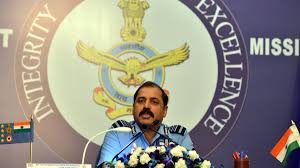
In pushback against Rahul Gandhi’s opposition to the project, retired Air Chief Marshal says ecological concerns will be mitigated; notes that proposed port is 150 km from Malacca Strait, the route for 75% of China’s energy trade The Greater Nicobar project is “important for India’s military footprint” in the area, a former chief of the Indian Air Force said on Thursday (April 30, 2026), as part of the BJP’s pushback against Congress leader Rahul Gandhi’s comments against the project and its harmful ecological footprint. Air Chief Marshal (Retd) R.K.S. Bhadauria, who is now a member of the BJP, pointed to the strategic importance of having a port near the route of China’s energy shipments, with the conflict in West Asia demonstrating the impact of such maritime leverage. Nicobar project largest theft of Indian property to fulfil fantasies of one businessman: Rahul Gandhi He added that environmental concerns are taken on board as a matter of course whenever such projects are mooted. “There are statutory clearances and committees are made. They look at all the factors and all these are mitigated,” he said in a statement. The project, being built at a cost of around ₹81,000 crore, includes a transhipment terminal, a power plant, and a township. The Union government expects it to boost maritime trade, connectivity, and security, and play a key role in promoting India’s geo-strategic and economic interests. The Great Nicobar project | Between the sea and the state Strategic location The retired Air Chief Marshal said that was “surprised” by Mr. Gandhi’s views on the project, noting that it was “important that such a project be understood.” “[The project] is important for India to set a militarily strategic footprint in that region. From a defence and strategic perspective, this development is very crucial. After Strait of Hormuz closure, we have realised the importance of straits and sea route blockades, and such a statement after all this is surprising. If the port is made, it will be only 150 km away from the Malacca Strait, which serves as the route for 75% of China’s energy trade. It will boost India’s maritime and air front dominance to a great extent,” he said. His response on behalf of the BJP came after Mr. Gandhi characterised the project as “one of the biggest scams and gravest crimes against the natural and tribal heritage of the country”. After visiting the area, the Leader of Opposition in the Lok Sabha had said that the project would entail the axing of millions of trees in 160 sq. km of rainforest. Terming it as “destruction dressed in development’s language”, Mr. Gandhi vowed to raise the issue in Parliament. The Hindu Bureau Courtesy : The Hindu Note: This news is originally published on https:/thehindu.com/bha and is used purely for non-profit/non-commercial purposes, especially human rights
Rahul Gandhi Flags Great Nicobar Connectivity Project As ‘Destruction Dressed As Development’ During Island Visit

Rahul Gandhi also mentioned that this project aims at the destruction of enormous ecological properties, and that he would raise this matter in the Parliament Leader of Opposition in the Lok Sabha and Senior Congress leader Rahul Gandhi strongly condemned the Union Government’s proposed infrastructure project on the Great Nicobar islands. He is currently visiting Andaman and Nicobar, where he is assessing the environmental impact the project could have, and talking to indigenous communities about the same. On Wednesday, April 29, 2026, he said: “What is being done in Great Nicobar is one of the biggest scams and gravest crimes against this country’s natural and tribal heritage in our lifetimes.” See Also: Hardoi School Principal Booked Under BNS and SC/ST Act After Viral Video of Her Shouting at Parents Rahul Gandhi: Destruction Dressed In Development’s Language The Rae Bareli MP described the Nicobar islands as one of the most beautiful forests he has seen in his lifetime, hosting a rich flora and fauna. In a post on X (April 29, 2026), Gandhi talked about his visit to the region. He said: “These are the most extraordinary forests I have ever seen in my life. Trees older than memory. Forests that took generations to grow. The people on this island are equally beautiful – both the adivasi communities and the settlers – but they are being robbed of what is rightfully theirs.” Flagging the ecological loss, he mentioned that this project ignores the livelihoods and aspirations of the local tribal communities living in the area. He also visited Campbell Bay on Tuesday, April 28, 2026, to talk to the tribal leaders opposing the project. “This is not development. This is destruction dressed in development’s language,” he added. Targeting Crony Capitalism Highlighting the scale of the deforestation as a major ecological loss for the region’s indigenous communities, the Lok Sabha MP said: “It’s amazing that 160 square kilometres of these forests is being chopped up, so that one businessman, Mr. Adani, can fulfill his fantasies.” The Adani Group has expressed interest in developing a trans-shipment project in the region. Rahul Gandhi has previously, on multiple occasions, targeted Gautam Adani for building projects that would pose harmful disadvantages to local communities. The Opposition recently targeted the BJP government in Assam for handing over a thermal power contract to Adani for procuring 3,200 MW power in the region, a move that could potentially deprive the state exchequer of thousands of crores of rupees. The ₹81,000-Crore Great Nicobar Connectivity Project The Great Nicobar Connectivity Project, officially known as the “Holistic Development of Great Nicobar Island” project, is a massive strategic and commercial initiative piloted by NITI Aayog. Now estimated at over ₹92,000 crores, the ambitious plan aims to transform the southernmost island into a global maritime and defense hub. The development includes the construction of a deep-water International Container Transshipment Terminal (ICTT) at Galathea Bay, a greenfield dual-use international airport, a gas-and-solar power plant, and a new coastal township projected to house over 3,00,000 people. Recent data indicate that the present population of the Great Nicobar Islands is around 8,000. To accommodate this sprawling infrastructure, the project could result in the mass felling of nearly 8.5 lakh trees, clearing approximately 160 square kilometres of pristine rainforests. See Also: Governments Come and Go, But Burari’s Fate Remains Same: Dust All Around, Long Pending Sewer Work and Collapsed Administration, It’s What US President Trump Would Call a HellHole Will Raise The Issue In Parliament, Says Rahul Gandhi Gandhi mentioned that this project aims at the destruction of enormous ecological properties, and also said that he would raise this matter in the Parliament. The project has already seen immense backlash from local tribal communities and environmentalists, who have raised concerns over the lack of transparency of the project, severe environmental risks, and the alleged neglect of tribal rights by the central government. Ultimately, the push for the Great Nicobar project highlights a growing conflict between the government’s aggressive infrastructure ambitions and the urgent need to protect India’s most vulnerable indigenous populations and irreplaceable natural heritage.India travel guides ParliamentAuthor:Gaurav Pandey, Edited by :Dhruv Sharma Courtesy : News Gram Note: This news is originally published on https:/newsgram.com/bha and is used purely for non-profit/non-commercial purposes, especially human rights
Rahul Gandhi: “Youth’s homes have been turned into a police state”; Rahul Gandhi said on Ladakh, “Democratic rights have also been crushed.”
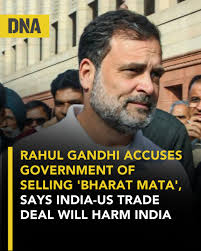
Congress MP Rahul Gandhi has targeted PM Modi and the central government on the issue related to the Union Territory of Ladakh. In a post on Instagram, he wrote, “The youth of Ladakh told me how their beautiful home has been turned into a police state. Their voices have been suppressed, democratic rights have been crushed, and their land and fragile environment are being handed over to Modiji’s billionaire friends.” The people of Ladakh want employment and industry. Rahul wrote, “The people of Ladakh are not against development. They want employment and industry, but development that benefits the local people. I hope the Home Minister understands this truth during his visit.” Published by: Jyoti Bhaskar Courtesy: Hindi News
Dalit History Month: How Caste Shapes Life After Inclusion

MPP student Tejaswi Singh reflects on Dalit History Month and how caste shapes labour dignity and opportunity in India In India, where one in six individuals is a Scheduled Caste, Dalit History Month offers, at first glance, a moment of remembrance. It also raises a difficult question: one that asks not only what has been corrected in the long arc of caste-based exclusion, but what continues to endure, often less visibly, within the structures of participation, labour, and everyday social life in India? Much like the staggered lanes of a relay track, where each runner begins from a different position not by choice but by design, individuals enter social and economic systems already carrying the weight of histories that determine how far they must travel to arrive at what is considered an equal point. Over time, policies such as reservation and affirmative actions have attempted to reduce these distances, to move starting lines closer together, or at least compensate for their unevenness. In measurable terms, these interventions have produced results. The proportion of Scheduled Castes (SCs) and Scheduled Tribes (STs) in government employment increased from 12.2% in 1990 to 21.9% in 2019. Between 2015 and 2022, enrolment of SC and ST students in higher education rose significantly, with SC students making up 15.3% and ST students 6.3%, together accounting for 21.6% of total enrolment. Female enrolment within the SC category also increased sharply, rising by 51% during this period. For earnings, a report from 2022 indicates that the ‘bottom 50%’ of the Indian population which includes a large share of SC, ST, and OBC groups, has a disproportionately low share of total national income at 13%. Taken together, this evidence shows improved earnings and a gradual, though uneven, entry into the formal sector. Yet, these shifts in access, when observed more closely, do not settle into a story of transformation. They mark an opening, certainly, but do not mean that Scheduled Castes and Scheduled Tribes have an equal position in the system. Representation has expanded, but it remains uneven, often clustering at the lower tiers of institutional and economic hierarchies. Scheduled Castes, for instance, continue to be overrepresented in low-status and low-paying occupations, such as manual labour and scavenging, while being underrepresented in high-status and high-paying occupations, such as professional and managerial jobs. According to the 2011-12 NSSO data, 63% of SC workers are engaged as wage labourers, with 32% in casual labour—double the national average of 16%. This reflects both economic vulnerability and persistent occupational segmentation that policy alone has not addressed. The question that emerges here is less about entry and more about placement. If participation does not change the terms on which individuals are incorporated into systems of work and recognition, it risks reshuffling them without altering the structure itself. It is in this space that caste continues to operate through expectations about where one belongs, what one is expected to do, and how that work is valued. This becomes more legible in moments where formal inclusion meets social resistance. In June 2019, two Scheduled Caste women appointed at an Anganwadi centre in Madurai were transferred shortly after their hiring, following objections from dominant caste groups who claimed that their presence would “pollute the food.” This incident does not reflect a lack of policy; the appointment itself was made possible by it. Rather, it reveals the limits of policy when it encounters forms of social perception that remain largely unaltered. Employment, in this instance, did not secure dignity; it exposed the conditions under which dignity continues to be withheld. Even in the case of tribal communities, inclusion in economic activities often unfolds alongside processes of marginalisation. The Birhor community, classified as a Particularly Vulnerable Tribal Group (PVTG), offers one such case. Their dietary practice of eating monkeys has been met with stigma and exclusion since monkeys are believed to be under the protection of the Hindu God Hanuman. Even as constitutional provisions emphasise their protection and advancement, formal recognition continues to coexist with social distance. These instances begin to suggest that caste persists not only as a structure of access, but as a structure of perception, one that shapes how individuals are seen even after they have entered spaces from which they were historically excluded. The stigma attached to marginalised communities does not disappear with the entry of the State. It often persists, sometimes subtly, sometimes explicitly, influencing both the opportunities available and the terms on which they are offered. As Dr B.R. Ambedkar had argued, restrictions on occupation do not only limit income but also shape whether employment is possible at all. What this indicates is that while affirmative policies (such as reservation, political representation, conditional cash transfers and scholarship) have been necessary and useful to a good extent, they have not been sufficient in altering the deeper social relations that govern inclusion. While economic participation has increased, it has not been accompanied by a proportional shift in dignity or recognition. Therefore, the persistence of caste is not simply a failure of policy, but a reminder that policy operates within a social field that does not change at the same pace. In this context, the ongoing discussions around caste-based enumeration could be seen in a positive light. The absence of updated, disaggregated data has long limited the ability to assess how caste continues to shape outcomes in contemporary India. If conducted with transparency and methodological care, the absence of vote-bank politics, such an exercise could offer a clearer view of not only who participates, but where they are located within systems of work, income, and representation. In doing so, it may allow for a rethinking of policy frameworks that have, over time, become somewhat static, even as the realities they seek to address have evolved. To conclude, the track may have widened, but the lanes remain staggered in ways that are not always immediately visible and not easily corrected through institutional presence alone. Dalit History Month, in this sense, returns not only as a site
Dalit Sena seeks action against Karnataka Minister Boseraju over land ‘encroachment’

In a letter addressed to the CM, Governor and the Forest Minister, Javeed Khan, state organisational secretary of Dalit Sena, alleged that five acres of land recorded as government/reserved forest land were recorded in the name of Boseraju’s wife. Bengaluru: The Dalit Sena has accused Science and Technology Minister N S Boseraju of ‘encroaching’ upon forest and Waqf land and has sought legal action. In a letter addressed to Chief Minister Siddaramaiah, Governor Thaawarchand Gehlot and Forest Minister Eshwar B Khandre, Javeed Khan, state organisational secretary of Dalit Sena, alleged that five acres of land recorded as government/reserved forest land were recorded in the name of Boseraju’s wife. He also alleged that at Manvi town in Raichur district, government land located in the Housing Board Colony was recorded in Boseraju’s name. Khan also noted that after public protests, the district administration and courts had directed that such lands be handed over to the government. He sought legal action against the concerned persons and requested immediate steps to safeguard public property and forest resources. Courtesy : DH Note: This news is originally published on https:/deccanherald.com/bha and is used purely for non-profit/non-commercial purposes, especially human rights