
Allahabad HC defers hearing on plea seeking probe into Rahul Gandhi’s alleged disproportionate assets
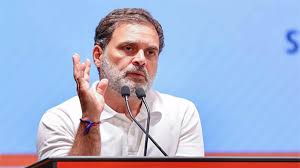
Division bench of Justices Rajesh Singh Chauhan and Zafeer Ahmad passed the order on a BJP worker’s plea, directing documents be sealed. LUCKNOW: In order to avoid an open court hearing while exercising utmost caution with documents attached to the case file, the Lucknow Bench of the Allahabad High Court on Wednesday deferred the hearing on a plea seeking a probe into the alleged disproportionate assets (DA) of Congress MP and Leader of Opposition in the Lok Sabha, Rahul Gandhi, till May 12. The division bench, comprising Justice Rajesh Singh Chauhan and Justice Zafeer Ahmad, passed the order on a writ petition filed by Karnataka BJP worker S. Vignesh Shishir, while directing that the documents related to the case be kept in a sealed envelope. The petitioner moved the Lucknow Bench of the Allahabad High Court on April 25, 2026, and the bench took up the case for its first hearing on May 6, 2026. Interestingly, both judges heard the matter in their chamber. After Wednesday’s hearing, they issued directions to seal the entire copy of the writ petition before them, and it was ordered to be kept in the custody of the Senior Registrar of the High Court. The judges further directed the Senior Registrar to place the case file before the bench on May 12 at 2:15 pm for a further hearing in chambers. “The seal shall be opened by the Bench Secretary of this Court on the next date of listing,” the judges ordered. Significantly, prior to the commencement of the hearing, the petitioner moved an application urging the bench to direct the authorities concerned to preserve the records of the present writ petition in safe custody. The petitioner has levelled serious allegations against the Congress leader, claiming that he has allegedly amassed substantial wealth from unknown sources. The petitioner has made the Government of India, CBI, ED, CBDT, Uttar Pradesh Police and the Director of the Serious Fraud Investigation Office, New Delhi, parties to the petition, and has sought directions from the court for an inquiry into the matter. The hearing was deferred after counsel for the central and state agencies sought time to obtain written instructions. After the first hearing, the bench recorded in its order that the petitioner had argued at length, following which counsel for the opposite parties requested a short adjournment to obtain written instructions from their respective governments and agencies. Agreeing to this request, the bench posted the matter for the next hearing on May 12. Namita Bajpai Courtesy : TNIE Note: This news is originally published on https:/thenewindianexpress.com/bha and is used purely for non-profit/non-commercial purposes, especially human rights
In the last five years, Tamil Nadu saw a 67% jump in atrocities against Dalits: NCDHR

While anti-incumbency, governance concerns, and political strategy have been considered reasons for the DMK’s defeat, the continued violence against Dalits and the state’s response to caste atrocities also deserve serious attention. The 2026 Tamil Nadu Assembly election results have triggered intense discussions on the reasons for the DMK’s defeat and the TVK’s rapid rise. While anti-incumbency, governance concerns, and political strategy have all been debated, the continued violence against Dalits and growing dissatisfaction over the state’s response to caste atrocities also deserve serious attention. The DMK has long projected Tamil Nadu as a model of social justice governance. However, data from the National Crime Records Bureau (NCRB) and the National Campaign on Dalit Human Rights (NCDHR) presents a troubling reality. An in-depth perusal of the data reveals a 67% increase in atrocities against Dalits and Adivasis. The contradiction between the language of social justice and the lived realities of caste violence raises difficult questions about how Tamil Nadu’s political parties understand and implement social justice. What the data shows An NCDHR report titled Five Years of Caste-Based Atrocity: An Analysis of Crime Against Scheduled Castes and Scheduled Tribes 2019-2023 points to an increase in atrocity cases in Tamil Nadu and at an all-India level. Tamil Nadu recorded a 67.9% increase — the highest in the country — followed by Madhya Pradesh (55.3%) and Odisha (42.9%). NCRB’s Crime in India 2023 further highlights alarming trends. Murders of Dalits increased by 40.4% (from 52 cases in 2019 to 73 in 2023). Grievous hurt cases rose by 240% (from 5 to 17). Criminal intimidation surged by 584.8% (from 46 to 315) These statistical figures reflect how caste continues to operate as a system of control and violence when Dalits assert their rights in the state. Violence against Dalit women and girls Gender-based caste crime against Dalit women and girls has also increased. Overall rape cases increased from 97 in 2019 to 132 in 2023 — a 36.1% jump. 2022 saw the highest cases (166). The prevalence of rape cases is higher among Dalit girls than adult women. Rape of Dalit women decreased by 14%, but the rape of Dalit girls escalated by 73.2%. In 2019, 56 rape cases were recorded. That increased to 97 in 2023. Rapes are not isolated incidents targeting individuals, especially when it is against Dalit women and girls. Often, rape is weaponised as a tool of caste oppression. ‘Assault on women and minor girls with an ‘intent to outrage her modesty’ has increased from 19 cases in 2019 to 74 in 2023 — a 289.5% increase. Judicial failures, state apathy The justice system’s response remains deeply inadequate. In 2023, the conviction rate in atrocity cases against Dalits was at just 12.2%, while the acquittal rate was a staggering 87.8%. Meanwhile, the pendency rate of atrocity cases is at 87.7%. A significant reason is the inadequate number of exclusive special courts that are supposed to conduct speedy trials. Tamil Nadu has only 20 exclusive special courts, according to the State Annual Report (2024) Data. According to section 16 of the Scheduled Castes/Scheduled Tribes Prevention of Atrocities (PoA) Act, the state-level vigilance and monitoring committee has to meet twice a year. These statutorily mandated meetings have not been properly conducted in Tamil Nadu since 2021. Only one meeting was conducted in 2021, 2022 and 2023. The committee did not meet even once in 2024. Notably, the chief minister is the chairperson of this committee. This is not an administrative lapse but is reflective of the state’s priorities its casteist attitude to Dalits and Adivasis In criminal law, including atrocity cases, the state prosecutes the accused. Therefore, the high rate of acquittals reflects not the failure of victims, but the failure of the state and its mechanism. The provisions of the Scheduled Castes/Scheduled Tribes Prevention of Atrocities (PoA) Act require the state to effectively oversee the case from the investigative stage to the final prosecution. The state is also required to ensure compensation, rehabilitation and protection for victims. Further, the state must protect and provide travel and maintenance funds for both victims and witnesses during the trial. In reality, there are gaps at every stage. The very process becomes exhausting and punishing for victims. Custodial violence The Prison Statistics India (PSI) reports reveal that Dalits are disproportionately subject to custodial violence under the cover of preventive detention laws. In 2021, SC persons accounted for 657 detainees, constituting 37% of the total detainees in the state. Strikingly, Tamil Nadu alone accounted for 84.5% of all SC detainees in India. By 2023, the share of SC detainees in the state further increased to 42.2%, despite SCs comprising only around 20% of the population in the state as per the 2011 census. The electoral defeat of the DMK reflects, among several factors, growing dissatisfaction over the gap between the rhetoric of social justice and the continued vulnerability of Dalit communities to caste violence and discrimination. At the same time, the TVK’s rapid rise within just two years of its formation reflects the strong celebrity-driven appeal and cinematic influence that continue to shape Tamil Nadu politics, particularly among younger voters seeking an alternative to the traditional Dravidian parties. However, political change driven by charisma, celebrity culture, and anti-incumbency sentiment alone cannot guarantee structural justice for marginalised communities. Concerns regarding TVK’s silence and response to recent critical issues, including the “honour” killing of Dalit techie Kavin Selvaganesh, intensified public scrutiny over how seriously caste-based violence will be addressed. The crucial question remains whether TVK will move beyond political symbolism and ensure prompt prevention of atrocities, effective investigation, accountability, victim protection, and stronger implementation of the SC/ST (Prevention of Atrocities) Act. Written by:Deepesh Chithra Edited by:Bharathy Singaravel Author bio: Deepesh Chithra is the Research & Advocacy Officer at the National Campaign on Dalit Human Rights (NCDHR) in New Delhi. Courtesy : TNM Note: This news is originally published on https:/thenewsminute.com/bha and is used purely for non-profit/non-commercial purposes, especially human rights
Supreme court slams Odisha High Court for ordering dalits, adivasi accused to clean police station

The Supreme Court of India has slammed Odisha High Court terming one of its orders as ‘violation of human rights’ after it ordered dalit and adivasi accused to clean police station for a period of two months. A Bench of Chief Justice of India (CJI) Surya Kant and Justice Joymala Bagchi was reportedly hearing the suo motu cognisance, when they observed that the court was deeply disappointed and disheartened by the orders, reportedly quoting it as ‘violative of human rights’ and ‘strike at the dignity of the accused’. During the hearing, the bench reportedly declared the condition imposed by Odisha court as null and void, directing petitioners to approach the state judiciary to delete such conditions. The bench also ordered the release of the accused on bail. The controversy erupts from the protests against the acquisition of land for bauxite mining by the Vedanta Group, which turned violent with demonstrators from dalit and adivasi communities allegedly attacking Vedanta officials with axes. After the protest, around 40 persons were arrested by police. This matter went to Odisha High Court and its sub-ordinate courts where they reportedly ordered the accused to clean the police stations for release on bail. Courtesy : Gujrat Samachar Note: This news is originally published on https:/gujratsamachar.com/bha and is used purely for non-profit/non-commercial purposes, especially human rights
Dalit student beaten, called casteist slurs at UoH. Admin delayed action, says protesting ASA
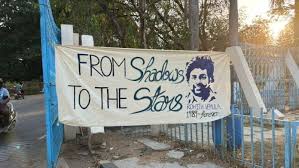
Members of the Ambedkar Students’ Association demand that the report by the fact-finding committee be released and action taken accordingly. New Delhi: Several students at the University of Hyderabad are protesting against the administration, accusing it of not taking appropriate action on an alleged incident of atrocity involving a Dalit student. The students have accused the university of downplaying the incident, as the administration has imposed only a Rs 5,000 fine on the accused student and did not release the findings of a fact-finding committee. The incident occurred on 11 December 2025, when a second-year master’s student, Anuj Kumar, was allegedly assaulted and abused with casteist slurs by another student in the hostel during a fight. Members of the Ambedkar Students’ Association (ASA) claimed the conflict began after a personal disagreement between the accused student and his friends escalated into violence. “It is like they put a price on my dignity. And they didn’t inform me about anything regarding this matter. The incident happened in December, and we have been fighting since, but no appropriate action has been taken,” said Kumar. The protest is being led by the ASA, which has issued a sharp statement alleging that the university had “put a price on the abuse of Dalit bodies — and it’s incredibly cheap”. “Anuj tried to intervene when his friend was being beaten, and then he himself was assaulted and abused with casteist remarks,” said Bishnu Jain, a member of ASA. Kumar alleged that he filed a formal complaint in December, but the university administration delayed action for months. The accused student has also filed a ragging complaint against Kumar and the other student with the administration, which has led to parallel proceedings within the university. ‘Three punishment orders issued’ After continued protests, the university constituted a fact-finding committee headed by the Liaison Officer for SC/ST and anti-discrimination cell officials. “The committee prepared a detailed report of more than 150 pages, but the administration has refused to make it public. Our demand is to make the report publicly available and punish the accused student accordingly,” said Kumar. However, students allege that instead of releasing the report, the administration privately informed the accused student of a Rs 5,000 penalty and asked him to issue an apology. “The administration did not even officially inform the complainant about the punishment,” Jain alleged, adding that the ASA sees the penalty as “grossly inadequate” for a case involving alleged caste violence. “The committee has done detailed work. We want the report to be released and action to be taken according to its findings,” Kumar said. On 4 May, ASA students announced a relay hunger strike outside the administration building. A university functionary told ThePrint that the administration acted on the recommendations of statutory bodies, including the Anti-Discrimination Officer and the Equal Opportunity Cell, which reviewed the fact-finding committee’s report. “It is not only Rs 5,000. There are three punishment orders issued. In two cases, he has been fined Rs 5,000, plus another Rs 5,000. He has been asked to submit an apology to the student, and if he doesn’t comply with all the directions, his degree will be withheld. He has also been asked not to apply for any University of Hyderabad course because he will not be admitted here,” said the functionary on the condition of anonymity. Nootan Sharma (Edited by Prasanna Bachchhav) Courtesy : The Print Note: This news is originally published on https:/theprint.com/bha and is used purely for non-profit/non-commercial purposes, especially human rights
MP Dalit family beaten for failing to meet temple donation demand
A few women and children were also caught in the violent attack, while several others sustained injuries. Chhatarpur: A Dalit family was violently assaulted for failing to provide an adequate amount of wheat as a donation for a local temple in Madhya Pradesh’s Chhatrapur district. The incident occurred in the Maharajganj village, where local strongmen allegedly harassed the victim at their house and demanded two quintals (200 kilograms) of wheat as a form of temple donation. The situation turned violent when the family said they were unable to donate. The accused allegedly dragged the family out, abused them, and attacked with rods, bricks, sticks, and stones. A few women and children were also caught in the violent attack, while several others sustained injuries and were left bleeding. According to NDTV, the victims said they gave whatever they could, leaving some for their own family’s needs. “If I give away my wheat as a donation, what will I feed my children for the rest of the year?” the victim reportedly told the men who were collecting the contribution. A video of the incident, which surfaced on Wednesday, May 6, has gone viral on social media, sparking widespread outrage as it showed villagers beating the victims aggressively with sticks. One of the victims’ clothes was removed in the assault. The victims claimed Shyam Patel, Hardayal Patel, Kripal Patel, Raja Bhaiya Patel, Ramswaroop Patel, Bhagwatdayal Patel, and others were involved in the attack. The remaining wheat was forcibly seized and taken away, the family alleged. However, the vehicle reportedly used to transport the wheat has not yet been recovered, they said. “The incident stemmed from a request for wheat donations for a temple, which subsequently escalated into a physical altercation. The accused individuals have been arrested, and appropriate action will be taken in accordance with the law,” the Maharajganj police told the media. Four accused have been arrested, and one is absconding. They have been booked under the provisions of the Scheduled Caste/Scheduled Tribe Act. The victims remain unsatisfied, alleging that it was a deliberate and organised assault as they were pressured based on their caste under the guise of temple donation. They questioned the inaction against the committee on whose orders the accused were using pressure tactics to collect donations. Posted by Khadija Irfan Rahim Courtesy : TSD Note: This news is originally published on https:/thesiasatdaily.com/bha and is used purely for non-profit/non-commercial purposes, especially human rights
Is it legal for transgender people to demand money?Will the police help if extortion occurs? Find out.

It’s common for transgender people to ask for alms at weddings. But is the law allowing them to do so? Frequently, transgender people come to homes during weddings or the birth of a child and demand gifts. However, many transgender people demand so much money that people are unable to pay. This leads to violence and clashes. The only reason for this violence is that transgender people are unhappy if they are not given the amount they demand. In India, the tradition of giving transgender people gifts and gifts on such occasions has been prevalent for a long time. Now that the tradition is already established, it emboldens transgender people, leading them to demand even larger gifts, which are often difficult to fulfill. This raises the question of how the law views this tradition of transgender people demanding gifts. The question of whether forced collection of Neg is illegal under the law is answered by a petition filed by a transgender person in the Allahabad High Court. A transgender person from Gonda had filed a petition with the court alleging that transgender persons from another community were coming to their area and collecting Neg. The collection of Neg is actually a territorial issue among transgender persons. Generally, transgender persons from one community collect Neg only within their own area. The transgender person who filed the petition requested protection so that they could collect Neg without any hassle within their own area. In response, the court stated that Neg collection is illegal under the law because no law has been enacted regarding it. Furthermore, it could not provide protection in light of the petition. According to the court, no demand other than tax, cess, or fee can be legally made from any citizen. What does the law say about Neg collection? The court stated clearly that this petition cannot be considered until another court declares the process of Neg collection legal. This means that the money demanded by transgender people on auspicious occasions is currently illegal. Furthermore, the Transgender Persons Act 2019 does not provide any provisions regarding money. Courtesy: Hindi News
Divide emerges in Dehradun’s transgender community; Civic body caps congratulatory amount at Rs 5,100

The Dehradun Municipal Corporation fixed Rs 5,100 as the maximum congratulatory amount for transgender people, sparking debate. While officials claim it ensures fairness, divisions within the transgender community have surfaced, with some opposing the cap and others calling for recognition of their traditional practices. Dehradun: The fourth board meeting of the Dehradun Municipal Corporation has triggered controversy after deciding to fix the maximum congratulatory amount for transgender people at Rs 5,100. While the civic body claims the move will prevent arbitrary demands, the decision has created divisions within the transgender community. The decision During the meeting, councilors debated concerns about transgender individuals demanding varying amounts during congratulatory ceremonies. After long discussions, the board approved a cap of Rs 5,100. Mayor Saurabh Thapliyal confirmed the decision, saying it was necessary to bring uniformity and fairness. Community divide The transgender community in Dehradun is now split over the ruling. Some members argue that the cap undermines their traditional practices, which have cultural and social significance. They believe the civic body should not interfere in their customs. Others, however, feel the decision could reduce tensions with the public and ensure a more respectful relationship. This divide has sparked discussions about how modern governance interacts with age-old traditions. For many transgender individuals, congratulatory ceremonies are not just about money but about recognition and dignity. Meeting uproar The board meeting itself was marked by uproar, with BJP and Congress councilors clashing repeatedly. Out of 65 proposals, many could not be discussed due to disruptions. The meeting will reconvene on Thursday to address pending issues. Other decisions Alongside the transgender donation cap, the board also approved an increase in the honorarium of sanitation workers (environmental friends) from Rs 500 to Rs 800 per day. Officials said this would improve morale and ensure better cleanliness across wards. Mayor’s statement Mayor Thapliyal said, “Important decisions were made today, including fixing the maximum congratulatory amount for transgender individuals at Rs 5,100 and raising sanitation workers’ honorarium. The remaining proposals will be discussed tomorrow.” Public impact Transgender community: The cap has created internal divisions, with debates over tradition versus regulation. Sanitation workers: The honorarium hike is widely welcomed, offering financial relief and recognition. Residents: The decisions reflect attempts to balance social concerns with civic development, though political clashes slowed progress. The Dehradun Municipal Corporation’s decision to cap transgender congratulatory amounts at Rs 5,100 has highlighted a deeper divide within the community. While some see it as a step toward fairness, others view it as interference in tradition. The debate underscores the challenge of balancing cultural practices with civic regulations. Namita Singh Namita is an Assistant News Editor at News9 Live. She has reported on a range of issues from Uttarakhand for mainstream papers such as The Hindu and websites such as Firstpost.com Courtesy : News Nine Note: This news is originally published on https:/newsnine.com/bha and is used purely for non-profit/non-commercial purposes, especially human rights
Left, IUML rules out support to TVK as Congress backs Vijay; VCK yet to decide
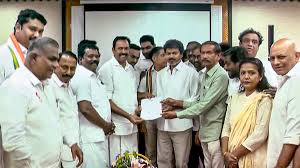
Despite the break away from the DMK alliance, Congress leaders indicated that both sides could continue to remain part of the broader INDIA bloc at the national level. With the Tamizhaga Vettri Kazhagam (TVK) approaching political parties in Tamil Nadu seeking support to form a government, the VCK, an ally of the DMK, was yet to take a decision, party sources said on Wednesday. However, despite TVK’s invitation, the Left parties and the Indian Union Muslim League (IUML) ruled out their support for Vijay’s party. The VCK has won two seats. TVK had sought VCK’s support, sources said. VCK was yet to take a call on it. “It will be decided by our party president, Thol Thirumavalavan,” a senior party functionary said. Meanwhile, CPI(M) candidates R Chellaswamy and Latha and CPI members T Ramachandran and Marimuthu, who won on April 23 Assembly elections, met DMK chief M K Stalin at Anna Arivalayam, the party headquarters. Similarly, IUML MLAs-elect Syed Farooq Basha SSB and A M Shahjahan also met the DMK president. Later, the CPI(M), CPI and IUML legislators asserted that they would continue to support DMK. The development comes amid the Congress extended its support to Vijay’s TVK to form the next government in Tamil Nadu, while snapping its long-standing alliance with the DMK and setting conditions to keep “communal forces” out of the arrangement. Right after the Congress’ announcement, Vijay met Governor Rajendra Arlekar at the Lok Bhavan in Chennai and staked a claim to form the next government. Earlier in the day, a delegation of Congress MLAs arrived for a high-profile meeting with the TVK chief at the party headquarters in Panaiyur. The visual of the legislators entering the TVK premises has sent ripples through the state’s political corridors, signalling a potential shift in traditional alliances ahead of the upcoming electoral cycles. The atmosphere at the TVK office remained charged, with supporters and onlookers gathering as the Congress leaders were ushered in for the closed-door interaction. The Congress leaders were welcomed by the TVK party chief and Chief Minister-designate with garlands and silk shawls. Announcing the decision, AICC Tamil Nadu in-charge Girish Chodankar said the Tamil Nadu Congress Committee and the Congress Legislative Party (CLP) had resolved to back the TVK. “Our support shall be conditional upon the TVK keeping out of this alliance any communal forces that do not believe in the Constitution of India,” he said. In the recently concluded Assembly elections, the TVK emerged as the single largest party, winning 108 seats of the total 234, disrupting the decades-long dominance of the DMK and AIADMK. The DMK secured 59 seats, while the AIADMK won 47. Despite the breakaway from the DMK alliance, Congress leaders indicated that both sides could continue to remain part of the broader INDIA bloc at the national level. The Congress’s support adds five MLAs to Vijay’s tally, taking the TVK-led bloc to 112 seats. The party will still require at least six more legislators to cross the majority mark of 118 in the 234-member Assembly. Vijay has already initiated talks with parties such as the VCK, CPI and CPM, whose backing could push the numbers past the halfway mark. Tamilaga Vettri Kazhagam (TVK) chief Vijay receives a letter of support from Tamil Nadu Congress Committee leaders for government formation, in Chennai. The Congress underlined that its partnership with the TVK is intended to go beyond immediate government formation. “This alliance is not only for the formation of this government, but also for future elections to the local body organisations, the Lok Sabha and the Rajya Sabha,” Chodankar said, describing it as one based on “mutual respect, appropriate share, and shared responsibility”. In its statement, the party invoked the legacies of K Kamaraj, Periyar E V Ramasamy and B R Ambedkar, positioning the alliance as rooted in social justice and constitutional values. The Congress also said Vijay had formally sought its support to form the government, adding that the electoral verdict reflected a mandate for a “secular, progressive and welfarist government”. The statement noted that Vijay and Rahul Gandhi had “jointly pledged to respect this historic verdict of the people of Tamil Nadu”. While the meeting was officially termed a “courtesy call”, the optics of established national party representatives engaging with the fledgling party’s top brass suggest a strategic warming of ties. Insiders indicate that the discussions touched upon the prevailing political climate in Tamil Nadu, though both camps have remained tight-lipped regarding specific tactical understandings. According to informed sources, TVK leaders have also reportedly met AIADMK chief Edappadi K Palaniswami in Chennai, signalling possible shifts in alliances and internal strains within the BJP-led camp. Courtesy : TNIE Note: This news is originally published on https:/thenewindianexpress.com/bha and is used purely for non-profit/non-commercial purposes, especially human rights
Samajwadi Party drops I-PAC tie-up ahead of 2027 UP polls amid setback in West Bengal
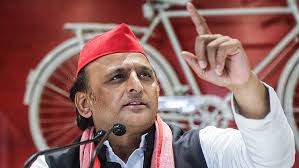
I-PAC, which has been handling the TMC’s election campaigns since 2019, had pitched its services to the SP as it prepares for the upcoming electoral battle in Uttar Pradesh. LUCKNOW: The Samajwadi Party has reportedly decided to call off its proposed pact with political consultancy firm Indian Political Action Committee (I-PAC) ahead of the 2027 Uttar Pradesh Assembly elections. The move comes in the wake of recent developments, including the Trinamool Congress’s poor performance in the West Bengal Assembly polls and the arrest of I-PAC director Vinesh Chandel by the Enforcement Directorate in connection with alleged financial irregularities in the alleged Bengal coal smuggling case. Sources said the agreement between the SP and I-PAC was close to being finalised, with the firm having already presented its campaign blueprint to the party leadership. However, no formal arrangement had been concluded. Party insiders indicated that SP chief Akhilesh Yadav was not particularly keen on engaging I-PAC and had only reviewed its presentation at the instance of the TMC leadership. With the firm now facing multiple challenges, the SP is unlikely to pursue further negotiations, sources added. I-PAC, which has been handling the TMC’s election campaigns since 2019, had pitched its services to the SP as it prepares for the upcoming electoral battle in Uttar Pradesh. On the other hand, sources also claimed that I-PAC, grappling with crises on multiple fronts, is in no position to take up fresh assignments at present. During the poll campaign in West Bengal, the Enforcement Directorate raided the I-PAC office in Kolkata, leading to a showdown between Chief Minister Mamata Banerjee and the agency. The firm, now led by Pratik Jain, was founded by Jan Suraj Party chief Prashant Kishor, who rose to prominence for designing election campaigns of political leaders including Prime Minister Narendra Modi in 2014, Bihar Chief Minister Nitish Kumar in 2015, Congress leader Rahul Gandhi in 2017, and the TMC. Prashant Kishor later left I-PAC to enter mainstream politics. His Jan Suraj Party made its electoral debut in the recently held Bihar Assembly elections but failed to open its account. Namita Bajpai Courtesy : TNIE Note: This news is originally published on https:/thenewindianexpress.com/bha and is used purely for non-profit/non-commercial purposes, especially human rights
Should we call them ghuspethiya?’: Rahul Gandhi alleges every sixth BJP MP won through ‘vote chori’
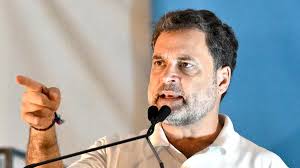
Gandhi also claimed that the BJP would not be able to win even 140 seats today in the Lok Sabha if fair elections are held. Congress leader Rahul Gandhi on Wednesday claimed that one in every six BJP MPs in the Lok Sabha had won through “vote chori” and questioned whether they should be called “ghuspethiya”, using the BJP’s own terminology. Gandhi also claimed that the BJP would not be able to win even 140 seats today in the Lok Sabha if fair elections are held. “Through vote theft, sometimes individual seats are stolen, and at other times, an entire government. Of the 240 BJP MPs in the Lok Sabha, roughly every sixth MP secured seat through vote chori,” the Leader of Opposition in the Lok Sabha said in a post in Hindi on X. “They are not hard to identify – should we, in the BJP’s own parlance, label them ‘ghuspethiya’? And what of Haryana? There, the entire government itself is an ‘ghuspethiya’. The very institutions they keep in their pockets – the ones they manipulate to distort voter lists and the electoral process – are themselves ‘remote-controlled’,” Gandhi said, in a scathing attack on the BJP. “Their real fear is the truth. For if fair elections were to be held, they would not be able to win even 140 seats today,” he said. On Tuesday, Gandhi had termed the BJP’s victory in Bengal and Assam assembly polls a “theft” of the mandate, and a big step forward in the saffron party’s mission to “destroy” Indian democracy. Gandhi has also come out in support of the TMC, which has been trounced by the BJP in the polls, and urged those gloating over the loss of Mamata Banerjee’s party to put petty politics aside. “Some in the Congress, and others, are gloating about TMC’s loss. They need to understand this clearly – the theft of Assam and Bengal’s mandate is a big step forward by the BJP in its mission to destroy Indian democracy,” Gandhi had said in a post on X. “Put petty politics aside. This is not about one party or another. This is about India,” he said in his post. The BJP ousted Trinamool Congress from power in Bengal and captured power for the third time in a row in Assam in results of assembly polls declared on Monday. Courtesy : TNIE Note: This news is originally published on https:/thenewindianexpress.com/bha and is used purely for non-profit/non-commercial purposes, especially human rights