
Kerala High Court Upholds Reproductive Autonomy of Transgender Man by Allowing Egg Cryopreservation
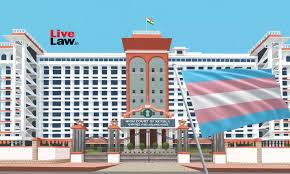
In a significant development concerning transgender rights and reproductive autonomy in India, the Kerala High Court recently permitted a transgender man to cryopreserve his eggs by allowing him to approach an Assisted Reproductive Technology (ART) bank of his choice. The order was passed in the case titled Hari Devageeth v. Union of India by Justice Sobha Annamma Eapen on May 15, 2026. The Court directed that the ART bank concerned should take steps to retrieve the petitioner’s oocytes and cryopreserve them for future reproductive use. The decision came in a writ petition filed by a transgender man who challenged the refusal of a private hospital to permit egg cryopreservation on the ground that transgender persons fall outside the statutory framework established under the Assisted Reproductive Technology (Regulation) Act, 2021. The case raised important constitutional and legal questions concerning the reproductive rights of transgender persons, the scope of healthcare protections under Article 21 of the Constitution, and the interpretation of statutory provisions regulating assisted reproductive technologies in India. While granting relief to the petitioner, the High Court also left open the constitutional challenge to Section 21(g) of the ART Act, which restricts ART services to women between the ages of 21 and 50 years and men between 21 and 55 years. The petitioner before the Court was a person assigned female at birth who identified as a man. According to the pleadings, the petitioner had undergone breast removal surgery as part of gender affirmation procedures but had not yet undergone complete sex reassignment surgery, including hysterectomy or removal of ovaries. Before proceeding further with gender-affirming procedures, the petitioner sought to preserve his reproductive potential by cryopreserving his eggs. However, KIMS Hospital allegedly refused permission for the procedure, citing restrictions under the ART Act and the absence of a legal framework expressly recognising transgender persons within assisted reproductive services. This refusal prompted the petitioner to approach the High Court seeking constitutional protection of reproductive choice and healthcare access. The litigation quickly evolved into a broader debate regarding the rights of transgender persons to parenthood, reproductive healthcare, and equal treatment under Indian law. It also highlighted gaps within existing legislation governing ART services, surrogacy, and adoption, all of which largely continue to operate on binary gender assumptions. The matter attracted significant attention because it brought into focus the intersection between gender identity, medical autonomy, constitutional dignity, and reproductive justice. Senior Advocate Anand Grover appeared on behalf of the petitioner and argued that denial of cryopreservation violated the petitioner’s fundamental rights. The Union Government opposed the plea, contending that existing statutory frameworks consciously excluded transgender persons from availing such services. Although the High Court’s detailed judgment is awaited, the operative order permitting cryopreservation has already emerged as an important judicial intervention in the evolving jurisprudence surrounding transgender rights in India. Arguments of the Parties: The petitioner argued that the refusal to permit egg cryopreservation amounted to a direct infringement of his constitutional right to reproductive autonomy and healthcare. It was submitted that although the petitioner identified as a man, he had been assigned female at birth and retained reproductive organs capable of producing oocytes. Therefore, prior to undergoing further gender-affirming surgical procedures, he wished to preserve his eggs for possible future reproduction. The petitioner clarified that he had not undergone complete sex reassignment surgery and had only undergone breast removal surgery. Since the uterus and ovaries remained intact, it was argued that the petitioner retained the biological capacity to reproduce. Counsel submitted that transgender men are capable of experiencing pregnancy and reproduction, and therefore, denying them access to fertility preservation services solely because of gender identity would be discriminatory and unconstitutional. A central argument advanced by the petitioner was that reproductive choice forms an essential component of personal liberty protected under Article 21 of the Constitution. The plea asserted that the right to make decisions regarding reproduction, parenthood, and fertility preservation is inseparably connected with bodily autonomy, dignity, and privacy. The petitioner contended that denial of cryopreservation effectively deprived him of the possibility of biological parenthood in the future. Once gender-affirming procedures such as hysterectomy or removal of ovaries are performed, the ability to retrieve oocytes would permanently cease. Therefore, refusal to permit cryopreservation would cause irreversible harm to the petitioner’s reproductive future. The petitioner also relied upon the protections available under the Transgender Persons (Protection of Rights) Act, 2019 and the accompanying Rules of 2020. It was argued that the statutory framework expressly prohibits discrimination against transgender persons in matters relating to healthcare access. Consequently, exclusion from ART services merely because the petitioner was a transgender man amounted to unlawful discrimination prohibited by statute and constitutional principles of equality. Another important submission made on behalf of the petitioner was that the ART Act did not contain any explicit prohibition against cryopreservation of eggs by transgender persons. According to the petitioner, while the legislation regulates eligibility for assisted reproductive procedures, it does not impose an absolute bar on fertility preservation. Therefore, the authorities could not rely upon legislative silence to deny healthcare access. Senior Advocate Anand Grover argued that reproductive rights must be interpreted in a gender-inclusive manner consistent with constitutional morality and the recognition of transgender identity affirmed by the Supreme Court of India in landmark transgender rights jurisprudence. It was submitted that constitutional protections cannot be denied merely because statutory frameworks have failed to evolve alongside contemporary understandings of gender identity and reproductive health. The Union Government opposed the plea and defended the existing legislative framework governing assisted reproductive technology and surrogacy in India. The Centre argued that the ART Act specifically permits assisted reproductive procedures only for a “commissioning couple” or a single woman. Under the statutory definition, a commissioning couple refers strictly to a legally married man and woman. According to the Government, transgender persons and single men were intentionally excluded from the categories of persons eligible to avail ART services. Since cryopreservation of oocytes forms part of ART services regulated under the statute, the petitioner could not claim
Dalit man beaten, threatened with bulldozer attack: Violent men assaulted in connection with missing teenager’s case
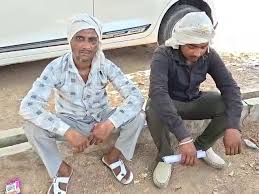
In Mahoba, a Dalit man was brutally beaten and threatened with a bulldozer attack on his home in connection with a missing teenager’s case. It is alleged that the victim’s family did not receive justice from the police; instead, they were assaulted and evidence destroyed. This incident occurred in Salarpur village, under the Srinagar police station area of Mahoba district. The victim, Devidin Ahirwar, and his nephew, Satish, are wandering from door to door seeking justice. It is alleged that on May 10, some village bullies forcibly dragged Devidin from his home. The bullies’ son had disappeared from the house, taking jewelry and two lakh rupees with him. They suspected the Dalit family of the crime, as Devidin’s 14-year-old son was a friend of the missing boy. It is alleged that the bullies held Devidin hostage in a house on the farm and beat him with kicks and punches. The victim was insulted with casteist slurs. An illegal pistol was pointed at their chest and they threatened to kill the entire family and demolish their home if the boy and money were not returned within eight days. When the victim’s elderly father and nephew Satish tried to intervene, the men did not spare them and assaulted them as well. The role of the police in this case is also under question. It is alleged that when the victim arrived at the Srinagar police station on the orders of the Superintendent of Police, the area in-charge abused and assaulted him, and forcibly deleted the video of the assault, which was on his mobile phone, as evidence. The victim’s family is now pleading for justice at the Superintendent of Police’s office. The video of the assault is also going viral on social media. The victim’s family maintains that they are completely innocent and now live in fear, demanding justice. Meanwhile, Srinagar police station in-charge Jaichandra stated that the police had gone to Devidin’s house to investigate the disappearance of one of the victims’ sons. During this time, an argument broke out between the two parties, which later escalated into a dispute. Necessary action has been taken at the police station level, and an investigation into the entire incident is ongoing. Irfan Khan Pathan | Mahoba Courtesy: Hindi News
Dalit family blocked from drawing water from government hand pump: Violent individuals also blocked the road, police investigating

A case has come to light in the Hargaon police station area of Sitapur district where a Dalit family was prevented from drawing water from a government hand pump. In Pandit Purva, a hamlet of Sarawa Gram Panchayat, members of another community are accused of preventing the Dalit family from drawing water and blocking the path to the hand pump. Villager Ramkumar stated in a police application that some influential members of the village prevented him from drawing water from the hand pump. They had placed logs and blocked the path to the hand pump. According to Ramkumar, the influential individuals also threatened to prevent any Hindu from drawing water. The victim, Ramkumar, has appealed to the police for justice in this matter. Basant Kumar, in-charge of the Ramnagar outpost in Hargaon, stated that he was unaware of the incident. He assured them that he would immediately investigate the matter and take necessary action. Vinay Kumar Singh | Hargaon, Sitapur Courtesy: Hindi News
Dalit History Month: Why is April 2, 2018, a memorable day for social justice movements?
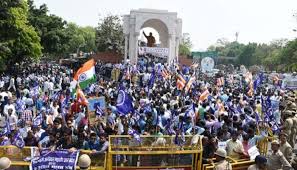
Dalit organizations considered this an attack on the spirit of the Act and said it would hinder justice for SC/ST victims of atrocities. Dalit History Month is celebrated by Bahujan communities worldwide in April. Dedicated to the birthday of Dr. Bhimrao Ambedkar, this month aims to remember and convey to the new generation the historical struggles of the Dalit-Bahujan community, which have often been suppressed in mainstream history. Inspired by Black History Month, Bahujan organizations, intellectuals, and social activists discuss the suffering, resistance, and achievements of the Dalit community. Remembering the community’s struggles during this month is important because these struggles not only remind us of the need to stand up against caste-based atrocities but also point the way to social justice even today. This time, during Dalit History Month, one event is being specifically remembered – April 2, 2018, when the country witnessed the largest social movement in history to protect the SC/ST (Prevention of Atrocities) Act. On March 20, 2018, the Supreme Court delivered its verdict in the case of Dr. Subhash Kashinath Mahajan vs. State of Maharashtra, weakening some key provisions of the SC/ST Act. The Court directed that a DSP-level preliminary investigation be mandatory before filing an FIR, that the arrest of public servants requires the permission of the appointing authority, and that anticipatory bail be granted in certain cases. Dalit organizations considered this an attack on the spirit of the Act and said that it would hinder justice for SC/ST victims of atrocities. This decision sparked anger across the country. Various Dalit and Bahujan organizations called for a Bharat Bandh on April 2, 2018. Millions of people took to the streets – trains were stopped, roads were blocked, and protesters demanded the government repeal the Supreme Court’s decision. Protests broke out in several states, including Madhya Pradesh, Uttar Pradesh, Rajasthan, Bihar, Punjab, Haryana, Maharashtra, and Delhi. In many places, the protests turned violent, leading to clashes with police, vehicle burnings, and stone-pelting. Curfews were imposed, internet services were shut down, and security forces were deployed. Fourteen people were martyred in the violence during this movement, while hundreds were injured. According to various media reports and official figures, Madhya Pradesh recorded the highest number of deaths (9) (including Gwalior, Bhind, and Morena), followed by Uttar Pradesh (3), and Rajasthan (2). These martyrs sacrificed their lives in the fight for the dignity and security of the Dalit community. Under pressure from the protests, the central government filed a review petition in the Supreme Court. In August 2018, Parliament passed the SC/ST (Prevention of Atrocities) Amendment Act, 2018, which repealed the Supreme Court’s March 2018 directives and restored the original provisions. April 2, 2018, was etched in the struggles for social justice as it demonstrated that the Bahujan Samaj could unite to protect its constitutional rights. Remembering this event during Dalit History Month is a reminder of the struggles that protected the law. Geetha Sunil Pillai Courtesy: Hindi News
Unless caste-based insults are in “public view,” the SC/ST Act will not apply: Why is the Bahujan community agitated by this Supreme Court decision?

Is caste-based abuse in a private home no longer a crime? The CPI(M) raises serious questions New Delhi – In a judgment on May 11, the Supreme Court held that if caste-based abuse or insult occurs within a private residence and is not in “public view,” no offense is made out under Sections 3(1)(r) and 3(1)(s) of the Scheduled Castes and Scheduled Tribes (Prevention of Atrocities) Act, 1989. A division bench of Justice N.V. Anjaria and Justice Prashant Kumar Mishra overturned the Delhi High Court order in Gunjan @ Girija Kumari v. State of Delhi (NCT) and quashed the FIR and charge sheet filed against the accused. The dispute arose from a family property dispute in the Kirti Nagar police station area of Delhi. The complainant and the accused are relatives. On January 28, 2021, the complainant, who belongs to the Scheduled Caste, alleged that the accused, Girija Kumari, addressed him with derogatory casteist slurs such as “Chuda,” “Chamar,” and “Harijan,” and that the other accused issued threats. FIR number 42/2021 was registered at the Kirti Nagar police station. The trial court framed charges under sections of the SC/ST Act, and the Delhi High Court upheld that decision, leading to the Supreme Court. Supreme Court’s Argument: “Public View” Essential Condition The Supreme Court clarified that offenses under Sections 3(1)(r) and 3(1)(s) of the SC/ST Act are made out only when the insult or casteist slur is uttered “in any place within public view.” The Court noted that the incident took place in a residential house in Ramesh Nagar, New Delhi, and the FIR did not state that any independent member of the public was present at the time or that the incident occurred in public view. Both points 5(b) and 6(e) of the FIR mentioned the same residential address. The court, citing its earlier judgments—Swaran Singh v. State (2008), Hitesh Verma v. State of Uttarakhand (2020), and Karuppudayar v. State (2025), held that “public view” means that the incident occurred in a place where the public could see or hear it. An incident occurring within a boundary wall, where the public had no access, did not satisfy this condition. The court also dismissed charges under Sections 506 (criminal intimidation) and 34 (common intention) of the Indian Penal Code, stating that the contents of the complaint did not establish either “intent to alarm” or “common criminal intent.” According to legal experts, this judgment reaffirms two key principles: first, the necessity of the “public view” condition under sections of the SC/ST Act; And second, the requirement that all legal elements must be clearly stated in the FIR and accompanying charge sheet before prosecution can begin. However, actual incidents of caste-based humiliation committed in public places are still fully punishable. This Supreme Court decision has caused deep unease among Dalit and Bahujan organizations. They argue that caste-based oppression often occurs within the confines of homes, where there are no outside witnesses. Therefore, making the “public view” requirement mandatory practically closes the doors to justice for victims. Social justice advocates argue that caste-based humiliation occurring within the confines of a home is no less painful. Ambedkarite activist Ravi Parmar says, “If tomorrow some Manuwadi forcibly kidnaps a Dalit person, takes him to his private home, and insults him with caste-based slurs, it will not be considered a crime under the SC/ST Act. It’s amazing. As long as the collegium system exists, attacks on the rights of Dalits and tribals are certain to continue.” Bahujan thinker Ravi Ratna says, “The atrocities in Khairlanji happened in public. The victim and her daughter were raped, paraded naked, brutally abused, and killed. The victim’s son and another youth were killed in broad daylight. But the court ruled that the murders were committed out of revenge and were not caste-related, so no SC/ST Act was applied.” Anti-caste activist Dr. Rehna Ravindran says, “Read it this way: If the murder happened in a private home, there’s no fault. If the rape happened in a private home, there’s no fault. If the husband beats his wife in a private home, there’s no fault. So, do you understand the absurdity behind these statements? Prejudiced casteists will go to any lengths to weaken the legal protections afforded to Scheduled Castes and Scheduled Tribes.” This isn’t the first time a Supreme Court decision on the SC/ST Act has sparked political and social opposition. In 2018, the court’s weakening of arrest provisions under the same Act sparked nationwide protests, a Bharat Bandh, and the deaths of several protesters, after which Parliament intervened to restore the original provisions through amendments. The CPI(M) had also called the decision “retrograde” and demanded an immediate review petition from the central government. The 2026 judgment is now being viewed by critics as part of a continuing judicial trend of diluting the Act’s safeguards. CPI(M) Politburo Expresses Deep Concern Over Judgment The Politburo of the Communist Party of India (Marxist) has expressed deep concern over the judgment delivered by the two-judge bench of the Supreme Court. The party said that in the case of Girija Kumari and others v. State of Delhi, the Supreme Court adopted a narrow approach based solely on legal technicalities and ordered the quashing of the FIR and chargesheet, which is extremely unfortunate. The Politburo said that this judgment is worrying for several reasons: firstly, it comes at a time when incidents of atrocities against SC and ST communities are rapidly increasing in most parts of the country, and secondly, this judgment is the latest in a long series of Supreme Court judgments that adversely impact the rights of these communities. The party feared that if this decision was not reversed, incidents of abusive treatment of SC/ST persons in homes, offices, schools, colleges, and other places would increase, as perpetrators would assume that the law could do nothing against them. The CPI(M) demanded the immediate intervention of the central government and an appeal to the Supreme Court to reconsider this decision. Communist Party of India General
Caste-based insults against sanitation worker leader in Jodhpur Municipal Corporation: DC accused of threatening to implicate him in a false case
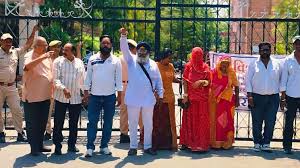
The letter also states that since 2018, non-Valmiki community members have not been performing sanitation work, placing additional burden on women from the Valmiki community. Therefore, they should be immediately deployed to the wards for sanitation work. Jodhpur. Even after 78 years of independence, another shocking case of social and mental exploitation of the Valmiki (Mehattar) community has emerged from the Jodhpur Municipal Corporation. Sardar Prakash Singh ‘Vidrohi,’ District President of the All India Safai Mazdoor Congress, has alleged in a letter to the Union Defense Minister that the corporation’s DC, Swaroop Singh, insulted him with caste-based slurs and threatened to implicate him in a false case of obstruction of government work. According to the letter, the leader was on a hunger strike on May 12th during the sanitation workers’ long-standing struggle for their ten-point demands. Due to the intense heat and the negligence of officials, Sardar Prakash Singh, who had already undergone bypass surgery, became seriously ill, but the municipal administration remained unconcerned. According to Vidrohi, as the situation worsened, Deputy Commissioner Swaroop Singh expelled all the policemen, officers, and organization members from the room. He then insulted them with casteist slurs, saying, “You Bhangi don’t have the guts to fight us.” Meanwhile, Vidrohi’s health suddenly deteriorated. He initially remained seated on a chair, then, as his condition worsened, he lay down in the Deputy Commissioner’s room. He was also threatened with a false case of obstructing government work against the Commissioner. Sardar Prakash Singh called this mentality a blot on humanity, saying that while the entire world is planning to settle on the moon, educated officials are still living with the same old mindset. During the talks with the police and organization members, I sat on a hunger strike in the scorching sun from 10:30 a.m. to 4:30 p.m., but none of the corporation officials took any notice, leading to my health deteriorating during the talks. I had previously undergone bypass surgery. Even then, the corporation’s DC and no other official took it seriously. My colleagues immediately called an ambulance and rushed me to the hospital, where doctors advised complete bed rest.- Sardar Prakash Singh In his letter, Sardar Prakash Singh made several demands to the Union Defense Minister. He demanded that the Jodhpur Municipal Corporation’s current cleaning contract be canceled and permanent staff recruitment, DPC, and criminal compassionate appointments be conducted soon. He also demanded that members of the Valmiki community be appointed as sanitation in-charges based on seniority and diplomas. The letter also stated that non-Valmiki community members have not been performing sanitation work since 2018, placing additional burden on women from the Valmiki community. Therefore, they should be immediately assigned to the wards. The most important demand is the immediate transfer of DC Swaroop Singh and departmental action against him. Warning that if timely action is not taken, Sardar Prakash Singh will approach the court and file a case against the DC under the SC/ST Act. Copies of this letter have also been sent to Union Minister Gajendra Singh Shekhawat, Rajasthan Chief Minister, and Jodhpur MLA Atul Bhansali. At present, there has been no response from the Municipal Corporation administration, but Sardar Prakash Singh’s allegations have sparked outrage within the Valmiki community. Geetha Sunil Pillai Courtesy: Hindi News
Delhi: “We are Pandits, you are a Chuhra… Nothing will happen to me,” Dalit youth publicly abused; despite video, police remain empty-handed.
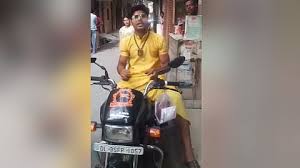
A Dalit youth in Delhi’s Mehrauli was publicly subjected to casteist abuse. Despite having the video and the vehicle number, the police are reluctant to register an FIR. New Delhi: A case of caste-based harassment and gross police negligence has come to light in the Mehrauli area of the capital Delhi. An unknown person publicly abused a Dalit youth, Vipin Kumar Duggal, with vulgar casteist slurs and attempted to assault him. Despite the victim having a video of the incident and the accused’s vehicle number, the police have been reluctant to register an FIR for the past several days. The entire incident occurred on May 10, 2026, at around 5:35 p.m. Vipin Kumar Duggal was returning home from the market on his motorcycle. When Vipin, riding a black Hero Splendor (DL3SFP1057), stopped him from cutting him off (driving dangerously) near the residence of former Mayor Satbir Singh, he began abusing him. During a minor altercation, the accused suddenly became aggressive and began pushing and insulting Vipin. According to the victim, the accused publicly shouted, “I know you… We are Pandits, you are a Chuhra… You are a Chuhra… Yes, I am telling you.” When Vipin began filming the incident on his mobile phone, the accused, claiming to be an army soldier, threatened him, saying that the police could not do anything to him. The victim immediately called PCR on 112 and went to Mehrauli police station to file a written complaint (DD No. 145A). The victim alleges that the accused, along with some of his friends, went to the police station to exert pressure and misbehaved there as well. However, as soon as the victim began filing a written complaint, the accused took advantage of the situation and fled. The investigation of this case has been entrusted to SI Naveen Kumar, but the police’s attitude has been extremely evasive. The complainant provided the accused’s mobile number (76XXXXXX94) and True Caller details to the police. Despite this, the investigating officer consistently avoided taking calls and offered only assurances instead of taking any concrete action. Frustrated by this police indifference, the victim sent an email to the DCP (South), ACP (Mehrauli), and SHO on May 12th, pleading for justice. He has also filed a complaint with the National Commission for Scheduled Castes. According to the victim, when he again visited the police station to meet with the SHO, he denied any knowledge of the incident even four days after the incident, which raises serious questions about police performance. Investigating this entire matter, we attempted to obtain the police’s version of events. We called the SI investigating the case twice to clarify the situation, but were unable to reach him. The Delhi Police’s failure to register an FIR despite the existence of clear evidence and the occurrence of a cognizable offense under the SC/ST Act is a matter of grave concern. Rajan Chaudhary Courtesy: Hindi News
Former Pradhan in Pratapgarh accused of assaulting Dalit woman and children: Police register case under SC/ST Act and begin investigation

In Pratapgarh’s Udaipur police station area, former Pradhan Amarnath Pal has been accused of assaulting a Dalit woman and her children. Police have registered a case under various sections, including the SC/ST Act, and have begun investigation. The incident occurred on Sunday in the village of Poore Man Singh in the Rehua Lalganj market. The victim, Rinku Devi, wife of Ramesh Saroj, stated in her complaint to the police that her husband was not at home at the time of the incident and she was ill. Her daughter, Saloni, was cooking at home. According to Rinku Devi, former Pradhan Amarnath Pal had initially asked her to work. Angered by her inability to work due to illness, Amarnath Pal arrived at her house with his wife and daughter. It is alleged that he abused and assaulted Rinku Devi, her daughter Saloni, and son. The accused also threatened to kill them before leaving. Upon receiving information about the incident, the police took immediate action and conducted medical examinations of the victims. Former village head Amarnath Pal dismissed the allegations, saying there was a minor altercation between the women. He claimed that all the allegations made by Rinku Devi are not true. Station in-charge Mohammad Aftab Alam stated that based on the medical examination and investigation, a case has been registered under relevant sections, including the SC/ST Act. The investigation is ongoing, and further legal action is being taken. Anoop Kumar Singh | Sangipur (Pratapgarh) Courtesy: Hindi News
Mamata calls for TMC rebuild after Bengal polls, says ‘those who want to leave can go’

The TMC supremo said the organisation would rise again despite suffering a crushing defeat in the recently concluded assembly elections. After the TMC faced its worst electoral setback in years, party supremo Mamata Banerjee on Saturday urged its candidates who contested the recent assembly polls to rebuild the organisation, asserting that those wishing to quit the party were free to do so. At a meeting with the Trinamool Congress’ contesting candidates at her Kalighat residence, attended by its national general secretary Abhishek Banerjee, she said the organisation would rise again despite suffering a crushing defeat in the recently concluded assembly elections. “Those who are leaving for other parties, let them go. I will rebuild the party afresh. To those who are staying, I say rebuild the damaged party offices, paint them and reopen them. If needed, I too will paint them. Trinamool Congress will never bow down. People’s mandate has been looted,” Banerjee was quoted as saying by party sources. The remarks came days after the TMC was reduced from the ruling party to the opposition benches following a dramatic reversal in electoral fortunes. Of the 294 assembly seats in the state, the party managed to win only 80. Mamata Banerjee herself suffered defeat in Bhabanipur, long considered her political bastion. The TMC had fielded candidates in 291 seats, leaving three seats in the Darjeeling hills to its ally Bharatiya Gorkha Prajatantrik Morcha (BGPM) led by Anit Thapa. Of these, only 80 candidates emerged victorious, while 211 lost, including several heavyweight leaders and ministers. The meeting at Kalighat was convened for candidates who had contested the elections on the party’s ticket amid reports of internal discontent and speculation over possible defections after the electoral debacle. Saturday’s meeting echoed Banerjee’s remarks made a day after the results were declared. Addressing a press conference on May 5, she had said she was aware that some leaders might switch camps. “I know many will leave for other parties. They may have their own compulsions. I have nothing to say about that. Whoever wants to go may go. I do not believe in forcibly holding anyone back,” she had said. The TMC’s official X handle later posted photographs of the meeting and praised the contesting candidates for their fight during the election campaign. “Today, our Hon’ble Chairperson @MamataOfficial and our Hon’ble National General Secretary @abhishekaitc met with our contesting candidates, at Kalighat. They fought with unmatched courage despite facing unimaginable atrocities and relentless intimidation. The Trinamool Congress stands united as one family. We will never bow before those who loot the people’s mandate. Truth will prevail,” the party posted on X. The post also reiterated the party’s charge that the electoral mandate had been “stolen”, a claim repeatedly raised by TMC leaders after the poll results. Party insiders said Banerjee used the meeting to boost the morale of candidates who had contested the polls and send a message of unity amid a difficult phase for the organisation. Courtesy : TNIE Note: This news is originally published on https:/thenewindianexpress.com/bha and is used purely for non-profit/non-commercial purposes, especially human rights
BJP MPs Kishan Reddy, Bandi Sanjay won elections with help of bogus votes: TPCC chief Mahesh

TPCC chief B Mahesh Kumar Goud on Friday urged the Election Commission to ensure that no eligible voter is disenfranchised while conducting the Special Intensive Revision exercise in Telangana. HYDERABAD: Alleging that BJP MPs G Kishan Reddy and Bandi Sanjay Kumar had won elections through “bogus votes” and were therefore nervous about the ongoing debate over voter verification, TPCC chief B Mahesh Kumar Goud on Friday urged the Election Commission to ensure that no eligible voter is disenfranchised while conducting the Special Intensive Revision (SIR) exercise in Telangana. Pointing out that there are no elections scheduled in the state for the next two years, Mahesh said the Congress had urged the Election Commission to conduct the SIR exercise in Telangana over a one-year period instead of rushing the process. The TPCC chief, along with MLAs, MPs and MLCs, met State Chief Electoral Officer C Sudharshan Reddy at BRK Bhavan and submitted a representation on the SIR process. Addressing the media later, the TPCC chief alleged that large-scale voter manipulation had taken place across 14 states and claimed that the voter verification exercise was being carried out in an “undemocratic manner”. Referring to West Bengal, he alleged that political equations in the state were altered through voter list manipulation, resulting in parties expected to come to power losing elections. He alleged that the large-scale deletion of voters during the SIR process altered the electoral outcome in West Bengal. While 90 lakh names were deleted from the electoral rolls in the eastern state, only 30 lakh were added, he claimed. Mahesh also expressed concern over conducting the SIR process alongside the ongoing Census exercise, stating that it could create confusion and irregularities. He warned that poor voters could face difficulties in producing required documents if their names were deleted from voter lists. Demanding safeguards in the verification process, the TPCC president said that voters should be given at least three months’ time and Booth Level Officers should visit households three times for proper verification. He cautioned that in some places there was a danger of deleting votes under the pretext of identifying “foreign nationals”. The TPCC chief said no citizenship proof should be made mandatory during the SIR process and pointed out that a passport was only one among the 14 accepted documents. He said the voter verification drive should be conducted without harassing citizens. Mahesh also alleged that, under the guise of the SIR exercise, there was an attempt to target and delete the votes of people who believe in secular values. Courtesy : TNIE Note: This news is originally published on https:/thenewindianexpress.com/bha and is used purely for non-profit/non-commercial purposes, especially human rights