
Congress eyes major reset of Revanth govt

The possibility of changes in the state party unit is also generating considerable discussion. HYDERABAD: Having completed half of its five-year tenure, the Revanth Reddy government appears headed for its biggest shake-up since coming to power in December 2023. With the Congress high command said to be weighing changes in both the Cabinet and the party organisation, ministers, MLAs and aspirants have begun jockeying for position, turning Hyderabad and New Delhi into hubs of intense political activity. According to sources in the ruling party, the proposed exercise is expected to go beyond a routine Cabinet expansion. The Congress leadership is reportedly considering a broader overhaul that could involve dropping some ministers, inducting fresh faces, redistributing key portfolios and reorganising the Telangana Pradesh Congress Committee (TPCC). Party insiders say two or three ministers could be shown the door as part of the exercise. However, the move is not being viewed as a demotion. Those relieved of Cabinet responsibilities may instead be assigned organisational roles in the All India Congress Committee (AICC), with some potentially being made in-charge of states such as Gujarat, Goa and Uttar Pradesh, which are scheduled to go to the polls next year. The possibility of changes in the state party unit is also generating considerable discussion. One of the names being widely talked about is TPCC president and MLC B Mahesh Kumar Goud, who is said to be under consideration for a Cabinet berth. His induction would also address the absence of Cabinet representation from Nizamabad district. If Mahesh moves into the Cabinet, party leaders believe a change at the helm of the TPCC could follow. Minister Ponnam Prabhakar’s name is doing the rounds as a possible successor. A long-time Congress leader who rose through the NSUI ranks and later represented Karimnagar in Parliament, Prabhakar is seen as someone with strong organisational credentials. Munugode MLA Komatireddy Rajagopal Reddy meets Rahul Gandhi in New Delhi on Saturday Munugode MLA Komatireddy Rajagopal Reddy meets Rahul Gandhi in New Delhi on SaturdayPhoto | Express The speculation has triggered a rush to New Delhi. Several leaders aspiring for Cabinet berths or key party positions have been making frequent visits to the national capital and meeting senior Congress leaders. Among the names being discussed are Speaker Gaddam Prasad Kumar, Munugode MLA Komatireddy Rajagopal Reddy and Parigi MLA T Rammohan Reddy. Sources indicated that the reshuffle, along with organisational appointments, could be announced in the third or fourth week of this month. Alongside personnel changes, the leadership is also believed to be examining a redistribution of important portfolios. Finance and revenue are among the departments being discussed in internal deliberations, with senior leaders who previously served as ministers in undivided Andhra Pradesh said to be in contention for greater responsibilities. Rammohan Reddy is also being mentioned as a possible choice for the post of chief whip in the Assembly. The ripple effects of a Mahesh Kumar induction could extend further. Party leaders say that if Prabhakar is moved to the TPCC chief’s post, it may create an opening in the Cabinet for Vemulawada MLA and whip Aadi Srinivas, who belongs to the Munnuru Kapu community. Leaders troop to Delhi to press their case Another subject of intense speculation is the Assembly Speaker’s post. According to sources, discussions are underway on whether a senior minister — from the same caste as Gaddam Prasad — could be made Speaker, potentially paving the way for further adjustments within the Cabinet. The expected exercise is also likely to cover appointments to corporations and public sector bodies. Aspirants from Warangal, Rangareddy and Nalgonda districts are said to be under consideration for chairperson posts in key corporations, while four former MLAs may also be accommodated. With every possible vacancy setting off a chain reaction elsewhere, the atmosphere within the ruling party has become increasingly charged. Ministers are lobbying to retain their positions or secure influential portfolios, while aspirants are reminding the leadership of assurances made during the Assembly election campaign. Several ministers recently met Congress president Mallikarjun Kharge during his visit to Hyderabad, while others have travelled to Delhi to make their case. Aspirants have also been seeking meetings with Rahul Gandhi as the party weighs what could be its most consequential political exercise since coming to power in Telangana. Ireddy Srinivas Reddy Courtesy : TNIE Note: This news is originally published on https:/thenewindianexpress.com/bha and is used purely for non-profit/non-commercial purposes, especially human rights
Ahead of INDIA bloc meet, CPM asks Congress to ‘clear air’ on Kerala poll remarks on ‘deal’ with BJP

NEW DELHI: Ahead of the INDIA bloc meeting on Monday, CPI(M) general secretary MA Baby, in a sharply worded letter to Congress President Mallikarjun Kharge, has raised the allegations by Rahul Gandhi and other senior leaders during the Kerala polls that CPI(M) and the BJP had struck a deal and their call for ED action against then CM Pinarayi Vijayan. The Left party has asked the Congress to “clear the air regarding such disruptive moves.” According to sources, in the letter to Kharge, Baby has alleged that there was a “systematic campaign” by the Congress leadership during the Kerala elections, wherein it was alleged that Vijayan had also struck a deal with Prime Minister Narendra Modi and a question was posed ‘Otherwise, why is it that he has not been interrogated or arrested by the Enforcement Directorate’? Baby makes it clear that “unless these matters are clarified, the very purpose of the INDIA bloc would be in question”. “As the President of the Congress, it is up to you and the Congress leadership to clear the air regarding such disruptive moves,” Baby is learnt to have said in the letter, putting the ball in Kharge’s court. The CPM general secretary has said that these were not stray remarks made in the heat of an election campaign, but were “the centrepiece of the Congress party-led UDF’s political campaign. “Every national leader, Rahul Gandhi, Priyanka Gandhi, and yourself, made such allegations repeatedly,” Baby has said in the letter. In this backdrop, Monday’s INDIA bloc meeting is likely to see some straight talk and fireworks. The two-term CPI(M) led LDF lost to the Congress-led UDF in the recent assembly polls. Despite the sharp tenor of the letter, it is expected that CPM is not going to boycott the meeting, though the party leadership will take a final call on Sunday, senior leaders said. While highlighting in his letter that the leader of the Opposition in the Lok Sabha, Rahul Gandhi, repeatedly called for ED action against the then Kerala CM Pinarayi Vijayan, the CPM general secretary asks Kharge that “can this be termed as an anti-BJP stance or is it a case of inviting the Modi govt to take illegal punitive action against a fellow opposition leader?” Baby recalls that the INDIA bloc was constituted as a broad platform to politically fight the BJP, and CPI(M) has worked sincerely to see such a united platform emerge. Noting that strangely, now, the CPI(M) was being accused of having a deal with the BJP, Baby has said in the letter that this is a canard they cannot take lightly, as “this strikes at the very basis of the unity forged against the BJP.” However, Baby has assured that CPI(M) will fully cooperate in Parliament with the INDIA bloc and other opposition parties to put up a united fight against the authoritarian, communal, and anti-people policies of the Modi govt. The INDIA bloc meeting, happening after a long gap, is taking place amid changing dynamics within the Alliance, with DMK already saying it will not attend in the backdrop of the Congress severing ties with it to support TVK to form the government in Tamil Nadu. On Thursday, DMK spokesperson TKS Ekangovan told ANI that DMK is no longer part of the INDIA bloc. In Monday’s meeting, where the future strategy of the INDIA bloc is proposed to be chalked out, former West Bengal CM and national general secretary Abhishek Banerjee will be there to present the TMC’s views and rally support amid the current developments in the state. The TMC, which has all along positioned itself as a dominant regional player within the INDIA bloc, is set to lose the clout the party enjoyed in the backdrop of the recent developments – the defeat in Bengal and the recent split in the party. According to sources, at the INDIA bloc meeting, TMC leaders, among various issues, propose to share their views on the role of the Election Commission, the developments on the counting day and the reasons for defeat. Courtesy : TOI Note: This news is originally published on https:/timesofindia.com/bha and is used purely for non-profit/non-commercial purposes, especially human rights
Dalit youth dies by suicide in collectorate
Kendrapada: A 26-year-old dalit man allegedly died by suicide inside the Kendrapada collectorate on Friday purportedly after facing sustained harassment by officials over permission to sell his land to members of another caste. The deceased has been identified as Srichandan Mallick of Raitundi village under Nikirei police station. He hanged himself from the iron railings of the office of the collector at 1 pm on Friday with a towel when there were few people as office was closed due to the morning shift. The family members and Dalit activists alleged that he ended his life after facing severe mental harassment by the officials. The deceased had been running from pillar to post since the last six months to get permission from the revenue office to sell his land to other caste persons as it is mandatory under Section 22 of the Orissa Land Reforms (OLR) Act, 1960. A SC person cannot sell or transfer land to an upper caste or general category person without the written prior permission of a revenue officer. Dalit activist and former chairperson of zilla parishad, Gita Sethi alleged that Srichandan Mallick, a dalit, was forced to end his life, driven by frustration over the long delay by the revenue officer to grant him permission to transfer his property. After knowing about the incident, police rushed to the spot and seized the body and sent it to the district headquarters hospital at Kendrapada for autopsy. No suicide note was recovered. An investigation is underway to find out what prompted him to kill himself, said IIC of Kendrapada police station Suvendu Sahoo. The district administration has launched an investigation. “We will take action if any official is found guilty of wrongdoing and harassing the dalit youth,” said collector (Kendrapada) Raghuram R. Iyer. Courtesy : TOI Note: This news is originally published on https:/timesofindia.com/bha and is used purely for non-profit/non-commercial purposes, especially human rights
A Lived Sociology of Caste
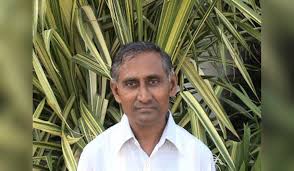
Chandu Maheria’s ‘Homes Without Windows’ is a vivid, empathetic and often devastating portrait of Dalit working-class life in urban Gujarat. Reading Homes without Windows, I frequently experienced flashes of deja vu. Although unlike Chandu Maheria, I grew up in a village setting in Maharashtra, the experiences of Dalits are essentially not very dissimilar. In addition, I was well acquainted with places and most people that figure in the book. It evoked memories of my own encounters with caste and communal violence in Gujarat. One episode returned vividly to mind: during the anti-reservation riots of 1981, while I was a student at IIM Ahmedabad, I found myself trapped by a mob in Bapunagar. The IIM campus was an elitist island that remained insulated even when the city around it burned. Yet the social activist in me often ventured into working-class neighbourhoods to understand events first hand. I had befriended several Dalit activists across Ahmedabad and regularly attended their meetings. One afternoon, in the thick of the riots, riding my Vijay scooter towards the Buddha Vihar in Bapunagar, I was stopped by half a dozen men armed with sticks and wearing the ferocious expressions of a riotous mob. When I told them where I was headed, they began manhandling me and seized my scooter. For a few moments, I genuinely thought I might become the next day’s newspaper headline. Suddenly, however, a group of 15 to 20 Dalit youths, blue scarves tied around their foreheads, emerged from a nearby basti. The attackers quickly dispersed, and I was saved. More importantly, I witnessed first-hand the transformation in Dalit consciousness that the reservation riots had produced. That awakening was extraordinary. Gujarat’s Dalits, despite belonging to the old Bombay Presidency, had remained only marginally touched by Ambedkar’s movement, except in a few urban pockets. Even the Dalit Panther movement, which travelled from Maharashtra and survived here longer than in its birthplace, remained largely confined to Ambedkarite circles. The anti-reservation riots changed that. The assertion, anger and self-respect they generated became visible in the massive Ambedkar Jayanti celebrations of 1982 and in the growing embrace of Ambedkarite politics across Gujarat. It is against this background that Maheria’s memoir assumes particular significance. Over the past decades, Dalit autobiographical writing has emerged as one of the richest literary traditions in India. Inspired in part by the Marathi Dalit literary movement, writers from many linguistic regions have narrated experiences of caste oppression with remarkable power. Omprakash Valmiki’s Joothan is perhaps the best-known example in Hindi, but many others, such as Bama’s Karukku in Tamil, G. Kalyan Rao’s Antarani Vasantam in Telugu and Balbir Madhopuri’s Chhangiya Rukh in Punjabi, have contributed substantially to this body of literature across the country. Maheria’s Homes Without Windows deserves a respectable place within that tradition. The book vividly portrays life in the Rajpur, Ahmedabad slums where the author grew up. The very first chapter, ‘The Mayor’s Bungalow’, takes its ironic title from a modern public toilet built in the settlement. After painting, in a tragi-comic manner, the inhuman conditions in which the residents of Rajpur and the surrounding slums lived, Maheria introduces this toilet as a symbol of “development”. Yet the facility remained largely unusable for the poor because it operated on a user-fee basis that none in the slum could afford. For the residents, it stood less as a public amenity than as a monument to a model of development that was ostensibly meant for them but effectively excluded them. In that sense, the toilet becomes a metaphor for the neoliberal development that has shaped India since the mid-1980s, catering primarily to the aspirations of the emerging middle classes. Roads, flyovers, malls, multiplexes, corporate hospitals and elite schools may inspire pride and reinforce the official narrative of a rapidly advancing India, even an emerging superpower. Yet they are largely useless to the vast majority who remain excluded from their benefits. Public resources, generated by the taxes of ordinary people, are increasingly deployed to create islands of comfort, consumption and spectacle that those very people rarely access. The obsession with flyovers illustrates this logic. They are built to enable car owners to travel faster and more comfortably. More cars generate demands for more flyovers, which in turn encourage greater automobile dependence, creating a self-perpetuating cycle. Meanwhile, those who rely on walking, cycling or overcrowded public transport – the majority who subsidise this infrastructure through their labour and taxes – remain largely invisible in planning priorities. Indeed, one of the great strengths of Dalit memoirs such as this is that they reveal social realities often missed by mainstream sociology. They provide an insider’s view of everyday life, exposing structures of exclusion, humiliation, adaptation and survival that rarely find a place in academic theories or policy discourse. Through lived experience, they generate sociological insights that formal research frequently overlooks. One of the most interesting chapters in the book is ‘That Fellow, Gandhido’, where Maheria explores the deep hostility many Dalits feel towards Gandhi. For many Dalits, Gandhi’s opposition to separate electorates for the Depressed Classes and the resulting Poona Pact of 1932 symbolise a historic betrayal. The sentiment has become so strong that September 24, the date on which the Pact was signed, is increasingly observed as a Black Day in Dalit circles. This antagonism extends even to language. Many contemporary Dalits object to the use of honorifics such as “Gandhiji”. Maheria uses this debate to reflect on the politics of naming in India, where forms of address often carry ideological and social meanings. Yet, rather than reproduce the conventional anti-Gandhi narrative, Maheria offers a more nuanced assessment. He acknowledges Gandhi’s opposition to separate electorates but also reminds readers that Gandhi played a significant role in bringing the question of untouchability to the centre of India’s public life. He points to Gandhi’s decision to admit an untouchable family into the Kochrab Ashram despite considerable opposition, and to his attempt to forge a new social identity for untouchables through the term Harijan. Whether one agrees with
Crime-Cascade on Eid: Dalit Man Gangraped by Muslim Friends in Meerut

Reports of yet another heinous crime committed on the day of Eid have surfaced on social media. In Uttar Pradesh’s Meerut, a Muslim man called Ayan lured the victim into his house under the pretext of inviting him for an Eid feast. At Ayan’s home, the victim was allegedly gangraped. After the victim filed a complaint with the police, three Muslim accused were arrested swiftly, while one is absconding. As per the victim’s statement recorded with the police, once he reached Ayan’s home for the ‘Eid feast’; at around 9 PM, Ayan’s friends, Gul Muhammad, Adnan, and Avesh reached the spot as well. Following this, these three friends removed the victim’s clothes forcefully and raped him. Not only was the victim gangraped, he was also beaten mercilessly, and was verbally abused using highly objectionable casteist slurs. The accused recorded a video of the whole act, and blackmailed the victim saying that if he told anyone about whatever had happened, they would make sure the video goes viral on social media. Despite the blackmail, the victim plucked up courage and filed a complaint with the police on May 29, the day following that of Eid. An FIR was registered, and soon, Gul Muhammad, Avesh, and Adnan were arrested, and have been jailed. Ayan is absconding and the police are on a lookout for him. At this point in time, it can be said for certain that there is no such year when Muslims do not commit brutal crimes against Hindus; but what is also noteworthy is the usual hypocrisy of the left-liberal cabal. No ‘secular’, ‘equality-loving’, ‘woke’, and ‘fearless’ ‘liberal’ has raised their voice against this heinous crime, even though the victim belongs in the SC community. We could only imagine the uproar if the culprits were so-called ‘high-caste’ Hindus rather than being Muslims. This selective hullabaloo on the part of the ‘liberals’ of this country, and their mundane what-aboutery have to be questioned at each step; for real equality begins at understanding that every crime has to be kept at an equal standing of disgust, and criminal acts cannot be sifted and conveniently categorized after looking at them through the magnifying glass called ‘bias’, based on the religious identity of the culprits and victims. Sonakshi Datta Courtesy : GC Note: This news is originally published on https:/goachronicle.com/bha and is used purely for non-profit/non-commercial purposes, especially human rights
“I’ll get away with it if the police let me go…” A Dalit youth suspected of motor theft was “punished” by a mob.

A video of a Dalit youth being hung upside down in a well in Haryana and beaten is going viral. Police have filed a named FIR against five people and launched an investigation. (Haryana: Dalit youth thrown upside down in a well (Latadia Today) “A disease can be cured, but not a sick mentality.” A similar incident occurred in Haryana’s Hisar district. A video from the area is going viral on social media, showing some people beating a Dalit youth suspected of stealing a water motor. The situation escalated when the accused hung him upside down in a well, crying and screaming. Seeing the seriousness of the matter, the police swung into action. They have registered a case against five named and some unidentified individuals. The incident took place in Sorki village, near Hansi in Hisar. The victim, a Dalit youth, has been identified as Baru, a resident of Sorki. According to a report by Praveen Kumar of India Today, a video of the incident, which occurred on June 1, 2026, has now gone viral. In the video, the victim can be seen tied with ropes and hanging upside down in a well. Caught on charges of motor theft In the viral video, people can be heard questioning Baru about the motor theft. After the incident, Baru managed to escape and report the crime to the police. Following this, the police registered an FIR on Thursday, June 5, and began an investigation. According to a report in the Indian Express, Sub-Inspector Praveen Kumar of the Sorkhi police post confirmed the incident. He said that Baru was admitted to the government hospital in Hansi on the evening of June 4. A case has been registered against the accused under sections 109 (1) of the IPC (attempt to murder), 126 (2) (wrongful restraint), 3 (5) and 351 (3) (criminal intimidation) of the Criminal Procedure Code (CrPC). Sections of the SC/ST Act have also been added. Went to the field after suffering from diarrhea According to Praveen Kumar’s report, Baru said that he was suffering from diarrhea and had gone to freshen up. Meanwhile, people chased him, mistaking him for a thief. When he jumped into a drain, a man started shouting “thief, thief!” Baru said, “He caught me. I said, ‘There’s no need to catch me, I won’t run away.’ Despite this, the men continued to beat me.” Baru said that he told the people that he was not a thief and would not run away. He even said that if they suspected him of theft, he was ready to go to the police station. According to the Indian Express report, Baru said that he denied the allegations several times, but the people refused to listen. People demanded punishment on the spot The attackers said that handing Baru over to the police would be of no use and that he would easily be released. Baru also alleged that one of the accused threatened to punish him “on the spot.” He said, “They tied a rope to my leg and hung me upside down in the well. That’s why I was forced to confess.” Local residents say Baru was arrested on suspicion of stealing a water motor. They even claim that several water motors had been stolen from the area recently, causing distress among farmers. At the time of writing, no information has been received regarding the arrest of the accused. Pragati Pandey Courtesy: Hindi News
Doctor accused of raping Dalit woman on false promise of marriage, case registered

Bijnor (UP), A doctor running a private hospital in the district has been accused of raping a Dalit woman employee on the pretext of marriage and forcing her to have an abortion, police said on Saturday. Dhampur Station House Officer (SHO) Mridul Kumar said that a case was registered on June 2 based on a complaint from a woman living in a village in the area. Citing the complaint, he stated that the accused belongs to another community and is already married. He said that according to the allegations made in the complaint, he had physical relations with the woman while she was working at the hospital. He said that the doctor running the hospital allegedly had physical relations with her and when the victim became pregnant, he allegedly pressured her to have an abortion. The SHO said that the matter is being investigated. Meanwhile, local BJP MLA Om Kumar met the victim on Saturday and alleged that it was a case of gang rape. Speaking to reporters, the MLA claimed that the woman was pressured to convert her religion and eat prohibited meat. Expressing dissatisfaction with the initial police action, the MLA alleged that the police neither invoked the Scheduled Castes/Scheduled Tribes (Prevention of Atrocities) Act nor accepted the initial application from the victim’s family. He said the Superintendent of Police has assured him of strict and thorough action in the case. Zafar Amit Courtesy : Hindi News
BJD questions Odisha govt’s grievance redressal mechanism as Dalit youth dies by suicide

Biju Janata Dal (BJD), the main Opposition party in Odisha, has targeted the BJP government over the alleged suicide of a Dalit youth at the Collector’s office in Kendrapara. BJD MLAs Ganeswar Behera and Dhruba Sahoo alleged that the youth, identified as Srichandan Das, died by suicide at the Collector’s office as the officials concerned did to take any steps for redressal of his grievances. Das, a resident of Raytunidi village under Derabish block in Kendrapara, was found hanging at the Collector’s office on Friday. Preliminary investigation suggests that Das died by suicide by hanging himself from the railing of the staircase with the help of a cotton towel. Sources claimed that Das was under severe mental pressure over some issues related to his landed properties. He had reportedly approached the Sub-Collector’s office several times for resolution of the issues. “The Dalit youth was forced to take the extreme step as the officials did not take any step for redressal of his grievances. The incident has exposed how the BJP government, which claims to be a people’s government, has turned a blind eye to the problems of ordinary citizens. The incident raises serious questions about the administrative and security arrangements at the Collector’s office,” said Behera. Sahoo, meanwhile, raised questions over the grievance redressal mechanism of the state government. “The BJP government claims that it has resolved 96 per cent of the grievances through its grievance redressal mechanism. However, the suicide of the Dalit youth has exposed the reality,” he said. The Opposition party has sought a compensation of Rs 10 lakh to the deceased’s family and a thorough probe into the incident. “The BJD will launch an agitation if the state government does not take immediate steps to conduct a high-level probe into the incident and initiate stringent action against the culprits,” Sahoo added By Priya Ranjan Swain Courtesy : Sambad English Note: This news is originally published on https:/sambadenglish.com/bha and is used purely for non-profit/non-commercial purposes, especially human rights
Bus services restored to dalits populated Anna Nagar in Coimbatore after ‘long-standing’ caste issue

COIMBATORE: Bus services have been restored to Anna Nagar, a Scheduled Caste residential area near Kembanur in Coimbatore’s Thondamuthur block, after two years of alleged caste-based obstruction. More than 300 SC families live in Anna Nagar. Bus services were stopped two years ago after dominant-caste individuals in Kembanur village had opposed the buses travelling the extra 500 metres to dalit-populated Anna Nagar. The dominant community complained that if buses started from Anna Nagar, dalit people would occupy all the seats, forcing other community commuters boarding at subsequent stops to travel standing. This forced Anna Nagar residents to walk 500 metres either to board buses or to reach home after alighting from them at Kembanur. But now following directions from Social Justice and Empowerment minister Vanni Arasu, the Coimbatore district collector and the Tamil Nadu State Transport Corporation acted to reinstate bus services to Anna Nagar. The first service from Gandhipuram (Route 21) reached Anna Nagar at 8am on Saturday. Residents welcomed the bus and distributed sweets to the driver, conductor and passengers. Protests by Left and progressive organisations, media reports, petitions and intervention by the State Commission for SC/ST had increased pressure on the administration to act. The issue was resolved after residents raised the matter directly with the minister, who treated the denial of transport access as a form of untouchability and ordered implementation of the original route plan without yielding to caste-based pressure. Courtesy : TOI Note: This news is originally published on https:/timesofindia.com/bha and is used purely for non-profit/non-commercial purposes, especially human rights
Doctor booked for rape, forced abortion of Dalit woman employee in UP’s Bijnor

According to the complaint, the accused, who is married and belongs to another community, allegedly established physical relations with the woman while she was working at his hospital in Habib Wala. A doctor running a private hospital in Uttar Pradesh’s Bijnor district has been booked on allegations of raping a Dalit woman employee on the pretext of marriage and forcing her to undergo an abortion, police said on Saturday. The case was registered on 2 June based on a complaint filed by the woman, Dhampur SHO Mridul Kumar said. According to the complaint, the accused, who is married and belongs to another community, allegedly established physical relations with the woman while she was working at his hospital in Habib Wala. The woman alleged that the doctor pressured her to undergo an abortion after she became pregnant. Police said the allegations are under investigation. Meanwhile, local BJP MLA Om Kumar met the victim on Saturday and alleged that it was a case of gang rape. Speaking to reporters, the legislator also claimed that the woman had been pressured to change her religion and consume prohibited meat. Expressing dissatisfaction with the initial police action, the MLA alleged that the police had neither invoked the SC/ST (Prevention of Atrocities) Act nor accepted the initial application from the victim’s family. He added that the superintendent of police has since assured him of strict and complete action in the matter. Courtesy : TNIE Note: This news is originally published on https:/thenewindianexpress.com/bha and is used purely for non-profit/non-commercial purposes, especially human rights