
Rahul Gandhi files application in MP HC, expresses regret over remark against Shivraj Singh Chouhan’s son
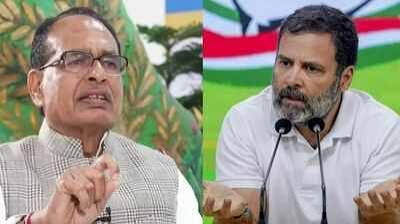
Shivraj Singh Chouhan’s son Kartikeya Singh filed a defamation case against Rahul Gandhi, alleging that Gandhi mentioned his name while referring to Panama Papers leak case, damaging his reputation. Congress leader Rahul Gandhi has approached the Madhya Pradesh High Court with an application expressing regret for his allegedly defamatory statement about Union Minister Shivraj Singh Chouhan’s son Kartikeya Singh. Kartikeya Singh had filed a defamation complaint in a Bhopal court against the Leader of the Opposition in the Lok Sabha. Gandhi’s application, filed by his lawyer on Wednesday, said his statement was not related to Singh. In the defamation complaint lodged in the Bhopal court for cases against MPs-MLAs, Kartikeya Singh alleged that during an election rally in Jhabua in 2018, Gandhi mentioned his name while referring to the Panama Papers leak scandal, thus damaging his reputation. The court issued a summons to Gandhi for personal appearance, following which the Congress leader moved the HC seeking to quash the summons as well as the defamation case. Justice Pramod Kumar Agarwal will hear Gandhi’s petition on Thursday. The petitioner on Wednesday produced the records of the lower court, as directed by the HC. Advocate Sankalp Kochhar represented the complainant before the high court. Responding to Gandhi’s regret application, Kartikey through his counsel on Thursday said that he didn’t intend to escalate the issue any further, so the proceedings before the MP HC as well as the trial court in Bhopal be closed. Courtesy : TNIE Note: This news is originally published on https:/thenewindianexpress.com/bha and is used purely for non-profit/non-commercial purposes, especially human rights
CJP protester attacked with iron rod; Dipke demands SC/ST Act, attempt to murder charges
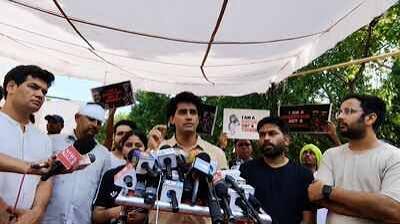
NEW DELHI: A person protesting with CJP sustained serious head injuries during the prolonged protest at Jantar Mantar on Tuesday night. CJP founder Abhijeet Dipke and CJP spokesperson Saurav Das have demanded that the Delhi Police take strict action against those responsible, alleging that while police have arrested one person, around 15 people were involved in the attack. Following the incident, a video of the injured man’s daughter surfaced on social media. In the video, she alleged that a group of “Manuvadi” people cornered her on the road and that when her father intervened to protect her, he was allegedly struck on the head with an iron rod, leaving him seriously injured. CJP demands justice CJP spokesperson Saurav Das said Delhi Police have taken “zero preventive action” regarding physical attacks and online threats. The CJP has demanded full accountability for the incident under the SC/ST Act and Attempt to Murder charges. Das said that the perpetrators targeted the protest so as to create an enviroment of terror and make it unsafe for those on ground to engage in a peaceful protest. He also revealed that the victim’s medical examination revealed three deep wounds to the skull, with the MLC report showing grievous injury, but police have recorded it as minor injury. Dipke urged authorities to identify and arrest all those allegedly involved in the attack. He further alleged that while police have arrested one person, but 15 were involved in the attack and have not been detained. The CJP has maintained that the protest will continue until Union Education Minister Dharmendra Pradhan resigns over alleged NEET-UG paper leaks and examination irregularities. Courtesy : TOI Note: This news is originally published on https:/timesofindia.com/bha and is used purely for non-profit/non-commercial purposes, especially human rights
Call for stronger awareness on SC/ST Act

Several senior officials on Thursday emphasised the need of the hour was for greater awareness of the Scheduled Castes and Tribes (Prevention of Atrocities) Act-1989, citing incidents of Dalits facing untouchability, social discrimination and other problems. The statement was made at the three day training programme organised by the Dalit Bahujan Shramik Union on community vigilance monitoring for committee members. Also present were Dalit Bahujan Shramik Union’s State general secretary and advocate P. Chittibabu. speaking at the event, APEPDCL Superintending Engineer M. Lakshmana Rao said that equal respect and opportunities need to be provided to all Dalit families in accordance to the provisions of the Indian Constitution written by Dr. B.R. Ambedkar. Deputy Director of Social Welfare Department Annapurnamma said that the government was extending immediate support to Dalit victims and implementing welfare measures for all Scheduled Castes. Mission for Elimination of Poverty in Municipal Areas (MEMPA) project director G.V.Chitti Raju, assistant director of A.P., Andhra Pradesh Government Life Insurance assistant director G. Hymavathi highlighted that women and children were also victimised due to discrimination. Mr. Chittibabu urged the government to take steps for quick filing of chargesheets in the courts so that the victims would get justice quickly under the provisions of the Act. People’s Action for Rural Awakening programme coordinator K.Ch. Bangara Raju clarified the doubts of the participants in the meeting. K Srinivasa Rao Courtesy : The Hindu Note: This news is originally published on https:/thehindu.com/bha and is used purely for non-profit/non-commercial purposes, especially human rights
Mangu Ram Mugowalia and Ad Dharm movement: A century of Dalit assertion in Punjab
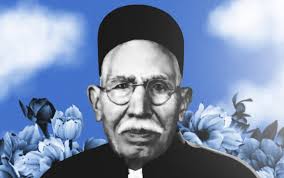
The Ad Dharm Movement, led by Mangu Ram Mugowalia, marked a transformative assertion of Dalit identity and dignity in Punjab, whose legacy continues to shape ongoing struggles for social and economic equality. June 11–12, 2026, marks the centenary of the Ad Dharm Movement, one of the most significant yet underappreciated chapters in the history of anti-caste struggles in India. Formally launched on June 11–12, 1926, under the leadership of Mangu Ram Mugowalia, the movement emerged as a powerful assertion of dignity, self-respect, and independent identity among the oppressed castes of Punjab. At a time when untouchability and caste discrimination structured everyday life, Ad Dharm challenged the social order by proclaiming that Dalits were not merely victims of caste oppression but a people with their own history, culture, and spiritual traditions. While anti-caste movements led by Jyotiba Phule in Maharashtra, Periyar in Tamil Nadu, and Ayyankali in Kerala have received recognition, the contribution of Mangu Ram Mugowalia remains relatively absent from mainstream narratives of social reform. Yet his role in shaping Dalit consciousness in Punjab was no less transformative. Through the Ad Dharm Movement, he laid the foundations of a distinct political and cultural identity that continues to influence Dalit assertion in the region even today. The movement also occupies an important place in the wider history of Dalit politics in India. Emerging during the same period that Dr. B.R. Ambedkar was mobilizing the Depressed Classes in India, Ad Dharm represented one of the earliest organized expressions of Dalit self-assertion in Punjab. Although they developed in different regional contexts, both Ambedkar and Mangu Ram shared a commitment to dignity, self-respect, and the rejection of caste-based oppression. From Ghadar revolutionary to a leader Born in 1886 in Hoshiarpur district, Mangu Ram’s political journey began with the Ghadar Movement, the revolutionary organization established by Indian migrants in North America to challenge British colonial rule. However, upon returning to India, he realized that political freedom alone could not guarantee social equality for the oppressed castes. The everyday reality of untouchability, exclusion, and humiliation demanded a separate struggle. This realization pushed him toward organizing Dalits and confronting caste oppression directly. The emergence of Ad Dharm must be understood within the social context of Punjab, where Dalits continued to face discrimination in social, religious, and economic spheres. Mangu Ram understood that emancipation required more than political representation; it required the creation of a collective consciousness rooted in dignity and self-respect. Religiousstudies books Long before the Ad Dharm Movement emerged, Guru Ravidas occupied a central place in the spiritual life of Punjab’s oppressed communities. His teachings of equality, human dignity, and the vision of Begampura—a society free from hierarchy, oppression, and suffering—had inspired generations of Dalits. Yet this reverence largely remained within the religious sphere. Mangu Ram recognized the immense emancipatory potential of Ravidas’s teachings. Through the Ad Dharm Movement, he transformed this spiritual legacy into a vehicle for social and political mobilization. Guru Ravidas became not merely a saint to be worshipped but a symbol of collective identity, resistance, and self-respect. The movement encouraged Dalits to take pride in their history and reject the caste labels imposed upon them by the oppressive social order. By placing Guru Ravidas at the centre of Dalit public consciousness, Mangu Ram created a cultural language through which oppressed communities could articulate dignity and equality. In this sense, he transformed an existing devotional tradition into a powerful instrument of social assertion. Ad Dharm: Transforming faith into assertion The Ad Dharm Movement sought to construct an alternative historical narrative. It argued that Dalits were the original inhabitants of the land and possessed an identity independent of the hierarchical framework of the social order. By promoting the term “Ad Dharm,” the movement challenged the legitimacy of caste classifications and asserted a distinct social existence. This was not merely a symbolic gesture. It represented a profound challenge to a social order that defined Dalits through exclusion and degradation. Ad Dharm offered dignity where caste society offered humiliation, and identity where caste hierarchy imposed stigma. The Ad Dharm Movement can be understood as Punjab’s own self-respect movement. Just as Jyotiba Phule’s Satyashodhak movement challenged Brahmanical domination in Maharashtra, Periyar’s Self-Respect Movement attacked caste hierarchy in Tamil Nadu, and Ayyankali fought for the rights of oppressed communities in Kerala, Mangu Ram developed a language of resistance suited to the social realities of Punjab. Each of these movements sought to restore dignity to those historically denied it. In Punjab, Ad Dharm became the vehicle through which Dalits asserted their humanity, cultural autonomy, and political agency. It gave Punjab’s Dalits a collective identity and a sense of pride that transcended caste-imposed inferiority. The movement demonstrated that social transformation requires more than political reform; it also requires cultural self-respect. Like the Self-Respect Movement in Tamil Nadu and the Satyashodhak Samaj in Maharashtra, Ad Dharm challenged the ideological foundations of caste and inspired oppressed communities to imagine themselves as equal citizens. The politics of recognition: The 1931 Census The movement’s impact became particularly visible during the 1931 Census, when thousands identified themselves as Ad Dharmis rather than under traditional caste labels. This was one of the earliest and most successful attempts in modern India to use the census as a tool of political assertion and collective self-definition. By refusing imposed identities and embracing Ad Dharm, Dalits challenged both colonial categories and caste hierarchies. The census thus became a site of resistance, demonstrating the transformative power of collective mobilization. The significance of the Ad Dharm Movement extends far beyond the colonial period. Its influence can be seen in the continued centrality of Guru Ravidas in Punjab’s Dalit public sphere, the emergence of Ravidasia religious institutions, and the enduring tradition of Dalit political mobilization in the state. Religiousstudies books Yet the centenary of Ad Dharm is an opportunity to reflect on the unfinished tasks of social justice. Punjab today has the highest proportion of Scheduled Castes among all Indian states, constituting nearly one-third of its population. Despite this demographic strength and
Rajgir Dalit Massacre: CPI-ML demands High Court investigation, punishment for the guilty, jobs and compensation for the victims’ families; warning of nationwide agitation
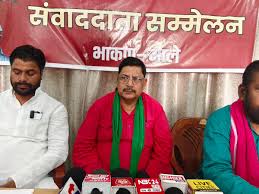
CPI-ML has attacked the government over the mob lynching of two Dalit youths in Rajgir, Nalanda district, and the police action against villagers demanding a degree college in Nagarnausa. Party leaders questioned the administration at a press conference on Wednesday after meeting with the families of the victims and affected people. The press conference was addressed by CPI-ML MP Sudama Prasad, MLA Sandeep Saurabh, former MLA Manoj Manzil, and former MLA Gopal Ravidas. They demanded an investigation into the Rajgir massacre by a sitting High Court judge, severe punishment for the culprits through a speedy trial, and compensation and government jobs for the victims’ families. Government failing to control crime MP Sudama Prasad alleged that crime is continuously increasing in Bihar and the government has completely failed to control it. He said that “encounter raj” prevails in the state, while criminals are carrying out crimes with impunity. Prasad questioned the government’s silence on the mob lynching of two Dalit youths in Rajgir. He demanded that the case be investigated under the supervision of a sitting High Court judge and that the culprits be punished with rigor by conducting a speedy trial. He also demanded compensation of ₹50 lakh each for the families of the deceased and a government job for one family member. Sudama Prasad also alleged that instead of taking action against criminals, the government is targeting the poor, laborers, Dalits, and those raising legitimate demands. Police entered homes and assaulted people in Nagarnausa Paliganj MLA Sandeep Saurabh said that while the Chief Minister constantly talks about taking strict action against criminals, incidents of murder, rape, and other crimes are continuing unabated in the state. He alleged that the administration brutally treated students and villagers protesting for a degree college in Nagarnausa. Police entered homes and beat people, breaking down the doors of approximately 300 houses, and arresting several people and sending them to jail. Saurabh claimed that even minor girls were assaulted during the operation. He demanded the immediate suspension of the local police station in-charge, action against the guilty officers, the unconditional release of the 39 arrested individuals, and the withdrawal of all cases. He said that a degree college should be established in the Nagarnausa block headquarters, as this has been a long-standing demand of local youth. The DM and SP should be held accountable. Former MLA Gopal Ravidas said that incidents of mob lynching are continuously increasing in the state, which is extremely worrying. He held the Nalanda district administration responsible for the Rajgir incident and demanded that the DM and SP be held accountable. He demanded that the district administration be held accountable for the entire matter and that an impartial investigation be conducted into the allegations against the chief priest of the Jhunukia Baba complex. A spectacle in the name of encounters Former MLA Manoj Manzil said that crime has reached its peak in the state. Incidents of atrocities against Dalits, women, and vulnerable groups are on the rise. He alleged that the police are attempting to suppress many cases instead of providing justice. Manoj Manzil said that a “spectacle in the name of encounters” is being staged, while crime and insecurity persist on the ground. CPI-ML leaders warned that if the government does not seriously consider their demands, the party will consider launching a statewide movement. Courtesy; Hindi News
Temple Entry: TN Dalit Families Enter Karur Mariamman, Sellandiamman Temples As Govt Ends Decades Of Discrimination Through Talks

After weeks of discussion, the existing temple administration was removed on June 20, and officials from HR&CE department were appointed to oversee temple affairs. Karur: Dalit residents of Punjai Kadambankurichi entered and worshipped main deities of Arulmigu Sri Mariamman and Arulmigu Sellandiamman temples after several decades of discrimination by caste-Hindus culminating with the intervention of the district administration, here on Tuesday. The issue of disallowing Dalits from worshipping at these temples came to light on May 19, while celebrating festivals. Though the upper caste families in the village which has over 1000 families honour Dalits for their role in carrying out the rituals involving burial of a sacrificed ox, the latter were not allowed to enter the temple to worship the deities. Temple Entry: TN Dalits Families Enter Karur Mariamman, Sellandiamman Temples As Govt Ends Decades Of Discrimination Through Talks A group of Dalits who were prevented from entering the temples which are believed to have been built about 150 years ago submitted their complaints to District Collector, the District Superintendent of Police district and the state government, seeking redressal to the long-standing dispute. The district administration led by Manmamangalam Tahsildar Kumaresan conducted proceedings with the members – including Murugesan and Kuppuswamy the key members – of the temple management committee and a series of peace talks involving both the communities. Temple Entry: TN Dalits Families Enter Karur Mariamman, Sellandiamman Temples As Govt Ends Decades Of Discrimination Through Talks After weeks of discussion, the existing temple administration was removed on June 20. Officials from the Hindu Religious and Charitable Endowments (HR&CE) department were appointed to oversee temple affairs. On the day of the worship, more than 100 police personnel were deployed to ensure peace and security. Dalit devotees carried traditional Maavilakku (made of rice flour and jaggery) offerings into the temples and performed prayers inside the premises for the first time in generations. Local resident Pon Muthukumar who acted on behalf of the members of the Scheduled caste community said they had historically been forced to worship from outside the temple and were denied even entry during festivals. Muthukumar thanked Chief Minister C Joseph Vijay for issuing directions in a separate petition filed before the Chief Minister’s Special Cell. He also credited the intervention of the district administration for ensuring that worship could take place peacefully. Temple Entry: TN Dalits Families Enter Karur Mariamman, Sellandiamman Temples As Govt Ends Decades Of Discrimination Through Talks “For generations we were denied to worship and now we express our gratitude to the Chief Minister of Tamil Nadu,” he daid. Welcoming the development, activists working against caste discrimination said the move marked an important departure from past approaches in similar disputes. They noted that, instead of restricting access to avoid tensions, authorities facilitated temple entry while maintaining law and order. Muthu Selvan, Karur district secretary of Tamil Nadu Untouchability Eradication Front, said: “During the previous administration, in various parts of Tamil Nadu, temples were often locked and sealed – preventing worship – whenever members of the Scheduled Caste communities sought to enter and pray. Authorities frequently cited ‘law-and-order issues’ as the reason for these closures, despite existing court orders upholding the right to worship.” Speaking to ETV Bharat, Aarayi, a 90-year-old-woman, said none of her relatives from her Schedule Caste community was allowed to enter the temple during any of the festivals. “It has become a custom here. Now, it is gone,” she said. The development has been viewed as a milestone in the struggle against untouchability and casteism, with residents describing it as the restoration of a fundamental right that had been denied to their community for generations. Courtesy : ETV Bharat Note: This news is originally published on https:/etvbharat.com/bha and is used purely for non-profit/non-commercial purposes, especially human rights
Muslim & Dalit netas say rebel MPs ‘betrayed’ UBT voters

Mumbai: A section of Muslim and Dalit politicians has accused the six Shiv Sena (UBT) rebel MPs of “betrayal” after they defected to the Shiv Sena. The politicians have said that these MPs, including Sanjay Dina Patil representing Mumbai North East, won largely because of en bloc voting by Muslims and Dalits as they fought the 2024 LS polls on the plank of “saving secularism and the Constitution.” “The voters in my area (Shivajinagar-Mankhurd) and other constituencies which these MPs represent feel cheated. The people voted for them because they fought on the plank of secularism and saving the Constitution. Now they have joined a party which is part of NDA and is working against secularism and the Constitution,” alleged SP MLA Abu Asim Azmi from Mankhurd-Shivajinagar. Shyam Dada Gaikwad, president of Republican Party of India (Secular), slammed the six MPs, accusing them of breaching the people’s trust. “I toured Dalit pockets in Mumbai and other parts of the state extensively seeking votes for the INDI alliance candidates. These six MPs have capitulated to inducements and pressure from above. The Dalits who voted for them are very worried and anguished,” Gaikwad said. City Congress general secretary Asif Farooqui said the community is pained and jolted by the defection of the six MPs. “The people voted for an ideology, an alliance, and a commitment — not for elected representatives to switch sides for political convenience after securing their votes. Such actions amount to a betrayal of the people’s trust and weaken faith in democracy itself,” said Farooqui who is also associated with Aligarh Muslim University and Jamia Millia Islamia. Courtesy : TOI Note: This news is originally published on https:/timesofindia.com/bha and is used purely for non-profit/non-commercial purposes, especially human rights
Parliament passes Transgender Persons Amendment Bill, 2026 with Rajya Sabha approving it today

Parliament has passed the Transgender Persons (Protection of Rights) Amendment Bill, 2026, with the Rajya Sabha approving it today. The bill was passed by the Lok Sabha yesterday by a voice vote amid an Opposition-led walkout. The bill seeks to redefine the category of transgender, removes the provision of self-perceived gender identity and excludes several socio-cultural identities as well as transmasculine individuals from its ambit. It also further defines transgender persons within a biological framework, based on intersex variations and differences in sexual development. Replying to the discussion on the Bill in the Rajya Sabha, Social Justice and Empowerment Minister Dr Virendra Kumar said the government is compassionate towards the well-being of the transgender community. He said the Bill has provisions to empower the transgenders and give them dignity. The Minister said that the NDA government has taken several initiatives to bring transgender people to the mainstream and stop discrimination against them. Starting the discussion in the Upper House, Congress MP Renuka Chowdhury said this bill dilutes the privacy of an individual provided under the Constitution. Opposing the Bill, Ms Chowdhury said self-identification cannot be taken away through bureaucratic certification. Criticizing the government, she said that the proposed bill undermines the fundamental rights and dignity of transgender persons. Calling such a move wrong and illegal, she argued that forcing transgender persons to provide their identity through official certificates is against the spirit of equality and dignity guaranteed by the constitution. She also questioned the government’s approach for not properly consulting with the transgender community before bringing the Bill. She also referred to the Supreme Court’s landmark NALSA judgement of 2014, which recognized the right of transgender persons to self-identify their gender. Ms Chowdhury said the proposed Bill violates the principles laid down in that judgement and fails to respect an already established legal framework. DMK MP Tiruchi Shiva also opposed the Bill, saying that even if the Bill is passed in Parliament with a majority, it will be struck down by the Supreme Court. He further added that the Bill violates Articles 14, 15, 19 and 21 of the Constitution and it deprives the community of the right to freedom, dignity and self-determination. Supporting the Bill, BJP MP Medha Vishram Kulkarni said, ” This Bill ensures justice, dignity, protection from criminalisation and legal safeguards for transgender persons. She also thanked Prime Minister Narendra Modi for bringing this bill with certain amendments in order to ensure that the benefits reach the deserving people in a proper manner. She said there is a need for a law that brings justice to real transgender individuals and punishes fake ones. Mrs Kulkarni said the benefits should be extended to those who are transgender by birth. She said that the amendment to extend punishment will bring down the rate of crime and forced identities. TMC’s Saket Gokhale said that 31% of Transgender people in India have attempted suicide because of the discrimination that they are facing. He alleged that now the government is going to start discriminating against them as though social discrimination were not enough. He called it unacceptable. Mr Gokhale expressed concern that gender is going to be decided by the Chief Medical Officer and a District Magistrate, and the bill does not prescribe any qualifications for the Chief Medical Officer. Sanjay Singh of AAP said the Bill is a big let-down for the transgender community. He accused the government of not doing anything for the community. RJD’s Manoj Kr Jha said that prejudices against transgender people should stop, and they should be able to live with dignity. He added that self-determination of gender should not be taken away. CPI(M)’s John Brittas said it is a black-letter day and the Bill is taking India a century back. He pleaded with the government to either withdraw the Bill or refer it to a Select Committee. Jaya Bachchan of the Samajwadi Party also questioned the government over the legislation. She sought to know what the urgency was in bringing the Bill, without examining it with the depth and care that it deserved. Courtesy : News On Air Note: This news is originally published on https:/newsinair.com/bha and is used purely for non-profit/non-commercial purposes, especially human rights
Former Bihar Congress chief blames his removal for party’s dismal performance in state assembly polls

The former Union minister’s remarks at an event in Delhi on Tuesday are being seen as a criticism of the party leadership at both the central and state levels. PATNA: Former Bihar Congress chief and Rajya Sabha MP Akhilesh Prasad Singh has asserted that his removal as the party’s Bihar unit president before the last Assembly election led to the Congress’ poor performance in the polls. In the 2025 Assembly election, the Congress won only six of the 61 seats it contested. The former Union minister’s remarks at an event in Delhi on Tuesday are being seen as a criticism of the party leadership at both the central and state levels. “I was removed from the post of state president before the elections, and the party had to bear the consequences,” he said, raising questions over the leadership’s decision. Singh, who is considered close to RJD chief Lalu Prasad, also took a swipe at the current AICC in-charge of Bihar, Krishna Allavaru, without naming him directly. He also openly objected to the functioning of co-in-charge Shahnawaz Alam, who was present at the event. “Such people were made in-charge who have nothing to do with politics and have no knowledge of it. When these people came to Bihar, the first thing they did was to remove me from the post of state president,” Singh said. He maintained that the Congress’ performance in the Assembly election would have been better had he remained the state president. “We had succeeded in getting four MPs elected (three Lok Sabha members and one Rajya Sabha member in 2024) when I was holding the post of state party president,” he said. He further said, “This time, 40 per cent of the elected MLAs in Bihar are from upper-caste communities, and 27 MLAs belong to the Bhumihar caste. I belong to the same caste. I had asked Rahul Gandhi what should now be done in Bihar.” Akhilesh was replaced by Rajesh Kumar, a Scheduled Caste legislator from Aurangabad district. Kumar also lost his seat in the last election. He had earlier been elected as MLA from Kutumba in Aurangabad district. Rajesh Kumar had accompanied Rahul Gandhi during his Voter Adhikar Yatra in Bihar ahead of the Assembly polls. Ramashankar Courtesy : TNIE Note: This news is originally published on https:/thenewindianexpress.com/bha and is used purely for non-profit/non-commercial purposes, especially human rights
PAC Chairman seeks report on ‘Great Nicobar project from MHA
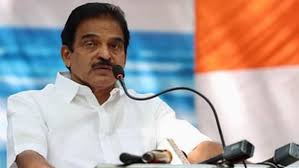
The project has faced criticism from environmental groups and opposition leaders over its potential impact on the island’s ecology. NEW DELHI: At a meeting of the Public Accounts Committee (PAC) on Wednesday, committee chairman and Congress MP KC Venugopal sought a report from Home Secretary Govind Mohan on the controversial Great Nicobar Project, which has been consistently opposed by Leader of the Opposition in the Lok Sabha Rahul Gandhi, sources said. The project has also faced criticism from environmental groups and opposition leaders over its potential impact on the island’s ecology. Although the issue was not listed on the meeting agenda, Venugopal said he raised it suo motu, citing its significance and concerns over the project’s ecological impact. The intervention came during a briefing by officials of the Ministry of Home Affairs (MHA) on observations in the Comptroller and Auditor General (CAG) audit report on the establishment and functioning of the Andaman and Nicobar Islands Institute of Medical Sciences (ANIIMS). According to sources, BJP MP Anurag Thakur objected when the chairman raised the Great Nicobar Project issue, arguing that it was not part of the committee’s agenda and that the proceedings should remain confined to scheduled business. Venugopal, however, said he was not seeking an immediate response from the Home Secretary. “While accepting that he is not prepared for this subject today, it is my duty to make the Home Secretary aware that the committee has taken cognisance of this matter and would like to receive a brief report later on the situation in the Andaman and Nicobar Islands with respect to the Great Nicobar Project,” sources quoted him as saying. Venugopal is learnt to have raised concerns over the felling of an estimated 1.5 crore trees and the displacement of tribal communities because of the project. “All this is being done to create commercial space for a few large private players. On one hand, the long-pending demand for the expansion of the naval base INS Baaz was put on hold. On the other hand, the Central government is hastily moving to commercialise the Andaman and Nicobar Islands,” he is learnt to have told the meeting. The Congress has consistently opposed the Great Nicobar Project, describing it as an ecological disaster. After his recent visit to the islands, Leader of the Opposition Rahul Gandhi challenged the government’s contention that the project is driven by strategic and defence considerations. Gandhi alleged that claims surrounding the proposed transshipment port were misleading and that the project was aimed at benefiting a single businessman through the development of hotels and casinos on ecologically sensitive land. Recently, Congress leader Jairam Ramesh wrote to Union Minister Sarbananda Sonowal raising concerns over the proposed international container transshipment port at Galathea Bay in Great Nicobar Island. He sought clarification on the project’s ownership structure, competition safeguards and government funding support. During the meeting, sources said, Venugopal expressed concern over financial mismanagement and a 12-year delay in the construction of ANIIMS. The PAC chairman also expressed displeasure over the absence of the Chief Secretary of the Andaman and Nicobar Administration from the meeting. Speaking to reporters later, Venugopal said the official had been asked to explain his absence. According to sources, the MHA informed the committee that it serves only as the monitoring agency for the institute, which is administered by the Ministry of Health and Family Welfare. Preetha Nair Courtesy : TNIE Note: This news is originally published on https:/thenewindianexpress.com/bha and is used purely for non-profit/non-commercial purposes, especially human rights