
A Padma Shri & a visit by PM Modi: What’s behind BJP’s Dera Ballan outreach in Punjab
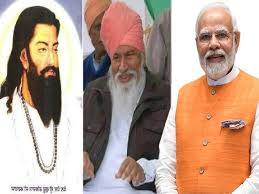
The visit is seen as a targeted strategy by the BJP to woo Dalit voters, particularly the Ravidasias and Ad-Dharmis, who often play a key role in close electoral battles in Punjab. Prime Minister Narendra Modi will visit Dera Sachkhand Ballan on February 1 for Guru Ravidas Jayanti. This is a strategic move by the BJP to attract Punjab’s significant Dalit voters, particularly the Ravidasias, ahead of next year’s Assembly polls. The visit aims to leverage identity recognition and secure support from this crucial demographic. *AI-generated summary. Check context in original text. Chandigarh: Prime Minister Narendra Modi is scheduled to visit Dera Sachkhand Ballan near Jalandhar on 1 February on the occasion of Guru Ravidas Jayanti, a move seen as part of the Bharatiya Janata Party’s (BJP) political outreach in the state to woo Dalit voters ahead of next year’s Assembly polls. The visit comes within days of the dera head, Niranjan Dass, being honoured with the Padma Shri. In December, the dera head, along with senior party leaders, met Modi and invited him for Gurpurab celebrations on 1 February. The dera head also requested the prime minister to centrally organise countrywide celebrations to mark the 650th birth anniversary of Guru Ravidas next year. With one year to go for the assembly polls in the state, experts see the prime minister’s visit as a more targeted strategy to reach out to specific caste communities that hold the key in closely contested electoral battles, particularly the Ravidasias and Ad-Dharmis, who constitute the largest subgroup among the Dalits in Punjab. “Ravidasias and other Dalit voters do not vote en bloc for a single party; they often shift depending on local issues, candidates and coalitions. The overt reaching out to the Ravidasia dera is strategically significant for the BJP,” says Dr Kanwalpreet Kaur of the department of political science, DAV College, Sector 10, Chandigarh. “The Ravidasias have been demanding recognition as an independent community, and the BJP intends to do just that—leverage identity recognition, aligning with the community’s demands for national visibility and respect for its spiritual leadership,” she added. ThePrint explains the significance of the prime minister’s visit to the central institution of the Ravidassia sect in the state. Also Read: BJP’s Ravidas Jayanti push to woo Dalits in poll-bound states — shobha yatras, sant sammelans BJP’s bid for a slice of the pie The BJP, once a junior partner of the Akali Dal, has been trying to build an independent electoral footprint in Punjab after the SAD-BJP alliance ended in 2020 over the contentious farm laws brought in by the BJP-led centre. The BJP’s strategy in the state has been successful enough for it to improve its vote share from 6.60 percent in the 2022 Vidhan Sabha elections to 18.56 percent in the 2024 parliamentary elections, cutting into the vote share of the AAP and the Congress. In the past year, the party has focused on increasing its foothold in rural areas dominated by Sikh peasantry. Dalits constitute almost 32 percent of Punjab’s population, the highest in the country. However, the Dalits are divided among Sikhs, Hindus and Christians, many of whom also follow deras. Deras, widespread on Punjab, are socio-religious centres of various sects and organisations. Unlike Sikh gurudwaras, where the Guru Granth Sahib is considered a living guru, derad are generally led by a living guru with a personal following. Dera Radha Soami Satsang Beas, Dera Sacha Sauda (headquartered in Sirsa) and Dera Sachkhand Ballan are the three most followed deras in Punjab, commanding a following running into several lakhs. Among the Dalits, the Ravidasias, Ramdasias and Ad-Dharmis are the major sub-groups, concentrated in the Doaba region districts of Jalandhar, Hoshiarpur, SBS Nagar and Phagwara. According to Dalit studies expert Ronki Ram of Panjab University in Chandigarh, the Ravidasias are the most prominent Dalit community in Punjab. “Out of the 39 SC castes in Punjab, the four major castes of Chamar (23.45 percent), Ad-dharmi (11.48 percent), Balmiki (9.78 percent) and Mazhabi (29.72 percent) constitute 74.44 percent of the total SC population,” he said. “Chamars are further divided into Ravidasias (leather workers) and Ramdasias (weavers). The Ravidasias are the most prominent for several reasons. They utilised the availability of reservation in education well, and are the most upwardly mobile. Many went abroad and constitute a large section of the NRIs from Doaba,” he added. As a result, Ronki Ram said, they have “become financially well-to-do”. “They have invested in Guru Ravidas deras and now have substantial social capital. They are also networked and, as a community, enjoy political clout,” he added. Guru Ravidas The Ravidasia identity is rooted in the teachings of Guru Ravidas, a 15th-century Bhakti saint and social reformer of the Chamar caste whose egalitarian message resonates with Dalit communities. “Ravidas was born into the Chamar caste, also known as Kutbandhla, one of the Scheduled Castes (SC) in Uttar Pradesh. Chamars are known by their profession of leather and tanning. They were oppressed and their touch and sight were considered polluting by the upper castes. Ravidas revolted against this inhuman system of untouchability. He adopted bhakti as a mode of expression for his revolt,” said Ronki Ram, quoting from his research paper. Guru Ravidas’s poetic hymns are also included in the holy text of the Guru Granth Sahib, considered a living Guru by Sikhs. “Ravidas holds a special place in the heart of Dalits, as he was one who unleashed a frontal attack on the traditional practice of caste-based social exclusion and oppression. Belonging to one of the lowest castes, his iconic figure continues to act as a catalyst in the emergence of a separate Dalit identity in Punjab,” said Ronki Ram. “Ravidas, as a spiritual figure who Omvedt (Gail Omvedt, an American sociologist) boldly called ‘the bhakti radical’, commands a massive following among his caste fellows, especially the Chamars in Punjab, who consider him their guru. They have built temples, gurdwaras, bhawans (memorial halls), educational institutions/ chairs, cultural organisations and hospitals in his name all over
Elderly Dalit Woman Cremated on Road in Bihar After Family Barred from Village Cremation Ground
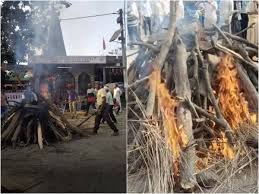
An elderly Dalit woman was cremated on a public road in Bihar’s Vaishali district after her family was allegedly stopped from accessing the village cremation ground, triggering outrage and tension in the area. The incident took place on Thursday at Sontho Andhari village under the Goraul police station limits. The woman, identified as Jhapki Devi, 95, belonged to a Mahadalit family. According to locals and police, when her family tried to take her body to the cremation ground, some people blocked the route, leaving the family with no option but to perform the last rites on the road. Family members and residents said the obstruction has been a long-standing issue. “Every time we take a body for cremation, the way is blocked. This has happened earlier too, but no permanent solution was given,” said a local resident from Manjhi Tola, expressing anger over repeated denial of access. As tensions rose, the funeral procession stopped at Andhari Gachi Chowk, where the body was placed on a pyre in front of a Shiva temple and cremated on the road. Angry villagers alleged that the pathway from the main road to the cremation ground has been encroached upon by local landowners. Police and administrative officials later reached the spot. A fire brigade vehicle was called to extinguish the pyre, and the road was cleaned after the cremation. Public representatives who arrived at the scene were reportedly chased away by protesting villagers, who accused the administration of ignoring their complaints for years. Vaishali Superintendent of Police Vikram Sihag said the issue arose due to the absence of a clear path. “Earlier, there was a route to the cremation ground, but some people built a temple on that path. Due to the lack of access, the family carried out the cremation on the road,” he said. He added that discussions were held with local officials and that arrangements would be made to restore access to the cremation ground. “The situation is currently under control,” the SP said. Block Development Officer Pankaj Kumar Nigam and Circle Officer Divya Chanchal said the area has been cleared and the matter is being investigated. “All aspects will be examined, and steps will be taken to ensure that such incidents do not happen again,” they said. Courtesy : TOP Note: This news is originally published on https:/theobserverpost.com/bha and is used purely for non-profit/non-commercial purposes, especially human rights
Modi Playing the Dalit Caste Card to Push Rahul Gandhi Out of the Ring and Don the Mantle of Dalit Messiah
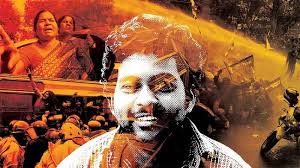
The Supreme Court’s decision to stay the recent University Grants Commission (UGC) regulation on the ground that it adopted a non-inclusive definition of caste-based discrimination and excluded certain categories from institutional protection is certainly not a setback for Narendra Modi. Instead, it could significantly elevate his stature in the eyes of Dalits and the poor. Politically, the most important observation made by the bench of Chief Justice Surya Kant and Justice Joymalya Bagchi—“If we don’t intervene, it will lead to dangerous consequences, divide society, and have grave impact”—will have far-reaching implications. The court also observed that by limiting the scope of “caste-based discrimination” only to SC, ST, and OBC categories, the UGC had effectively denied institutional protection and grievance redressal to individuals belonging to the “general” or non-reserved categories who may also face harassment or bias based on caste identity. However, this order also raises a crucial question: why did the court not take suo motu cognisance when hundreds of SC, ST, and OBC students in IITs and IIMs allegedly died by suicide due to discrimination? With the epithet “Hindu Hridaya Samrat” losing relevance amid the mushrooming of multiple claimants, Narendra Modi appears to have chosen a new path in saffron politics—to don the crown of a Dalit Messiah. For the first time in his eleven-year rule as Prime Minister, Modi has made a politically astute move by antagonising traditional upper-caste supporters through measures perceived as protective of Dalits and marginalised students. Modi refused to heed the advice of friends and well-wishers to retrace his steps, despite being aware of the consequences. Some protesters even targeted his caste identity, claiming that “the Teli is out to destroy our future” (Modi belongs to the Teli community, an OBC group). Yet Modi appears unmoved. He seems confident that upper-caste voters will not desert the BJP despite their anger over the new rules. With the 2029 Lok Sabha election in view, winning over Dalits and EBCs appears to be at the top of his priority list. Shivam Singh, one of the founders of the Savarna Sena (Forward Caste Army), stated that protests would be withdrawn if the government assured that general-category students would not be affected. Data shows that complaints related to caste discrimination in universities were around 173 in 2016–17 but rose to over 350 in the 2023–24 academic year, indicating a significant increase. Even memories of 1990, when upper-caste youth launched violent protests against the implementation of the Mandal Commission report, do not seem to deter Modi. During that agitation, over 150 people attempted suicide, with at least 63 succumbing to their injuries. The protest, which began after Prime Minister V.P. Singh announced the implementation of the Mandal Report, turned violent as many students resorted to self-immolation. Rajeev Goswami’s attempt became the symbolic face of the agitation. The compulsion to identify with Dalits and the proletariat has become so acute for Modi’s political survival that he has sought to reinvent himself as a modern Dalit Messiah. This shift also reflects the rise of hardline Hindutva leaders such as Yogi Adityanath within the BJP ecosystem, many of whom are associated with the “Hindu Hridaya Samrat” image. Modi, unwilling to be overshadowed by any rival within the saffron camp, appears determined to chart an independent path by aligning himself with Dalits and EBCs. Recent political developments have significantly strengthened Rahul Gandhi’s appeal among Dalits. What was once a peripheral issue has become a central ideological plank of his leadership as Leader of the Opposition. Although the Congress had historically lost Dalit trust in the 1990s, Rahul Gandhi has attempted to reclaim this space by linking social justice with the demand for a caste census—what he calls an “X-ray of the country.” He is increasingly perceived by Dalits and EBCs as a potential liberator. By placing the caste census at the centre of his political narrative, Rahul Gandhi has moved beyond tokenism. He aims to demonstrate the underrepresentation of Dalits, Adivasis, and OBCs in corporate, media, and academic institutions. He has targeted what he calls BJP’s “Manuvaad” and accused the government of weakening constitutional protections for marginalised communities. His claim that 95 per cent of upper-caste bureaucrats decide the fate of Dalits and the poor has found resonance among these communities. With Rahul Gandhi aggressively shaping the Dalit narrative, Modi appears left with little option but to reposition himself. Yet he faces competition not only from regional leaders but also from the BJP’s own targeted outreach strategies. After V.P. Singh, no national leader could fully capture the imagination of Dalits as a Mandal Messiah, although regional leaders like Mulayam Singh Yadav, Lalu Prasad Yadav, Ram Vilas Paswan, and Nitish Kumar emerged as protagonists of Mandal politics. Over time, however, they came to be seen largely as caste leaders rather than representatives of collective Dalit empowerment. Experts and liberals fear the emergence of violent protests similar to those witnessed after the Mandal Commission’s implementation in 1990. Upper-caste students in Bihar and Uttar Pradesh have already taken to the streets against the UGC’s Promotion of Equity in Higher Education Institutions Regulations, 2026. Sit-in protests have been organised across universities, with demonstrators claiming that the rules would lead to caste conflict and disrupt social harmony on campuses. Critics argue that the rules are one-sided and lack safeguards against false complaints. They question the effectiveness of “Equity Squads” and the potential for increased conflict. The regulations require every university and college to establish an Equal Opportunity Centre and an Equity Committee, with representation from SC, ST, and OBC communities. Institutions must address complaints within 24 hours, failing which they risk severe penalties. The 2026 regulations mark a legally binding step towards safer and more equitable campuses, aiming to curb the sharp rise in reported caste-based discrimination cases between 2019 and 2024. Yet a crucial question remains: why did the Modi government choose this moment and this mechanism to introduce such rules? In 2022, the Supreme Court had directed the UGC to formulate accessibility guidelines for students with
Dalit laborer dies in Saharanpur after under-construction roof collapses: Married a year ago, pregnant wife left without support
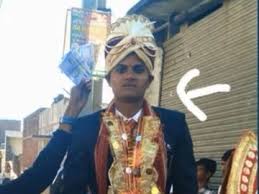
A laborer died on the spot when the roof of an under-construction house collapsed in the Kutubsher police station area of Saharanpur. The deceased has been identified as 21-year-old Nitin, son of Ramesh, a resident of Igrikala village. Nitin had gone to Rupdi Kapurpur village for work. The incident occurred on Wednesday when Nitin was demolishing the old roof of the house while working. Suddenly, the entire roof collapsed, and Nitin was buried under the debris. People nearby tried to rescue him, but he had already died. The news of the incident plunged the deceased’s family into mourning. Upon receiving the information, police and administrative officials reached the spot and assessed the situation. Following the accident, the administration immediately convened a meeting to address potential tensions between the two villages. After mutual discussions, an agreement was reached on the funeral and other related issues, maintaining peace in the area. The deceased, Nitin, had been married for about a year. His wife is approximately eight months pregnant. This incident has deeply affected the family, as Nitin was the sole breadwinner. Upon learning of the incident, BSP District President Rajneesh Bandhu, ASPA District President Sachin Khurana, Bhim Army Jai Bhim organization’s District President Sunny Gautam, and several other office bearers of social organizations reached the spot. These office bearers and socially responsible individuals like Rajneesh Ujala, Asif Ali, Beer Singh, Sukhbir Pradhan, Harshit Pradhan, and Narendra Gautam consoled the family. Immediate financial assistance was provided by the authorities, and further assistance from the government level was assured. In the presence of socially responsible people, the family declined any legal action and took the body with them. The young man’s last rites will be performed this afternoon. Tariq Siddiqui | Saharanpur Courtesy: Hindi News
SC Commission chairman urges swift action on Dalit welfare schemes
Andhra Pradesh Scheduled Castes Commission chairman K.S. Jawahar on Wednesday appealed to the officials to implement the welfare schemes meant for Scheduled Castes without delay. During interactions with Dalit leaders Mr. Jawahar received grievances on various issues before reviewing the implementation of the welfare schemes with officials. District In-Charge Collector Y. Megha Swaroop, East Godavari Superintendent of Police D. Narasimha Kishore assured timely action to execute the respective schemes and programmes of the government. The Hindu Bureau Courtesy : The Hindu Note: This news is originally published on https:/timesofindia.com/bha and is used purely for non-profit/non-commercial purposes, especially human rights
‘Homebound’ actor Shalini Vatsa reveals ‘reading autobiographies written by Dalit women’ for Ishaan Khatter, Janhvi Kapoor, Vishal Jethwa starrer
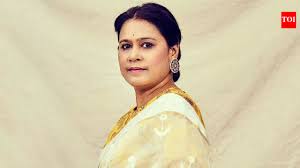
Actor Shalini Vatsa, who essays the role of Phool Kumari, Chandan’s mother, in Neeraj Ghaywan’s ‘Homebound’, recently spoke about the intense preparation that went into portraying the character with honesty and depth. The conversation took place just days before the 2026 Oscar nominations were announced, at a time when the film had already been selected as India’s official entry. Shalini Vatsa’s research for the role In a conversation with Free Press Journal, Shalini Vatsa revealed that preparing for Phool Kumari involved extensive reading and detailed workshops that helped her step into the world of film. “There were workshop sessions on the script, the character, the story. I usually like to prepare by reading books and other material, academic and fiction, related to the theme and the story of a film.” For ‘Homebound’, she read Dr B. R. Ambedkar’s ‘Annihilation of Caste’, autobiographies written by Dalit women, and Maya Angelou’s autobiographical works. She also worked closely on dialect and pronunciation. “I also had to work on the specific diction for this film. I thank Shreedhar Dubey who worked with us on the diction.” When asked whether she anticipated ‘Homebound’ making it to the Oscars when she first signed the project, Shalini Vatsa made it clear that awards were never on her mind. “When I join the team of a film, my fundamental concern is regarding my character, and my preparation to play it with sincerity and responsibility and to delve into the script and live up to the director’s vision. No, I was not thinking about the Oscars or any other awards.” Why working with Neeraj Ghaywan excited her Vatsa also spoke at length about her admiration for director Neeraj Ghaywan and his filmography, which played a key role in her decision to come on board. “I have loved all his works from ‘Masaan’ to ‘Geeli Pucchi’, and some episodes directed by him in ‘Made in Heaven’. It was exciting to be invited to be a part of his next.” ‘Homebound’ and Oscar 2026 While ‘Homebound’ couldn’t make it to the list, the movies that were nominated in the Best International Feature Film Category for the 98th Academy Awards are ‘The Secret Agent’, ‘It Was Just An Accident’, ‘Sentimental Value’, ‘Sirat’, and ‘The Voice Of Hind Rajab’. Chandan K Anand reflects on Homebound The film’s story revolves around two friends, Shoaib and Chandan, who take on the police recruitment exam, hoping that it will bring dignity to them while fighting caste discrimination in the society. But as they get closer to their objective, pressure and difficulties cause issues in their friendship. The film also showcases how they survive during the COVID-19 pandemic. The cast also includes Harshika Parmar, Shalini Vatsa, Chandan K Anand, and Vijay Vikram Singh. It was based on ‘A Friendship, a Pandemic, and a Death Beside the Highway’ by Basharat Peer. The 122-minute-long film premiered at the Cannes Film Festival in May 2025, while the movie was released in theaters on September 26, 2025. Courtesy : TOI Note: This news is originally published on https:/timesofindia.com/bha and is used purely for non-profit/non-commercial purposes, especially human rights
Dalit youth brutally beaten in Hathras: Attackers bit him with their teeth for resisting, police investigating
A case of brutal assault on a Dalit youth has come to light in Sikandra Rao, Hathras. The youth was seriously injured by goons in the Sikandra Rao police station area. The victim’s brother, Ranjit Kumar, has filed a complaint with the police. Ranjit Kumar, a resident of Mohalla Qazian, stated in his complaint that his brother Asharfi had gone to the forest to defecate around 4 pm. There, 4 to 5 youths surrounded him and started taking money from his pocket. When Asharfi resisted, the accused attacked him with sticks, rods, and kicks and punches. According to the complaint, during the assault, the attackers bit Asharfi on the back with their teeth, causing him to lose consciousness on the spot. Upon receiving information about the incident, the family members reached the spot and immediately informed the police by dialing 112. The injured Asharfi was taken to the hospital for treatment, where he is currently undergoing treatment. The victim’s family alleges that the attackers are the same goons who run a roadside eatery in the area and illegally sell liquor. Ranjit Kumar also stated that the accused had previously assaulted his brother. He has demanded strict action against the accused and expressed fear for his life. In this matter, Kotwali in-charge Shiv Kumar Sharma said that they have received the complaint and the matter is being investigated. Further legal action will be taken based on the investigation. Jaynendra Varshney | Sikandararao, Hathras Courtesy: Hindi News
Public hearing in Hyderabad highlights gaps in SC/ST Atrocities Act enforcement
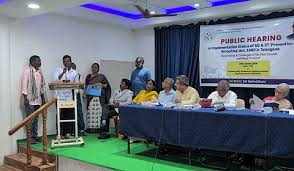
A seven-member civil society jury heard testimonies from Dalit and Adivasi victims at a public hearing in Hyderabad, where activists and legal experts flagged systemic failures in the implementation of the SC/ST (Prevention of Atrocities) Act in Telangana. The Telangana chapter of the National Alliance of People’s Movements (NAPM), along with other state-level anti-caste organisations, held a public meeting on Sunday, January 25, to review the implementation of the Scheduled Castes and Scheduled Tribes (Prevention of Atrocities) Act. A seven-member jury comprising civil society representatives heard testimonies detailing atrocities faced by Dalits and Adivasis from various parts of Telangana. The jury examined 90 cases presented before it, of which victims in 30 cases deposed in person at the review meeting held at Hyderabad’s Sundarayya Vignyana Kendram (SVK). The cases reflected a wide range of issues, including inter-caste and gender-based killings, sexual assault, police torture, custodial violence, and verbal abuse. Speaking at the meeting on the failure to effectively implement the SC/ST Act, retired judge Justice Nimma Narayana said that the Supreme Court and High Courts had not been sufficiently proactive in applying legislative rigour while examining cases under the Act. Advocate Darshanam Narasimha highlighted Section 4 of the Act, which provides for punishment of public servants, including police officers, for neglect of duty. Speakers such as Professors Sujatha Surepally, Rama Melkote, and Kalpana Kannabiran spoke on issues of gender, caste-based humiliation, and constitutional morality, stressing the need for strict and meaningful implementation of the SC/ST Act. The panel noted that the Telangana government must ensure uniform implementation of the Act across the state and demanded the establishment of district-level vigilance and monitoring committees in all districts. The jury said it would submit a list of demands to the Telangana government to ensure effective implementation of the Act in the foreseeable future. The public hearing forms part of a year-long Constitutional Justice Campaign initiated by NAPM Telangana from Republic Day 2026. Courtesy : TNM Note: This news is originally published on https:/thenewsminute.com/bha and is used purely for non-profit/non-commercial purposes, especially human rights
SC Commission member urges immediate FIRs for Dalit atrocities reports
The Andhra Pradesh State Commission for Scheduled Castes member Ravada Seetharam on Monday directed the police department to file First Information Reports (FIRs) immediately when Dalits approach them to report atrocities and other related cases. On the occasion of the 77th Republic Day, he interacted with Dalit leaders and explained the rights guaranteed by the Indian Constitution effective since January 26, 1950. Leaders and activists complained about delays in filing FIRs under The Scheduled Castes and Scheduled Tribes (Prevention of Atrocities) Act-1989 by the police when they approach them. Mr. Seetharam asked them to inform the commission about through the WhatsApp number 9701305417. He said that the Commission would hold a review meeting in February in regards to the pending grievances of Dalit families across the State. K Srinivasa Rao Courtesy : The Hindu Note: This news is originally published on https:/thehindu.com/bha and is used purely for non-profit/non-commercial purposes, especially human rights
From the memoir: A Dalit woman writer on domestic violence, casteism, and emotional subjugation
The savarnas in the village always used coercion to force the safai karamcharis to do the filthy work of collecting night soil. If anyone refused, the village headmen and businessmen would summon and question them. The Thakurs and Raghuvanshis hurled abuses and threats. “Do you want to live in the village or not? We will not spare your lives.” There was no point in leaving the village either, because people of our jati had to do this work everywhere. Besides, forming new relationships in a new place was a daunting task. Our refusal to do this work invited a flood of abusive words and poisonous behaviour, enough to keep our people in constant fear. The threat of sexual violence against our women also remained a powerful weapon of control. Even after the municipality was formed, the savarnas continued to hold on to their dominance. Once, the safai karamcharis of the municipality went on strike. Their monthly wages were a mere five rupees, and even that was never paid on time. They demanded an increase in their pay. The protestors would be summoned to the police station – sometimes urged to compromise, and at other times, beaten brutally by the police. Many people were badly injured. In Seoni, Hari Rathore, Phoolchand Baggan, Chhotelal Baggan, Gorelal, and Dulichand Rathore were the bold and outspoken men of our community. After striking work, a jati panchayat was called, and a unanimous decision was made to go on an indefinite strike. Our people were prepared for the worst, and the savarnas failed to intimidate them. The strike was announced publicly and lasted an entire week, throwing Seoni and Banapura into chaos. Villagers came to our homes, urging us to return to work. People of our jati were summoned to the police station and threatened with dire consequences, but this time, no one gave in. This was the result of their newfound resolve. The distraught women of our community described the condition of their injured husbands and sons to other women and wept over the uncertain future of their children. Another jati panchayat was held to discuss possible solutions to this grim situation. During the strike, policemen constantly patrolled our mohallas, forcing our men into hiding. When they couldn’t find the men, they summoned the women to the police station and made them sit there all day. The women were subjected to verbal abuse and humiliation, threatened with dire consequences, and told to persuade their men to end the strike. Terrified, the women yielded easily. Hearing them weep filled me with fear too. Kalicharan Bhaiya’s wife, Budhia Bhabhi, however, was a bold and fearless woman. Whenever she saw the policemen, she hurled abuses at them: “May you rot in hell! You envy our men and cast lustful eyes on our women. Don’t you have women at home?” The villagers always managed to break such strikes; this was true of strikes in places like Hardi, Itarsi, and Hoshangabad too, which would be forcibly brought to an end. On such occasions, a jati panchayat was convened, and the elders would advise the people of our community to compromise. But we continued to do the same work as before, and we continued to endure the same hardships. This pattern had been reproduced for generations. Young men who resisted and refused to work without pay were summoned to the police station and beaten. False charges of theft and robbery were levelled against them. Then they were given a choice – return to work or rot in jail. The constant threat of the police kept us living in fear. Many such atrocities were committed against our people in Madhya Pradesh, Rajasthan, and other states of northern India. Goons hired by casteist savarnas would storm into our mohallas, beat up our men, and publicly humiliate our women. They even set fire to our bastis. On hearing about such incidents from Pitaji and my brothers, Ma and Nani would tremble with fear and pray to God for protection. Yet the injustices and atrocities committed by the savarnas continued without end. And so, the safai karamcharis of the municipality in Seoni went on strike in 1968 to demand better wages and working conditions, but also to protest against the harassment they were constantly subjected to. I was in class eight then. This time, they showed unity and firm resolve. The demands that had been ignored by government officials for years were now quickly accepted. When the week-long strike ended, the villagers heaved a sigh of relief. After this incident, our people began to be treated with a measure of respect. This was a big achievement, yet our people never realised their own strength. Had they understood the meaning of this change, they could have moved further towards liberation from their oppression. After the strike ended, they struggled immensely clearing the backlog of work that had piled up over those eight days. The second major strike took place in protest against dry latrines. The workers stopped work for many days. Official notifications were issued, recognising the seriousness of the situation. Flush latrines were built to replace the dry ones. This was a major victory for us, yet the work of carrying night soil continued wherever dry latrines remained. Our people still did this degrading work – out of ignorance, fear, or helplessness. Gandhiji’s ideas about the upliftment of the Harijans were widely promoted in our region, but our people didn’t realise that they had brought no real improvement in our condition. Having deep faith in Gandhiji, they often said, “Mahatma Gandhi cleaned his toilet himself. Under his influence, even the traders and moneylenders had begun to pick up the garbage around their homes and dispose of it themselves. When such big businessmen didn’t hesitate to do this work, why should we? We were born into this caste and must do this work, whether we like it or not.” This was a kind of conspiracy, a trap to deceive innocent people and stop them from