
How Conversion of Dalits to Buddhism has Helped Dalits in their Emancipation?
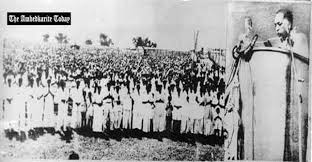
The conversion of Dalits to Buddhism under Dr. B.R. Ambedkar’s guidance, culminating in the mass conversion event on October 14, 1956, in Nagpur, was a pivotal moment in their emancipation. This movement, often called the Ambedkarite or Neo-Buddhist movement, offered Dalits a pathway to break free from the oppressive caste system entrenched in Hinduism, providing social, psychological, and cultural liberation. Here is how it contributed to their emancipation: Rejection of Caste-Based Oppression Hinduism, as Ambedkar saw it, institutionally sanctioned untouchability and caste hierarchy through scriptures like the Manusmriti. By converting to Buddhism—a religion he viewed as egalitarian, rational, and devoid of caste—Dalits could reject the theological basis of their subjugation. This act of conversion was a symbolic and practical renunciation of a system that deemed them “impure,” empowering them to redefine their identity outside the Hindu fold. Restoration of Dignity and Self-Respect Ambedkar emphasized that emancipation was not just about material upliftment but also dignity. Buddhism, with its focus on equality (all beings can attain enlightenment) and ethical living, gave Dalits a new sense of self-worth. The 22 vows he administered during the conversion—such as rejecting Hindu gods and rituals—were a deliberate assertion of agency, encouraging Dalits to shed the internalized inferiority imposed by centuries of discrimination. Cultural and Social Alternative Conversion provided Dalits with a distinct cultural identity rooted in Buddhist values like compassion, wisdom, and community (Sangha). This countered the exclusion they faced in Hindu society, where they were barred from temples and social spaces. By embracing Buddhism, they built their own communities, rituals, and spaces—like viharas—fostering solidarity and pride. Over time, this created a subculture that challenged the dominance of upper-caste norms. Political Consciousness and Mobilization The conversion movement was not just spiritual; it was deeply political. Ambedkar framed it as a revolt against caste tyranny, galvanizing Dalits into a collective force. This heightened their political awareness and strengthened their resolve to demand rights and representation. The Neo-Buddhist identity became a rallying point for Dalit activism, reinforcing Ambedkar’s broader efforts through organizations like the Scheduled Castes Federation. Education and Empowerment Ambedkar saw Buddhism as a rational, scientific faith that encouraged inquiry and education—key tools for Dalit upliftment. By embracing it, many Dalits were inspired to pursue learning, as Ambedkar himself had urged (“Educate, Agitate, Organize”). This shift helped break the cycle of illiteracy and poverty that caste had perpetuated, enabling social mobility. Long-Term Impact on Caste Dynamics The mass conversion—initially involving over 500,000 Dalits and growing to millions in subsequent decades—sent a powerful message to Indian society. It pressured the state and upper castes to confront the injustices of untouchability, accelerating reforms and the implementation of constitutional safeguards. It also inspired future generations of Dalits to resist caste oppression, whether through Buddhism or other means. Practical Outcomes In Maharashtra, where the movement took root most strongly, Neo-Buddhists (often from the Mahar caste, Ambedkar’s own community) saw gradual improvements in education, employment, and political participation, aided by reservations and their newfound assertiveness. While not all socio-economic woes were erased—poverty and discrimination persisted—the conversion gave Dalits a framework to challenge their marginalization more effectively. In summary, Ambedkar’s leadership in converting Dalits to Buddhism was a radical act of emancipation, offering them a spiritual escape from caste, a platform for self-assertion, and a tool for long-term empowerment. It did not end all their struggles, but it planted the seeds for a sustained fight against inequality, reshaping their place in Indian society. Courtesy: Countercurrents Note: This news is originally published on https://countercurrents.org and is for use by the non-military/non-commercial community, especially those in the human rights sector.
Daily weather tracker: Hot & humid weather likely over Assam & Meghalaya on May 10
Hot and humid weather is likely over Assam & Meghalaya on May 10, 2025, the India Meteorological Department (IMD) said in its daily bulletin. “Hot & humid weather is likely to prevail over Odisha during 10th-14th; Assam & Meghalaya on 10th; Tripura on 10th& 11th; Tamilnadu Puducherry & Karaikal during 10th-13th; Kerala & Mahe on 10th & 11th May,” the IMD said. It added that heat wave conditions are very likely in isolated pockets of West Uttar Pradesh on May 15 and 16; eastern Uttar Pradesh during May 14-16; Sub-Himalayan West Bengal and Sikkim on May 10 and 11; Gangetic West Bengal during May 10-14 and Bihar, Jharkhand and Odisha during May 11-14. According to the IMD, the southwest monsoon is very likely to advance into the South Andaman Sea, some parts of Southeast Bay of Bengal and Nicobar Islands around May 13, 2025. “It is likely to advance over some parts of south Arabian Sea, Maldives & Comorin area; some more parts of South Bay of Bengal, entire Andaman & Nicobar Islands and Andaman Sea; and some parts of central Bay of Bengal during subsequent 4-5 days,” the bulletin added. In the west, isolated light/moderate rainfall, accompanied with thunderstorm, lightning and gusty winds at speeds reaching 40-50 kmph and gusting to 60 kmph is likely over Gujarat on May 10, Madhya Maharashtra, Marathwada during May 10-14; with winds speed reaching 30-40 kmph and gusting to 50 kmph over Konkan & Goa on May 10; Gujarat on May 11 and 12. In eastern and central India, isolated to scattered light/moderate rainfall accompanied with thunderstorm, lightning and gusty winds at speeds reaching 40-50 kmph and gusting to 60 kmph is likely over Madhya Pradesh, Vidarbha, Chhattisgarh, Sub Himalayan West Bengal and Sikkim during May 10-14; Gangetic West Bengal during May 11-14 and Odisha on May 11 and 12; and with winds at speeds reaching 30-40 kmph gusting to 50 kmph over Jharkhand on May 11. Courtesy: Down to Earth Note: This news is originally published on https://www.downtoearth.org.in and is for use by the non-military/non-commercial community, especially those in the human rights sector.
28 held in Vadakadu communal clash; plaint filed against VCK leader Thol Thirumavalavan
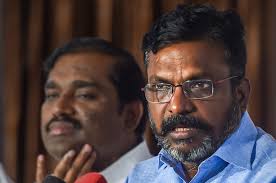
Violence broke out on May 5 when a dispute between Dalits and caste Hindus over rights at a temple festival escalated into an attack in a Dalit residential area. PUDUKKOTTAI: The number of arrests made in connection with the communal clash in Vadakadu rose to 28 with the arrest of two more persons on Saturday. According to police, 20 caste Hindus and 6 Dalits had earlier been arrested in this connection. On Saturday, one person from each group was arrested, taking the total to 28. Violence broke out on May 5 when a dispute between Dalits and caste Hindus over rights at a temple festival escalated into an attack in a Dalit residential area, leaving several people injured on both sides. Following the incident, VCK leader Thol Thirumavalavan alleged that Dalits, traditionally allowed to pull the car of the Muthumariamman temple, were denied that right on May 5. Countering his statement, the ‘Servaikaranpatti servai’, a caste Hindu organisation, claimed a 300-year-old right over the ritual. The organisation filed a complaint in Vadakadu police station accusing Thirumavalavan of spreading false and provocative remarks. Responding to this on Sunday Thirumavalavan said his comments were based on inputs from affected people, and would stand corrected if proven wrong. Courtesy: New Indian Express Note: This news is originally published on https://www.newindianexpress.com and is for use by the non-military/non-commercial community, especially those in the human rights sector.
forces Dalit kids to trek two km daily after school
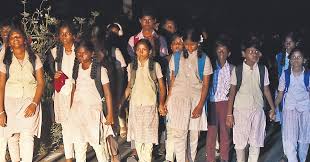
“It is unsafe. We also instruct girl students not to accept rides from any strangers,” said S Priya, a female resident. CHENNAI: With the weight of a school bag on her back, Vinodhini, a Class 11 student at a private school in Gummidipoondi, walks nearly two km daily from the nearest bus stop in Rettambedu to her village, Kuruviagaram, often after sunset due to special classes. The path has no street lights and is also a haven for snakes. She is just one among the scores of girl students from Kuruviagaram, who, equipped with nothing but torchlights, risk their lives every day while returning from school as there are no buses to the village. “It is unsafe. We also instruct girl students not to accept rides from any strangers,” said S Priya, a female resident. Around 1,000 Dalits who live in Kuruviagaram have long been demanding bus services to their village, but have so far not been able to elicit any official action. Around 60 high school students go out of the village to study every day, as Kuruviagaram only has a primary school. One resident, M Kannadasan (20), who is pursuing his masters in social work at the Loyola College, Chennai, said that route number 43 (Gummidipoondi-Pallipalayam) stops at Rettambedu which is two km away from the village. In the evening, there are only two buses, one at 4.30 pm and another service at 6.30 pm. The bus is operated from the Ponneri depot. Students and workers (including women) who take the 6.30 pm bus are left to brave the dark and snakes, he said. Urging the government to extend the bus route till Kuruviagaram, Kannadasan said the move will positively impact around five panchayat villages surrounding Kuruviagaram, with a population of around 2,000. Another resident, V Ramya (33), said that the lack of buses is an obstacle especially during medical emergencies. We have to transport the patient either by two-wheeler or an autorickshaw if the 108 ambulance is not available, she added. Speaking to TNIE, Gummidipoondi MLA TJ Govindarajan said, “Kuriviagaram hamlet has less population. We will do an estimate and depending on the patronage we will talk to the transport department and take steps to extend the bus service to the village” Courtesy: New Indian Express Note: This news is originally published on https://www.newindianexpress.com and is for use by the non-military/non-commercial community, especially those in the human rights sector.
Out to play, 7yo Dalitboy brutally murdered
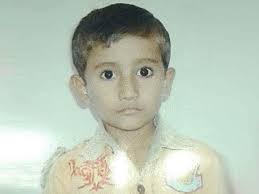
Agra: A 7-year-old Dalit boy was found brutally murdered at a village in Hathras district on Saturday, police said. The Class 1 student, who had gone missing on Thursday evening when he went out to play, was found dead with limbs tied and injury marks all over the body. DSP (Sadabad) Himanshu Mathur said, “The body was sent for postmortem. The forensic team along with a dog squad were called to the spot where the body was found. Four police teams were formed to work on this case. Investigation is on.” The boy’s father, Rajpal Singh, who runs a flour mill, said that despite efforts to locate him, he did not return, prompting the family to file a missing persons complaint at the local police station. On Saturday, the body was sighted at a nearby farm with his limbs tied and severe injury marks on stomach and chest. A black cloth was also tied to the body, leading family members to suspect a “pre-planned murder”. A case under BNS section 103 (murder) was registered against an “unknown person”. The boy’s grandfather, Prem Singh, alleged the killing appeared deliberate. “The way the body was dumped suggests he was murdered elsewhere. Police must look for the culprit and punish him,” he said. Rajpal Singh lives in Khuntipur Jatan village with his wife and three children. The victim was his only son. Courtesy: Times of India Note: This news is originally published on https://timesofindia.indiatimes.com/ and is for use by the non-military/non-commercial community, especially those in the human rights sector.
The State of Power and Poetry: Vedan, Caste, and the Revolutionary Awakening of Kerala’s Left

Vedan’s arrest shows what truly frightens the establishment: not weed or wildlife, but a Dalit voice with rhythm, rage, and reach. In the great theatre of Kerala politics, some performances are so overacted that even the audience begins to check if the actors have mistaken the stage for a mirror. Case in point: the Left government’s magical rediscovery of caste, which, until a few days ago, was filed somewhere between ‘British conspiracy’ and ‘bourgeois distraction.’ And what was the trigger for this radical epiphany? Not decades of data, demands for a caste census, or Dalit deaths in custody. No – it was Vedan. A 29-year-old Dalit rapper with verses sharp enough to cut through the haze of ideological gaslighting, and a fanbase that couldn’t be tamed with Marxist lullabies. On April 28, 2025, Kerala police raided a rented apartment in Vyttila, Ernakulam, where Vedan – fast becoming a cult icon among Kerala’s youth – was present with eight others. The officers seized six grams of ganja in total, amounting to less than a gram per person. Despite the nature of the charge (for which the station house officers could grant bail), the news was sensationalised – Asianet News aired it under the distasteful headline ‘The Shirt Stitched with Ganja’, a sarcastic parody of a line from his song that translates as ‘The Shirt Stitched with Sweat,’ evoking his rise from a Dalit ghetto to his current position through immense personal struggle. The law granted Vedan the station bail. However, during the search, officers noticed that he wore a pendant bearing what appeared to be a tiger’s tooth. And then Vedan is, again, arrested over the pendant by the forest department. The state, in a dazzling display of procedural enthusiasm, invokes the Wildlife (Protection) Act. He is jailed, shamed, and paraded like contraband. Abraham and a U-turn And in the backdrop? A scathing high court order had torn into the vigilance department’s handling of a corruption case involving former finance secretary K. M. Abraham – who now holds post-retirement posts as the chief principle secretary to the chief minister and the CEO of the Kerala Infrastructure Investment Fund Board (KIIFB). The court, expressing clear distrust in the vigilance, ordered a CBI probe. Abraham swiftly approached the Supreme Court. But just before that judgement could drop, the news cycle swerved. Suddenly, primetime was consumed not by the looming threat to the government’s credibility, but by the arrest of a very visible, very loud, very Dalit artist. The scandal disappeared, the spectacle took over, and the timing spoke volumes. Of course, the strategy was textbook: create a moral spectacle, weaponise the law, ride the waves of manufactured moral outrage and deflect attention from the haunting issue. Except, this time, the waves didn’t crash where expected. Social media didn’t play along. Neither did the youth. Neither did the left comrades. And neither, eventually, did the facts. Within days, the same Left government that had struck its most pious pose – arms folded, eyes closed, whispering “let the law take its course” – began pirouetting through a series of rhetorical backflips. It was, in short, the kind of U-turn that deserves its traffic signage. But the real showstopper came from the Left’s intelligentsia – those eternal gatekeepers of dialectical purity who’d spent years dismissing caste as “postmodern identity fetish”. Suddenly, they’ve become fluent in the vocabulary of Ambedkarite resistance. Facebook timelines that once shunned Dalit politics for being “divisive” are now gesturing solidarity with Vedan’s cause. Comrades who wouldn’t touch a caste census with a ten-foot pole are now rapping along with Vedan’s lyrics, as if rediscovering the minor inconvenience of systemic discrimination. The same media spaces that never placed a single Dalit face in front of the news camera are now speaking of “double justice” with the urgency of a corporate consultant trying to meet quarterly goals and with the theatrics of a rejected theatre school applicant who suddenly rediscovered the forgotten passion. It’s not conviction, it’s crisis management with hashtags. Let’s not forget: this is the same government that implemented EWS reservations for temple boards long before the BJP turned it into law. The same comrades who defended the idea of economic backwardness among Savarna with a straight face now pretend they’ve always been torchbearers of radical anti-caste politics. You’d almost believe them – if you had the memory of a goldfish and the political literacy of a houseplant. The glorious parallel universe of Savarna celebrity immunity Let’s recap. Vedan is arrested over a tiger tooth pendant—an item that becomes magically illegal when worn by a Dalit. The state, in a dazzling display of procedural enthusiasm, invokes the Wildlife (Protection) Act. He is jailed, shamed, and paraded like contraband. But curiously, when superstar-politician Suresh Gopi sported what looked suspiciously like a tiger tooth pendant on television, no forest officer went sprinting to file a case. No raid. No remand. The law, it seems, doesn’t just take its course – it checks your caste location before deciding which route to take. And lest we forget the precedent: Mohanlal, in 2011, was caught with ivory tusks in his house. The case meandered through a decade of legal somnambulism before the government conveniently moved to withdraw prosecution in 2023. Because apparently, public interest in wildlife protection has a caste and celebrity filter too – it spikes for Dalit rappers but flatlines for award-winning actors with the right social capital. Dalit with a pendant? Jail. Superstar with tusks? Souvenir. That’s the equality of enforcement in the People’s Republic of Casteist Irony. And now, in this theatre of irony, the chief minister and the CPI(M) secretary, two Avarnas themselves, have their historic roles to play When asked about the hunting of Vedan, the chief minister, with a wry smile, offered this gem: “When it is an issue of drug, no question of the abuser being forward or backward. But the tiger claw issue, it should have been dealt more carefully (my translation, listen from the 7.40-minute mark).
South First investigation: A clash with a casteist tag, injured Dalits, deity-less temple, and TN politics
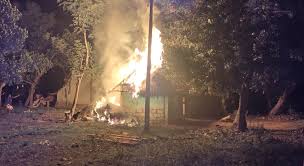
There was a clash between two communities. Several reasons are being cited but a concreate cause is yet to be made public. The Vadakadu violence needs a long-standing solution rather than cosmetic changes. Synopsis: There might be multiple reasons for the violence that left the Vadakadu village in Tamil Nadu’s Pudukkottai district in distress. However, it seems no concerted effort has been made to get to the fundamental, underlying cause or causes and address them for good. Filming violence has become common of late, though not many of those videos get to the root cause of the incident. Videos posted on social media after the clash between two communities at Thiruvalluvar Nagar, a predominantly Dalit settlement in Vadakadu village, in Alangudi Taluk in Tamil Nadu’s Pudukkottai district, too, did not shed light on the developments that had led to the violence. Several reasons have been cited. Police said it was the fallout of a drunken brawl between two youth groups over filling petrol. Some others felt it was a land dispute, many others blamed it on caste discrimination that divides people. The clash occurred on the night of Monday, 5 May, after the chariot procession at the Muthumariamman Temple. Besides local residents, people from other villages, too, have gathered at the temple located in an area dominated by the Mutharaiyar community. Selvarani Kannaiya a resident of Thiruvalluvar nagar, Vadakadu Selvarani Kannaiya, a 66-year-old Dalit, was praying after the procession along with fellow villagers. “We received word from our village that something was happening, and we should return immediately. She left immediately. “Around 50 women and children were with me. While returning, more than 300 youth from the Mutharaiyar community passed her,” Selvarani told South First. The figures she mentioned could not be independently verified. The woman was still in shock when she recalled the incidents of that violent night. “They must have mistaken us for residents of another area,” she continued. Fear had by then gripped the women and children. “After they had passed, we hid in a field. When it seemed clear and safe, we rushed back to our village,” the elderly woman said. She has been living at Thiruvalluvar Nagar. A road separated the village from the area where the temple was located. The women still felt something was about to happen. Along with the children, they hid on the upper floor of a house that was shrouded in darkness. Their fear came true as more than 300 youths from the Mutharaiyar community allegedly stormed Thiruvalluvar Nagar, attacking whoever came their way, setting a hut on fire, damaging houses and vehicles. They recorded their act on mobile phones and later uploaded them, with background music, onto social media. More than 15 residents of Thiruvalluvar Nagar were left injured. Some of the assailants, too, sustained injuries. Those with grievous injuries were admitted to the state-run Medical College Hospital at Pudukkottai. Police version The Pudukkottai police issued a media statement the next morning. The incident had no connection with the temple festival, they said. The violence allegedly stemmed from a drunken altercation over who should be allowed to fill petrol first at a nearby fuel station. The statement warned of action against those who “misrepresent” the incident as festival-related violence. However, on the night of the attack, Tamil Nadu Minister S Regupathy and Tiruchirappalli Range DGP Varun Kumar met with residents of Thiruvalluvar Nagar. They acknowledged that the attack was indeed linked to a long-standing temple-related dispute and that the violence was a continuation of earlier tensions. Whose version is true? On the first night, villagers told the minister one version of the story. The next morning, the police offered a completely different explanation. Long-drawn conflict Vadakadu is a large village, comprising 18 hamlets. While it is home to people from various communities, the Mutharaiyar, an OBC group, form the majority. Thiruvalluvar Nagar, located within Vadakadu, has been home to around 150–200 Dalit families belonging to the Paraiyar community for over seven generations. Growing flowers and jackfruits has been the primary occupation of the residents of Vadakadu. The “Adaikalam Katha Ayyanar” Temple, located on the main Pudukkottai–Alangudi road in northern Vadakadu, is regarded as the clan deity temple of the residents of Thiruvalluvar Nagar. Locals said there was a dispute around this temple. The Ayyanar temple sits on around three acres. Initially, a few youths from another community came to play volleyball there. “Since it seemed harmless, our elders allowed it,” Anandan told South First. Later in the 1990s, the government proposed a police station on that land. Our community protested, saying it belonged to the temple. He claimed that the plan was dropped after a series of negotiations. But ever since, individuals from the other community have been claiming that they too have rights over this land. Escalating the conflict “The issue escalated significantly in 2015. Until then, the temple was just a modest structure built with sand. We decided to renovate and expand it, and when we started digging a pit for the foundation, some people from the other community objected, saying it was their play area and that the land belonged to them.” Both sides went to court, and the case is still pending. “If they had ownership, they would have proven it by now. The problem isn’t about land; it’s about caste pride. Their real concern is how Paraiyars can build and run a temple independently. They can’t tolerate it,” Sethupathi said. Anandan added that more than six peace committee meetings were held to resolve the issue. “But no solution has been reached. I’ve been witnessing this tension since I was 18.” A temple without deity Due to the dispute, the temple has long remained unused for worship. In January this year, when residents of Thiruvalluvar Nagar attempted to clean the premises and celebrate Pongal, members of the other community objected, saying the land was under litigation and could not be used. They blocked the road in protest and prevented the Thiruvalluvar Nagar residents from
SubscriberWrites: Caste Census – Political compulsion or need of the nation
One of the fundamental principles of our constitution is ‘equality for all’. A caste census has the potential to formalise the social stigma connected with SC/ST/OBC/Dalit tagging. The demand for a caste census was a fallout from the infamous slogan credited to Rahul Gandhi – ‘Jitni Abadi, Utna Haq.’ This has to be seen as one of the more absurd arguments ever. The right to all national resources and wealth vests in the nation and it is incumbent on governments not to fritter them away. Instead, they have to use and allocate them judiciously, with the sole aim of multiplying the nation’s wealth continually while ensuring wellbeing of all citizens with focus on ensuring a Minimum Acceptable Standard of Life (MASL) for all. The failure of the nation in not being able to dismantle the caste system is evident in the rising demand for a nationwide caste census. It is a retrograde step in every possible way and yet all opposition political parties are clamouring for it. The aim of the political opposition is to paint the current government as anti-lower castes and anti-backward sections of the society. They hope to veer Dalit/SC/ST/OBC votes to their fold and ride them for a victory in national elections. It is a blatant exploitation of the poor and the less privileged but our political fraternity could not care less. The reality is that all they want is to convert them to vote banks and mark the caste of every Indian on his forehead. It is indeed a pity that the BJP government, despite its known anti caste census stance, has capitulated to this demand. It is not that such caste numbers were not collated earlier. The first such national census was carried out in 1872. In 1901, 1,646 distinct castes were identified, this number increased to 4,147 in 1931. The last figure was also the basis of the Mandal Commission report in 1980. The 2011 census collected caste-based data for the first time after independence, but it was not made public. Reportedly, the Socio-Economic and Caste Census (SECC) of 2011 identified over 4.6 million castes and subcastes in the country. For the record, in ancient India there were only four proper castes Kshatriyas, Brahmins, Vaishyas and Shudras based on Varna (occupation) and not birth. It may be prudent to note that the SC/ST population was estimated to be about 25% at the time of independence. More recently, a report in the Times of India dated 30 July, 2021 published an estimation of current SC/ST/OBC population based on the records of children enrolled in primary schools. It estimated that there were 45% OBC, 19% ST and 11% SC students and rest 25% were upper castes including others. These figures were in line with the data of last census in 2011 with variations limited to one or two percentage points for SC/ST and a bit higher for OBCs. For the record, in 1989-90, the Mandal Commission had estimated the OBC population at about 52%. The data shows that not only have the percentage figures for ST/SC increased over the years, the overall figure for backward classes has shown a quantum jump with addition of OBCs. One major reason for this state of affairs is the underlying principle of once a SC/ST/OBC – always a SC/ST/OBC. The lure of reservations scores over any social stigma and that has resulted in a continual addition of new communities in these categories. One of the fundamental principles of our constitution is ‘equality for all’. A caste census has the potential to formalise the social stigma connected with SC/ST/OBC/Dalit tagging. This goes against the need of the hour which is to remove all forms social tagging and promote equality. All those clamouring for a caste census, normally justify it by saying that with such data in hand, the government can work towards improving their financial status by allocating necessary resources. It is obvious that they have a very limited understanding of the implications of being ‘backward’ in a society. The term ‘backwardness,’ apart from a below par financial status, also reflects a more serious malady of social barriers and distancing that these sections face from others who are better placed in the society. Therefore, aim of addressing backwardness has to include both economic and social upliftment. Perhaps, the latter is more important in the long run for a life of dignity. It is comparatively simpler to define and talk about financial needs as a suitable threshold can be laid out keeping MASL life as the target. This goal can be reached through a judicious mix of doles, freebies and development of such backward people to get jobs or prepare them for other vocations that can help them to earn a decent living. A prudent approach will aim to reduce the freebies and doles with time while increasing their abilities to find jobs or pursuing other remunerative vocations. Does the social status of a Dalit/SC/ST/OBC change automatically if his financial status moves up by a few notches? One will have to be very naïve to answer this in the affirmative. History tells us that social biases continue unabated even if financial status improves. The large volume of complaints in the government services to investigate biases against employees from such communities stands testimony to this hard truth. If this is the harsh reality in educated and well-placed strata of the Indian society, the situation in the underdeveloped and rural areas will be many times worse. This brings us to an important conclusion that removal of social biases is not a function of financial status alone. At the best it can act as a facilitator or a start point. Social distancing or biases are a function of the mind set of both – the one being shunned and the one who shuns. The phenomenon of social bias is a two-way traffic, where both the less privileged and the more privileged are involved. Therefore, both sections of the society have to be educated.
Truce again, Barbers return, villagers vow to shun untouchability in Koppal
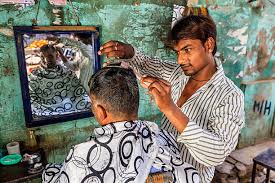
Truce reached in Muddaballi after 50-day boycott; officials urge unity, warn against social evils KOPPAL: Almost 50 days after some eateries and two salon owners shut their shops after some Dalits visited a salon for a haircut, a truce was arrived at between the warring upper caste community and Dalits in Muddaballi village in Koppal district. Barbers carried out their business during this period by visiting houses. The truce became possible after Koppal district administration and police officials visited the village and held meetings with the two groups. The officials succeeded in pacifying the hotel and salon owners, and told them that in today’s digital world, they should root out social evils like untouchability and live together in peace. The officials held a mass meeting with the police, and villagers took an oath that they will not follow untouchability henceforth, and allow everybody into their eateries and salons. Village seniors also played a role in convincing the two parties, following which the barbers came forward and cut Dalit leaders’ hair. However, some leaders say this is a temporary solution and some eatery owners will revert to their earlier stand, and not entertain Dalits. Some villagers, who did not want to be named, said, “We appreciate the efforts of the district administration, but officials should keep vigil as some people will repeat the same thing. The truce will continue for some days and some eatery and salon owners may shut their shops, giving one or other reason out of fear of being targeted. But this time, all villagers have made a promise and let’s hope nobody breaks it.” An official from Koppal district administration said, “We went to Muddaballi village and convinced the villagers. We have also told people to treat all as equal and be a role model for others by maintaining unity. We have spoken to some seniors to intervene if any small disputes arise.” Courtesy : Raghottam Koppar, TNIE Note: This news is originally published on https://thenewindianexpress.com/ and is for use by the non-military/non-commercial community, especially those in the human rights sector.
Man gets 20-yr jail for raping 5-year-old Dalit girl

Jhansi: Special Pocso Court Judge Mohd Niyaz Ahmed Ansari on Thursday sentenced a 32-year-old man to 20 years of rigorous imprisonment (RI) for raping a five-year-old Dalit girl in 2020. The Judge also imposed a fine of Rs 50,000 on him for the offence. According to special public prosecutor for Pocso court, Ajay Kushwaha, the incident occurred on Oct 13, 2020, when the minor was playing outside her house near ITI area under Sipri Bazar police station. The accused, Bharat Yadav, who also lived nearby, lured her to an isolated place and raped her. Fortunately, the girl’s sister arrived at the scene and raised an alarm, causing Bharat to flee. Later, when the minor’s parents went to the accused’s house to confront him, they were assaulted and abused by Bharat, his father Gyan Singh, and his brother Balbir Singh. A police complaint was lodged against the trio under relevant sections of rape, the POCSO Act, and the SC/ST Act. During the trial, Bharat was found guilty of rape, while Gyan and Balbir were found guilty of assaulting and abusing the victim and her family members. On Thursday, Judge Mohd Niyaz Ahmed Ansari convicted Bharat and sentenced him to 20 years of rigorous imprisonment. The Judge also awarded three years of rigorous imprisonment each along with a fine of Rs 7,000 each to Gyan and Balbir. Courtesy : TOI Note: This news is originally published on https://timesofindia.com/ and is for use by the non-military/non-commercial community, especially those in the human rights sector.