
Is communicating with Dalits a sin, asks Congress over Rahul Gandhi’s Darbhanga address permission
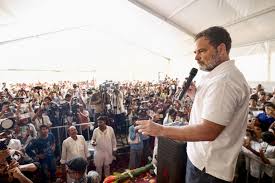
It is the height of dictatorship that the JDU-BJP government prevented Rahul Gandhi from attending the ‘Shiksha Nyay Samvad’ program at the Ambedkar Hostel in Darbhanga, Bihar, says Congress president Mallikarjun Kharge Congress MP and Lok Sabha Leader of Opposition Rahul Gandhi holds a portrait of Dr BR Ambedkar during the Shiksha Nyay Samvad programme, in Darbhanga, Thursday, May 15, 2025. Congress MP and Lok Sabha Leader of Opposition Rahul Gandhi holds a portrait of Dr BR Ambedkar during the Shiksha Nyay Samvad programme, in Darbhanga, Thursday, May 15, 2025. | Photo Credit: PTI Congress president Mallikarjun Kharge on Thursday (May 15, 2025) hit out at the JDU-BJP government in Bihar, accusing it of sheer dictatorship by “preventing” Leader of Opposition in Lok Sabha Rahul Gandhi from holding a ‘Shiksha Nyay Samvad’ in Darbhanga. Mr. Gandhi addressed students at Mithila University’s Ambedkar Hostel, despite being allegedly denied permission to hold the event. “Is communicating with Dalit, deprived and backward class students against the Constitution? Is it a sin to talk to them about their education, their recruitment exams and jobs,” asked Mr. Kharge. “It is the height of dictatorship that the JDU-BJP government prevented Rahul Gandhi from attending the ‘Shiksha Nyay Samvad’ program at the Ambedkar Hostel in Darbhanga, Bihar,” he said in a post on X in Hindi. Kharge said the birthplace of democracy Bihar will remember this “injustice” and will give a befitting reply to JDU-BJP when the time comes. Congress general secretary Jairam Ramesh shared a video of police action in preventing Gandhi from going to the Ambedkar students hostel in Darbhanga. “India is a democracy, it is governed by the Constitution, not by dictatorship. No one can stop us from raising our voice for social justice and education,” Ramesh said in his post on X. The Congress had also expressed outrage on the suggestion by the authorities to change the venue to an alternative site. Addressing the students, Gandhi claimed that Prime Minister Narendra Modi had agreed to hold a caste census “out of fear” of the country’s deprived population, to which the opposition was lending its voice. The leader of the opposition made the remark at a charged-up interaction with students in Darbhanga district of Bihar. “As you all are aware, my car was stopped at the gate (of Mithila University). But I did not relent. I got out and took a circuitous route to reach here on foot,” said the Rae Bareli MP, who launched ‘Shiksha Nyay Samvad’, a public interaction programme in Bihar where assembly polls are due later this year. Courtesy : The Hindu Note: This news is originally published on https://thehindu.com/ and is for use by the non-military/non-commercial community, especially those in the human rights sector.
Dalit says he was assaulted during village fair in Belagavi
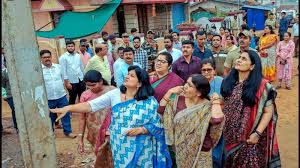
Ramdurg Police have registered case against unidentified people based on a complaint by a Dalit youth that he was assaulted during a village fair in Kunnal in Belagavi district. In his complaint, Laxman Madar has said that he was beaten up by a group of five-six people when he questioned why they were trying to forcibly throw coloured water on women from his family. “The victim received some injuries and was admitted to hospital. He is recovering. Investigation is on to identify and apprehend the accused,” Additional Superintendent of Police Ramagonda Basaragi said. Courtesy : The Hindu Bureau, The Hindu Note: This news is originally published on https://thehindu.com/ and is for use by the non-military/non-commercial community, especially those in the human rights sector.
Gorakhpur: Dalit family was invited to a wedding, they were beaten up for touching food, they entered their house and attacked… case registered against 11
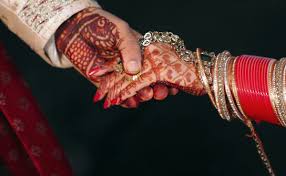
In Gorakhpur, Uttar Pradesh, a case of beating up six Dalits for touching food at a wedding ceremony has come to light. People of Rajbhar community beat up Dalits badly for touching food. The victims have lodged a complaint with the police and a case has been registered against 11 accused. In Gorakhpur, Uttar Pradesh, a case of beating up half a dozen Dalits for touching food has come to light. Dalit youths who had gone to eat food at a wedding ceremony were beaten up by people of Rajbhar community. Police have registered a case against 11 accused on the complaint of the victims. The incident is being investigated. This case of beating is of 9th May. The accused beat up the people of Dalit community because they had touched the food prepared at the wedding ceremony. Whereas, the victims had received an invitation for the feast. Even in today’s times, cases of untouchability and caste-religion discrimination are not decreasing. Many people are seen arguing over these things even in today’s digital age. Sometimes not allowing a Dalit groom to ride a horse, sometimes there is a conspiracy of beating and boycott for touching water. The latest case is of village Dudhai of Chaurachauri police station area of Gorakhpur. Police has registered a case against the accused. Uproar over touching food According to the incident, there was a wedding ceremony at Lalji’s house in village Dudhai on May 9. Everyone was present in the program and the feast was going on. People were eating food. On receiving the invitation to the feast, Dinanath, a Dalit youth of the village, reached the program with his family to eat food. In the complaint letter given to the police, Dinanath told that when he picked up the plate of food, Sonu, Ramchandra and Bhim of Rajbhar community stopped him and said how did you touch the food? Dalit family members were beaten up after going home It is alleged that they abused Dinanath and his family members and drove them away from there. All of them went back home. Meanwhile, the three accused along with their other companions came to their house at night. The accused armed with sticks and knives attacked them. They were beaten up badly, due to which 6 people including women of the family got injured. Police have registered a case. Courtesy: Hindi News
Bihar Politics: Rahul Gandhi blew the Congress trumpet in Bihar, how important are Dalit voters in the state, know in 5 points
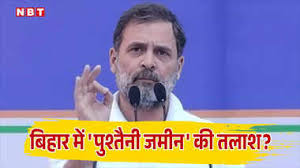
Bihar Politics: Assembly elections are to be held in Bihar in October-November. Before this, Rahul Gandhi has started the exercise of giving a new lease of life to the Congress by playing the Dalit card in Bihar politics. This has alerted all the parties. Know how important the Dalit card is in Bihar. Bihar Politics: Whether as the Leader of Opposition in the Lok Sabha or as a Congress MP on the road, a new form of Rahul Gandhi is visible. Rahul will be seen talking about the Constitution, the rights of Dalits given in it and Baba Saheb Bhimrao Ambedkar everywhere. This is part of Rahul Gandhi’s exercise, in which he is trying to connect Dalit voters with the Congress again. Due to this, he has also been talking about caste census everywhere. Along with this, there have been claims of pressure from Congress behind the caste survey conducted by Nitish Kumar’s government in Bihar, which was a partner in the government with Nitish Kumar’s JDU at the time of the survey. The first test of this exercise of Rahul Gandhi is Bihar, where assembly elections (Bihar Assembly Election 2025) are going to be held in October-November. Dalit voters have special importance in Bihar politics. This is the reason why Rahul Gandhi reached Darbhanga on Thursday (May 15) to meet Dalit students despite all the obstacles and after reaching Patna, he watched the film ‘Phule’ based on Dalit social reformers Jyotirao Phule and Savitribai Phule. The importance of this tour for Rahul can be gauged in such a way that he met Dalit students in Ambedkar hostel despite all the opposition from the administration in Darbhanga. Two FIRs have also been registered against him for this. Let us tell you in 5 points how important Dalit voters are in Bihar and why the elections here are going to prove to be a test for Rahul Gandhi- Dalit voters constitute 19 percent of Bihar’s population Bihar’s politics has always revolved around Dalit and Mahadalit vote banks. There are about 19 percent Dalit voters in Bihar. The state’s Dalit vote bank has so far been influenced by LJP (Ram Vilas Paswan), Jitan Ram Manjhi’s HAM, CPI (ML). Apart from this, Chief Minister Nitish Kumar’s JDU and Lalu Prasad Yadav’s RJD have also been a part of it. Nitish Kumar has also found new equations by playing the Mahadalit card among this Dalit vote bank. Before the rise of Lalu Prasad Yadav and Nitish Kumar, Dalit voters used to be in the Congress’s share. Rahul Gandhi’s exercise is to return this love of Dalit voters to the Congress, the hope of which has increased after the results of the 2024 Lok Sabha elections. 2. 40 assembly seats are reserved in the state Out of 243 seats in Bihar assembly, 40 seats are reserved. Out of these, Dalit Scheduled Caste candidates contest on 38 seats and Scheduled Tribe candidates contest on 2 seats. Congress has been getting the support of Muslim voters in Bihar, which it is expecting this time too. If Congress gets the support of Dalit voters due to Rahul Gandhi’s efforts, then due to Dalit-Muslim equation, Congress can do the miracle which has been keeping away from it for the last several decades. How is Rahul Gandhi trying in Bihar? Rahul Gandhi has visited Bihar 4 times in the last 5 months. On these visits, he has been continuously accusing BJP of trying to snatch the rights of Dalits and calling Nitish Kumar a partner of BJP in this. Along with this, he has also been talking about giving rights to Dalits through caste census. Earlier in ‘Bharat Jodo Yatra’ also, Rahul Gandhi has been continuously raising the issue of Dalits. To woo Dalits in the state, on Rahul Gandhi’s behest, Congress has removed a strong leader like Akhilesh Prasad Singh and made Dalit leader Rajesh Kumar the state president, while Sushil Pasi has been appointed as the co-in-charge of Bihar. Dalit focus Rahul Gandhi is raising three demands Rahul Gandhi has been raising three demands to woo Dalit voters to his camp, the first of which is to conduct caste census in the country. After the Modi government announced caste census, Rahul has tried to take credit for it by loudly calling it the result of Congress’ pressure. The second demand is to ensure funding under the government’s SC/ST sub-plan scheme and the third demand is to implement reservation in private institutions as well. Let us tell you that SC/ST sub-plan fund is a fixed part of the budget for the socio-economic development of Dalits in every state’s plan. Rahul Gandhi says that Dalits are not getting this fund. If Congress rises, Nitish will suffer a direct loss The separation between Congress and Dalit voters in Bihar started after the rise of Nitish Kumar’s JDU. In such a situation, it is believed that if Dalit voters join Congress again, Nitish Kumar will suffer a direct loss. In the NDA alliance, JDU’s status in Bihar is higher than BJP. This means that if Nitish Kumar’s party goes down, then it will be BJP’s loss. This math can be understood from the following figures- In Bihar elections 1990, Congress got 24.78% votes. In Bihar elections 1995, Congress got 16.30% votes. In Bihar elections 2000, Congress got only 11.06% votes. In Bihar elections 2005, Congress’s fort collapsed with 6.09% votes. In Bihar elections 2010, Congress tried to rise with 8.37% votes. In Bihar elections 2015, Congress got only 6.7% votes. In Bihar elections 2020, Congress again got 9.48% by joining RJD. Courtesy : Kuldeep Panwar, Hindi News
Dalit young man stopped from entering temple in Karnataka
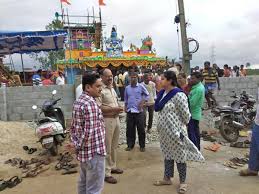
When the man protested, reminding the upper caste man of being a hindrance in exercising his constitutional rights, others joined in, abused him with casteist slurs, and forced him to leave. Tension broke out in Karnataka’s Kavanadala village of Madhugiri taluk on Saturday, May 10, after a Dalit young man was allegedly stopped from entering a local temple by members of the temple committee. Swaminatha, who was visiting relatives, went to the Ramanjaneya temple to perform a pooja but was denied entry by Shivananda, who curtly told him that Dalits were not allowed inside. When Swaminatha protested, reminding the upper caste man of being a hindrance in exercising his constitutional rights, others joined in, abused him with casteist slurs, and forced him to leave. The Dalit young man filed a police complaint with the Badavanahalli police station. On information, officials from the Police, Revenue, and Social Welfare departments visited the village and a peace meeting was held where they said practising caste discrimination is against the rule of law. After the intervention, Swaminatha was allowed to enter the temple. Authorities assured that Dalits in the village would no longer face such discrimination. Superintendent of Police Ashok KV said the issue was resolved peacefully, but an investigation is ongoing and legal action will follow based on the findings. Posted by Veena Nair Courtesy : TSD Note: This news is originally published on https://thesiasatdaily.com/ and is for use by the non-military/non-commercial community, especially those in the human rights sector.
Justice B R Gavai, second Dalit to be sworn in as Chief Justice of India
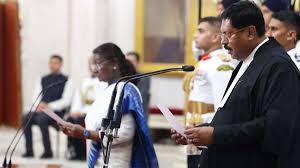
Justice Gavai has been a part of several Constitution benches in the apex court, which delivered path-breaking verdicts. New Delhi: Justice Bhushan Ramkrishna Gavai, who has been part of several benches that delivered landmark rulings, including the one upholding the Centre’s decision to abrogate provisions of Article 370 bestowing special status to Jammu and Kashmir, was on Wednesday, May 14, sworn in as the 52nd Chief Justice of India. The 64-year-old was administered oath by President Droupadi Murmu at a brief ceremony at the Ganatantra Mandap in the Rashtrapati Bhavan. He succeeds Justice Sanjiv Khanna, who demitted office on Tuesday on attaining the age of 65. MS Creative School CJI Gavai, who was elevated as a judge of the Supreme Court on May 24, 2019, will have a tenure of over six months and will demit office on November 23. He took the oath of affirmation in Hindi. Soon after he took oath, CJI Gavai sought blessings of his mother Kamal Tai Gavai by touching her feet. He was greeted by Vice President Jagdeep Dhankhar, Prime Minister Narendra Modi, Union ministers and former judges. He is the second Dalit person and the first Buddhist to hold the esteemed position of Chief Justice of India. The first Dalit CJI was KG Balakrishnan, who served from 2007 to 2010. About CJI Gavai Born on November 24, 1960, in Amravati, Justice Gavai was elevated as an additional judge of the Bombay High Court on November 14, 2003. He became a permanent judge of the High Court on November 12, 2005. He had joined the bar on March 16, 1985, and was the standing counsel for the Municipal Corporation of Nagpur, Amravati Municipal Corporation and Amravati University. Justice Gavai was appointed an assistant government pleader and additional public prosecutor in the Bombay High Court’s Nagpur bench from August 1992 to July 1993. He was appointed a government pleader and public prosecutor for the Nagpur bench on January 17, 2000. Important verdicts by CJI Gavai Justice Gavai has been a part of several Constitution benches in the apex court, which delivered path-breaking verdicts. He was part of a five-judge Constitution bench which in December 2023 unanimously upheld the Centre’s decision to abrogate provisions of Article 370, bestowing special status to the erstwhile state of Jammu and Kashmir. Another five-judge Constitution bench, of which Justice Gavai was a part, declared the electoral bonds scheme unconstitutional and cancelled for political funding. He was part of a five-judge Constitution bench which, by a 4:1 majority verdict, gave its stamp of approval to the Centre’s 2016 decision to demonetise Rs 1,000 and Rs 500 denomination currency notes. Justice Gavai was also part of a seven-judge Constitution bench, which by a 6:1 majority held that states are constitutionally empowered to make sub-classifications within the Scheduled Castes, which form a socially heterogeneous class, for granting reservation for the uplift of castes that are socially and educationally more backwards among them. A seven-judge Constitution bench, also having Justice Gavai ruled that the arbitration clause in an unstamped or insufficiently stamped agreement between parties was enforceable as such a defect was curable and did not render the contract invalid. In an important verdict, a bench headed by Justice Gavai laid down pan-India guidelines and said no property should be demolished without a prior show-cause notice, and the affected must be given 15 days to respond. He is also heading the bench which is hearing matters related to forests, wildlife and protection of trees. Posted by Veena Nair Courtesy : TSD Note: This news is originally published on https://thesiasatdaily.com/ and is for use by the non-military/non-commercial community, especially those in the human rights sector.
The Caste on Your Plate: How Food Became India’s Silent Divide
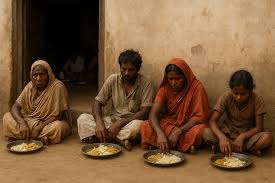
Explore how India’s food culture is intertwined with caste, highlighting Dalit chefs like Asha Kowtal and Shahu Patole as they challenge norms through festivals and books. The sizzle of Tadka/Chhunka in a pan. The aroma of freshly cooked rice. The comfort of a home-cooked meal. In India, food is love, tradition, and identity. But scratch just beneath the surface, and you’ll find an uncomfortable truth – our plates are caste-certified. What we eat, who cooks it, and who we share it with isn’t just about taste. It’s about centuries of hierarchy served fresh every day. Kitchen apartheid runs deeper Let’s talk numbers first. A 2021 CSDS survey drops a bombshell – 64% of Brahmins are vegetarian versus just 8% of Dalits. That’s not a coincidence. That’s caste at work. For generations, vegetarianism has been marketed as “pure”, while meat became code for “dirty”. Remember the 2017 Gujarat school meal controversy? The government banned non-veg food, hitting Dalit and tribal kids hardest – their main protein sources suddenly taboo. Jignesh Mevani called it out for what it was – casteism on a platter. The kitchen apartheid runs deeper. In 2018, Kausalya, a Dalit cook in Tamil Nadu, lost her job because upper-caste parents refused to let their children eat her food. Her crime? Her caste. Fast forward to 2024, and a National Campaign on Dalit Human Rights study shows 30% of midday meal workers still face this discrimination. Some things haven’t changed since Manusmriti times – the idea that food becomes “impure” if certain hands touch it. But here’s where the story gets interesting. Dalit chefs and foodies are flipping the script. Take Asha Kowtal’s Dalit Food Fest – where dried fish curry and stuffed vegetables became symbols of pride, not shame. Or Shahu Patole, whose book “Dalit Kitchens of Marathwada” sold 10,000 copies, bringing recipes like kala mutton into mainstream consciousness. His YouTube channel? Packed with 50,000 viewers learning what school never taught them – that Dalit cuisine is rich, diverse, and damn delicious. Small wins, but seismic shifts Social media has become the new battleground. #DalitFoodPride trends with over a million views. WhatsApp groups like “Dalit Culinary Network” connect cooks across states. Facebook’s “Food Without Caste” hosts virtual cook-alongs where Brahmins and Dalits share recipes – and stories. One post that went viral? A Brahmin woman’s confession: “I never knew your food could taste so good.” Small wins, but seismic shifts. Of course, pushback comes with the territory. Vidya Biradar’s Pune eatery got vandalized in 2023 – her crime? Serving authentic Dalit cuisine. Online, trolls swarm Dalit food posts with “disgusting” comments. A Digital Empowerment Foundation study found 15% of Indian food content has casteist undertones. The irony? The same “unclean” dishes – paya, bamboo shoot curry, wild boar – are now gourmet trends when served in five-star hotels. Here’s the real pickle. While urban Dalits use Instagram to reclaim their food heritage, rural Dalits still face violence for breaking dining rules. A 2019 case from Uttarakhand says it all – a Dalit man beaten for daring to eat at an upper-caste wedding. The National Family Health Survey shows that only 20% of rural Dalits have internet access to join this food revolution. The divide isn’t just about caste anymore – it’s about who gets a seat at the digital table. It’s all coded with caste Yet, hope simmers on slow fire. When Osmania University students hosted a mutton curry festival despite threats, they weren’t just serving food – they were serving notice. When home cooks like Priya Thakur get Brahmins to taste their food and ask for seconds, centuries of taboo crack a little. And when millets – long dismissed as “poor man’s food” – become urban health fads, it proves everything is about who’s selling the story. The bottom line? Food in India is political. Always has been. The rotis you eat, the hands that make them, the people you share them with – it’s all coded with caste. But the kitchen, that most traditional of spaces, is becoming an unlikely site of revolution. Every time someone tries Vidya’s masala fish fry, every time a Brahmin follows @DalitFoodStories, every time a college kid chooses mutton over judgment – the old order trembles. So next time you sit down to eat, ask yourself: Is my plate free? Or is it still carrying the weight of centuries? Because in a country where food is god, the real test of progress isn’t just what’s on your thali – but who cooked it, who’s eating with you, and whether anyone still cares about caste when the first bite hits. The revolution won’t be televised. It’ll be served hot, with a side of stories, and shared across tables that are finally learning to become equal. One meal at a time. Parambrahma Tripathy is an author and Communication for Development professional with over 18 years of experience. He has worked with organizations like BBC Media Action, Landesa, The Energy Policy Institute at the University of Chicago, IPE Global, and Coceptual Media. He has been recognized with several awards, including the prestigious Laadli Media and Gender Sensitivity Award in 2022 and 2023, Best Lyricist of the Year in 2022, Dr. Radhanath Rath Fellowship for Journalism, Kalinga Literary Youth Award, Timepass Bestseller Award, Srujan India Youth Award, Utkal Sahitya Samaj Felicitation and Odia Yuva Stambha Samman(2023) (DISCLAIMER: This is an opinion piece. The views expressed are the author’s own and have nothing to do with OTV’s charter or views. OTV does not assume any responsibility or liability for the same.) Courtesy : Parambrahma Tripathy, Odishatv Bureau, Odisha TV
Today is a mega-show of Dalit politics in Bihar, Rahul Gandhi will roar with his entire army, the program will range from dialogue to cinema
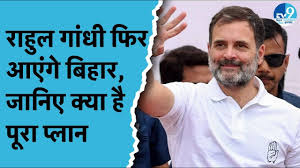
Congress is putting in all its efforts to win the Bihar assembly elections in its favour. Former Congress President Rahul Gandhi is entering the battlefield of Bihar on Thursday with his entire army of leaders. Actually, Rahul Gandhi is trying to get 17 percent Dalit votes with him, for which he is continuously visiting Bihar. This is Rahul Gandhi’s fourth visit to Bihar in five months. As the Bihar assembly elections are getting closer, the political heat is increasing. The issues of migration and employment have become the center of the campaigns of political parties. All the parties of the ruling and opposition are making these issues the main basis of their strategy. Former Congress President Rahul Gandhi is entering the battlefield of Bihar on Thursday with his entire army of leaders, where the Dalit community is going to be at the center of his political agenda. Rahul Gandhi has made a strategy from communicating with Dalit students to watching movies. Congress’s youth leader Kanhaiya Kumar has led the ‘Palan Roko, Naukri Do’ Yatra and has already brought the issues of migration and unemployment to the political centre stage in Bihar. Now Rahul Gandhi is coming together with senior Congress leaders to give it a political edge and set the political equations. In all the districts of Bihar, Congress leaders will discuss the issues of employment and education with Dalit and backward class students through the ‘Shiksha Nyay Samvad’ program. Rahul will start ‘Shiksha Nyay Samvad’ Rahul Gandhi will start the ‘Shiksha Nyay Samvad’ program from Darbhanga, Bihar. This program of Rahul was to be held in Ambedkar Hostel, but permission was not given. In such a situation, Rahul Gandhi will communicate with Dalit students in Darbhanga’s Nagar Bhawan. During this time, more than 60 national level leaders of Congress will participate in the dialogue program at about 75 places in different districts of Bihar. They will visit colleges, universities and hostels and communicate with the students. The purpose of this program is to spread awareness among students and youth about the right to education and social justice. Congress national secretary and co-in-charge of Bihar Sushil Pasi says that the biggest problem in Bihar is of better education and employment. Students of Bihar are constantly migrating for better education and jobs, in which the biggest problem is being faced by the people of Dalit society. Economically and socially, the people of Dalit society are very weak, due to which they are neither able to provide better education to their children nor are they able to get employment. Due to this they have to migrate, Rahul Gandhi and Congress leaders will also do Shiksha Nyay Samvad to know and understand the problems of Dalit society. The purpose of Congress’s ‘Shiksha Nyay Samvad’? Sushil Pasi told that the Congress’s ‘Shiksha Nyay Samvad’ program means to provide social justice in education and jobs to Dalit, backward and extremely backward class people. Through ‘Shiksha Nyay Samvad’, Congress will loudly raise issues like delay in academic session, question paper leak, crumbling education system. Congress’s Shiksha Nyay Samvad can be understood in five points… The aim is to remove the 50 percent limit of reservation. The limit of reservation is 50%, and the Supreme Court is stopping any further increase. Congress is demanding to abolish this limit and increase it. Congress wants that reservation should be given to people as per their participation in the society. Implement sub-plan on Dalits and tribals. To achieve the goals set by the Constitution for the development of SCs and STs as per Articles 46 and 47. To promote socio-economic development of SCs and STs and provide social justice. To ensure participation of SCs and STs in development plans and provide equal opportunities. Such as education, health, employment and social security. Demand to improve education infrastructure- Congress is demanding to strengthen and improve the education system in Bihar. Congress leaders will raise this demand through Shiksha Nyay Samvad. Give jobs, not loans- Congress leaders will raise the demand through Shiksha Nyay Samvad that give jobs, not loans. Through this, the strategy of Congress leaders and Rahul Gandhi is to target the BJP’s Modi government. Give 3-year degree in 3 years only- Congress leaders will raise the demand in Bihar that the exams should be conducted on time and there should be no delay in the results. In recent times, it has been seen that exams are being delayed in many universities of Bihar. It is taking four to five years to complete a three-year degree. Students of Bihar have been continuously raising demands regarding this. Rahul Gandhi will watch Phule film in Patna Rahul Gandhi will reach Patna directly after inaugurating the Shiksha Nyay Samvad program in Darbhanga, Bihar. In Patna, he will first interact with the representatives of various social organizations. Representatives of the civil society ‘Phule’ based on EBC thinker Jyotirao Phule will be seen with the people of the Dalit community at P&M Mall. This film is based on the life of social reformer Mahatma Jyotiba Phule and his wife Savitribai Phule, who have deeply hurt the caste system of the society. Jyotiba Phule has his own political importance among Dalits and backward classes. Congress leader Rahul Gandhi will try to give a political message by watching the Phule film with social justice activists in Bihar. Bihar has been the land of the social justice movement. Jyotiba Phule may have belonged to Maharashtra, but he has his own political importance in Bihar, especially the Dalit and extremely backward communities consider him their messiah. Jyotiba Phule used to play an important role in the politics of BSP founder Kanshiram. He is considered the pivot of social justice. Congress will give edge to Dalit politics Congress is focused on students and youth, but its eye is on wooing Dalits. Congress is busy preparing for the Bihar assembly elections. Rahul Gandhi is busy in reviving the Congress organization in Bihar. He wants to make the organization sharper. In such
Rampur News: Uproar over beating of Dalit youth
Maswasi. There was a ruckus late on Wednesday night over the beating of a Dalit youth resident of Mohalla Chaupura in the city. Last Tuesday, a group of some youths had beaten up the Dalit youth. When the victim gave a complaint to the police post, he was taken into custody, although after some time the police released him. Angry with this incident, on Wednesday night at around 9:30, people of the Dalit community started marching towards the post in large numbers for protest, but the police stopped them in the middle of the market. During this, there was a long argument between the police and the protesters. Meanwhile, people of the other group also reached the post and they also started a ruckus there. The atmosphere became tense due to sloganeering and debate of both the sides. Due to the protest, the road was blocked and long queues of vehicles were formed on both sides. The situation remained chaotic for about an hour. Later, the police tried to pacify both the parties by explaining. During this time, the people of the Dalit community who had marched to the police post returned, but the other group continued to create a ruckus at the police post. An atmosphere of tension has prevailed in the area since the incident. Courtesy : Hindi News
Budaun News: 20 Dalit villages will be transformed, four crore rupees will be spent
Add Your Heading Text HereBudaun. 20 Dalit dominated villages of the district have been selected for PM Adarsh Gram Yojana. Development work will be done in these villages at a cost of four crores. The survey report has been sent by the Social Welfare Department for carrying out development work. Work will be started as soon as the budget arrives. Advertisement: 0:18 Development work is to be done in 34 Scheduled Caste dominated revenue villages of the district under PM Adarsh Gram Yojana. Facilities like road, water, electricity, toilets etc. will be provided in these villages. This will lead to the development of Scheduled Caste dominated villages. Assistant Manager of Scheduled Caste Finance Development Corporation Santosh Diwakar said that under the scheme, integrated development of villages with more than 50 percent Dalit population will be done. He said that work will be done in the direction of poverty eradication and education in the selected villages of the district. Rs 20 lakh will be spent on each selected village. He said that the file has been sent to the government regarding the demand for budget. Development work will be done in these villages Jarawan, Harpalpur, Mirzapur, Jajpura, Mugarra Jarasi, Sakhamai, Dandah, Koda Gujar, Tikai Kham, Mary Bajar Mary, Atsena, Bijauri, Daulatpur, Harnathpur Mustakharj, Kaur, Mallamai, Nainamai, Nizampur Mazra Midoli, Paharpur, Sahaspur. Courtesy : Hindi News