
UP: Bulldozers run on the possession of the accused who burnt a Dalit youth alive in Prayagraj, this is how the painful incident was carried out.
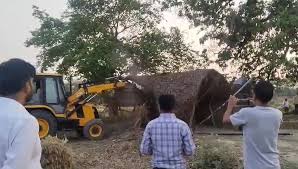
The accused beat the Dalit youth half to death. They prepared to bury him alive, even dug a pit. But then the attackers changed the plan. They collected straw and set it on fire to burn Devi Shankar. Uttar Pradesh: A 35-year-old Dalit youth was murdered in Prayagraj on April 12. The accused burnt him alive. It is being told that the only fault of the youth was that he refused to harvest wheat. On Tuesday, the administration ran a bulldozer on the illegal construction of the accused involved in the murder. This action was taken under the ‘Zero Tolerance’ policy of the Yogi government, in which strict steps are being taken against the criminals. According to the report of Dainik Bhaskar, the family members were enraged after finding his half-burnt body on the morning of April 13. They not only vandalised the house of the accused, but also did not allow the police to lift the body for 2 hours for postmortem. Later, after the postmortem, on the night of 13 April, the police forcibly cremated the Dalit youth. After this, people’s anger increased. People gathered on the road and started creating a ruckus. On Monday, Congress MP Ujjwal Raman Singh and Congress State President Ajay Rai reached to meet the victim’s family. Angry villagers also stopped their vehicles. They blocked Hanuman Mori Road. After being persuaded by the police and the MP, the villagers agreed after about 2.30 hours and moved away from the road. This entire matter is of Karchana area of Yamunapar. At around 6 pm, a bulldozer was run on the land occupied by the accused. What was the whole matter? Dalit Ashok Kumar, who lives in Isota village, has a 35-year-old son Devi Shankar who used to work as a labourer. He has 3 children. One daughter is Kajal and two sons are Suraj and Akash. His wife has died. He was the only son of his parents. On 12th April, some people took Devi Shankar to harvest wheat. When he refused to harvest wheat, the accused beat the Dalit youth half to death. They prepared to bury him alive and even dug a pit. But then the attackers changed their plan. They collected straw and set it on fire to burn Devi Shankar. This incident happened on 13th April at 6 am. Then seeing the villagers coming towards the fields, the accused ran away. After the half-burnt body of the Dalit youth was found, a ruckus started. The father gave a statement to the police that 7 people including Chhuttan Singh of the village killed my son because he was not going to harvest wheat. The dead body was not allowed to be lifted for 2 hours When the police reached the village after getting the information about the murder, the people did not allow the body to be lifted. They started protesting by keeping the dead body in front of the police. During this time, the police kept explaining to the villagers for about 2 hours. People demanded compensation of Rs 7 crore, security of license and allotment of house. Meanwhile, some people also attacked the house of the main accused Chhuttan Singh. However, the police pacified the people by explaining. The police have arrested 6 accused. Now the main accused Chhuttan Singh is still out of the reach of the police. ACP Karchana Varun Kumar said, 4 youths of the village took Devi Shankar at night on the pretext of work. His body was found in the morning. The family members say that the same people killed him where he went to work. Looking at the body, it seems that he was burnt after killing him. The matter of burning him alive is not clear. The family members allege that he was burnt alive. 6 people have been arrested and are being questioned. Due to contradictions in their statements, investigation is going on from many angles. Nephew Rahul said that some people came in the evening and took his uncle away. Those people had said that there was work to harvest wheat. What happened there, nothing is known. Dalit Ashok Kumar’s 30-year-old son Devi Shankar, who lives in Isota village, used to work as a labourer. He has 3 children. One daughter Kajal and two sons Suraj, Akash. His wife has died. He was the only son of his parents. According to the Patrika report, investigation has revealed that the deceased Devi Shankar had relations with a girl from the accused family, due to which the accused got angry and hatched a conspiracy. He was called on some pretext, made to drink alcohol and then strangled to death. After this, an attempt was made to burn the body to destroy the evidence. The accused arrested and sent to jail by the police include Dilip Singh alias Chhuttan, Ajay Singh, Manoj Singh, Sanjay Singh alias Sonu, Shekhar Singh, Mohit Singh, Awadhesh Singh alias DM and Vimlesh Gupta alias Baba Don. The main accused Vinay Singh is still absconding. This incident once again shows that the administration is no longer shying away from taking a tough stand against crime and criminals. Courtesy: Rajan Chaudhary, Hindi News
Increasing atrocities on Dalits in Gujarat, why is the administration indifferent?
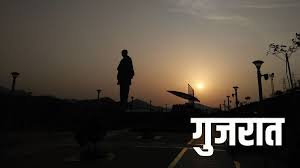
Dalit activists say that earlier, in cases of atrocities on Dalits, at least ministers would come to meet the victims. Now even the tehsildar does not come. The judiciary is also openly showing bias. Idar (Gujarat) – Shaileshbhai Chenva, a 32-year-old Dalit daily wage labourer from Vadol village near Idar town in North Gujarat, now always ties a white handkerchief on his face when he steps out of the house. He walks with a limp and has deep blue and black marks on his body – signs of the horrific attack he has suffered. On March 11, Chenva went to work in a cold storage in Idar as usual. While returning after working all day, some Thakurs kidnapped him. He was brutally beaten, then paraded naked in front of the entire village – Nani Vadol. Not only this, he was forced to write an apology letter, in which he had to promise that he would never talk to a Thakur woman. He said, “The whole village saw me naked, as if I was an animal. No one came to save me.” Attack on riding a mare at wedding In 2022, Kishanbhai Senma of Vansol village in Mehsana district has still not forgotten his wedding day — but remembering that day does not make him happy, but he shivers. When he was riding a mare to his bride’s house for the wedding rituals, people from the Thakur community pulled him down from the mare and showered caste-related abuses on the entire family. The reason was only that Senma was a Dalit and was riding a mare. Senma said, “These people believe in Manusmriti and treat us like insects. But now we will not sit quiet.” At first, he decided not to escalate the matter, but a month later he filed a case against the Thakurs. He said, “When we went to register an FIR, the police said that the matter could be resolved even without investigation. Then we realized that we will have to go to court for our rights.” Sukhbhai (60), an elder from the village, says, “Our lives are going from bad to worse. Neither are we educated, nor are we considered a vote bank. The government does not care whether we are alive or dead.” Vikas model vs ground reality Gujarat may be presented as a ‘Vikas model’, but the figures tell a different story. According to data presented in the Rajya Sabha, the conviction rate in cases of atrocities on Scheduled Castes in Gujarat between 2018 and 2021 was only 3.065% — which is much lower than the national average. In 2022, 189 such cases were registered in Ahmedabad city alone, which is the highest in the state. 1,425 cases were reported across the state. Of the total 5,369 cases registered between 2018 and 2021, only 32 cases resulted in conviction. Whereas in 1,012 cases, the accused were acquitted, be it murder or rape. Attack in village ‘adopted’ by Amit Shah In January 2024, a minor dispute took the form of violence in Bileshwar village of Gandhinagar district, which has been ‘adopted’ by Union Home Minister Amit Shah. Gitaben, a Dalit woman, was milking her cow when some teenagers from the Thakur community were playing nearby. Geetaben asked them to go away and play so that the cow does not get scared. Angered by this, the next day evening, about 200 Thakur men entered the Dalit settlement (Rohitvas Colony) in trucks and attacked the houses with stones, sticks and iron rods. Geetaben and her family suffered serious injuries. Gitaben said, “The police refused to register an FIR. It seemed as if they did not want to catch the accused.” Later, when Geetaben filed an FIR, the police allowed the Thakurs to file an FIR in retaliation. “This village has been adopted by Amit Shah, but has he forgotten us? The BJP MLA here is also from the Thakur community — Lachchanbhai Punjaji (Bakaji) Thakor — so he gets a free hand,” said Baldevbhai, a village elder. Atrocities on everyday pretexts Sombhai Chenva, a cotton farmer in Chitrodi village in Idar, is now scared of animals. People from the Rabari community deliberately let their cattle loose in his crop. When he objected to this six months ago, he was hurled caste-related abuses and his head was broken. In January 2019, Dahyaben Vankar (65) was attacked after her grandson defeated Thakur boys in a kite-flying competition. Her house was demolished. With the help of an NGO called Jan Vikas, she filed a case under the SC/ST Atrocities Prevention Act. But six years later, the case is still pending in the Idar district court. The hearing scheduled for December 17, 2024, also could not take place due to the absence of the accused. Victims said that in most cases, the attackers are from the Thakur, Rabari and Suthar communities — all OBC groups. Petty issues are deliberately turned into disputes to trap Dalits in false cases. Political silence and government apathy Jignesh Mevani, MLA from Vadgam and convener of the Rashtriya Dalit Adhikar Manch, says, “The BJP follows the principles of Manusmriti — which talks about humiliating Shudras and Dalits. That is why no action is taken against those who commit atrocities.” Mevani launched the ‘Swabhimaan Helpline’ (9724344061) in 2023, which has so far received 113 calls and led to the arrest of 150 accused. “This shows that people have lost faith in the justice system,” he says. According to the 2011 census, the Scheduled Caste population in Gujarat is 40.74 lakh, or 6.74% of the state’s total population. In the last two decades, the government has not launched any major campaign to stop atrocities. According to the 2020 report of the National Crime Records Bureau, the number of crimes against Dalits in Gujarat was 1,313. In 2019, state social justice minister Ishwar Parmar told the assembly that such crimes had increased by 32% between 2013 and 2018. The state’s declining sensitivity “Earlier, at least ministers would visit the
Dalits’ rights on 927 acres of land! Hundreds arrested, hunger strike in jail… Anger erupted against Punjab government

Workers of the Jamin Prapti Sangharsh Committee went on hunger strike in jail demanding Dalit rights on 927 acres of land, hundreds arrested, serious allegations against the administration. Sangrur – The ongoing movement for land rights in Punjab took a new turn when more than 125 workers of the Jamin Prapti Sangharsh Committee (ZPSC), who were arrested during a demonstration in Sangrur on May 20, started an indefinite hunger strike in the jail premises. The protesters demand that 927 acres of land of Jind Riyasat be distributed among landless Dalit families and the proposed ‘Begumpura’ be settled on it. This demand arose after the death of Satbir Singh, the last ruler of Jind Riyasat, in August 2023. ZPSC says that this land is located in Beed Iswan village of Sangrur district and under the Land Ceiling Act, no person can own more than 17 acres of land. Therefore, this land should come under the government and be given to landless Dalits. ZPSC president Mukesh Maloud and treasurer Bakkar Singh Hathoa alleged that on May 20, when the activists were peacefully marching towards Beed Iswan village, they were forcibly stopped and arrested. Some people were released late night, but more than 400 protesters are still in custody, of which about 300 have been lodged in various jails. According to a report published in the Indian Express, Pendu Khet Mazdoor Union (PKMU) president Tarsem Peter said that 70 women are lodged in Sangrur jail, 35 in Malerkotla, 66 in Patiala, 85 in Nabha and about 100 in Bathinda jail. The location of many other activists has not been made public by the administration so far. Peter said, “This is a violation of every principle of democracy.” The ZPSC has alleged that the activists lodged in jail are being treated inhumanly. They are kept in overcrowded barracks, denied clean drinking water, poor food arrangements and even essential items sent by their families are being snatched away. Several student activists are also involved in the agitation, including Sukhdeep Kaur of the Punjab Students Union. They have reportedly not even been allowed to take their exams in jail. The ZPSC has called it “dictatorship and murder of democracy”. Following the development, the Pendu Mazdoor Union has launched a statewide campaign against the Aam Aadmi Party (AAP) government. “More than 400 Dalit labourers — men and women — have been arrested and many are still missing. This entire action is unjust and undemocratic,” said Avtar Singh Rasoolpur, general secretary of the union. Kashmir Singh Ghugashor, the press secretary of the union, said, “The government is standing with the landlords and corporate houses and is preventing the settlement of Begumpura, a proposed colony for landless labourers on 927 acres of land. We demand the unconditional release of all the arrested activists.” On this issue, Sangrur Deputy Commissioner Sandeep Rishi said, “Out of 927 acres, about 800 acres is forest land, while 125 acres of cultivable land is in the possession of some private individuals who are related to the late ruler of Jind state, Satbir Singh. The ownership of this land has not yet been handed over to the government, and the matter is pending in the Punjab and Haryana High Court. The court has ordered to maintain status quo, so the government or any organization cannot claim it right now.” Meanwhile, Satpal Virdhi, former general secretary of Sant Sarvan Das Ji Sachkhand Balan, the largest dera of Ravidasiya community from Jalandhar, has written a letter to Punjab Chief Minister Bhagwant Mann condemning this action. He wrote, “This arrest is injustice to the Dalits of Punjab. It is against the spirit of the Constitution and an attack on the entire concept of justice.” Virdhi has demanded a fair investigation of all the arrests, immediate release and transparent dialogue with grassroots organizations. He said, “This demand of the landless people is not alms, it is their constitutional right. The land reform law was implemented in 1972, but till date it is only on paper and in reality there is repression.” This ongoing struggle for land rights is now giving a new direction to the questions of human rights and social justice in the entire state and the country. Courtesy : Rajan Chaudhary, Hindi News
Bihar: Patna Municipal Corporation is getting sewage cleaned before the monsoons—Safai Karamchari Commission took suo motu cognizance of the complaint of manual scavenging by a 23-year-old Dalit engineering student!
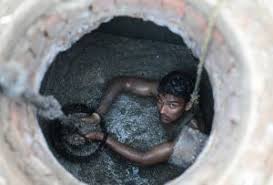
NCSK has directed Patna District Magistrate Dr. Chandrashekhar Singh to immediately investigate the incident. The Commission has asked to submit a detailed action report (ATR) in the prescribed format within 15 days. New Delhi/Patna- The National Commission for Safai Karamcharis (NCSK) has taken suo motu cognizance of a serious complaint of manual scavenging in Patna, Bihar, which highlights violations of the Prohibition of Employment as Manual Scavengers and Their Rehabilitation Act, 2013 and the Scheduled Castes and Scheduled Tribes (Prevention of Atrocities) Act, 1989. The complainant Shubham Kumar filed a complaint through NCSK’s online portal on May 10, 2025 (Complaint No. 102574), mentioning the incident that took place on April 28 at Chandmari Road, Kankarbagh, Mithapur, Patna. The complaint alleges that persons possibly belonging to the Scheduled Caste community were forced to do manual cleaning of sewage and manholes without any safety equipment or mechanical aid. This act is a clear violation of the 2013 Act, which The Act prohibits manual scavenging and makes mechanised cleaning of sewers and septic tanks compulsory, and is violative of Articles 17 (Abolition of Untouchability) and 21 (Protection of Life and Personal Liberty) of the Constitution of India. The complainant has sought the following reliefs: 1. Immediate investigation of the violation of caste-based discrimination under the 2013 Act and Article 17. 2. Registration of a First Information Report (FIR) under the 2013 Act, the SC/ST Atrocities Act, and relevant sections of the Indian Penal Code (IPC) for endangering human life. 3. Identification of the names, social category and employment status of the victims. 4. Compensation of Rs 10,00,000 to each victim as per the 2014 Supreme Court judgment Safai Karamchari Andolan vs Union of India. 5. Prosecution against responsible officials of the Patna Municipal Corporation (PMC) and supervisory officials who failed to prevent the incident. 6. If an FIR is not registered, So proper written reasons for this. The complainant has warned that if no action is taken, he will file a contempt petition against NCSK, Bihar State and PMC, as well as approach the Patna High Court under Articles 226 and 215 of the Constitution. Giving more details of the case, Shubham told The Mooknayak that the incident of April 28 happened in front of his eyes. In his colony, the employees of the cleaning contractor were cleaning the manholes naked, they did not have any safety equipment nor were they given any kit to wear during cleaning. Shubham told that the work of cleaning and maintenance of manholes and sewer lines is going on in the entire city before the rains and the safety of the employees and their rights are being grossly ignored. Along with the complaint, four time-stamped, geo-tagged photographs have also been sent which show workers cleaning human excreta and opening manholes without protective equipment, which underlines the dangerous and inhuman nature of this work. After Shubham’s complaint, a committee of the National Safai Karamchari Commission was formed. The NCSK has initiated an inquiry into the matter exercising its authority under the Rules of Procedure, 2019 and Section 31 of the 2013 Act, which empowers the Commission to monitor the implementation of the Act and inquire into complaints of non-compliance. In a letter dated May 2025 (DO No. 11059/50/7/13/20-RAD), the District Magistrate of Patna, Dr Chandrashekhar Singh has been directed to conduct an immediate inquiry into the incident. The Commission has requested to submit a detailed action taken report (ATR) in the prescribed format within 15 days, seeking information on compensation provided to the victims as per the Manual Scavengers Rehabilitation Rules, 2013 and SC/ST (Prevention of Atrocities) Rules, 2016. A copy of the letter has also been sent to the Chief Secretary of Bihar for action. Courtesy : Geetha Sunil Pillai, Hindi News
There is no stopping the deaths of manual scavengers in India — is the government deliberately ignoring it?

Increasing number of deaths of manual scavengers in India, ignorance of law even after Supreme Court order and serious problem of caste discrimination New Delhi — The claim of the Government of India to eradicate manual scavenging seems far from the ground reality. Recently, a series of deaths while cleaning sewers and septic tanks in different parts of the country have once again raised the question — is it just administrative negligence, or a deep-rooted structural problem of caste injustice? Tragic incidents in Delhi and Kolkata in early February On February 2, two sanitation workers died near Mansa Devi Apartments in Narela, Delhi, while one was seriously injured. These workers were lowered into a toxic sewer by a private contractor without any safety equipment. On the same day, three workers — Farzem Sheikh, Hashi Sheikh and Suman Sardar — lost their lives in the Bantala area of Kolkata when they were swept into a manhole due to a burst pipe. All these workers were residents of Murshidabad district of West Bengal and were employed by the Kolkata Metropolitan Development Authority (KMDA). Deaths continue despite Supreme Court order The above incidents took place four days after the landmark judgment on January 29 in which the Supreme Court banned manual scavenging and hazardous sewer cleaning in the country’s major metropolises. This order was given by a bench of Justices Sudhanshu Dhulia and Arvind Kumar. A horrific series of deaths from March to May 2025 • Tiruppur, Tamil Nadu (May 19): Three Dalit labourers — Saravanan, Venugopal and Harikrishnan — died after inhaling toxic gas at Alaya Dyeing Mills. Another is hospitalised. • Khandwa, Madhya Pradesh (April 3): Eight people lost their lives while cleaning a well ahead of the Gangaur festival. • Faridabad, Haryana (May 21): A sanitation worker died while cleaning a septic tank, and the landlord who went to rescue him also lost his life. Police did not register an FIR. • Ahmedabad, Gujarat (May 16): Three young workers died while cleaning the septic tank of a closed factory. There was no safety arrangement of any kind. At least 20 sanitation workers have lost their lives across the country between February and May 2025. Structural injustice and caste discrimination According to data, 92% of India’s sanitation workers come from Scheduled Castes, Tribes and Backward Classes. Experts believe that these deaths are not just ‘accidents’ but are the result of systemic casteism and economic exploitation. Demands of Dalit-Adivasi organization DASAM Dalit Adivasi Shakti Adhikar Manch (DASAM) has reacted sharply to these incidents and has made the following demands from the government: • Immediate registration of FIR in all incidents (under relevant sections of Manual Scavengers Act 2013, SC/ST Act, and BNS). • Independent and time-bound judicial investigation of each case. • Compensation of Rs 30 lakh to the families of the victims, along with full rehabilitation in housing, education, and livelihood. • Formation of a central monitoring body to ensure compliance with the Supreme Court order. • Cancellation of licenses of contractors engaged in such work. • National audit of sanitation system and private contracts across the country. The question is on the system, not on sympathy DASAM says that this is not just a matter of pity or compassion, but a matter of constitutional duties, legal accountability and human dignity. Accepting the deaths of sanitation workers as normal is a blot on the face of a civilized society. The organization said in a statement, “The lives of these workers are precious. Their deaths could have been prevented. And if we still remain silent, we will also be complicit in this injustice.” Courtesy : Hindi News
Gujarat: Dalit youth brutally beaten up for just calling him ‘son’, dies in hospital six days later; 9 arrested
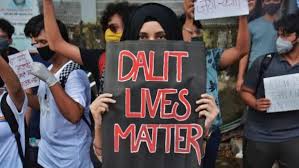
A tragic case of caste violence, Dalit youth dies after fighting for life for 6 days; family demands justice and compensation Gujarat – A Dalit youth was brutally beaten up in Amreli district for allegedly addressing a teenager from another caste as “son”. Six days after the incident, the youth died in Bhavnagar Civil Hospital on Thursday. The deceased has been identified as Nilesh Rathod (village – Jarkiya). The police have so far arrested eight accused in the case and detained a minor, while the search for two accused is on. On Friday, Congress MLA Jignesh Mevani staged a protest with the family of the deceased and demanded justice. In a statement released on Facebook, Mevani said: “Nilesh Rathore… passed away a few days ago after being brutally beaten up by casteist elements for merely calling him ‘son’. We demand that the family of the deceased and others affected in the attack be given 5 acres of agricultural land or a government job each, the case be investigated by a senior officer and the trial be held in a fast-track court to set an example.” Rathore’s family has announced that they will not accept the body until their demands are met. What happened? According to the FIR lodged by Lalji Mansukh Chauhan (28), one of the victims, on May 16, he, Rathore and their other companions were at a bhajiya (pakoda) stall on the Amreli-Sawarkundla road. Rathore had gone to buy snacks from a nearby shop. Chauhan said in the FIR that Rathore returned in a panic and said that the shop owner tried to hit him with an iron ladle because Rathore had asked his minor son, addressing him as “son”, if he needed help in reaching a packet of snacks hanging at a height. When Chauhan reached the shop to look into the matter, the shop owner Chhotha Khoda Bharwad attacked him with a stick. Later, a man named Vijay Anand Tota also attacked both Rathore and Chauhan. The FIR said that bhajiya stall owner Jaga Dudhat rescued the two. Later, Rathore’s uncle Suresh Wala reached the shop to talk, but by then Bharwad had called some more men who attacked them with sticks and sickles and hurled caste-related slurs. According to the complaint, the victims tried to flee from the spot, but the attackers followed and kept attacking them, taunting them for being from a “lower caste”. Finally, the attackers stopped after an elderly man intervened. Legal action The FIR lodged at Amreli rural police station first named four accused — Bharwad, Tota, Bhavesh Mundhwa and Jatin Mundhwa. They were booked under several sections of the Indian Penal Code (BNS), including Section 118(1) – causing grievous hurt, Section 115(2) – voluntarily causing hurt, Section 189 – unlawful assembly, Section 191 – rioting, Section 131 – assault or criminal force, Section 352 – intentional insult for breach of peace, Section 3(5) – responsibility for collective offence. A case was also registered under sections of the Scheduled Castes and Scheduled Tribes (Prevention of Atrocities) Act and the Gujarat Police Act. The police added attempt to murder (Section 109) when Rathore’s condition deteriorated, and murder (Section 103) after his death. Arrests so far The Indian Express quoted Amreli Superintendent of Police Sanjay Kharat as saying that a total of 11 people were involved in the incident, of which 9 have been arrested. Apart from the initial four, the other accused arrested are: Kathad Arjan Mundhwa, Deva Sanga Mundhwa, Duda Boga Mundhwa and Ravi Duda Mundhwa. Police teams are searching for two other absconding accused. Courtesy : Rajan Chaudhary, Hindi News
Dalit business champ scheme: Orders on plea seeking CBI probe reserved
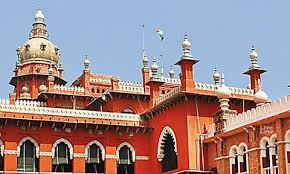
He said it was filed out of political animosity as the petitioner himself had stated that the petition was a retaliatory measure to the vandalisation of his house. CHENNAI: The Madras HC’s vacation bench of justices GR Swaminathan and V Lakshminarayanan on Friday reserved orders on a PIL petition filed by YouTuber ‘Savukku’ Shankar seeking a CBI probe into the alleged irregularities in implementation of Annal Ambedkar Business Champion Scheme aimed at making SC/ST conservancy workers into entrepreneurs. During the hearing, Additional AAG J Ravindran, representing the Chennai Metro Water Supply and Sewerage Board, submitted that 213 eligible persons were selected adhering to eligibility criteria. Questioning the maintainability of the plea and taking it up as urgent matter during vacation, he raised doubts about the bona fide intent behind filing the petition. He said it was filed out of political animosity as the petitioner himself had stated that the petition was a retaliatory measure to the vandalisation of his house. The bench said it wouldn’t see who is the petitioner but only the contents of the plea. It questioned why a group management company was not established as per the requirement of the scheme. Representative of Gen Green Logistics, one of the parties impleaded, submitted that each member belonging to SC will be made a shareholder. Subsequently, the bench reserved the orders. Courtesy : TNIE Note: This news is originally published on https://thenewindianexpress.com/ and is for use by the non-military/non-commercial community, especially those in the human rights sector.
UP: 12-year-old Dalit girl raped by teenagers in Moradabad

The girl alleged the boys spiked her soft drink, raped her and made a video, which was circulated online. In a horrifying act, a 12-year-old Dalit girl was allegedly gang-raped by five boys, all aged between 12 and 15, inside the principal’s office in Uttar Pradesh’s Moradabad district. The incident took place on May 8. The girl alleged the boys spiked her soft drink, raped her and made a video, which was circulated online. It was only after one of her neighbours saw the video that the crime came out in the open. The Dalit girl’s mother immediately filed a complaint with the police and all five boys were arrested on May 20. According to the girl’s complaint, she knew the boys. They asked her to accompany them to a nearby school. Having known them, she agreed. One of the boys had the key to the school’s building and then took her to the principal’s office. “Once inside, they locked the gate and gave me a soft drink. After that, I lost consciousness. All five raped me and then made a video. When I came to my senses, they threatened to kill my parents if I mentioned the incident,” the Dalit girl said in her statement. Police said that all five have been arrested and sent to a juvenile facility. A case has been registered. Lakdikapul Gated CommunitySt JosephsGermanten Hospital Meanwhile, the girl is receiving counselling. Posted by Veena Nair Courtesy : TSD Note: This news is originally published on https://thesiasatdaily.com/ and is for use by the non-military/non-commercial community, especially those in the human rights sector.
Private school principal gets one-year RI for misbehaving with minor Dalit student in Telangana’s Adilabad

The court cross-questions 17 eyewitnesses and examines pieces of evidence produced before it by public prosecutor Adilabad: A court here on Thursday sentenced a principal of a private school to one-year rigorous imprisonment and fined Rs 9,000 for misbehaving with a minor Dalit student a year ago Additional district court principal judge Dr Shivaramprasad delivered the verdict awarding the term and fine on Phanimohan Rao of SR Prime School in Mavala for misbehaving with a minor girl from a weaker section by inviting her to his cabin on January 3, 2024. The court cross-questioned 17 eyewitnesses and examined pieces of evidence produced before it by public prosecutor B Praveen Kumar. Courtesy : Telangana Today Note: This news is originally published on https://telanganatoday.com/ and is for use by the non-military/non-commercial community, especially those in the human rights sector.
To address casteism, society needs to acknowledge it first

Our society, which allows the turpitude to divide communities by turning its face from it, needs to look at it in the eye and stare it down with a steely resolve Unlike in the rest of the country, casteism is usually a private affair in Kerala. One rarely gets to experience it in public spheres, thanks to the social revolutions the state has gone through. So when it recently raised its ugly head again, there was a furore across Kerala. It reminded us that the scourge still exists in deep layers among all the communities in the state. The Thiruvananthapuram police had, on April 23, registered a case for the “theft” of 18 grams of gold from a house where a Dalit woman worked as household help. She was summoned to the police station the same evening. There, she claimed, she was not given food or water through the night and was not even allowed to sleep. When she asked for drinking water, she reported she was told to get it from the toilet. The next day, she was released after the complainant informed police that the “stolen gold” had been found misplaced at home. The story shocked Kerala’s psyche. The government suspended the sub-inspector for lapses in taking the woman into custody without a preliminary probe. Two days later, an assistant sub-inspector was also suspended. In neighbouring Tamil Nadu, the bastion of Dravidian politics, the principal of a school and two other employees in Pollachi were booked this week after a menstruating Dalit schoolgirl was forced to write her annual examination outside the classroom. Around the same time, three Dalit men died at a Tiruppur dyeing factory after inhaling toxic gas while cleaning a sewage tank, an act proscribed by several laws and regulations. These recent cases in the two states stand out in their treatment of the marginalised. That such gross human rights violations are still happening in apparently progressive states like Kerala and Tamil Nadu is a bigger shame. Swift action by the authorities in the Thiruvananthapuram and Pollachi cases is welcome. But action against casteism does not stop there. Caste works in conscious and subconscious ways—and we can address it only when we acknowledge it. Our society, which allows the turpitude to divide communities by turning its face from it, needs to look at it in the eye and stare it down with a steely resolve. Courtesy : TNIE Note: This news is originally published on https://thenewindianexpress.com/ and is for use by the non-military/non-commercial community, especially those in the human rights sector.