
Man arrested for raping 16-year-old Dalit girl in UP’s Bhadohi
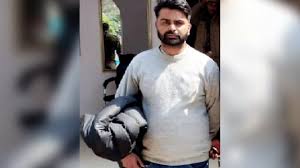
Bhadohi (UP), (PTI) A 30-year-old man was arrested in connection with the alleged rape of a 16-year-old Dalit girl here, officials said on Thursday. According to a senior police official, the alleged incident occurred on May 17 when the girl went out to attend the nature’s call. Accused Jitendra Prajapati allegedly covered her mouth, took her to his house, assaulted her, and then raped her at knife point. When the girl did not return home late that night, her family began searching for her. The accused arrived at her father’s workplace, a petrol pump, and allegedly told him to take his daughter from his house. He also allegedly threatened him to remain silent, according to police. Police sources said that the victim’s father said he initially preferred to remain silent due to fear and social stigma. However, the 16-year-old girl reportedly threatened to commit suicide if her family did not register a complaint against Prajapati. Following this, her father went to the Koirauna police station and filed a complaint on May 25. Bhadohi Superintendent of Police (SP) Abhimanyu Manglik said on Friday that based on the complaint received from the girl’s father, an FIR was registered against Prajapati under relevant sections of the BNS, Protection of Children from Sexual Offences (POCSO) Act, and Section 3(1)(d) of the Scheduled Castes and the Scheduled Tribes (Prevention of Atrocities) Act. After conducting the girl’s medical examination and recording her statement before the court, police launched a search for the absconding accused. “Jitendra Prajapati was arrested on Wednesday night near Newajipur and was sent to jail on Thursday,” said the SP. (This story has not been edited by THE WEEK and is auto-generated from PTI) Courtesy : The Week Note: This news is originally published on https:/theweek.com/ and is for use by the non-military/non-commercial community, especially those in the human rights sector.
Dalit family demolishes temple they built after embracing Christianity in Chhattisgarh; Hindutva brigade protests
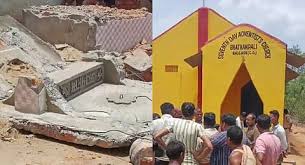
The police arrested five, including three members of the Dalit family after the incident. RAIPUR: Tension prevailed at Bhatanpali after a Dalit family that got converted into Christianity dismantled a temple built by them, leading to a protest by cadres of Bajrang Dal in the outskirts of Chhattisgarh’s Raigarh town. The police arrested five, including three members of the Dalit family after the incident. A senior police officer told TNIE that the Sarthi family had built the temple in 2020 on government land, though there was no idol placed inside and only the structure existed. The family accepted the Christian faith a year ago, and the temple was dismantled by a JCB machine. “As the news spread, a group of Bajrang Dal cadres arrived and, claiming that their religious sentiments were hurt, attempted to reach out to a nearby church to vandalise it in retaliation, but the police intervened and prevented it,” the officer said. The existing church was built on private land some 25 years ago. According to eyewitnesses, some Bajrang Dal protestors managed to enter the church, raised a saffron coloured cloth and tried to remove the cross. “There was a scuffle between the activists of Bajrang Dal and the police, who asked the protestors not to take the law into their hands. We have arrested five persons including three members of the Sarthi family and an operator of a JCB machinery that was used to demolish the temple”, the officer added. The locals close to Nirmal Sarthi claimed that the family was initially taken to a police station to safeguard them from the protestors, and later they were arrested by the police. “The demolished temple was a 6 ft x 6ft structure built by the Sarthi family close to the entrance of their residence. “The Hanuman temple didn’t have any idol installed, nor did anyone ever come to worship there. A Dalit family stands victimised in the incident. While Sarthi, his two sons and Bogilal Sarthi were arrested and sent to jail, no stern action was taken against those who created disharmony and agitation in the name of religion”, said Degree Prasad Chouhan, human rights activist based in Raigarh. Courtesy : Ejaz Kaiser, TNIE Note: This news is originally published on https:/thenewindianexpress.com/ and is for use by the non-military/non-commercial community, especially those in the human rights sector.
From the memoir: The long shadow of caste discrimination on Dalit writer Adhir Biswas as a schoolboy
Ma had asked me to wait a bit. But that had been a long while back! How much longer? What was she looking for inside the room? What was so important now? I couldn’t understand why she had asked me to wait! Oof, why did she have to do this when I was in such a hurry! Should I leave? No, maybe she’d give me something. Did she go in to get some money? Wouldn’t be bad if I got some. After all, I was beginning school today. It was my first day of school. If not an anna, even two paise was good. But I wouldn’t wait longer for that. I could easily run all the way, but because it was the first day, I wouldn’t do that. If Ma held me up like this hereafter I would just leave. Hey, why was she going from one room to another? I knew that Ma shouldn’t move about like us. That was the toll of suffering her sickness. I saw Ma every day, but I had never seen her like I was doing today. Bustling around for so long. And through all that, it seemed to me that Ma was moving about with her sari wound around her body like thin skin. Ma had had her medicine. The decoction from the kobiraj. Some pills. A powder. Only after having those did she begin cooking for the household. Baba too lent her a hand. That meant cutting the vegetables, washing them, washing the utensils, and preparing the wheat dough. Sometimes Ma would do it; at other times Baba would say, “Leave it, I’ll do it.” He wasn’t around all the time, so he tried to do some of Ma’s work in the little time he had at home. But despite all this, why wasn’t Ma getting better? “O Ma, it’s getting late. What are you doing? Tell me what you’re looking for.” “What else! The kohl container. It was next to the candlestick. Did you move it somewhere?” “Aah,” I said impatiently. “What do you need the kohl for?” “Oh dear! What are you saying? You’re beginning school, won’t I put a dot on you?” “What’ll happen if you don’t put it? I’ve grown up now – I’m off!” “Wait.” I had never heard Ma shout so loud! She wasn’t angry, it didn’t seem like a scolding either. It was like indulgence. I was annoyed but I couldn’t move. Ma walked slowly towards me. Coming closer, and before I knew it, she held my head gently between her palms and kissed me on the forehead! “Do your studies mindfully, my dear, I’m afraid I won’t be there to see it all.” The thought of school vanished at once from my mind. Why was she choking? As she swallowed, she sniffled a little. Her eyes were brimming with tears. As if she was going to … just now. I said softly, “Are you crying, Ma?” “Where, no!” And saying so, she wiped her eyes. “Go now!” What if I went after a few days instead? Or never went at all so I could stay home with Ma? Could I not learn a trade like Baba’s instead of going to school? After all, I had gone all the way to Poyatibari after a bereavement there and cut the nails of the people in the household. The womenfolk there had held out their hands so gently. One finger at a time. In return, a clay bowl full of rice. My mind wandered to that day. Aush paddy was planted in summer and harvested in autumn. Its rice was browncoloured. Also round potatoes, and sometimes clinking coins. So what if I was small, after all I belonged to that caste. I filled the bag with fistfuls of rice. The vegetables would be placed on one side. But that was for later. As soon as the bag was full, I would hear someone from the household say, “Don’t keep sitting there, come back to the house, come and have lunch when you are done.” I could see it all, as if Thakur Moshai, the priest, was sitting far away from me. A banana leaf was full of rice, dal and vegetable curry. After mixing them with my hand, I licked the starch off my hand and fingers. Time and again I would think, no one was watching me eating, were they? Oh, how long it had been since I had eaten so well! In front of Thakur Moshai were Kakima and others of the household. I was served a lot of rice and vegetable curry. It took a while to eat that. Someone shouted out from the veranda, “Just ask if you want more rice.” I wondered, isn’t there anything else? Some fish? Maybe not the choicest one but perhaps a tail-piece? But then I thought, where’s the need for that! With what I had been served I wouldn’t have to eat till noon the next day. I continued eating. As I ate, I began to feel drowsy. So, what was wrong with that – if I went around from village to village with a nail-cutting chisel? I could start earning right away. I just wanted to stay close to Ma. I wouldn’t go to school. What if she kept on crying after I went to school? Ma understood. There were tears in my eyes. She wiped my tears and said, “Go, my dear, it’s getting late.” I didn’t say “no”. Once again the urge to go to school awakened. “So, I’m going!” Ma nodded. I had come quite a distance. But Ma was still standing on the road in front of the house. I turned back every now and then to look. Ma waved her hand. Chhor-da had left already for the day. Ma had said to him, “Drop your brother at school tomorrow.” “He’ll go on his own. Why are you worrying? He wanders around everywhere all day long; won’t he be able
Legislative committee visits Katteraghatta after Dalit farmer dies in suspicious fire
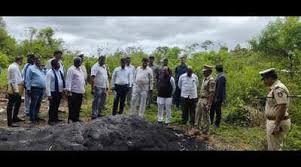
Mandya: The Karnataka Legislative Committee for the welfare of SCs/STs led by Malavalli MLA PM Narendra Swamy, visited Katteraghatta village in KR Pet taluk on Thursday, where a Dalit farmer died in a fire incident. The panel members visited the house of the deceased, Jayakumar, who died under suspicious circumstances, and the site where the incident took place. Narendra Swamy consoled Jayakumar’s wife, Lakshmi. About 10 days ago, the charred body of Jayakumar was found in a haystack in Katteraghatta village. Following reports raising suspicion about the cause of his death, progressive organisations sought a probe. They alleged that a rowdy-sheeter murdered Jayakumar and burned his body in the haystack. The organisation demanded an impartial investigation and punishment for the accused, as well as justice for Jayakumar’s family. Committee members Prasad Abbayya, Dr Thimmayya, Abhay Patil, along with KR Pet MLA HT Manju of JD(S), visited the spot. DGP Arun Chakravarthy, DIGP of Southern Range B Boralingaiah, Mandya DC Kumara, and district SP Mallikarjun Baladandi were present. Meanwhile, the committee appointed IPS officer Dharanidevi Malagatti to investigate the case. As the investigation including the FSL report is still ongoing no public statement can be made. “We are here to ensure justice for an innocent Dalit family,” said Narendra Swamy. He also clarified that Manju was excluded from the committee meeting because he is not a member of the committee. “Don’t read too much into it. Even though the incident took place in his constituency the committee has full authority,” he said. Courtesy : TOI Note: This news is originally published on https://timesofindia.com/ and is for use by the non-military/non-commercial community, especially those in the human rights sector.
35 convicted in Agra for attack on Dalit wedding procession in 1990

AGRA: An Agra court on Wednesday convicted 35 men in a 35-year-old case related to caste violence that erupted during a Dalit wedding procession in Panwari village in 1990. The special SC/ST court of judge Pushkar Upadhyay also acquitted 15 accused due to lack of evidence. The quantum of punishment in the case will be delivered on Friday. Additional district govt counsel Hemant Dixit said 22 of the original 72 accused died during the prolonged trial. On June 21, 1990, a group of Jat men confronted a Dalit wedding procession, objecting to the groom riding a horse, in Panwari village in Agra. Courtesy : TOI Note: This news is originally published on https://timesofindia.com/ and is for use by the non-military/non-commercial community, especially those in the human rights sector.
Dalit scholar denied passport for being daughter of Devadasi finally gets passport
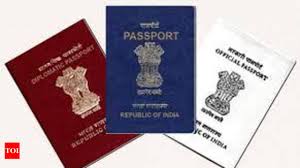
Until Monday (May 26), Nari Kamakshi, an accomplished researcher had been denied both a passport and official recognition of her identity for over two years by the authorities, despite submitting all required legal documents, including a certificate from the Child Welfare Department confirming her mother’s status as a Devadasi, solely on the absence of her father’s name in the application. The researcher and practitioner committed to education, youth empowerment, and social justice, in an article published on The News Minute, titled “Waiting for Passport: How a broken system denies identity and justice to a Devadasi’s daughter,” asks,” How many times must I prove I exist? How many forms must I fill out to explain why I don’t have a father’s name? Why does the system punish those of us born outside patriarchy’s rules, even as it pretends to offer us a future?” Since 2023, she has been repeatedly denied a passport, a process she describes as “humiliating,” during which, she says, “I found myself spiraling into a question that tormented me daily: Who am I if the state refuses to acknowledge that I belong?” In April 2023, Nari Kamakshi applied for a passport in Delhi, believing that all her documents were in order. She carried everything she understood the system required, including Aadhaar, voter ID, education certificates, and a government-issued certificate verifying her mother’s status as a Devadasi. At the time, she had been working in Delhi for over a year, supporting youth programmes and leading research in public education. What should have been a routine application process quickly turned into what she describes as “a nightmare.” The Devadasi system, deeply rooted in caste-based oppression, has devastated thousands of women in Karnataka. Under this practice, young girls like her mother were dedicated to temples as children act which deprived them of agency and autonomy. These women were forced into a life of servitude, denied the opportunity to marry, and compelled to serve deities through religious rituals, trapping them in a cycle of social and economic marginalisation. Kamakshi, who worked as a Research Assistant on the Karnataka Devadasi (Prohibition of Dedication) Act 1982/2018 Rehabilitation Bill, also presented her mother’s certificate from the Department of Women and Child Development, providing clear legal proof of her mother’s status as a Devadasi. Even though she referenced the Maharashtra High Court’s decision that allows a mother’s name alone to be used in official documents, it made no difference. The officer rejected her application outright and, she recalls, remarked dismissively, “You can try, but it’ll likely be rejected at police verification.” Hours of waiting, pleading, and explaining resulted only in humiliation. The weight of caste and patriarchy reduced her to an administrative inconvenience. Although the officer eventually forwarded her application, he warned her, “At your own risk.” His warning proved accurate, as the application was ultimately rejected during police verification. She recalls one particularly painful moment when being mocked and ridiculed for not having a father’s name, which, she says, “shattered something deep inside me.” For the next two years, she was in constant motion, both physically and emotionally. “To the system, I wasn’t a person, I was a problem,” she said. She returned repeatedly to the Delhi Passport Seva Kendra, hoping that someone would look beyond the blank space in the father’s name column and recognise her as a human being with proof, purpose, and dreams. She filed appeals, sent emails, and made numerous visits, only to be met with silence. After nearly a year, she withdrew her application in resignation. In March 2025, she reapplied for a passport in Bengaluru under the Tatkal category, urgently needing it to meet the approaching deadline for her scholarship documents, but was denied entry at the token counter itself. “I felt a deep, burning shame—not for who I am, but for daring to expect fairness from a system designed to erase people like me. I clutched my mother’s certificate—her truth, my truth—as I watched my dreams dissolve into paperwork tossed between indifferent hands. Powerless and invisible, I cried,” she wrote. Officials insisted that she switch from the Tatkal to the regular passport application process, citing vague and arbitrary rules lacking any legal basis. She waited for hours, pleaded her case, and explained her situation, but the Assistant Passport Officer refused to consider her application. She changed her appointment from Tatkal to the regular process and shifted her Passport Seva Kendra from Bengaluru to Bellary, becoming more aware of the system’s workings. On May 1, 2025, she completed her document verification and submitted a written letter explaining her mother’s Devadasi status while formally requesting a passport. Her identity wasn’t seen, it was “sorted, stamped, and sidelined.” She was treated as just another bureaucratic anomaly: not a person, not a citizen, and “not worthy.” Officials repeatedly told her, “Switch to the regular process!” “This certificate is not enough!” and “Come back later!” Emphasising that her experience is not an isolated one, she asserts, “I am not alone. This isn’t just a personal struggle-it’s a reflection of the larger systemic failures that continue to oppress marginalised communities.” “This is a system that continues to erase people like me, Dalit women and their children, whose existence is inconvenient to the established social order,” she added. She says she wasn’t rejected for lack of qualifications or merit, but because her mother, once a Devadasi, raised her alone. Despite her years of education, acceptance into a PhD program, and the extensive official documentation she provided, “none of it mattered.” She was treated as if her very existence was “an error,” an “anomaly unworthy of recognition.” Yet, this is no longer just her fight. Thousands of children born to Devadasis face the same barriers, and most lose. They are denied “passports, education, and dignity.” She says her lived experience fuels her activism, “Education gave me the language to dream and resist,” as a first-generation Dalit learner. However, she acknowledges that education alone has not been enough, as discrimination persists through “red tape, silent rooms,
AIISCA’s warning on Amreli Dalit youth murder case: ‘Caste’ cannot be the norm in a democratic society, supporters held accountable
The organisation called it shameful that the country’s Prime Minister hails from Gujarat, yet he and his party have not taken any concrete steps to abolish the caste system in his home state. His silence on this atrocity is not neutrality, but complicity. New Delhi- The All India Independent Scheduled Castes Association (AIISCA) has strongly condemned the brutal murder of Dalit youth Nilesh Rathod in Jarakhia village of Amreli district of Gujarat. AIISCA said that Nilesh’s only “crime” was to call a minor boy, who belonged to a so-called “upper” caste, “son”. Caste mentality took a violent turn in response to this simple human affection. The incident reflects everyday caste violence against Dalits in Gujarat, which violently enforces caste supremacy despite claims of a development model. The organisation criticised the silence and normalising role of the ruling caste-class nexus, which includes business elites, upper caste landlords and the political class, in the violence. AIISCA President Dr Rahul Sompimpale issued a statement. The organisation termed the silence of Dalit MPs and MLAs of the ruling party as complicity in standing with upper caste bosses rather than their own community. The failure of Gujarat’s state machinery—police, administration and politicians—to protect Dalits was also questioned. The police’s lethargic response exposes institutional casteism. The organisation called it shameful that the country’s Prime Minister hails from Gujarat, yet he and his party have not taken any concrete steps to end the caste system in his home state. His silence on this atrocity is not neutrality but complicity. AIISCA expressed solidarity with the grieving family of Nilesh Rathod, who have announced that they will not accept his body until their demands are met. Their demand is not just compensation, but respect, recognition and an end to the violent caste system. Demands: Immediate and full compensation to all victim families, including: o Five acres of agricultural land or government jobs for all affected families. The investigation be handed over to an independent, high-ranking officer with a clean record, and a time-bound trial in a special fast-track court under the SC/ST Atrocities Act. FIR and arrest of all remaining accused, who incited and aided the mob. Statewide public inquiry into caste-based violence in Gujarat, with particular focus on rural areas. Public apology and assurance of reform from the Chief Minister of Gujarat, as well as a statement from the Prime Minister acknowledging structural caste violence in Gujarat. Initiation of a comprehensive anti-caste violence policy in Gujarat, including: o Dedicated SC/ST protection task force. o Educational and cultural programs to eradicate caste bias. o Accountability mechanism for caste-based negligence by police and civil servants. AIISCA warned that if the Rathore family did not get justice, the organisation would launch nationwide protests. The organisation said they would not allow this violence to be buried under bureaucratic silence and electoral games. Dalit lives matter, and the right to dignity is inviolable. Sompimple said the statement is not a petition but a warning: caste cannot be normalised in any democratic society. And those who support it directly or indirectly will be held accountable. Courtey; Geetha Sunil Pillai, Hindi News
Dalit Elderly Man Allegedly Burned Alive in Gujarat’s Patan Village; MLA Mevani Says—Gujarat Becoming Hell for Dalits!
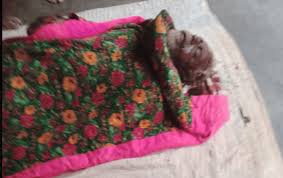
According to the Patan police, a preliminary investigation has been initiated. Patan- A heart-wrenching incident has come to light in Pipala village, Santalpur taluka of Patan district, Gujarat, where 70-year-old Dalit elderly man Harji Bhai Deva Bhai Solanki was allegedly burned alive in the neighboring Jakhota village. Dalit leader and Vadgam MLA Jignesh Mevani stated that he spoke with the Patan District Superintendent of Police, who confirmed the incident. However, the police have not yet disclosed the reasons behind the killing, and the investigation is ongoing. The victim’s body was found wearing women’s clothing and anklets, making the incident even more suspicious. This incident is being seen as another link in the chain of increasing violence against the Dalit community in Gujarat. MLA Jignesh Mevani expressed deep sorrow over the incident and tweeted, “Despite all its claims of development, Gujarat is becoming a hell for Dalits.” He has appealed to all activists and citizens to gather at the Civil Hospital in Dharpur, Patan, to demand justice for the victim’s family. Mevani has demanded that the government provide adequate compensation to the victim’s family and allocate 2 acres of agricultural land to them. He described the incident as yet another example of atrocities against the Dalit community and called for immediate action. According to the Patan police, a preliminary investigation has been initiated. The police stated that Harji Bhai’s murder took place in Jakhota village, and his body was sent to the Civil Hospital in Dharpur for a postmortem. The motive behind the killing is still unclear. The police have started questioning local residents and have increased security arrangements in the area due to the prevailing tension. This incident has sparked significant outrage within the local Dalit community. Several social organizations and activists have come forward in support of the victim’s family. Tension is prevailing in Jakhota and Pipala villages, and locals are demanding strict action against those responsible for this brutal incident. MLA Jignesh Mevani said, “I just spoke with the District Superintendent of Police, who confirmed the incident, but the reasons behind it are still unknown! It is with great sorrow that I must say, despite all its claims of development, Gujarat is becoming a hell for Dalits! The government must provide adequate compensation to the victim’s family and 2 acres of agricultural land!” Mevani appealed to the Dalit community, stating that they must strongly protest against the atrocities, assaults, murders, and horrific incidents like being burned alive that are happening to Dalits under the BJP regime. Courtesy : Geetha Sunil Pillai, The Mooknayak Note: This news is originally published on https://themooknayak.com/ and is for use by the non-military/non-commercial community, especially those in the human rights sector.
AIISCA’s Warning on Amreli Dalit Youth Murder: “Caste Cannot Be the Norm in a Democratic Society, Supporters Will Be Held Accountable”
AIISCA expressed solidarity with Nilesh Rathod’s grieving family, who have refused to accept his body until their demands are met. Their demand is not just for compensation but for dignity, recognition, and an end to the violent caste order. New Delhi- The All India Independent Scheduled Castes Association (AIISCA) has strongly condemned the brutal murder of Nilesh Rathod, a Dalit youth from Jarakhiya village in Gujarat’s Amreli district. In a statement issued by Dr Rahul Sonpimple, President AIISCA said, “His only “crime” was addressing a minor boy from a so-called “upper” caste as “beta” — a simple act of human affection that provoked violent retaliation rooted in casteist mentality.” This incident reflects the daily caste-based violence faced by Dalits in Gujarat, a state that claims to be a model of development but enforces caste supremacy through violence in its towns, villages, and streets. The organization criticized the ruling caste-class nexus, comprising business elites, upper-caste landlords, and the political class, for their silence or active role in normalizing this violence. The organization called out the silence of Dalit MPs and MLAs from the ruling party, labeling it as complicity. Instead of standing with their oppressed communities, they have aligned with upper-caste leaders, betraying those they claim to represent. AIISCA also highlighted the failure of Gujarat’s state machinery—police, administration, and political leaders—in protecting Dalit lives. The police’s sluggish and selective response reveals deep-rooted institutional casteism. The organization termed it shameful that the Prime Minister, hailing from Gujarat, and his party have taken no concrete steps to dismantle the caste system in the state. Their silence on this atrocity was described as complicity. AIISCA expressed solidarity with Nilesh Rathod’s grieving family, who have refused to accept his body until their demands are met. Their demand is not just for compensation but for dignity, recognition, and an end to the violent caste order. Immediate and full compensation to all affected families, including five acres of agricultural land or government jobs. Investigation by an independent, high-ranking officer with a clean record and time-bound trial in a special fast-track court under the SC/ST Atrocities Act. FIRs and arrests of all remaining accused, including those who incited or abetted the mob. A state-wide public inquiry into caste-based violence in Gujarat, focusing on rural areas. A public apology and assurance of reform from the Gujarat Chief Minister, and a statement from the Prime Minister acknowledging structural caste violence in Gujarat. A comprehensive anti-caste violence policy in Gujarat, including an SC/ST Protection Task Force, educational and cultural programs to eradicate caste bias, and accountability mechanisms for caste-based negligence by police and civil servants. AIISCA warns that if justice is denied to the Rathod family, it will mobilize nationwide protests. The organization stated, “Caste cannot be the norm in any democratic society. Those who uphold it, through action or silence, will be held accountable.” Courtesy : Geetha Sunil Pillai, The Mooknayak Note: This news is originally published on https://themooknayak.com/ and is for use by the non-military/non-commercial community, especially those in the human rights sector.
Uttar Pradesh: Rahul Gandhi felicitates first Dalit boy to pass class 10 in village
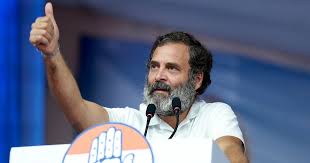
Ramkeval received a personal letter from the LoP, gifts and a promise of support towards his higher education Congress leader Rahul Gandhi has sent a personal letter of congratulations and gifts to Ramkeval, who recently became the first in his village, Nizampur, to pass the class 10 board exams. The letter and mementos to the Dalit boy were handed over on Wednesday, 28 May, by local MP Tanuj Punia in Nizampur, located in the Ahmedpur gram panchayat of Ramsanehighat tehsil. Gandhi described the student’s achievement as a “historic moment for the entire village” and praised his persistence despite challenges. “Your achievement is not only personal but also a historic occasion for Nizampur,” Gandhi wrote. “Your determination to succeed despite the odds will inspire many students. You’ve proved that strong willpower can break any barrier. Dr Ambedkar always stressed the importance of education, and your success, built on hard work and dedication, will open many doors for your future,” the Leader of Opposition in the Lok Sabha said. Gandhi also extended his congratulations to Ramkeval’s parents, calling the family’s journey a testament to perseverance and hope. Punia congratulated Ramkeval in person and assured his family of full support in the boy’s education. “It is our duty to support talented students like Ramkeval. We will make every effort to ensure he receives the higher education he deserves and brings further pride to his village, district, and state,” he said. Punia also said Ramkeval’s achievement was made possible by the Government Inter College set up in Ahmedpur during the UPA-II government. The school was constructed in 2011-12 under the Multi-Sectoral District Plan. “The school opened doors for children like Ramkeval… Thanks to PL Punia’s persistent efforts, this institution has helped make possible what was once unimaginable for families in remote villages like Nizampur,” Gandhi wrote. Ramkeval was felicitated earlier by the district administration too. Courtesy : National Herald Note: This news is originally published on https://nationalherald.com/ and is for use by the non-military/non-commercial community, especially those in the human rights sector.