
Telangana: Dalit Congress leader found dead under suspicious circumstances in Medak
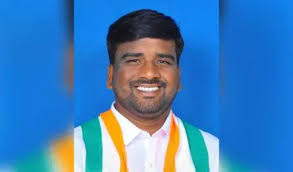
Congress SC Cell leader Marrelli Anil (28) was found dead under mysterious circumstances in Kulcharam mandal, Medak. Bullets were found near his body, but cause of death is yet to be confirmed. Police have launched an investigation. Medak: Congress Party SC Cell district secretary Marrelli Anil (28) was found dead under suspicious circumstances at Variguntham village in Kulcharam mandal in the early hours of Tuesday. The police have recovered four bullets close to his body. However, they did not confirm whether there were any bullet injuries on his body. He has bleeding injuries on his right shoulder and chest. Anil was on his way to Pythara village, his residence, in his car on Monday late at night after participating in a party programme in Gandhi Bhavan. The police reached the spot, and the body was taken to the government hospital in Medak for a postmortem. The news of his death has triggered widespread shock, with several Congress leaders rushing to the Medak hospital to inquire into the incident. Courtesy : Telangana Today Note: This news is originally published on https:/telanganatoday.com/ and is for use by the non-military/non-commercial community, especially those in the human rights sector.
Erasure Of Dalit Labour In The Prada-Kolhapuri Cultural Theft Discourse
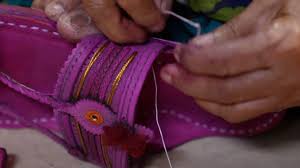
What if the cultural erasure didn’t start with Prada, or with the West? What if the deeper, older story is not just about colonial appropriation, but about caste-based appropriation from within? The last few weeks have seen major upheaval within the tumultuous horizons of Indian social media, with allegations of “cultural appropriation” abounding. When global luxury brand Prada unveiled a new line of footwear that bore a striking resemblance to the Kolhapuri sandals, shoes familiar to anyone with an inkling of Indian “ethnic” wear. The brand had not acknowledged the roots of these sandals, nor credited any artisans, and the price was not disclosed. Estimations ranged from £600 to £1000, based on the retail rates of its other sandals on its website. Backlash by privileged Indians ignorant of caste appropriation Harsh Goenka, chairman of RPG Enterprises, tweeted on X, ‘Prada is selling products looking like Kolhapuri chappals for over ₹1 lakh. Our artisans make the same by hand for ₹400. They lose, while global brands cash in on our culture. Sad!’ His tweet is one of several that call out this blatant cultural theft. After a flurry of news media outlets picking this up, a supposed dig Kareena Kapoor at from the brand, a series of complaints and responses from Maharashtra Development Commission and Maharashtra Chamber of Commerce, Industry and Agriculture, and the filing of a PIL – Prada said in a statement to BBC, “The company has ‘always celebrated craftsmanship, heritage and design traditions’, adding that it was ‘in contact with the Maharashtra Chamber of Commerce, Industry & Agriculture on this topic.’” They also assured the MCCIA about a collaborative venture, with a possible partnership with the artisans who are the original makers and conservators of the shoes in question. This debacle also gained more ground with the propagation of other forms of Indian apparel, like the dupatta, gaining ground among designers and influencers in the West as a “Scandinavian scarf” while models and consumers sported clothing eerily resembling a mutated form of the salwar-kameez. All these conversations are necessary — they point out and criticise the contemporary strains of colonialism and gentrification of the craft of the Global South, and mention the well-being of “artisan clusters” and make comparisons between the original artisans’ rates and the corporation’s. However, none of them seemed to take any interest in matters regarding the actual well-being of these communities and their present situation, detached from this specific situation, nor the central issue of caste and the patterns of savarna consumption. Beneath the surface: The invisibilisation of Dalit artisans and their labour Purushu Arie, in an article for The Hindu, wrote, “When Italian luxury house Prada recently unveiled its version of the Kolhapuri chappal, Indian social media was quick to react. Accusations of cultural appropriation and erasure followed, accompanied by demands for proper attribution and a wider call to ‘decolonise fashion’. But what if the cultural erasure didn’t start with Prada, or with the West? What if the deeper, older story is not just about colonial appropriation, but about caste-based appropriation from within? Beneath the Indian diaspora’s outrage lies a deeper, more uncomfortable truth: the issue isn’t just about what is being borrowed, but who gets to borrow and who doesn’t. The Kolhapuri controversy exposes not only colonial legacies but also the casteist dynamics embedded within India’s cultural economy.” “What if the cultural erasure didn’t start with Prada, or with the West? What if the deeper, older story is not just about colonial appropriation, but about caste-based appropriation from within? The Kolhapuri controversy exposes not only colonial legacies but also the casteist dynamics embedded within India’s cultural economy.” Leatherwork has been deeply stigmatised in India historically because of its proximity to animal hides. The Kolhapuri chappals are crafted by the Charmakar (also known as Chamars), Dhor and Matang people, belonging to scheduled caste communities who are often put under the umbrella of the “Indian” or “Maharashtrian” label, erasing the caste-specific labour dynamics that are associated with this profession. There has also been little mention of the dismal conditions that most of the artisans behind the Kolhapuri sandals have to face, affecting them socio-economically. While nearly 100,000 artisans are involved in this industry, according to the MCCIA, most of them are relegated to working in an informal economy with extremely low daily incomes. Artisans making Kolhapuri chappals inside an Inga Leathers workshop in Kolhapur. Photo Credit: Emmanual Yogini Although Kolhapuri sandals have been given a GI tag with regard to authenticity markers, artisans can barely keep up with the influx of machine-made, cheap synthetic copies that have flooded the markets, which Indian consumers have no issue purchasing, although this puts the artisans in a detrimental position. Moreover, with the election of the BJP at the centre, and the 2015 ban of the Maharashtra government on cow slaughtering, artisans are having to source the leather from other states, more expensively. All quiet on the Indian front: Problematising “cultural theft” The problems of cultural theft, it seems, are only acknowledged when it exists in the colonial dimension – when a Western “other” decides to take what’s “ours”. There is, however, a larger question – what is this “ours” that we speak of? The rendering of cultural theft into an “western colonization” issue acts as a defanging of sorts – where theft is only defined by nationality, and the imagined ideals of the “others (westerners) with a colonial past” and “us (Indians) subjugated by this colonial legacy” erases India’s own violent and troubling history of marginalizing and subjugating its citizens in systemic and structural ways. This is not a standalone phenomenon; it keeps recurring and is a structural part of our culture. As a Savarna Bengali person, I saw the intermixing of Santhali fashion with the Bengali bhadralok’s repertoire of apparel. I was also afforded the blissful ignorance of the same, where this homogenization of all these distinct identities of craft under the “Bengali” banner almost seemed natural. Aastha Jani writes in another article on FII,
President Murmu inspires me to work for poor, tribals and dalits of the state: CM Mohan Charan Manjhi
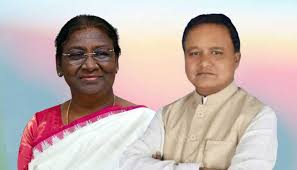
“I vividly remember the jubilant atmosphere that swept the country when her name was announced as the Presidential nominee,” the CM said. Her Excellency President Droupadi Murmu has arrived in Odisha. As I greet her on behalf of 4.5 crore Odias, my heart overflows with joy and pride, not just as a citizen, but as a younger brother welcoming his beloved elder sister. President Droupadi Murmu’s identity is truly unique among her predecessors. I vividly remember the jubilant atmosphere that swept the country when her name was announced as the Presidential nominee. From the Himalayas to Kumarika, people from tribal and dalit communities, the poor and hardworking citizens poured into the streets to celebrate. It was a spontaneous outpouring of joy, a moment so unprecedented that no similar celebration has ever followed the announcement of a Presidential candidate in the past. And perhaps, such a moment may never come again. As the first tribal woman to occupy the highest Constitutional post in the country, her election marked not only a historic moment for Odisha, but a moment of celebration for the entire nation, especially for the tribal communities, women, the underprivileged, and the marginalized. Droupadi Murmu Ji’s family background and social life had fascinated the people across India. Marking an incredible journey from Rairangpur to Raisina Hills, she proves that a person, who is at the bottom of the social and economic system, can rise to occupy the highest constitutional office of the country. This is the strength of India’s democracy. Obliviously, Prime Minister Narendra Modi had a key role in the selection of Droupadi Murmu as the Presidential candidate. ‘Purvodaya’ is Modi Ji’s vision. His plan was to ensure that eastern part of the country, lagging behind in terms of development compared to the western and southern regions, prosper economically. He was clear that a developed India is not possible without the development of the poor and women of the country. It can be said without a doubt that by nominating Droupadi Murmu Ji from Odisha as the Presidential candidate, Modi Ji succeeded in creating a suitable atmosphere to successfully achieve his priorities of development and prosperity across the country. In 2000, when I was elected as an MLA, Droupadi Murmu Ji was serving as a minister in the Odisha government. She was able to accomplish her mission with diligence and hard work. During the aggressive stance of the Opposition in the Assembly, she always had the ability to silence them by giving calm, simple, polite yet firm and lo gical answers. As a young legislator, especially as a member of the government alliance, there was little opportunity to speak but Droupadi Murmu Ji used to guide us to raise the problems of the poor, women, tribals, dalits, farmers and youth of our region and state. The Santhali tribe, to which Her Excellency belongs, has a glorious tradition. Pandit Raghunath Murmu of Santhali community invented the Ol Chiki script. The memories of her distributing sweets out of happiness and joy when Santhali language was included in the Eighth Schedule of Constitution during the Prime Ministership of Atal Bihari Vajpayee in 2003, is still fresh in my mind. However, this great daughter of Odisha, a role model for women and the poor, is often insulted and humiliated for political vendetta. Today, when she arrived in Odisha, I felt very happy as a tribal. I have experienced poverty and also managed to withstand it. Her Excellency is an inspiration for me to work more diligently and systematically for the tribals and the poor of the state. Jai Jagannath! Courtesy : TNIE Note: This news is originally published on https:/thenewindianexpress.com/ and is for use by the non-military/non-commercial community, especially those in the human rights sector.
Priyanka questions U.P. school merger decision, calls it directed against Dalits, backwards
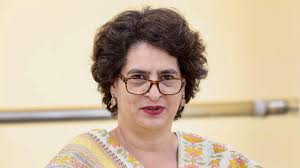
If schools are located far from homes, how will small children, especially girls, walk several kilometers to reach school, she asked Senior Congress leader and Lok Sabha MP Priyanka Gandhi Vadra on Monday (July 14, 2025) alleged that the Bharatiya Janata Party (BJP) government in Uttar Pradesh is set to close around 5,000 government schools in the name of merger and described the reported decision not only against the Right to Education, but also against the Dalits, backwards, tribals, minorities, poor, and deprived sections. “The Uttar Pradesh government is going to close about 5,000 government schools in the name of merger. According to teacher organizations, the government intends to close about 27,000 schools. The UPA government had introduced the Right to Education Act in the country, under which a school was arranged in every village so that education could be made accessible to children from poor families. If schools are located far from homes, how will small children, especially girls, walk several kilometers to reach school? Obviously, their studies will be disrupted. Why is this right being snatched away from children,” wrote the Congress leader on X. She added, “this order of the BJP government is not only against the right to education but is also against the Dalit, backward, tribal, minority, poor and deprived sections,”. Uttar Pradesh government initiated a plan to merge schools having enrolment of less than 50 students, with nearby educational facility to make the education system more functional and viable. As part of the consolidation plan, students from these schools will be accommodated in nearby facilities to ensure their continued education. The decision faced pushback from many teachers and opposition political parties who dubbed the decision as anti-poor. Mayank Kumar Courtesy : The Hindu Note: This news is originally published on https:/thehindu.com/ and is for use by the non-military/non-commercial community, especially those in the human rights sector.
Dalit teen beaten, abused with casteist slurs by five men in Muzaffarnagar; police register case under SC/ST act
According to the complaint lodged by him, he was on his way to a shop when Azad, Ankur, Nitin, Deepak and Saurabh started abusing him Five people allegedly beat up a Dalit teenager in a village here and made casteist remarks against him, police said on Sunday. A case has been registered against the five people from Badhai Kala village in Muzaffarnagar district for beating up Gullu, 19, when he was going to buy goods from a shop on Saturday, they said. According to the complaint lodged by him, he was on his way to a shop when Azad, Ankur, Nitin, Deepak and Saurabh started abusing him. When he opposed them, they thrashed him and hurled casteist remarks at him. They were booked under relevant sections of the BNS and Scheduled Castes and Scheduled Tribes (Prevention of Atrocities) Act, Charthawal SHO Jasvir Singh on Sunday told reporters. Except for the headline, this story has not been edited by The Telegraph Online staff and has been published from a syndicated feed. Courtesy : The Telegraph
Dalit beaten up for playing Shiv Bhajans on E-Rickshaw in Sawan, case against 25
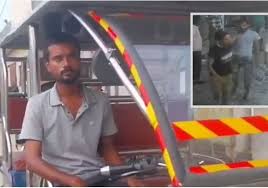
Dalit beaten up for Playing Shiv Bhajans on E-Rickshaw: A case of attacking a Dalit e-rickshaw driver for playing Shiv Bhajans has come to light in Rustam Nagar Sahaspur of Bilari police station area of Moradabad district of Uttar Pradesh. It is alleged that some Muslim youths first beat up the Dalit youth and then dragged him to a house. CCTV footage of this incident has also surfaced, in which the attackers can be seen dragging the victim. The victim e-rickshaw driver Ankit said that he was playing Lord Shiva’s bhajans in his e-rickshaw as the month of Sawan is going on. Angered by playing Shiv Bhajans, some youths attacked him. The attackers first insulted him with casteist words and then started beating him. When Ankit tried to run away, he was dragged to a house, where he was beaten up fiercely. Police arrested three As soon as the information about the incident was received, the police took immediate action and registered a case against 5 named and 15-20 unknown people on the basis of the complaint of the victim. At the same time, the police took action in the case and arrested 3 accused and sent them to jail. Additional police force has been deployed to maintain peace in the area. This incident is being thoroughly investigated. So that all the culprits can be punished. The police have appealed to the people not to pay attention to rumors and maintain peace. Also, the police expects the cooperation of the public for any new information in this case. Search for other accused continues Taking the matter seriously, the police arrested three accused and sent them to jail. SP Rural said that strict action is being taken against the accused and further legal process is going on. On the basis of CCTV footage, the police has started searching for other unknown accused. By Sorit Chaudhary Courtesy: Hindi News
Rampur News: Inspector on line duty in Dalit youth murder case
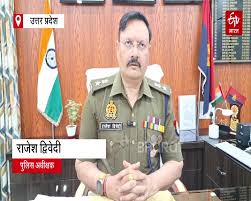
Bilaspur. In the case of beating a Dalit youth to death, the SP has suspended the sub-inspector. On Sunday, Minister of State Baldev Singh Aulakh reached the house of deceased Suraj, a resident of village Bhainsia Jwalapur, and consoled the family members, but the family members complained about the negligence of the police in the incident. The Minister of State asked the SP over phone to take action against the police personnel guilty of killing the Dalit youth, after which the SP took action to send the sub-inspector to the line. At the same time, the National President of Tarai Kisan Union Tejendra Singh Virk also reached the house of the deceased and condemned the incident. The police also conducted raids at several suspicious places on Sunday in search of a wanted accused, but he could not be caught by the police. Minister of State Baldev Singh Aulakh reached the house of Dalit youth Suraj, resident of village Bhainsiya Jwalapur, along with Block Pramukh Kulwant Singh Aulakh etc. on Sunday afternoon. He expressed condolences without consoling the family of Suraj. The family demanded that the wanted accused in the case of carrying out the incident should be arrested soon, along with compensation, action should also be taken against the guilty police personnel. He described the negligence of the police in the entire incident. The Minister of State immediately spoke to SP Vidya Sagar Mishra over phone and asked to take action against the guilty policemen as well. The SP told him that sub-inspector Pramod Kumar Sharma has been sent to the line. He is getting the matter investigated.The Minister of State assured the family that he is with them in this sad moment. He told former village head Naresh Kumar Gautam that if the family of the deceased faces any problem, they should inform him so that they can be helped.Kotwali in-charge Balwan Singh said that five people involved in the incident have been arrested. Police teams are raiding to arrest another wanted murder accused. He has also confirmed the suspension of the inspector.Courtesy : Hindi News
Moradabad News: Two more sent to jail in the incident of beating a Dalit rickshaw driver
Bilari. Two more accused named in the incident of beating an e-rickshaw driver playing religious bhajans in Sahaspur village were arrested by the police on Sunday and sent to jail. Police is raiding to arrest the remaining absconding accused. Remember that on the evening of July 10, Sahaspur’s Dalit e-rickshaw driver Ankit was beaten up by youths of another caste in Mohalla Sabir Chowk when he was going while playing religious bhajans. When the matter escalated, the e-rickshaw driver lodged a case under serious sections against five named and twenty unknown persons late on the night of the incident. One named accused Sonu alias Asif was arrested by the police on Saturday and sent to jail, while two other named accused Sameer and Bhura alias Hafiz were arrested on Sunday and presented in the court of Moradabad by Bilari police. From where both were sent to jail. With the help of CCTV cameras, the police is also trying to find out those twenty unknown people who took the e-rickshaw driver to the village head’s house after beating him. Since all the accused of beating the e-rickshaw driver who played religious bhajans belong to another caste, the Bilari police is serious about the peace and order in Sahaspur in this case. These days the Kanwar Yatra has started and the procession of Jashne Eid Miladunnabi will be taken out in the coming month. In the year 2011, after the procession of Eid Miladunnabi was taken out in Sahaspur village, there was a dispute between the two castes. Therefore, the police is keeping an eye on the situation in Sahaspur regarding this matter. The police is identifying such people from both the castes who can disturb the peace on the occasion of festivals. Courtesy: Hindi News
Moradabad News: Case filed against youth of other community for molesting a Dalit girl
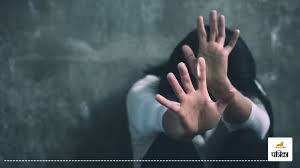
Bhojpur. A case has been filed against two people for molesting a minor girl of Dalit community. The victim has also accused the accused of insulting her by using casteist slurs and threatening to kill her. In a complaint filed by a villager to the police, it was said that on Saturday evening, his 13-year-old daughter was sitting at a grocery shop when Naveed, a resident of Pipalsana village, came to the shop with one of his friends and started molesting the girl. He asked for her mobile number and threatened to kill her if she did not talk. The girl challenged the youths and said that she would tell her father about their actions. On this, the youths used casteist slurs and threatened to kidnap the girl. The police have filed a report against the accused Naveed and his friend. The investigation of the case has been handed over to CO Thakurdwara Rudra Kumar Singh. Courtesy : Hindi News
Dalit Youth Hanged Upside Down From Tree, Brutally Beaten By Villagers Over Suspicion Of Theft In UP’s Fatehpur

After being alerted, the police arrived at the spot and rushed the victim to the Community Health Centre (CHC), from where he was referred to the district hospital. A young Dalit man was brutally assaulted by villagers on suspicion of theft in Uttar Pradesh’s Fatehpur. A shocking video of the assault has surfaced online. The video shows the victim hanged upside down from a tree while villagers beat him mercilessly. According to reports, the villagers also beat another young man who tried to intervene. After the video went viral, police filed a case on Saturday evening. Naresh Paswan, a resident of Chhimi village in the Kotwali area, has alleged that villagers caught him on Thursday night when he was going towards his field. They later accused him of intent to steal and created a commotion, causing several villagers to gather at the scene. Villagers allegedly tied him to a tree and hanged him upside down. During this, Vijay Singh, a resident of Munna Ka Purwa hamlet in Chhimi, arrived. He tried to intervene and mediate. He was also beaten and chased away. He suffered head injuries during this. After being alerted, the police arrived at the spot and rushed the victim to the Community Health Centre (CHC), from where he was referred to the district hospital. Based on Vijay Singh’s complaint, police have registered a case under serious sections against Arjun, Phool Singh, Khanna alias Rajesh, Raju, Shivkaran alias Bauwa, Amarjeet, Ramchandra, and four to five others. Station Officer R.K. Singh said that a report has been registered and the investigation will be conducted by Khaga CO. Naresh’s condition is stable. Vinay Mishra Courtesy : TFPJ Note: This news is originally published on https:/thefreepressjournal.com/ and is for use by the non-military/non-commercial community, especially those in the human rights sector.