
Muslim Girl Murdered & Secretly Buried For Eloping With Dalit Youth In UP; Father & Uncle Arrested
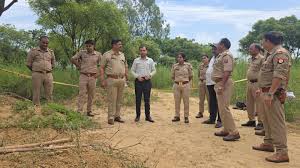
Lucknow: A teenaged Muslim girl was allegedly murdered and secretly buried by her family members in Uttar Pradesh’s Baghpat district after she eloped with a 19-year-old Dalit boy. The victim’s father, Waris, uncle Matlubh, and cousin Sadik — all residents of Palda village — were taken into custody by Baraut police after villagers noticed injury marks on the girl’s neck during her burial and informed the boy’s family and local police. According to primary investigation, the girl was in a relationship with Sagar Kashyap, a scheduled caste youth from the same village. “The two had been in love for over 18 months but faced strong opposition from the girl’s family due to caste and religious differences. The minor girl’s grandfather is a known Samajwadi Party worker with political influence in the area,” a police official said. On July 15, the couple fled to Himachal Pradesh’s Una, where Sagar worked at a brick kiln. “The girl’s family tracked them down the next day, brought them back to the village in a car, allegedly beating them throughout the journey. They tied them near a tubewell in the village, where the couple was publicly thrashed. Sagar was handed over to his family with death threats, and the girl was taken back home,” the cop added. According to police, the family allegedly strangled the girl on July 23, telling everyone that she had died of tuberculosis. Her body was buried in a hurry. However, some villagers noticed bruises and strangulation marks on her neck and other parts during the burial, and alerted the authorities. Courtesy : Odisha Bytes Note: This news is originally published on https://odishabytes.com/bha and is used purely for non-profit/non-commercial purposes, especially human rights.
The accused of molesting a Dalit minor has been declared absconding: In Sant Kabir Nagar, the victim was attacked with a stick when she protested.
The court has taken a tough stand in the case of molestation of a 13-year-old Dalit girl in Sant Kabir Nagar. The court of ADJ and Special Judge POCSO Act Krishna Kumar Pancham has issued a permanent arrest warrant against the accused Chandrashekhar Yadav. The accused is accused of doing obscene acts with the minor girl, beating her and using casteist abuses. The accused has been declared absconding due to his continuous absence in the case. The court has issued a permanent arrest warrant in four copies to the police station in-charge Dhanghata and ordered action. This incident is from a village in Dhanghata police station area. According to the complaint lodged by the victim’s uncle, on April 20, 2022, at around five in the evening, his niece was going to her field to collect straw. Meanwhile, the accused Chandrashekhar Yadav of another village started molesting her on the way. When the girl protested, the accused abused her with casteist abuses and hit her on the head with a stick. The girl’s head was broken due to this attack. The police registered a case of molestation, assault, POCSO Act and SC/ST Act and after investigation sent the charge sheet to the court. Sub-inspector Ram Darsh Yadav said that raids were conducted to arrest the accused, but he is absconding. Since there is no possibility of the accused being arrested immediately, the court has issued an arrest warrant against him in 4 copies. The station in-charge has been ordered that after the arrest of the accused, the file will be called from the archives. Ashutosh Vikram Singh Courtesy : Hindi News
Dalits will never believe BRS: AICC secretary Sampath Kumar
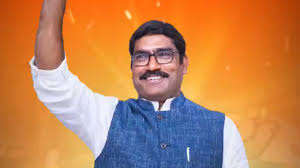
AICC secretary Sampath Kumar hit out at BRS MLA T. Harish Rao alleging that his statements on Kaleshwaram and water release by the government were incoherent indicating his frustration more than anything else. Speaking to reporters at Gandhi Bhavan on Saturday, Mr. Sampath Kumar said the government releases water based on need, in stages. It’s a continuous, planned process. He asked Mr. Harish Rao not to play to the gallery by warning that he would go and release water from the projects if the government doesn’t do so. “When water is released based on the needs, Mr. Rao will claim credit, saying it happened because of him. This is political opportunism and nothing to do with reality,” he said. Targeting BRS working president K.T. Rama Rao, Mr. Sampath Kumar wondered whether Dalits would believe the BRS party. “Don’t use Dalits as political tools. After 10 years in power, you have nothing to show except dismissing Dalit Deputy Chief Minister T Rajaiah overnight and using third-degree methods on Dalits protesting illegal sand mining,” he said. Unlike the BRS government, the Revanth Reddy government has four Dalit ministers, he said while accusing the BRS of diverting SC sub-plan funds. “We have allocated ₹30,000 crore for Dalit welfare. That is the real difference.” The Hindu Bureau Courtesy : The Hindu Note: This news is originally published on https://thehindu.com/bha and is used purely for non-profit/non-commercial purposes, especially humanrights.
Two dalit youths tied to pole, thrashed by mob in UP’s Sambhal
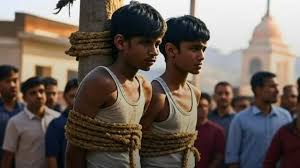
The two youths had gone to see Kanwar procession and on their way back home, , some residents of Barhai Wali Basti caught them, accused them of theft, and beat them up. SAMBHAL: A violent mob allegedly tied two Dalit youths to a pole and beat them up, accusing them of theft, police here said on Saturday. A purported video of the incident has surfaced online. The incident took place on July 22, and a case was registered on Saturday against five named and around a dozen unidentified persons based on a complaint filed by the mother of one of the victims, they said. Station House Officer (SHO) of Nakhasa police station, Rajnish Kumar, said Sunita, a resident of Nahar Dher village, alleged in her complaint that her son Sundar (20) and his relative Shani (22) had gone to see the Kanwar procession in Sambhal. On the way, some residents of Barhai Wali Basti caught them, accused them of theft, tied them to a pole, and beat them up, the SHO said. Both youths were admitted to the hospital for treatment, he said. Based on the complaint, an FIR has been registered against Nand Kishore, Bharat, Dabbu, Bhura, Shriram’s son, and 1012 unidentified persons under sections 191(2) (rioting), 190 (unlawful assembly), 127(2) (wrongful confinement), 115(2) (voluntarily causing hurt), 352 (intentional insult with intent to provoke breach of peace), 351(2) (criminal intimidation) of the Bharatiya Nyaya Sanhita (BNS), and provisions of the Scheduled Castes and Scheduled Tribes (Prevention of Atrocities) Act, the officer said. Further action is being taken in the matter, he added. Courtesy : TNIE Note: This news is originally published on https://thenewindianexpress.com/bha and is used purely for non-profit/non-commercial purposes, especially human rights.
Have you tried Dalit food?
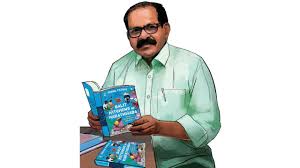
Shahu Patole’s book Dalit Kitchens of Marathwada, artist Rajyashri Goody’s installation Eat with Great Delight, and Sri Vamsi Matta’s curated ‘Come Eat With Me’ events—all assert their caste identity in different ways Meenakshi SheddeMany years ago, I was working on an English translation of filmmaker Nagraj Manjule’s stunning book of poetry in Marathi, Unhachya Kataviruddha. He very graciously invited me to stay over at his and Gargee’s house in Pune during the long hours of back-and-forth, as I struggled to translate it accurately — Marathi is only my third language. One of his poems had the evocative phrase “kulkulit chaha”. Did you mean like kick-ass, strong tapri chai? I asked naively. Nagraj looked at me and said frankly, “We simply could not afford milk for tea.” Translation is not only a question of language and the subtext of the tea, but also the economic conditions in which the tea was made. Filmmaker Mari Selvaraj also turns two glasses of tea, a black tea and a milk tea, with a small mogra flower between them, into an iconic, most heartbreaking image in the climax of his remarkable film Pariyerum Perumal in Tamil. Not much is widely known about “Dalit food”, and related recipes, stories and culture. But there have been fascinating efforts to highlight this. These include Shahu Patole’s landmark book Anna He Apoorna Brahma (Marathi, 2015), translated as Dalit Kitchens of Marathwada by Bhushan Korgaonkar (Harper Collins, Rs 599, 2024). Gifted artist Rajyashri Goody has created installations Writing Recipes (2016) and Eat with Great Delight, the latter with family photographs and recipe booklets (2018). Born and raised in Pune in a half-Dalit, half-English family, she put together a series of recipe booklets, recipe-poems really, inspired by references to food in Dalit literature. She acknowledged that she was inspired by Shahu Patole’s book, and Isn’t This Plate Indian? Dalit Histories and Memories of Food by the Gender Studies Class of 2009 at Pune University. And there is theatre artist Sri Vamsi Matta, in whose “Come Eat With Me” events, cooking is an act of remembering, performance and a communal experience, by way of asserting his identity and defying everyday injustices. Shahu Patole’s remarkable book is possibly one of the first published Dalit cookbooks in India. Patole, who grew up in Marathwada, is a writer and retired government officer from the Indian Information Service cadre, who has worked in the Press Information Bureau, Defence PRO, All India Radio and Doordarshan. His book records a range of non-vegetarian and vegetarian recipes from the Mahar and Mang communities in Mara¬thwada, along with the social context, his personal memories and lived experiences as a Dalit. The recipes, like any other, are shaped by locally available foods and ingredients, as well as historical, financial and cultural factors, and “acquired through centuries of discrimination.” He writes of how upper caste Hindus, including Kayasths, Rajputs, and even Saraswat Brahmins, are often non-vegetarian, eating “meat, mainly goat, lamb, chicken.” He observes how, in the face of “vegetarian propagandists”, “non-vegetarians are made to feel immoral and guilty.” And of course, vegetarian moral police are increasingly common: housing societies and landlords won’t allow a non-vegetarian to live in the flat/society. He shares how the democratisation of media and social media has enabled Dalits to share their food stories. Food is a sensitive, and entirely personal issue. And Patole counters critics with his comment: “If people would really have become ‘satshil’ (good natured) by eating sattvic food, then the caste and class system wouldn’t have survived in this culture.” Mahars and Mangs traditionally disposed of dead animals, among other professions, and have been eating meat since before the Common Era — long before Muslims arrived in India, writes Patole. Commenting on the hypocrisy and exploitation of lower caste labour by Brahmins, he observes: “Untouchability was not followed while digging and construction work (of wells) was on. Though once they hit water, untouchability kicked in.” Traditionally, Mahars and Mangs also did a lot of labour for the landlords’ households: cleaning cattlesheds, cleaning the house, repairing plaster, feeding cattle, cutting wood: usually they are not paid money for such ‘minor’ work, but paid in leftover food, that’s how reheated leftovers have become a dish, ambura, meaning fermented, Patole explains. His meat recipes, and stories, include kalij (liver), boka (kidneys), khima (minced meat), rakti (animal blood), and even moholachi poli (honeycomb), the last cooked with onions, chilli powder and salt. And also vegetarian recipes, including pithla, kandavani (onion chutney), hula (roasted pods), tarvat (a leafy vegetable), ambadi (roselle) bhakri, dodya curry (raw figs) and chigur (tamarind flowers). Thank you to the team — Patole, Suchismita Ukil from Harper Collins and Bhushan Korgaonkar, for opening our eyes to worlds within. Meenakshi Shedde Meenakshi Shedde, film curator, has been working with the Toronto, Berlin and other festivals worldwide for 30 years. She has been a Cannes Film Festival Jury Member and Golden Globes International Voter, and is a journalist and critic. Courtesy : Mid-Day Note: This news is originally published on https://mid-day.com/bha and is used purely for non-profit/non-commercial purposes, especially human rights.
Congress leader calls Rahul Gandhi 2nd Ambedkar, BJP decries insult of Dalits

Congress leader Udit Raj compared Rahul Gandhi to Ambedkar, triggering strong backlash from BJP leaders who called it an insult to the Dalit icon. BJP demanded an apology from Congress for allegedly undermining Ambedkar’s legacy. Congress leader Udit Raj stirred a political controversy on Saturday after drawing parallels between Rahul Gandhi and Dr BR Ambedkar. His remarks sparked a sharp backlash from several BJP leaders, who called the comparison a “big insult” to the architect of the Constitution. Taking to X, Udit Raj wrote, “Other Backward Classes people will have to think that history does not give opportunities for progress again and again. They should follow and support what Rahul Gandhi said in the Talkatora Stadium conference. If they do so, then Rahul Gandhi will prove to be the second Ambedkar for them.” Congress leader Rahul Gandhi on Friday admitted that not conducting a caste census earlier was his mistake and pledged to correct it now. He told the gathering that it was not the Congress party but he himself who had erred in not pushing for a caste census earlier. “I regret that if I had known more about your history and issues, I would have got the caste census conducted. That is my mistake and not that of the Congress. I am going to correct that mistake now,” Gandhi said. Union Minister Kiren Rijiju strongly objected to the comment, saying, “I take serious objection to the Congress comparing Babasaheb Ambedkar with Rahul Gandhi.” BJP Spokesperson Pardeep Bhandari also reacted sharply. In a post on X, he said, “This is a big insult of Baba Saheb Ambedkar! There is a competition of ‘bootlicking’ in Congress. Kerala BJP president Rajeev Chandrasekhar also hit out at Udit Raj and Rahul Gandhi. “First, Rahul Gandhi should do something for the country. He has not done any work even for a day in his life so far. He is living on taxpayers’ money, lives in a big house. He should first do something for the country, people and say something good about the country, then people will decide what is he,” he wrote on X. Courtesy : India Today Note: This news is originally published on https://indiatoday.com/bha and is used purely for non-profit/non-commercial purposes, especially human rights.
MPDO booked for sexual harassment of Dalit woman in Andhra’s Prakasam

In response, Madiga Reservation Porata Samiti (MRPS) leaders staged a protest in front of the Mandal Office on Saturday. ONGOLE: A Mandal Parishad Development Officer (MPDO) in Tarlupadu mandal of Prakasam district was booked for sexual harassment and under the SC/ST (Prevention of Atrocities) Act, following a complaint by a Dalit woman staff member. According to Tarlupadu SI Brahmanaidu, the accused officer, Chakrapani Prasad, allegedly harassed the woman—an office assistant on daily wages for the past 10 years—on two consecutive days last week. The first incident occurred on Monday evening when he allegedly misbehaved with her after calling her into his room. The following day, she did not attend work out of fear. On Wednesday, the officer reportedly tried to forcibly pull her into the restroom, causing minor injuries to her hand. She later filed a complaint at the Tarlupadu police station on Thursday night. In response, Madiga Reservation Porata Samiti (MRPS) leaders staged a protest in front of the Mandal Office on Saturday. Tahsildar assured them that the matter would be reported to higher authorities. The accused officer is currently absconding. Courtesy : TNIE Note: This news is originally published on https://thenewindianexpress.com/bha and is used purely for non-profit/non-commercial purposes, especially human rights.
Rahul Gandhi slams ‘Institutionalised Manuwad’ in higher education; demands immediate filling of reserved posts
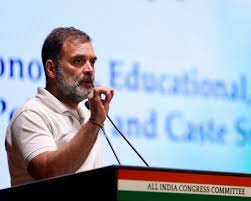
Rahul Gandhi on Friday slammed what he called “solid evidence of the deprivation of Dalits, Bahujans and institutionalised Manuwad,” after government data revealed a significant backlog in filling reserved category posts in higher education, and demanded that all vacant positions be filled immediately. The data, revealed in the Rajya Sabha by Minister of State for Education Sukanta Majumdar in response to a question raised by Professor Manoj Kumar Jha of the Rashtriya Janata Dal on vacancies over the past five years, highlighted a glaring gap for OBC, Dalit, and Tribal communities, as appointments from the general category far outweigh those from reserved categories, with the highest number of seats filled under the general category. For instance, only 84 professors from the OBC category have been appointed against a sanctioned strength of 423, reflecting a staggering 80% vacancy rate. Only 111 professors from the Dalit community have been appointed in the last five years, against a required 308, resulting in a 64% vacancy rate. Similarly, only 24 professors from the Tribal community were appointed out of the mandated 144, marking a stark vacancy rate of 83%. As of June 30, 2025, central universities across India had a total of 18,951 sanctioned teaching posts — professors, associate professors, and assistant professors. Of these, 14,062 were filled, leaving 25% of posts vacant. While the general category saw a relatively lower vacancy rate of 15%, the shortfall was significantly higher for reserved categories. Among OBCs, only 2,197 appointments were made against 3,688 sanctioned posts, reflecting a 40% vacancy rate. For the Dalit community, just 1,599 out of 2,310 posts were filled, resulting in nearly 30% of seats lying vacant. The gap was even more striking for the Scheduled Tribe (ST) community — only 727 of 1,155 posts were filled, leaving 37% of positions unoccupied. Notably, the highest number of seats were filled under the general category. In central universities, professor positions for Scheduled Tribes remain largely unfilled, with 83% of posts vacant, while 80% of OBC and 64% of SC professor posts also remain vacant. A similar pattern is seen in associate professor positions, with 65% vacancies for STs, 69% for OBCs, and 51% for SCs. Rahul Gandhi alleged that “this is not mere negligence but a well-planned conspiracy, to keep Bahujans out of education, research, and policymaking.” The Opposition leader said the exclusion of Bahujans from academia was not accidental but deliberate. “Due to the lack of adequate participation of Bahujans in universities,” he highlighted, adding, “the issues of marginalized communities are deliberately excluded from research and discourse.” “In the name of NFS (Not Found Suitable), thousands of qualified SC, ST, OBC candidates are being declared unfit under a Manuwadi mindset, and the government is unwilling to take any accountability,” he said. Calling the situation “completely unacceptable,” Gandhi demanded that “all vacant positions must be filled immediately, Bahujans should get their rights, not Manuwadi (follower of Manu) exclusion.” In response to Professor Manoj Kumar Jha’s question regarding the number of vacancies and the proportion of candidates declared “Not Found Suitable” (NFS) in reserved categories over the last five years, the Ministry avoided giving specific figures. Instead, it offered a generic explanation that sidestepped the core concern of systemic bias. The Minister of State for Education admitted that, “The details of the number of candidates ‘Not Found Suitable’ by selection committees for teaching posts in Central Universities are not maintained centrally.” While the government claimed that UGC regulations ensure “a transparent and objective selection procedure,” it offered no data to back that claim or to rebut the allegations of caste-based discrimination in appointments. Critics argue this reflects a broader Manuwadi framework, where upper-caste dominance in academia limits opportunities for OBC, Dalit, and Tribal communities, reinforcing caste-based hierarchies. Congress leader Randeep Singh Surjewala called this a “systemic erasure, not meritocracy.” Tribal Army, a vocal advocate for Indigenous rights in India, also sharply criticized the government’s track record on social justice and representation. “While the BJP may be showcasing the presence of a Prime Minister from the OBC community and a President from the tribal community,” it stated, “the stark reality is that 80% of professor posts for the OBC category and 83% for the ST category in central universities remain vacant.” “These figures,” they said, “are not just a sign of neglect but testify to deliberate discrimination. Governments pat themselves on the back by providing representation in symbolic positions, but when it comes to real empowerment, such as appointments to professor, associate professor, or assistant professor positions, these communities are sidelined with the excuse of being ‘not found suitable.’” Calling the practice “a blatant disregard for the principles of social justice,” Tribal Army warned, “If this situation persists, this game of depriving millions of marginalized people of education and opportunities under the guise of symbolic leadership will continue unabated.” RJD Spokesperson Priyanka Bharti said, “The ruling class still does not appear sensitive or committed to the welfare of marginalized social groups!” Courtesy : Maktoob Media Note: This news is originally published on https://maktoobmedia.com/bha and is used purely for non-profit/non-commercial purposes, especially human rights.
Geeli Puchchi: A Messy Tale of Caste and Desire
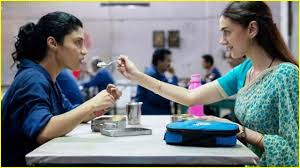
“Geeli Puchhi,” one of the four segments within the film Ajeeb Dastans, directed by Neeraj Ghaywan, intricately weaves the narrative around two central characters: Bharati, a Dalit queer woman employed as a ‘machine-man’ in a factory, and Priya, a Brahmin woman who is also grappling with questions about her sexuality while working as a data operator in the same factory. “Bhool gayi thi kya hum Dalit hai? Table-kursi ka sirf khaana milega; table-kursi ka kaam nahi” (“Have you forgotten we are Dalits? They will allow us to eat at a table but not work at one.”) This line from the movie Ajeeb Dastans aptly encapsulates what many Dalits go through in the 21st century. It portrays a time when societal values profess to support the upliftment of Dalits, yet this support seems to wane when it comes to their involvement within the confines of their workplace or home. Society’s morality lies in a grey area, allowing it to treat Dalits like equals but only to the extent that they do not interfere in their designated spaces, like their home or workplace—just like in the movie when Bharati was ‘allowed’ to enter their house but not given the same utensil to eat from. “Geeli Puchhi,” one of the four segments within the film Ajeeb Dastans, directed by Neeraj Ghaywan, intricately weaves the narrative around two central characters: Bharati, a Dalit queer woman employed as a ‘machine-man’ in a factory, and Priya, a Brahmin woman who is also grappling with questions about her sexuality while working as a data operator in the same factory. This film stands out for its inclusivity, with the director being a Dalit person himself and the protagonist, for the first time in Indian cinema, being a Dalit queer woman. Both women in the movie are shown to be morally grey, which is also a break from the typical ‘aspirational heroine complex’ of Bollywood. Interestingly, they are confronted with the same underlying themes of gender, caste, and sexuality, yet their responses to them are extremely different, navigating the complex web of intersectionality in India in starkly different ways. Their inter-caste queer love is something that Bollywood or even the broader anti-caste discourse has not explored before. Although the film could be critiqued for casting an upper-caste woman (Konkona Sen Sharma) as a Dalit woman, it courageously ventures into territories previously unexplored in Indian cinema. The film’s cinematography is a standout element, effectively immersing the audience in Bharati’s humiliation and Priya’s profound sense of loneliness. The movie is divided into two main colours: blue and orange. This deliberate choice becomes evident from the outset, as Bharati is linked with blue and Priya with orange through their clothing. An interesting visual metaphor unfolds when Bharati enters the factory; the camera captures orangish cylinders on the ground, while Bharati and her fellow workers occupy the blue side. Interestingly, this symbolic use of colour is given more depth by the historical significance of blue, a colour favoured by Ambedkar for its representation of an egalitarian open sky, where all stand as equals. The tension between the difficulties faced by the blue-collared worker and her potential to break free embodies a sense of liberation and sustains the anti-caste colour of blue. Through this review, I try to highlight the intricate knots that bind individuals to their social contexts, shedding light on the multifaceted realities that shape lives in the world’s largest democracy. I also try to shed light on how different social factors affect the characters in the movie and whether any of the characters are ‘at fault’ for doing what they did, or if it is a bigger play of societal norms that led them to their actions. ‘Intersectionality,’ a term often discussed but rarely comprehensively understood, is the crucible in which identities are forged and disparities perpetuated. For many people in the world, understanding how social factors affect people’s daily lives is a struggle, but for those who do understand this, connecting more than one social factor becomes an even tougher task. Most people understand the hindrances of a lower-caste woman through one lens only—either her caste or her gender. More so, her sexuality, class, and other social factors are either ignored or seen as separate things entirely. Kimberlé Crenshaw talks about a case in a factory where Black women were not getting employment, whereas women in general were. The court dismissed the appeal for hiring Black women and said that they should not be allowed to create a ‘super-remedy’ outside what the relevant statutes stood for. This shows how people think social factors lie on a linear spectrum with no intersection. According to her, the main issue for Black women is that there is no ‘framing the problem;’ in the previous case, the court saw sexism and racism in play as an either/or but not as a combined form of oppression. The collective disparaging social factors of a Black woman are not framed. And because their identity falls under both a ‘woman’ and a ‘person of color’ category within public discourses that only look to respond to one or the other, the interests of a Black woman are often marginalized in both. This also leads to the burden shifting to the most privileged members of a group (Black men in the Black Lives Matter movement or white women in the feminist movement) and results in a ‘single-axis framework,’ which distorts the analysis of people affected by social factors. In the same way in India, the kind of problem a Black woman faces in the U.S., a Dalit woman faces in India. The phrase, ‘All women are upper-caste and all Dalits are men,’ shows the underlying ‘invisibilisation’ of Dalit women in broader anti-caste and feminist movements. A Dalit queer woman, like Bharati, becomes even more marginalized in broader caste, sexuality, and feminist movements. Her gender and her caste play a big role in deciding her position in the factory. She is seen as a ‘man’ because of her behavior, which
Caste Violence and the ‘Valmiki Caste’ in Haryana: Atrocities, Trauma, and Resistance
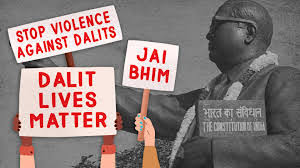
Casteist minds still resist the idea that a Valmiki can rise beyond socially imposed boundaries, that they too can become teachers, doctors, artists, or leaders. Atrocities against Dalits have been a big challenge for Dalits as well as governments. Because, as Dalits have been waking up about their rights, they have become objectives for casteist minds, and they have tried to break their confidence and even dismantle their leadership. The Indian caste system always endorses structures of social exclusion and discrimination. It would hardly be an exception to find a Dalit who has not experienced discrimination of some kind. The Valmiki community, a Dalit sub-caste traditionally associated with sanitation and manual scavenging, has particularly suffered under the weight of this oppressive system. The caste “Valmiki” does not refer to a single caste but rather a group of communities that were historically forced into occupations considered impure or degrading, especially manual scavenging and cleaning. Unfortunately, still today, Valmikis, who are associated with their hereditary professions, are accepted by Savarnas and Dalits also. However, if someone tries to establish him/herself, s/he would face dual exclusion from Dalits and non-Dalits. Even though India gained independence more than seventy-seven years ago and enacted a constitution that guarantees equality and dignity for all, many caste-bound occupations continue to function as inherited fates. Casteist minds still resist the idea that a Valmiki can rise beyond socially imposed boundaries, that they too can become teachers, doctors, artists, or leaders. This systemic prejudice is evident in many everyday situations and becomes glaringly violent in others. A striking recent example is the case of Jansu Chauhan, a Class 8 student at Christ Raja Convent School in Jind, Haryana. His father is a schoolteacher and his mother a homemaker. It was very unbelievable that an ignorable quarrel between Jansu and a classmate, Jivansh, during a telephonic conversation, turned into a horrifying episode of casteist abuse and threats because of Jansu’s caste identity. Following the argument, Jivansh’s father, Vikas Sharma, and his uncle, Deepak Sharma, called Jansu and unleashed a torrent of caste-based slurs—terms like “Chude,” “Chamaar,” and “Bhangi”—words that have been used for generations to shame and degrade Dalit individuals. The abuse went beyond words; they threatened to strip Jansu’s parents and kill him and his father, aiming to reduce the family to a state of terror. many difficulties, on May 17, 2025, Jansu’s mother lodged a complaint at Patiala Chowki in Jind. She described how her son had been harassed continuously for three years. She named not just the relatives of Jivansh but also a teacher, Hariom, who allegedly supported the harassment. She described that Vikas and Deepak Sharma often stood outside the school, harassed her son, and made videos to mock and intimidate him. However, the police delayed registering an FIR for eight days. When they finally did, on May 25, 2025, the FIR—registered as Case No. 179—only mentioned Deepak Sharma’s name. The other two accused, including the teacher named explicitly in the complaint, were excluded. The FIR invoked Sections 296 and 351(2) of the Bharatiya Nyaya Sanhita (BNS) along with Sections 3(1)(r) and 3(1)(s) of the SC/ST (Prevention of Atrocities) Act, 1989. But the selective naming of the accused and the delay in filing the FIR point to a larger issue: the collusion of caste and prejudices of state institutions. Even in a formal educational setting, and even when supported by a written complaint, a Valmiki child’s trauma was not taken seriously. Jansu has now stopped attending school. The trauma inflicted on him has not only interrupted his education but also left a deep emotional scar. After a few weeks, another shocking incident occurred—this time in the 12 Quarter Road area of Hisar district—on July 7, 2025, Ganesh, a minor young boy from the Valmiki community, was celebrating his birthday with his family. Loudspeakers were used during the celebration, reportedly beyond the legal time limits, which disturbed a nearby police outpost. What followed was a brutal overreaction by the police. Without a warrant and in the absence of a female officer—both in violation of standard legal procedures—the police forcibly entered the home. They beat members of the family, including women; Ganesh died during this trauma. Later, the video of the police attack circulated widely on social media, sparking anger and mourning. Members of the Valmiki community gathered at the Civil Hospital of Hisar, where Ganesh’s body had been taken for postmortem. They refused to cremate the body and demanded justice. Their demands were registration of an FIR against the officers involved, a CBI inquiry, termination of the involved personnel, financial compensation, and a government job for a family member. For ten days, from July 8 to July 17, they held a peaceful protest. The government initially ignored their demands and even issued a coercive notice under the Haryana Honourable Disposal of Dead Body Act, 2025, mandating cremation within 12 hours—a move widely seen as an attempt to suppress resistance. Finally, on July 17, after public pressure and ongoing protest, the government agreed to all five demands. Ganesh was cremated on July 18, 2025. The incident served as a painful reminder of other brutal caste crimes in Haryana—particularly Gohana (2005) and Mirchpur (2010). In 2020, a young man from the Valmiki community—Raman Valmiki—died under mysterious circumstances in judicial custody. His death also sparked protests by Dalit organizations, particularly by Balmikis. However, later investigation revealed that Raman’s death occurred due to health issues. Yet, it was still an institutional murder because it is the duty of the jail authorities to provide immediate medical facilities. One thing that must be discussed here is why all these atrocities have occurred specifically against the Balmikis. I investigated and found some answers to this question: Balmikis are not aware of the value of icons. Due to this ignorance, they are misled by misinformation and end up following icons who are not well established. Due to a lack of education, Balmiki representatives are fewer in the system than their proportion in the population.