
Congress dalit figures in Karnataka close ranksahead of internal quota report
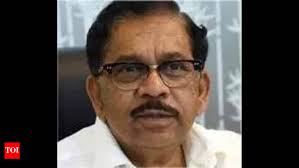
Bengaluru: With the Justice HN Nagamohandas commission set to submit its report on internal reservation for scheduled castes (SCs), senior dalit functionaries of Congress, including ministers and legislators, have resolved to remain united and avoid infighting over expected discrepancies in the caste-wise data. Home minister G Parameshwara, who chaired a closed-door meeting with SC ministers and legislators at his Sadashivanagar residence in the city Saturday, said the participants agreed to prioritise long-delayed quota reforms over internal differences. “We have been waiting for the internal reservation for many years. If there are conflicts about the report, it may lead to further delays. So, we have decided to stay together by ignoring small differences,” he added. The meeting comes ahead of the submission of the Nagamohandas commission report, which has collected empirical data on 101 scheduled castes to guide sub-quota distribution within the community. The report, which is expected to be submitted to CM Siddaramaiah on Aug 4, is likely to recommend revised shares for various sub-castes based on population and backwardness, raising concerns of potential discontent. “There are no MLAs or ministers from many sub-castes. So, we have decided to bring all socially and educationally backward groups into the mainstream. Everyone should get justice,” Parameshwara added, while urging all SC communities to stand together when the report is released. Ministers KH Muniyappa, HC Mahadevappa, RB Thimmapur, Shivaraj Tangadagi, deputy speaker Rudrappa Lamani, and several MLAs and MLCs participated in the meeting. Among them were KS Basavanthappa, AC Srinivas, Darshan Dhruvanarayan, Nayana Motamma, Roopakala Shashidhar, HV Venkatesh and Dr Thimmaiah. They resolved to meet Siddaramaiah once the report is submitted and press for a Cabinet decision ensuring fair representations for all SC communities. “If we are divided, the implementation will get delayed again. That should not happen,” Parameshwara said. “We have discussed staying together after the commission submits its report. We will meet again to decide the course of action to give justice to all the communities within the SC,” Pulikeshinagarr MLA, AC Srinivasa, said after the meeting. Courtesy : TOI Note: This news is originally published on https://timesofindia.com/bha and is used purely for non-profit/non-commercial purposes, especially human rights.
Dalit student’s suicide at CUK triggers outrage, allegations of cover-up
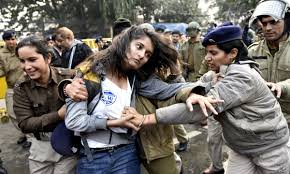
Kalaburagi: The alleged suicide of Jayasri Nayak, 20, a student from Odisha, has raised many questions about the educational atmosphere at Central University Karnataka (CUK) here. As authorities broke the door of the room — where the body was found — without informing police, activists suspect efforts to destroy evidence. Since the student belonged to the Dalit community, casteism is also being suspected. Agitation regarding the death is getting traction by the day. P Nandakumar, who was a student for 8 years from UG to PhD and was president of Ambedkar Vidyarthi Sanghatane at CUK, told TOI that atrocities against Dalit students have been ongoing in the varsity since its inception. “However, there was space to agitate when a Dalit student committed suicide in 2017. For the past 3-4 years, even our right to protest has been suppressed. If we insist, an FIR is filed against us. It started in 2019 when Rahul, a student, questioned performing religious rituals on campus when the varsity is a secular place. Earlier, the varsity’s SC/ ST cell provided financial assistance of Rs 20,000 for Dalit students intending to present their papers at national and international platforms. Now, it has been stopped. Even the OBC cell is shut. So is the case with the book bank and computer facility for Dalit students preparing for competitive exams. Now, SC/ST researchers are forced to pay fees on a par with general students. A caste column was introduced in the attendance sheet. Though they announce in press releases that accommodation and food are free for SC/ ST students, rent and fees are collected. Only when we oppose it, it gets refunded. Though Article 28/1 says there should not be any religious symbol in educational institutions, they have installed a Saraswati statue long before the installation of an Ambedkar statue. There are hundreds of cases to prove our allegations,” he explained. Dwarakanath CS, former chairman of Karnataka State Commission for Backward Classes, said he was prevented by security personnel from delivering a speech on Ambedkar last year. “I’m told there have been clashes between Dalit students and the varsity management for years. When we visited the campus at the request of Dalit students, we just offered a garland to the Ambedkar statue but were not allowed to speak about him. Many Dalit students shared that they are depressed by the casteist atrocities. Now, both the govt and the varsity management should consider the suicide of a Dalit student seriously,” he said. K Neela, a social activist in Kalaburagi, alleged that the varsity is turning anti-women and anti-minorities too in recent years. When contacted, prof Battu Satyanarayana, CUK vice-chancellor, said: “The anti-women allegation is false. Girl students outnumber boy students in our varsity. We are providing all facilities to all students irrespective of caste and creed. During admission, we follow reservation rules. It is our duty to provide equal opportunities to all. We have not introduced caste columns in attendance. We will ask caste and category only during the admission to follow the reservation system. There is no caste-based discrimination in the campus. We are following UGC guidelines and norms specified by the Constitution.” Responding to the recent suicide case, the VC said they did not know the student’s caste until it was raised. “Security personnel might have broken the room door assuming that she might be alive and needed immediate medical care. After learning about her death, we immediately informed the police, who in turn informed her parents. Her parents informed us that she had some health issues,” he stated. Courtesy : TOI Note: This news is originally published on https://timesofindia.com/bha and is used purely for non-profit/non-commercial purposes, especially human rights.
Dihuli Massacre Full Story: When 24 Unarmed People Were Brutally Killed, Justice Delivered After 44 Years
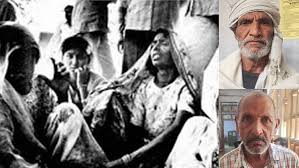
Read the full history of the 1981 Dihuli massacre in Uttar Pradesh, where 24 unarmed Dalits were killed. After 44 years, a Mainpuri court delivered justice with death sentences to three convicts. Dihuli Massacre Full Story Dihuli Massacre History: On the dark evening of November 18, 1981, the small village of Dihuli in Uttar Pradesh became the site of a horrifying tragedy that its residents can never forget. In the Jasrana police station area of Firozabad district (then part of Mainpuri), the sound of relentless gunfire claimed the lives of 24 innocent Dalits—men, women, children, and even infants. The Dihuli massacre was so brutal that it shook not just Uttar Pradesh but the entire nation. From Prime Minister Indira Gandhi to Opposition leader Atal Bihari Vajpayee, leaders visited the village to share the grief of the victims’ families. Finally, 44 years later, in March 2025, a special court in Mainpuri sentenced three convicts—Captain Singh, Ramsevak, and Rampal—to death, marking a significant step toward justice, though delayed for decades. This is the story of that dreadful night, the reasons behind the massacre, the long legal battle, and the final verdict that gave a glimmer of justice to the bereaved families. The Horrific Night of Dihuli Dihuli, a modest village largely inhabited by Dalits, survived on farming and daily labor. On November 18, 1981, around 4:30 pm, a gang of 17 armed dacoits led by Santosh Singh alias Santosha and Radheshyam alias Radhe stormed into the village, dressed in police uniforms, misleading the villagers at first. They specifically targeted the Dalit settlement and unleashed a frenzy of gunfire that lasted three to four hours. The attackers dragged people out of their homes, killing children, women, and the elderly without mercy. Twenty-three villagers died on the spot, and one more succumbed in the hospital, raising the death toll to 24. Among the dead were a six-month-old infant and a two-year-old girl. The police charge sheet later revealed the revenge motive behind this attack. Earlier, a Dalit youth Kunwarpal had been associated with the gang and was reportedly friendly with a woman from an upper-caste family—something that angered some gang members. After Kunwarpal’s murder, the gang suspected that Dihuli’s Dalits had informed the police. Seeking vengeance, and driven by deep-rooted caste hatred, the gang executed the Dihuli massacre. Panic and Terror in the Village The sounds of continuous gunfire sent shockwaves through the village. Survivors fled to nearby fields and forests, while the attackers remained in the village for hours, even hosting a feast after the killings, which made the environment more terrifying. The massacre sparked nationwide outrage. Leaders rushed to the site: Indira Gandhi, the Prime Minister, assured justice and security. Chief Minister Vishwanath Pratap Singh and Union Home Minister BP Singh visited the village. Atal Bihari Vajpayee undertook a solidarity march from Dihuli to Sadupur. The terror, however, lingered for years. Many Dalit families abandoned the village, while those who stayed lived under constant fear. Police and PAC camps were set up for months, and a permanent outpost was established. Yet, the psychological scars never faded. The Long Legal Battle The FIR was filed on November 19, 1981, based on Laik Singh’s complaint, naming 17 accused. Initially, the case ran in Firozabad court, then moved to Allahabad Sessions Court, and finally, in 2009, to a Special Dacoity Court in Mainpuri, where it lingered for 15 more years. By the time of the verdict: 13 out of 17 accused had died One, Gyan Chand alias Ginna, remains absconding Only 3 accused survived to face justice Banwari Lal, whose father Jwala Prasad was the first victim, became the key witness. He lost multiple family members—his brothers Manish Kumar and Bhure Singh, and cousin Mukesh—yet stood firm in court. Other witnesses like Laik Singh, Vedram, Harinarayan, and Kumar Prasad also faced intimidation but never retracted their statements. Even after all witnesses died over the years, their testimonies and the police charge sheet sustained the case. On March 11, 2025, Judge Indira Singh of Mainpuri’s Special Dacoity Court found Captain Singh (60), Ramsevak (70), and Rampal (60) guilty. March 18, 2025: The court sentenced them to death by hanging, along with ₹50,000 fines each and additional fines up to ₹2 lakh. The court classified the massacre as a “rarest of the rare” crime, justifying the death penalty. Hearing the verdict, the convicts wept in court, pleading innocence. The Voices of the Victims For the surviving families, justice is bittersweet. 90-year-old Jai Devi, who survived by hiding, said: “The pain of losing my family never fades. Justice came after 44 years, but late.” Malti Devi, who lost her husband and three sons, added: “The court’s decision is like a balm on our wounds.” Sharda Devi revealed that the convicts lived in the village, keeping survivors in fear for decades. After the verdict, villagers celebrated with Holi colors, seeing it as a symbolic closure. Sanjay Singh, another victim’s relative, said: “We want to see the killers hanged. Only then will our souls find peace.” Social and Political Impact The Dihuli massacre exposed the deep-seated caste violence and systemic social discrimination in rural India. The incident shook state politics, prompting debates on Dalit rights and police efficiency. Many Dalit families were forced to migrate, leaving only three families in Dihuli today. Special Prosecutor Rohit Shukla called it a historic judgment, proving that “no criminal can escape the law.” Yet, survivors like Jai Devi feel that justice after four decades is incomplete, as most accused died naturally. The convicts still have 30 days to appeal in the High Court, but the verdict stands as a powerful reminder: Justice may be delayed, but the Constitution eventually hears every victim’s voice. Lessons from Dihuli The Dihuli massacre is not just a story of one night—it is a stark reminder of caste prejudice, systemic failure, and the importance of social unity. After 44 years, the long-awaited justice offers some solace to the souls of the 24 who perished in that night of
Siddaramaiah calls himself champion of Dalits, BCs
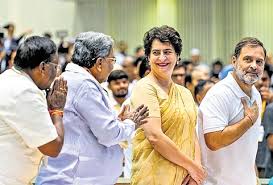
We have also commenced a survey of various Scheduled Castes to provide internal reservation proportional to their population. BENGALURU: Karnataka Chief Minister Siddaramaiah is going from strength to strength, and seems to be cementing his position to continue as CM for the full five years of the Congress government’s term. In a reflection of his rising stature, on Saturday, he shared the dais with Leader of Opposition in the Lok Sabha Rahul Gandhi at the AICC Legal Department’s ‘Constitutional Challenges: Perspectives and Pathways’ conclave held at Vigyan Bhavan in New Delhi. In his speech, he called himself a leader of both Dalits and backward classes, claiming to have protected their interests by ensuring social justice. He said the Scheduled Caste survey his government conducted by appointing the Justice HN Nagamohan Das commission is to provide internal reservation. He also claimed to have implemented 32% reservation to backward classes, going beyond the Mandal commission report. “My government has ordered a survey to identify communities that are still socially and educationally backward and provide them with reservation to achieve real equality. We have also commenced a survey of various Scheduled Castes to provide internal reservation proportional to their population. Through these affirmative actions as envisaged in our Constitution, I am sure we are on the right path to achieving social justice, real equality and fraternity,” he said. “Karnataka is the pioneer in apportioning funds exclusively to the SC/STs, proportionate to their population through the SCP/TSP Act,” he stressed. On the legacy of Dr BR Ambedkar’s Constitution, he said, “Finest prime minister of this nation Jawaharlal Nehru put India on the path of social justice. Leaders like Indira Gandhi used affirmative action to uplift the backward classes and marginalised sections through reforms, such as the 20-point programme and nationalisation, while Rajiv Gandhi ensured reservation for backward classes at the panchayat level through the 73rd and 74th constitutional amendments,” he recalled. “To those who believe in our Constitution, its objective will be achieved when we have real equality and fraternity as a matter of course, which is nothing but social justice. Equality requires proactive intervention by the state and not just passive nondiscrimination. The guarantee of social justice is a positive duty on all of us to ensure real equality. The commitment of my government and my party is to fulfil the objective of the Constitution and ensure social justice and we remain on that path,” he elaborated. With Rahul backing Siddaramaiah, the other leaders were found readily greeting him and they included AICC legal department head Abhishek Manu Singhvi, AICC General Secretary Priyanka Gandhi Vadra and Rajya Sabha member P Chidambaram among others. Devaraj B Hirehalli Courtesy : TNIE Note: This news is originally published on https://thenewindianexpress.com/bha and is used purely for non-profit/non-commercial purposes, especially human rights.
Dalit techie murder: Sub-inspector father of accused arrested; family accepts body after 5 days of protest
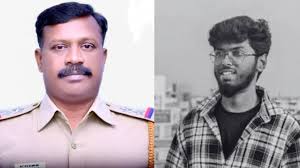
In an alleged caste killing case of 23-year-old Dalit techie Kavin Selvaganesh, the Tamil Nadu police have arrested Saravanan, a serving sub-inspector and the father of the main accused Surjith. The arrest came after days of public outrage and continued protest by Kavin’s family, who had refused to receive his body until all suspected individuals were held accountable. Subashini, the sister of the accused and Kavin’s partner, denied her parents’ role in the murder. In a viral video, she clarified, “We were in true love. Since we wanted some time to settle down, we didn’t say much about our relationship to my parents. On May 30, Surjith, my brother, informed my father about my relationship with Kavin. But when my father asked, I didn’t disclose anything as Kavin asked me for time.” The family of the deceased techie finally took possession of his body on Friday, after five days of protest. The handover took place at Tirunelveli Government Medical College Hospital, where Municipal Administration Minister KN Nehru and District Collector R Sukumar paid their respects. Earlier, the Tamil Nadu police had transferred the case to the Crime Branch–CID for an independent probe following widespread public anger. The accused, Surjith, was arrested on the same day as the crime and has been booked under charges of murder, along with provisions of the SC/ST (Prevention of Atrocities) Act and the Goondas Act. Tamil Nadu DGP Shankar Jiwal stated, “Preliminary investigation reveals the murder was over the relationship between the accused man’s sister and the victim.” Kavin was killed near a Siddha centre in Tirunelveli, where his girlfriend worked and his grandfather was under treatment. CCTV footage reportedly shows Surjith taking Kavin away on his motorcycle shortly before the brutal attack. Kavin’s body was later found with severe injuries. The victim’s family had earlier demanded the arrest and remand of the accused’s parents. “Surjith has been booked as A1. Our only demand is his parents ought to be remanded. With that demand, we protested the other day and we’ve not collected the body. This is a clear case of honour killing. There’s provision to remand them based on the FIR,” said Selvam, a relative of Kavin. Political voices also weighed in on the incident. Rajya Sabha MP and Makkal Needhi Maiam chief Kamal Haasan condemned the killing and urged political unity against caste violence. “Stringent punishment must be ensured. Casteism must be eradicated through collective political will,” he posted on X. Maktoob Staff Courtesy : Maktoob Media Note: This news is originally published on https://maktoobmedia.com/bha and is used purely for non-profit/non-commercial purposes, especially human rights.
Minister Parameshwara to meet Dalit MLAs to chalk out strategy to handle fallout of SC Survey
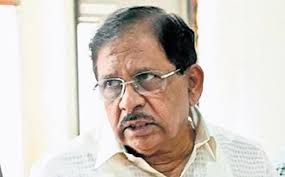
The meeting is likely to discuss probable repercussions of the report as it would trigger controversies over the population of the communities and per centage of quota allotted to them in the report. BENGALURU: Home Minister Dr G Parameshwara has called a meeting of the Dalit legislators at his residence here on August 2 over high tea to discuss various issues, including the Scheduled Caste communities’ survey which was carried out by the Justice HN Nagmohandas Commission to provide the internal reservation. The Commission is likely to submit its report to the government on August 4, according to sources, which may escalate tension among various SC communities. The report is likely to consist of recommendation of the classification of the quota among the 101 castes under SC category proportional to their population. “The survey is complete and I have sought the time of the chief minister to submit my report to the government,” Nagmohan Das told TNIE. RDPR minister Priyank Kharge confirmed that Parameshwara has called a meeting to discuss the survey. The meeting is likely to discuss probable repercussions of the report as it would trigger controversies over the population of the communities and per centage of quota allotted to them in the report. Courtesy : TNIE Note: This news is originally published on https://thenewindianexpress.com/bha and is used purely for non-profit/non-commercial purposes, especially human rights.
Dispute Over Dalit Man’s Cremation In Himachal’s Hamirpur Triggers Caste Tensions

Rain renders Nanawan cremation ground unusable; local opposition at alternative site highlights ongoing caste-based segregation. Residents of two villages in the Barsar area of Himachal Pradesh’s Hamirpur district were involved in a dispute over the cremation of a Dalit man’s body, prompting intervention from the local administration and police. The dispute took place at the Bhevad Saheli crematorium in Kadasai Panchayat on Tuesday, when villagers from Bhevad Saheli and Nanawan confronted each other over the performance of last rites. The issue began after the designated cremation ground for the Scheduled Caste community of Nanawan village became unusable due to rain and a rapidly flowing ravine. As a result, the deceased’s family turned to the nearby Bhevad Saheli crematorium, which was opposed from the local residents and led into a heated argument between the two groups. Later, as tensions escalated, the police and local authorities were informed about the matter, and with their intervention, the matter was resolved peacefully, allowing the cremation to proceed. The dispute arose due to the existence of caste-based cremation grounds. According to the representatives of the Kadasai Panchayat, residents of Nanawan village had earlier sought permission to use the Bhevad Saheli cremation site during the monsoon season. However, the Panchayat declined the request due to lack of consensus among the villagers. Sub-Divisional Magistrate Rajendra Gautam confirmed the peaceful completion of the rites and assured that a permanent solution would be sought. “The local administration has been directed to identify government land and build a separate crematorium for Nanawan village at the earliest,” he added. Courtesy : Outlook India Note: This news is originally published on https://outlookindia.com/bha and is used purely for non-profit/non-commercial purposes, especially human rights.
Dalit IT Engineer’s Murder: Filmmaker Pa. Ranjith Urges Tamil Nadu Govt to Declare Atrocity-Prone Areas
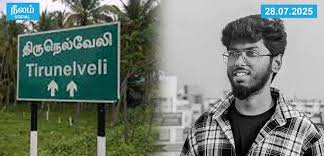
He highlighted that Scheduled Caste communities are forced to protest for minimal justice, as seen in Kavin’s parents’ ongoing struggle. Chennai- Filmmaker Pa. Ranjith, founder of the Neelam Cultural Centre, has strongly condemned the Tamil Nadu government and police for their inaction following the brutal honour killing of Kavin Selvaganesh, a 27-year-old software engineer, in Tirunelveli on July 27. In a statement, Ranjith demanded transparent investigations, immediate arrests, and the designation of districts like Tirunelveli, Sivagangai, Pudukkottai, and Thoothukudi as “Atrocity-Prone Areas” under the Scheduled Castes and Scheduled Tribes (Prevention of Atrocities) Act. Kavin, the son of Tamilselvi and Chandrasekar, a government school teacher couple from Arumugamangalam in Thoothukudi district’s Eral Taluk, was hacked to death in broad daylight near the home of his lover, Subashini, who worked at a private hospital in Tirunelveli. Subashini’s parents, Saravanan and Krishnaveni, both police personnel, opposed the couple’s relationship. Despite their objections, the relationship continued, leading to the fatal attack by Subashini’s brother, Surjit. Initially, only Surjit was named as the accused. Following protests and road blockades by Kavin’s family and relatives, who alleged the involvement of Subashini’s parents, the authorities included them as accused. However, Saravanan and Krishnaveni have not yet been arrested, raising concerns about the investigation’s impartiality given their police affiliations. Ranjith criticized the government for failing to follow the Prevention of Atrocities Act, which mandates that the District Collector meet victims immediately after such incidents. The Collector has not yet visited Kavin’s family. He highlighted that Scheduled Caste communities are forced to protest for minimal justice, as seen in Kavin’s parents’ ongoing struggle. The statement accused the current DMK government of continuing the previous administration’s indifference in handling Dalit-related cases. Ranjith expressed doubts about the case’s handling, given the accused’s police connections, and urged the government to conduct a transparent investigation and arrest Surjit’s parents immediately. Ranjith emphasized the rising caste-based crimes in Tamil Nadu, calling for districts with high caste-related issues to be placed under special surveillance and declared as “Atrocity-Prone Areas” with dedicated police stations. He noted that basic legal protocols, such as filing First Information Reports (FIRs) promptly and transferring investigations to a Deputy Superintendent of Police, are often ignored, as recently pointed out by the Madras High Court. The Neelam Cultural Centre condemned the police practice of circulating alternative narratives in the media to deflect attention from such crimes and demanded strict action against officers involved. Ranjith called for a committee led by a retired judge, Dalit activists, and intellectuals to investigate honour killings, analyze social factors, and prevent their recurrence. He also strongly criticized the DMK government and its allies for ignoring demands for a separate law against honour killings, urging immediate action to address this issue. Geetha Sunil Pillai Courtesy : The Mooknayak Note: This news is originally published on https://themooknayak.com/bha and is used purely for non-profit/non-commercial purposes, especially human rights.
Mumbai: SC Upholds Bombay HC Order To Register FIR In 35-Year-Old Dalit Law Student’s Custodial Death Case
The SC has upheld a Bombay HC order to register an FIR in the custodial death case of Somnath Suryavanshi, a 35-year-old Dalit law student who died on December 15, 2024, while in judicial custody in Parbhani, Maharashtra. Mumbai: The SC has upheld a Bombay HC order to register an FIR in the custodial death case of Somnath Suryavanshi, a 35-year-old Dalit law student who died on December 15, 2024, while in judicial custody in Parbhani, Maharashtra. His mother, represented by Vanchit Bahujan Aghadi chief Prakash Ambedkar, grandson of Dr BR Ambedkar, and two other advocates, had moved the SC. Suryavanshi had been arrested following violent protests triggered by the desecration of a replica of the Constitution in the region. Dalit organisations alleged he was tortured while in police custody. His mother approached the Aurangabad bench of the High Court seeking accountability and action against the police officials involved. “The Supreme Court upheld the High Court’s order directing registration of an FIR. However, no FIR has been filed yet despite the court’s July 4 deadline. We brought this non-compliance to the attention of the apex court, which also questioned the delay,” Ambedkar told reporters in Delhi on Wednesday. He further criticised the government-run JJ Hospital in Mumbai for issuing a second medical opinion on the cause of death without fully assessing all relevant facts. “We intend to seek action against the doctors involved. A second opinion in such cases must not be issued without court sanction,” Ambedkar said. The matter now awaits further judicial directions, potentially including contempt proceedings against police officials for failing to act on the High Court’s orders. Courtesy : TFPJ Note: This news is originally published on https://thefreepressjournal.com/bha and is used purely for non-profit/non-commercial purposes, especially human rights.
SC Commission committed to protecting Dalit rights: Jawahar
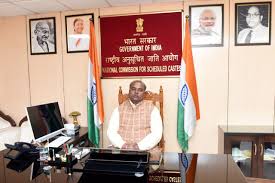
Vijayawada: SC Commission chairman Kothapalli Samuel Jawahar on Wednesday reiterated the commission’s unwavering commitment to safeguarding the rights of Dalits. Speaking at a press conference at the SC Commission office in the NTR Administrative Block here on Wednesday, Jawahar said the commission is continuously working towards building an egalitarian and caste-free society. Jawahar expressed concern over trend of officials neglecting registering atrocity cases. “We are working with the goal of protecting Dalit rights,” he stated. “Officials should not be apathetic in matters of atrocity cases. Police must stand by the victims and register FIRs.” The chairman, presenting data illustrating the issue, said that a total of 135 atrocity cases have been reported this year, with 78 cases coming in over the last three months alone. Specifically, in NTR district, out of 13 atrocity cases, only 3 were registered. “This clearly shows that even when atrocity cases are reported, officials are not registering them,” Jawahar asserted. He criticised some officials for their “indifferent” behavior in case registration, noting that FIRs are not being filed when complainants approach police stations. Jawahar urged a change in this situation, stressing that officials must act responsibly. “When someone in distress comes to them, an FIR must be registered, and a detailed report should be sent,” he stated. He affirmed the extensive powers vested in the Commission Chairman, declaring “no compromise” in resolving the rights of Scheduled Castes. He also called on the police to accept complaints related to land re-surveys. Addressing concerns about residential hostels, Jawahar noted a high demand for seats, with 3,000 students applying for just 300 available spots, urging officials to address this disparity. Courtesy : THI Note: This news is originally published on https://thehansindia.com/bha and is used purely for non-profit/non-commercial purposes, especially human rights.