
Dalit teen abducted, forced to prostrate before caste Hindus in Tamil Nadu’s Madurai
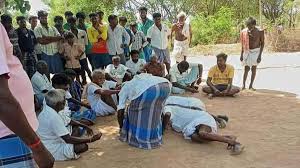
Madurai: A 17-year-old Dalit boy from Sankampatti village in Usilampatti, Madurai, was allegedly abducted and humiliated by a group of caste Hindus who forced him to prostrate before them. The incident occurred on January 16, but police registered a case only on January 18, sparking outrage from rights groups. According to the teenager’s complaint, members of the dominant caste abducted him when he returned home for the Pongal holidays. He alleged that the group hurled casteist slurs, beat him, and forced him to prostrate before each member present, including a six-year-old child. The boy’s relative, advocate Deviammal, further alleged that the attackers urinated on him before releasing him after learning that police had been alerted. The Usilampatti police have registered an FIR against six individuals, invoking provisions of the Bharatiya Nyaya Sanhita (BNS), Sections 296(b) and 351(2), along with Sections 3(1)(r) and 3(1)(s) of the SC/ST (Prevention of Atrocities) Act. However, the police denied the allegation that the accused urinated on the boy. “The case has been registered based on the teenager’s complaint. The claim about urination is not true. Further investigation is underway,” officials stated. The Neelam Cultural Centre condemned the delay in filing the FIR, accusing the police of shielding the accused. “The police registered the FIR only on January 18 even though the complaint was lodged on January 16. This shows their bias,” the group posted on X. The boy, who is undergoing treatment at the Usilampatti Government Hospital, remains traumatised. Relatives also accused the police of trying to weaken the case by misrepresenting his age as 19 instead of 17. facebook sharing buttontwitter sharing buttonwhatsapp sharing buttonlinkedin sharing buttonemail sharing buttonprint sharing button Courtesy : Vartha Bharati Note: This news is originally published on https:/varthabharati.com/bha and is used purely for non-profit/non-commercial purposes, especially human rights.
For the first time in a village in Gujarat, a Dalit youth got his hair cut at a barber shop – a centuries-old tradition broken
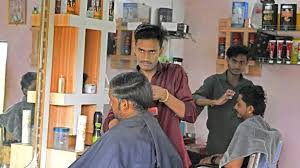
In Alwada village of Banaskantha, a Dalit youth got his hair cut at a barber shop for the first time, a historic step towards social equality. Banaskantha – A historic event took place on 7 August in Alwada village of Banaskantha district of Gujarat. Kiran (Kirti) Chauhan, a 24-year-old farm labourer of the village, got his hair cut at the village barber shop for the first time. This occasion became a symbol of freedom from the social shackles that had been going on for generations for the Dalit community, not just a haircut. Broken wall of generations About 250 Dalit families live in Alwada village with a population of about 6,500. But this discrimination was going on here for generations that the barbers of the village did not cut the hair of Dalits. Dalits were forced to go to other villages to visit barber shops and many times had to hide their caste. 58-year-old Chhogaji Chauhan says, “Our ancestors used to face this discrimination even before independence. And my children have also been facing the same for the last eight decades.” This experience was very emotional for Kirti Chauhan. He said, “For the first time in 24 years, I sat on the chair of the barber in my village. Earlier we always had to go out. That day I felt that I have been accepted in my own village and am free.” Initiative of social workers and administration In the continuous efforts of the Dalit community, they got the support of social worker Chetan Dabhi. He explained to the upper castes and barbers of the village that this practice is unconstitutional. When the matter did not work out with the explanation, the police and the district administration had to intervene. Mamlatdar Janak Mehta held a meeting with the village leaders and resolved the issue. At the same time, Gram Sarpanch Suresh Chaudhary expressed regret over the past discrimination and said that it is a matter of happiness for him to see this change happening during his tenure. Now all the five barber shops of the village welcome Dalit customers. Barbers and upper castes have also accepted the change Pintu, a 21-year-old barber who cut Kirti’s hair, said, “We used to do this due to tradition. But now that the elders have given permission, there is no restriction. Our business has also increased due to this.” People from the upper castes are also satisfied with this change. Prakash Patel from the Patidar community said, “If everyone can come to my grocery shop, then why not to the barber shop? It is good that this wrong practice has ended now.” A long journey still remains Although this change is commendable, the Dalit community believes that discrimination has not ended completely. Dalit farmer Ishwar Chauhan says, “Today we have got a place in the barber shop, but we are still made to sit separately in the community feast. Hopefully, one day this will also end.” For Alwada village, this haircut is not just an ordinary event, but a big step towards respect, acceptance and equality. As the villagers say, “This is not just a haircut, but a new beginning.” Rajan Chaudhary Courtesy: Hindi News
Such brutality with a Dalit youth in Muzaffarnagar: The mob beat him to death on suspicion of theft

Villagers in Budhana town brutally beat a 30-year-old Dalit youth on suspicion of theft, he died at home due to lack of treatment; police started investigation. Muzaffarnagar (Uttar Pradesh): A 30-year-old Dalit youth was beaten to death by villagers in Budhana town of the district on Sunday night on suspicion of theft. Police confirmed this on Monday. The deceased has been identified as Monu. The complaint filed by the family states that the villagers beat Monu badly on suspicion of theft. He somehow reached home but died late night. Quoted by the media, Superintendent of Police (Rural) Aditya Bansal said, “No one will be allowed to take the law into their own hands. Strict action will be taken against the culprits.” Police said that a video of the incident is going viral on social media, with the help of which the accused are being identified. Some people have also been detained and questioned. Monu’s body has been sent for postmortem and investigation into the case is underway. Rajan Chaudhary Courtesy : Hindi News
Sensation in JNU: Casteist abuses on Ambedkar Library table, anger erupts in campus, who is behind this?
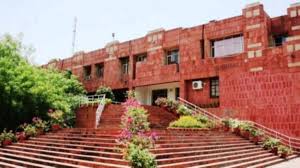
The protesters stressed that spreading such hatred in a library named after Dr. Ambedkar is reprehensible. The rally also demanded that awareness campaigns be run in the university and anti-discrimination policies be strictly implemented. New Delhi – Casteist and misogynistic abuses written on a table in the General Reading Hall of Dr. B.R. Ambedkar Central Library of Jawaharlal Nehru University (JNU) have shocked the student community. Unknown persons wrote casteist and misogynistic abuses, including hateful words like “Chamar $#d ” and “Chamar ki maa ki &%$” on a study table in the General Reading Hall of the library. Students said that the incident is not only derogatory against the Dalit community, but it is also an attack on the progressive image of this university, which is known for social justice. Student activists have termed it as an open display of Brahminical mindset. Birsa Ambedkar Phule Students Association (BAPSA), an organisation fighting for the rights of Bahujan students, took prompt action on the incident. On August 18, BAPSA filed a formal complaint at the Vasant Kunj North police station. In its letter, the organisation demanded that an FIR be lodged against the culprits under the Scheduled Castes and Scheduled Tribes (Prevention of Atrocities) Act, 1989 and relevant sections of the Indian Penal Code. BAPSA also requested that the CCTV footage of the library be secured and made available for investigation so that the culprits could be identified. BAPSA president Avichal Varkey said such incidents are intolerable. Varkey termed the incident not only as disgraceful but also as an act that made the campus unsafe for students from SC, ST and other marginalised communities. He said, “This is not an isolated incident but a major attack on Dalits, Adivasis, OBCs and religious minorities by the BJP-RSS regime. Such incidents expose the Brahminical mindset that led to the writing of slogans like ‘Dalit India Quit’ and ‘Chamar India Quit’ on the walls of Cauvery Hostel. BAPSA will continue to fight against these casteist goons and raise the voice of marginalised students inside and outside the campus.” Along with the police complaint, BAPSA mobilised the anger of the students and held a massive protest outside the Central Library in the evening. The rally was attended by a large number of Bahujan and progressive minded students who showed solidarity by raising slogans against casteism and hatred. BAPSA leaders including Karyakarta Kranti and Rupesh Kumar called the incident part of a larger scale attack on Dalits, Adivasis, OBCs and minorities. The protesters stressed that spreading such hatred in a library named after Dr Ambedkar is reprehensible. The rally also demanded awareness campaigns and strict enforcement of anti-discrimination policies in the university. The protest was also supported by other student organisations. The Students Federation of India (SFI) JNU unit took part in the rally and strongly condemned the “open casteism” in the library. The Jawaharlal Nehru University Students Union (JNUSU) also submitted a complaint to the chief librarian and demanded immediate administrative action. JNUSU joint secretary Vaibhav Meena said in a statement that such narrow-mindedness has no place in the temple of knowledge and all students must unite and reject it. Many users reacted sharply to the incident on social media, especially on Twitter. Users shared pictures of abusive words written on the table and criticised the silence on Dalit issues in society. Many posts expressed anger over how such an act could happen in a library named after Ambedkar. BAPSA shared videos and pictures of the rally from its official handle, with their message clear: “We will not remain silent.” Geetha Sunil Pillai Courtesy: Hindi News
Dalit youth brutally attacked, robbed in Gujarat, third caste-based atrocity in 21 days
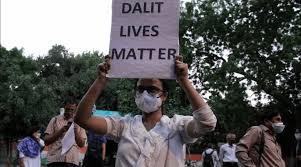
A Dalit youth on Saturday was brutally thrashed, robbed, and threatened with death in Junagadh, Gujarat, marking the third caste-based atrocity in the state in just 21 days. The incident occurred when the victim, who had gone to meet a friend, was lured into a trap by a boy claiming his brother was being taken away. At the Swami Vivekanand School ground, three upper-caste youths, led by Hitesh and two others, confronted him. The video of the attack, which went viral, shows that upon learning his background from Kadiawad, the assailants verbally abused him with casteist slurs and beat him with belts and sticks, leaving visible injuries. They also stole his mobile phone and threatened to kill him if he reported the matter to the police. A case has been registered at Junagadh A Division Police Station under multiple IPC sections. Separate police teams have been formed to apprehend the accused. DySP Hitesh Dhandhaliya assured that “strict legal action will be taken at the earliest.” Earlier, on August 11, 2025, in Khambhaliya (Ozat) village, Junagadh district, a Dalit youth, Sagar Makwana, and his father-in-law, Jivanbhai Wala, were brutally assaulted after the attackers objected to Sagar keeping a beard and mustache, claiming it was reserved for “upper castes.” Courtesy : Maktoob Media Note: This news is originally published on https:/maktoobmedia.com/bha and is used purely for non-profit/non-commercial purposes, especially human rights.
Private hostel owner booked for harassing Dalit girl, roommate

Varanasi: A Dalit girl NEET aspirant from Jaunpur district, staying at a private hostel in Durgakund area under Bhelupur police station, was sexually harassed allegedly by the hostel owner. According to reports, he also attempted to target her roommate on Saturday. Assistant Commissioner of Police (ACP) Bhelupur Gaurav Kaumar said that on receiving complaint from the girl’s father, Bhelupur police lodged FIR against the accused hostel owner under sections of BNS, Pocso and SC/ST Act. An investigation into the matter had begun and proper action would be taken based on its outcomes, he added. In his complaint, the girl’s father alleged that the hostel owner not only harassed his daughter but also threatened her with dire consequences if she told anyone, using caste-based slurs against her. On Friday, he alleged, the hostel owner harassed her classmate too, who somehow pushed him away and ran to her room, locking herself inside. Failing to target her, the hostel owner started harassing his daughter. The girl’s father mentioned that the hostel owner’s wife also hurled abuses at the daughter and her classmate and threatened to kill them. Bhelupur police said as the case registered in this connection also comprises sections of SC/ST Act, further action would be taken after detailed investigation by the ACP. Courtesy : TOI Note: This news is originally published on https:/timesofindia.com/bha and is used purely for non-profit/non-commercial purposes, especially human rights.
Basti, a minor girl was gang-raped after being locked in a room, beaten and thrown out, boys from another community accused
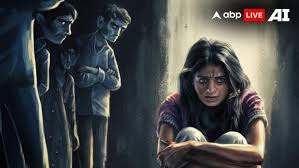
Basti news: Three youths from another community gang-raped a minor Dalit girl in Basti. The accused beat her up and threw her out of the house threatening to kill her. A very disgusting incident has come to light from Basti in Uttar Pradesh, which has created a stir in the entire area. Here, a minor Dalit girl was gang-raped by three boys from another community after being locked in a room. Here, the accused beat up the victim and threw her out threatening to kill her. The pain of the victim did not end here, when she reached the police station with a complaint, the policemen made her run for half an hour saying that she will be there for ten minutes. When the leaders of Vishwa Hindu Mahasangh started a protest against this incident, then a case could be registered against the accused. Police teams have been formed to arrest the accused. Minor kidnapped and gangraped The incident is from a village in Sonha police station area where three boys from the Muslim community of the village gangraped a minor girl. The victim’s mother told in the complaint that on August 16 at 9:00 am, her daughter was going to the grocery store when the accused kidnapped her by closing her mouth and raped her in turns for 3 hours. During this time, the accused kept guarding the room by locking it so that no one could find out. When the family members searched for the daughter, they came to know about the entire incident. The accused beat up the victim badly and threw her out of the house threatening to kill her. Hindu organizations protested After the case came to light, Vishwa Hindu Mahasangh reached the police station and registered a complaint of the victim’s family. District President of the Mahasangh, Akhilesh Kumar Singh said that this is the situation when the government claims about the safety of daughters in Uttar Pradesh. But the reality is that daughters are being brutalized openly. After taking action, the police is trying to suppress the case. The police has registered a complaint in this case. Additional Superintendent of Police Om Prakash Singh said that on the basis of the application, a case has been registered against the accused and action is being taken to arrest them. The victim will be given a medical checkup. The police has gone to the village for investigation. The accused will not be spared. By: Satish Shrivastava Courtesy: Hindi News
A snip of freedom: Banaskantha village ends Dalit haircut ban
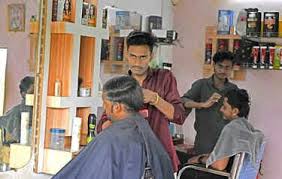
Aalwada (Banaskantha): In a moment as symbolic as it was long overdue, a barber’s scissors in Aalwada village cut through decades of caste prejudice. On Aug 7, 24-year-old farm labourer Kirti Chauhan became the first Dalit ever to walk into a barber’s shop in the village and get a haircut. It felt like an early Independence day for the community as all five barber shops opened their doors to Scheduled Castes for the first time. For generations, the 250-odd Dalits in this 6,500-strong village were denied service by local barbers and forced to travel to other villages, often concealing their identity for something as basic as grooming. That changed last week after months of dialogue, when elders from all communities agreed to end the unwritten ban. “I am the first Dalit to get a haircut here. Ever since I can remember, we had to go to other towns for basic grooming. In 24 years of my life, I finally felt free and accepted in my own village,” said an emotional Kirti Chauhan. The breakthrough followed persistent efforts by the Dalit community, supported by local activist Chetan Dabhi. Their campaign involved sensitising upper-caste residents and barbers about the unconstitutional nature of the practice. Where persuasion failed, the police and district administration stepped in. Village sarpanch Suresh Chaudhary admitted, “As sarpanch, I felt guilty about the earlier practice. I am proud it ended during my tenure.” The district administration, led by mamlatdar Janak Mehta, played a crucial role in resolving the issue. “We addressed complaints of discrimination and worked with village leaders to ensure a harmonious resolution,” Mehta said. “Small cut, big change,” is how Dalits describe this first step towards social equality. Chhogaji Chauhan, 58, recalls, “We have walked miles for a haircut. My father faced this before independence, and my children endured it nearly eight decades after.” Now, barbers are welcoming all customers. Pintoo Nai, 21, who gave Kirti his historic haircut, said, “We simply followed society’s diktat earlier. Once the elders agreed to change, it was no longer prohibited. It’s also good for business.” Activist Chetan Dabhi explained, “Many resisted change despite months of sensitisation. Only after constant intervention by police and the district administration did the upper castes agree.” Even members of dominant communities backed the move. Prakash Patel, a Patidar, said, “If customers are welcome at my grocery store, why not at a barber’s shop? We’re glad the wrong practice is gone.” While celebrating the change, Ishwar Chauhan, a Dalit farmer, noted that prejudice lingers. “We still face separate seating at community feasts. I hope that will change too Courtesy : TOI Note: This news is originally published on https:/timesofindia.com/bha and is used purely for non-profit/non-commercial purposes, especially human rights.
Suspicious death of Dalit youth: Suicide note makes serious allegations including police beating and casteist slurs
Victim made serious allegations of beating, casteist slurs and harassment against constable and PSI before his death, kin demand Rs 50 lakh compensation Chikkamagaluru. A 27-year-old Dalit youth from Samase village in Kalasa taluk of Chikkamagaluru district of Karnataka committed suicide on Wednesday. In his suicide note, the deceased alleged that he was beaten and abused by a Kudremukh police employee. The deceased has been identified as Nagesh, a resident of Bastigadde. According to information, Nagesh had lodged a complaint against constable Siddesh at Kudremukh police station on July 15. The complaint alleged that Siddesh thrashed him and made casteist remarks. According to the complaint, the incident took place around 10:30 pm when Nagesh was returning in his autorickshaw. On the way, he saw Siddesh and two locals standing on the road, whose car was blocking the way. As it was dark, Nagesh moved ahead with his mobile phone torch light. Siddesh suspected that Nagesh was clicking pictures of them while drinking alcohol, following which he allegedly thrashed and abused him. Family members say that instead of taking action on Nagesh’s complaint, the police registered a case against him for obstructing government work. The police had seized his autorickshaw and pesticide spray machine. Though he later got bail, he was unable to release his vehicle due to financial constraints and also feared further police harassment. In the suicide note, Nagesh accused constable Siddesh of torturing him and also named PSI Aadarsh, alleging that they did not take any action on his complaint. Family members and locals staged a protest after Nagesh’s death. They demanded that Siddesh and Aadarsh be dismissed from service and a compensation of Rs 50 lakh be given to the victim’s family. However, the police have started investigating the case. Rajan Chaudhary Courtesy : Hindi News
Dalit student Somnath Suryavanshi custodial death: Bombay High Court orders to form SIT, will the secrets of police torture be revealed?
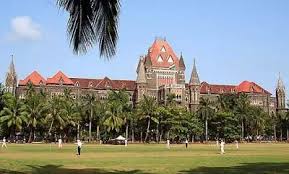
Bombay High Court’s big decision in the case of suspicious custodial death of Dalit law student Somnath Suryavanshi, order to investigate by forming SIT. Aurangabad – The Aurangabad bench of the Bombay High Court has directed the Director General of Police (DGP) of Maharashtra to constitute a Special Investigation Team (SIT) within a week to investigate the suspicious custodial death of Dalit law student Somnath Suryavanshi. This order was passed orally by a division bench of Justice Vibha Kankanwadi and Justice Sanjay A. Deshmukh. The court clarified that the inquiry committee appointed earlier by the state government will be dissolved and all documents related to it will now be handed over to the new SIT. The bench said, “If the petitioner Vijayabai Venkata Suryavanshi has any objection to the members of the SIT, she can register it before the court.” Petitioner’s allegation This interim order was given on the petition of Somnath’s 61-year-old mother Vijayabai Suryavanshi. He alleged that his son was illegally detained and brutally tortured in police custody during a peaceful demonstration in Parbhani in December 2024. Later, the authorities tried to hush up the case by calling his death a heart attack. Somnath, a final year law student from Latur and belonging to the Scheduled Caste community, was arrested while recording on camera a protest against the desecration of the replica of the Constitution near the statue of Dr Bhimrao Ambedkar in Parbhani. FIR and Supreme Court proceedings On July 4, 2025, the High Court directed the Parbhani police to register an FIR within a week. The court had said that prima facie evidence of custodial torture and violation of fundamental rights exists. After this, on July 30, the Supreme Court dismissed the petition of the Maharashtra government, which challenged the High Court’s order to register an FIR. Custodial torture and death The petition said Somnath was illegally arrested despite peacefully recording the protest while carrying a copy of the Constitution. After being produced before a magistrate on December 12, 2024, he was handed over two days of police custody during which he was brutally beaten. His condition deteriorated further when he was produced before a magistrate again on December 14. He was then sent to judicial custody, where he suddenly died at 6:49 am on December 15. While the police attributed the cause of death to chest pain, the postmortem report of a seven-member medical team cited 24 serious injuries and stated the cause of death as “shock resulting from multiple injuries”. Alleged bargaining attempt The petitioner alleged that upon reaching Parbhani, he was taken to the IG by police officer Ashok Ghorband, where he was told that other sons of the family could be given police jobs and was asked not to file a complaint in exchange for Rs 50 lakh. Also, he was advised to perform the last rites in Latur. But he turned down these proposals and demanded that his son’s death be registered as a custodial murder. Court’s strict comment The High Court said that the judicial inquiry conducted under Section 196 of the Indian Civil Security Code (BNSS) found serious human rights violations and the death was directly linked to custodial beating. The court reprimanded the state government and said, “When the constitutional rights of a person are violated while in custody, this court cannot remain a silent spectator.” The bench also questioned the delay of the CID and the credibility of the internal investigation. The court said that the CID tried to get a second opinion from JJ Hospital, Mumbai by bypassing the doctors who conducted the postmortem, which casts doubt on the investigation. Order of SIT inquiry The court directed to register an FIR on the basis of the petitioner’s complaint lodged on December 18, 2024 and get the case investigated by a Deputy Superintendent of Police under the SIT. Also, CID officer D.B. The earlier order restraining Talpe from filing the final report has now been revoked. Welcoming the decision, advocate Hitendra Gandhi, appearing for the petitioner, said, “The order to form an SIT in the case of Somnath Suryavanshi’s death is a big step towards justice. We hope that the SIT will conduct an impartial investigation and bring out the truth and the culprits will be punished.” Rajan Chaudhary Courtesy : Hindi News