
Dalits’ struggle for dignity continues even after conversion: New book
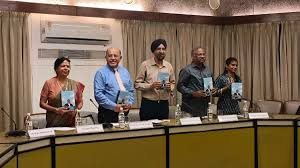
Six essays in the book ‘Dalit Journeys for Dignity’ explore the distinct trajectories of Dalit communities in their search for religious alternatives — Christian conversions in colonial Tamil Nadu to Buddhist renunciations in Maharashtra. New Delhi: Religion, for Dalits, is not always about faith, it’s about social possibilities and transformation, said K Satyanarayana, a professor at the English and Foreign Languages University in Hyderabad. He was speaking at the launch of the book Dalit Journeys for Dignity at the India International Centre, last week. The book is part of a series on Dalit studies. The first volume, Dalit Studies, edited by Ramnarayan S Rawat and K Satyanarayana, was published in 2016 by Duke University Press. The book’s second volume was published in April 2025 after facing several rejections for two years from Indian and US publishing houses, primarily because the contributing scholars were not widely known personalities, said the professor. “There were various kinds of rejections because most of these scholars are not visible or known. They have no name. They have no fame,” said Satyanarayana. Eventually, the volume was published by Permanent Black in the Indian subcontinent and by the State University of New York (SUNY) press for other regions. The panelists at the launch included Madhulika Sonkar, assistant professor, IIT, Delhi, Harish Wankhede, assistant professor at Jawaharlal Nehru University, Delhi University professor Charu Gupta, Satyanarayana, and Ramnarayan S Rawat, associate professor at University of Delaware. Dalit Journeys for Dignity: Religion, Freedom, and Caste is a collection of essays that highlight the fight for dignity and equality in India. Edited by Satyanarayana, Rawat, and P Sanal Mohan, the book unveils personal narratives of caste hierarchies and explores the creation of neo-cultural practices. “The book urges us to re-examine the interests of the mind, and the histories of caste, religion, politics, and literature in shaping modern India,” said Satyanarayana. A university press in the US rejected the book due to their internal policy, which requires approval from two reviewers. Since the book did not receive it, it was ultimately turned down. Most contributors were young or marginalised scholars without recognition, which many publishers see as a disadvantage. “Dalit Studies II is a project of knowledge production — knowledge created from the margins, by scholars rooted in those very experiences,” said Satyanarayana. “This volume is not only about resistance; it is about dignity — human dignity even before civic status.” Journey of conversion Six essays in the book explore the distinct trajectories of Dalit communities in their search for religious alternatives — Christian conversions in colonial Tamil Nadu, Buddhist renunciations in Maharashtra, and contemporary Dalit-Christian movements in Telangana, Andhra Pradesh and Kerala. One of the essays is by Chakali Chandra Sekhar, who traces the story of Nanchari, a Mala weaver-trader and community headman of Rayasaleema in southern Andhra Pradesh. He was sent to jail for trying to enter a Hindu temple, after which he converted to Christianity in prison in 1838 in search of dignity. Nanchari’s conversion then started a mass conversion movement amongst local Mala weaver-traders. “Conversion is not an escape, but a confrontation and a way of asserting self-worth,” said Sonkar. Three of the essays in the book specifically examine the struggle against the caste system in Hinduism. They include stories of people who struggled and fought for land ownership, sartorial choices, and even their living spaces and jobs. Anupama, one of the nine authors of the book, talks about Dalit clothing in colonial India. She explains how the clothing served as a manifesto, a way of expressing identity. “Wearing the clothes of the dead was a symbol of being branded as death itself. So reclaiming attire was a way of reclaiming one’s skin and identity,” said Charu Gupta. In his essay, Sumeet Mhaskar uncovers how in Mumbai’s mills, caste influences factory work, pushing Dalits into the dirtiest forms of labour. Another essay by Rawat and Sekhar also focuses on Muslim conversions among Dalit women where the act of conversion is reshaping the discourse of empowerment within deeply patriarchal contexts. “Conversion to Islam is also offered as a way of stepping outside or moving beyond the caste Hindu framework,” said Sonkar. However, conversion does not come without consequences. Many Dalit converts encounter a complex predicament — while they shed the caste identities imposed by Hinduism, they often face new forms of invisibility and denial within the secular or non-Hindu spaces they enter. “Caste doesn’t disappear with conversion,” said Surinder Jodhka, a professor at JNU who moderated the discussion. “Their struggles for dignity continue in new guises.” A daily struggle Sonkar shared a story from her classroom at IIT Delhi. One of her students, who comes from a marginalised community, told her, “Every semester, I have to change my rank.” The student was in the Computer Science (CS) branch which is typically chosen only by top rankers in the JEE Advanced exam. But because he gained admission through reservation, people often questioned whether he truly deserved the seat. Every semester, he felt the need to prove that he had earned his seat. “What if we had more such texts, more stories like these, in classrooms? What if students could learn about caste not just through numbers and data, but through lived experiences?” said Sonkar. Gupta, meanwhile, explained the daily struggles faced by Dalits and other marginalised communities — within the community to schools, colleges, and workplaces. She said Dalit stories of struggle have helped other marginalised people to come forward and express themselves. Books like Dalit Journeys for Dignity will further help the marginalised in future. “Dalits are socially flourishing through conversion, poetry, new rituals, reclaiming names, and love that defies boundaries,” Gupta said. Almina Khatoon (Edited by Aamaan Alam Khan) Courtesy : The Print Note: This news is originally published on https:/theprint.com/bha and is used purely for non-profit/non-commercial purposes, especially human rights.
Dalit student burnt with hot iron inside hostel in Andhra Pradesh, school staff accused of ignoring

A Dalit student was attacked by classmates in a private school hostel in Morampudi in Konaseema district, mother saw the incident and got him treated, police started investigation. Andhra Pradesh: A shocking incident has come to light from Konaseema district. A Dalit student studying in a private school hostel here was allegedly burnt with a hot iron by two of his classmates. After the incident, the student started getting severe burns, but the hostel staff did not pay any attention to it. The secret was revealed when the mother noticed it According to the police, this incident is from Morampudi area. When the mother of the victim student reached the hostel to meet him, she saw burn marks on his body. On enquiry, the son revealed the entire incident. After this, the mother immediately admitted him to a hospital in Razole, where he is undergoing treatment. All students from Dalit community According to the information, all the three students involved in this entire episode belong to the Dalit community. Police said that on August 16, a film was shown for children in the hostel. After this, two students removed the hostel’s surveillance camera (CCTV) and put it in the bag of the victim student. The dispute started with the missing camera When the camera was found missing, the hostel in-charge called the three students. During that time, the victim student told that his classmates had done this mischief. Angered by this, both the students called the victim to their room on August 18 and branded his stomach and hands with a hot iron. Police investigation continues After this inhuman incident came to light, the police have registered a case and started investigation. At the same time, the treatment of the victim student is going on in the hospital. Rajan Chaudhary Courtesy : Hindi News
In Lucknow, a Dalit farmer was slapped by a deputy tehsildar, he was admitted to PGI when blood started coming out of his ear; Chandrashekhar Azad said – ‘This is a war for justice’
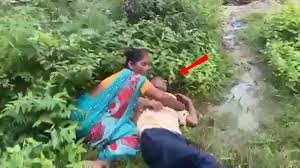
The inhuman incident that happened with farmer Ram Milan Pasi in Mastemau village of Lucknow has raised serious questions on the administration, Chandrashekhar Azad demanded strict action from the government. Lucknow. The incident that happened with a Bahujan farmer in Lucknow, the capital of Uttar Pradesh, has shamed humanity. Chandrashekhar Azad, MP from Nagina Lok Sabha constituency and National President of Azad Samaj Party (Kanshi Ram), has raised serious questions on the government and administration by sharing a video on Twitter (former Twitter) regarding this matter. In the video, an elderly woman can be seen crying loudly while sitting beside her injured husband, while police and security personnel are standing nearby. Along with this video, Chandrashekhar Azad wrote that the incident that happened with farmer Ram Milan Pasi is not only painful, but is a direct attack on the rights of Bahujan Samaj and farmers. How did the incident happen? According to the information given by the MP, the Municipal Corporation team had reached Mirzapur Mastemau village in Lucknow to remove the encroachment on the land. During this, farmer Ram Milan Pasi told the Naib Tehsildar that the land is ancestral to his family and he also showed its papers to the officers. The farmer only requested the officials to give him one hour to safely remove the straw lying on the ground. But ignoring this humanitarian appeal, the Naib Tehsildar got angry and slapped the farmer hard in front of the crowd. The injury of the slap was so serious that the farmer fell down on the spot. Blood started flowing from his ear and he fainted in a short while. Deteriorating condition of the injured When Ram Milan Pasi’s condition deteriorated, he was first taken to Gosaiganj CHC by ambulance, then referred to Civil Hospital. Due to his critical condition, the doctors finally sent him to PGI Trauma Center. At present, the farmer is fighting a battle between life and death. The most shameful aspect was that after attacking the farmer, the Naib Tehsildar and his team ran away from the spot and did not even fulfill the responsibility of taking the injured to the hospital. Push-and-shove with family members During this, when the farmer’s elderly wife came forward to save her husband, the policemen and officers pushed her too instead of helping. This increased the uproar and tension at the spot. FIR not even registered Chandrashekhar Azad alleges that despite the incident, the police is not registering any complaint in the case till now. This attitude shows the insensitivity of the administration. Chandrashekhar Azad’s demand On this incident, the chief of Azad Samaj Party (Kanshi Ram) has placed three major demands from the state government – An immediate case should be registered against the guilty Naib Tehsildar and his team under the sections of SC/ST Act and attempt to murder. The victim farmer should be given high-level treatment at government expense and the family should be provided compensation and security. There should be an impartial investigation of the land dispute and the farmer’s rights should be prevented from being snatched. Bhim Army-Azad Samaj Party team sits on dharna In protest against the incident, the Lucknow team of Bhim Army-Azad Samaj Party (Kanshi Ram) has sat on a dharna in Sushant Golf City police station. They say that the dharna will continue until the victim farmer gets justice and strict action is taken against the culprits. Rajan Chaudhary Courtesy: Hindi News
Horrible result of Inter-Caste Marriage in MP: Dalit youth dies after being brutally beaten by wife’s family
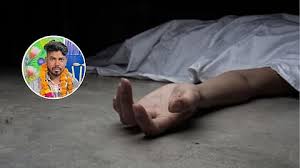
A Dalit youth died six days after being brutally beaten by his wife’s family in Bhitarwar area of Madhya Pradesh. The village panchayat had imposed a fine of Rs 51,000 and socially boycotted him. Gwalior. The death of a 25-year-old Dalit youth in Harsi village of Bhitarwar area of Madhya Pradesh has once again raised questions on caste violence. The youth was attacked by his wife’s family. After battling between life and death for six days, he breathed his last on Sunday evening. How did the incident happen Omprakash Batham was married to Shivani Jha in January this year. Shivani comes from an upper caste family and her family strongly opposed this relationship. Omprakash came to the village to meet his parents on August 19 to celebrate Rakshabandhan. During this time, Shivani’s family came to his house and attacked him brutally. According to the police, Shivani’s father Dwarka Prasad Jha along with relatives Rajesh alias Raju Jha, Uma Ojha and Sandeep Sharma attacked. It is alleged that all of them dragged Om Prakash out of the house and beat him with sticks and rods. Meanwhile, when wife Shivani tried to intervene, she also got injured. Son returned on Rakshabandhan The pain of the family hurt by the attack cannot be expressed in words. Sitting on her kutcha courtyard in Harsi village, Om Prakash’s mother says crying, “He had come just to see me. Every son wants to celebrate Rakshabandhan with his mother. They had a court marriage and the girl also wanted to live with him, yet she was killed so brutally.” Used to get threats Actually, this conflict had started from 2023 itself. When Om Prakash and Shivani tried to run away from home and get married for the first time, the police found them. But Shivani clearly said that she is an adult and wants to live with her husband. After this, both of them lived in different places—sometimes in Madhya Pradesh, sometimes in Uttar Pradesh—and in January this year, they registered their marriage in court. But they had to pay a heavy price for this relationship. The village panchayat imposed a fine of Rs 51,000 on Omprakash and socially boycotted the family. Not only this, Shivani’s father had openly threatened that Omprakash should never step inside the village boundary. Legal action He was treated in a private hospital in Gwalior for six days, but Omprakash died on Sunday evening. In this case, Belgada police station in-charge Ajay Singh Sikarwar said that initially a case of assault was registered against the attackers. Now after the death of the youth, a case of murder has been registered against 12 people. The main accused Dwarka Prasad Jha is absconding and the police is searching for him. Rajan Chaudhary Courtesy : Hindi News
“Dead Girls Get Cases Registered, But a Living Girl Fighting With Evidence is Ignored”: Switzerland-Based Dalit Activist Rohini Ghavari Issues Suicide Threat Amid Stalled FIR Against Nagina MP
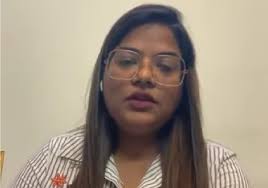
Ghavari also lamented her Valmiki identity, suggesting that if she were from the Jatav community, the response might differ, and urged society not to accept leaders with such allegations, drawing parallels to how women leaders like Mayawati would be treated. Indore- In a dramatic escalation of her ongoing battle against Nagina MP and Azad Samaj Party leader Chandrashekhar Azad, Switzerland-based scholar Dr. Rohini Ghavari went live on social media, expressing deep frustration over the lack of progress in her complaint against him. Ghavari, who arrived in India on August 6, after taking a break from her job abroad, accused Azad of emotional and sexual exploitation, betrayal, and ruining her life under the guise of a relationship tied to the Bahujan movement. She warned that if a First Information Report (FIR) is not registered within the next three to four days, she would stage a sit-in protest outside Azad’s residence and commit suicide, challenging supporters from the Jatav community to collect her body afterward. This stark ultimatum comes amid claims of political interference delaying legal action, despite her repeated submissions of evidence, statements, and meetings with police officials. Ghavari, hailing from a modest background in Indore’s slums and now a representative at the United Nations through her work with the R&M Geneva Nations Institute, detailed how her life drastically changed after June 2025, when she began facing what she described as false accusations and defamation orchestrated by Azad and his associates. In her emotional live session, she recounted helping Azad during his political struggles, including providing emotional support after his 2022 election loss and encouraging him to persist in the Bahujan movement. She claimed to have been instrumental in his rise, even drafting messages and managing party affairs remotely, only to be discarded once he achieved success as an MP. “I was the one who stood by him when he wanted to quit; I watered the plant, and now it shows its true colors,” she said, accusing Azad of being a “fraud” and “corrupt” leader who exploits the Dalit community for personal gain without contributing meaningfully, such as creating opportunities for education or jobs. The scholar alleged that Azad, also known as Ravan, has a history of similar exploitation, referencing a 2017 case involving a woman from Saharanpur where community pressure allegedly silenced the victim. Ghavari criticized Azad’s leadership, pointing to his opposition to caste-based reservation sub-categorization, which she said betrayed marginalized groups like the Valmiki community, to which she belongs. She accused him of being a BJP agent, enjoying undue privileges like Z+ security and a Type-VII bungalow shortly after his election victory with 1.5 lakh votes, questioning how an independent MP from a new party could amass such luxuries without corruption. “If I were a BJP agent, the FIR would have been filed on day one, and national media would be covering it,” she retorted to counter-allegations from Azad’s supporters that she is politically motivated to defame him. Despite initiating legal proceedings via email in June and her father meeting the Delhi Police Commissioner on July 23, Ghavari said no FIR has been lodged even after her personal appearances at the airport police station on August 6 and further interrogations on August 18. She described spending entire days at police stations, providing detailed statements, transcripts, and evidence, only to face delays attributed to “political pressure.” Police officials reportedly assured her of action within 24 hours, but she claims cross-verifications have been completed without result. “Dead girls get cases registered, but a living girl fighting with evidence is ignored,” she lamented, highlighting the irony and her disillusionment with the Indian police system, which she had never encountered before due to her life abroad. Ghavari’s accusations extend beyond personal betrayal, portraying Azad as a self-serving politician who prioritizes vote banks over community welfare. She cited his absence during key issues like the Waqf Board Bill protests and his failure to protest Home Minister Amit Shah’s alleged insult to Dr. B.R. Ambedkar in Parliament, despite being present there. She challenged Azad’s loyalty to the Bahujan movement, comparing him unfavorably to icons like Kanshi Ram and Mayawati, who empowered others rather than hoarding power. “He can’t share a chair, let alone create leaders,” she said, noting his party’s poor performance in recent elections in Haryana, Delhi, and Maharashtra, where deposits were forfeited and votes barely reached 10,000 despite large Dalit populations. The live session, marked by Ghavari’s visible distress and health issues like a sore throat, highlighted her demotivation after over 20 days in India with no progress. She emphasized fighting for self-respect and the Bahujan cause, vowing not to return to Switzerland until justice is served. “This is a battle of honesty against deceit; I have my truth, and he has his money,” she stated, accusing Azad of using funds from the community for luxury while showing poverty to garner sympathy. Ghavari also lamented her Valmiki identity, suggesting that if she were from the Jatav community, the response might differ, and urged society not to accept leaders with such allegations, drawing parallels to how women leaders like Mayawati would be treated. Geetha Sunil Pillai Courtesy : The Mooknayak Note: This news is originally published on https:/themooknayak.com/bha and is used purely for non-profit/non-commercial purposes, especially human rights.
Demand for caste census and reservation expansion raised on B.P. Mandal’s birth anniversary in Azamgarh
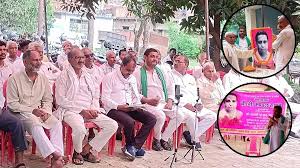
Demand for caste census, reservation expansion and ban on privatization in seminar on Mandal Commission’s birth anniversary Nizamabad (Azamgarh). A seminar was organized on Sunday in Dadra, Tahbarpur (Azamgarh) in memory of the birth anniversary of Mandal Commission Chairman and former Chief Minister B.P. Mandal. On this occasion, a serious discussion was held on caste census and SIR with the resolution to implement all the recommendations of the Mandal Commission. Farmer leader Rajiv Yadav said that implementing all the recommendations of the Mandal Commission would be a true tribute to B.P. Mandal. Describing it as a document of nation building, he said that through this, the society oppressed for centuries can get the rights from which they have been deprived till now. Rajiv Yadav stressed that caste census is the key to social justice. But when the demand for it intensified, the census was postponed for a long time. And when the caste census was announced, the voting rights given by Baba Saheb Ambedkar were attacked in the name of SIR. He said that without counting the backward classes, their rights cannot be ensured. He further said that social justice is incomplete in the presence of obstacles like 50 percent reservation limit and creamy layer. To fully implement social justice, it is necessary to eliminate creamy layer, sub-classification, quota within quota and 50 percent limit of reservation. Also, the speed at which the public sector is being privatized in the country is a blow to both employment and social justice. He demanded that reservation should be implemented in the private sector as well and the system of “quota within quota” should be ensured in women’s reservation. Rajiv Yadav said that after the implementation of two recommendations of the Mandal Commission, there was a revolutionary change in the country, but even today 27 percent reservation and reservation given to SC/ST have not been fully implemented. Reservation is the process that gave representation to the deprived society in independent India. He raised the question that those who oppose reservation should tell what alternative do they have to provide rights and entitlements to the large population which is a victim of caste and birth based discrimination. Apart from farmer leader Rajeev Yadav, Dinesh Yadav Master, Ram Sambhar Prajapati, Dr. Rajendra Yadav, Satyam Prajapati and Advocate Rajnath Yadav Kavi also addressed the seminar. A large number of people including Nandlal Yadav, Awadhesh Yadav, Vinod Yadav and Sahabdin were present in the meeting. Rajan Chaudhary Courtesy : Hindi News
Dalits’ resentment in Mangaluru, Karnataka: Allegations of negligence at DCRE station, police warned
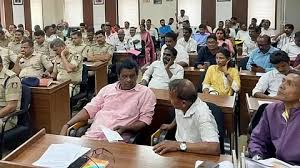
Dalit activists question the functioning of DCRE stations, warn police, prepare for agitation Mangaluru: Despite the establishment of separate Directorate of Civil Rights Enforcement (DCRE) stations in the district to investigate cases of atrocities on Scheduled Castes and Tribes, the victims are not getting justice. Dissatisfied with this situation, Dalit activists of Dakshina Kannada have expressed their resentment. Dalit activists put forth their grievances before police officials at a meeting held at the Mangaluru Police Commissioner’s Office on Sunday. The meeting focused on the grievances of Scheduled Caste and Scheduled Tribe communities and discussed the functioning of the Mangaluru City Police Commissionerate and Dakshina Kannada District Police. The meeting was chaired by DCP (Law and Order) Mithun HN and Additional Superintendent of Police Anil Kumar S. Bhoomaraddi. During the meeting, Jagdish Pandeshwar mentioned a case in which a Dalit woman was sent obscene calls and messages via WhatsApp by a man living abroad. The woman lodged a complaint, but no action was taken. The case was sent to the DCRE police station, but the accused was not arrested. It is alleged that the station in-charge also gave irresponsible answers. The activists warned that if no concrete action is taken on such cases till the next meeting, they will be forced to agitate. They also demanded to make public the complete record of cases of atrocities registered in the DCRE police station. On this, DCP Mithun said that since the DCRE does not come under the jurisdiction of the City Police Commissioner at present, a letter will be sent to the DG of DCRE regarding the complaints of the activists. Other demands of Dalit leaders In the meeting, Dalit leader SP Anand said that the government should restore the old process of selection of self-employment beneficiaries for the Scheduled Caste-Tribe community. Earlier this selection was done by a committee headed by the District Deputy Commissioner, but for the last 15 years this work is in the hands of local MLAs. Due to this, most of the benefits go to the influential class and people close to the MLAs, while the real needy are deprived. Rajan Chaudhary Courtesy : Hindi News
Brutal attack on Dalit youth in Junagadh, third casteist atrocity in 21 days
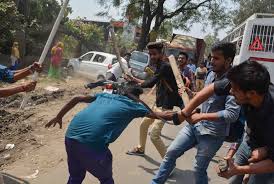
Brutal attack on Dalit youth in Junagadh, video goes viral; Third casteist violence in 21 days raises questions again. Ahmedabad: A Dalit youth was brutally beaten up, robbed and threatened with death in Junagadh, Gujarat. This incident has come to light as the third casteist atrocity against Dalits in the last 21 days. The viral video of the incident shows that even today, decades after Independence, casteism is deeply rooted in the society. What is the whole matter? The incident took place on the afternoon of August 16, when the victim had gone to meet a friend. Then a boy came to him and pleaded for help as his brother was being taken away. The victim and his friend followed the boy to the Swami Vivekanand School ground, where they understood that it was a trap. In the ground, three upper caste youths surrounded the youth and questioned him about his whereabouts. When the youth told them that he was from Kadiyawad, a youth named Hitesh and his two unidentified companions started insulting him with casteist slurs and beat him badly with belts and sticks, causing serious injuries on the youth’s body. The attackers also snatched the youth’s mobile phone and threatened to kill him if he complained to the police. The victim told people at the Junagadh Civil Hospital, “They hit me with belts and sticks, snatched my phone and threatened to kill me. Today it is my turn, tomorrow it could be someone else’s. I only want justice.” The police have registered a case under several sections of the Indian Penal Code at the Junagadh A Division police station. Separate teams have been formed to nab the accused. Deputy SP Hitesh Dhandaliya assured that “strict legal action will be taken as soon as possible.” This attack in Junagadh is not the only one. This is the third attack against Dalits in Gujarat in the last three weeks, which shows that casteism is still fuelling violence. Each incident is a crack in the promise of equality in society and a grim indication of the urgent need for justice and protection for vulnerable communities. Rajan Chaudhary Courtesy : Hindi News
Ballia: BJP worker arrested for assaulting Dalit engineer, Bhim Army chief says ‘It is not an attack on Jatav ji but on Baba Saheb’s dreams’
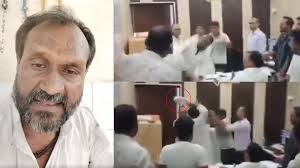
Police arrested a BJP worker for assaulting a Dalit engineer and using casteist slurs in Ballia district. Uttar Pradesh: Police arrested BJP worker Munna Bahadur Singh (40) for assaulting a Dalit engineer of the power department in Ballia district on Saturday. According to police, the incident took place in the engineer’s office when Munna Bahadur Singh had reached there with his colleagues. In a video that went viral on social media, the accused can be seen attacking the engineer with a shoe and abusing him. Police produced the accused in court on Sunday, from where he was sent to judicial custody. Ballia Superintendent of Police Omveer Singh said, “As soon as the incident was reported on Saturday afternoon, a police team reached the spot and started investigation.” The victim engineer Lal Singh told the police that about 20–25 people led by Munna Bahadur Singh barged into his office and made casteist remarks on him. Based on the complaint, the police have registered a case against the accused and other unknown people for assaulting a government employee, abusing and other sections. Along with this, sections of SC/ST Act have also been imposed. A day before this incident, National President of Azad Samaj Party (Kanshi Ram) and MP from Nagina Lok Sabha constituency Chandrashekhar Azad had posted a video related to the incident on social media platform X and reacted strongly to the atrocities being committed on Dalits under the BJP rule and demanded action in the matter. Rajan Chaudhary Courtesy : Hindi News
UP: BJP worker arrested for thrashing Dalit engineer with shoe in Ballia
A Bharatiya Janata Party (BJP) worker has been taken into custody in Uttar Pradesh’s Ballia district for allegedly attacking a Dalit engineer inside his office by striking him with a shoe, PTI reported. The incident, which occurred on Saturday, was captured on video and quickly spread across social media. The footage shows a tense verbal altercation between Lal Singh, a superintending engineer in the electricity department, and several men, after which Singh is visibly assaulted with a shoe. Superintendent of Police Omveer Singh stated that in his complaint, Lal Singh alleged that a man identified as Munna Bahadur, along with a few unidentified persons, barged into his office without permission. Bahadur, according to district BJP president Sanjay Mishra, is both a party member and a former office-bearer. The complaint further mentions that Bahadur and his associates used casteist insults before physically assaulting Singh with kicks, punches, and a shoe. They also allegedly vandalised office documents and threatened to kill Singh and his family if he chose to pursue legal action. Police have booked Bahadur and the others involved under provisions of the Bharatiya Nyaya Sanhita as well as the Scheduled Castes and the Scheduled Tribes (Prevention of Atrocities) Act. The superintendent confirmed that Bahadur has been arrested and further investigation is in progress. Prior to his arrest, Bahadur told reporters that he had gone to the engineer’s office to submit a memorandum regarding power-related grievances from his locality. He claimed, however, that the official used abusive language against him. Bahadur further alleged that he himself was attacked and sustained injuries. The incident has drawn sharp political reactions. The Congress party condemned the assault, saying, “BJP goons in Ballia had turned the law into a ‘farce’.” The party added on X, “In [Chief Minister] Yogi Adityanath’s government, there is no rule of law; instead, BJP leaders’ whims and anarchy reign supreme. The administration has bowed down before these political goons. If this unrestrained thuggery is not reined in in time, they will plunge the entire society into the fire of anarchy.” The Trinamool Congress also lashed out at the ruling party, asserting that BJP leaders were “emboldened” to “unleash savagery on Dalits in broad daylight” with the assurance that neither the police nor the system would act against them. “This is a party that hides behind empty slogans of ‘Sabka Saath, Sabka Vikas’ while trampling Dalits with boots and fists,” the party said on X. TMC further remarked, “Until BJP is uprooted, Dalits will remain under assault, democracy will remain hostage, and India will remain shackled to caste tyranny.” Courtesy : Maktoob Media Note: This news is originally published on https:/maktoobmedia.com/bha and is used purely for non-profit/non-commercial purposes, especially human rights.