
Odisha: Dalit man beaten to death after mob finds him skinning dead cow
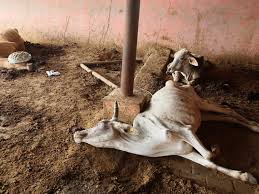
The victim, Kishore Chamar, hailed from Kaunsidhipa village and worked as a cattle skinner. In Odisha’s Deogarh district, a 35-year-old Dalit man was beaten to death on September 4 after being accused of killing a cow by a mob. The incident took place in Kendeijori village under the Reamal police station limits. The victim, Kishore Chamar, hailed from Kaunsidhipa village and worked as a cattle skinner. His co-worker was also assaulted, but the latter managed to escape. “The mob found them cutting up a dead cow. Angered, they attacked Kishore and his colleague. The latter escaped with injuries, but Kishore was not lucky,” Deogarh Superintendent of Police Anil Kumar said, adding the animal had died naturally. Six individuals, Prabhat Kumar Sahu, 36, Ghanashyam Pradhan, 30, Gajanan Kalet, 18, Kumarmani Karlo, 60, Suresh Kisan, 55 and Deepak Kumar Behera, 37, have been arrested. Further investigations are underway. Odisha has seen a string of similar incidents, with dairy farmers and cattle skinners facing brutal attacks and harassment over cow-related allegations. On September 6, four dairy farmers were allegedly attacked by cow vigilantes in Bhubaneswar, where one calf was killed in the midst of the chaos. Posted by Veena Nair Courtesy : TSD Note: This news is originally published on https:/thesiasatdaily.com/bha and is used purely for non-profit/non-commercial purposes, especially human rights.
Police cooked up theft case to frame dalit woman, finds crime branch
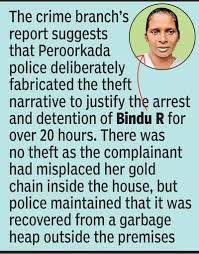
Thiruvananthapuram: Amidst mounting outrage over police excesses in the state, the crime branch’s findings in the Peroorkada false theft case — in which dalit domestic worker Bindu R was falsely accused of stealing a gold chain from her employer’s house and detained at the police station for nearly 20 hours in April — could further dent the already “battered” image of the force. The crime branch’s report in the case suggests that Peroorkada police had deliberately constructed the theft narrative to implicate Bindu and justify her arrest and detention. It is reliably learnt that Pathanamthitta crime branch DSP K A Vidyadharan, who took over the investigation following a state human rights commission order that an officer of DSP rank from outside the district should look into the incident, concluded in his report that no theft had taken place at the residence of complainant and Bindu’s employer Omana Daniel. According to the report, the “stolen” gold chain was recovered from inside the complainant’s own residence. The complainant, who reportedly suffers from memory loss, had misplaced the ornament inside the house, but police maintained that it was recovered from a garbage heap outside the premises. The report is also learnt to have recommended action against then Peroorkada station house officer R Sivakumar, who has been transferred, and Omana. Bindu had alleged that she was subjected to inhuman treatment, including denial of food and drinking water, during her detention. She also said officers had coerced her into confessing to the theft by threatening to implicate her two minor daughters and husband. Her plight had sparked outrage, with rights activists alleging a caste bias. Sub-inspector S G Prasad and ASI Prasannan were earlier suspended from service for the incident. Courtesy : TOI Note: This news is originally published on https:/timesofindia.com/bha and is used purely for non-profit/non-commercial purposes, especially human rights.
Supreme Court quashes rape case ‘filed after 4 years’ by Allahabad University Dalit student
A bench of Justices J.B. Pardiwala and Sandeep Mehta passed the order while allowing an appeal filed by accused Pradeep Kumar Kesarwani challenging an Allahabad High Court order refusing to quash the summoning order passed by a trial court in the case The Supreme Court has quashed a rape case filed by a Dalit student of Allahabad University on the ground that the complaint was filed after four years of the alleged assault, laying down fresh guidelines for high courts to bin criminal cases that abuse the process of law and cause harassment. A bench of Justices J.B. Pardiwala and Sandeep Mehta passed the order while allowing an appeal filed by accused Pradeep Kumar Kesarwani challenging an Allahabad High Court order refusing to quash the summoning order passed by a trial court in the case. Kesarwani argued that a false rape complaint was lodged against him in 2014, four years after the alleged incident. He said the woman had brought charges of rape and other offences under the SC-ST Act after their consensual relationship turned sour. Allowing the appeal, the apex court noted that the complainant showed a lack of seriousness in pursuing the case. “We are of the view that the Additional Chief Judicial Magistrate committed an error in passing the summoning order. The high court too overlooked the relevant aspects of the matter while rejecting the Section 482 (of the Criminal Procedure Code) application. It is very apparent on a plain reading of the complaint, more particularly, considering the nature of the allegations that the same doesn’t inspire any confidence. There is no good explanation offered why it took four years for respondent no. 2 to file a complaint,” the top court observed. The fact that the complainant did not accept the notice issued by the Supreme Court also showed that she was not serious about pursuing the case, the bench said. “…We are of the view that continuation of the criminal proceedings against the appellant would be nothing but gross abuse of the process of law…. The impugned order passed by the high court is set aside,” the bench ruled. Citing earlier judicial precedents, the apex court laid down guidelines for high courts to follow in such cases. The bench said that high courts should examine whether the material relied upon by the accused (i) was sound, reasonable and indubitable; (ii) would rule out the assertions contained in the charges levelled against the accused; (iii) has not been refuted by the prosecution/complainant; and (iv) whether proceeding with the trial would result in an abuse of process of the court. “If the answer to all the steps is in the affirmative, the judicial conscience of the high court should persuade it to quash such criminal proceedings, in exercise of power vested in it under Section 482 of the CrPC,” the bench said. Courtesy : The Telegraph Note: This news is originally published on https:/thetelegraph.com/bha and is used purely for non-profit/non-commercial purposes, especially human rights.
Dalit Youth Attacked With Sharp Weapon, Caste Slurs Hurled in UP’s Sultanpur
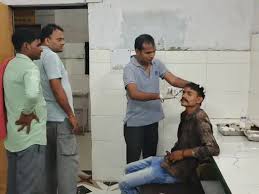
A Dalit youth was seriously injured after being attacked with a sharp weapon in Sultanpur district’s Akhandnagar area on Tuesday evening. The victim, Amit Kumar, a resident of Lorpur village, said the incident took place around 6 pm when he was returning home from Nirala Nagar market. “A young man from my village, along with his companions, stopped me on the way. They attacked me with a sharp weapon and hurled caste-based abuses,” Amit told police. He further alleged that the accused also threatened to kill him if he reported the matter. “My family and I are terrified after this attack,” he added. Akhandnagar police station in-charge Deepak Kushwaha confirmed the incident. “Based on the victim’s complaint, a case will be registered and strict action will be taken,” he said. Courtesy : The Observer Post Note: This news is originally published on https:/theobserverpost.com/bha and is used purely for non-profit/non-commercial purposes, especially human rights.
Tippiri Tirupathi: New commander of Naxals, a Dalit from Telangana
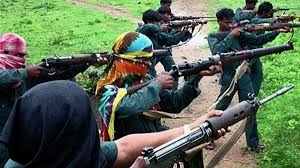
Tirupathi, in his 60s, hails from Korutla in Telangana’s erstwhile Karimnagar district. Hyderabad: Continuing the legacy of Telugu leadership within the Maoist movement, Tippiri Tirupathi, a Madiga Dalit operating under the alias Devuji, has been appointed as the new general secretary of the CPI (Maoist), according to sources in security forces. Tirupathi, in his 60s, hails from Korutla in Telangana’s erstwhile Karimnagar district. His elevation follows the killing of Nambala Keshav Rao alias Basava Raj during Operation Kagaar on May 21 a watershed moment that marked the first time in decades that the Maoists found themselves without a supreme leader, and the first successful neutralization of such a high-ranking Naxalite by security forces. Intelligence sources identified two frontrunners to succeed Keshav Rao, Tippiri Tirupathi and Mallojula Venugopal Rao. While Tirupathi leads the Central Military Commission (CMC), the party’s armed wing, Venugopal Rao serves as the current ideological head. Ultimately, the organization selected Tirupathi for the top position. In a significant parallel appointment, Madvi Hidma alias Santosh, commander of the People’s Liberation Guerrilla Army (PLGA) 1st Battalion, has been designated as secretary of the Dandakaranya Special Zonal Committee (DSZC). This role makes him responsible for party activities across Chhattisgarh’s Bastar division, considered a crucial operational region for the Maoists. through organizational ranks due to his early involvement and tactical acumen. Now commanding Battalion 1 of the PLGA, Hidma oversees one of the most lethal and rigorously trained units within the Maoist structure. Operating primarily across Sukma, Dantewada, and Bijapur regions of Chhattisgarh, this battalion distinguishes itself as the most heavily armed formation, with 80 percent of personnel equipped with automatic or semi-automatic weapons, including AK-series rifles, self-loading rifles, and light machine guns. Given his strategic importance, Hidma operates within a three-layer security cordon. Beyond his PLGA role, he serves as a Dandakaranya Special Zonal Committee member and has been inducted into the CPI (Maoist) Central Committee, making him among the youngest to achieve such status. The Maoists currently face their most severe leadership vacuum and organizational crisis in years. Since Operation Kagar’s launch, they have been unable to convene core committee meetings as cadres and leadership remain scattered. Security forces have strategically surrounded the Karregutta hills, a traditional safe haven along the Telangana-Chhattisgarh border from all directions. “Special forces discovered the leadership transition after interrogating Kamlesh, a Maoist Central Committee member who recently surrendered in Andhra Pradesh,” revealed a top source in the anti-Naxal squad. Since the 2004 merger that created the CPI (Maoist) by unifying the CPI (Marxist-Leninist) People’s War, predominantly active in Andhra Pradesh with the Maoist Communist Centre of India from Bihar and West Bengal, undivided Andhra Pradesh has consistently provided leadership to India’s Naxal movement. This tradition encompasses figures like Kondapalli Seetharamaiah, a former schoolteacher who established the CPI (ML) People’s War in 1980, and Nambala Keshava Rao alias Basavaraju from Srikakulam, who became the CPI (Maoist) General Secretary in 2018 and gained recognition for his military strategies. The significance of this regional influence was underscored when the merger was announced in Hyderabad, highlighting undivided Andhra Pradesh’s centrality to the movement. SNV Sudhir Courtesy : DH Note: This news is originally published on https:/deccanherald.com/bha and is used purely for non-profit/non-commercial purposes, especially human rights.
India‘Kicked With Boots, Abused With Slurs’: 62-Year-Old Retired Dalit Bank Official Alleges Assault, Caste Abuse by Adoor Police

A retired bank official from Pallikkal has accused the Adoor Police of physically assaulting him without any reason. The victim, Babu (62), alleged that despite filing complaints months ago with the Chief Minister, the Legislative Petition Committee, and the SC/ST Commission, he has not received justice. Speaking to the media, Babu recalled the incident from May 27. He said he had a financial dispute with another person which was settled at the Adoor police station under the mediation of the Circle Inspector (CI). After the settlement, the CI stepped out, asking Babu to write a statement confirming he had no further complaints. “At that time, SI Anoop Chandran entered the station, abused me verbally, and beat me without any reason,” Babu said. According to him, his wife, who was waiting outside, pleaded with the officer not to harass him because of his poor health. “Instead, the SI verbally abused her too and even used casteist slurs against us. He kicked me with his boots and used extremely offensive language,” Babu alleged, adding that both he and his wife are Dalit activists. Following his complaint, SI Anoop Chandran was transferred from Adoor station to the district control room. However, Babu claims no real action has been taken against the officer. “The SC/ST Commission had also sought a report on the incident from the police, but it has not been submitted till now,” he said. Courtesy : TOP Note: This news is originally published on https:/theobserverpost.com/bha and is used purely for non-profit/non-commercial purposes, especially human rights.
24-yr-old dalit youth beaten, forcedto ‘consume poison’ over love affair
Lucknow: Tension gripped Azamgarh’s Naushera village on Monday after the murder of a 24-year-old dalit loco pilot, who was allegedly thrashed and forced to consume poison by six men linked to a dispute over a love affair. The victim’s family and locals later blocked the Azamgarh–Gorakhpur National Highway, demanding strict action against the accused. Later, police force from three stations and senior officers reached the spot and got the protestors evicted, ensuring stern action. Lured, Beaten and Poisoned The deceased, Durgesh Kumar, son of Indal Ram of Naushhera village under Jiyanpur police station, was working as a loco pilot since 2021, with postings in Gorakhpur and Chandigarh. He was reportedly in a relationship with the daughter of a fellow villager Ganesh Yadav, which the girl’s family opposed. According to his younger brother Ajit Kumar, Durgesh was called on Saturday evening by one Gyanendra Mishra under the pretext of “settling matters.” On reaching the spot, Durgesh was surrounded by Ganesh Yadav, Ajay Yadav, Shravan Yadav, Sheru Yadav, Govind Yadav, and Mishra. A video clip that surfaced shows the youth being slapped, pinned, and assaulted by multiple men. Ajit alleged that the accused later forced Durgesh to drink a poisonous substance and abandoned him at a deserted location. Last Call Before Death Durgesh managed to call Ajit from a second mobile phone hidden in his pocket, narrating the assault and naming his attackers. Ajit rushed to the spot and took him to hospital, but doctors declared him dead within minutes of arrival. Highway Blocked, Heavy Deployment After the postmortem, grieving family members placed the body on the highway and, joined by villagers, staged a massive protest demanding immediate arrests. The blockade caused traffic snarls as police struggled to pacify the mob. Considering the tense situation, force from three police stations and PAC personnel were deployed. Durgesh’s father broke down, saying: “He was the only earning member of my family. They have snatched my son, my light.” Police Action SP (Rural) Chirag Jain confirmed that an FIR was lodged against six accused under murder and related sections. “The victim’s family has alleged he was beaten and forced to drink poison. The video evidence shows the accused clearly. Raids are on to arrest them,” he said. Additional DG, Varanasi Zone, Piyush Mordia, told TOI that the autopsy revealed poisoning as the cause of death and viscera was preserved for further examination. A police force was deployed in the village while efforts are on to nab the accused. Courtesy : TOI Note: This news is originally published on https:/timesofindia.com/bha and is used purely for non-profit/non-commercial purposes, especially human rights.
In a new book, a journalist writes about the life of a young Dalit boy growing up in Mumbai
An excerpt from ‘Scum of the Earth: A True Story from the Margins’, by Rakshit Sonawane. When the Giraffe brand compass box was launched in the market, it became an instant craze among students. Within a week, everyone in Avinash’s class had one – except him. One evening, when he had accompanied Godavari to the market, he saw the compass box at a stationery shop. He told her about it, and she hesitantly inquired about its price. The shopkeeper promptly presented one of the compass boxes at the counter and mentioned its price. “Oh, we’ll buy it later,” she said, handing it back. Avinash knew the reason behind her answer and kept quiet. At school the next day, Panvelkar announced that he would conduct a special coaching class after school hours to prepare deserving students for the elementary and intermediate grade drawing examinations conducted by the state government. A few interested students raised their hands. Avinash wanted to take the class as well, but he did not raise his hand – signing up for the special class meant paying an extra fee. He avoided looking at Panvelkar and kept doodling in his notebook with a pencil stub, desperately wishing for some magic that would make him disappear from his teacher’s sight. “What about you?” he heard Panvelkar ask, but he did not look up. There was silence in the class. “Avinash, I’m asking you,” Panvelkar said. Prasad nudged him, and Avinash’s heart missed a beat. He stood up and looked around. The entire class was agog over the conversation that was unfolding. “Not interested?” Panvelkar asked. Avinash avoided making eye contact with his teacher and didn’t say anything. “You will pick up very fast,” Panvelkar said. “I want students like you.” “I’ll ask my parents,” Avinash mumbled, hanging his head. Panvelkar looked at him, bewildered. “All right,” he said. “Let me know.” That evening, when Avinash brought up the topic at home, Godavari got irritated. “Where will the money come from? You think it grows on trees?” she shouted. Without saying another word, he went and sat on the threshold of the house, looking at the fascinating spectacle of the city spread out below, vibrant as ever. A few days later, while walking in the school corridor during recess, Avinash spotted Panvelkar coming down the corridor from the opposite direction. To avoid him, he started walking behind some students. Keeping his head down as he walked, Avinash hoped that Panvelkar had not seen him, but in vain. “Avinash,” he heard Panvelkar’s voice and stopped. “Have you told your parents about the drawing class?” “Err … yes, sir,” he said. “But they said there was no need to join it.” “Why? What’s the problem?” Panvelkar asked. “They are not interested.” Panvelkar looked at him for a while. “Are you interested?” “I am, but …” “But?” “They say we can’t afford it.” “Oh. Ask your mother or father to see me, and you start coming to the extra class from today,” Panvelkar said. Avinash nodded. He wasn’t sure how his parents would react, but he hoped that Panvelkar would convince them to let him join the class. The temptation of playing with colours was irresistible. So, that day, he stayed back after classes and went to the art classroom. Without a word, Panvelkar opened a cupboard and provided him with pencils, colours, brushes and paper. Then he started instructing all the students in the class, and Avinash soon got lost in his favourite subject. Reaching home late in the evening, he found Godavari busy cooking and his father away on duty. She greeted him with a glare. “Why are you so late?” she demanded. When he told her about what had happened, she calmed down and after a long pause said, “Your education is becoming more and more expensive by the day.” The next day, when Avinash and the other students were in the art class, Dagadoo appeared at the door of the classroom. He was dressed in his watchman’s uniform. Avinash went to Panvelkar and told him that his father had come to meet him. Panvelkar asked him to continue with his work and went to talk to Dagadoo. The students in the class looked at one another, their eyebrows raised in curiosity. “That’s my father,” Avinash said. “Your father is a watchman?” Atharva asked. “Yes,” Avinash replied. Atharva shrugged, while some of the more amused students giggled. After a brief whispered conversation, Dagadoo folded his hands, smiled and left. “Your father has agreed to let you attend this class,” Panvelkar told Avinash when he came back in. “You can continue now.” When Avinash reached home that evening, Dagadoo told him that Panvelkar had waived the fee for him. It came as a beautiful surprise, and from that day onwards, Avinash started finding the school less repulsive. He would wait eagerly for the regular classes to conclude so that he could rush to the art classroom A month later, Panvelkar announced that an inter-school painting competition had been organised. He selected Avinash and three others, including Atharva, from the entire school to participate in it. When Avinash hesitated, Panvelkar called him closer and whispered that he would also provide the necessary drawing material for the competition, which was in two weeks’ time. The competition venue was the spacious hall of another school nearby. On the day of the competition, as he was nearing the entrance, Avinash saw Atharva approaching. They smiled and wished each other luck as they walked in together. “I had gone to a temple today to offer special prayers for my success,” Atharva said, pointing at the tilak, the holy mark, on his forehead. “You didn’t go?” Avinash shook his head. “We follow Buddhism, and there is no god in Buddhism,” he said as Atharva cast him a scornful glance. Suddenly, a cat crossed their path, startling Atharva, who halted and retraced a few paces, muttering something inaudibly. “What happened?” Avinash asked. “Didn’t you see the cat
Telangana HC clears constable post for Dalit woman after 8 yr case

Division Bench upholds single-judge order, dismisses govt appeal against appointment under SC and local quota in 2015 constable recruitment. Hyderabad: A Dalit woman has secured an appointment as a police constable after the Telangana High Court upheld her petition. The court directed that she be considered under the Scheduled Caste reservation and local quota. In the 2015 recruitment for Stipendiary Cadet Trainee Civil Police Constable and Armed Reserve Constable posts, K Sangeetha of Hyderabad’s Gowliguda was rejected on the grounds of being a non-local candidate. She challenged the decision by filing a petition before the High Court in 2017. A single-judge bench ruled in March 2025 that she was entitled to be appointed under the SC reserved category and local quota. The state government and police recruitment board filed appeals questioning this order. A division bench of Chief Justice Apresh Kumar Singh and Justice GM Mohiuddin at the Telangana High Court on Monday dismissed the appeals, upholding the earlier direction for her appointment. Posted by P N Sree Harsha Courtesy : TSD Note: This news is originally published on https:/thesiasatdaily.com/bha and is used purely for non-profit/non-commercial purposes, especially human rights.
13-year-old Dalit girl allegedly raped, filmed by accused in UP village

In a horrific incident in a village under the Bazar Shukul police station area, a 13-year-old Dalit girl was allegedly raped by a man from her village, who also filmed the assault, police reported on Sunday, September 7, 2025. The accused, now in custody and under interrogation, faces serious charges following the crime that has sparked outrage. According to police, the incident occurred on Friday evening when the accused lured the girl out of her home and assaulted her. He recorded the act and threatened to upload the video online and kill her if she disclosed the incident to anyone. Despite the threats, the traumatized girl confided in her mother upon returning home. Her father promptly lodged a complaint at the Bazar Shukul police station on Saturday, detailing the harrowing ordeal. Station Officer Abhinesh Kumar confirmed that a case has been registered against the accused under relevant sections of the Bharatiya Nyaya Sanhita, the Protection of Children from Sexual Offences (POCSO) Act, and the Scheduled Castes and Scheduled Tribes (Prevention of Atrocities) Act. The police are conducting a thorough investigation to ensure justice for the victim. The case highlights the persistent issue of violence against marginalized communities, particularly Dalit girls, in rural India. Authorities are under pressure to act swiftly, as the incident underscores the urgent need for stronger measures to protect vulnerable children and enforce stringent penalties for such heinous crimes. Courtesy : Muslim Mirror Note: This news is originally published on https:/muslimmirror.com/bha and is used purely for non-profit/non-commercial purposes, especially human rights.