
Mad scramble for Dalit candidates in Kerala: Congress may pay price for neglect
Kodikunnil, first elected to the Lok Sabha in 1989, remains an MP, while Sudhakaran has held sway since his Wandoor debut in 1982. KOCHI: As Kerala races towards the assembly election next May, the Congress is in a desperate eleventh-hour search for Dalit and tribal candidates. The scramble has laid bare a bitter truth: The party has failed to groom and promote leaders from the scheduled castes and scheduled tribes, leaving itself exposed in 16 reserved constituencies (14 SC and two ST). The shift from the past could not have been starker. Until the mid-1980s, the Congress was never short of stalwarts from backward communities. The likes of Vella Eacharan Iyyani, M P Thami, K K Balakrishnan, K Raghavan Master, Damodaran Kalassery, P K Velayudhan, K K Madhavan, T K C Vaduthala, Kittappa Narayana Swamy and Dr M A Kuttappan gave the party both legislative heft and grassroots presence. These leaders emerged not just as candidates, but as mass figures who commanded respect. But as factionalism deepened in the late 1980s and ‘90s, Dalit and tribal representation shrank. “The main reason for the failure of Congress to promote SC/ST leaders was the endless feud between the ‘A’ and ‘I’ groups. It choked the rise of new leaders and created a vacuum that remains unfilled even today,” said political analyst Dijo Kappen. That vacuum is now haunting the party. For decades, the leadership has relied on a handful of “safe” names — most notably Kodikunnil Suresh and Pandalam Sudhakaran. Kodikunnil, first elected to the Lok Sabha in 1989, remains an MP, while Sudhakaran has held sway since his Wandoor debut in 1982. Both men have effectively blocked the entry of younger leaders, according to critics. “Congress is finding no names beyond Kodikunnil and Sudhakaran. With issues clouding Remya Haridas as well, the party has only itself to blame,” remarked Ramesh Mathew, a former journalist and long-time Congress watcher. Indeed, the bench is worryingly thin. The party has no ready replacements for the 16 reserved constituencies. Meanwhile, the CPM and the BJP are making visible efforts to cultivate Dalit and tribal candidates, intensifying the Congress’ anxiety. A senior Congress source admitted the crisis, but insisted change was coming. “The AICC wants new names from fishermen, SC and ST communities, not the tired old set such as Kodikunnil and [T N] Prathapan. We have identified promising new faces, and there will be a visible generational shift in 2026,” the leader told TNIE. Sources said Sajithamol, the widow of M G Kannan, who was vice-president of the Pathanamthitta District Congress Committee (DCC) and district panchayat member, who passed away in May this year. at the age of 42, will be among the Congress picks from the backward community for the assembly election. The stakes are high. In the 140-member House, the 16 reserved seats can prove decisive. Losing ground on this front could cripple Congress’ chances of returning to power. Leaders like P R Sona from Kottayam — educated, with a doctorate, and active in community work — represent the kind of profile the party should have nurtured years ago. Instead, the neglect of grassroots Dalit leadership has left Congress scouring the state at the last minute for candidates with credibility, said sources. The irony is stark. A party that once produced giants like K K Balakrishnan — who held multiple ministerial portfolios, including harijan welfare and transport — and Kuttappan, a staunch Ambedkarite who fought his way into the assembly despite factional sabotage, is today struggling to find even a handful of recognisable Dalit leaders. As the countdown to the polls begins, Congress is discovering that decades of ignoring and sidelining its Dalit and tribal leaders cannot be wished away in a frantic candidate search. The past is catching up fast — and the party may pay a heavy price. Rajesh Abraham Courtesy : TNIE Note: This news is originally published on https:/thenewindianexpress.com/bha and is used purely for non-profit/non-commercial purposes, especially human rights
Dalit teen allegedly attacked, stripped for meeting girl in Chennai

Police said Saravanan also made casteist slurs during the attack. The boy is currently undergoing treatment at Kilpauk Medical College (KMC) The Secretariat Colony police in Chennai on Friday, September 12, arrested two men under the Scheduled Castes and Scheduled Tribes (Prevention of Atrocities) Act for allegedly assaulting, stripping, and verbally abusing a 17-year-old Dalit teen who had gone to meet a girl at her relatives’ residence. The arrested men have been identified as Saravanan, reportedly a former Bharatiya Janata Party (BJP) functionary, and his brother Logesh. Police said the incident took place after the girl’s relatives confined the boy in a room and then called Saravanan for intervention. The boy, who belongs to the Scheduled Caste (SC) Hindu Adi Dravidar community, and the girl, who is from the Most Backward Class (MBC) Vanniyar community, had been friends for years. Though they later joined different schools, they continued to stay in touch through social media. When the boy went to visit her, Saravanan and Logesh allegedly stripped and assaulted him. Police said Saravanan also made casteist slurs during the attack. The boy is currently undergoing treatment at Kilpauk Medical College (KMC) Hospital. The police have registered a case against the accused, under the SC/ST (Prevention of Atrocities) Act and Sections 296(b) (obscene act or singing), 115(2) (voluntarily causing hurt), 109(1) (attempt to murder) and 351(3) (criminal intimidation) of Bharatiya Nyaya Sanhita (BNS). Written by:TNM Staff Courtesy : TNM Note: This news is originally published on https:/thenewsminute.com/bha and is used purely for non-profit/non-commercial purposes, especially human rights
‘Rising From the Dust’: Luminous short stories about Dalit lives on both sides of the Bengal border

The anthology contains 12 stories curated and translated by Aruna Chakravarti. Aruna Chakravarti’s exceptional skills as both a translator and a writer of meticulously researched historical fiction are widely acknowledged and evidenced by her much-acclaimed oeuvre so far. This time, however, she has mobilised her art of translation to cast some light on the plight of the Dalits of Bengal, more specifically, of Dalit women, who confront a three-pronged dilemma: the stigma of their caste, gender-based injustice, and ubiquitous poverty. The result is Rising From the Dust: Dalit Stories from Bengal. Many Bengals For this anthology Chakravarti has translated 12 stories spread across a century, including works by both contemporary Dalit writers and those written about the community by non-Dalit writers who wrote sensitively about the condition of Dalit women. Apart from the sheer enjoyment of reading these stories, which I shall deal with later, I must mention here that for me, this book, at many levels, is an eye-opener and offers multiple layers of pleasure, like a matryoshka doll, encasing within itself a variety of linked worlds of personal and literary associations and significance. I come to it not just as a reader but as an expatriate Bangladeshi-Italian, and an anglophone writer and translator myself. There is also my background of being born in undivided Pakistan, and growing up in both East and West Pakistan, which enables me to relate to the stories where Bangladesh or East Bengal is mentioned. Also, to read in this anthology the works of some of the contemporary writers of Bengali Dalit literature, like Manoranjan Byapari, Manohar Mouli Biswas or Nakul Malik, all new to me and all born in East Pakistan, gives me a special insight into, at least, the geographic if not the economic or social circumstances of their remembered world. This is true also of the great Mahasweta Devi, many of whose stories about Adivasis I helped translate into Italian, and had the pleasure of meeting her during a film festival in Rome, in 2010, where the cinematic version of one of her stories was being screened as Gangor by the Italian director Italo Spinelli. Each story in this collection has a powerful impact, representing as it does a specific professional group of Dalits. The diversity here is tremendous: there are fisherfolk and boatmen, farmers and snake-charmers, doms and sweepers, tanners and drum-makers, basket-weavers, and rickshaw pullers. Even dung-cake-makers. Here, Mothos and Duleys, Bedeys and Vaishnavs, and poor Muslim farmers all exist side by side. Women at the centre There are strong female protagonists: Sarama in Manoranjan Byapari’s “The Fortress,” who makes her body her last battlefield. (“She is a pot brimming over with poison.”). In Chintay in Bimalendu Haldar’s “Salt,” we see the spirit of resistance among fisherwomen united against exploitation. (“Men…scorn us as weak and helpless. Let’s show them that we…can do everything they can. We are four women together.”) In Mahasweta Devi’s “Nalini’s Story,” we witness heartwarming female solidarity as Nalini’s friend, Mukundo’s mother, constantly stands up for Nalini against her greedy family. “You’re here to grab the old woman’s house and sell it … But it won’t be that easy. We’re with her.”) In Manohar Mouli Biswas’s “Shonkhomala,” the eponymous character, a rare, educated woman of the dom community, inspires her husband to help them escape their constraining circumstances. “Let us cast off the surname that brings us only shame and dishonour.” In Shankini, the beautiful and fiery leader of the band of bedeys, snake charmers in Prafulla Kumar Roy’s “Snake Maiden,” presents a version of the career-driven woman’s dilemma confronting domestic bliss versus ambition. (It wasn’t as though she herself was not lured by the prospect of putting down roots. “But I love my life as a bedeyni even more. The danger and excitement of sailing over tumultuous waters…We have been nomads for generations.”) Shefali, the wife in Nakul Mallik’s “Illegal Immigrant”, runs all the way from the slums of Bongaon to the Petrapole border office looking for her immigrant husband, and, when stopped from crossing the border, she rages at the officer. (“What passport? … I’m going to my husband. How dare you try to stop me?”) Larani in Anil Ghorai’s “Insect Festival” questions societal and religious rules. (“All these decrees are given out by evil men…in the name of the gods.”) And the pathetic old recluse Shora is seen as a fiendish creature in Tarasankar Bandyopadhyay’s psychologically complex story “The Witch,” about the battle of self-worth against public perception. (“There was no doubt in her mind now. What people said was right. She possessed a demoniac power…a power that destroyed everyone she loved.”) And even when the protagonists are frail or passive, their stories by dint of their narrative power, have the strength to move readers to tears, as in Saratchandra Chattopadhyay’s “Abhagi’s Heaven” where a dignified cremation with full funeral rites is craved by the lowborn protagonist as her most dazzling goal; or Mahasweta Devi’s “The True-Life story of Ulli-Bulli’s Mother” where a skilful use of dual points of view effectively reveals the mind of an unhinged old woman living in her past, searching for her lost twin daughters; orTarasankar Bandyopadhyay’s “Raikamal”, where a young Vaishnavi Kamal quietly struggles to embody the purity of spiritual love while suppressing her physical instincts. As to the faith of the other characters, whether the gods actually hear their fervent prayers or not, we see the wives of fishermen near the Sunderbans go to shrines of Bonbibi, the lady guardian spirit of the forest venerated by both Hindus and Muslims;,while the snake charmers bow to both Allah and Bishohari, another name for Manasha, the snake goddess. Some characters give offerings at Ma Sheetala’s temple, others at Kalighat. Translation and details Within a single volume one journeys through diverse settings and locations: refugee camps and slums, forests, fields of wild reeds, bulrushes, tussock grass, teeming bazars, urban alleys, streets and train stations, salt fens and muddy banks of rivers, bamboo groves, fish warehouses, paddy fields, dusty stretches
Dalit boy stripped and beaten up ‘for visiting friend’s home’ in TN

The 17-year-old boy and the girl had been friends since studying together in Choolaimedu. CHENNAI: The Secretariat Colony police on Friday arrested two men under the SC/ST (Prevention of Atrocities) Act for allegedly stripping, beating and abusing a Class 12 boy who visited a Class 10 girl at her house. The accused were identified as Saravanan, said to be a former BJP functionary, and his brother Logesh. Police said the girl’s mother has also lodged a complaint under the Pocso Act, alleging the boy abused her daughter, though no case has yet been registered. The 17-year-old boy and the girl had been friends since studying together in Choolaimedu. Though later in different schools, they remained in touch via social media. On Friday, when the boy visited her at Secretariat Colony, the girl’s relatives confined him in a room before calling Saravanan. He and Logesh allegedly assaulted the boy before releasing him. Courtesy : TNIE Note: This news is originally published on https:/thenewindianexpress.com/bha and is used purely for non-profit/non-commercial purposes, especially human rights
54 Rajputs tied and brutally attacked:Women gangraped, victims buried alive; Congress never regained Bihar Chief Ministership after the massacre

In the second episode of Dainik Bhaskar’s election series ‘Massacre’, today is the story of the Dalelchak Baghaura massacre, after which the Congress, which ruled Bihar for 40 years, could never make its CM again… One night of May 29, 1987. Location – Aurangabad district of Bihar. The same Aurangabad where the country’s only west-facing Sun Temple is located. A crowd of about 500 people was advancing, chanting the slogan ‘MCC Zindabad’. They had guns, axes, sickles, and cans of kerosene oil in their hands. After a while, everyone stopped at one place. They talked for a bit. Then half of them started moving towards Baghaura village and the other half towards Dalelchak. Both villages are one kilometer apart. Here, the Rajputs had dominance. Gaya Singh of Baghaura was the head clerk in the forest department. He had the only concrete house in the village. He had built it with passion. The eyes would stop at the gateway from afar. Around 8 PM, suddenly some noise was heard. When he opened the door and looked, a crowd of 200-300 people was standing in front. Gaya Singh hastily closed the door. They hadn’t even taken two steps when the crowd pushed and broke the door. First, the men of the house were dragged out and lined up. Meanwhile, two boys tried to escape unnoticed, but the attackers fired shots. Both fell right there. The attacker went near them. Their breaths hadn’t completely stopped yet. He struck a machete on the neck. Then, wiping his sweat, he said- ‘What are you looking at… go and bring their women.’ 20-25 attackers entered and started throwing women and children outside. Everyone was screaming- ‘Don’t kill us. Let us go. We beg you.’ One attacker spoke up- ‘#&#$% these people show a lot of arrogance. They make our women work. Dishonor their women in front of them. Only then will the revenge be complete.’ The attackers pounced on the women and girls. They tore their clothes. They began to rape them. After a while, a middle-aged man spoke up- ‘Enough. Now kill them all.’ The attackers dragged the women into the veranda. They placed their necks on the cot and pressed hard. One attacker picked up an axe and one by one beheaded the five women. Blood spread all over the veranda. The attacker said- ‘Dispose of them all.’ 8-10 people started digging a pit in front of the house with shovels. In a short time, the pit was ready. The attackers put the women’s bodies in the pit and filled it with soil. ‘Now tie these #@$%*& and take them to the banyan tree. The villagers should also see what happens when they clash with us.’ Hearing this, the attackers tied the hands and feet of Gaya Singh and his family members. They dragged them to the banyan tree. There was a large banyan tree at the beginning of the village. 30 May 1987, Dalelchak Baghaura village. Rajputs were killed by tying them to this banyan tree. Source: Library 30 May 1987, Dalelchak Baghaura village. Rajputs were killed by tying them to this banyan tree. Source: Library By now, there was chaos in the village. The attackers were dragging women, men, and children from Rajput families one by one to the banyan tree. Many people were jumping from the roofs and running towards the fields. The attackers were continuously firing. Some people were killed on the spot. A 40-year-old man was returning home with a tractor. Seeing the attackers, he screamed, ‘Oh uncle, we are not Rajputs. We work at their house. We are Harijans, Harijans.’ #$%@#$ Lying… saying this, a middle-aged man struck him on the back with an axe. Two attackers tied him to the seat of the tractor. Then they poured a can of kerosene oil on the tractor and set it on fire. Within minutes, the driver died in agony. Meanwhile, in the nearby village of Dalelchak, Kamla Kunwar had just returned from her in-laws’ house a few hours earlier. Her father was preparing for a feast. Guests had already arrived. Suddenly, the dogs started barking. Kamla said to her sister Lalita- ‘Go and see who is outside?’ Lalita peeked and saw hundreds of armed men advancing towards the village. She screamed- ‘Papa, Mummy, everyone run, the Naxalites have come.’ Both sisters, their parents, and other relatives started running towards the fields. Just then, the people next door stopped them. They said- ‘You people are not in any danger. Just hide in the house.’ Within minutes, the crowd stormed into the village. They entered the Rajputs’ houses and started a massacre. Kamla and Lalita hid in a pile of hay behind the house. The rest of the family and relatives were caught. A two-year-old child was sleeping on the bed. He started crying upon seeing the crowd. The attacker shouted – ‘Kill this bastard first.’ As soon as he heard this, a middle-aged man picked up the child and threw him on the threshold. His head split open. The attacker grabbed the child by the hair and lifted him. Another struck the child’s neck with an axe. The child’s head remained in the attacker’s hand, and the body fell to the ground. 30 May 1987, the children of the Dalelchak Baghaura massacre whose entire families were killed in the massacre. Source: Library 30 May 1987, the children of the Dalelchak Baghaura massacre whose entire families were killed in the massacre. Source: Library One pointed towards the women and said, ‘Violate their honor and finish them off.’ The attackers did just that. After raping, they beheaded the women and girls. Kamla’s father could not bear to see this. He charged at the attackers, cursing them, but they caught him. Two attackers held his legs and two held his arms. A 20-year-old boy struck him in the stomach with an axe. He screamed. Then the attacker shoved the butt of a gun into his mouth. Within minutes, he was writhing in
Opinion: We must talk about Savarna women’s complicity in caste violence

Dominant caste women are not a monolithic entity. Their engagement with caste may not be uniform. Some might be victims of it. Some are complicit in it. Some resist only the misogyny. But true liberation is possible only if they dismantle both caste and patriarchy. There appears to be a marked shift in the caste discourse after the brutal murder of Kavin Selvaganesh, a 27-year-old Dalit IT professional. Onus was placed on Subhashini, and suspicions were raised about her culpability. Her video, defending her parents’ innocence, garnered severe criticism. And she was chastised for her appeals to “drop” the issue, whitewashing the crime and failing to take a stance against the perpetrators. Many also questioned the Dravida Munnetra Kazhagam-led (DMK) state government’s ineffectual anti-caste politics and its general apathy towards Dalits. People shared their anxieties regarding the increase in violent caste pride among intermediate castes. On July 27, Kavin was brutally hacked to death in Tirunelveli for his relationship with Subhashini, a woman from the dominant Maravar caste. Kavin was an IT employee based in Chennai and was killed in broad daylight at KTC Nagar in Tirunelveli. Both victim and perpetrator The criticism of Subhashini deviated from how public narratives largely frame dominant caste women as victims of so-called honour killings. The murders of Dalit individuals who are in intercaste relationships are often referred to as ‘honour’ killings. The caste-supremacist view dictates that such relationships are a threat to the maanam (honour) of dominant communities. In a caste-punitive society, murder is wielded as a means to keep intercaste relationships in check and uphold caste endogamy. In many caste killings, the loss of life has been that of a Dalit man, either hacked to death in broad daylight like Shankar in 2016 or found dead on deserted railway tracks like Ilavarasan in 2013. Each of them was punished for being in love with dominant caste women. In 2016, V Shankar, a Dalit man, and his wife Kowsalya, who belongs to the Kallar caste, were brutally attacked in Tiruppur district. While Shankar succumbed to his injuries on the spot, Kowsalya survived despite her wounds. Kowsalya held firm and testified against her family, seeking justice for her husband. Events after the 2013 caste killing of Dalit youth Illavarasan in Dharmapuri district played out differently. Following the suicide of her father, Divya, Illavarasan’s partner, returned home to her mother. Divya is from the Vanniyar community. She succumbed to the pressures of a caste society a few days before Ilavarasan’s death. Kowsalya is now a fierce anti-caste activist, while Divya leads a quiet life, staying out of the limelight. However, both women were considered victims. The reason why Subhashini was held accountable by social media users is the changing perspectives of women’s roles in Tamil caste society. Dominant caste women are no longer regarded solely as victims but as active benefactors of the system. Several critiques even flipped the derogatory narrative of naadaga kaadhal (fake love), using it to describe how Subhashini cost Kavin his life. The term naadaga kaadhal was first used by the Pattali Makkal Katchi (PMK), a Vanniyar-majority party, to falsely accuse Dalit men of ‘luring’ dominant caste women. Vanniyars are categorised as Most Backward Class (MBC). There is no denying that caste, like patriarchy, oppresses all women. Both systems rob women of their autonomy, agency and personhood and fundamentally treat them as mere birthing vessels meant to further male and caste lineage. The practice of endogamous monogamy was institutionalised in order to ensure the idea of ‘purity’ in bloodlines. As a result, a woman’s freedom was curbed, and restrictions were placed to control who she can love and marry. Despite the knowledge that both patriarchy and casteism thrive on women’s subjugation, dominant caste women’s critique and opposition have been uneven. While women from all quarters put up a fierce fight to dismantle patriarchy, the struggle against casteism is largely led by Dalit women. Many dominant caste women content themselves with tepid criticisms. This is because the hierarchical and gradational nature of caste offers them considerable privilege. A privileged caste position provides women with social and cultural capital that their gender identity does not. Caste privilege helps them navigate patriarchal hurdles and even reap some extra benefits along the way. Challenging portrayals of Savarana women in cinema Mari Selvaraj’s portrayal of dominant caste women in his films offers insightful examples of how such caste privilege works. In director Mari Selvaraj’s Maamannan (2023), Rathnavel’s (Fahadh Faasil) wife Jyothi (Raveena Ravi) is docile and subservient. She, quite literally, has a silent presence in the film, as she has no dialogues. Despite being confined to her house for the most part, she ultimately bags a seat at the Legislative Assembly, clearly a fruit of her dominant caste status. One can argue that she stands in the election only at her husband’s bidding and is a puppet in his hands, calling attention to her oppression as a woman. Nevertheless, it is undeniable that her path to power is relatively easier and not as arduous as that of the film’s eponymous Dalit protagonist (Vadivelu). His life and dignity and that of his family’s are perpetually at stake. A reading like this might go against the grain of what the director believes in and wants to convey. Mari, in many of his interviews, maintains the conviction that women are hapless victims and that their victimisation by patriarchy is worse than the caste marginalisation faced by a man. Regardless of his position, due to the realistic tenor of his films, the caste privilege of dominant caste women is apparent in the upper hand they have over Dalit men. Take, for instance, Jo (Anandhi) from Pariyerum Perumal (2018). When the dominant caste Jo falls in love with Pariyan (Kathir), she has the freedom and space to be honest about her feelings and express them boldly. On the other hand, Pariyan, a first-generation Dalit law student, is attacked multiple times to force upon him the realisation that he is forbidden
4 years’ jail for AAP MLA in Dalit woman assault case
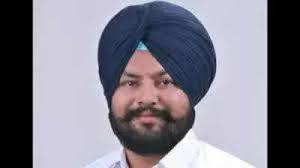
TARN TARAN: A court in Punjab’s Tarn Taran district sentenced Manjinder Singh Lalpura, AAP MLA from Khadoor Sahib, to four years in prison in a 12-year-old case of assault and molestation of a Dalit woman. On Wednesday, the court had convicted 11 people, including six policemen, in the case. Pronouncing the sentence on Friday, additional sessions judge Prem Kumar awarded four-year jail term to Lalpura and six others, while three accused were sentenced to one-year imprisonment each. One of the accused, Harvinder Singh, currently lodged in Delhi’s Tihar Jail, did not appear in the court and his sentencing is scheduled on Sept 16. Another accused, Paramjit Singh, died during the trial. “The court also imposed a fine of Rs 50,000 on each of the accused and directed that compensation be paid to the victim as per the law,” the survivor’s lawyer, Amit Dhawan, said. Following the pronouncement of the sentence, the MLA was taken into custody and sent to jail. On Sept 4, 2013, a taxi driver and a few other men assaulted and molested a 19-year-old woman when she and her family members were attending a wedding. A police team that arrived at the scene also assaulted the woman. Courtesy : TOI Note: This news is originally published on https:/timesofindia.com/bha and is used purely for non-profit/non-commercial purposes, especially human rights
Dalit rights activist Immanuel Sekaran memorial to be opened in two months in TN’s Paramakudi
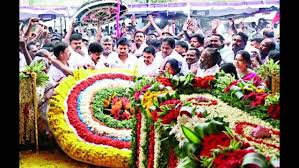
Ministers Thangam Thennarasu, Sattur Ramachandran, P Moorthy, KR Periakaruppan, and Raja Kannappan were present. RAMANATHAPURAM: Construction work of the mani mandapam (memorial hall) and installation of a statue of Dalit rights activist Immanuel Sekaran at Paramakudi is nearing completion, and they would be inaugurated within two months, Deputy Chief Minister Udhayanidhi Stalin said on Thursday. Speaking to reporters after paying homage to Immanuel Sekaran on his 68th death anniversary, Udhayanidhi recalled that Chief Minister MK Stalin had announced construction of the memorial and allocated Rs 3 crore, based on a request from Sekaran’s family and followers. “The work will be completed shortly and the memorial will be inaugurated within two months,” he said. Ministers Thangam Thennarasu, Sattur Ramachandran, P Moorthy, KR Periakaruppan, and Raja Kannappan were present. Leaders of several political parties, including TNCC chief K Selvaperunthagai, AMMK leader TTV Dhinakaran, NTK chief Seeman, and functionaries of AIADMK, DMDK, TVK, and VCK also paid their respects. Selvaperunthgai told reporters that the BJP was behind the rift in the AIADMK and the PMK. Further, he said AIADMK general secretary Edappadi Palaniswami had demanded naming Madurai airport after Muthuramalinga Thevar only to score political points. Seeman said the airport should be named after Pandian Nedunchelian. Courtesy : TNIE Note: This news is originally published on https:/thenewindianexpress.com/bha and is used purely for non-profit/non-commercial purposes, especially human rights
Dalit Youth Beaten with Iron Rod in Kanpur After Demanding ₹6,000 Payment
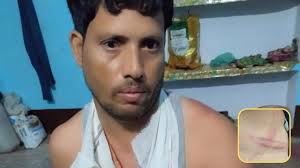
In Shivrajpur, Kanpur, a Dalit youth named Sudhir Kumar was brutally beaten with an iron rod by two brothers from an influential family after he asked them to repay money owed for flour milling. Sudhir, who runs a small flour mill, said he had been requesting payment for a long time. When he reminded them again, they became angry. “I was walking home from my mill when Manoj Singh and Mohit Singh Chandel stopped me. I asked them to return ₹6,000 they owed for flour milling. They abused me, started beating me, and then hit me with an iron rod lying nearby. I was bleeding badly,” Sudhir told TV9. Sudhir alleged that despite filing a written complaint at the Shivrajpur police station, no action has been taken. He claimed the outpost in-charge, Shubham Pandey, was under pressure from the accused. “It’s been two days since I complained. No FIR has been filed. The accused are roaming freely and even threatening to kill me,” he said. He added that several people had approached him to compromise, but he fears for his life if action is not taken. “The attackers come from a powerful family. They are using their influence to escape punishment,” Sudhir said. Shivrajpur Police Station Head Varun Sharma confirmed receiving the complaint and stated, “The matter is being investigated.” Courtesy : TOP Note: This news is originally published on https:/theobserverpost.com/bha and is used purely for non-profit/non-commercial purposes, especially human rights
Know the story of the formation of Mauritius, Dalits have the biggest contribution
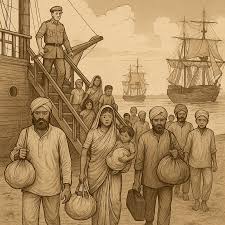
The first ship Atlas reached Mauritius from Calcutta on 2 November 1834. It mainly had people from Bihar, Eastern Uttar Pradesh, Jharkhand and Bengal. In which a large population was of Dalit, backward and deprived castes. The Dalit communities that went from these areas mainly included Chamar, Dhobi, Dom, Pasi, Musahar, Kahar, Nai etc. castes. It is about the year 2021. A man from Mauritius came to India in search of his roots. This search brought him to Purvanchal. This was surprising for him. Then a research started. What came out in this research started bringing out the story of the contribution of Dalits of Purvanchal in making Mauritius layer by layer. BHU’s DN Scientist Professor Gyaneshwar Choubey, who did this research, has collected important information in four years of research. According to research, about 55% of the DNA of the total population of Indians living in Mauritius matches with the Bhojpuri speaking Dalit community of UP’s Purvanchal and Bihar. In this, the DNA of the Dalit community of Purvanchal, especially Buxar, Ara, Bhabua, Chhapra and Sasaram, has been matched. Currently, the population of Mauritius is 12 lakhs. That is, the Dalits have contributed the most in making the beauty of Mauritius, which is discussed all over the world today. Mauritius was discovered in 1502. Africans were settled here in 1670. The British captured Mauritius in 1810. The first time Dalits went here also has its own story. When did Dalits go to Mauritius for the first time? In 1834, the British government abolished slavery, but they needed laborers for sugarcane cultivation. After this, indentured laborers were taken from India. British agents used to take these labourers on a 5-year contract in the name of “Girmit” (agreement). The first ship Atlas reached Mauritius from Calcutta on 2 November 1834. It mainly had people from Bihar, Eastern Uttar Pradesh, Jharkhand and Bengal. In which a large population was of Dalit, backward and deprived castes. The Dalit communities that went from these areas mainly included Chamar, Dhobi, Dom, Pasi, Musahar, Kahar, Nai etc. castes. Role of Dalits in making Mauritius Sugarcane cultivation and sugar industry are the backbone of Mauritius’ economy. Most of the work of building it was done by Indian labourers, a large number of whom were Dalits. Dalit migrants were at the forefront in the construction of all these infrastructures – farms, factories, roads, railways and ports. Although they were assigned the most difficult and humiliating work, this labour became the economic foundation of Mauritius. Those who went to Mauritius included Dalit women, who worked equally with men in the fields, and also faced exploitation as domestic servants. The great novelist William has written that “these Bhojpuri speaking people of the weakest section of UP and Bihar used to cultivate sugarcane and cotton while tied in chains. This work was unbearably painful. But they endured that pain and established themselves in Mauritius. The report shows that among the Indian population present in Mauritius, 55 percent of the people have DNA matching with the Bhojpuri speaking Dalit community. 35 percent of the DNA was of people coming from the Dravidian society while 4 percent of the DNA matches with the Brahmin and Kshatriya society. The special thing is that despite being in Mauritius, this community has not forgotten its language and culture even today. Bhojpuri and Chhath still reside in the veins of the people here. That is, the Dalit community, which the Indian scriptures and society still consider the most incapable and small, has created a country like Mauritius. Ashok Das Ashok Das (Ashok Kumar) is the country’s first person to do journalism by keeping the Dalit-tribal society at the center. He is a well-known journalist. He is the founder and editor of ‘Dalit Dastak Media Sansthan’. His journalism has been appreciated in countries like America, Canada, Sweden and Dubai including India. He has also traveled to these countries. Features about Ashok Das’ journalism have been published in many newspapers and magazines of the country and abroad, including DW (Germany), The Asahi Shimbun (Japan), The Mainichi Newspaper (Japan), The Week Magazine (India) and Hindustan Times (India). Ashok has given a lecture at the world-renowned Harvard University in America in February 2020. He has received a fellowship from the world’s largest organization of investigative journalism, Global Investigation Journalism Network, for the conference organized in Gothenburg, Sweden in 2023. Courtesy: Hindi News